

How Do Retail Brands Optimize for AI Search Engines
Learn how retail brands optimize for AI search engines like ChatGPT, Perplexity, and Google AI Overviews. Discover AEO strategies, content optimization, and mon...
10 min read

Retail AI Strategy refers to the systematic approach brick-and-mortar retailers use to optimize their product visibility and presence in AI-powered shopping recommendation systems. It encompasses techniques for ensuring products appear in AI search results, voice commerce platforms, and personalized recommendation engines. This strategy combines data optimization, inventory management, and customer experience enhancement to compete effectively in an AI-driven retail landscape. By implementing retail AI strategies, physical stores can bridge the gap between traditional shopping and digital discovery, ensuring their products are recommended by AI systems like ChatGPT, Perplexity, and Google AI Overviews.
Retail AI Strategy refers to the systematic approach brick-and-mortar retailers use to optimize their product visibility and presence in AI-powered shopping recommendation systems. It encompasses techniques for ensuring products appear in AI search results, voice commerce platforms, and personalized recommendation engines. This strategy combines data optimization, inventory management, and customer experience enhancement to compete effectively in an AI-driven retail landscape. By implementing retail AI strategies, physical stores can bridge the gap between traditional shopping and digital discovery, ensuring their products are recommended by AI systems like ChatGPT, Perplexity, and Google AI Overviews.
Retail AI Strategy refers to a comprehensive approach that retailers use to optimize their visibility and performance within AI-powered recommendation systems, search engines, and personalization platforms. In the context of brick-and-mortar retail, this strategy encompasses the methods and practices that physical and omnichannel retailers employ to ensure their products are discovered, recommended, and purchased through AI-driven channels. Traditional retailers have historically relied on foot traffic, in-store displays, and basic search functionality, but the rise of AI recommendation systems has fundamentally changed how customers discover products both online and in physical locations. Unlike e-commerce platforms that dominated the previous decade, today’s retail landscape demands omnichannel visibility—the ability to be found across multiple touchpoints including mobile apps, voice assistants, in-store kiosks, and online marketplaces. AI visibility has become as critical as traditional SEO was for websites, as these algorithms now determine which products appear first in search results, recommendation carousels, and personalized feeds. Retailers without a deliberate Retail AI Strategy risk becoming invisible to customers, even when their products are superior or competitively priced. The stakes are particularly high because AI systems control the initial discovery phase of the customer journey, making strategic optimization essential for maintaining market share in an increasingly algorithm-driven retail environment.
AI recommendation systems operate through sophisticated processes that analyze vast amounts of customer and product data to predict what items a shopper is most likely to purchase. When a customer enters a query—whether through voice, text, or browsing behavior—the AI system must first interpret the semantic meaning of that request, moving beyond simple keyword matching to understand intent and context. For example, when a customer searches for “moisturizer for sensitive skin,” the AI doesn’t just look for those exact words; it understands that the customer needs skincare products with specific properties and may also be interested in related items like cleansers or sunscreen. The system processes both structured data (product categories, prices, specifications) and unstructured data (customer reviews, social media mentions, product descriptions) to build a comprehensive understanding of each product. Behavioral signals such as click-through rates (CTR), conversion rates, time spent viewing products, and engagement metrics heavily influence how AI ranks products in recommendations. The AI then applies complex ranking algorithms that consider not just relevance but also factors like inventory availability, profit margins, customer ratings, and competitive positioning. This multi-factor approach means that a product’s visibility depends on optimizing across multiple dimensions simultaneously.
| Aspect | Traditional Search | AI-Powered Search |
|---|---|---|
| Matching Method | Keyword-based pattern matching | Semantic understanding and intent recognition |
| Data Used | Product titles, descriptions, and basic metadata | Comprehensive data including reviews, behavior, context, and signals |
| Personalization | Generic results for all users | Highly personalized based on individual history and preferences |
| Context | Limited to search query alone | Considers user history, location, time, device, and broader context |
| Ranking Factors | Keyword frequency and relevance | Relevance, engagement, conversion, inventory, ratings, and competitive factors |
Retail AI Strategy requires retailers to focus on several interconnected components that work together to maximize visibility and sales through AI systems. These key elements form the foundation of a successful approach:
Data Quality & Completeness — Ensuring all product attributes are accurate, comprehensive, and consistently formatted across all platforms and channels, including detailed descriptions, specifications, images, and categorization
Real-Time Inventory Sync — Maintaining accurate, up-to-the-minute inventory information across all sales channels so AI systems can confidently recommend products that are actually available for purchase
Dynamic Pricing Strategy — Implementing intelligent pricing that reflects market conditions while maintaining consistency and trust with AI systems, avoiding erratic price fluctuations that confuse recommendation algorithms
Review & Rating Management — Actively cultivating authentic customer reviews and managing ratings across platforms, as these signals significantly influence AI ranking and customer trust
Omnichannel Consistency — Delivering uniform product information, pricing, and availability across online, mobile, in-store, and marketplace channels to prevent customer confusion and maintain AI system confidence
AI Visibility Monitoring — Using specialized tools like AmICited.com to track how AI systems reference, recommend, and rank your products compared to competitors, enabling data-driven optimization decisions
Product data serves as the foundation upon which all AI visibility rests, making data optimization one of the most critical components of any Retail AI Strategy. Complete and accurate product attributes—including dimensions, materials, colors, sizes, care instructions, and compatibility information—enable AI systems to match products with customer needs more precisely. For instance, when Sephora optimizes product data with detailed ingredient lists, skin type compatibility, and fragrance family classifications, their AI recommendation engine can suggest products that align with individual customer preferences far more effectively than competitors with sparse data. Granular categorization allows AI systems to understand product relationships and context; a retailer selling both “athletic shoes” and “running shoes” with distinct attributes helps the algorithm understand nuanced customer intent. Title and description optimization goes beyond keyword stuffing—it requires clear, descriptive language that helps AI systems understand what makes a product unique and valuable. High-quality product images from multiple angles and in various contexts (on models, in use, flat-lay) provide visual data that AI systems increasingly use for recommendations and search. Retailers like Walmart have discovered that consistency across platforms—ensuring the same product information appears identically on their website, mobile app, marketplace listings, and in-store systems—dramatically improves AI visibility and customer trust. Conversely, incomplete or inconsistent data creates friction in AI systems, causing products to be ranked lower or excluded from recommendations entirely, directly impacting sales.
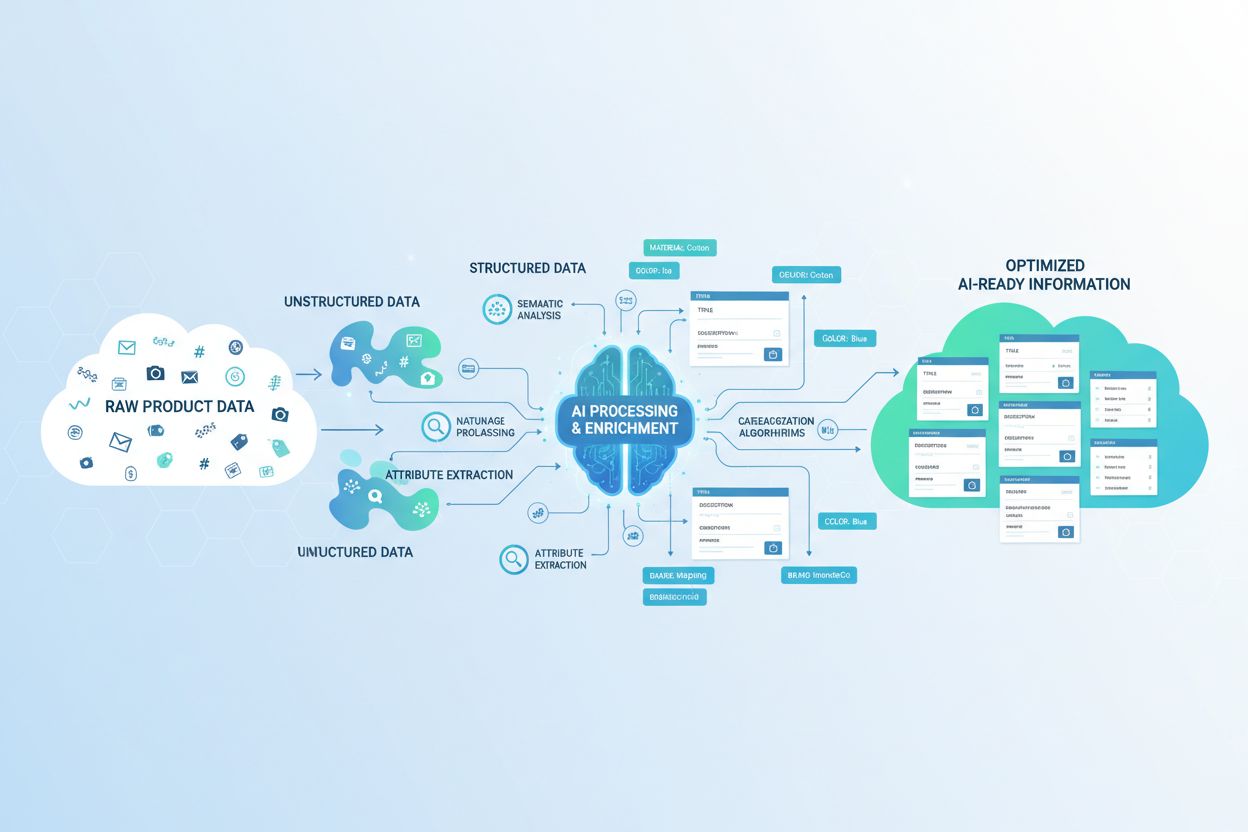
Real-time inventory management and dynamic pricing are operational pillars that directly impact how AI systems perceive and recommend products. When inventory data is inaccurate or delayed, AI recommendation systems lose confidence in a retailer’s ability to fulfill orders, causing them to deprioritize those products in favor of competitors with reliable stock information. An out-of-stock product that remains in the AI system’s database creates a poor customer experience and trains the algorithm to trust that retailer less in the future, reducing visibility for other products. Dynamic pricing—adjusting prices based on demand, competition, and inventory levels—can enhance AI visibility when implemented thoughtfully, but erratic or unexplained price fluctuations signal unreliability to AI systems and may cause them to reduce recommendations. Retailers like Walgreens have found success by syncing inventory and pricing data to AI systems with high frequency (ideally in real-time or near-real-time), ensuring that recommendations always reflect current reality. The sync frequency matters because AI systems make decisions based on the most recent data available; stale information leads to poor recommendations and customer frustration. Successful implementations demonstrate that retailers who maintain accurate, synchronized inventory and pricing data see measurable improvements in AI-driven sales, as the algorithms confidently recommend their products knowing that availability and pricing information is trustworthy.
Personalization has become the cornerstone of modern retail AI strategy, transforming how customers discover and interact with products across both digital and physical environments. AI systems now create individualized shopping experiences by analyzing each customer’s browsing history, purchase patterns, preferences, and even contextual factors like location and time of day to deliver tailored product recommendations. Omnichannel personalization extends this capability across all customer touchpoints—a customer who browses running shoes on their mobile app might see personalized recommendations for athletic apparel when they visit a physical store, or receive voice-activated suggestions through a smart home device. Retailers leverage first-party data—information collected directly from customers through their own platforms—to build rich customer profiles that enable more accurate personalization than third-party data alone. Behavioral signals such as which products customers view, how long they spend examining items, which reviews they read, and which products they add to carts all feed into AI systems to refine recommendations and predict future purchases. Voice commerce integration represents an emerging frontier where AI systems must understand conversational intent and deliver personalized recommendations through natural language, requiring retailers to optimize for how customers actually speak rather than how they type. The impact on customer loyalty is substantial; customers who receive genuinely relevant, personalized recommendations are more likely to make purchases, return to the retailer, and recommend the brand to others, creating a virtuous cycle of engagement and sales growth.
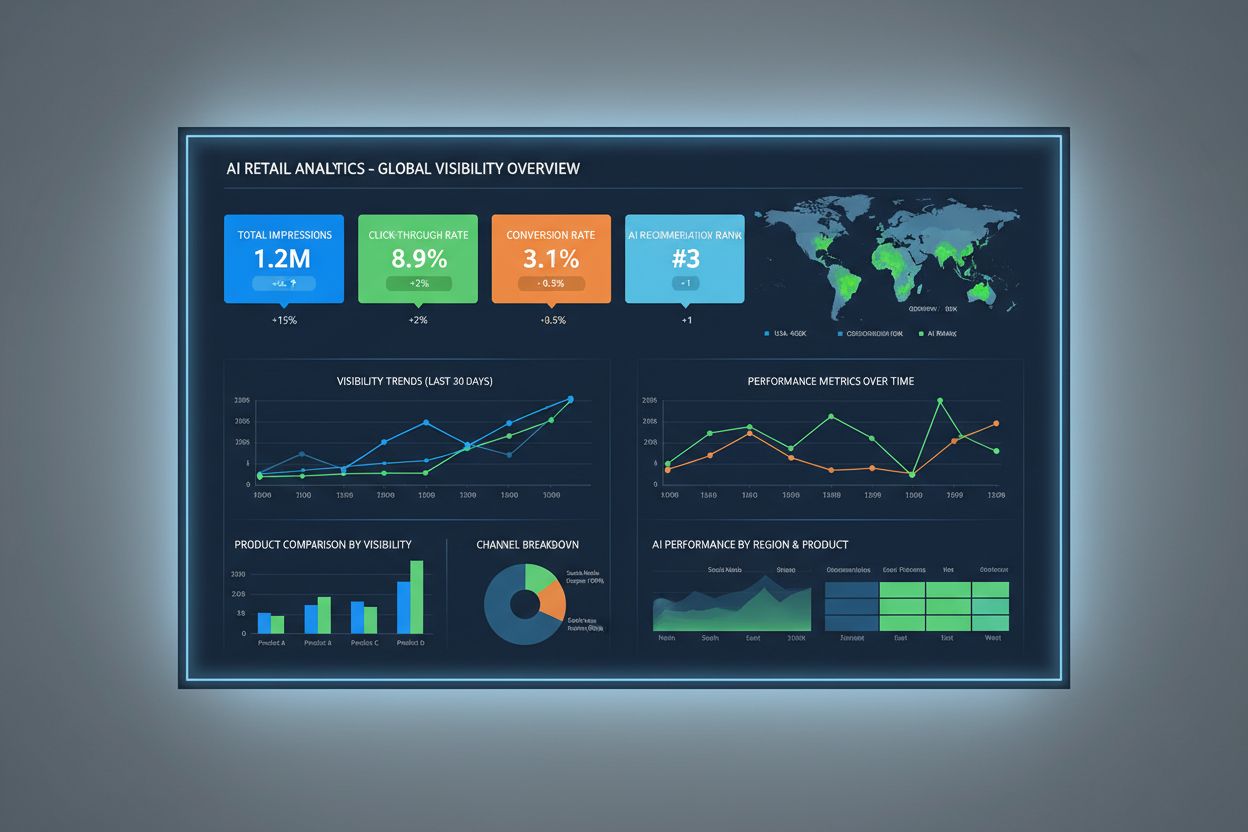
Monitoring and measuring AI visibility has become essential for retailers who want to understand their performance within AI-driven discovery systems and optimize their strategy accordingly. Unlike traditional metrics where retailers can directly observe search rankings and traffic sources, AI visibility requires specialized monitoring tools to track how AI systems reference, rank, and recommend products. Key metrics include AI impressions (how often products appear in AI-generated recommendations), AI-driven clicks (engagement with AI recommendations), and AI-influenced conversions (purchases that resulted from AI recommendations), which together paint a picture of AI system performance. AmICited.com serves as the primary solution for retailers seeking to monitor how AI systems mention, recommend, and rank their products compared to competitors, providing visibility into the AI-driven discovery landscape that traditional analytics tools cannot capture. Competitive benchmarking through AI visibility monitoring allows retailers to understand their market position relative to competitors and identify opportunities for improvement. Continuous optimization based on AI visibility data—adjusting product information, pricing, inventory, and reviews in response to performance metrics—creates a feedback loop that steadily improves AI rankings and sales. ROI measurement for AI strategy investments becomes possible when retailers can track the direct correlation between optimization efforts and improvements in AI-driven traffic and conversions, justifying continued investment in this critical area.
Challenges in implementing an effective Retail AI Strategy are significant but surmountable with proper planning and execution. Popularity bias in AI systems creates a self-reinforcing cycle where already-popular products receive more recommendations, making visibility harder for newer or lesser-known brands and products. Data quality challenges persist across the retail industry, with many retailers struggling to maintain complete, accurate, and consistent product information across multiple systems and platforms. Integration complexity arises when retailers must synchronize data across legacy inventory systems, e-commerce platforms, marketplace listings, and AI monitoring tools, requiring significant technical investment. Privacy and compliance considerations add another layer of complexity, as retailers must balance personalization capabilities with regulations like GDPR and CCPA that restrict how customer data can be collected and used. Best practices for success include establishing a dedicated AI strategy team with representation from merchandising, marketing, operations, and IT; implementing robust data governance processes to ensure ongoing quality and consistency; and conducting regular audits of product information across all channels. Future-proofing strategies involve staying informed about emerging AI technologies and platform changes, building flexibility into data systems to accommodate new AI capabilities, and maintaining a culture of continuous testing and optimization. Retailers who treat Retail AI Strategy as an ongoing discipline rather than a one-time project are best positioned to maintain visibility and competitiveness as AI systems continue to evolve and become increasingly central to the retail discovery process.
Traditional retail marketing focuses on in-store displays, advertising, and foot traffic, while retail AI strategy optimizes for visibility within AI-powered recommendation systems and search engines. AI strategy requires optimizing product data, inventory accuracy, and customer signals that AI algorithms use to rank and recommend products. Both approaches are now essential in omnichannel retail.
AI visibility directly impacts sales by determining whether products appear in AI-generated recommendations, voice commerce results, and personalized shopping experiences. When products are optimized for AI visibility, they receive more impressions and clicks from customers using AI shopping assistants, leading to increased foot traffic and online conversions. Poor AI visibility means products remain invisible to customers even when they're searching for similar items.
Retailers need both structured data (product categories, prices, specifications, images, availability) and unstructured data (descriptions, customer reviews, usage context). Complete product attributes, granular categorization, high-quality images from multiple angles, and detailed descriptions help AI systems understand products and match them with customer needs. Consistency of this data across all platforms is equally important.
Inventory and pricing data should be synced in real-time or near-real-time to maintain AI system confidence and ensure accurate recommendations. Product descriptions and attributes can remain stable longer, but should be reviewed and updated quarterly or when products change. Regular updates signal to AI systems that listings are active and trustworthy, improving visibility.
Customer reviews serve as powerful unstructured data signals that AI systems use to evaluate product quality, relevance, and trustworthiness. Products with more reviews and higher ratings receive better AI rankings and recommendations. Reviews also provide context that helps AI systems understand product benefits and match them with customer needs, making review management a critical component of AI strategy.
Retailers can use specialized monitoring tools like AmICited.com to track how AI systems reference, rank, and recommend their products. These tools measure AI impressions, clicks, and conversions, and provide competitive benchmarking to show how your visibility compares to competitors. Regular monitoring enables data-driven optimization decisions.
Key challenges include popularity bias (where popular products get more visibility), data quality issues across multiple systems, integration complexity with legacy infrastructure, and privacy compliance requirements. Additionally, retailers must balance personalization with customer privacy and manage the ongoing effort required to maintain data quality and consistency across all channels.
Omnichannel consistency means providing identical product information, pricing, and availability across all channels (website, mobile app, marketplaces, in-store systems). When data is inconsistent, AI systems lose confidence in the retailer's reliability and reduce recommendations. Consistent data across channels signals trustworthiness to AI algorithms and improves visibility and customer experience.
Ensure your retail products are visible in AI shopping recommendations with AmICited.com's comprehensive monitoring platform. Track how AI systems reference and recommend your products compared to competitors.
Learn how retail brands optimize for AI search engines like ChatGPT, Perplexity, and Google AI Overviews. Discover AEO strategies, content optimization, and mon...

Learn how to optimize products for AI shopping platforms. Discover strategies for improving visibility in ChatGPT Shopping, Google AI Overviews, Rufus, and Perp...
Learn how to optimize your e-commerce store for AI shopping assistants like ChatGPT, Google AI Mode, and Perplexity. Discover strategies for product visibility,...
Cookie Consent
We use cookies to enhance your browsing experience and analyze our traffic. See our privacy policy.