

New Visitor
Learn what a new visitor is in web analytics, how they're tracked using cookies, and why monitoring new vs returning visitors matters for AI monitoring and bran...
11 min read
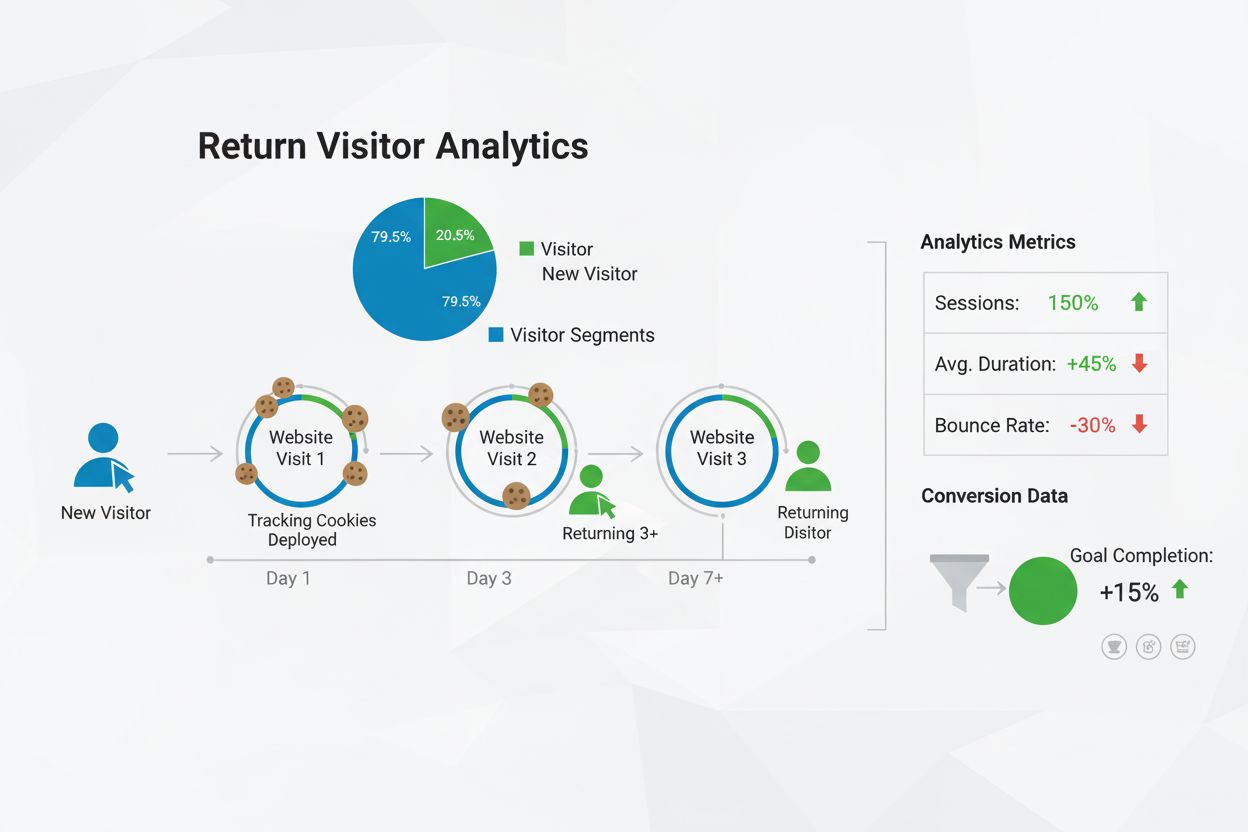
A return visitor is a user who has visited a website or digital property more than once, identified through first-party cookie tracking or device identification. Return visitors typically demonstrate higher engagement, longer session durations, and significantly greater conversion rates compared to new visitors, making them a critical metric for measuring website loyalty and customer retention effectiveness.
A return visitor is a user who has visited a website or digital property more than once, identified through first-party cookie tracking or device identification. Return visitors typically demonstrate higher engagement, longer session durations, and significantly greater conversion rates compared to new visitors, making them a critical metric for measuring website loyalty and customer retention effectiveness.
A return visitor is a user who has visited a website or digital property on more than one occasion, typically identified and tracked through first-party cookie data or device identification systems. Unlike new visitors experiencing a website for the first time, return visitors represent users with prior exposure to your brand, content, and value proposition. This distinction is fundamental to web analytics and forms one of the core metrics in platforms like Google Analytics, Mixpanel, and other digital analytics tools. The identification of return visitors enables businesses to understand user loyalty, measure retention effectiveness, and optimize marketing strategies based on visitor behavior patterns. Understanding the return visitor metric is essential for any organization seeking to balance customer acquisition with retention and to maximize the lifetime value of their audience.
The concept of tracking return visitors emerged alongside the early development of web analytics in the late 1990s and early 2000s. As websites became more sophisticated and businesses recognized the value of understanding user behavior, cookie-based tracking became the standard method for distinguishing between new and returning users. Initially, third-party cookies dominated the tracking landscape, allowing advertisers and analytics platforms to follow users across multiple websites. However, privacy concerns and regulatory pressures—particularly the introduction of the General Data Protection Regulation (GDPR) in Europe and the California Consumer Privacy Act (CCPA)—shifted the industry toward first-party cookie tracking, where websites directly collect and store user data on their own domains.
The evolution of return visitor tracking reflects broader changes in digital privacy and data governance. Modern analytics platforms now face the challenge of accurately identifying return visitors while respecting user privacy preferences and complying with increasingly stringent regulations. According to industry research, approximately 78% of enterprises now use AI-driven content monitoring tools to track brand appearances and user engagement patterns, indicating a shift toward more sophisticated visitor identification and behavior analysis. This evolution has made return visitor metrics more complex but also more valuable, as businesses must now combine traditional cookie-based tracking with alternative identification methods such as user login data, email subscriptions, and device fingerprinting to create a comprehensive understanding of visitor behavior.
Return visitor identification relies primarily on first-party cookies, which are small data files stored on a user’s browser by the website they’re visiting. When a user first arrives at a website, the analytics platform generates a unique tracking ID and stores it in a cookie on their device. On subsequent visits, the platform reads this cookie and recognizes the user as a returning visitor. This cookie contains essential information including the user’s unique identifier, the timestamp of their first visit, the number of previous visits, and sometimes additional behavioral data such as pages viewed or actions taken.
However, the accuracy of return visitor tracking faces significant limitations. Users who delete their browser cookies, visit from different devices, use different browsers, or enable incognito mode will be counted as new visitors even if they’ve previously visited the site. According to Parse.ly, a leading content analytics platform, this means that analytics systems are technically tracking tracking snippets rather than actual individuals. A single person using a desktop computer, smartphone, and tablet would appear as three separate users in most analytics platforms. Additionally, users who deny cookie consent or use privacy-focused browsers may not be tracked at all, creating blind spots in visitor data. Despite these limitations, first-party cookie tracking remains the industry standard because it provides actionable insights while respecting user privacy better than third-party tracking methods.
| Metric | Return Visitor | New Visitor | Returning User | Repeat Customer |
|---|---|---|---|---|
| Definition | User who has visited site multiple times (tracked via cookies) | User visiting site for first time | User with prior app/product engagement | Paying customer who made repeat purchases |
| Tracking Method | First-party cookies, device ID | Cookie absence, new tracking ID | User login, account history | Transaction records, CRM data |
| Time Frame | Varies (30 days to 2 years depending on platform) | Single initial visit | Typically 7+ days between visits | Multiple purchase transactions |
| Conversion Rate | 73% higher than new visitors | Baseline metric | Highly variable by product | Highest conversion potential |
| Average Session Duration | 2.5+ sessions per visitor | 1.0 sessions per visitor | Extended engagement | Longest duration (loyalty) |
| Bounce Rate | 30-40% (lower than new) | 60-70% (higher) | 20-30% (lowest) | 10-20% (minimal) |
| Business Value | Indicates loyalty and retention | Measures acquisition effectiveness | Shows product stickiness | Demonstrates revenue generation |
| Primary Use Case | Retention strategy optimization | Acquisition channel analysis | Product engagement analysis | Revenue and CLV calculation |
The technical process of identifying return visitors involves several interconnected systems working in concert. When a user first visits a website, the analytics tracking code (such as Google Analytics’ gtag.js or similar implementations) executes in the user’s browser. This code checks for the existence of a specific cookie associated with the website’s domain. If no cookie exists, the system generates a unique Client ID or User ID and stores it in a first-party cookie with an expiration date typically ranging from 30 days to 2 years, depending on the platform’s configuration.
On subsequent visits, the tracking code reads the existing cookie and retrieves the stored Client ID. The analytics platform then compares this ID against its database to determine whether the user is new or returning. This comparison happens in real-time, allowing the platform to immediately classify the visitor and apply appropriate tracking rules. Modern analytics platforms like Google Analytics 4 have enhanced this process by introducing User-ID tracking, which allows websites to associate multiple devices and browsers with a single user if they log into an account. This approach provides more accurate return visitor identification because it relies on explicit user authentication rather than cookie-based inference.
However, the technical implementation faces challenges related to data privacy and consent management. With the rise of cookie consent banners and privacy regulations, many users now opt out of cookie tracking entirely. In these cases, analytics platforms must rely on alternative identification methods such as IP address analysis, device fingerprinting, or first-party data collected through user accounts. These alternative methods are less reliable than cookies but provide some level of return visitor identification while respecting user privacy preferences. The technical complexity of modern return visitor tracking reflects the industry’s ongoing effort to balance data collection needs with privacy protection.
Return visitors represent one of the most valuable segments of website traffic because they demonstrate significantly higher engagement and conversion potential compared to new visitors. Research from Barilliance and other industry sources consistently shows that retained visitors convert 73% more than first-time visitors, making return visitor optimization a critical component of any digital marketing strategy. This conversion advantage stems from multiple factors: returning visitors have already evaluated your brand and decided it’s worth their time, they’re familiar with your website’s navigation and value proposition, and they’ve likely progressed further along the customer journey toward a purchase or desired action.
Beyond conversion rates, return visitors typically exhibit superior engagement metrics across all dimensions. They spend 2.5 times longer on websites compared to new visitors, view more pages per session, and demonstrate significantly lower bounce rates. For e-commerce businesses, this translates to higher average order values and increased customer lifetime value. For content-driven websites like news sites or blogs, return visitors form the core of loyal readership that generates consistent traffic and engagement. For SaaS companies, return visitors indicate product stickiness and successful user onboarding, which are critical indicators of long-term viability and growth potential.
The strategic importance of return visitors extends beyond immediate conversion metrics. Return visitor rates serve as a health indicator for overall business performance, reflecting the effectiveness of content strategy, user experience design, and customer retention initiatives. A declining return visitor rate may signal problems with content quality, website performance, or competitive positioning. Conversely, a rising return visitor rate indicates successful brand building and customer satisfaction. Many businesses use return visitor metrics as a key performance indicator (KPI) for evaluating marketing effectiveness, with target ratios varying by industry and business model. Understanding and optimizing return visitor performance has become essential for sustainable business growth in the digital economy.
Different analytics platforms implement return visitor tracking with varying levels of sophistication and accuracy. Google Analytics, the most widely used analytics platform, identifies return visitors through the User-ID feature and cookie-based tracking. In Google Analytics 4 (GA4), the terminology has shifted slightly, with the platform now distinguishing between “new” users (first visit in the last 7 days) and “established” users (first visit more than 7 days ago). This change reflects Google’s effort to provide more nuanced user segmentation while accounting for the reality that user behavior patterns change over time.
Mixpanel takes a more sophisticated approach to return visitor identification through its identity management system, which can retroactively associate multiple devices and browsers with a single user if they log into an account. This approach provides more accurate return visitor metrics for businesses with authenticated user bases, such as SaaS products or membership sites. Mixpanel also offers user enrichment capabilities, allowing businesses to layer additional context onto return visitor data, such as subscription tier, geographic location, or behavioral attributes. This enrichment enables more granular analysis of return visitor segments and their distinct characteristics.
Parse.ly, a content analytics platform, emphasizes the importance of understanding return visitor behavior in the context of content performance. The platform recognizes that return visitors often consume different types of content compared to new visitors, and provides tools for analyzing content preferences by visitor type. Databox and other business intelligence platforms allow users to visualize return visitor metrics alongside other engagement indicators, creating comprehensive dashboards that reveal patterns and correlations. For businesses using AI monitoring platforms like AmICited, understanding return visitor behavior becomes even more critical, as consistent brand appearances in AI-generated responses often correlate with higher return visitor rates and increased brand authority in search results.
Increasing return visitor rates requires a multifaceted approach that addresses content quality, user experience, and engagement strategy. High-quality content remains the foundation of return visitor optimization. Content must provide specific, concrete value that justifies repeat visits. Generic, surface-level content fails to encourage return visits, whereas in-depth, authoritative content that addresses user needs comprehensively creates reasons for visitors to return. Businesses should focus on creating “consideration” or “middle-of-funnel” content that helps returning visitors progress toward conversion while maintaining their engagement with the brand.
Email marketing represents one of the most effective channels for driving return visits. By inviting website visitors to subscribe to newsletters or email lists, businesses create direct communication channels that encourage repeat visits. According to industry research, email-driven visitors convert at 5.3%—more than 7.5 times higher than the 0.7% conversion rate from social media traffic. Well-crafted email campaigns that promote valuable content and personalized offers can significantly increase return visitor rates. Web push notifications offer another powerful tool for re-engaging past visitors, requiring minimal friction (users simply click “Allow” in a browser prompt) while providing direct communication capabilities.
Social media marketing plays a supporting role in return visitor optimization by keeping your brand visible to past visitors and encouraging them to return to your website. Sharing valuable content, engaging with followers, and building community around your brand creates touchpoints that remind past visitors of your value proposition. Internal linking and calls-to-action (CTAs) guide visitors toward additional content and engagement opportunities, increasing the likelihood of repeat visits. Effective CTAs must be contextually relevant to the content being consumed and aligned with the visitor’s stage in the customer journey. Retargeting ads across social media and display networks serve as visual reminders to past visitors, encouraging them to return to your website. These ads should be distinct from acquisition ads, featuring messaging that acknowledges the visitor’s prior exposure to your brand and highlighting specific benefits or new content that might interest them.
The future of return visitor tracking faces significant transformation due to evolving privacy regulations and technological changes. The deprecation of third-party cookies by major browsers like Chrome, Safari, and Firefox has accelerated the shift toward first-party data collection and alternative identification methods. This transition creates both challenges and opportunities for businesses seeking to track return visitors accurately. First-party data strategies that rely on user authentication, email subscriptions, and direct data collection will become increasingly important, requiring businesses to invest in customer data platforms and identity resolution technologies.
Artificial intelligence and machine learning are beginning to play larger roles in return visitor identification and behavior prediction. Advanced analytics platforms now use AI to identify patterns in visitor behavior that indicate return likelihood, even when traditional cookie-based tracking fails. These systems can predict which new visitors are likely to return based on behavioral signals such as time on site, pages viewed, and interaction patterns. As AI continues to advance, return visitor analytics will become more sophisticated, enabling businesses to understand not just whether visitors return, but why they return and what factors drive repeat engagement.
The integration of AI monitoring platforms like AmICited with traditional analytics represents another frontier in return visitor understanding. As businesses increasingly recognize the importance of appearing in AI-generated responses across platforms like ChatGPT, Perplexity, Google AI Overviews, and Claude, the correlation between AI citations and return visitor behavior becomes more relevant. Brands that consistently appear in AI responses may experience higher return visitor rates as users encounter the brand multiple times across different touchpoints. This convergence of traditional web analytics and AI monitoring creates new opportunities for understanding how brand visibility across AI platforms influences visitor behavior and loyalty.
Return visitors represent far more than a simple analytics metric—they embody the success of your content strategy, user experience design, and overall brand value proposition. The fact that return visitors convert 73% more than new visitors underscores their critical importance to business growth and profitability. As digital marketing becomes increasingly competitive and customer acquisition costs continue to rise, the ability to attract and retain return visitors has become a fundamental competitive advantage. Businesses that excel at return visitor optimization create sustainable growth engines that generate consistent revenue while building loyal customer bases.
The technical mechanisms underlying return visitor tracking continue to evolve in response to privacy concerns and regulatory requirements. While first-party cookies remain the industry standard, alternative identification methods and AI-powered analytics are creating new possibilities for accurate visitor tracking. Understanding these technical foundations enables businesses to implement effective return visitor strategies while respecting user privacy and complying with regulations. As the digital landscape continues to transform, return visitor metrics will remain central to measuring business success and optimizing marketing performance. By combining traditional analytics with emerging technologies like AI monitoring and advanced identity resolution, businesses can gain unprecedented insights into visitor behavior and build strategies that maximize return visitor rates and lifetime customer value.
Analytics platforms like Google Analytics use first-party cookies stored on a user's browser to track whether they have visited a website before. When a user visits a site, the platform checks for an existing tracking cookie. If no cookie exists, the user is classified as new and assigned a unique tracking ID. If a cookie is found, the user is counted as a returning visitor. However, this method has limitations—users on different devices, browsers, or in incognito mode may be counted as new visitors even if they've visited before.
Research consistently shows that return visitors convert at significantly higher rates than new visitors. Studies indicate that retained visitors convert approximately 73% more than first-time visitors. This substantial difference reflects the fact that returning visitors have already demonstrated interest in your brand, are more familiar with your offerings, and have progressed further along the customer journey, making them more likely to complete desired actions like purchases or sign-ups.
Return visitors typically spend more time on websites because they have prior knowledge of the site's structure, content, and value proposition. They know what they're looking for and navigate more efficiently to relevant pages. Additionally, returning visitors often have established trust in the brand, reducing friction in their browsing experience. They're also more likely to explore multiple pages and engage deeply with content, resulting in longer average session durations compared to new visitors who may be evaluating whether the site meets their needs.
Return visitor tracking faces several limitations. First-party cookies can be deleted by users, causing returning visitors to be counted as new. Users accessing from different devices or browsers appear as separate visitors. Incognito or private browsing modes prevent cookie storage, skewing data. Additionally, cookie consent requirements and privacy regulations like GDPR have reduced tracking accuracy. The metric also doesn't account for actual individuals—it tracks devices and browsers, so one person using multiple devices appears as multiple users in analytics platforms.
Return visitor metrics are closely tied to customer lifetime value (CLV) because they indicate customer retention and repeat engagement. Visitors who return multiple times demonstrate loyalty and sustained interest, which typically correlates with higher lifetime spending. By analyzing return visitor behavior—such as frequency of visits, pages viewed, and conversion patterns—businesses can estimate CLV and determine whether their customer acquisition costs are justified by long-term revenue potential. High return visitor rates generally signal strong CLV and effective retention strategies.
The ideal ratio varies significantly by business model and industry. E-commerce sites typically aim for approximately 30% new visitors and 70% returning visitors to balance customer acquisition with retention. Media and content sites often target 50-50 ratios to maintain both loyal readership and fresh audience growth. SaaS companies may prioritize higher return visitor percentages to demonstrate product stickiness. Rather than pursuing a fixed ratio, businesses should align their new-to-returning visitor balance with specific goals—whether that's growth, retention, or revenue optimization.
Businesses can increase return visitor rates through multiple strategies: creating high-quality, valuable content that encourages repeat visits; implementing email marketing campaigns to re-engage past visitors; using web push notifications for timely reminders; optimizing user experience and website performance; establishing clear calls-to-action that guide visitors toward meaningful engagement; leveraging retargeting ads across social media and display networks; and building community features that encourage ongoing interaction. Additionally, personalization based on past behavior and offering exclusive content or benefits to returning visitors can significantly boost return rates.
Start tracking how AI chatbots mention your brand across ChatGPT, Perplexity, and other platforms. Get actionable insights to improve your AI presence.
Learn what a new visitor is in web analytics, how they're tracked using cookies, and why monitoring new vs returning visitors matters for AI monitoring and bran...
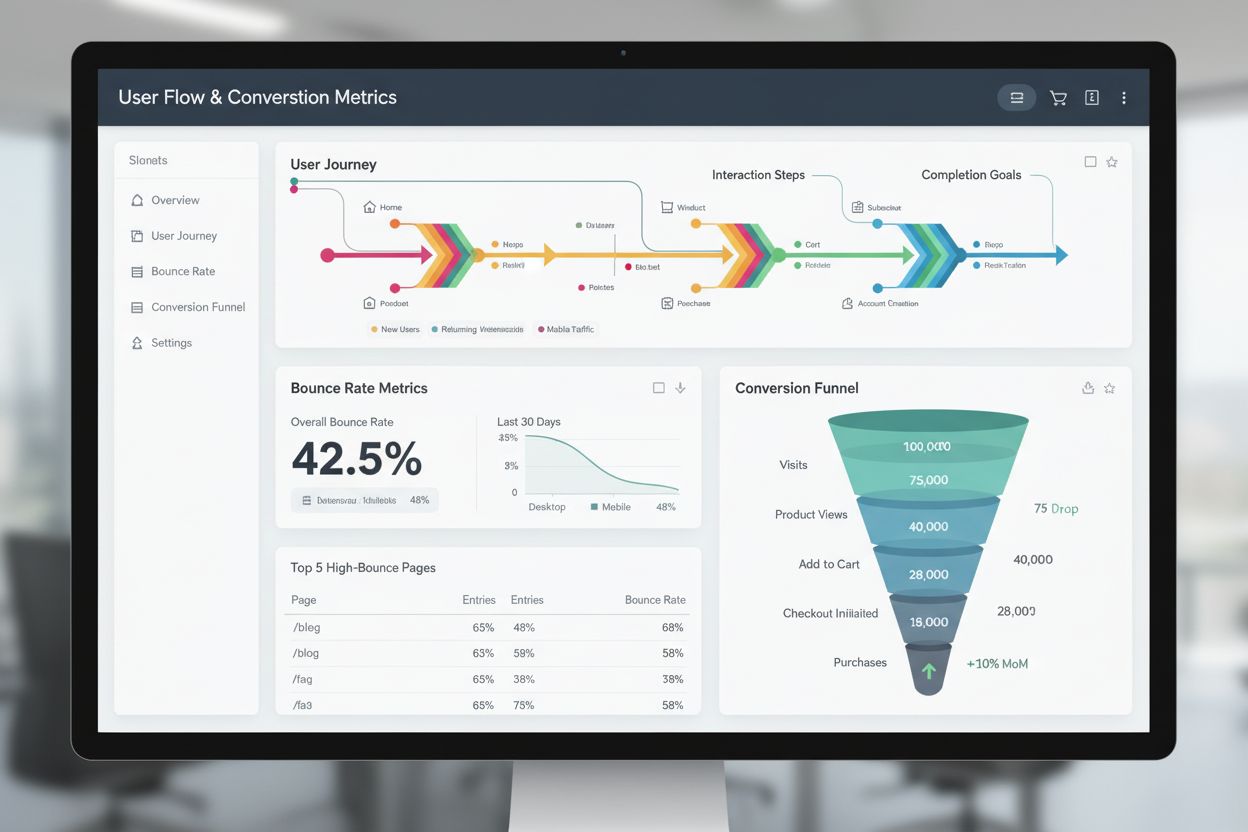
Learn what an entry page is, why it matters for user engagement and conversions, and how to optimize entry pages to reduce bounce rates and improve website perf...
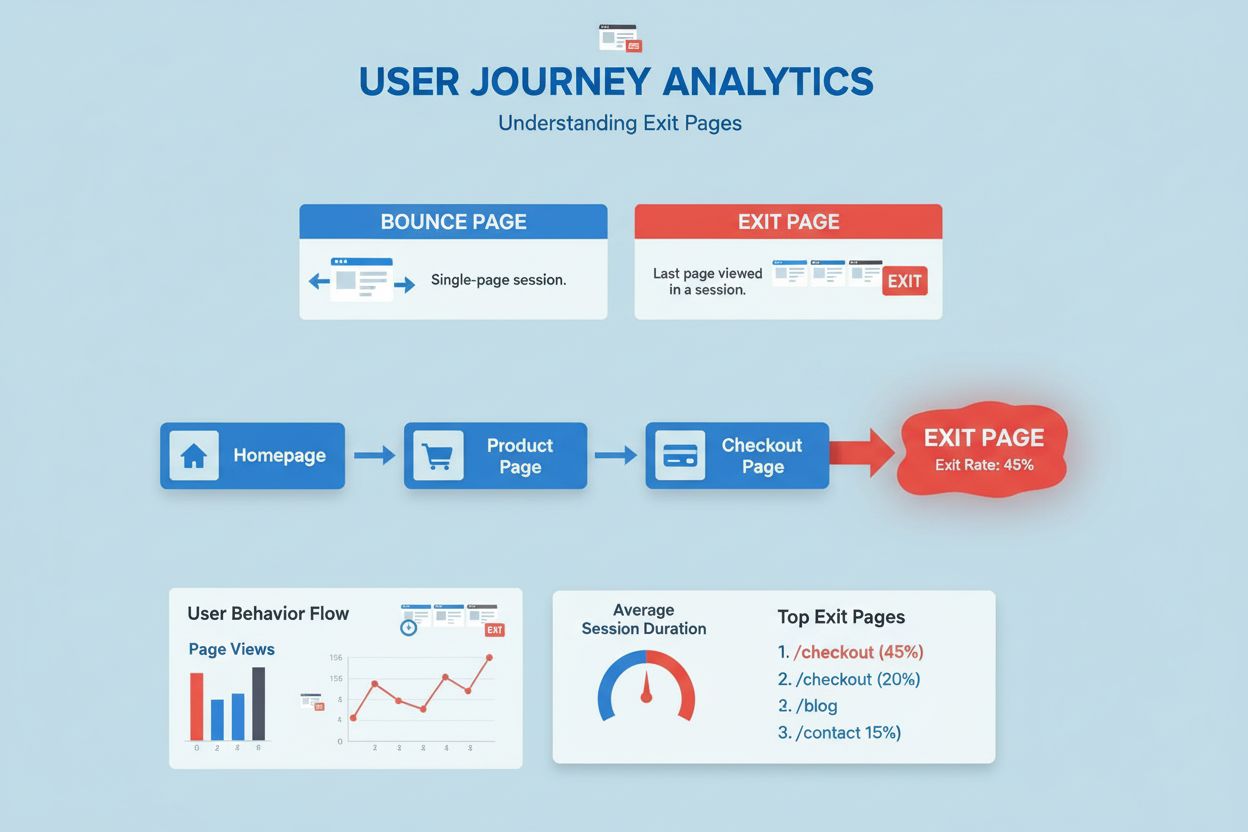
Exit page definition: the last page users view before leaving your site. Learn how exit pages differ from bounce pages, why they matter for conversions, and how...
Cookie Consent
We use cookies to enhance your browsing experience and analyze our traffic. See our privacy policy.