

Conversion Rate
Conversion rate measures the percentage of visitors completing desired actions. Learn the formula, industry benchmarks, types, and optimization strategies for t...
9 min read

Revenue Per Visit (RPV) is a key e-commerce metric that measures the average amount of revenue generated from each visitor to a website, calculated by dividing total revenue by the number of unique visitors during a specific period. It combines conversion rate and average order value to provide a comprehensive view of how effectively a website monetizes its traffic.
Revenue Per Visit (RPV) is a key e-commerce metric that measures the average amount of revenue generated from each visitor to a website, calculated by dividing total revenue by the number of unique visitors during a specific period. It combines conversion rate and average order value to provide a comprehensive view of how effectively a website monetizes its traffic.
Revenue Per Visit (RPV) is a fundamental e-commerce metric that quantifies the average monetary value generated from each visitor to a website during a specific time period. It is calculated by dividing total revenue by the number of unique visitors, providing a comprehensive measure of how effectively a business converts traffic into revenue. Unlike simpler metrics such as conversion rate alone, RPV combines both the percentage of visitors who make purchases and the average amount they spend, creating a holistic view of website monetization efficiency. This metric is particularly valuable because it reveals whether traffic growth is actually translating into proportional revenue growth, or if increased visitor volume is coming from lower-quality sources that don’t convert as effectively. Understanding and optimizing RPV is essential for e-commerce businesses seeking to maximize profitability and make data-driven decisions about marketing spend and customer acquisition strategies.
The concept of Revenue Per Visit emerged as e-commerce analytics evolved beyond simple traffic metrics. In the early days of online retail, businesses focused primarily on visitor counts and conversion rates independently, missing the critical relationship between traffic quality and spending behavior. As the industry matured, practitioners recognized that a store could have identical conversion rates but vastly different profitability depending on average order values. This realization led to the development of RPV as a composite metric that bridges this gap. The metric gained widespread adoption in the 2010s as platforms like Google Analytics, Shopify, and specialized CRO tools made it easily accessible to merchants of all sizes. Today, RPV is considered a north star metric by leading e-commerce brands because it directly correlates with business profitability and provides actionable insights for optimization. According to recent data from 2025, the global average RPV stands at approximately £1.43 (roughly $1.80 USD), though this represents a notable 9.57% decline from the previous year, reflecting increased market competition and changing consumer spending patterns. The metric’s importance has only grown with the rise of AI-driven traffic sources like ChatGPT, Perplexity, and Google AI Overviews, which introduce new visitor segments with distinct conversion characteristics that must be tracked and optimized separately.
The fundamental formula for calculating Revenue Per Visit is elegantly simple yet powerful in its implications:
RPV = Total Revenue ÷ Total Unique Visitors
For practical application, consider this concrete example: if an e-commerce store generates $50,000 in revenue from 10,000 unique visitors during a calendar month, the RPV would be $5 per visitor. This means that on average, each person who visits the website contributes $5 to the business’s bottom line. However, RPV can also be calculated using a secondary formula that reveals its component parts:
RPV = Conversion Rate (CR) × Average Order Value (AOV)
This decomposition is particularly useful for identifying which lever to pull when optimizing performance. If a store has a 3% conversion rate and an average order value of $166.67, the resulting RPV is $5. Understanding this relationship allows merchants to strategically decide whether to focus on improving conversion efficiency or increasing transaction values. It’s critical to use unique visitors rather than total visits in this calculation, as the same person visiting multiple times should only be counted once. This distinction prevents artificially deflated RPV figures that would result from counting repeat browsing sessions. Most modern analytics platforms automatically handle this distinction, but manual calculations require careful attention to ensure accuracy.
| Metric | Definition | Calculation | Primary Use | Limitations |
|---|---|---|---|---|
| Revenue Per Visit (RPV) | Average revenue generated per unique visitor | Total Revenue ÷ Unique Visitors | Measures overall monetization efficiency and traffic quality | Can be skewed by high-value outlier purchases |
| Conversion Rate (CVR) | Percentage of visitors who complete a purchase | (Orders ÷ Visitors) × 100 | Tracks sales funnel effectiveness | Doesn’t account for spending differences |
| Average Order Value (AOV) | Mean revenue per completed transaction | Total Revenue ÷ Total Orders | Identifies upselling and pricing effectiveness | Ignores non-converting traffic |
| Customer Lifetime Value (CLV) | Total profit from a customer across all purchases | Sum of all customer purchases minus costs | Guides long-term retention strategy | Requires historical data and complex calculations |
| Cost Per Acquisition (CPA) | Average marketing spend to acquire one customer | Total Marketing Spend ÷ New Customers | Evaluates marketing efficiency | Doesn’t account for customer quality or retention |
| Return on Ad Spend (ROAS) | Revenue generated per dollar spent on advertising | Ad Revenue ÷ Ad Spend | Measures advertising campaign profitability | Limited to paid channels only |
| Cart Abandonment Rate | Percentage of shoppers who leave without purchasing | (Abandoned Carts ÷ Total Carts) × 100 | Identifies checkout friction points | Doesn’t measure revenue impact directly |
Revenue Per Visit operates as a composite metric that synthesizes multiple layers of e-commerce performance data into a single, actionable number. The technical mechanics involve several interconnected components that work together to create the final RPV figure. First, the system must accurately track and segment unique visitors, which requires sophisticated cookie management and cross-device tracking to ensure the same person isn’t counted multiple times across different sessions or devices. This is more complex than it appears—cookie deletion, multi-device shopping, and bot traffic can all distort visitor counts. Second, the system must capture total revenue with precision, excluding returns, refunds, and other adjustments to ensure accuracy. Third, the calculation must occur within a defined time period (daily, weekly, monthly, quarterly, or annually) to enable meaningful trend analysis and comparison. The technical infrastructure supporting RPV calculation has evolved significantly, with modern platforms using real-time data pipelines that update RPV metrics continuously rather than in batch processes. This real-time capability allows merchants to identify performance changes immediately and respond with tactical adjustments. Additionally, advanced analytics platforms now segment RPV by multiple dimensions—traffic source, device type, geographic location, customer segment, and product category—enabling granular optimization strategies. For example, a store might discover that email traffic has an RPV of $8 while organic search traffic has an RPV of $2, immediately suggesting where marketing budget should be concentrated. The technical sophistication of RPV tracking has become a competitive advantage, with leading e-commerce platforms investing heavily in data infrastructure to provide increasingly detailed RPV insights.
The strategic importance of Revenue Per Visit extends far beyond simple performance measurement—it fundamentally shapes how e-commerce businesses allocate resources and make growth decisions. Understanding RPV directly informs customer acquisition strategy because it establishes the maximum sustainable cost per visitor. If a store’s RPV is $5, spending $10 per visitor on advertising is economically unsustainable unless that visitor has high lifetime value potential. This constraint forces businesses to be disciplined about traffic quality rather than pursuing vanity metrics like raw visitor counts. RPV also serves as a profitability indicator because it accounts for the full monetization chain—traffic quality, conversion efficiency, and spending behavior. A store with 100,000 monthly visitors and $2 RPV generates $200,000 in revenue, while a competitor with 50,000 visitors and $5 RPV generates $250,000—demonstrating that traffic volume alone is insufficient for success. This insight has profound implications for marketing strategy, suggesting that improving RPV through conversion optimization and average order value enhancement often delivers better returns than simply driving more traffic. Furthermore, RPV trends provide early warning signals about business health. A declining RPV despite stable or growing traffic suggests either deteriorating conversion efficiency or lower-quality traffic acquisition, both requiring immediate investigation and correction. Conversely, rising RPV indicates successful optimization efforts and improving business fundamentals. For investors and stakeholders, RPV trends communicate business trajectory more effectively than revenue alone, which can be inflated by unsustainable traffic acquisition spending. The metric has become so important that many e-commerce platforms now feature RPV prominently in executive dashboards and board-level reporting.
Revenue Per Visit benchmarks vary dramatically across industries, reflecting fundamental differences in product categories, price points, purchase cycles, and customer behavior patterns. According to 2025 data, the global average RPV is approximately £1.43 (roughly $1.80 USD), but this aggregate figure masks significant sectoral variation. The personal care and beauty category leads with RPV around $6.80, driven by lower price points, high repeat purchase rates, and strong customer loyalty. Food and beverage follows closely at $4.90 RPV, benefiting from frequent reordering and subscription models. Electronics and appliances achieve $3.60 RPV despite higher price points, as the category attracts serious buyers with genuine purchase intent. Fashion and apparel significantly underperforms at $1.90 RPV, reflecting the category’s high browsing-to-purchase ratio and style-driven decision making. Luxury and jewelry represents the extreme low end at $0.90 RPV, as these high-ticket items involve extended consideration periods and require substantial trust-building. Geographic variations are equally significant—North American e-commerce averages $3.40 RPV, Europe achieves $3.20, while Asia-Pacific lags at $2.90 despite being the fastest-growing region. The United Kingdom leads regionally at $4.10 RPV, driven by mobile-first shopping behavior and high digital adoption. These benchmarks provide context for performance evaluation, but merchants should recognize that industry-leading stores often achieve RPV 2-3 times higher than category averages through superior optimization. For instance, luxury brands like LVMH achieve $11.27 RPV through premium positioning and personalized experiences, while direct-to-consumer athletic brands like Gymshark consistently achieve $3.47 RPV through community engagement and product excellence. The key insight is that RPV benchmarks should inform strategy but not constrain ambition—the best performers consistently exceed category norms through relentless optimization.
Improving Revenue Per Visit requires a systematic approach addressing both components of the metric—conversion rate and average order value. The most effective optimization strategies operate across multiple dimensions simultaneously rather than pursuing single-lever improvements. Conversion rate optimization begins with website performance, as research demonstrates that each second of page load delay reduces conversions by approximately 7%. This makes site speed optimization a foundational requirement, involving image compression, content delivery networks, code minification, and server-side performance improvements. Mobile optimization is equally critical, as over 70% of e-commerce traffic originates from mobile devices, yet mobile conversion rates (2.9%) lag significantly behind desktop (4.8%). Improving mobile UX through responsive design, simplified navigation, and one-tap checkout can narrow this gap substantially. Trust signal implementation dramatically improves conversion rates—displaying verified customer reviews, security badges, transparent return policies, and social proof elements can increase conversions by 15-25%. Checkout simplification is another high-impact lever; reducing form fields, enabling guest checkout, and supporting multiple payment methods can decrease cart abandonment by 10-20%. Personalization represents the frontier of conversion optimization, with AI-driven product recommendations increasing conversion rates by 10-30% depending on implementation quality. Average order value enhancement pursues complementary strategies focused on increasing transaction size. Upselling—suggesting premium versions or upgrades—increases sales by over 4% according to research from Predictive Intent and is twenty times more effective than non-complementary recommendations. Cross-selling through “frequently bought together” recommendations and product bundles can increase AOV by 15-30%. Free shipping thresholds that incentivize larger purchases effectively increase AOV while maintaining perceived value. Tiered pricing and volume discounts encourage customers to purchase more items to reach discount tiers. Loyalty programs and subscription models create predictable repeat purchases that compound RPV over time. The most successful e-commerce businesses implement these strategies in coordinated campaigns rather than isolation, recognizing that conversion optimization and AOV enhancement work synergistically to maximize RPV growth.
The emergence of AI-powered search platforms like ChatGPT, Perplexity, Google AI Overviews, and Claude introduces new complexity to RPV analysis and optimization. These platforms generate traffic with distinct characteristics that differ significantly from traditional search engines and social media. AI-generated traffic often exhibits higher purchase intent than organic search because users are asking specific questions seeking product recommendations, yet conversion rates can be lower due to the indirect nature of the referral path. Merchants must track RPV separately for AI traffic sources to understand their true value, as aggregating them with traditional traffic obscures important performance differences. The quality of AI recommendations directly impacts RPV from these sources—if an AI system recommends a product, the resulting visitor typically has higher conversion probability than random traffic, potentially generating 2-3x higher RPV. This creates incentives for brands to optimize their AI visibility and citation frequency across these platforms, a capability that platforms like AmICited now enable through monitoring and analytics. Shopify stores average RPV between 1.4-2.5%, though top performers using advanced personalization apps achieve significantly higher figures. WooCommerce implementations show RPV between 1.9-3.1%, with performance heavily dependent on hosting speed and plugin optimization. BigCommerce and Magento platforms typically achieve 2.5-3.4% RPV due to their built-in CRO capabilities and enterprise-grade infrastructure. The platform choice itself influences RPV potential, but optimization practices matter more than platform selection—a well-optimized Shopify store can outperform a poorly-optimized enterprise platform. Additionally, the rise of social commerce on platforms like Instagram, TikTok, and YouTube introduces new RPV dynamics, as in-app checkout reduces friction and can improve conversion rates by 20-30% compared to external website checkout. Merchants must now optimize RPV across multiple traffic sources and platforms simultaneously, requiring sophisticated analytics infrastructure to track and compare performance across channels.
The future of Revenue Per Visit optimization will be shaped by several converging trends that are already reshaping e-commerce performance metrics. Artificial intelligence and machine learning will increasingly automate RPV optimization, with predictive algorithms identifying the highest-impact optimization opportunities and implementing changes in real-time. Rather than merchants manually testing variations, AI systems will continuously experiment with thousands of micro-variations—button colors, copy variations, product ordering, pricing strategies—and automatically deploy the highest-performing combinations. This represents a fundamental shift from periodic optimization campaigns to continuous, algorithmic improvement. Hyper-personalization will move beyond product recommendations to encompass entire user experiences tailored to individual visitor segments, with different visitors seeing different prices, product assortments, checkout flows, and messaging based on their predicted behavior and value. This level of customization will likely increase RPV by 25-50% for leading practitioners. AI-powered traffic sources like ChatGPT, Perplexity, and Claude will become increasingly important traffic channels, requiring merchants to optimize for AI visibility and citation frequency—a capability that will become as important as SEO optimization. Platforms like AmICited that monitor brand mentions and recommendations across AI systems will become essential business intelligence tools. Voice commerce and conversational shopping will introduce new RPV dynamics as customers interact with AI assistants to discover and purchase products, potentially increasing conversion rates through natural language interfaces. Augmented reality and virtual try-on technologies will reduce purchase hesitation for categories like fashion, beauty, and furniture, potentially increasing RPV by 20-40% in these categories. Subscription and recurring revenue models will continue expanding beyond traditional subscription categories, with more merchants adopting subscription options to create predictable, recurring RPV streams. Cross-border e-commerce will accelerate, with merchants optimizing RPV across multiple currencies, languages, and regulatory environments simultaneously. The merchants who thrive in this evolving landscape will be those who embrace continuous optimization, invest in AI and personalization capabilities, and maintain sophisticated analytics infrastructure to track RPV across all traffic sources and customer segments. The metric itself will likely evolve to incorporate lifetime value components and profitability adjustments, moving beyond simple revenue metrics to true profit-per-visit calculations that account for customer acquisition costs and fulfillment expenses. This evolution will make RPV an even more powerful strategic metric for guiding business decisions and resource allocation.
Revenue Per Visit (RPV) and Conversion Rate (CVR) measure different aspects of e-commerce performance. Conversion Rate only tracks the percentage of visitors who make a purchase, while RPV combines both conversion rate and average order value to show the actual revenue generated per visitor. For example, a 3% conversion rate with a $100 average order value equals $3 RPV. RPV provides a more complete picture of business health because it accounts for both traffic quality and spending behavior.
To calculate RPV, use this simple formula: Total Revenue ÷ Total Unique Visitors = RPV. For example, if your store earned $50,000 in revenue from 10,000 unique visitors in a month, your RPV would be $5 per visitor. You can also calculate it by multiplying Conversion Rate × Average Order Value. Most analytics platforms like Google Analytics, Shopify, and BigCommerce automatically calculate this metric in their dashboards, making it easy to track over time.
Average RPV benchmarks vary significantly by industry and region. In March 2025, the global average RPV was approximately £1.43 (about $1.80 USD), though this represents a 9.57% decline from the previous year. However, top-performing e-commerce stores often achieve RPV between $2-$5 depending on their product category. Luxury brands may see higher RPV ($7+), while commodity-based stores typically see lower RPV ($0.50-$1). Your target should be to consistently improve your RPV month-over-month rather than just matching industry averages.
There are two primary ways to increase RPV: improve your conversion rate or increase your average order value. To boost conversion rate, optimize website speed, simplify checkout, add trust signals like reviews, and improve mobile UX. To increase average order value, implement upselling and cross-selling strategies, create product bundles, offer free shipping thresholds, and use personalized product recommendations. Research shows that optimized site search can increase RPV by up to 52.4%, while strategic upselling increases sales by over 4% for e-commerce businesses.
Tracking RPV is crucial because it reveals the true efficiency of your traffic monetization, independent of traffic volume. Two stores might have the same total revenue, but one could be generating it from 5,000 visitors while the other uses 50,000 visitors. The first store has a much higher RPV and is more efficient. RPV also helps you determine how much you can afford to spend on customer acquisition—if your RPV is $5, you shouldn't spend more than $2-$3 per visitor on marketing. This metric prevents you from chasing unprofitable traffic growth.
While RPV measures revenue from a single visit, Customer Lifetime Value (CLV) measures total revenue from a customer across all their purchases. RPV is a short-term metric useful for optimizing immediate conversion performance, while CLV is a long-term metric for understanding customer profitability. A visitor with low RPV on their first visit might become a high-value customer over time through repeat purchases. Successful e-commerce businesses track both metrics—using RPV to optimize initial conversions and CLV to build retention strategies that maximize long-term profitability.
The primary factors affecting RPV are website speed, user experience design, product pricing, trust signals, checkout simplicity, and personalization. Website performance is critical—each second of delay can reduce conversions by 7%. Mobile optimization is essential since over 70% of e-commerce traffic comes from mobile devices but converts at only 2.9% compared to 4.8% on desktop. Personalization through AI-driven product recommendations can boost RPV by 10-30%. Additionally, traffic source quality matters significantly—email marketing converts at 10.3% while social media converts at only 1.5%, directly impacting your overall RPV.
Start tracking how AI chatbots mention your brand across ChatGPT, Perplexity, and other platforms. Get actionable insights to improve your AI presence.
Conversion rate measures the percentage of visitors completing desired actions. Learn the formula, industry benchmarks, types, and optimization strategies for t...
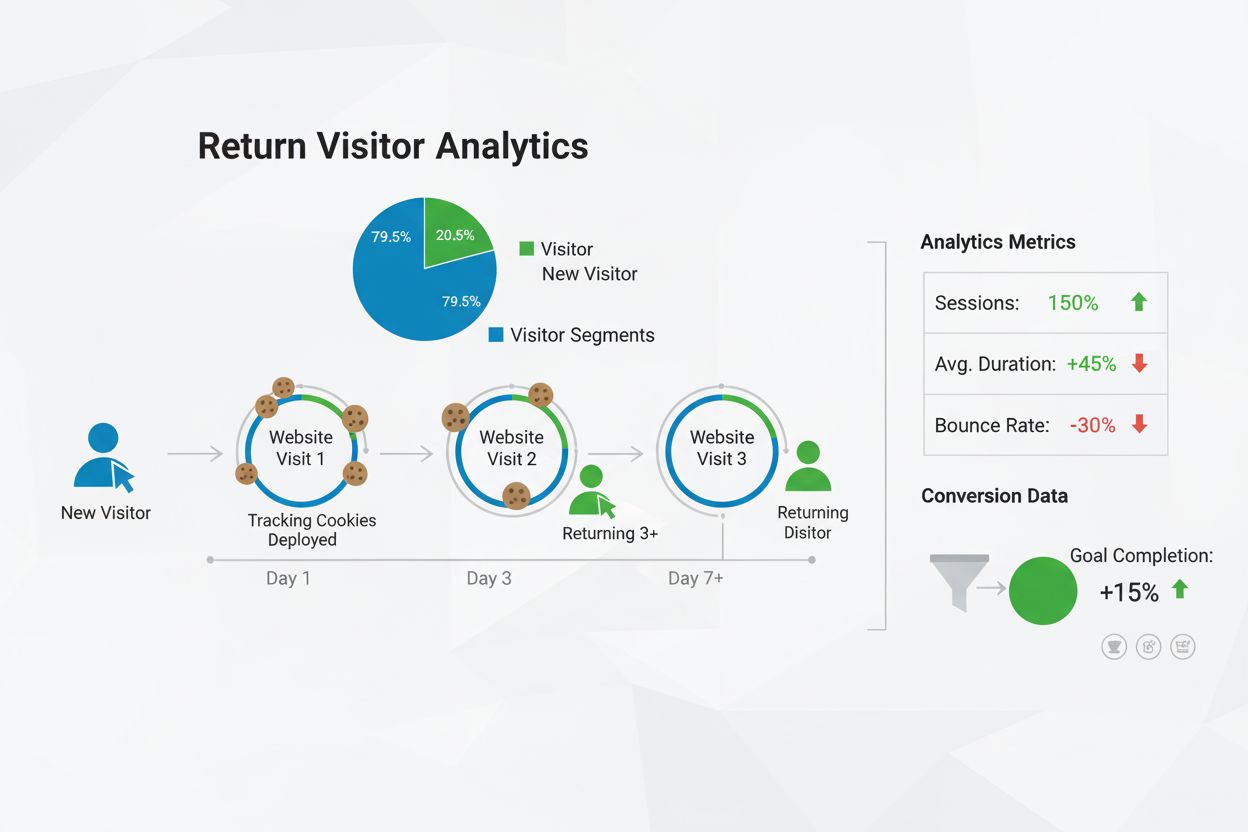
Learn what return visitors are, how they're tracked using cookies and analytics, why they convert 73% more than new visitors, and their strategic importance for...
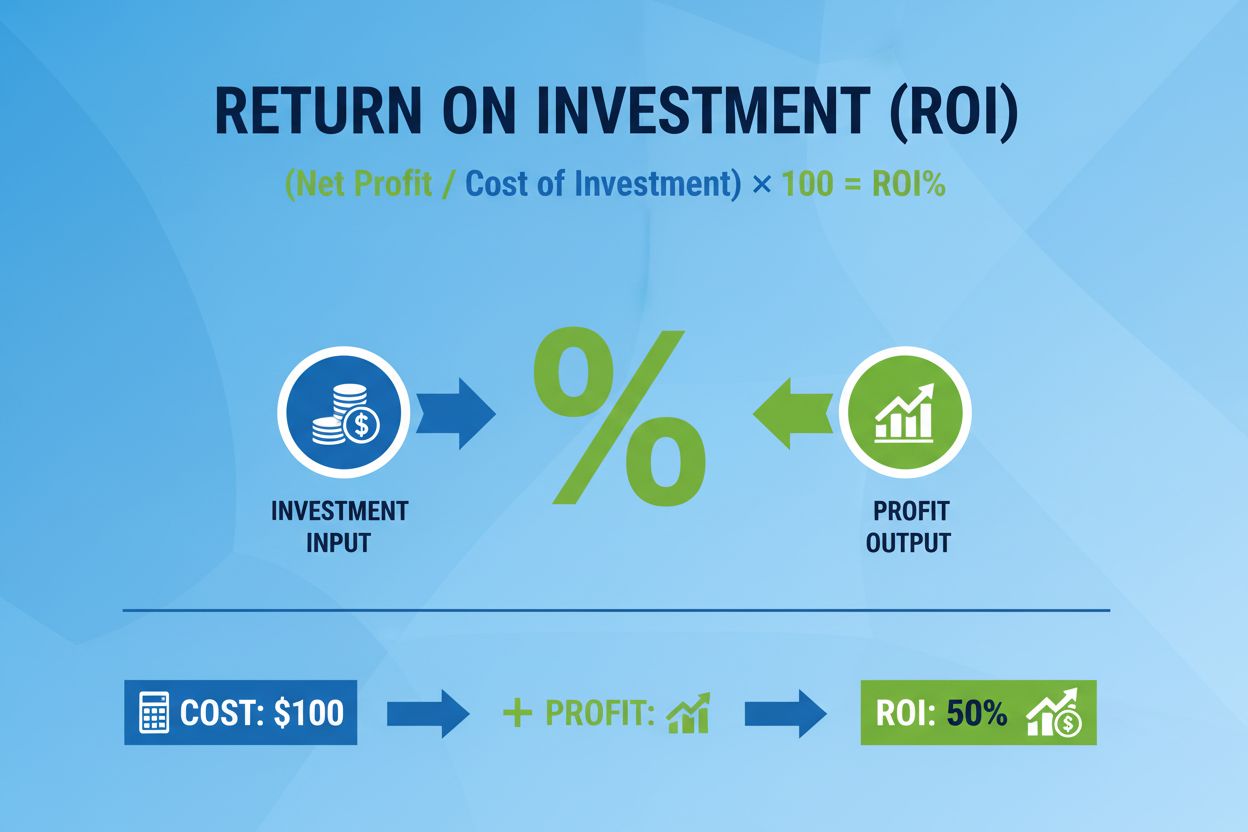
Learn what ROI (Return on Investment) means, how to calculate it, and why it matters for measuring investment profitability. Comprehensive guide with formulas a...