
AI Citation Threshold
Learn what AI citation thresholds are, how they work across ChatGPT, Perplexity, and Google AI Overviews, and strategies to meet them for better AI visibility.
12 min read
The minimum review count (typically 50+) needed on platforms like G2 and Capterra for consistent AI citation. This threshold represents the point at which a product gains sufficient credibility signals to be regularly referenced by AI systems like ChatGPT, Perplexity, and Google AI Overviews. Review Platform Threshold is a critical metric in off-page AI visibility strategy, directly impacting how often your brand appears in AI-generated answers.
The minimum review count (typically 50+) needed on platforms like G2 and Capterra for consistent AI citation. This threshold represents the point at which a product gains sufficient credibility signals to be regularly referenced by AI systems like ChatGPT, Perplexity, and Google AI Overviews. Review Platform Threshold is a critical metric in off-page AI visibility strategy, directly impacting how often your brand appears in AI-generated answers.
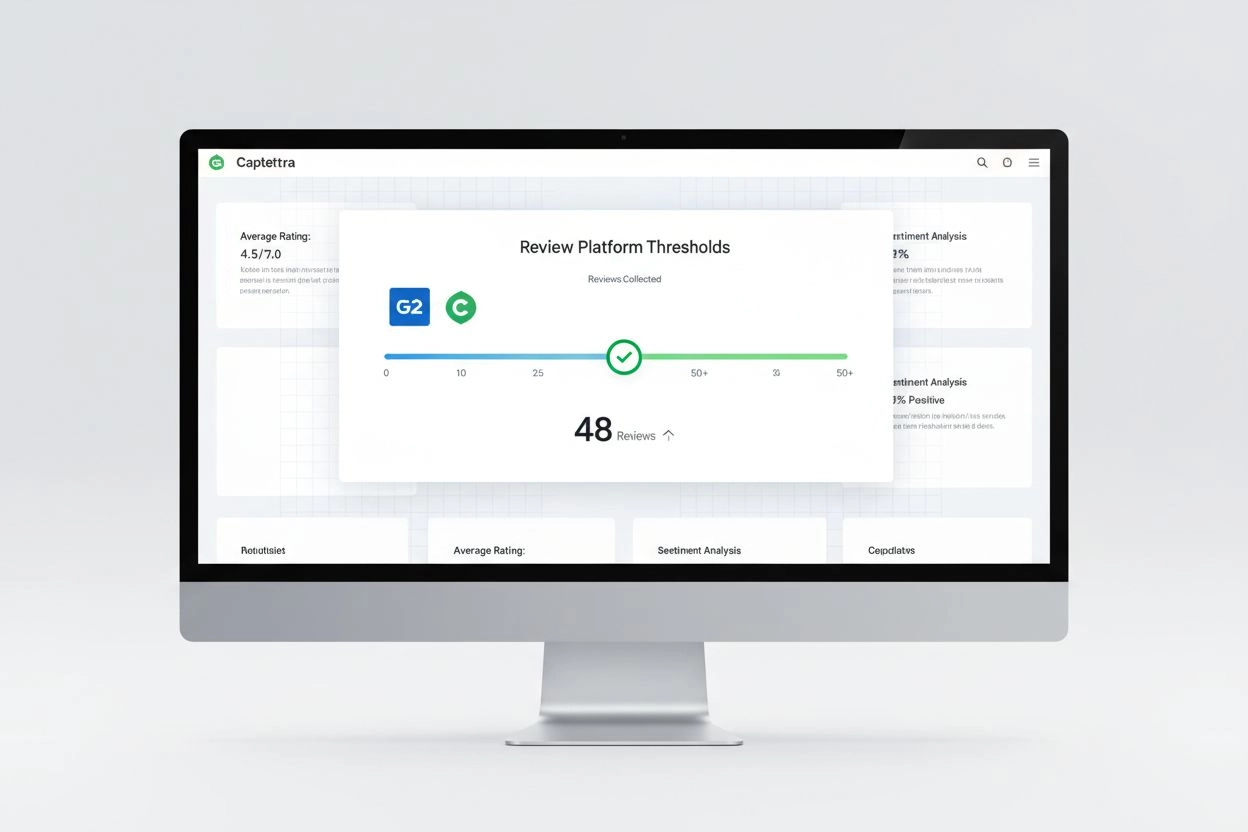
A Review Platform Threshold represents the minimum number of reviews—typically 50 or more—required on platforms like G2 and Capterra for a software product to achieve consistent visibility in AI-generated answers. This threshold acts as a critical credibility signal that artificial intelligence systems use to determine whether a product is established, validated, and trustworthy enough to recommend to users. When your product crosses this threshold, AI systems like ChatGPT, Perplexity, and Google AI Overviews begin citing your platform more frequently in their responses. The threshold isn’t arbitrary; it represents the point where customer validation becomes statistically significant enough for AI models to recognize your product as a legitimate market player. Understanding and reaching this threshold has become essential for any software company seeking visibility in the AI-driven discovery landscape.
Research from G2 and independent analysts reveals compelling data about why the 50+ review benchmark matters. Kevin Indig’s analysis of 30,000 AI citations found that categories with 10% more reviews experience approximately 2% more citations from AI systems—a small but reliable correlation that compounds over time. The threshold of 50 reviews represents a tipping point where AI models begin to treat your product as having sufficient market validation. This isn’t just about quantity; review recency plays a crucial role, with reviews from the past 90 days carrying full weight in AI visibility calculations, while older reviews experience exponential decay. G2’s research shows that categories with 100+ total reviews generate Grid reports that AI systems frequently reference, while individual products with 50+ reviews see significantly higher citation rates across ChatGPT, Perplexity, and Google AI Overviews.
| Metric | Impact on AI Visibility |
|---|---|
| 50+ reviews | Baseline for consistent AI citations |
| 100+ reviews | Eligible for Grid reports and category rankings |
| 10% review increase | ~2% increase in AI citations |
| Reviews 0-90 days old | Full weight in AI visibility calculations |
| Reviews 90+ days old | Exponential decay begins |
| Verified buyer reviews | Higher weighting than unverified |
The decay factor is particularly important: reviews lose influence over time, with those older than 90 days experiencing moderate decay and reviews beyond 12 months carrying minimal weight. This means reaching 50 reviews through a single campaign provides temporary visibility—maintaining the threshold requires consistent, ongoing collection.
Different review platforms apply slightly different algorithms, though the 50+ benchmark remains consistent across major platforms:
G2: Requires 50+ reviews for meaningful AI visibility; emphasizes review recency (90-day window) and verified buyer status. G2’s algorithm weights recent, detailed reviews from verified customers most heavily, making quality and freshness critical.
Capterra: Similar 50+ threshold with different weighting; focuses on detailed, substantive feedback. Capterra’s algorithm values comprehensive reviews that address specific use cases and implementation experiences.
TrustRadius: Emerging platform with lower initial thresholds but growing AI citation influence; emphasizes detailed, technical reviews from verified professionals in the industry.
GetApp: Different algorithmic approach that sometimes shows lower correlation with AI citations compared to G2, though still valuable for overall visibility strategy.
SoftwareAdvice: Moderate threshold with selective AI crawler access; useful for specific verticals but less dominant in AI citations than G2.
Monitoring your progress across these platforms is essential. AmICited.com provides real-time tracking of your review counts and AI citation performance, helping you understand which platforms drive the most AI visibility for your specific product category.
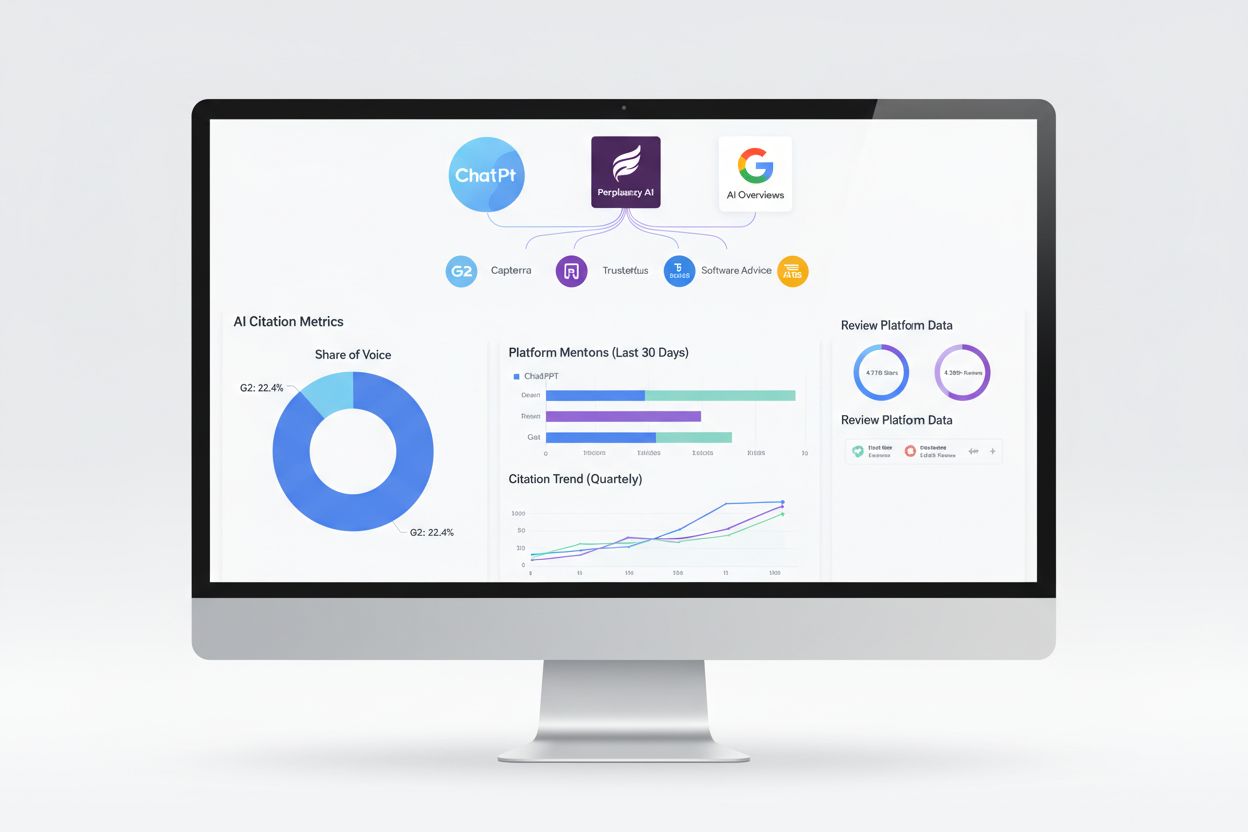
Reaching the Review Platform Threshold directly translates to increased visibility in AI-generated answers. G2 dominates AI citations with 22.4% share of voice across ChatGPT, Perplexity, and Google AI Overviews—meaning roughly one in five software-related AI citations reference G2. When your product reaches 50+ reviews on G2, you become part of this highly-cited ecosystem. Products in categories with 150+ total reviews qualify for Grid reports, which AI systems frequently reference when answering comparative questions like “What’s the best project management tool for small teams?”
The impact extends beyond raw citation count. Verified buyer reviews carry significantly more weight than unverified feedback, meaning a product with 50 verified customer reviews will see more AI citations than one with 50 mixed reviews. Additionally, the quality of reviews matters—detailed, substantive feedback that addresses specific use cases receives higher algorithmic weighting than brief, generic praise. This means your threshold strategy should focus not just on reaching 50 reviews, but on ensuring those reviews come from verified customers and contain meaningful detail about the product’s capabilities and implementation.
Successfully reaching the 50+ review threshold requires a strategic, systematic approach rather than one-time campaigns. Consistent, ongoing collection outperforms sporadic campaigns because review decay means yesterday’s reviews lose impact over time. The most effective strategy involves integrating review collection into your regular customer success processes—requesting feedback at natural touchpoints like onboarding completion, feature adoption milestones, or renewal periods.
Incentivized reviews can accelerate progress, but organic reviews carry algorithmic advantages. The optimal approach balances both: use incentive programs to jumpstart collection, but simultaneously build organic collection processes that generate unbiased feedback. When customers voluntarily leave reviews without incentives, AI systems recognize these as more credible signals. Review quality trumps quantity—a product with 50 detailed, substantive reviews will outperform one with 100 generic one-liners in AI visibility metrics.
Timing matters significantly. Concentrating review collection efforts during product launches, major feature releases, or customer success milestones creates natural momentum. However, maintaining the threshold requires consistent monthly collection—even 5-10 reviews monthly keeps your product above the threshold and ensures fresh reviews within the critical 90-day window. AmICited.com helps track this progress, showing you exactly how many reviews you need to reach the threshold and monitoring how your review count translates into actual AI citations across ChatGPT, Perplexity, and Google AI Overviews.
The most common mistake is treating the threshold as a destination rather than a baseline. Companies that run intensive review campaigns to reach 50 reviews often experience declining AI visibility months later as those reviews age and decay. Review decay is relentless—reviews lose 30% of their impact annually after the first year, meaning a campaign that generated 50 reviews twelve months ago now provides the visibility equivalent of only 35 reviews. This is why consistent collection beats one-time campaigns.
Category misattribution represents another significant pitfall. When customers submit reviews, they must select the correct product category. If your CRM tool gets reviewed in the “Project Management” category instead of “CRM,” those reviews don’t contribute to your visibility in the right category. Guiding customers through the review submission process and ensuring proper categorization is critical.
Fake or low-quality reviews damage long-term visibility. While they might temporarily inflate your count, AI systems and platform algorithms increasingly detect and penalize inauthentic feedback. Additionally, ignoring negative reviews is counterproductive—responding professionally to criticism demonstrates engagement and actually improves your overall credibility signal. Products with balanced review profiles (some negative feedback addressed constructively) often see better AI citations than those with suspiciously perfect ratings.
Finally, failing to monitor your progress means missing opportunities to optimize. Without visibility into your review count, decay rate, and AI citation performance, you can’t make data-driven decisions about collection strategy. Tools like AmICited.com provide the monitoring infrastructure necessary to understand whether your efforts are moving the needle on actual AI visibility.
A Review Platform Threshold is the minimum number of reviews (typically 50+) required on platforms like G2 and Capterra for a software product to achieve consistent visibility in AI-generated answers. This threshold acts as a credibility signal that AI systems use to determine whether a product is established and trustworthy enough to recommend to users.
Research from G2 and independent analysts shows that products with 50+ reviews demonstrate sufficient market presence and customer validation. At this threshold, AI systems begin to reliably cite the product in responses. The number correlates with higher share of voice in AI citations and better positioning in AI-generated recommendations.
Once you reach the Review Platform Threshold, your product becomes more visible to AI systems. Studies show that a 10% increase in reviews correlates with approximately 2% increase in AI citations. Products above the threshold appear more frequently in ChatGPT, Perplexity, and Google AI Overviews responses about your category.
Yes, while 50+ reviews is a general benchmark, different platforms weight reviews differently. G2 emphasizes review recency and verified buyers, Capterra focuses on detailed feedback, and TrustRadius values in-depth reviews. However, 50+ reviews across any major platform generally triggers meaningful AI visibility.
Timeline varies based on your customer base size and review collection strategy. Companies with systematic collection processes typically reach 50+ reviews within 3-6 months. However, review decay means you must maintain consistent collection—reviews older than 90 days lose impact, so reaching the threshold is only the beginning.
If your review count drops below the threshold due to review decay or removal, your AI visibility decreases. This is why consistent, ongoing review collection is more effective than one-time campaigns. Maintaining above-threshold status requires continuous effort to generate fresh reviews.
Yes, tools like AmICited.com provide real-time monitoring of your review counts across platforms and track how this impacts your AI citations. You can see exactly how many reviews you need to reach the threshold and monitor your progress toward improved AI visibility.
While 50+ is a general benchmark, some highly competitive categories may require more reviews to achieve meaningful AI visibility. Less competitive niches might see AI citations with fewer reviews. The key is your position relative to competitors in your specific category.
Track how your brand appears across AI search engines and review platforms with AmICited's comprehensive monitoring solution. Understand your review platform threshold progress and optimize for maximum AI visibility.
Learn what AI citation thresholds are, how they work across ChatGPT, Perplexity, and Google AI Overviews, and strategies to meet them for better AI visibility.

Learn what AI content quality thresholds are, how they're measured, and why they matter for monitoring AI-generated content across ChatGPT, Perplexity, and othe...
Discover why 50+ reviews is the critical threshold for AI citation. Learn how review volume impacts LLM recommendations and brand visibility across ChatGPT, Per...
Cookie Consent
We use cookies to enhance your browsing experience and analyze our traffic. See our privacy policy.