

How to Create AI Search Reports for Your Brand
Learn how to create comprehensive AI search reports to monitor your brand visibility across ChatGPT, Perplexity, Gemini, and other AI answer engines. Step-by-st...
11 min read
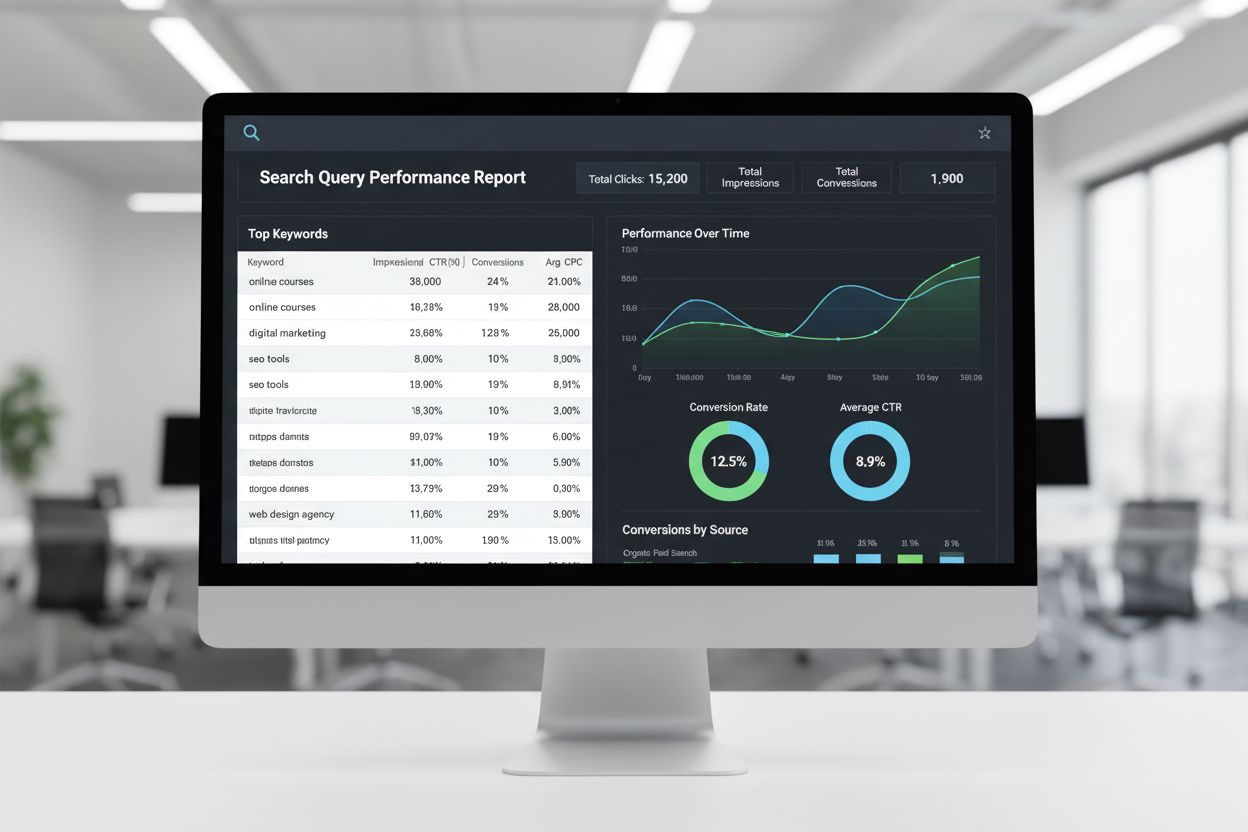
A Search Query Report is a data analytics tool that displays the actual search terms users enter into search engines and their performance metrics, including impressions, clicks, conversions, and cart additions. It provides insights into user search behavior and helps advertisers and brands optimize their visibility and marketing strategies based on real customer search intent.
A Search Query Report is a data analytics tool that displays the actual search terms users enter into search engines and their performance metrics, including impressions, clicks, conversions, and cart additions. It provides insights into user search behavior and helps advertisers and brands optimize their visibility and marketing strategies based on real customer search intent.
A Search Query Report is a comprehensive data analytics tool that captures and displays the actual search terms users enter into search engines and other search platforms, along with detailed performance metrics for each query. This report provides critical insights into user search behavior, search intent, and the effectiveness of marketing campaigns by showing exactly which keywords and phrases drive traffic, clicks, conversions, and sales. The Search Query Report differs fundamentally from keyword lists because it represents real, verified user behavior rather than predicted or estimated search patterns. By analyzing these reports, marketers, advertisers, and brand managers can understand the gap between the keywords they’re targeting and the actual search terms customers use, enabling data-driven optimization of their digital marketing strategies.
Search Query Reports emerged as a critical tool in digital marketing as search engines and advertising platforms recognized the need for transparency between advertiser intent and actual user behavior. Google introduced its Search Terms Report in Google Ads to help advertisers understand which searches triggered their ads, fundamentally changing how PPC campaigns were optimized. Prior to this innovation, advertisers operated largely in the dark, unable to see the exact queries that led to their ad impressions and clicks. The evolution accelerated significantly with the rise of e-commerce platforms like Amazon, which introduced the Search Query Performance (SQP) Report in 2022, providing brand-registered sellers with first-party data on search volume, impressions, clicks, cart additions, and conversions at the search term level. According to industry data, over 78% of enterprises now use AI-driven content monitoring tools to track brand appearances across multiple platforms, making search query data increasingly valuable for competitive intelligence and market positioning.
Search Query Reports function by aggregating and analyzing raw search data from user interactions with search platforms. When a user enters a search query, the search engine records that query along with metadata including the user’s device type, geographic location, time of search, and whether the search resulted in a click or conversion. The system then matches this query against advertiser keywords or brand listings to determine which ads or products were shown. The report aggregates this data across thousands or millions of searches, presenting it in a structured format that shows performance metrics for each unique search term. Modern Search Query Reports employ sophisticated data processing to handle privacy concerns by filtering out low-volume queries (typically fewer than 10 searches) to prevent identification of individual users. The reports also implement close variant matching, which groups similar search terms together—for example, “running shoes,” “runners shoes,” and “athletic footwear” might be grouped as variations of the same search intent. This technical sophistication allows marketers to see patterns in user behavior while maintaining user privacy and data security.
| Platform | Data Source | Key Metrics | Access Requirements | Update Frequency | Historical Data |
|---|---|---|---|---|---|
| Google Ads | Google Search Network & Partners | Impressions, Clicks, CTR, Conversions, CPC | Active Google Ads account | Daily | Up to 2 years |
| Amazon SQP Report | Amazon Marketplace searches | Search Volume, Impressions, Clicks, Cart Adds, Purchases, Market Share | Brand Registry enrollment | Weekly | Up to 30 weeks (7 months) |
| Google Search Console | Organic search results | Clicks, Impressions, CTR, Average Position | Website ownership verification | Daily | Up to 16 months |
| Perplexity/ChatGPT | AI-generated responses | Brand mentions, citation frequency, context | Third-party monitoring tools | Real-time | Varies by tool |
| Bing Ads | Bing Search Network | Impressions, Clicks, CTR, Conversions | Active Bing Ads account | Daily | Up to 2 years |
The strategic value of Search Query Reports extends far beyond simple keyword optimization. By analyzing actual search queries, businesses gain unprecedented insight into customer pain points, market gaps, and emerging trends that might not be apparent from traditional market research. For example, if a Search Query Report reveals that customers frequently search for “eco-friendly running shoes” but your brand doesn’t offer this product, it signals a market opportunity. Additionally, Search Query Reports enable competitive intelligence by showing which search terms drive traffic to competitors’ listings, allowing businesses to identify underserved keywords and market segments. The data also supports product development decisions—if search volume for a particular query is high but conversion rates are low, it might indicate that existing products don’t adequately address that customer need. Research shows that companies leveraging Search Query Report data achieve 23-35% improvements in campaign efficiency by reallocating budgets from low-performing keywords to high-intent search terms. Furthermore, these reports provide quantifiable evidence for business cases, helping marketing teams justify budget increases and demonstrate ROI to stakeholders.
Different platforms implement Search Query Reports with varying levels of sophistication and accessibility. Google Ads Search Terms Reports remain the most widely used, providing granular data on which searches triggered ads across Google’s vast network. However, Google’s privacy-first approach means that low-volume queries are increasingly hidden, requiring marketers to work with aggregated data. Amazon’s Search Query Performance Report represents a paradigm shift for e-commerce sellers, offering first-party data that was previously unavailable—sellers can now see exactly which search terms drive impressions, clicks, and conversions for their products, enabling precise optimization of listings and advertising spend. The report’s ability to show market share metrics (comparing a seller’s performance against all competitors for a given search term) provides competitive context that Google Ads lacks. For emerging AI search platforms like Perplexity, Claude, and ChatGPT, Search Query Report equivalents are still developing, but third-party monitoring tools like AmICited are beginning to track how brands appear in AI-generated responses, representing a new frontier in search query monitoring. These AI platforms don’t expose traditional search query data, but monitoring tools can track citation patterns and brand mentions, providing insights into how AI systems reference and recommend brands.
Understanding the metrics within a Search Query Report is essential for effective optimization. Search Volume represents the total number of times a particular search term was entered during the reporting period, indicating demand and market size for that keyword. Impressions show how many times your listing or ad appeared in search results for that query, while Clicks measure actual user interactions with your listing or ad. The Click-Through Rate (CTR), calculated as clicks divided by impressions, indicates how compelling your listing or ad copy is relative to competitors—a low CTR might suggest that your title, description, or positioning needs improvement. Conversion Rate measures the percentage of clicks that resulted in a purchase or desired action, revealing which search terms attract high-intent customers. Cart Adds (on e-commerce platforms) show interest level even if they don’t convert to purchases, providing insight into product appeal. Cost Per Click (CPC) indicates the competitive intensity of a keyword—highly competitive terms typically have higher CPCs. Market Share metrics (available on platforms like Amazon) show your brand’s performance relative to all competitors for a given search term, providing crucial competitive context. Advanced Search Query Reports also include Quality Score (Google Ads) or Relevance Scores that measure alignment between search intent and your offering.
Effective use of Search Query Reports requires a structured approach to data analysis and optimization. First, establish a regular review cadence—weekly or bi-weekly analysis allows you to identify trends and respond quickly to market changes. Segment your data by relevant dimensions such as device type (mobile vs. desktop), geographic location, time period, and campaign type to identify specific optimization opportunities. For example, you might discover that a particular search term converts well on mobile but poorly on desktop, suggesting the need for device-specific optimization. Create negative keyword lists by identifying search terms that generate clicks but no conversions, indicating misalignment between search intent and your offering. Prioritize optimization efforts on high-volume, high-intent keywords that show strong conversion potential but lower market share—these represent the best opportunities for ROI improvement. Use Search Query Report data to inform your keyword strategy, identifying gaps between your current keyword list and actual customer search behavior. Implement A/B testing based on insights from the report—if a search term shows high volume but low CTR, test new ad copy or listing titles to improve performance. Finally, establish benchmarks and KPIs based on your industry and competitive landscape, using Search Query Report data to track progress toward these goals over time.
The landscape of Search Query Reports is evolving rapidly, driven by technological advancement and changing user behavior. The rise of AI-powered search through platforms like ChatGPT, Perplexity, and Google’s AI Overviews is fundamentally changing how users discover information and products, creating new challenges and opportunities for brand visibility. Traditional Search Query Reports from Google and Amazon will likely continue to evolve, with increased emphasis on privacy-preserving data aggregation and AI-assisted insights that automatically identify optimization opportunities. Emerging platforms are developing their own equivalents of search query data, though with different structures reflecting their unique architectures—for example, AI search platforms may track “citation queries” (searches that result in brand mentions in AI responses) rather than traditional click-through data. The integration of voice search and conversational search is expanding the types of queries captured in reports, with longer, more natural language queries becoming increasingly common. Industry experts predict that Search Query Reports will increasingly incorporate intent classification powered by machine learning, automatically categorizing queries by user intent (informational, navigational, transactional) to enable more sophisticated optimization strategies. Additionally, the convergence of Search Query Report data with other analytics sources—such as customer journey data, social listening, and competitive intelligence—will provide increasingly holistic views of market dynamics. For brands and marketers, staying ahead of these changes requires continuous learning and adaptation, with Search Query Report analysis becoming an even more central component of data-driven marketing strategy.
A search query is the actual word or phrase a user types into a search engine when looking for something, while a keyword is what advertisers bid on in their ad accounts. For example, if someone searches for 'best running shoes for marathons,' that's the search query. An advertiser might bid on the keyword 'running shoes' to potentially show their ad for that search. Search queries are real user behavior data, while keywords are strategic targeting choices made by marketers.
Search Query Reports are critical for AI monitoring because they reveal exactly how users search for and discover brands across platforms like Google, Amazon, and other search networks. For brand tracking, these reports show which search terms lead to brand visibility, clicks, and conversions, helping companies understand their market position. In the context of AI search monitoring platforms like AmICited, understanding search queries helps track when and how brands appear in AI-generated responses and search results.
A comprehensive Search Query Report typically includes search volume (total number of searches for a term), impressions (how many times your listing appeared), clicks (user interactions with your listing), click-through rate or CTR (percentage of impressions that resulted in clicks), cart additions, conversion rate, and purchase data. Some reports also include cost-per-click (CPC), average position, and market share metrics that compare your performance against competitors.
Businesses can use Search Query Report data to identify high-performing keywords worth investing more in, discover new keyword opportunities based on actual user searches, add irrelevant search terms as negative keywords to reduce wasted ad spend, optimize product listings and ad copy to match user intent, and understand seasonal trends in search behavior. This data-driven approach helps allocate marketing budgets more efficiently and improve overall return on investment (ROI).
Zero-click searches are instances where users find the information they need directly on the search results page without clicking through to any website. Search Query Reports help identify which search terms result in zero-click behavior, allowing marketers to adjust their strategies. For example, if a search query consistently shows zero clicks, it might indicate that featured snippets or knowledge panels are satisfying user intent, prompting marketers to optimize for those SERP features instead.
Each platform's Search Query Report reflects its unique ecosystem. Google Ads Search Terms Reports show queries from Google Search Network and partner sites. Amazon's Search Query Performance Report provides first-party data on brand visibility, clicks, and conversions specific to Amazon's marketplace. Emerging AI search platforms like Perplexity and ChatGPT are beginning to offer similar insights into how brands appear in AI-generated responses, representing a new frontier in search query monitoring.
Search Query Reports must balance data utility with user privacy. Most platforms aggregate low-volume queries to protect individual user privacy, meaning very specific or rare search terms may not appear in reports. Additionally, platforms implement data privacy standards to ensure personally identifiable information isn't exposed. For brand monitoring purposes, this means reports show aggregated search behavior patterns rather than individual user data, which is both a privacy protection and a limitation for granular analysis.
Start tracking how AI chatbots mention your brand across ChatGPT, Perplexity, and other platforms. Get actionable insights to improve your AI presence.
Learn how to create comprehensive AI search reports to monitor your brand visibility across ChatGPT, Perplexity, Gemini, and other AI answer engines. Step-by-st...
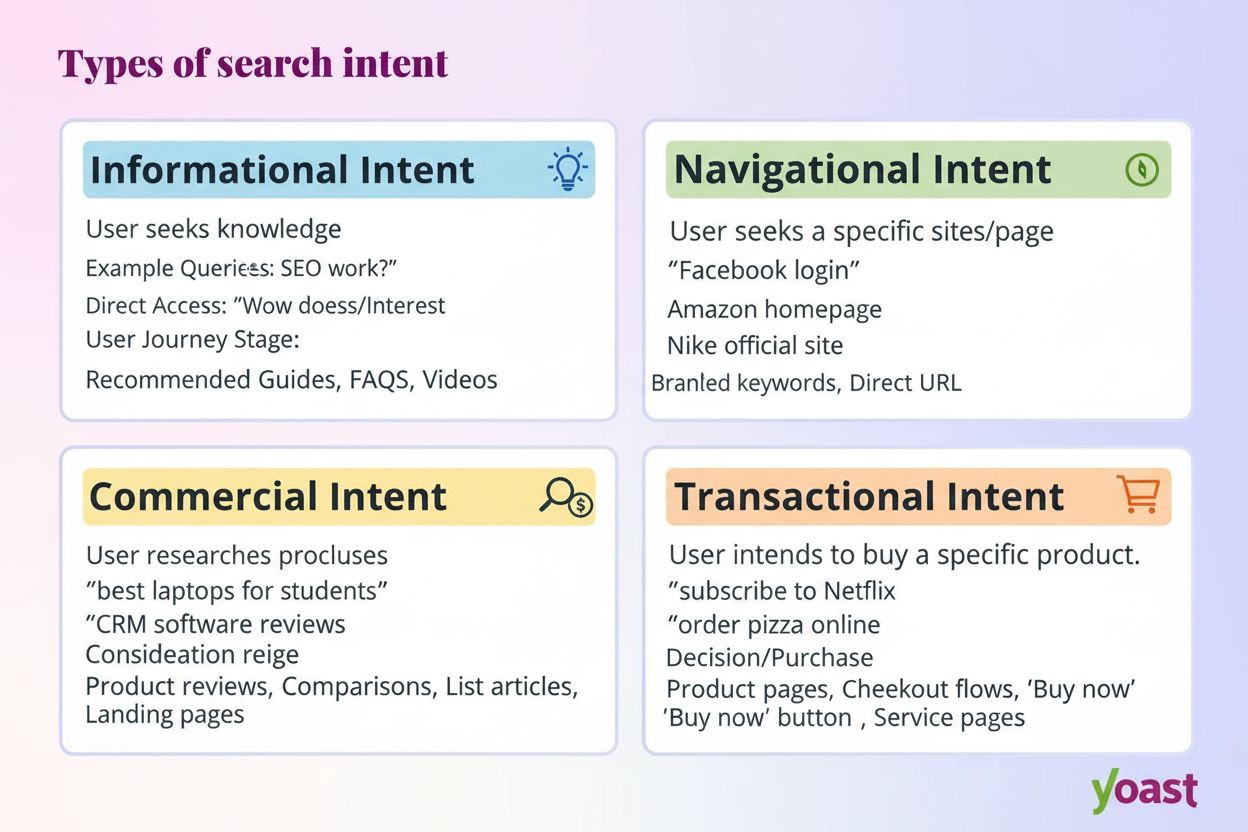
Search intent is the purpose behind a user's search query. Learn the four types of search intent, how to identify them, and optimize content for better rankings...

Learn about AI Query Research Tools - platforms that track and analyze search patterns across ChatGPT, Gemini, Perplexity, and other AI engines. Discover how to...
Cookie Consent
We use cookies to enhance your browsing experience and analyze our traffic. See our privacy policy.