
Negative SEO
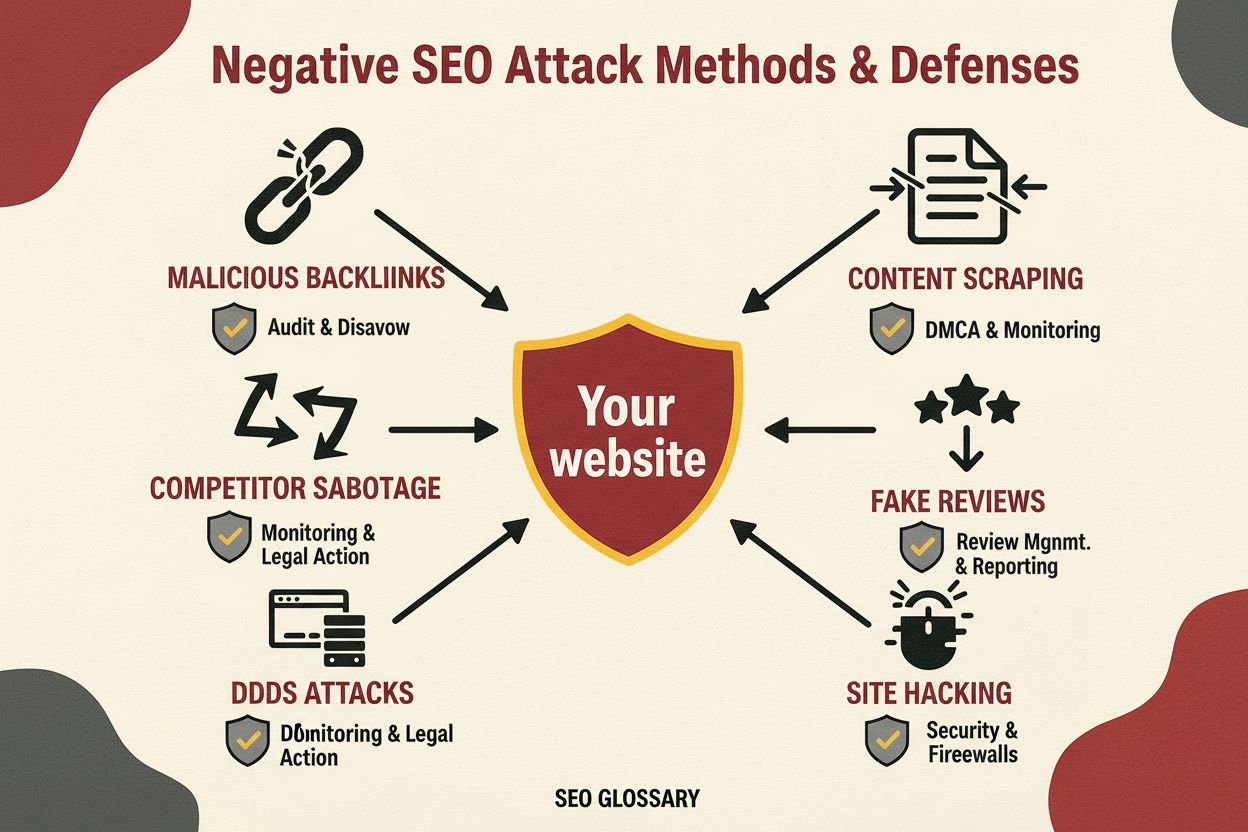
Negative SEO is the practice of using unethical techniques to harm competitor rankings. Learn about attack tactics, detection methods, and how to protect your s...
13 min read

Security issues and website vulnerabilities are weaknesses in a website’s infrastructure, code, or configuration that expose it to cyberattacks, malware, and data breaches, directly damaging search engine rankings, organic traffic, and user trust. When search engines like Google detect security vulnerabilities, they penalize affected websites through ranking suppression, blacklisting, or complete removal from search results, making website security a critical SEO ranking factor.
Security issues and website vulnerabilities are weaknesses in a website's infrastructure, code, or configuration that expose it to cyberattacks, malware, and data breaches, directly damaging search engine rankings, organic traffic, and user trust. When search engines like Google detect security vulnerabilities, they penalize affected websites through ranking suppression, blacklisting, or complete removal from search results, making website security a critical SEO ranking factor.
Security issues and website vulnerabilities represent weaknesses in a website’s infrastructure, code, or configuration that expose it to cyberattacks, malware infections, data breaches, and unauthorized access. These vulnerabilities range from outdated software and weak passwords to unpatched plugins, SQL injection flaws, and cross-site scripting (XSS) vulnerabilities. When search engines like Google detect security vulnerabilities on a website, they treat the site as a threat to user safety and implement severe penalties including ranking suppression, security warnings displayed to users, and in extreme cases, complete removal from search results. This makes website security not merely an IT concern but a critical SEO ranking factor that directly impacts organic visibility, traffic, and revenue. According to industry data, an average of 30,000 websites are hacked daily worldwide, with 43% of attacks targeting small businesses regardless of size or industry. The relationship between security and SEO has become so significant that Google explicitly confirmed HTTPS as a ranking signal in 2014, and continues to prioritize site safety as a quality indicator in its ranking algorithms.
The connection between website security and search engine optimization emerged gradually as search engines evolved their ranking criteria. In the early 2000s, security was primarily an IT concern with minimal SEO implications. However, as Google and other search engines began prioritizing user experience and safety, the landscape shifted dramatically. Google’s Safe Browsing initiative, launched in 2007, marked a turning point by implementing real-time checks of websites for malware, phishing, and other threats. By 2014, Google officially announced that HTTPS/SSL certificates would become a ranking signal, giving websites with encrypted connections a competitive advantage in search results. This announcement signaled that security was no longer optional—it was integral to SEO strategy.
Today, the stakes are higher than ever. Research from Cyber Management Alliance indicates that 57% of organizations now view cybersecurity as a competitive advantage, directly tied to establishing customer trust and maintaining search visibility. The average cost of a data breach has reached $4.45 million globally, according to IBM’s 2024 Data Breach Report, yet many organizations still underinvest in preventive security measures. For websites relying on organic search traffic, the financial impact of a security breach extends far beyond data loss—it includes catastrophic SEO damage, revenue collapse, and months of recovery effort. Studies show that websites experiencing security breaches lose an average of 76% of their ranking keywords, with top 10 positions lost in 88% of cases. This dramatic impact has transformed security from a technical requirement into a strategic business imperative for marketing teams and SEO professionals.
| Vulnerability Type | Attack Method | Primary SEO Impact | Recovery Timeline | Severity Level |
|---|---|---|---|---|
| SQL Injection | Exploiting database queries to inject malicious code | SEO spam injection, unauthorized page creation, data theft | 4-8 weeks | Critical |
| Cross-Site Scripting (XSS) | Injecting malicious scripts into web pages | Malware distribution, user redirection, content manipulation | 2-4 weeks | High |
| Outdated Plugins/Themes | Exploiting known vulnerabilities in unpatched software | Backdoor access, persistent malware, reinfection | 6-12 weeks | High |
| Weak Passwords | Brute force attacks on admin credentials | Complete site takeover, content replacement, blacklisting | 8-16 weeks | Critical |
| Malware Infection | Injecting malicious code into website files | Google blacklisting, traffic collapse, ranking suppression | 6-18 months | Critical |
| Phishing Pages | Creating fake login pages to steal credentials | Manual action penalties, user trust erosion, deindexing | 4-12 weeks | High |
| DDoS Attacks | Overwhelming servers with traffic to cause downtime | Site unavailability, crawl errors, ranking loss | 1-4 weeks | Medium |
| Content Scraping | Copying website content to other domains | Duplicate content penalties, authority dilution | 3-8 weeks | Medium |
| Insecure APIs | Exploiting unprotected application interfaces | Data breach, unauthorized access, compliance violations | 4-10 weeks | High |
| Unencrypted Data | Transmitting sensitive data without HTTPS | User trust loss, ranking penalty, compliance issues | 1-2 weeks | Medium |
Website vulnerabilities create multiple pathways for SEO damage, each with distinct mechanisms and consequences. When attackers exploit SQL injection vulnerabilities, they gain direct access to a website’s database, allowing them to inject malicious code, create unauthorized pages, and manipulate existing content. This injected content typically includes spam keywords targeting pharmaceutical, gambling, or adult industries—content designed to rank in search engines and generate revenue for attackers. Google’s crawlers detect these pages during regular indexing, and the presence of spam content triggers Panda algorithm penalties that degrade the entire site’s quality score. The algorithm interprets the spam as evidence that the site distributes low-quality or deceptive content, causing all pages—even legitimate, high-quality content—to lose ranking authority.
Cross-site scripting (XSS) vulnerabilities operate differently but with equally damaging SEO consequences. XSS flaws allow attackers to inject malicious JavaScript into web pages, which executes in users’ browsers. This injected code can redirect users to malware-distributing sites, display unwanted popups, or hijack user sessions. When Google’s crawlers detect these redirects and malicious behaviors, they flag the site as dangerous and display security warnings to users. The warnings appear before users can access your content, causing 95% of users to abandon the site immediately. This creates a cascading effect: users stop visiting, engagement metrics plummet, bounce rates spike, and Google interprets these signals as evidence of poor user experience, further suppressing rankings.
Malware infections represent the most severe category of security vulnerabilities affecting SEO. Malware can persist in website files for months, continuously injecting spam content, creating backdoors for repeated access, and distributing malicious code to visitors. The infection often remains invisible to site owners while Google’s security systems detect it through behavioral analysis. When malware is detected, Google immediately adds the site to its Safe Browsing blacklist, triggering automatic security warnings for all users arriving from search results. This blacklisting causes organic traffic to collapse by 95% or more within 24-72 hours. Even after cleanup, recovery requires not just removing the malware but also rebuilding Google’s trust in the site—a process that typically takes 6-18 months of active optimization and security monitoring.
The business impact of security vulnerabilities extends far beyond technical metrics—it directly translates to revenue loss, market share erosion, and competitive disadvantage. Consider a mid-sized B2B SaaS company generating 50,000 monthly organic visits with a 3% conversion rate and $5,000 average customer value. This company generates approximately $7.5 million in monthly revenue from organic search. When a security breach occurs and Google blacklists the site, organic traffic collapses to 2,500 visits (95% drop), reducing monthly organic revenue to $375,000. Over a six-month recovery period where traffic averages 50% capacity, the company loses approximately $22.5 million in organic revenue. Adding cleanup costs ($50,000), emergency PPC campaigns ($200,000), and accelerated recovery marketing ($200,000), the total financial impact reaches $22.95 million—a catastrophic loss that many companies cannot absorb.
Beyond direct revenue loss, security breaches create secondary business impacts that compound over time. Customer Acquisition Cost (CAC) skyrockets when organic traffic disappears. Pre-breach, a company might acquire customers at $120 blended CAC (combining organic and paid channels). During and after a breach, with organic traffic eliminated, CAC rises to $400+ as companies rely entirely on paid advertising at emergency bidding rates. This destroys unit economics—if customer lifetime value (LTV) is $600, the pre-breach LTV:CAC ratio of 5:1 crashes to 1.5:1, potentially making customer acquisition unprofitable. Companies must either reduce marketing spend (losing market share) or accept negative unit economics (losing money on each customer).
Competitive dynamics amplify the damage. While your site recovers, competitors continue their SEO efforts, capturing your lost market share, winning your potential customers, and building stronger market positions. A company that ranked #1 for a high-value keyword and drops to #5 doesn’t just lose 4 positions—it loses 70% of clicks. Meanwhile, the competitor who moved to #1 gains those clicks. The swing is double: you lose traffic while competitors gain it. Over a 6-month recovery period, competitors may permanently capture market share, customer relationships, and brand loyalty that never returns to your company. This competitive displacement often proves more damaging than the direct revenue loss from the breach itself.
Security vulnerabilities affect not just traditional search engines but increasingly impact how websites appear across AI platforms like Perplexity, ChatGPT, Google AI Overviews, and Claude. These AI systems crawl and analyze websites to generate responses, and security issues directly influence how your brand and content are represented in AI-generated answers. When a website is blacklisted or flagged for security issues, AI systems may exclude it from their training data or deprioritize it in response generation, reducing your brand’s visibility in AI responses. This creates a compounding visibility problem: your site loses search rankings AND loses AI citations simultaneously.
Google Search Console serves as the primary interface for understanding security issues affecting your SEO. Google displays specific security warnings including “Hacked with spam,” “Hacked with malware,” “Phishing,” and “Pure spam.” Each warning type requires different remediation approaches and has different recovery timelines. Manual action penalties issued through Search Console require explicit reconsideration requests after cleanup, extending recovery time by 1-3 weeks beyond the initial cleanup period. Monitoring Search Console security notifications is essential for early detection—sites that identify breaches within 24 hours typically recover 2-3 weeks faster than those that discover breaches after 1-2 weeks.
WordPress sites face disproportionate security risks affecting SEO. Research shows that 94% of CMS infections occur on WordPress, primarily due to outdated plugins, themes, and core installations. WordPress’s popularity makes it a prime target for attackers, and the ecosystem’s decentralized plugin architecture creates numerous potential vulnerabilities. A single outdated plugin can compromise an entire WordPress installation, injecting malware across all pages and triggering site-wide SEO penalties. This makes WordPress security particularly critical for SEO—a single vulnerability can destroy rankings for thousands of pages simultaneously.
Effective security implementation requires a multi-layered approach that addresses vulnerabilities at every level of website infrastructure. SSL/TLS certificates and HTTPS encryption form the foundation of modern website security and SEO. Google confirmed HTTPS as a ranking signal, and modern browsers display security warnings for non-HTTPS sites. Implementing HTTPS is now non-negotiable for SEO—it’s both a ranking factor and a user trust signal. Organizations should use at least 256-bit encryption and ensure certificates are properly configured and regularly renewed.
Regular security audits and vulnerability scanning identify weaknesses before attackers exploit them. Automated vulnerability scanners can detect outdated software, misconfigurations, and known vulnerabilities. However, automated scanning should be complemented by manual penetration testing, which identifies logic flaws and complex attack chains that automated tools miss. Security audits should be performed quarterly at minimum, with more frequent audits for high-traffic or high-value websites. Results should be documented and tracked to ensure vulnerabilities are remediated within defined timeframes.
Keeping all software updated is critical for preventing exploitation of known vulnerabilities. This includes the CMS (WordPress, Drupal, Joomla), all plugins and themes, server operating systems, and any third-party applications. Developers consistently release security patches to address discovered vulnerabilities, and failing to apply these patches leaves known attack vectors open. For WordPress specifically, 56% of infected sites had outdated software at the time of infection, indicating that many breaches are preventable through basic maintenance. Automated update systems should be implemented where possible, with testing procedures to ensure updates don’t break functionality.
Web Application Firewalls (WAF) provide real-time protection against common attacks including SQL injection, XSS, and DDoS attacks. WAFs analyze incoming traffic, identify malicious patterns, and block requests before they reach your website. Cloud-based WAFs like Cloudflare, AWS WAF, and Sucuri offer additional benefits including DDoS protection, malware scanning, and automatic threat response. WAFs should be configured to block known attack patterns while allowing legitimate traffic, requiring careful tuning to avoid false positives that block real users.
The integration of security into SEO ranking algorithms will only deepen in coming years. Google’s E-E-A-T framework (Experience, Expertise, Authoritativeness, Trustworthiness) increasingly emphasizes trustworthiness, which is directly tied to security. Websites with strong security records, clean malware histories, and robust protection mechanisms will receive trust signals that improve rankings. Conversely, websites with security breach histories will face ongoing algorithmic scrutiny and slower trust recovery, even after cleanup.
AI systems will increasingly factor security into content evaluation and citation decisions. As Perplexity, ChatGPT, Google AI Overviews, and Claude become primary information sources for users, these systems will prioritize citing secure, trustworthy websites. Security breaches will not only damage traditional search rankings but will also reduce AI citations and visibility in AI-generated responses. This creates a dual visibility problem: poor security damages both search engine and AI platform visibility simultaneously. Organizations must monitor their security status across both ecosystems to maintain comprehensive online visibility.
Zero-trust security models will become standard practice, replacing the outdated perimeter-based security approach. Zero-trust assumes that all traffic—internal and external—is potentially malicious and requires verification. This approach, combined with continuous monitoring and behavioral analysis, will detect and prevent breaches faster than traditional security models. Organizations implementing zero-trust security will experience fewer breaches and faster recovery when breaches do occur, creating competitive advantages in SEO performance.
Regulatory compliance will increasingly intersect with SEO performance. GDPR, CCPA, and emerging privacy regulations require strong security measures to protect user data. Non-compliance results in fines, legal liability, and reputational damage—all of which harm SEO. Search engines may begin factoring compliance status into ranking algorithms, making regulatory compliance a direct SEO factor. Organizations must view security and compliance not as separate initiatives but as integrated strategies that protect both legal standing and search visibility.
The future of SEO is inseparable from security. Organizations that treat website security as a core SEO strategy—not an afterthought—will maintain competitive advantages in search visibility, AI citations, user trust, and revenue generation. The cost of proactive security investment (typically $1,200-$6,000 annually) is negligible compared to the cost of breach recovery ($50,000-$500,000+) and lost revenue ($100,000-$5,000,000+). For marketing teams and SEO professionals, security is no longer optional—it’s a fundamental requirement for maintaining and growing organic visibility in an increasingly security-conscious digital landscape.
The most common vulnerabilities include SQL injection, cross-site scripting (XSS), outdated plugins and themes, weak passwords, insecure APIs, and unpatched CMS installations. According to research, 94% of WordPress infections in 2019 occurred on sites with outdated software. These vulnerabilities allow attackers to inject malware, create spam pages, and manipulate content, all of which trigger Google's security warnings and ranking penalties. Regular security audits and timely updates are essential for prevention.
Google typically detects and penalizes hacked websites within 24-72 hours of infection. Search engines display security warnings to users, causing organic traffic to drop by 95% or more almost immediately. Even without visible warnings, Google's algorithms suppress rankings and may deindex pages entirely. The speed of detection depends on crawl frequency and the severity of the security breach, but the impact is nearly instantaneous for most websites.
Algorithmic suppression is automatic and lifts automatically after cleanup (3-7 days), while manual action penalties require human review and can take 1-3 weeks longer to resolve. Manual actions are issued for severe violations like phishing, malware distribution, or SEO spam. Both significantly damage rankings, but manual actions require explicit reconsideration requests through Google Search Console and represent more serious violations of Google's policies.
Full SEO recovery typically takes 6-18 months, depending on breach severity, response quality, and ongoing SEO efforts. Initial recovery (removal of security warnings) takes 1-2 weeks, partial traffic recovery (60-80%) takes 3-6 months, and full recovery requires 6-18 months of active optimization. Some sites never fully recover, especially if they lose significant backlinks or suffer permanent manual penalties. Professional cleanup and aggressive recovery marketing accelerate the process.
Yes, malware significantly degrades Core Web Vitals by injecting malicious scripts that consume server resources and slow page loading. Largest Contentful Paint (LCP) can increase from 2 seconds to 8+ seconds, First Input Delay (FID) can rise from 80ms to 500ms+, and Cumulative Layout Shift (CLS) increases dramatically from injected ads and popups. Since Core Web Vitals are confirmed Google ranking factors, this performance degradation directly damages SEO rankings across all devices.
SEO spam injection occurs when hackers use SQL injection or other vulnerabilities to fill legitimate websites with spammy keywords, links, and auto-generated pages targeting pharmaceutical, gambling, or adult content. This triggers Google's Panda algorithm penalties for thin or duplicate content, reduces site quality scores, and wastes crawl budget on spam pages. The injected content dilutes your site's topical authority and causes all legitimate pages to lose rankings due to overall site quality degradation.
Google blacklisting causes immediate and severe traffic collapse—typically 95% loss within 24-72 hours. Users see security warnings before accessing your site, and most click 'Back to Safety' rather than proceed. Even after cleanup, recovery takes weeks to months as Google recrawls and re-evaluates your site. Blacklisting also damages brand reputation, as users remember the warning and become hesitant to visit even after the issue is resolved, creating long-term CTR problems.
Marketing teams should care because website security directly protects SEO assets worth millions of dollars in organic traffic and revenue. A single security breach can destroy months or years of SEO investment overnight, causing revenue losses of $100,000 to $5,000,000+ depending on organic traffic volume. Security is now a core SEO strategy, not just an IT concern. Proactive security investment has 100:1+ ROI compared to breach recovery costs, making it one of the smartest marketing budget allocations.
Start tracking how AI chatbots mention your brand across ChatGPT, Perplexity, and other platforms. Get actionable insights to improve your AI presence.
Negative SEO is the practice of using unethical techniques to harm competitor rankings. Learn about attack tactics, detection methods, and how to protect your s...

Hacked content is unauthorized website material altered by cybercriminals. Learn how compromised websites affect SEO, AI search results, and brand reputation wi...
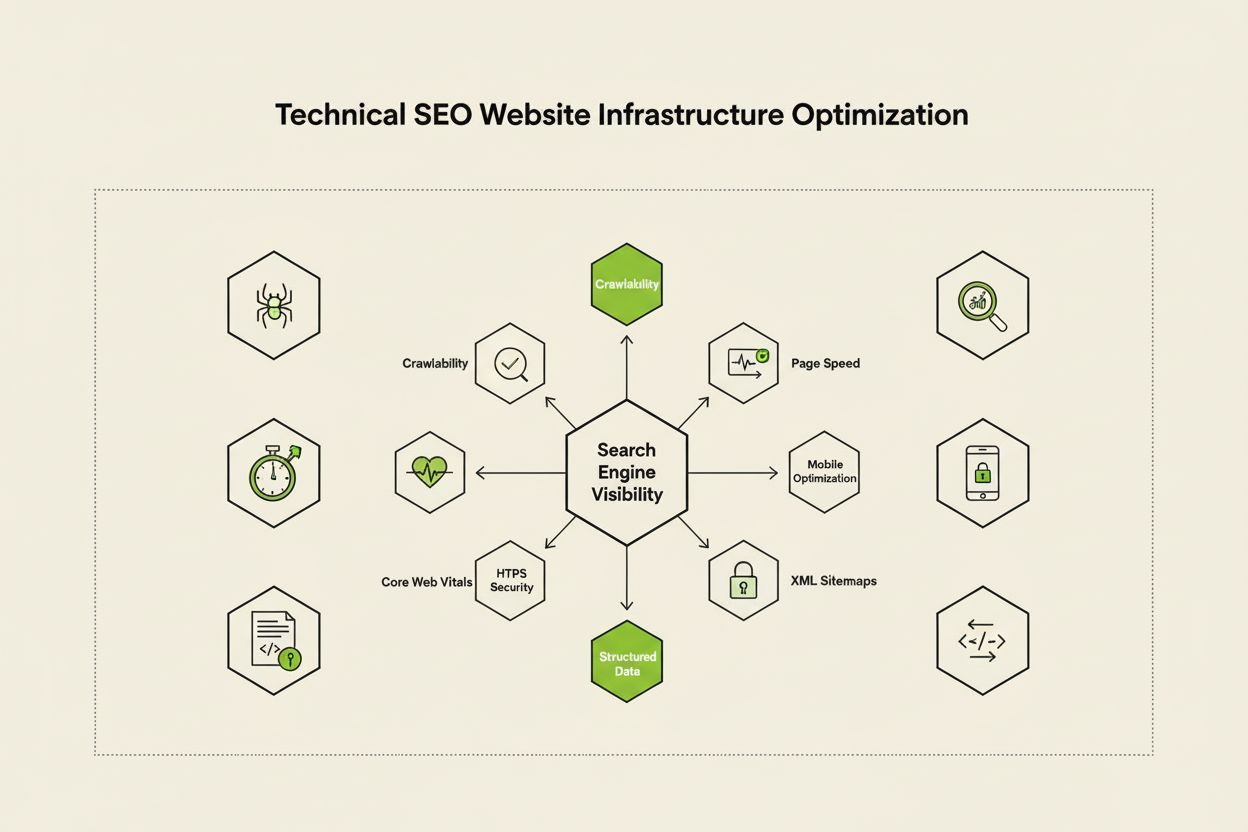
Technical SEO optimizes website infrastructure for search engine crawling, indexing, and ranking. Learn crawlability, Core Web Vitals, mobile optimization, and ...
Cookie Consent
We use cookies to enhance your browsing experience and analyze our traffic. See our privacy policy.