
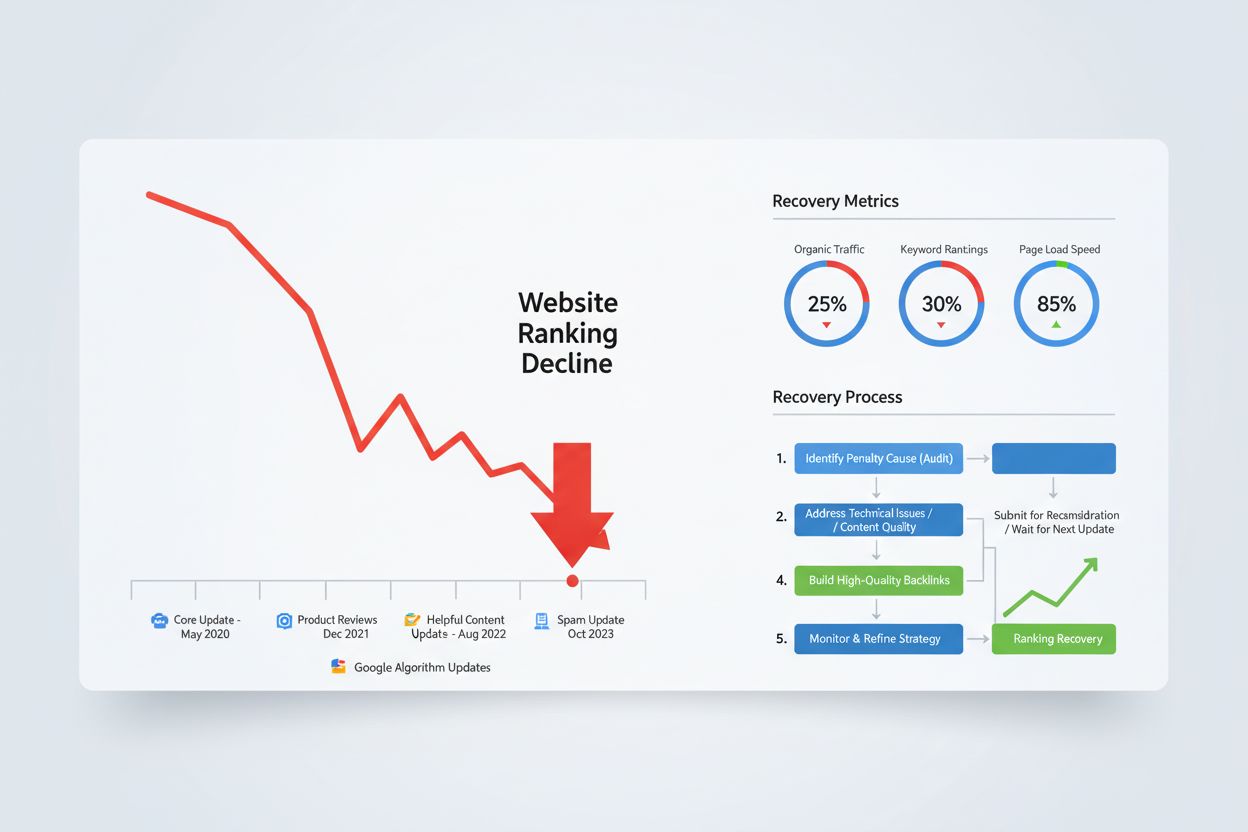
Algorithmic Penalty
Learn what algorithmic penalties are, how they differ from manual penalties, and discover proven strategies to detect and recover from ranking drops caused by G...
9 min read
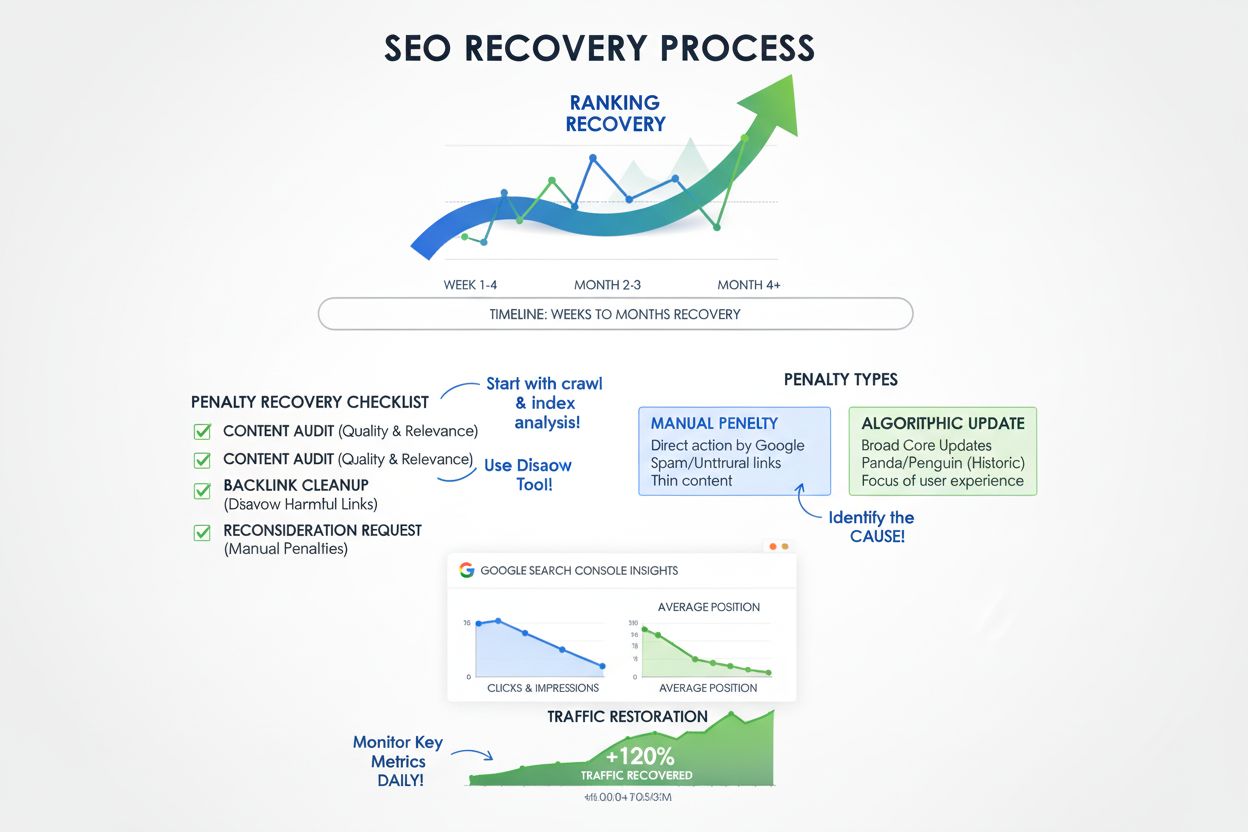
Recovery is the strategic process of identifying, diagnosing, and resolving SEO penalties or algorithm update impacts to restore a website’s search rankings and organic traffic. It involves conducting comprehensive audits, implementing corrective measures, and rebuilding trust with search engines through compliance with guidelines and quality improvements.
Recovery is the strategic process of identifying, diagnosing, and resolving SEO penalties or algorithm update impacts to restore a website's search rankings and organic traffic. It involves conducting comprehensive audits, implementing corrective measures, and rebuilding trust with search engines through compliance with guidelines and quality improvements.
Recovery in SEO refers to the comprehensive process of identifying, diagnosing, and resolving penalties or algorithm update impacts to restore a website’s search rankings and organic traffic. When a website experiences a sudden drop in rankings due to a Google penalty or algorithm update, recovery involves conducting thorough audits, implementing corrective measures, and systematically rebuilding trust with search engines. This process requires both technical expertise and strategic planning, as different types of penalties demand different recovery approaches. Recovery is not a one-time fix but rather a sustained effort to ensure compliance with search engine guidelines while improving overall site quality and user experience.
The importance of recovery cannot be overstated in today’s competitive digital landscape. Over 400,000 manual penalties are issued by Google monthly, and countless additional websites are affected by algorithmic penalties from core updates. A website that fails to recover from a penalty faces prolonged visibility loss, reduced organic traffic, and significant revenue impact. Understanding the recovery process and implementing it correctly can mean the difference between temporary setback and permanent damage to a brand’s online presence.
Recovery strategies differ fundamentally based on the type of penalty affecting your website. Manual penalties are issued by Google’s human reviewers when they detect violations of Webmaster Guidelines, such as unnatural links, thin content, cloaking, or manipulative redirects. These penalties appear as explicit notifications in Google Search Console, making them easier to identify and address. Algorithmic penalties, conversely, result from automated algorithm updates like Google Penguin (targeting link quality) or Google Panda (targeting content quality), and are detected through traffic analysis rather than direct notification.
The distinction between these penalty types is crucial because recovery timelines and strategies vary significantly. Manual penalties typically resolve within 10-30 days after implementing fixes and submitting a reconsideration request, while algorithmic penalties can persist for 3-6 months or longer. Recent updates like the March 2024 Core Update and May 2024 Update have introduced stricter measures, particularly targeting low-quality content, AI-generated content at scale, and websites with poor user experience signals. Understanding which type of penalty has affected your site is the foundational step in developing an effective recovery strategy.
The recovery process begins with penalty identification and analysis. This involves checking Google Search Console for manual action notifications, reviewing Google Analytics for traffic anomalies, and correlating ranking drops with known algorithm update dates. Tools like Moz’s algorithm change tracker and Panguin Tool help identify which specific updates may have impacted your site. Once you’ve identified the penalty type, the next phase involves conducting a comprehensive SEO audit to uncover technical issues, content problems, and backlink quality concerns. This audit should examine on-page SEO factors, site structure, mobile optimization, page speed, and indexation status.
Following the audit, content remediation becomes critical. This involves removing thin or low-value content, consolidating pages targeting similar keywords, improving existing content to meet user intent, and eliminating duplicate content. For websites affected by helpful content updates, this step is particularly important—studies show that websites removing unhelpful content see measurable traffic improvements within weeks. Simultaneously, backlink cleanup must occur through identifying and requesting removal of low-quality links, disavowing remaining problematic backlinks, and building new high-quality links from authoritative sources. The final phase involves submitting a reconsideration request (for manual penalties) or monitoring recovery progress (for algorithmic penalties) while continuing to implement best practices to prevent future penalties.
| Recovery Factor | Manual Penalty Recovery | Algorithmic Penalty Recovery | Core Update Recovery |
|---|---|---|---|
| Identification Method | GSC Manual Actions notification | Traffic drop analysis + date correlation | Traffic drop + algorithm update timeline |
| Primary Cause | Guideline violations (links, content, cloaking) | Link quality or content quality issues | Overall site quality, E-E-A-T signals |
| Initial Action | Identify specific violation | Audit content and backlink profile | Content audit and quality assessment |
| Recovery Timeline | 10-30 days post-reconsideration | 3-6 months minimum | 3-6+ months (until next core update) |
| Key Recovery Step | Reconsideration request submission | Content improvement + link cleanup | Content overhaul + technical fixes |
| Success Indicator | GSC notification removal | Ranking and traffic restoration | Sustained traffic improvement |
| Monitoring Tools | GSC Manual Actions | Analytics, GSC, rank tracking tools | Analytics, GSC, AI monitoring platforms |
| Prevention Strategy | Guideline compliance audit | Quality content + ethical link building | E-E-A-T focus + user experience optimization |
Effective recovery requires a methodical technical diagnosis before implementing fixes. Begin by verifying that Google Analytics tracking is properly installed using the Google Analytics Debugger Chrome extension—surprisingly, many apparent penalties are actually tracking issues. Next, examine Google Search Console comprehensively: check the Manual Actions section for explicit penalties, review the Coverage report for indexation issues, and examine the Experience section for Core Web Vitals problems, HTTPS issues, and page experience metrics. Document any errors or warnings, as these often indicate the root causes of ranking drops.
A content audit should identify pages with minimal traffic, thin content, or poor keyword relevance. Tools like Surfer SEO provide SERP analysis and content recommendations, helping you understand how your content compares to top-ranking competitors. This audit should also identify duplicate content using tools like Copyscape and assess whether AI-generated content has been deployed at scale. For backlink analysis, use Google Search Console’s Links report combined with third-party tools like Ahrefs or Moz to compile a comprehensive backlink profile. Evaluate each link’s quality based on domain authority, relevance, anchor text naturalness, and placement context. Tools like Monitor Backlinks streamline this evaluation process by scoring links and flagging suspicious patterns.
Content quality is the cornerstone of successful recovery, particularly for websites affected by helpful content updates or core algorithm updates. Google’s 2024 updates explicitly target low-quality content, including thin pages with minimal value, automatically generated content, scraped content, and AI-generated content deployed at scale without editorial oversight. During recovery, every page should be evaluated against the question: “Does this page provide genuine value to users?” Pages that fail this test should be either significantly improved or removed entirely.
Research demonstrates that websites implementing comprehensive content improvements as part of recovery see dramatic traffic increases. One case study showed a 201.94% increase in organic traffic and 158.46% increase in organic revenue after addressing content quality issues in a weight loss supplements niche. Another e-commerce health brand achieved a 240.33% increase in organic traffic and 438.02% increase in organic revenue through content optimization combined with technical SEO improvements. These results underscore that content quality isn’t just a recovery tactic—it’s the foundation of sustainable search visibility. During recovery, prioritize creating comprehensive, well-researched content that thoroughly addresses user search intent, includes relevant examples and data, and demonstrates expertise and authority in your niche.
Backlink cleanup is essential for recovery from link-based penalties or when your link profile contains suspicious patterns. The process begins with comprehensive backlink identification using multiple sources: Google Search Console’s Links report, Ahrefs, Moz, and Monitor Backlinks. This multi-source approach ensures you don’t miss problematic links. Once compiled, evaluate each link using criteria including domain authority, topical relevance, anchor text naturalness, and placement context. Links from low-authority sites, with over-optimized anchor text, or from unrelated niches are candidates for removal.
The removal process involves two phases: outreach and removal requests, followed by disavowal of non-responsive links. When contacting site owners, use tools like Hunter.io to find contact information and BuzzStream to manage outreach campaigns. Be polite and professional—site owners are helping you by removing links. For links where owners don’t respond after 2-3 follow-ups, use Google’s Disavow Tool to inform Google that these links shouldn’t be counted against your site. According to industry data, approximately 78% of enterprises now use backlink monitoring tools as part of their ongoing SEO strategy, recognizing that link profile health is critical to avoiding penalties. After cleanup, focus on building high-quality links from authoritative, topically relevant sources through ethical link-building strategies.
For websites affected by manual penalties, submitting a reconsideration request is the critical final step in recovery. This request should be comprehensive, honest, and demonstrate genuine effort to resolve violations. Begin by clearly explaining what violations occurred—whether unnatural links, thin content, cloaking, or other guideline violations. Provide specific examples of problematic pages or links, explaining why they violated guidelines. Next, detail the exact steps taken to fix each issue: links removed, pages improved or deleted, technical issues resolved, and policy changes implemented to prevent recurrence.
Include evidence supporting your claims: screenshots of removed content, lists of disavowed links, documentation of content improvements, and metrics showing traffic recovery or quality improvements. The reconsideration request should also include a forward-looking commitment to compliance, explaining how you’ll prevent similar violations in the future. Google typically reviews reconsideration requests within 10-30 days, though response times vary. According to recovery case studies, websites that provide detailed, evidence-backed reconsideration requests see significantly higher approval rates. One notable case involved Halifax Bank, which recovered from a manual penalty by removing unnatural links and 404ing affiliate landing pages, successfully restoring search positions. Another case, Cashlady.com, recovered by removing spammy comments and cleaning unnatural links, demonstrating that thorough cleanup efforts lead to successful recovery.
Effective recovery requires continuous monitoring to track progress and identify emerging issues. Google Search Console should be checked weekly for new manual actions, coverage issues, or experience problems. Google Analytics should be monitored for organic traffic trends, comparing current performance to pre-penalty baselines. Rank tracking tools like SEMrush or Ahrefs help monitor keyword rankings, showing whether specific keywords are recovering and at what pace. Most importantly, establish clear recovery milestones: expect to see initial improvements within 4-6 weeks for manual penalties, and 8-12 weeks for algorithmic penalties, though full recovery may take longer.
Beyond traditional metrics, AI monitoring platforms now provide additional recovery insights by tracking how your brand and content appear in AI-powered search results. Platforms like Profound and Otterly.ai monitor your presence in ChatGPT, Perplexity, and Google AI Overviews, helping you understand whether your recovery efforts are improving visibility across the entire search ecosystem. This is particularly important as AI search continues to grow—approximately 60% of user queries now receive answers from AI systems without requiring a click to traditional search results. By monitoring AI citations during recovery, you gain a comprehensive view of whether your improved content is being recognized as authoritative across all search channels, not just traditional Google rankings.
Understanding realistic recovery timelines is crucial for managing expectations and maintaining commitment to recovery efforts. Manual penalties typically resolve within 10-30 days after implementing fixes and submitting a reconsideration request, assuming Google’s review team approves your request. However, this timeline assumes you’ve correctly identified and fixed all violations—incomplete fixes may result in rejection and extended recovery periods. Algorithmic penalties follow a different timeline: initial improvements may appear within 4-6 weeks as you implement content and technical fixes, but full recovery often requires 3-6 months or longer, as Google needs to re-crawl your site and re-evaluate it during subsequent algorithm updates.
Industry data shows that approximately 68% of websites implementing comprehensive recovery strategies see measurable improvement within 3-4 months. However, recovery isn’t always linear—traffic may fluctuate as Google re-evaluates your site. One case study documented a website in the coupon codes niche achieving 40% improvement over pre-penalty traffic levels after implementing comprehensive recovery measures. Another gambling niche site achieved a 488.57% increase in organic traffic through addressing technical SEO issues, content enhancement, and focused link building. These results demonstrate that while recovery requires patience and sustained effort, the potential rewards justify the investment. The key is maintaining consistency in implementing best practices rather than expecting immediate results.
While recovery is important, prevention is ultimately more valuable. Establish a continuous compliance monitoring system that regularly audits your site for potential penalty triggers. This includes monthly content audits to identify thin or low-value pages, quarterly backlink audits to catch suspicious link patterns early, and regular technical SEO audits to address Core Web Vitals, mobile optimization, and indexation issues. Subscribe to Google Search Central updates and follow industry resources like Search Engine Journal to stay informed about algorithm changes and guideline updates.
Implement E-E-A-T principles (Expertise, Experience, Authoritativeness, Trustworthiness) throughout your site, particularly for YMYL (Your Money Your Life) content. This involves clearly establishing author credentials, citing authoritative sources, maintaining updated content, and building genuine authority through quality backlinks and brand mentions. Create a content governance policy that prevents low-quality content deployment, establishes editorial standards, and defines when content should be updated or removed. For link building, establish ethical guidelines that prioritize quality over quantity, focusing on relevant, authoritative sources rather than manipulative tactics. By implementing these preventive measures, you significantly reduce the likelihood of future penalties and the need for recovery efforts.
The recovery landscape is evolving as AI search platforms become increasingly important to overall visibility. Traditional recovery focused exclusively on Google rankings, but with ChatGPT, Perplexity, and Google AI Overviews now handling significant search traffic, recovery strategies must now address visibility across multiple platforms. AI systems rely on different ranking signals than traditional search—they prioritize authoritative, well-cited content and may weight brand mentions and citations differently than Google does. This means recovery efforts must now include strategies to improve visibility in AI responses, not just traditional search results.
Future recovery strategies will likely emphasize content comprehensiveness and authority signals even more heavily, as AI systems tend to cite content that thoroughly addresses queries and comes from recognized authoritative sources. The integration of AI monitoring tools into recovery workflows will become standard practice, allowing teams to track recovery progress across the entire search ecosystem. Additionally, as Google continues to refine its helpful content updates and core algorithms, recovery will increasingly focus on demonstrating genuine expertise and user-first design rather than technical optimization alone. Organizations that adapt their recovery strategies to address both traditional and AI search visibility will maintain competitive advantage as the search landscape continues to evolve.
Manual penalties are issued by Google's human reviewers when a website violates Webmaster Guidelines, appearing as notifications in Google Search Console. Algorithmic penalties result from automated algorithm updates like Penguin or Panda, detected through traffic drops. Manual penalties typically require 10-30 days to recover after fixes are submitted, while algorithmic penalties can take 6+ months. Both require different recovery strategies: manual penalties need reconsideration requests, while algorithmic penalties require content and technical improvements to rebuild algorithmic trust.
Recovery timelines vary significantly based on penalty type and severity. Manual action penalties typically resolve within 10-30 days after implementing fixes and submitting a reconsideration request. Algorithmic penalties from core updates can take 3-6 months or longer, as Google needs to re-crawl and re-evaluate your site during subsequent algorithm updates. According to industry data, approximately 68% of websites show measurable improvement within 3-4 months of implementing comprehensive recovery strategies, though full recovery may extend beyond this period.
First, verify the drop is real by checking Google Analytics and Google Search Console for traffic anomalies. Check GSC's Manual Actions section for penalty notifications. Review recent algorithm updates using tools like Moz's algorithm change tracker to correlate timing. Examine your site for technical errors in GSC's Coverage and Experience reports. Finally, document any recent site changes made by your team. This diagnostic phase is critical before implementing any corrective measures to ensure you address the actual cause.
Content quality is fundamental to recovery from algorithm updates, particularly those targeting helpful content. Google's 2024 updates specifically penalize thin, low-value, and AI-generated content at scale. During recovery, you should audit all content for relevance and depth, remove pages that don't meet user intent, consolidate similar topics, and ensure all remaining content provides genuine value. Studies show that websites focusing on content improvement as part of recovery see 40-240% increases in organic traffic, making content quality the cornerstone of successful recovery strategies.
Backlink cleanup is critical for recovery, especially from link-based penalties triggered by Google Penguin or manual link penalties. The process involves identifying low-quality or spammy backlinks using tools like Google Search Console and Ahrefs, requesting removal from site owners, and disavowing remaining problematic links. Research indicates that approximately 78% of enterprises use backlink monitoring tools as part of their recovery strategy. Effective backlink cleanup can significantly accelerate recovery, with some case studies showing 5x traffic increases after comprehensive link profile rehabilitation.
A reconsideration request should include a detailed explanation of the issues that caused the penalty, specific steps taken to fix each problem with evidence (screenshots, links to updated content), documentation of your cleanup efforts, and a commitment to future compliance with Google's guidelines. The request should be honest, transparent, and demonstrate genuine effort to resolve violations. Google typically reviews reconsideration requests within 10-30 days, though response times vary. Including metrics showing improvements (traffic recovery, content updates, backlink removal) strengthens your request significantly.
AI monitoring platforms track how your brand and content appear in AI-powered search results like ChatGPT, Perplexity, and Google AI Overviews during recovery. These tools help measure whether your recovery efforts are improving visibility across AI search channels, not just traditional Google rankings. By monitoring AI citations and mentions during recovery, you can assess whether your improved content is being recognized as authoritative by AI systems. This provides a comprehensive view of recovery success beyond traditional SEO metrics, helping you understand if your recovery strategy is effective across the entire search landscape.
Start tracking how AI chatbots mention your brand across ChatGPT, Perplexity, and other platforms. Get actionable insights to improve your AI presence.
Learn what algorithmic penalties are, how they differ from manual penalties, and discover proven strategies to detect and recover from ranking drops caused by G...

Learn what Google Algorithm Updates are, how they work, and their impact on SEO. Understand core updates, spam updates, and ranking changes.
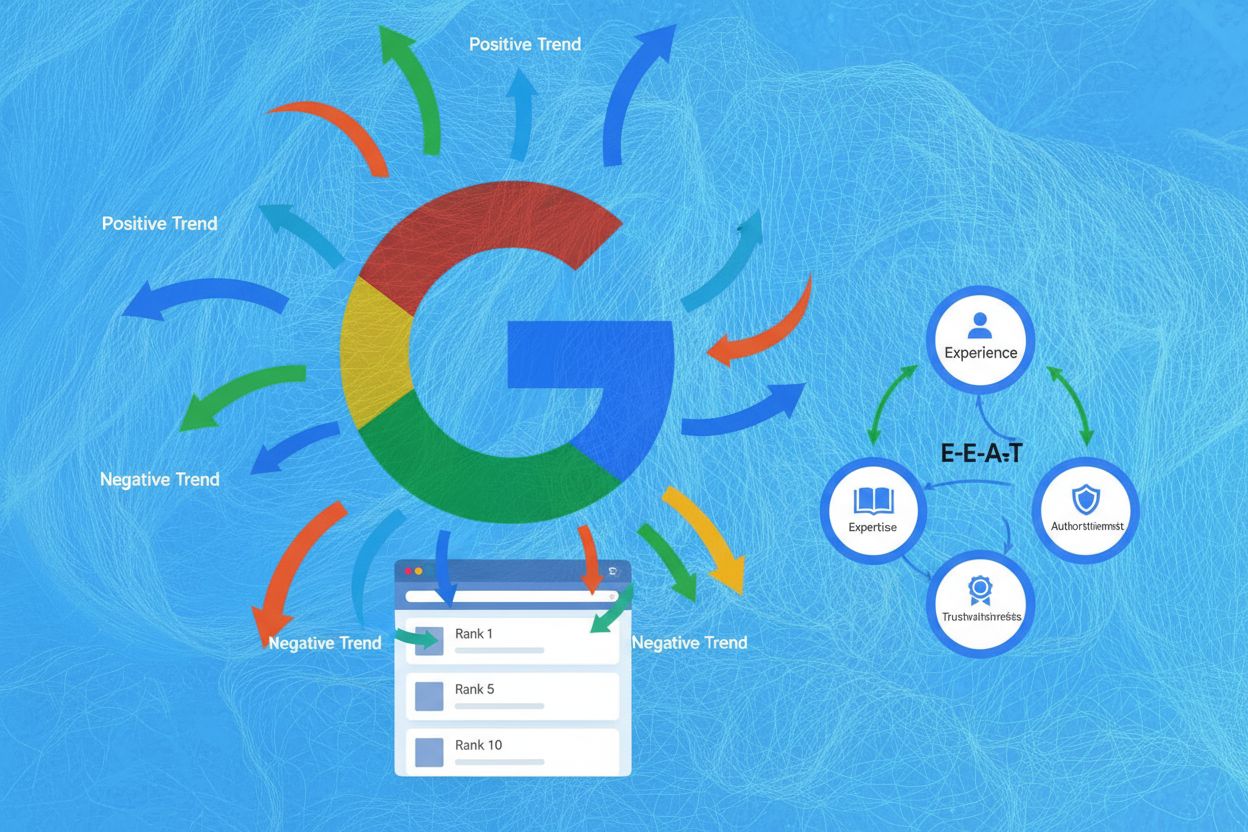
Learn what a Google Core Update is, how it affects website rankings, the difference between core and algorithm updates, and strategies for recovery and long-ter...
Cookie Consent
We use cookies to enhance your browsing experience and analyze our traffic. See our privacy policy.