

How to Optimize Single Page Applications for AI Search Engines
Learn how to optimize SPAs for AI search engines like ChatGPT, Perplexity, and Claude. Discover technical strategies including server-side rendering, prerenderi...
10 min read
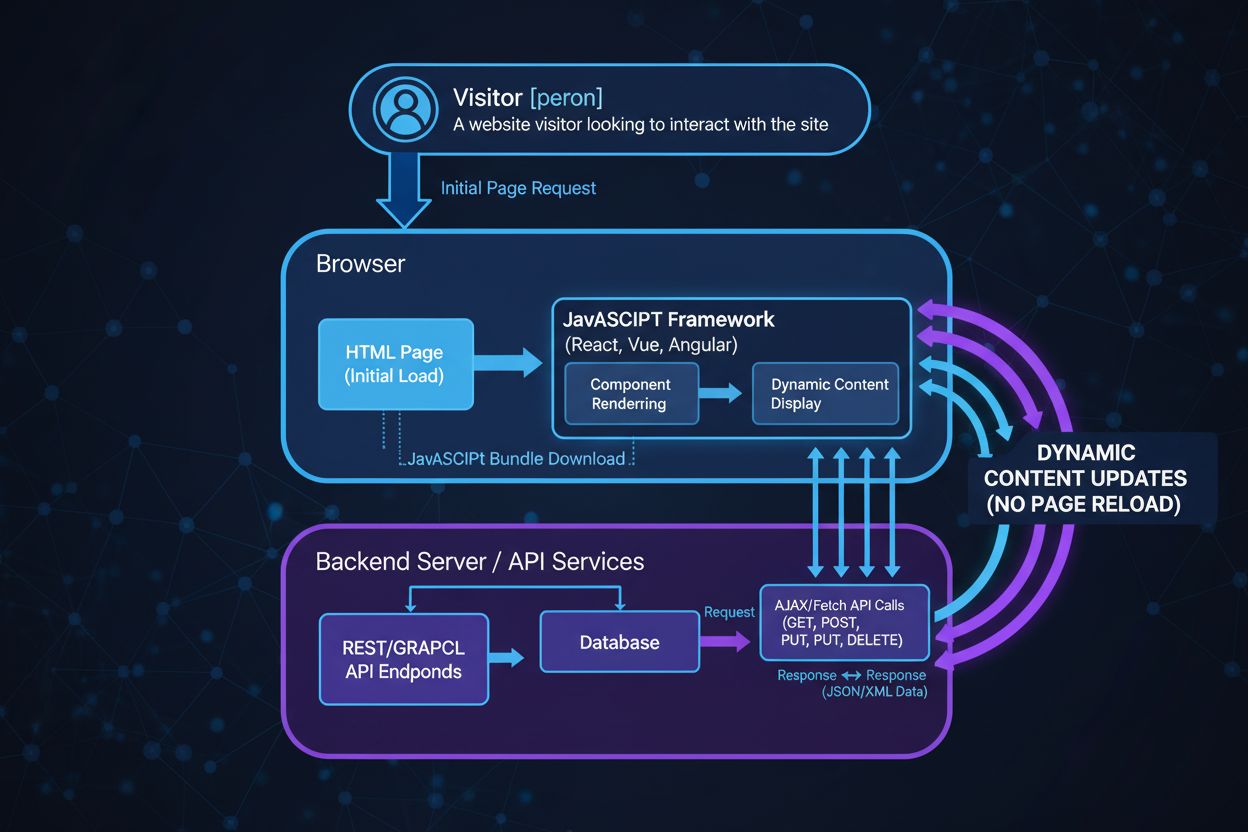
A Single Page Application (SPA) is a web application that loads a single HTML page and dynamically updates content without requiring full page reloads. SPAs use JavaScript frameworks and AJAX to render content on the client-side, providing a seamless, app-like user experience similar to desktop software.
A Single Page Application (SPA) is a web application that loads a single HTML page and dynamically updates content without requiring full page reloads. SPAs use JavaScript frameworks and AJAX to render content on the client-side, providing a seamless, app-like user experience similar to desktop software.
A Single Page Application (SPA) is a web application that loads a single HTML document and dynamically updates its content without requiring full page reloads as users interact with it. Unlike traditional websites that request and load entirely new HTML pages from the server for each user action, SPAs use JavaScript frameworks and AJAX (Asynchronous JavaScript and XML) to fetch only the necessary data and render it on the client-side. This architectural approach creates a seamless, responsive experience that closely resembles desktop applications. The browser loads all essential resources—HTML, CSS, and JavaScript—during the initial page load, and subsequent user interactions trigger only targeted data requests to update specific page sections. Popular examples of SPAs include Gmail, Google Maps, Netflix, Airbnb, Twitter, and Facebook, all of which provide fluid, uninterrupted user experiences without the interruption of traditional page reloads.
SPAs operate through a fundamentally different rendering model compared to traditional multi-page applications. When a user first visits an SPA, the browser requests a single HTML file from the server, which includes links to CSS stylesheets and JavaScript bundles. The server responds with this minimal HTML shell and the necessary JavaScript code. The browser then executes this JavaScript, which renders the user interface and fetches any initial data required from backend APIs. As users interact with the application—clicking links, submitting forms, or scrolling—the JavaScript intercepts these events and makes asynchronous requests to the server for only the data needed to update specific components. The DOM (Document Object Model) is then updated dynamically without reloading the entire page, creating the illusion of instant navigation and responsiveness.
Three primary rendering approaches power modern SPAs: Client-Side Rendering (CSR), Server-Side Rendering (SSR), and Static Site Generation (SSG). Client-Side Rendering, the traditional SPA approach, performs all rendering in the browser using JavaScript. While this minimizes server load and enables rich interactivity, it can result in slower initial page loads and SEO challenges. Server-Side Rendering generates the complete HTML on the server before sending it to the browser, improving initial load times and SEO performance while maintaining the interactive capabilities of SPAs. Static Site Generation pre-renders pages at build time, offering the fastest initial loads but requiring rebuilds for content updates. Modern frameworks like Next.js (for React), Nuxt.js (for Vue), and Angular Universal provide built-in support for these rendering strategies, allowing developers to optimize performance based on specific use cases.
| Aspect | Single Page Application (SPA) | Multi-Page Application (MPA) |
|---|---|---|
| Page Reloads | No full page reloads; dynamic content updates | Full page reload for each user interaction |
| Initial Load Time | Slower (larger JavaScript bundles) | Faster (smaller initial payload) |
| Subsequent Navigation | Very fast (only data fetched) | Slower (entire page re-rendered) |
| SEO Performance | Challenging without SSR/SSG; requires optimization | Naturally better; each page has unique URL and metadata |
| Server Load | Lower (client-side rendering) | Higher (server generates each page) |
| Bandwidth Usage | Lower (only necessary data transferred) | Higher (full pages transferred repeatedly) |
| Browser Compatibility | Requires modern JavaScript support | Works on older browsers |
| Development Complexity | Higher (requires JavaScript framework expertise) | Lower (traditional server-side development) |
| Offline Functionality | Possible with service workers | Limited without additional implementation |
| User Experience | App-like, seamless, responsive | Traditional web experience with interruptions |
| Best Use Cases | Interactive apps, dashboards, real-time platforms | Content-heavy sites, blogs, news websites |
| Caching Strategy | Client-side caching with service workers | Server-side and HTTP caching |
React, Angular, and Vue.js represent the three dominant JavaScript frameworks for building SPAs, each offering distinct philosophies and capabilities. React, developed and maintained by Facebook, leads the market with the largest developer community and job market share. React’s component-based architecture and virtual DOM implementation provide excellent performance optimization and a gentle learning curve for developers transitioning from traditional JavaScript. The framework’s ecosystem is vast, with libraries like Redux for state management and React Router for client-side routing. Angular, created by Google, takes a more opinionated, comprehensive approach to SPA development. It provides built-in solutions for routing, HTTP communication, form handling, and state management, making it ideal for large-scale enterprise applications. Angular’s TypeScript foundation appeals to developers from traditional object-oriented backgrounds. Vue.js offers a middle ground, combining React’s simplicity with Angular’s comprehensiveness. Vue’s progressive framework design allows developers to adopt it incrementally, and its single-file component structure provides excellent developer experience.
According to industry data, React continues to dominate with approximately 40% of the SPA framework market share, followed by Angular with roughly 25%, and Vue.js with approximately 20%. However, emerging frameworks like Svelte and Remix are gaining traction for their innovative approaches to performance and developer experience. The choice between frameworks depends on project requirements, team expertise, performance needs, and long-term maintenance considerations. Each framework provides excellent tooling, comprehensive documentation, and vibrant communities. React’s ecosystem is particularly rich, with tools like Next.js enabling server-side rendering and static generation, while Angular’s CLI and comprehensive documentation support enterprise-scale applications. Vue’s approachability makes it popular for startups and smaller teams seeking rapid development cycles.
Single Page Applications must carefully balance interactivity with Core Web Vitals performance metrics to maintain search engine rankings and user satisfaction. The three primary Core Web Vitals—Largest Contentful Paint (LCP), First Input Delay (FID), and Cumulative Layout Shift (CLS)—directly impact user experience and SEO performance. LCP measures the time until the largest visible content element loads, and SPAs often struggle here due to large JavaScript bundles that must be downloaded, parsed, and executed before content appears. Developers can optimize LCP through code splitting, lazy loading, and implementing Server-Side Rendering for critical content. FID measures the responsiveness of the page to user interactions, and SPAs typically excel here due to their client-side rendering approach, which enables instant response to user actions without server round-trips. CLS measures visual stability, and SPAs generally perform well because their consistent page structure minimizes unexpected layout shifts.
Optimization strategies for SPAs include code splitting, which divides JavaScript bundles into smaller chunks loaded on-demand, reducing initial load times. Tree-shaking removes unused code from bundles, and minification reduces file sizes. Service workers enable caching strategies, allowing SPAs to serve cached content instantly on repeat visits and even function offline. Image optimization through modern formats like WebP and responsive image techniques significantly reduces bandwidth usage. Implementing lazy loading for routes and components ensures that code for less-frequently-used features loads only when needed. Developers should also monitor performance using tools like Lighthouse, WebPageTest, and real user monitoring (RUM) solutions to identify bottlenecks and optimize accordingly. Progressive enhancement ensures that SPAs remain functional even if JavaScript fails to load, providing a baseline experience while enhancing it with dynamic features.
Historically, SPAs presented significant SEO challenges because search engines struggled to execute JavaScript and index dynamically-rendered content. When Googlebot crawled an SPA, it often encountered minimal HTML content, as the actual page content was rendered by JavaScript after the initial page load. This resulted in incomplete indexing and poor search rankings. However, Google’s Googlebot has significantly improved its JavaScript rendering capabilities, and modern search engines can now execute JavaScript and index SPA content more effectively. Despite these improvements, SPAs still require careful optimization to ensure search engines can properly crawl and index content.
Server-Side Rendering (SSR) represents the most effective solution for SPA SEO challenges. With SSR, the server generates the complete HTML for each page before sending it to the browser, ensuring that search engines receive fully-formed pages with all content immediately visible. Frameworks like Next.js and Nuxt.js provide built-in SSR support, allowing developers to render pages on the server while maintaining the interactive capabilities of SPAs. Static Site Generation (SSG) offers another approach, pre-rendering pages at build time and serving them as static HTML files. This approach works well for content that doesn’t change frequently and provides excellent performance and SEO. Dynamic rendering is another technique where the server detects search engine bots and serves them pre-rendered HTML while serving regular users the SPA. Additionally, developers should implement proper meta tags, structured data (Schema.org markup), and XML sitemaps to help search engines understand and index SPA content effectively. Using clean URLs with the History API instead of hash-based routing also improves SEO performance.
Despite their advantages, SPAs present several significant challenges that developers and organizations must carefully consider. The most prominent disadvantage is the slower initial page load time, as SPAs must download, parse, and execute large JavaScript bundles before rendering any content. Users with slow internet connections or older devices may experience noticeable delays before the application becomes interactive. SEO optimization requires additional effort and expertise, as SPAs don’t naturally provide the URL structure and metadata that search engines prefer. Browser compatibility issues can arise with older browsers that lack support for modern JavaScript features, though this concern has diminished as Internet Explorer support has ended.
Security vulnerabilities represent a critical concern for SPAs, as most application logic runs in the browser where it’s exposed to users. Cross-Site Scripting (XSS) attacks can inject malicious code into the SPA, potentially stealing user credentials or session tokens. Cross-Site Request Forgery (CSRF) attacks can trick users into performing unintended actions. Developers must implement rigorous input validation, output encoding, and security headers like Content Security Policy. Memory leaks can occur in SPAs if developers don’t properly clean up event listeners and references when components are destroyed. Complex state management becomes increasingly challenging as applications grow, requiring sophisticated solutions like Redux or Vuex. Browser history management requires careful implementation to ensure back/forward buttons work intuitively. Additionally, SPAs place significant computational load on client devices, which can impact performance on low-end devices or older hardware.
The SPA landscape continues to evolve with emerging technologies and architectural patterns reshaping how developers build web applications. Micro frontends represent a significant trend, allowing large SPAs to be divided into smaller, independently deployable applications that can be developed and maintained by separate teams. This approach scales SPA development to enterprise levels while maintaining modularity and reducing complexity. Edge computing and edge rendering are gaining prominence, with frameworks and platforms enabling code execution closer to users, reducing latency and improving performance. Progressive Web Applications (PWAs) increasingly blur the line between SPAs and native applications, combining SPA capabilities with offline functionality, push notifications, and home screen installation.
Artificial Intelligence and machine learning integration is transforming SPAs, enabling intelligent features like personalized recommendations, predictive search, and automated content generation. WebAssembly (WASM) is emerging as a complementary technology to JavaScript, allowing developers to write performance-critical code in languages like Rust and C++, then compile it to run in browsers. This enables SPAs to handle computationally intensive tasks previously impossible in JavaScript. Streaming and partial hydration techniques are improving initial load performance by sending HTML to browsers immediately while progressively enhancing it with JavaScript. Framework consolidation is occurring, with Next.js, Nuxt.js, and similar meta-frameworks becoming the preferred choice over bare frameworks, as they provide built-in solutions for SSR, SSG, and performance optimization.
The monitoring and observability of SPAs in AI-driven search environments is becoming increasingly important. As AI systems like ChatGPT, Perplexity, Google AI Overviews, and Claude generate responses by citing web content, tracking SPA visibility in AI responses helps organizations understand their brand presence in the AI-powered search landscape. Tools like AmICited enable organizations to monitor when their SPA domains, URLs, and brand mentions appear in AI-generated content, providing insights into how AI systems discover and cite their applications. This emerging capability is crucial for SEO strategy in an era where AI-generated search results are becoming primary discovery mechanisms alongside traditional search engines.
+++
The primary difference lies in how content is delivered and updated. SPAs load a single HTML page and dynamically update content using JavaScript without full page reloads, while Multi-Page Applications (MPAs) load separate HTML pages for each user interaction, requiring the browser to refresh the entire page. SPAs provide faster subsequent interactions and a more seamless user experience, whereas MPAs are traditionally better for SEO and simpler to develop for content-heavy websites.
React, Angular, and Vue.js are the three most popular JavaScript frameworks for building SPAs. React, developed by Facebook, dominates the market with the largest community and job market share. Angular, created by Google, is known for its comprehensive features and enterprise-level capabilities. Vue.js offers a more approachable learning curve and is gaining popularity for its simplicity and flexibility. Each framework provides different approaches to state management, routing, and component architecture.
SPAs traditionally faced SEO challenges because search engines struggled to index JavaScript-rendered content. Modern solutions include Server-Side Rendering (SSR), which generates HTML on the server before sending it to the browser, and Static Site Generation (SSG), which pre-renders pages at build time. Frameworks like Next.js and Nuxt.js provide built-in SSR capabilities. Additionally, Google's Googlebot has significantly improved its JavaScript rendering abilities, making it easier for search engines to index SPA content when properly implemented.
SPAs offer several performance advantages: they reduce bandwidth usage by only fetching necessary data instead of entire pages, minimize server load through client-side rendering, enable caching strategies for offline access, and provide faster subsequent page transitions. The initial page load may be slower due to larger JavaScript bundles, but once loaded, user interactions are significantly faster. SPAs also reduce server requests and can implement service workers for offline functionality and improved responsiveness.
SPAs are best suited for applications requiring high interactivity, real-time updates, and frequent user interactions, such as social media platforms, productivity tools, and dashboards. They are less ideal for content-heavy websites like blogs or news sites where SEO is critical and content changes frequently. Many modern applications use a hybrid approach, implementing SPA architecture for interactive features while maintaining traditional multi-page structures for SEO-critical content pages.
SPAs are vulnerable to client-side security threats like Cross-Site Scripting (XSS) and Cross-Site Request Forgery (CSRF) attacks because most application logic runs in the browser. Developers should implement proper input validation and sanitization, use Content Security Policy (CSP) headers, implement CSRF protection tokens, and avoid storing sensitive data in local storage. Server-side validation remains essential, and developers should follow security best practices for API authentication and authorization.
SPAs use client-side routing with the History API to manage browser history without full page reloads. The History API allows developers to manipulate the browser's session history and update the URL without triggering a page reload. This enables users to use browser back/forward buttons naturally. Alternatively, some SPAs use hash-based routing (URLs with #), which is more compatible with older browsers but creates less user-friendly URLs. Modern frameworks handle this automatically through their routing libraries.
Start tracking how AI chatbots mention your brand across ChatGPT, Perplexity, and other platforms. Get actionable insights to improve your AI presence.
Learn how to optimize SPAs for AI search engines like ChatGPT, Perplexity, and Claude. Discover technical strategies including server-side rendering, prerenderi...
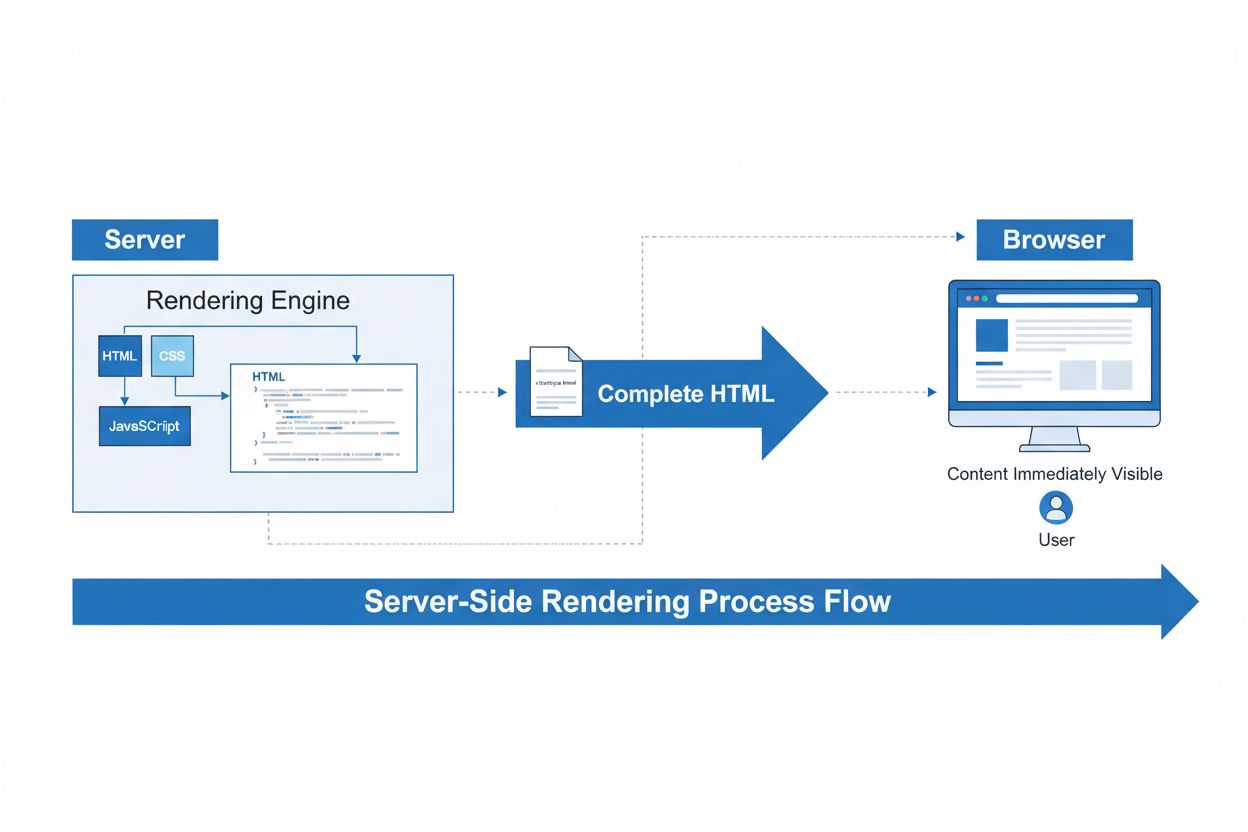
Server-Side Rendering (SSR) is a web technique where servers render complete HTML pages before sending them to browsers. Learn how SSR improves SEO, page speed,...

AMP is an open-source HTML framework for building fast-loading mobile pages. Learn how Accelerated Mobile Pages work, their benefits, limitations, and relevance...
Cookie Consent
We use cookies to enhance your browsing experience and analyze our traffic. See our privacy policy.