
Content Distribution
Learn what content distribution is, explore owned, earned, and paid channels, and discover strategies to amplify your content across platforms including AI sear...
13 min read
Social sharing is the process of distributing and promoting content across social media platforms to maximize reach, engagement, and visibility with target audiences. It encompasses owned, earned, and paid distribution channels to amplify brand messages and drive audience interaction.
Social sharing is the process of distributing and promoting content across social media platforms to maximize reach, engagement, and visibility with target audiences. It encompasses owned, earned, and paid distribution channels to amplify brand messages and drive audience interaction.
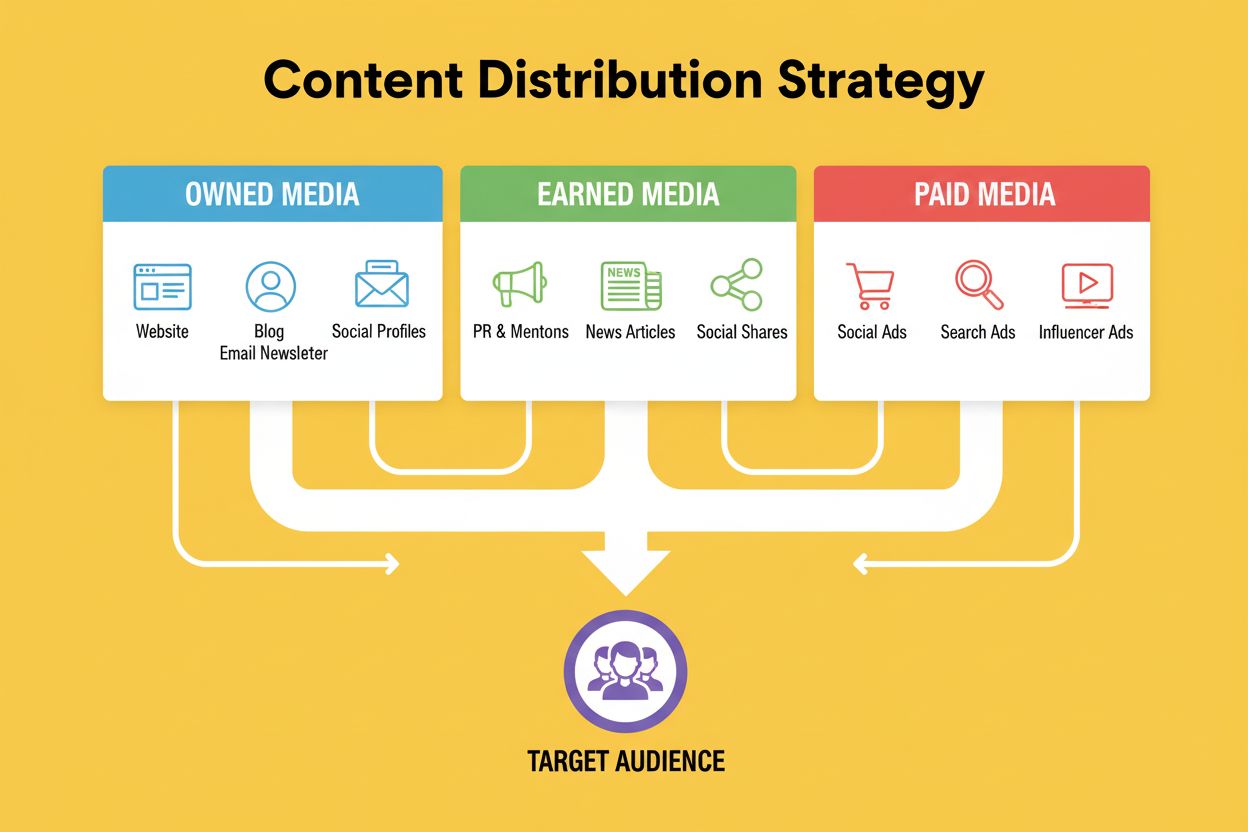
Social sharing is the strategic process of distributing and promoting content across social media platforms to maximize reach, engagement, and visibility with target audiences. It encompasses the deliberate dissemination of digital content—including blog posts, videos, infographics, articles, and multimedia assets—through owned channels (platforms you control), earned channels (external sharing and promotion), and paid channels (sponsored content and advertising). Social sharing serves as a critical bridge between content creation and audience discovery, ensuring that valuable content reaches the right people at the right time across multiple digital touchpoints. In the context of modern digital marketing and AI monitoring, social sharing has become essential for brand visibility, as widely distributed content is more likely to be discovered, cited, and referenced by artificial intelligence systems and generative AI platforms.
The concept of social sharing emerged alongside the rise of social media platforms in the mid-2000s, fundamentally transforming how brands communicate with audiences. As platforms like Facebook, YouTube, and Twitter gained adoption, marketers recognized that simply creating content was insufficient—distribution became equally critical. Today, with 5.42 billion social media users worldwide as of 2025, social sharing has evolved into a sophisticated discipline combining organic reach, paid amplification, and community engagement. The average person now uses 6.83 different social networks per month, creating unprecedented opportunities for content distribution but also intensifying competition for audience attention. According to recent data, nearly half (48%) of consumers interact with brands more often on social media than six months ago, demonstrating the growing importance of strategic social sharing in customer relationships. The landscape has shifted dramatically from simple link-sharing to complex, multi-channel distribution strategies that require careful planning, platform-specific optimization, and continuous performance measurement.
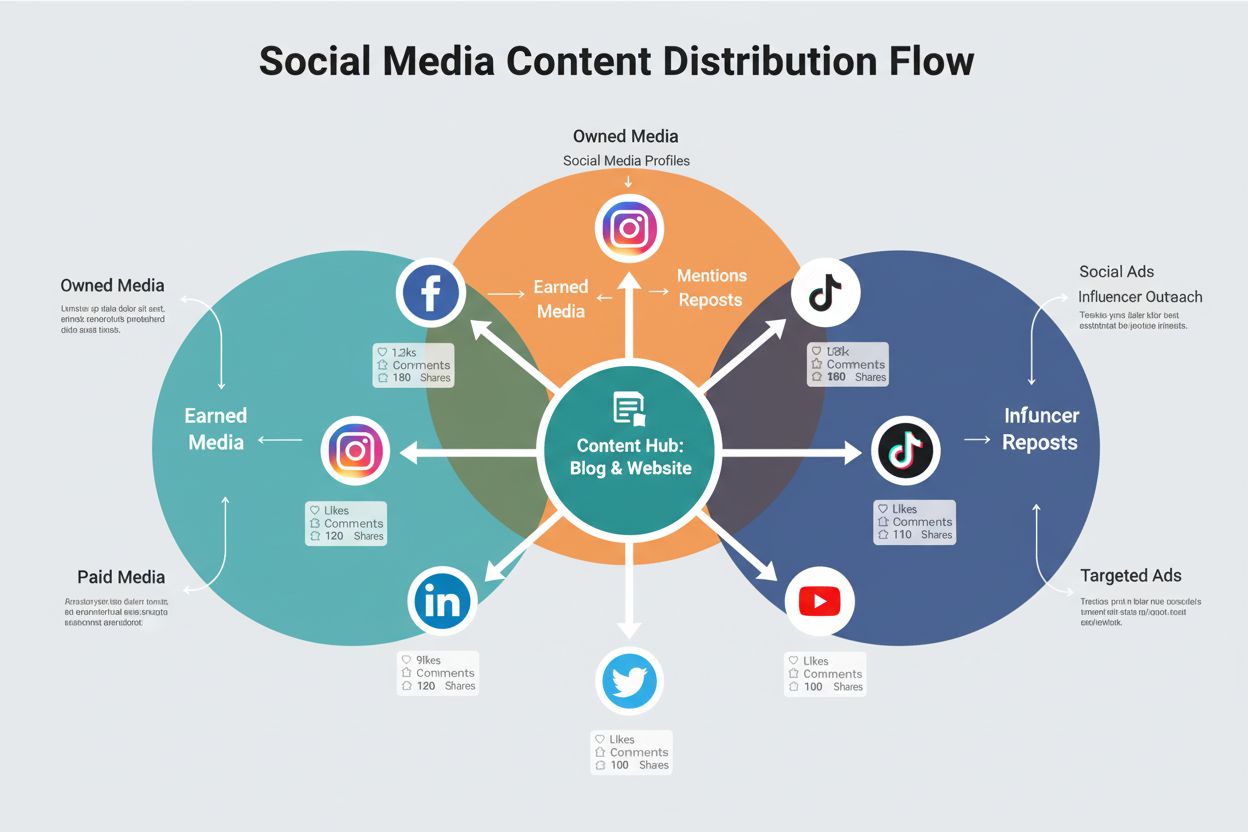
Social sharing operates through three interconnected distribution mechanisms that work together to amplify content reach and engagement. Owned channels form the foundation, allowing brands to publish content directly on platforms they control—websites, blogs, email lists, and branded social media accounts. These channels provide complete control over messaging and timing but reach only existing followers and subscribers. Earned channels represent organic amplification, occurring when external parties voluntarily share, link to, or reference your content. This includes social media shares, backlinks from other websites, media coverage, influencer mentions, and user-generated content. Earned channels offer exponentially greater reach but require creating genuinely valuable, shareable content that resonates with audiences. Paid channels involve direct investment in content promotion through social media advertising, sponsored content placements, native advertising, and pay-per-click campaigns. These channels deliver immediate, measurable results and precise audience targeting but require dedicated budget allocation and ongoing optimization.
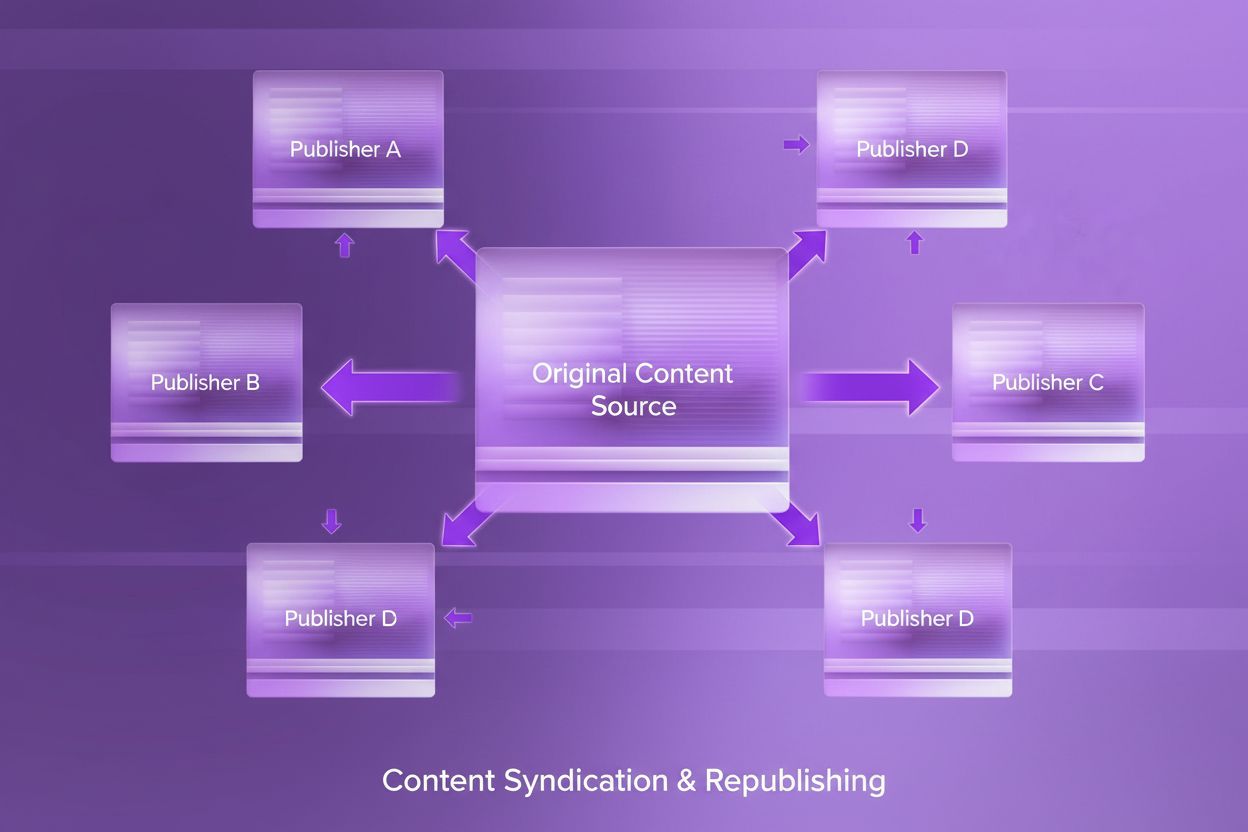
The technical infrastructure supporting social sharing includes content management systems, social media scheduling tools, analytics platforms, and distribution networks. When content is shared across platforms, it generates multiple data signals—impressions, clicks, engagement metrics, and conversions—that feed into performance tracking systems. Modern social sharing also leverages content syndication, where existing content is republished on third-party platforms to extend reach and improve search engine visibility. The mechanics involve optimizing content for each platform’s unique algorithm, format requirements, and audience preferences, then strategically timing distribution to maximize visibility when target audiences are most active.
| Channel Type | Control Level | Reach Potential | Cost Structure | Best For | Key Metrics |
|---|---|---|---|---|---|
| Owned Channels | Complete | Limited to followers | Minimal (infrastructure only) | Building loyal community, SEO, long-term presence | Traffic, email subscribers, repeat visitors |
| Earned Channels | Minimal | Exponential (viral potential) | Free (content creation only) | Brand authority, credibility, organic growth | Shares, backlinks, media mentions, reach |
| Paid Channels | High | Immediate and scalable | Per-impression or per-click | Quick visibility, targeted audiences, conversions | CTR, CPA, ROAS, conversion rate |
| Content Syndication | Moderate | Extended reach | Variable (free to paid) | Accessing new audiences, SEO benefits | Referral traffic, brand awareness |
| Influencer Partnerships | Moderate | Access to influencer audience | Performance-based or flat fee | Credibility, niche audience access | Engagement rate, reach, conversions |
| Employee Advocacy | Moderate | Multiplied through employee networks | Minimal (training/tools) | Authentic amplification, extended reach | Engagement, reach, brand sentiment |
The business impact of social sharing extends far beyond vanity metrics. Social media advertising spend is projected to reach $276.7 billion in 2025, with 83% of that spending expected to be generated on mobile by 2030, demonstrating the massive investment brands are making in social distribution. Research shows that 81% of consumers say social media compels them to make spontaneous purchases multiple times per year or more, with 28% making impulse purchases at least once monthly. This purchasing behavior directly correlates with effective social sharing strategies that place products and brand messages in front of consumers at critical decision moments. Additionally, 73% of social users agree that if a brand doesn’t respond on social, they’ll buy from a competitor, highlighting how social sharing and engagement directly influence customer loyalty and revenue. For B2B organizations, the impact is equally significant—LinkedIn engagement rates average 3.4% across industries, with decision-makers actively consuming and sharing professional content on the platform. The strategic importance of social sharing lies in its ability to transform passive content into active brand ambassadors, multiplying reach through network effects and creating opportunities for earned media that traditional advertising cannot achieve.
Each social platform requires tailored social sharing approaches based on unique algorithms, user behaviors, and content formats. Facebook, with 3.065 billion monthly active users, prioritizes native content over external links, making it essential to share insights as mini-posts or infographics rather than direct blog links. Facebook Groups offer particularly high engagement for niche distribution, with community members more likely to share content within trusted circles. Instagram, averaging 3.5% engagement rates, excels with visual content repurposing—turning blog posts into carousel posts, Reels, and Stories. The platform’s algorithm currently favors Reels, making short-form video adaptation critical for social sharing success. LinkedIn, with 1 billion members and 3.4% average engagement, serves as the premier platform for B2B social sharing, where thought leadership posts, industry insights, and professional content generate significant reach. TikTok, despite lower average engagement at 1.5%, offers massive reach potential for brands willing to embrace trending sounds and native content creation. YouTube, with 2.5 billion users, remains dominant for long-form video distribution, with opportunities to repurpose webinars, tutorials, and educational content. X (Twitter), with 611 million monthly active users, facilitates real-time sharing through threads, quote tweets, and engagement with trending topics. Each platform’s unique characteristics require strategic adaptation of core content to maximize social sharing effectiveness.
Successful social sharing requires adherence to proven best practices that maximize reach and engagement. Content repurposing stands as the most fundamental practice—transforming a single blog post into LinkedIn carousels, Instagram Reels, Twitter threads, email newsletters, and Pinterest pins extends content lifespan and reaches diverse audience segments without proportional content creation effort. A/B testing distribution strategies involves systematically testing variables like posting time, content format, caption style, and distribution channel to identify what resonates with specific audiences. Building content pillars around core themes enables consistent, repurposable content that feeds multiple distribution channels—a single pillar like “workflow optimization” can generate dozens of platform-specific assets. Leveraging influencer partnerships amplifies reach by tapping into established audiences; co-creating content with industry experts ensures natural sharing as partners promote content featuring their insights. Implementing employee advocacy programs multiplies reach through personal networks, with employees sharing company content receiving significantly higher engagement than official company posts. Bridging email and social channels creates synergy where newsletters showcase top social posts while social channels promote email sign-ups. Measuring and optimizing continuously through analytics ensures resources focus on highest-performing channels and content types, with Instagram consistently delivering the highest engagement rates at 3.5% across industries.
User-generated content (UGC) represents one of the most powerful social sharing mechanisms, as content created by customers and community members carries inherent authenticity that branded content cannot replicate. Research indicates that user-generated content is the most trusted content online, with consumers viewing it as more authentic than expert opinions or influencer recommendations. Effective UGC campaigns establish branded hashtags, encourage community participation through contests or incentives, and prominently feature customer-created content on official channels. When brands showcase UGC, they validate creators, inspire others to participate, and create organic amplification loops where customers become brand ambassadors. Ninety percent of consumers rely on social media to keep up with trends and cultural moments, making community-driven content particularly valuable for social sharing. Platforms like Instagram’s “Add Yours” sticker, TikTok’s duet and stitch features, and Twitter’s quote tweet functionality facilitate UGC creation and sharing. Brands that successfully activate UGC campaigns see exponential reach multiplication, as each piece of user-generated content carries the sharing potential of that user’s entire network, creating cascading amplification effects that paid campaigns struggle to achieve.
While organic social sharing provides sustainable long-term reach, paid amplification accelerates visibility and enables precise audience targeting. Social media advertising platforms offer sophisticated targeting capabilities based on demographics, interests, behaviors, and lookalike audiences, allowing brands to place content in front of high-probability converters. Marketers spend an average of $46.47 per user to reach social audiences, with spending concentrated on platforms delivering highest ROI for specific business objectives. Facebook remains the top platform for direct purchases, with 39% of consumers turning to it when ready to buy, followed by TikTok (36%) and Instagram (29%), informing budget allocation decisions. Effective paid social sharing requires identifying high-performing organic content before investing in promotion—content that already resonates with audiences organically typically performs better when amplified with paid budget. A/B testing paid campaigns on variables like creative assets, headlines, and audience segments optimizes spending efficiency. Retargeting strategies that show ads to users who previously engaged with content or visited websites create multiple touchpoints that increase conversion probability. The integration of paid and organic social sharing creates a multiplier effect where organic reach establishes credibility and engagement signals that improve paid campaign performance, while paid amplification extends organic reach to new audience segments.
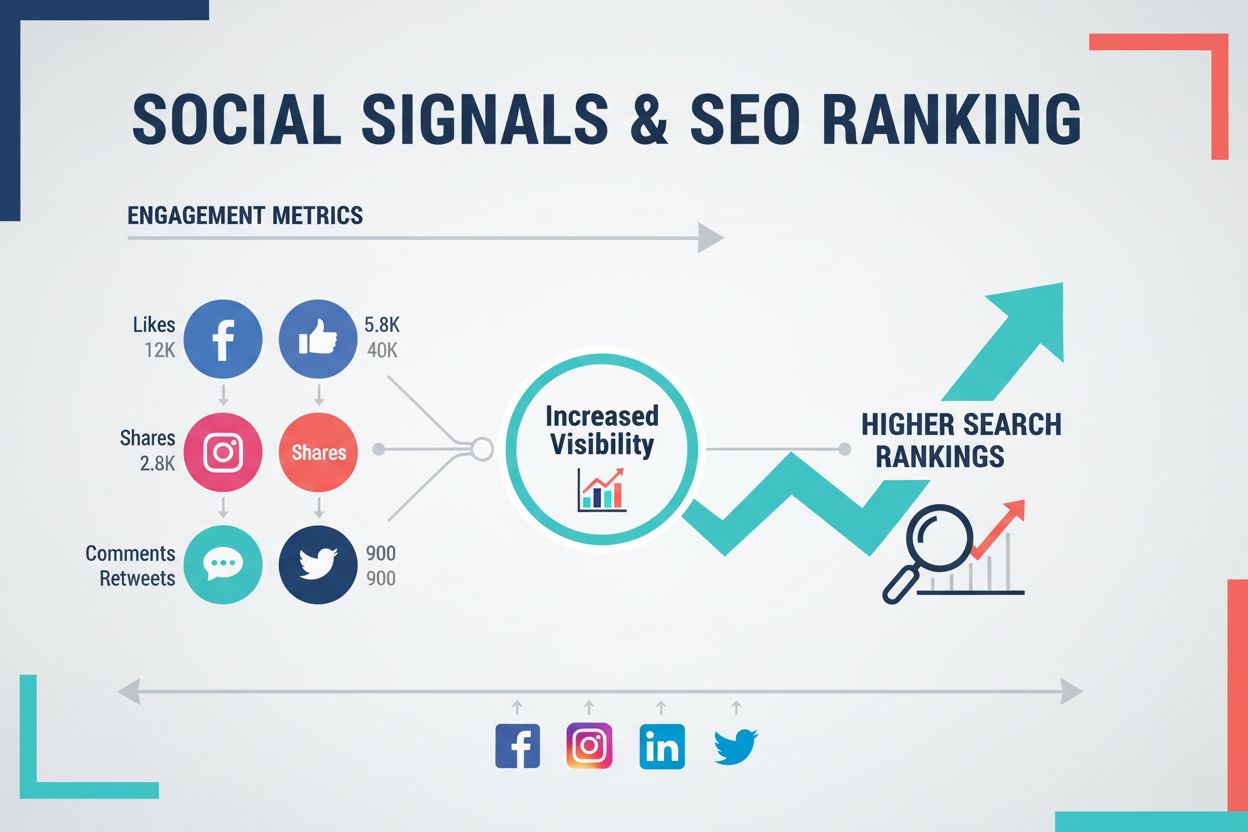
Comprehensive measurement of social sharing effectiveness requires tracking multiple interconnected metrics across the customer journey. Website traffic from social sources indicates how effectively social sharing drives audience to owned properties, measured through Google Analytics and UTM parameters. Engagement metrics—likes, comments, shares, saves, and clicks—signal content resonance and audience interest, with platform-specific benchmarks providing context for performance evaluation. Conversion rates measure the percentage of social traffic completing desired actions like email sign-ups, purchases, or demo requests, directly connecting social sharing to business outcomes. Cost per acquisition (CPA) calculates the efficiency of paid social spending by dividing total marketing costs by conversions, enabling comparison across channels and campaigns. Reach and impressions quantify content visibility, with reach indicating unique users exposed to content and impressions counting total content views. Click-through rates (CTR) measure the percentage of impressions resulting in clicks, indicating content appeal and call-to-action effectiveness. Attention metrics, an emerging measurement category, track actual user attention rather than simple viewability, providing deeper insight into content impact. Industry benchmarks provide essential context—Instagram engagement averages 3.5% across industries, LinkedIn 3.4%, X 1.8%, TikTok 1.5%, and Facebook 1.3%—enabling brands to assess performance relative to peers. Sophisticated analytics platforms like Hootsuite, Sprout Social, and Socialinsider aggregate these metrics across channels, enabling holistic performance assessment and data-driven optimization.
The social sharing landscape continues evolving rapidly, driven by algorithmic changes, platform consolidation, emerging technologies, and shifting consumer preferences. Artificial intelligence increasingly influences social sharing success, with AI-powered content recommendations, predictive analytics, and automated optimization becoming standard features in social management platforms. The rise of AI-generated content and deepfakes creates new challenges for social sharing authenticity and trust, making human-created and user-generated content increasingly valuable. Short-form video continues dominating, with 78% of people preferring to learn about products through short video content, driving investment in Reels, Shorts, and TikTok-style content across all platforms. Decentralization and privacy concerns are reshaping social sharing strategies, with platforms implementing stricter data policies and users increasingly valuing privacy-respecting brands. Niche communities and private channels are growing in importance as users seek authentic conversations away from algorithmic feeds, requiring brands to develop community-specific social sharing strategies. AI monitoring and brand visibility tracking have become critical business functions, with platforms like AmICited enabling brands to track where their content appears in AI-generated responses across ChatGPT, Perplexity, Google AI Overviews, and Claude. The future of social sharing will likely emphasize authenticity over reach, community over broadcast, and measurable business impact over vanity metrics. Brands that adapt to these shifts—prioritizing genuine engagement, investing in community building, and leveraging AI monitoring to optimize visibility—will maintain competitive advantage in an increasingly complex social sharing ecosystem.
Social sharing specifically refers to the distribution and promotion of content across social platforms to reach audiences, while social media marketing is a broader strategy encompassing content creation, community management, advertising, and analytics. Social sharing is a key component of social media marketing but focuses primarily on content amplification and reach. Both work together to build brand presence and engagement on social platforms.
Social sharing significantly increases brand visibility by distributing content across multiple platforms where AI systems and users discover information. When content is shared widely, it generates more mentions, backlinks, and citations that AI monitoring tools like AmICited track across platforms such as ChatGPT, Perplexity, and Google AI Overviews. Higher visibility through social sharing increases the likelihood that AI systems will reference your brand or content in their responses, making monitoring and optimization essential for maintaining brand presence in AI-generated content.
The three main types are owned channels (platforms you control like your website, blog, and social media accounts), earned channels (external sharing through social media shares, backlinks, and media coverage), and paid channels (sponsored content, social media ads, and native advertising). Each channel offers different advantages: owned channels provide control but limited reach, earned channels offer wider reach but less control, and paid channels deliver immediate results but require budget investment.
Content repurposing maximizes the value of your original content by adapting it for different platforms and formats. A single blog post can become LinkedIn carousels, Instagram Reels, Twitter threads, and email newsletters, extending its lifespan and reaching diverse audience segments. This strategy reduces content creation workload while increasing overall reach and engagement, making it one of the most cost-effective social sharing approaches for brands.
Engagement rates vary significantly by platform and industry. As of 2025, Instagram leads with an average engagement rate of 3.5%, followed by LinkedIn at 3.4%, X (Twitter) at 1.8%, TikTok at 1.5%, and Facebook at 1.3%. However, these rates differ by industry—for example, construction and manufacturing average 4.4% on Instagram, while technology sectors average 0.7% on TikTok. Understanding platform-specific engagement patterns helps brands allocate resources effectively.
Employee advocacy amplifies social sharing reach by empowering team members to share company content on their personal social profiles. When employees distribute branded content, it extends reach beyond official company channels and adds authenticity through personal networks. Studies show that content shared by employees receives significantly more engagement and reach than company-only posts, making employee advocacy a powerful organic amplification strategy.
Brands can measure social sharing success through multiple metrics including website traffic from social sources, engagement rates (likes, comments, shares), conversion rates, cost per acquisition (CPA), reach and impressions, click-through rates (CTR), and attention metrics. Tools like Google Analytics, Hootsuite, and Sprout Social provide detailed performance data. Comparing results against industry benchmarks helps determine whether social sharing efforts are delivering expected ROI.
Social sharing directly impacts AI visibility because widely distributed content is more likely to be indexed, cited, and referenced by AI systems. When your content appears across multiple social platforms and generates engagement, it signals authority and relevance to AI models. AmICited and similar monitoring platforms track where your brand appears in AI-generated responses, making strategic social sharing essential for maintaining visibility in AI search results and generative AI platforms.
Start tracking how AI chatbots mention your brand across ChatGPT, Perplexity, and other platforms. Get actionable insights to improve your AI presence.
Learn what content distribution is, explore owned, earned, and paid channels, and discover strategies to amplify your content across platforms including AI sear...
Learn what content syndication is, how it works, its SEO implications, and best practices for republishing content across platforms to expand reach and generate...
Learn what social signals are, how they impact SEO rankings, and their role in AI monitoring. Explore likes, shares, comments, and engagement metrics across pla...
Cookie Consent
We use cookies to enhance your browsing experience and analyze our traffic. See our privacy policy.