
Social Signal
Learn what social signals are, how they impact SEO rankings, and their role in AI monitoring. Explore likes, shares, comments, and engagement metrics across pla...
12 min read
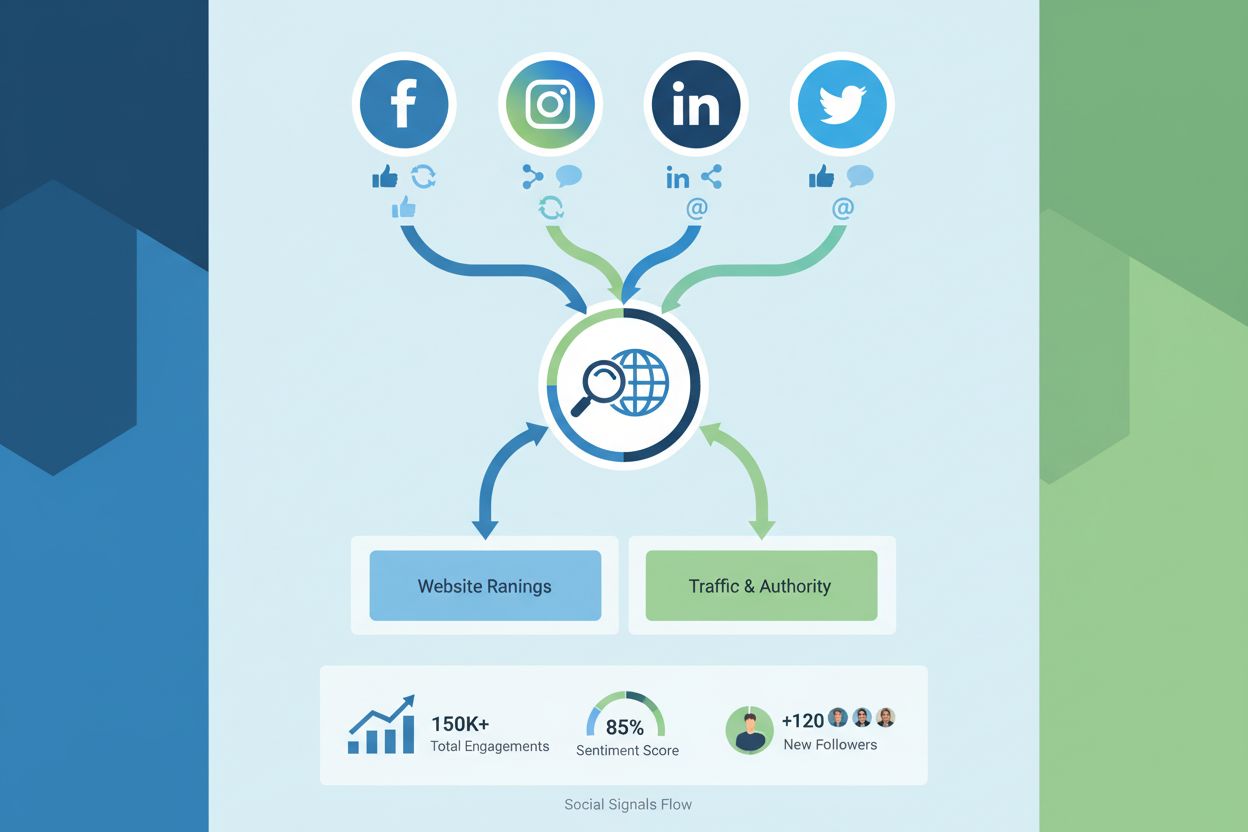
Social signals are engagement metrics such as likes, shares, comments, and mentions that users generate on social media platforms. While not a direct Google ranking factor, they indirectly influence SEO by driving organic traffic, increasing brand visibility, and generating backlinks that improve search engine rankings.
Social signals are engagement metrics such as likes, shares, comments, and mentions that users generate on social media platforms. While not a direct Google ranking factor, they indirectly influence SEO by driving organic traffic, increasing brand visibility, and generating backlinks that improve search engine rankings.
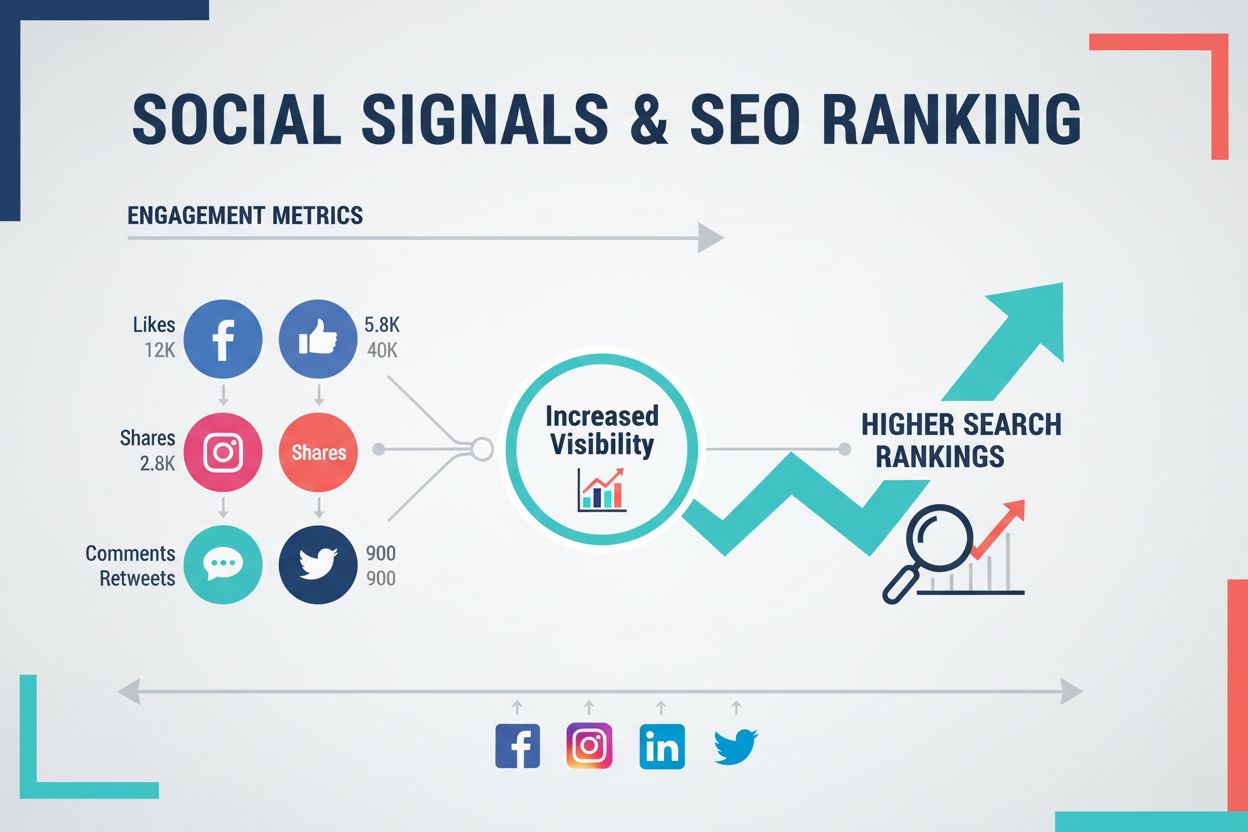
Social signals are engagement metrics generated by users on social media platforms, including likes, shares, comments, mentions, reviews, and overall social media visibility. These interactions represent how audiences respond to and amplify your content across platforms like Facebook, Instagram, LinkedIn, TikTok, X (Twitter), and Reddit. While Google has consistently stated that social signals are not a direct ranking factor in its search algorithm, they function as powerful indirect signals that influence search engine rankings through multiple mechanisms. Social signals demonstrate content quality, audience trust, and brand authority—all factors that search engines use to evaluate website credibility and relevance. Understanding social signals is essential for any comprehensive SEO strategy because they bridge the gap between social media engagement and organic search visibility.
The concept of social signals emerged in the early 2010s as social media platforms gained prominence and search engines began recognizing the correlation between social engagement and content quality. Initially, Google and other search engines experimented with directly incorporating social signals into ranking algorithms, particularly after Google’s partnership with Twitter in 2009, which added tweets to search results. However, by 2014, Google officially clarified that social signals were not direct ranking factors, citing the difficulty of accessing real-time social data and the potential for manipulation. Despite this clarification, the indirect relationship between social signals and SEO has only strengthened. According to recent research, 73% of businesses prioritize organic social media as their primary distribution strategy to nurture authentic engagement. The evolution of social signals has accelerated with the rise of AI-powered content monitoring, where platforms like ChatGPT, Perplexity, Google AI Overviews, and Claude now cite sources in their responses, creating a new category of social signals within AI-generated content. This shift has made monitoring brand mentions across both traditional social platforms and AI systems increasingly critical for maintaining brand authority and search visibility.
While social signals don’t directly influence Google’s ranking algorithm, they create multiple pathways through which social engagement translates into improved search visibility. The primary mechanism is organic traffic generation—when content receives high engagement on social platforms, it drives visitors to your website, and increased website traffic signals to search engines that your content is valuable and relevant. Google’s Chrome browser data, as revealed in leaked company documents in May 2024, suggests that the search giant monitors user behavior patterns, including how frequently people click on and interact with websites. This means that traffic originating from social media shares directly contributes to engagement metrics that influence rankings. Additionally, branded search volume increases when social media campaigns build brand awareness, and people subsequently search for your company by name on Google. This branded search activity is a powerful authority signal that can improve rankings for both branded and non-branded keywords. Another critical pathway involves backlink generation—content that performs exceptionally well on social platforms often attracts citations and links from blogs, news outlets, and industry websites, and these backlinks are confirmed direct ranking factors. Finally, social signals contribute to content longevity, as reshared and commented-upon content resurfaces in feeds, extending its visibility window and creating multiple opportunities for traffic generation and link acquisition.
| Aspect | Social Signals | Direct Ranking Factors | Indirect SEO Impact |
|---|---|---|---|
| Definition | Engagement metrics (likes, shares, comments) on social platforms | Confirmed factors Google uses in ranking algorithm | Signals that influence rankings through user behavior |
| Google Confirmation | Not a direct ranking factor (officially stated) | Directly impact search rankings | Influence rankings through traffic and authority |
| Examples | Facebook shares, Twitter retweets, LinkedIn comments | Backlinks, page speed, mobile-friendliness, content quality | Branded searches, website traffic, brand mentions |
| Measurability | Easily tracked on each platform | Measured through SEO tools and Google Search Console | Tracked via Google Analytics and UTM parameters |
| Time to Impact | Weeks to months (indirect effect) | Immediate to weeks (direct effect) | Weeks to months (cumulative effect) |
| Manipulation Risk | High (fake engagement possible) | Lower (harder to manipulate) | Medium (requires authentic engagement) |
| Platform Dependency | Varies by platform indexability | Universal across all websites | Depends on platform and audience quality |
| Business Value | Builds brand awareness and community | Improves search visibility directly | Drives qualified traffic and conversions |
The technical relationship between social signals and SEO operates through several interconnected systems that search engines monitor. When a piece of content receives high engagement on social platforms, it triggers a cascade of measurable behaviors that search engines track. Click-through rates from social media to your website increase, which Google’s algorithms interpret as a signal that your content satisfies user intent. Time on page metrics improve when social traffic arrives at relevant, high-quality content, indicating that visitors find value in what they’re reading. Bounce rate decreases when social audiences are well-targeted, meaning they stay on your site and explore additional pages, which signals content relevance to search engines. The sharing velocity—how quickly content accumulates shares—also matters because rapid social amplification suggests newsworthy or exceptionally valuable content. Additionally, social signals contribute to domain authority development; when multiple authoritative accounts share your content, it builds your brand’s credibility in the eyes of search engines. The anchor text used in social shares and the referring domain authority of accounts sharing your content both influence how search engines evaluate your website’s trustworthiness. Finally, social signals enable content discovery by search engine crawlers; content that goes viral on social platforms is more likely to be crawled, indexed, and ranked because search engines prioritize content that demonstrates real-world engagement and relevance.
Different social media platforms have varying levels of impact on SEO due to differences in indexability, data accessibility, and Google’s algorithmic weighting. Facebook remains one of the most SEO-relevant platforms because Google can index public posts and pages, making Facebook engagement directly visible to search algorithms. Reddit has experienced a significant boost in SEO relevance following Google’s 2024 content licensing deal, with Reddit discussions now prominently featured in search results and AI overviews. TikTok videos are increasingly indexed by Google and can drive substantial organic traffic, particularly for younger demographics and trending topics. LinkedIn was previously a strong SEO signal but has diminished in impact due to widespread abuse and reduced data accessibility to search engines. Instagram has limited indexability; while profiles can appear in search results, individual posts are rarely indexed unless linked from external websites. X (Twitter), formerly Twitter, has reduced data accessibility since Elon Musk’s acquisition, limiting its direct SEO impact, though public posts from verified accounts still get indexed. YouTube functions as both a social platform and search engine, with video engagement signals directly influencing both YouTube rankings and Google search results. Understanding these platform differences is crucial for allocating social media resources effectively; brands should prioritize platforms where their audience is most active and where engagement generates the most SEO value.
Brand authority is one of the most important concepts in modern SEO, and social signals play a central role in establishing and demonstrating it. When industry influencers, journalists, and thought leaders share your content on social platforms, they’re essentially vouching for your expertise and credibility. These authority signals from influencers carry significant weight because they indicate that recognized experts in your field consider your content valuable enough to amplify. Mentions from high-authority accounts are particularly powerful; a mention from a verified account with millions of followers carries more weight than the same mention from a small account. User-generated content and customer testimonials shared on social media also contribute to brand authority by demonstrating real-world satisfaction and trust. The sentiment analysis of social mentions matters too; positive sentiment around your brand indicates genuine customer satisfaction, while negative sentiment can damage authority. Review ratings on platforms like Facebook, Google My Business, and industry-specific review sites are a form of social signal that directly influences both local SEO and brand perception. Social proof—the psychological principle that people trust brands that others trust—is amplified through social signals, creating a virtuous cycle where increased engagement leads to more engagement. Brands that consistently generate positive social signals develop what researchers call topical authority, where search engines recognize them as go-to sources for specific topics, leading to improved rankings across related keywords.
Effective social signal measurement requires a multi-layered approach that combines platform-native analytics with third-party tools and web analytics integration. Engagement rate is the foundational metric, calculated by dividing total engagements (likes, comments, shares) by total impressions and multiplying by 100; this metric reveals how effectively your content resonates with audiences relative to its reach. Reach and impressions metrics show how many unique users saw your content and how many times it appeared in feeds, respectively. Share of voice compares your brand’s social mentions to competitors’ mentions within your industry, revealing your relative market presence. Sentiment analysis uses AI to categorize mentions as positive, negative, or neutral, providing insight into brand perception. Branded search volume can be tracked through Google Search Console and Google Trends, showing how social campaigns influence direct brand searches. Referral traffic from social platforms to your website is tracked through Google Analytics, where you can see which social channels drive the most visitors and how those visitors behave on your site. Conversion tracking connects social traffic to actual business outcomes like purchases, sign-ups, or downloads. Backlink monitoring tools like Ahrefs and SEMrush help identify which social shares generate links from external websites. For brands monitoring their presence in AI-generated content, platforms like AmICited track mentions across ChatGPT, Perplexity, Google AI Overviews, and Claude, representing an emerging category of social signals that influence brand authority in AI systems.
Maximizing the SEO value of social signals requires a strategic, authentic approach focused on creating genuinely engaging content rather than chasing vanity metrics. Content quality is the foundation; high-quality, informative, entertaining, or visually compelling content naturally generates more engagement than mediocre content. Shareability optimization involves designing content with sharing in mind—using compelling headlines, high-quality images, clear value propositions, and calls-to-action that encourage sharing. Platform-specific optimization means tailoring content format and messaging to each platform’s unique audience and algorithm; a LinkedIn post should differ significantly from a TikTok video or Instagram Reel. Consistent posting schedules keep your brand visible in followers’ feeds and maintain steady engagement momentum. Community engagement through responding to comments, answering questions, and participating in conversations builds relationships that lead to more organic sharing and advocacy. Influencer partnerships and collaborations extend your reach to new audiences and generate authority signals through association with recognized experts. User-generated content campaigns encourage customers to create and share content featuring your brand, generating authentic social signals and social proof. Cross-platform promotion amplifies content reach by sharing it across multiple platforms where your audience is active. Analytics-driven optimization involves regularly reviewing which content types, topics, and posting times generate the most engagement, then doubling down on what works. Importantly, authentic engagement must always be prioritized over purchased followers or fake engagement, which damages credibility and provides no SEO value.
The emergence of AI-powered search systems and generative AI platforms has fundamentally expanded the definition and importance of social signals. Platforms like ChatGPT, Perplexity, Google AI Overviews, and Claude now generate responses that cite sources, creating a new form of brand visibility and authority signal. When an AI system cites your website or mentions your brand in a response, it represents a form of social signal that influences brand authority and can indirectly affect traditional search rankings. AI citation monitoring has become essential for understanding your complete digital footprint; a brand that appears frequently in AI-generated responses gains authority signals that extend beyond traditional social media. AmICited and similar platforms now track brand mentions across AI systems, providing insights into how often your domain appears in AI responses and how that visibility compares to competitors. This represents a significant evolution in social signal tracking because AI systems are increasingly the first point of contact for information seekers, particularly among younger demographics. Brand monitoring across AI platforms reveals emerging trends in how your industry is discussed and which topics are gaining prominence in AI-generated content. The sentiment and context of AI mentions matter; being cited as an authoritative source carries more weight than being mentioned in passing. As AI systems become more integrated into search and information discovery, monitoring social signals within AI-generated content will become as important as tracking traditional social media engagement. Organizations that proactively track their presence in AI systems gain competitive advantages in understanding brand perception and market positioning.
The future of social signals in SEO is being shaped by several converging trends that will fundamentally change how brands approach social media and search optimization. AI integration will continue to blur the lines between social media platforms and search engines; as AI systems become primary information sources, social signals within AI-generated content will gain importance. Real-time personalization powered by machine learning will make social signals more granular and context-specific, with search engines weighing signals differently based on individual user behavior patterns. Privacy-first measurement will require new approaches to tracking social signals as platforms implement stricter data privacy regulations; first-party data and authenticated engagement will become more valuable than third-party tracking. Video dominance will continue, with video engagement signals becoming increasingly important for both social platforms and search rankings; platforms like TikTok and YouTube will drive more SEO value. Decentralized social networks and alternative platforms may fragment the social media landscape, requiring brands to monitor social signals across a broader ecosystem. Authenticity verification will become critical as AI-generated content proliferates; search engines will likely weight signals from verified human accounts more heavily than signals from bot-generated content. Cross-platform signal aggregation will become standard practice, with brands needing tools that consolidate social signals from traditional social media, AI platforms, review sites, and emerging channels. Predictive analytics will enable brands to forecast which content types and topics will generate strong social signals before publishing, optimizing content strategy based on data-driven predictions. The integration of social signals with zero-party data (information users willingly share) will create richer, more accurate signals of user intent and satisfaction. Organizations that adapt their social signal strategies to these emerging trends will maintain competitive advantages in search visibility and brand authority.
No, Google has explicitly stated that social signals like likes, shares, and comments are not direct ranking factors in their search algorithm. However, they indirectly influence rankings by driving organic traffic to your website, increasing brand searches, and generating backlinks from authoritative sources. The correlation between strong social signals and improved rankings exists because engaged audiences tend to visit and link to high-quality content.
The most impactful social signals include shares (which expand content reach), comments (which indicate engagement and discussion), and mentions from influencers or authoritative accounts (which build credibility). Backlinks generated from viral social content are particularly valuable since they are a confirmed direct ranking factor. Additionally, branded search volume increases resulting from social visibility can signal authority to search engines.
Social signals significantly boost local SEO through reviews, local mentions, and community engagement on platforms like Facebook and Google My Business. When local audiences engage with your social content, it generates signals that Google uses to determine local relevance and authority. Local news coverage and community discussions sparked by social media activity also contribute to improved local search visibility.
Facebook and Reddit currently have the strongest SEO impact due to Google's indexing capabilities and content visibility. TikTok videos are increasingly indexed by Google and can drive significant traffic. LinkedIn was previously boosted but has diminished impact due to abuse. Instagram has limited indexing, and X (Twitter) has reduced data accessibility. The platform's indexability and your audience's presence should guide your strategy.
Track social signals using platform-native analytics (Meta Business Suite, TikTok Analytics, LinkedIn Analytics) and third-party tools like Sprout Social or Google Analytics. Key metrics include engagement rate, reach, impressions, share of voice, sentiment analysis, and branded search volume. Tools like BrandMentions and SocialSignal AI provide real-time monitoring of brand mentions across social platforms and the web.
Yes, increasingly so. As AI systems like ChatGPT, Perplexity, Google AI Overviews, and Claude cite sources in their responses, brand mentions within AI-generated content represent a new form of social signal. Monitoring these AI citations through platforms like AmICited helps track brand visibility in AI responses, which influences brand authority and can indirectly affect SEO performance.
Social signals typically influence SEO indirectly over weeks to months rather than days. The process works through increased website traffic from social shares, which improves engagement metrics that search engines monitor. Backlinks generated from viral content take longer to impact rankings. Building consistent social engagement and brand visibility creates compounding effects that strengthen SEO performance over time.
No, purchasing fake engagement is counterproductive and can harm your SEO. Fake likes and followers don't generate genuine traffic, backlinks, or brand searches—the mechanisms through which social signals actually influence rankings. Additionally, inauthentic engagement damages brand credibility and can trigger platform penalties. Authentic engagement from real users is the only type of social signal that meaningfully impacts SEO.
Start tracking how AI chatbots mention your brand across ChatGPT, Perplexity, and other platforms. Get actionable insights to improve your AI presence.
Learn what social signals are, how they impact SEO rankings, and their role in AI monitoring. Explore likes, shares, comments, and engagement metrics across pla...
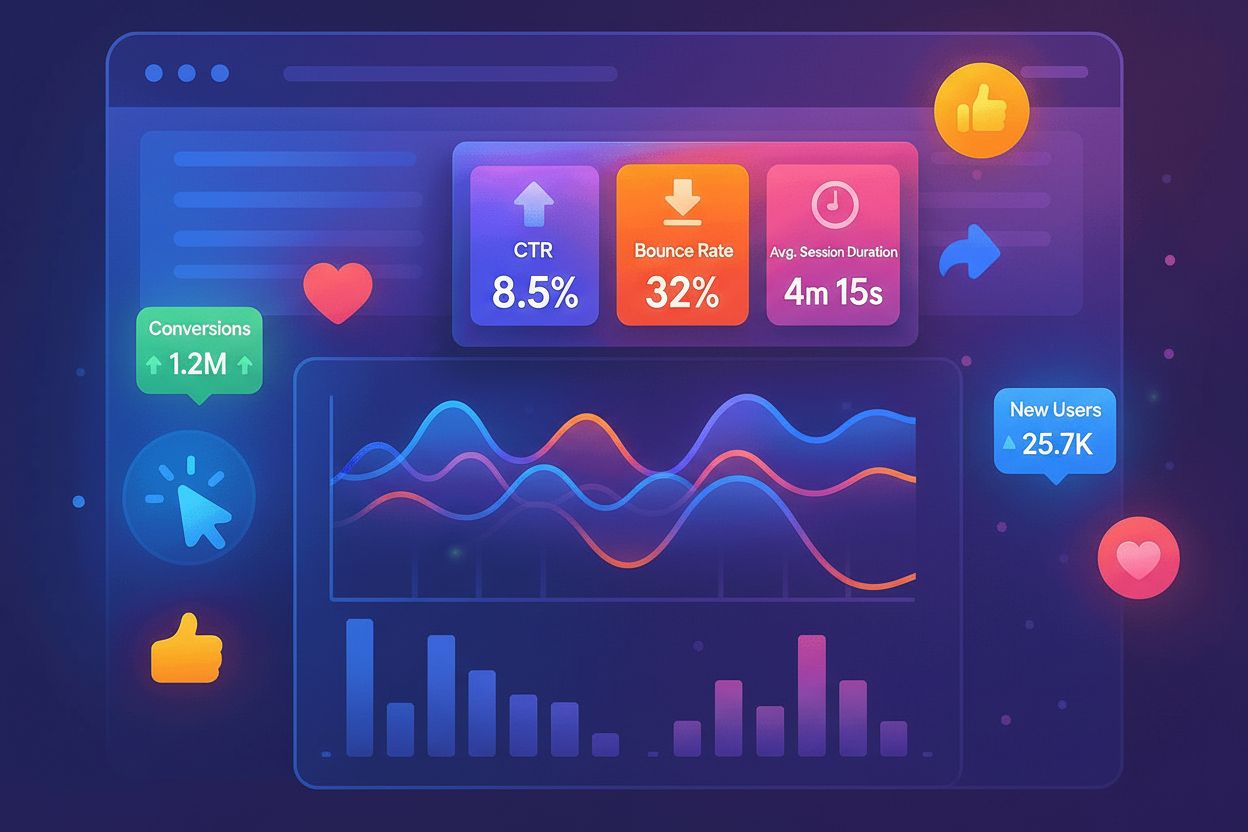
Engagement signals are measurable indicators of user interaction with digital content. Learn how clicks, time spent, shares, and conversions impact SEO, AI moni...
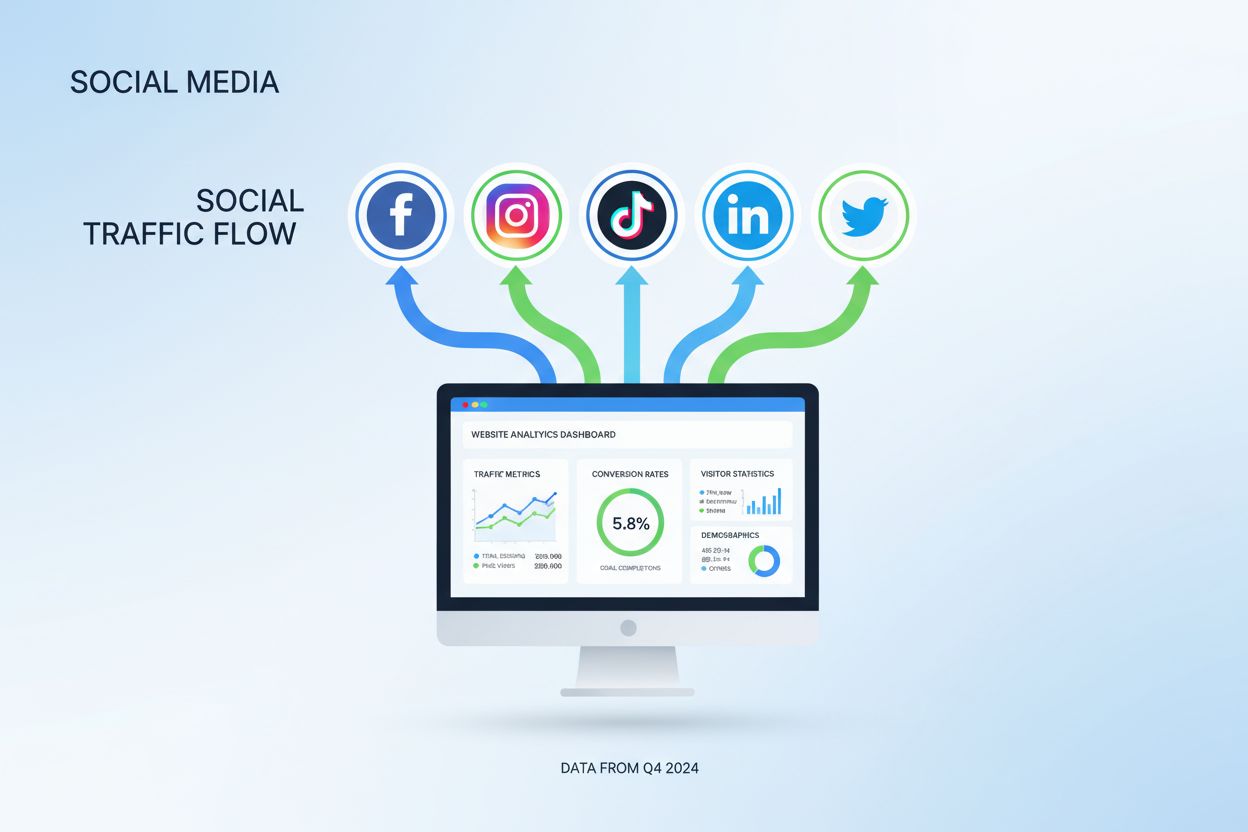
Social traffic is website visitors from social media platforms. Learn how to measure, track, and optimize social referrals for better ROI and brand visibility.