
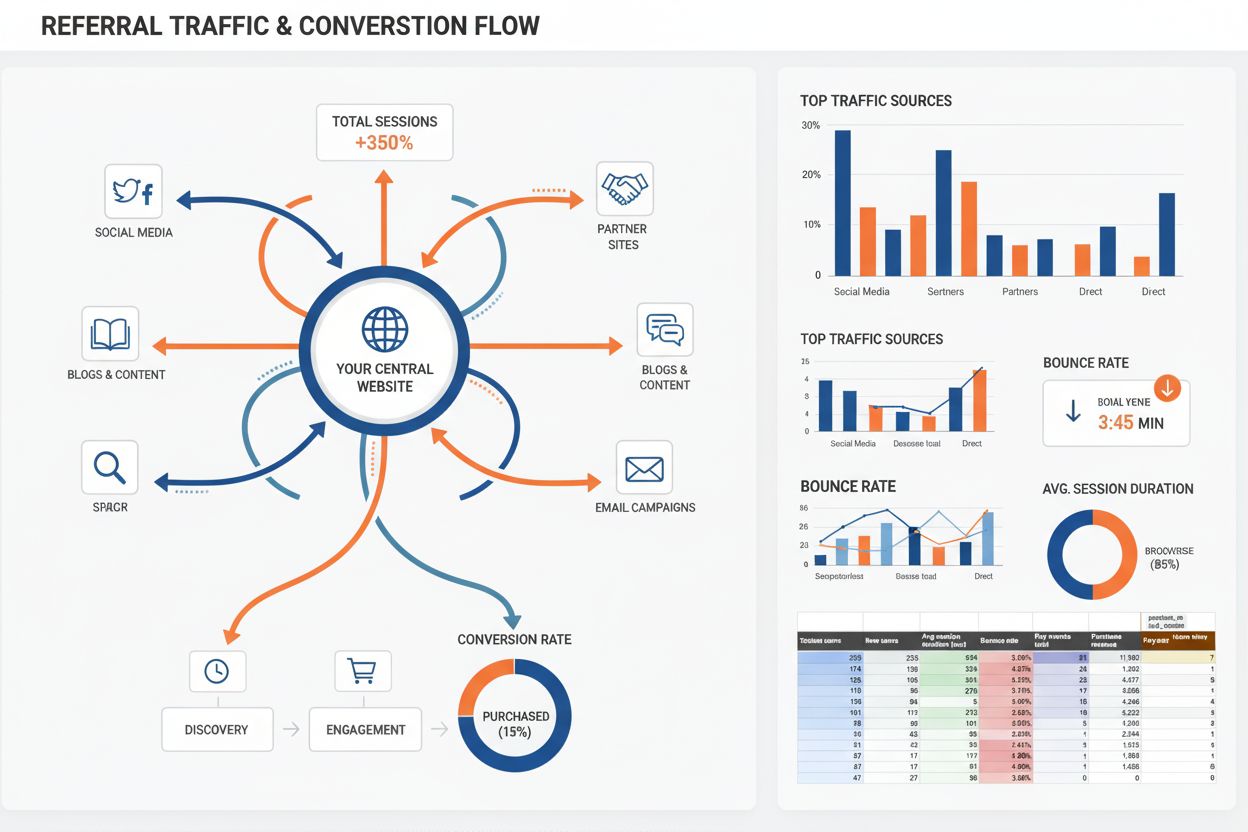
Referral Traffic
Referral traffic definition: visitors from external websites. Learn how referral traffic works, its importance for SEO, conversion rates, and strategies to incr...
10 min read
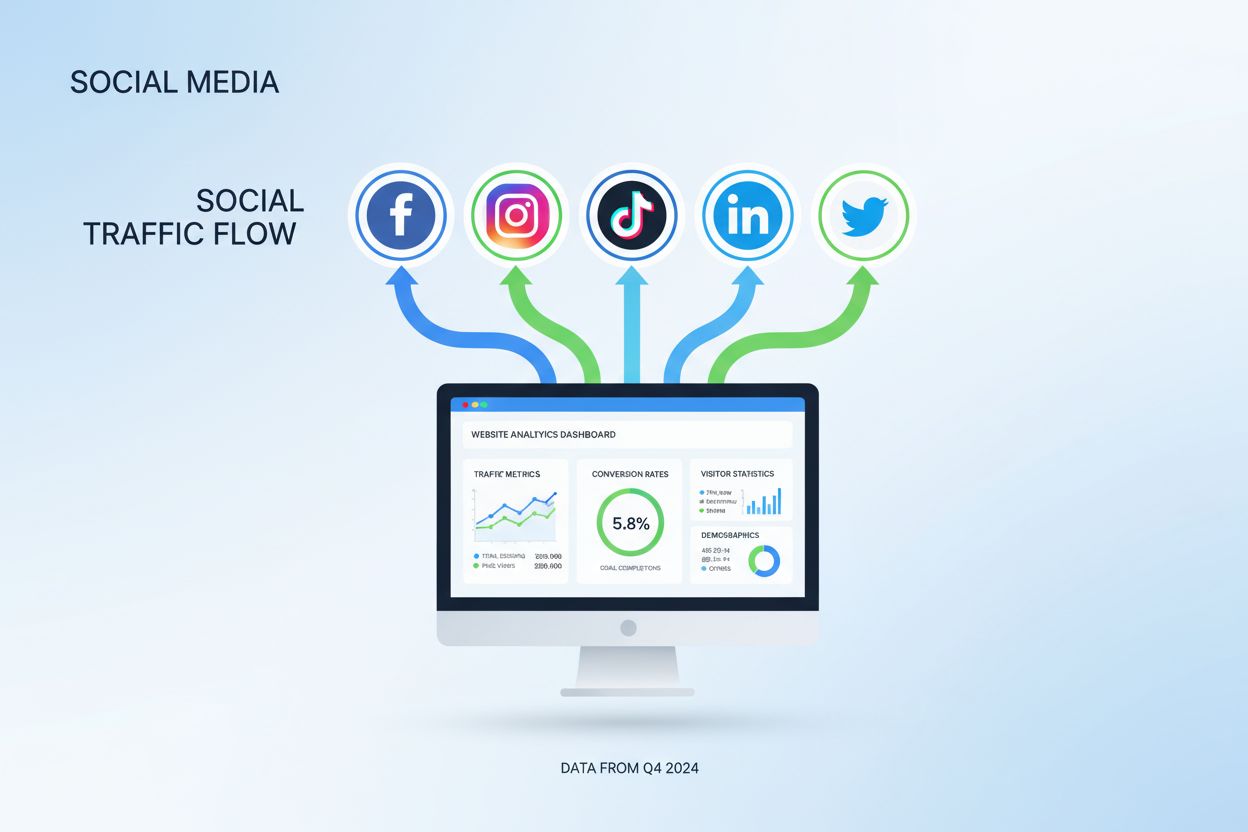
Social traffic refers to visitors arriving at a website or digital property directly from social media platforms such as Facebook, Instagram, TikTok, LinkedIn, and Twitter. It represents a measurable portion of overall website traffic driven by social media posts, shares, ads, and user engagement across social networks.
Social traffic refers to visitors arriving at a website or digital property directly from social media platforms such as Facebook, Instagram, TikTok, LinkedIn, and Twitter. It represents a measurable portion of overall website traffic driven by social media posts, shares, ads, and user engagement across social networks.
Social traffic is the volume of visitors who arrive at a website, landing page, or digital property directly from social media platforms. This includes traffic from major networks such as Facebook, Instagram, TikTok, LinkedIn, Twitter (X), Pinterest, Reddit, YouTube, and other social channels. Social traffic is tracked as a distinct referral source in web analytics and represents a critical component of overall website traffic. Unlike organic search traffic, which originates from search engines, or direct traffic, which comes from bookmarks and typed URLs, social traffic is specifically attributed to clicks and engagement on social media platforms. This metric has become increasingly important as social platforms evolve from purely social networks into search and discovery engines in their own right.
The significance of social traffic has grown dramatically over the past decade as social media platforms have become primary channels for content discovery and information sharing. Historically, social media was viewed primarily as a marketing and engagement tool, but research from 2025 demonstrates that social media now drives 10.12% of global website traffic, a substantial increase from previous years. This shift reflects fundamental changes in how users discover content and navigate the internet. According to recent industry data, 82.52% of websites receive traffic from social media, indicating near-universal reliance on these platforms as traffic sources. The growth is particularly pronounced in the United States, where social traffic accounts for 15.23% of all website visits—significantly above the global average. This regional variation highlights how different markets have adopted social platforms at different rates and with varying intensity.
The evolution of social traffic is intrinsically linked to platform algorithm changes, user behavior shifts, and the rise of social commerce. Facebook continues to dominate, generating 76.56% of all social referrals globally, but emerging platforms like TikTok have experienced explosive growth, with traffic increasing nearly fivefold from January to August 2025. This diversification means that brands can no longer rely on a single platform; instead, they must develop multi-platform strategies to capture social traffic across different demographics and user behaviors. The importance of tracking and optimizing social traffic has never been greater, as it directly impacts brand visibility, customer acquisition, and overall digital marketing ROI.
| Traffic Source | Global Share (2025) | Primary Characteristics | User Intent | Conversion Potential |
|---|---|---|---|---|
| Organic Search | 46.98% | Highest volume, intent-driven, algorithm-dependent | High intent, problem-solving | Very High |
| Social Traffic | 10.12% | Growing, platform-dependent, engagement-driven | Medium intent, discovery-focused | Medium-High |
| Direct Traffic | ~35-40% | Bookmarks, typed URLs, brand recall | High intent, returning visitors | High |
| Paid Search (PPC) | ~5-8% | Immediate visibility, cost-per-click model | High intent, competitive | Very High |
| AI Search Traffic | 0.18% | Emerging, citation-based, rapidly growing | Varies, AI-filtered | Medium (Growing) |
| Email Traffic | ~2-3% | Highly targeted, subscriber-based | High intent, relationship-driven | Very High |
| Referral Traffic | ~3-5% | Third-party sites, partnerships, backlinks | Medium intent, contextual | Medium |
Social traffic encompasses two primary categories: organic and paid. Organic social traffic originates from unpaid engagement—when users naturally discover your content through shares, likes, comments, and algorithmic distribution. This type of traffic builds gradually but establishes authentic audience connections and long-term brand loyalty. Paid social traffic, conversely, comes from sponsored posts, promoted content, and social media advertisements where marketers invest budget to reach targeted audiences. Paid social traffic provides immediate visibility and allows precise audience targeting based on demographics, interests, and behaviors. Most successful brands employ a balanced mix of both, using organic strategies to build community and paid strategies to accelerate reach during critical campaigns or product launches.
The composition of social traffic varies significantly by platform. Facebook remains the dominant traffic driver at 7.75% of total global traffic, but its role differs from emerging platforms. Instagram contributes 0.68% of global traffic with a focus on visual content and lifestyle engagement. TikTok, the fastest-growing platform, has surged from 0.23% in January 2025 to 1.09% in August, demonstrating how rapidly user behavior can shift toward new platforms. LinkedIn drives 0.30% of global traffic but serves a distinct professional audience, making it invaluable for B2B companies. Pinterest contributes 0.26% of global traffic with a strong focus on visual discovery and product inspiration. Understanding these platform-specific characteristics is essential for allocating resources effectively and tailoring content strategies to each channel’s unique audience and algorithm.
Tracking social traffic accurately requires understanding how web analytics platforms attribute visitor sources. When a user clicks a link on a social media platform and lands on your website, analytics tools identify the referrer as the social platform. However, without proper implementation of UTM parameters (Urchin Tracking Module), some social traffic may be misattributed as direct traffic, leading to underestimation of social’s true impact. UTM parameters are custom tags added to URLs that allow analytics platforms to track the specific source, medium, campaign, and content associated with each click. For example, a Facebook link might include utm_source=facebook&utm_medium=social&utm_campaign=summer_sale, enabling precise attribution and performance analysis.
Google Analytics 4 (GA4) has become the standard tool for tracking social traffic, offering detailed reports on traffic acquisition by source. The platform distinguishes between organic social traffic (unpaid) and paid social traffic (sponsored), allowing marketers to evaluate the effectiveness of each strategy independently. Most major social platforms—including Meta Business Suite (Facebook and Instagram), TikTok Analytics, LinkedIn Analytics, and Pinterest Analytics—provide native analytics dashboards that show click-through rates, referral traffic, and audience demographics. However, these platform-specific tools often lack cross-platform comparison capabilities, making integrated analytics platforms like Sprout Social, Hootsuite, and Buffer valuable for comprehensive social traffic analysis. These tools consolidate data from multiple platforms, enabling marketers to identify which channels drive the most traffic, which content performs best, and how social traffic converts compared to other sources.
The relationship between social traffic and search visibility has fundamentally changed in 2025. Research demonstrates that social media platforms appear in approximately 50.3% of Google’s top-10 organic search results, with Reddit appearing in 37% of queries, YouTube in 19.8%, and other platforms in smaller percentages. This integration means that strong social media presence directly influences traditional search rankings. Additionally, AI-generated search responses cite social media platforms extensively—at least one social site appears in 20% of Google’s AI Overviews and 36% of AI Mode responses. The most frequently cited platforms in AI responses are YouTube, Reddit, Quora, LinkedIn, and Medium, indicating that content visibility on these platforms significantly impacts AI search visibility.
This convergence of social, search, and AI creates a new imperative for brands: visibility now requires presence across all three channels. A piece of content that gains traction on social media is more likely to be referenced in AI responses and ranked higher in traditional search results. Conversely, content that ranks well in search engines may be shared more frequently on social platforms, creating a virtuous cycle of visibility. For brands monitoring their presence in AI search results—a critical function for companies using platforms like AmICited—understanding social traffic becomes essential. When your brand is mentioned or cited in AI responses, those citations often link back to social media platforms where the original content was shared, making social traffic a key indicator of AI visibility success.
Effective social traffic optimization begins with establishing clear metrics and benchmarks. Key performance indicators (KPIs) for social traffic include click-through rate (CTR), which measures the percentage of social media impressions that result in clicks; conversion rate, which tracks the percentage of social visitors who complete desired actions; bounce rate, which indicates the percentage of visitors who leave without engaging; and return on ad spend (ROAS) for paid campaigns. Additionally, marketers should monitor engagement metrics such as shares, comments, and saves, as these signals influence algorithmic distribution and can amplify social traffic over time. Comparing your metrics against industry benchmarks provides context—for example, average social media CTR varies by platform, with Facebook averaging around 1-3%, while TikTok often achieves higher engagement rates due to its algorithm’s emphasis on content quality over follower count.
Regional and platform-specific variations significantly impact social traffic optimization strategies. In the United States, social traffic accounts for 15.23% of all website visits, compared to just 6.14% in the United Kingdom, indicating that U.S.-focused brands should prioritize social strategies more heavily. Platform distribution also varies by region: while Facebook dominates globally at 76.56% of social referrals, TikTok’s share is substantially higher in the U.S. at 8.61% of social traffic, compared to its global average of 5.50%. This means that brands targeting younger American audiences should invest disproportionately in TikTok content, while those targeting professional audiences should emphasize LinkedIn. Understanding these nuances allows marketers to allocate budgets more effectively and create platform-specific content strategies that maximize social traffic potential.
The landscape of social traffic is undergoing rapid transformation as artificial intelligence reshapes how content is discovered and consumed. AI platforms are increasingly citing social media content, with YouTube, Reddit, and other platforms appearing in AI-generated responses at rates that rival traditional search results. This development creates both opportunities and challenges for brands. On one hand, strong social media presence increases the likelihood of being cited by AI systems, potentially driving traffic through AI search results. On the other hand, as AI systems aggregate and summarize content from social platforms, users may find answers directly in AI responses without clicking through to the original social post, potentially reducing direct social traffic while increasing brand visibility.
The future of social traffic will likely be characterized by greater integration between social platforms, search engines, and AI systems. TikTok’s explosive growth—with traffic increasing nearly fivefold in 2025—demonstrates how rapidly user preferences can shift toward new platforms, suggesting that emerging platforms and formats will continue to reshape social traffic distribution. Additionally, the rise of social commerce and in-app shopping features means that social traffic increasingly converts directly on social platforms rather than driving users to external websites. This shift requires brands to develop dual strategies: optimizing for external website traffic while simultaneously building commerce capabilities within social platforms. For companies monitoring brand visibility across channels—particularly those tracking AI citations and search appearances—understanding how social traffic connects to broader visibility metrics becomes increasingly critical for comprehensive digital strategy.
Organic social traffic comes from unpaid, natural engagement—when users discover and share your content through likes, comments, and shares without any paid promotion. Paid social traffic, conversely, originates from sponsored posts, promoted content, and social media advertisements where you invest budget to reach specific audiences. Both types are valuable: organic builds long-term trust and community, while paid provides immediate reach and targeted visibility. Most successful strategies combine both approaches for maximum impact.
To track social traffic in Google Analytics, ensure you're using UTM parameters (utm_source, utm_medium, utm_campaign) on all links shared across social platforms. In GA4, navigate to the 'Traffic Acquisition' report and filter by 'Social' as the source to see which platforms drive the most visitors. You can also create custom segments to analyze social traffic behavior separately. Additionally, most social platforms (Facebook, Instagram, LinkedIn) offer built-in analytics dashboards that show click-through rates and referral data directly.
Social traffic signals brand authority and content quality to search engines and AI systems. When content receives significant engagement and shares on social platforms, it increases visibility in both traditional search results and AI-generated responses. Research shows that social media platforms like Reddit, YouTube, and LinkedIn appear in approximately 50% of Google search results and are cited in over 36% of AI Mode responses. This interconnection means strong social traffic can indirectly boost your organic search rankings and AI citations.
Facebook dominates with 76.56% of all social referrals globally, followed by Instagram (6.72%), TikTok (5.50%), LinkedIn (2.97%), and Pinterest (2.61%). However, TikTok is the fastest-growing platform, with traffic increasing nearly fivefold from January to August 2025. Regional variations exist—in the U.S., TikTok drives significantly more traffic than globally, while in the UK, Facebook's dominance is even stronger at 89% of social referrals.
Key metrics include click-through rate (CTR), which shows how often people click your links; conversion rate, measuring desired actions taken by social visitors; bounce rate, indicating if visitors stay on your site; and social referral traffic volume, showing total visitors from each platform. Additionally, track engagement metrics like shares and comments, as well as return on ad spend (ROAS) for paid campaigns. Comparing these metrics against industry benchmarks helps you understand if your social traffic performance is competitive.
Social traffic comes specifically from social media platforms and is tracked as a distinct referral source. Direct traffic occurs when users type your URL directly or use bookmarks. Organic search traffic comes from search engines like Google and Bing. While organic search still dominates at 46.98% of global traffic, social media now accounts for 10.12%—a significant and growing share. Each source has different user intent and behavior patterns, making it important to analyze them separately.
Yes, social traffic and engagement can indirectly influence AI search visibility. AI systems like ChatGPT, Perplexity, and Google's AI Overviews reference social media platforms extensively—Reddit appears in 37% of top search results, YouTube in 19.8%, and other platforms in AI-generated responses. When your content gains traction on social platforms, it increases the likelihood of being cited by AI systems. Additionally, social signals demonstrate content authority and relevance, which AI systems consider when generating responses and recommendations.
Start tracking how AI chatbots mention your brand across ChatGPT, Perplexity, and other platforms. Get actionable insights to improve your AI presence.
Referral traffic definition: visitors from external websites. Learn how referral traffic works, its importance for SEO, conversion rates, and strategies to incr...
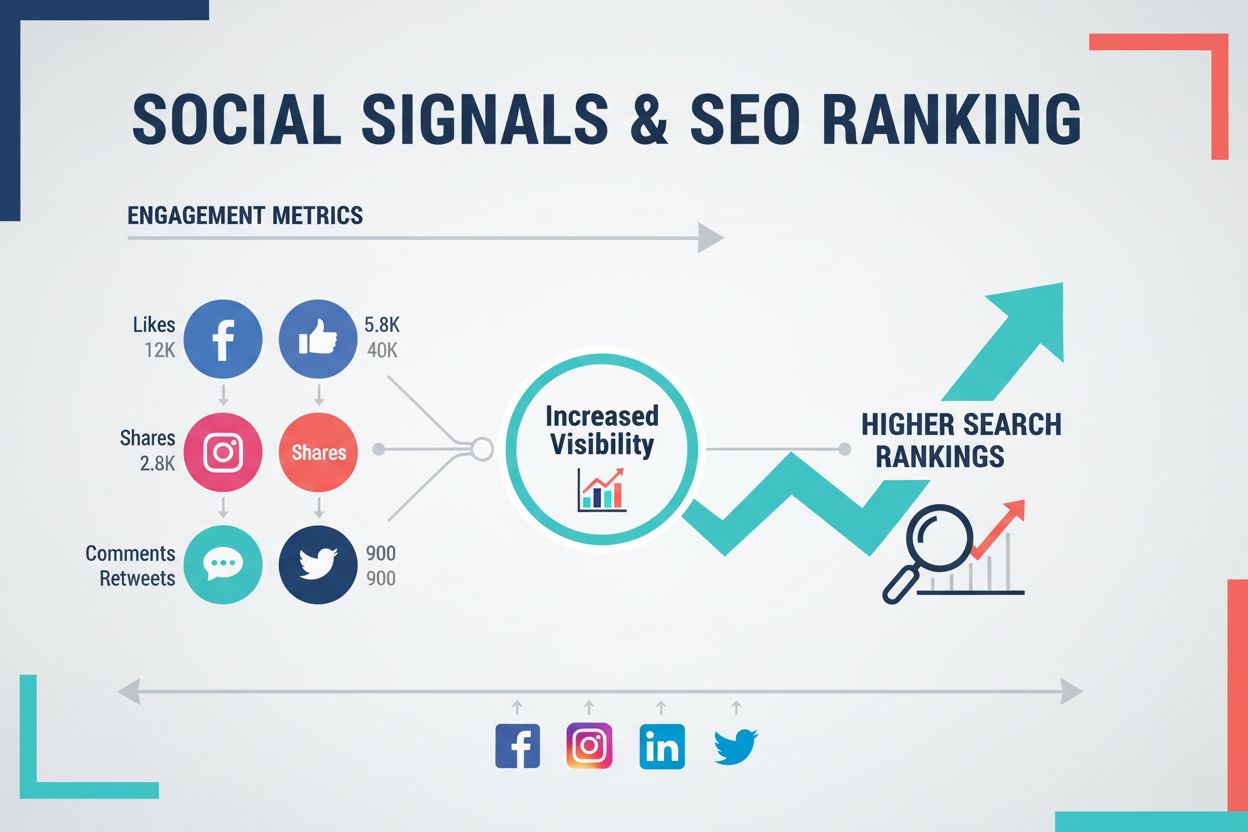
Learn what social signals are, how they impact SEO rankings, and their role in AI monitoring. Explore likes, shares, comments, and engagement metrics across pla...
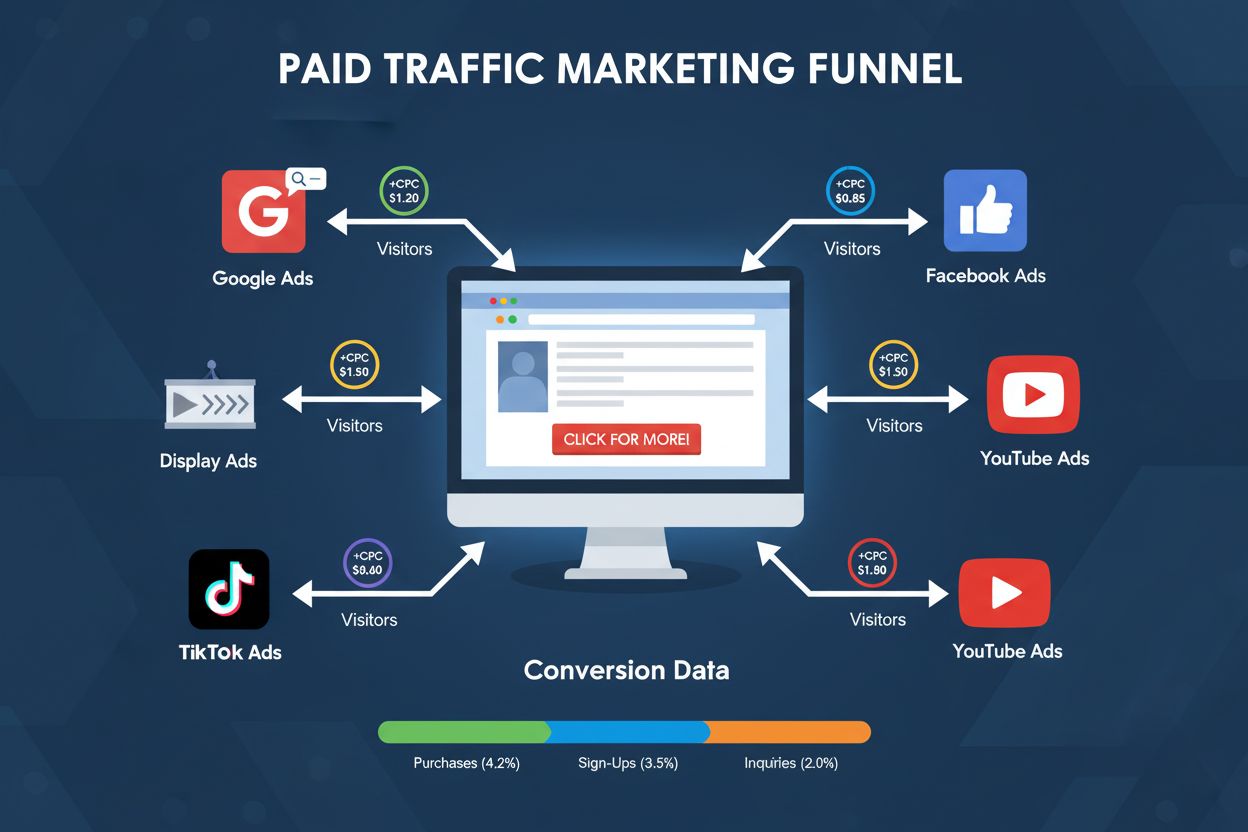
Paid traffic definition: visitors from paid ads on Google, Facebook, display networks. Learn CPC costs, conversion rates, ROI, and how paid traffic differs from...