


- Sponsored Brands is an Amazon ad format that features your brand: a logo, a headline and several products, a Store spotlight, or a video.
- It is open to Brand Registry sellers, vendors and their agencies. You bid on keywords or products and usually pay per click.
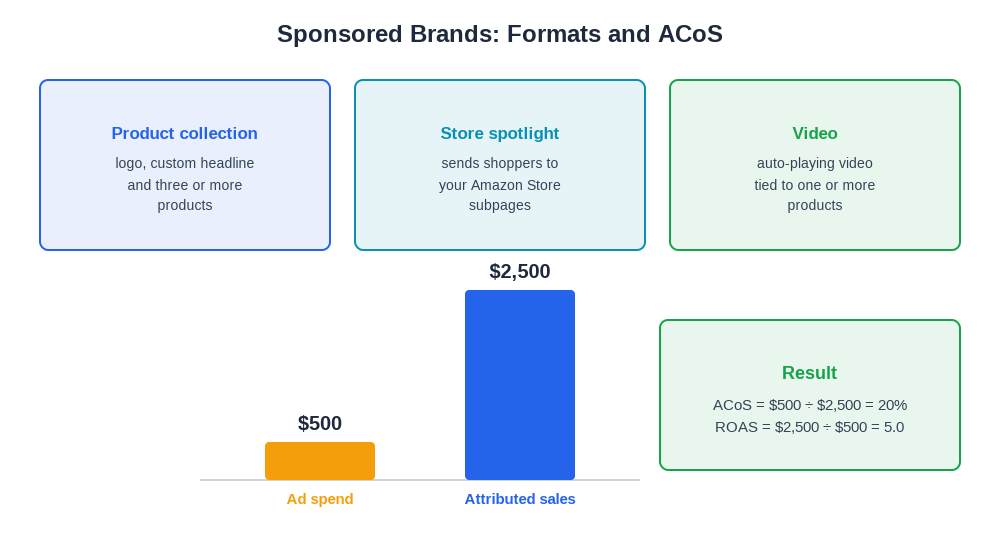
- ACoS = ad spend ÷ attributed sales × 100. $500 of spend credited with $2,500 in sales is a 20% ACoS.
- Sponsored Brands is mostly bought for discovery and brand defense, so check new-to-brand orders as well as ACoS.
Where AmICited fits
Many shoppers ask ChatGPT, Perplexity or Google AI Mode which brand to buy before they search Amazon. AmICited’s Shopping report shows which sellers and products appear on AI product cards for the prompts you track.
See AI visibility tracking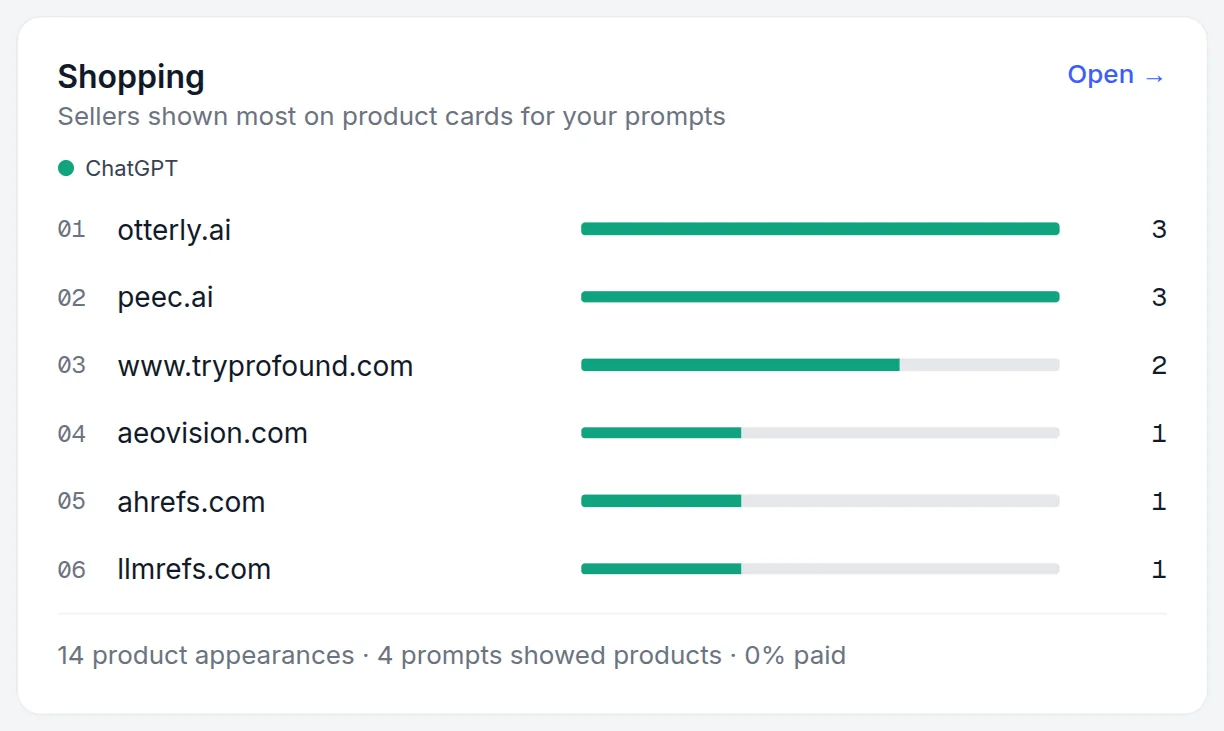
What Is Sponsored Brands?
Sponsored Brands is one of Amazon’s self-serve ad formats. Instead of promoting a single listing, a Sponsored Brands ad features your brand: a logo and custom headline with a set of products, a spotlight on your Amazon Store, or a video tied to one or more products. Amazon originally called the format Headline Search Ads, which is why you still see that name in older guides.
You create Sponsored Brands campaigns in the Amazon Ads console or Seller Central’s advertising section. They’re available to brand owners enrolled in Amazon Brand Registry, vendors, and agencies acting for them. Together with Sponsored Products and Sponsored Display, they make up the core of Amazon’s retail media offering.
How Sponsored Brands Works
A Sponsored Brands campaign is built from a few choices:
- Format. Product collection (logo, headline and products), Store spotlight (several Store subpages), or video (an auto-playing video linked to products).
- Landing page. Your Amazon Store, a Store subpage, or a product list or detail page, depending on the format.
- Targeting. Keywords with broad, phrase or exact match, or product and category targeting so your ad appears on related searches and detail pages.
- Bidding. Usually cost per click, with options to adjust bids by placement. Amazon has also added impression-based (vCPM) buying for some Sponsored Brands goals.
When a shopper’s search or page matches your targeting, your bid enters Amazon’s auction. If you win, the ad shows, and you pay when someone clicks (or per thousand viewable impressions on vCPM).
The main efficiency metric on Amazon is ACoS, advertising cost of sales:
ACoS = Ad spend ÷ Attributed sales × 100
If a Sponsored Brands campaign spends $500 in a month and is credited with $2,500 in sales, ACoS is $500 ÷ $2,500 = 20%. The same result as ROAS is $2,500 ÷ $500 = 5.0. If your margin before advertising is 30%, a 20% ACoS leaves 10% of revenue as profit on those sales.
Sponsored Brands reports also show new-to-brand metrics: orders from customers who haven’t bought from your brand on Amazon in the past year. That’s useful because Sponsored Brands is often bought for reach and discovery, not just for the lowest ACoS.
Two settings shape results more than most sellers expect. The first is placement: you can raise bids for top-of-search placements, which usually cost more per click but get the most attention. The second is attribution. Sponsored Brands sales are credited using a 14-day window after the click and include sales of other products from your brand, not only the advertised ones. That makes Sponsored Brands ACoS look better than a strict same-product view would, so compare it with your total sales trend, not only the campaign report.
Sponsored Brands vs Sponsored Products vs Sponsored Display
| Sponsored Products | Sponsored Brands | Sponsored Display | |
|---|---|---|---|
| What it promotes | One product (ASIN) | Brand plus several products, Store or video | Products, shown to audiences or on product pages |
| Creative | Product image and title | Logo, headline, product set or video | Product image, optional custom creative |
| Main placements | Search results and product pages | Top of search, within search, product pages | Product pages, Amazon and off-Amazon sites |
| Brand Registry needed | No | Yes (for sellers) | Yes (for sellers) |
| Typical role | Direct sales | Discovery and brand defense | Retargeting and competitor conquesting |
Most brands start with Sponsored Products because it ties directly to sales, then add Sponsored Brands once they have several products and a Store worth sending shoppers to.
Sponsored Brands and AI Search
Shoppers increasingly ask AI assistants which brand to buy before they ever reach an Amazon results page. Amazon’s own assistant, Rufus, answers questions using listing content and reviews, and ChatGPT, Perplexity and Google AI Mode answer “best X for Y” questions using reviews, publisher articles and community threads. Sponsored Brands can’t buy a mention in those organic answers.
If a shopper arrives already set on a competitor because an AI answer recommended them, your Sponsored Brands ad at the top of search is fighting a decision that was made earlier. Tracking AI visibility for your category prompts shows whether that’s happening.

Stay Updated on AI Visibility Trends
Get the latest insights on AI mentions, brand monitoring, and optimization strategies.
Best Practices for Sponsored Brands
- Use clear, specific headlines. Say what the products are and why they’re different. Vague brand slogans rarely help.
- Pick products that look like a range. Three products that clearly belong together beat a random mix of best sellers.
- Run a branded-keyword campaign. Bidding on your own brand protects the top of your branded search results from competitors.
- Test video. Short product videos that show the product in use in the first seconds often get more attention than static collections.
- Separate branded and non-branded campaigns. Branded ACoS is usually much lower; mixing them hides how non-branded terms perform.
- Watch new-to-brand share. If almost all Sponsored Brands orders are from existing customers, the campaign isn’t growing your customer base.
Common Sponsored Brands Mistakes
A frequent mistake is judging Sponsored Brands only by ACoS against Sponsored Products. The formats do different jobs, and cutting Sponsored Brands because it has a higher ACoS can leave the top of search open to competitors. Another is sending traffic to a thin or outdated Amazon Store, which wastes the click.
Sellers also run broad keywords without reviewing search terms and negatives, so spend drifts to irrelevant queries. And many forget to check stock: Sponsored Brands ads pause or lose products when items go out of stock, and a collection with one product missing looks broken. Strong Amazon SEO on the advertised listings also matters, because the ad brings the click but the listing has to convert it.