
HTTPS
HTTPS is the secure protocol for web communication using SSL/TLS encryption. Learn how it protects data, differs from HTTP, and why it's essential for website s...
10 min read
An SSL Certificate is a digital credential that authenticates a website’s identity and enables encrypted HTTPS connections between browsers and servers, protecting data transmission and establishing user trust. SSL stands for Secure Sockets Layer, and modern implementations use the updated TLS (Transport Layer Security) protocol to secure internet communications.
An SSL Certificate is a digital credential that authenticates a website's identity and enables encrypted HTTPS connections between browsers and servers, protecting data transmission and establishing user trust. SSL stands for Secure Sockets Layer, and modern implementations use the updated TLS (Transport Layer Security) protocol to secure internet communications.
An SSL Certificate is a digital credential that authenticates a website’s identity and enables encrypted communication between a user’s browser and a web server using the HTTPS protocol. SSL stands for Secure Sockets Layer, though modern implementations use the updated TLS (Transport Layer Security) protocol. The certificate contains a public key that browsers use to encrypt data, while the server maintains a corresponding private key for decryption. By installing an SSL certificate on a web server, organizations establish a secure, encrypted connection that prevents hackers from intercepting sensitive information such as passwords, credit card numbers, and personal data. The certificate also serves as a digital identity verification, confirming to users that the website they are visiting belongs to the legitimate organization it claims to represent. This dual function—encryption and authentication—makes SSL certificates fundamental to modern web security and user trust.
The SSL protocol was originally developed by Netscape in 1994 to secure web communications, with SSL 3.0 becoming the standard in 1996. However, vulnerabilities discovered in the SSL protocol led to the development of TLS (Transport Layer Security) as a more secure successor. TLS 1.0 was released in 1999, followed by TLS 1.2 in 2008 and TLS 1.3 in 2018, each version introducing stronger encryption algorithms and closing security gaps. Despite SSL being technically obsolete, the term remains widely used in the industry due to its historical recognition. According to W3Techs data, SSL/TLS adoption has grown dramatically, with 87.6% of websites using valid SSL certificates in 2024, up from just 18.5% six years ago. This exponential growth reflects increasing awareness of cybersecurity threats and regulatory requirements. The Certificate Authority Browser (CA/B) Forum has continuously updated standards to strengthen certificate validation processes, including reducing certificate validity periods from 39 months to the current maximum of 13 months. This evolution demonstrates the industry’s commitment to maintaining robust security standards as threats evolve.
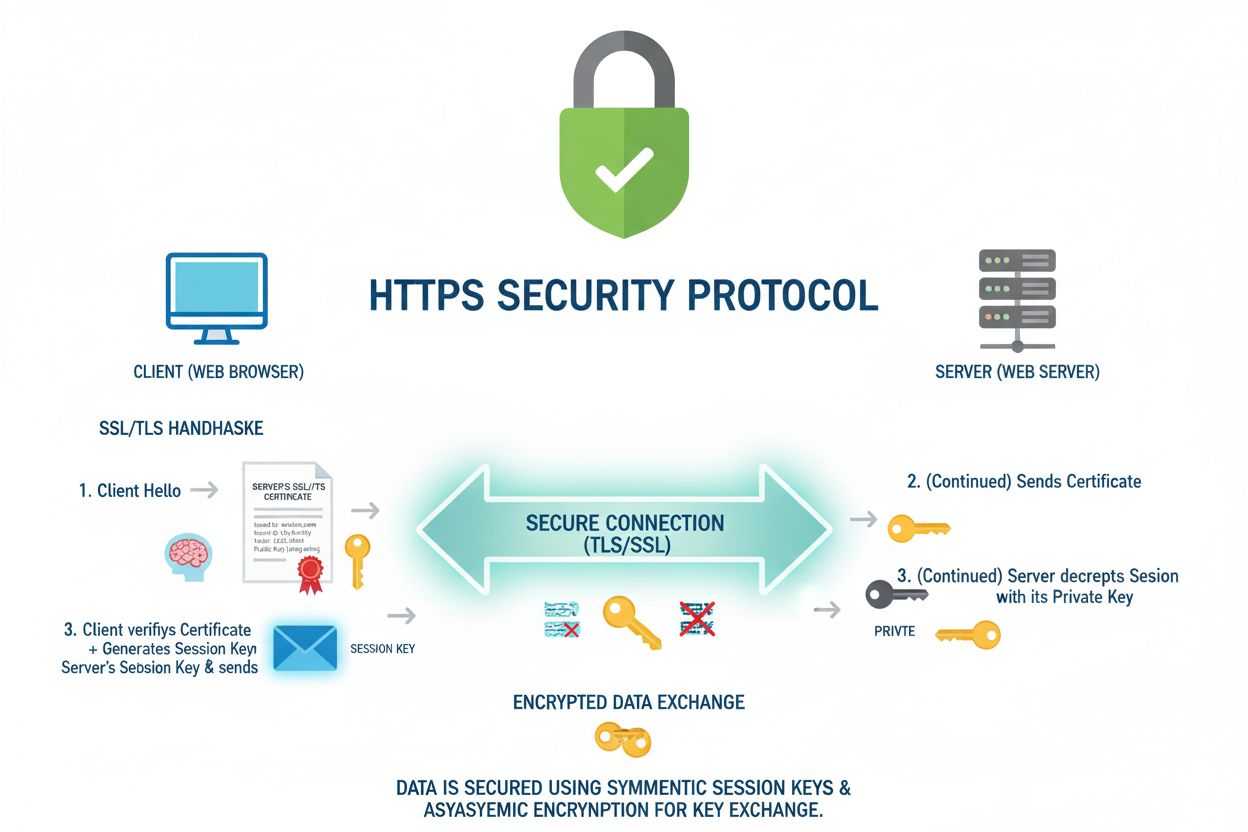
SSL certificates operate through a sophisticated process called the SSL/TLS handshake, which occurs invisibly and instantaneously when a user visits an HTTPS website. The process begins when a browser connects to a secure server and requests the server’s SSL certificate. The server responds by sending its certificate containing the public key and certificate details. The browser then verifies the certificate’s authenticity by checking it against a list of trusted Certificate Authorities (CAs) stored in the browser. If the certificate is valid and matches the domain being accessed, the browser generates a session key and encrypts it using the server’s public key. The server decrypts this session key using its private key, and both parties now possess the same session key. From this point forward, all data transmitted between the browser and server is encrypted using this symmetric encryption session key, which is much faster than the initial asymmetric encryption process. This elegant system combines the security of asymmetric cryptography (public/private key pairs) with the efficiency of symmetric encryption (single shared key), creating a secure yet performant connection. The entire handshake typically completes in milliseconds, making it transparent to users while providing robust protection against eavesdropping and data tampering.
SSL certificates are categorized into three distinct types based on the level of identity verification performed by the Certificate Authority:
Domain Validated (DV) Certificates represent the most basic level of SSL certification, requiring only proof of domain ownership. The applicant must demonstrate control over the domain through email verification or DNS record validation, a process that can be completed within minutes. DV certificates provide encryption but offer no organizational identity verification, making them suitable only for non-commercial websites such as blogs and personal projects. However, DV certificates have become problematic because phishing sites and malicious actors can easily obtain them, creating a false sense of security for users who see the padlock icon.
Organization Validated (OV) Certificates require nine validation checks and represent a mid-level option for businesses conducting online transactions. In addition to domain ownership verification, Certificate Authorities must confirm the organization’s legal existence, physical address, and operational status. When users click the padlock icon on an OV-secured website, they can view the organization’s name, providing additional assurance about the website’s legitimacy. OV certificates are ideal for small to medium-sized businesses, login pages, and websites handling customer information.
Extended Validation (EV) Certificates provide the highest level of identity assurance, requiring 16 rigorous validation checks including verification of the business’s public phone number, length of time in operation, registration number, jurisdiction, and a telephone call to confirm the requestor’s employment status. EV certificates also include a domain fraud check and contact blacklist verification. When an EV certificate is installed, browsers may display the organization’s name directly in the address bar (depending on browser implementation), providing immediate visual confirmation of the website’s legitimacy. Financial institutions, Fortune 500 companies, and major e-commerce platforms predominantly use EV certificates to maximize customer trust.
| Characteristic | Domain Validated (DV) | Organization Validated (OV) | Extended Validation (EV) |
|---|---|---|---|
| Validation Checks | 1-2 (domain ownership only) | 9 validation checks | 16 validation checks |
| Issuance Time | Minutes to hours | 1-3 days | 3-7 days |
| Organization Name Display | Not displayed | Displayed in certificate details | Displayed in address bar (browser-dependent) |
| Cost | $0-50/year | $50-200/year | $150-500+/year |
| Best For | Blogs, personal sites, non-commercial | Business sites, login pages, SMBs | Banks, e-commerce, Fortune 500 |
| Trust Level | Low (minimal assurance) | Medium (organizational verification) | High (comprehensive verification) |
| Phishing Risk | High (easily obtained by attackers) | Low (organizational verification required) | Very Low (extensive vetting) |
| SEO Impact | Positive (HTTPS required) | Positive (HTTPS required) | Positive (HTTPS required) |
Certificate Authorities (CAs) are trusted third-party organizations authorized to issue, validate, and manage SSL certificates. Major CAs include DigiCert, Sectigo, GlobalSign, and Let’s Encrypt, among others. CAs must meet stringent requirements set by operating systems, web browsers, and mobile device manufacturers to be included in the root certificate store—the list of trusted CAs pre-installed in browsers and devices. The CA’s role is critical because they verify the identity of certificate applicants and digitally sign the certificate with their own private key, creating a digital signature that proves the certificate’s authenticity. When a browser receives an SSL certificate, it verifies the CA’s signature using the CA’s public key, which is already trusted in the browser’s root store. This creates a chain of trust where users can rely on the certificate because they trust the CA that issued it. CAs are held to rigorous standards and undergo regular WebTrust audits to ensure compliance with security practices. The CA/B Forum establishes industry standards that all CAs must follow, including validation procedures, certificate validity periods, and security requirements. This standardized approach ensures consistent security across the internet and protects users from fraudulent certificates.
Google’s commitment to HTTPS has made SSL certificates a critical factor in search engine optimization. In 2014, Google announced that HTTPS would become a ranking signal, meaning websites with valid SSL certificates receive a slight boost in search rankings compared to non-HTTPS sites. This policy has been reinforced over time, with Google continuously increasing the importance of HTTPS in its ranking algorithm. Beyond search rankings, Google Chrome and other modern browsers display prominent “Not Secure” warnings for websites without valid SSL certificates, which significantly impacts user behavior. Studies show that users are substantially less likely to complete transactions or enter personal information on websites displaying security warnings. For e-commerce sites, this translates directly to lost revenue, as users abandon shopping carts when they see security warnings. Additionally, SSL certificates enable the HTTPS Everywhere initiative, which aims to encrypt all internet traffic by default. Organizations that implement SSL certificates demonstrate a commitment to user privacy and data protection, which enhances brand reputation and customer loyalty. The combination of SEO benefits, reduced bounce rates, and increased conversion rates makes SSL certificate implementation a fundamental business requirement rather than merely a technical security measure.
Implementing SSL certificates effectively requires attention to several critical practices. Organizations should first choose the appropriate certificate type based on their website’s function and data sensitivity—DV for informational sites, OV for business operations, and EV for financial transactions. The certificate signing request (CSR) must be generated on the server where the certificate will be installed, containing the domain name, organization details, and a public key. Organizations should use strong key lengths (minimum 2048-bit RSA or equivalent ECC) to ensure encryption strength. Certificate renewal must occur before expiration to avoid service interruptions and security warnings; many organizations automate this process using certificate management platforms like AWS Certificate Manager or DigiCert’s CertCentral. For organizations with multiple domains or subdomains, Wildcard certificates or Multi-Domain (SAN) certificates provide cost-effective coverage. Certificate pinning can be implemented for high-security applications to prevent man-in-the-middle attacks. Regular certificate audits should verify that all certificates are valid, properly configured, and not approaching expiration. Organizations should also implement HSTS (HTTP Strict Transport Security) headers to force browsers to use HTTPS connections. Monitoring tools should track certificate expiration dates and alert administrators well in advance of renewal deadlines.
The SSL/TLS landscape continues to evolve in response to emerging security threats and technological advances. Post-quantum cryptography represents a significant frontier, as quantum computers could theoretically break current encryption algorithms. Organizations and standards bodies are actively developing and testing quantum-resistant cryptographic algorithms to ensure SSL/TLS remains secure in the quantum computing era. Certificate Transparency (CT) has become increasingly important, requiring all publicly-trusted certificates to be logged in public CT logs, enabling detection of fraudulently issued certificates. The industry is moving toward automated certificate management through technologies like ACME (Automated Certificate Management Environment), which streamlines certificate issuance and renewal. Zero-trust security models are driving adoption of mutual TLS (mTLS), where both clients and servers authenticate each other, extending SSL/TLS protection beyond traditional web browsers to APIs and microservices. The maximum certificate validity period continues to decrease—from 39 months to 13 months—reflecting the industry’s commitment to reducing security risks. Elliptic Curve Cryptography (ECC) is gaining adoption as an alternative to RSA, offering equivalent security with smaller key sizes and faster computation. Organizations are increasingly implementing certificate pinning and HSTS preloading to prevent sophisticated attacks. The integration of SSL/TLS with AI-driven security monitoring enables real-time detection of certificate anomalies and potential threats. As cyber threats become more sophisticated, SSL/TLS technology will continue to evolve, incorporating stronger encryption standards, faster performance, and enhanced protection mechanisms to maintain the security and trust that modern internet communications depend upon.
SSL (Secure Sockets Layer) and TLS (Transport Layer Security) are cryptographic protocols that serve the same purpose, with TLS being the modern, more secure successor to SSL. While SSL is technically outdated (version 3.0 was released in 1996), the term 'SSL certificate' remains commonly used in the industry to refer to both SSL and TLS certificates. Modern certificates use TLS protocols, which offer stronger encryption algorithms and better security features than the original SSL protocol.
An SSL certificate enables HTTPS by establishing an encrypted connection through the SSL/TLS handshake process. When a user visits an HTTPS website, the browser requests the certificate from the server, verifies it with a trusted Certificate Authority, and then uses the certificate's public key to encrypt data. This encrypted connection ensures that all data transmitted between the browser and server remains confidential and cannot be intercepted by attackers.
The three types are Domain Validated (DV), Organization Validated (OV), and Extended Validation (EV) certificates. DV certificates require only domain ownership verification and are the quickest to obtain but provide minimal identity assurance. OV certificates verify both domain ownership and the organization's legitimacy, requiring nine validation checks. EV certificates provide the highest assurance with 16 validation checks, including business verification and telephone confirmation, making them ideal for financial institutions and e-commerce sites.
Google has made HTTPS a ranking factor for search engine optimization since 2014, meaning SSL-secured websites receive higher search rankings than unsecured sites. Additionally, Google Chrome and other browsers display 'Not Secure' warnings for websites without valid SSL certificates, which negatively impacts user trust and click-through rates. Implementing an SSL certificate is therefore essential for both SEO performance and user confidence in your website.
Modern SSL certificates have a maximum validity period of 13 months, down from the previous 39-month limit. This reduction in validity period was implemented to minimize security risks and reduce the window of opportunity for certificate misuse. Organizations must renew their certificates before expiration to maintain continuous HTTPS protection and avoid browser security warnings.
An SSL certificate contains the domain name, certificate authority details, the CA's digital signature, issuance and expiration dates, the public key, and the SSL/TLS version. It may also include the organization name (for OV and EV certificates), subject alternative names for multi-domain coverage, and other metadata. This information allows browsers to verify the certificate's authenticity and the website owner's identity.
Yes, SSL certificates can protect multiple domains through different types: Single Domain certificates protect one domain, Wildcard certificates protect a domain and all its subdomains, and Multi-Domain (SAN) certificates protect multiple unrelated domains. Organizations can choose the certificate type that best matches their infrastructure needs and cost considerations.
SSL certificates directly impact user trust by displaying a padlock icon and HTTPS prefix in the browser address bar. Higher validation levels (OV and EV) display the organization name, providing additional assurance to users. Studies show that users are significantly more likely to complete transactions on websites with visible security indicators, making SSL certificates crucial for e-commerce conversion rates and brand reputation.
Start tracking how AI chatbots mention your brand across ChatGPT, Perplexity, and other platforms. Get actionable insights to improve your AI presence.
HTTPS is the secure protocol for web communication using SSL/TLS encryption. Learn how it protects data, differs from HTTP, and why it's essential for website s...

Learn how HTTPS impacts AI search trust and visibility. Discover why SSL certificates matter for ChatGPT, Perplexity, and AI answer generators. Essential guide ...
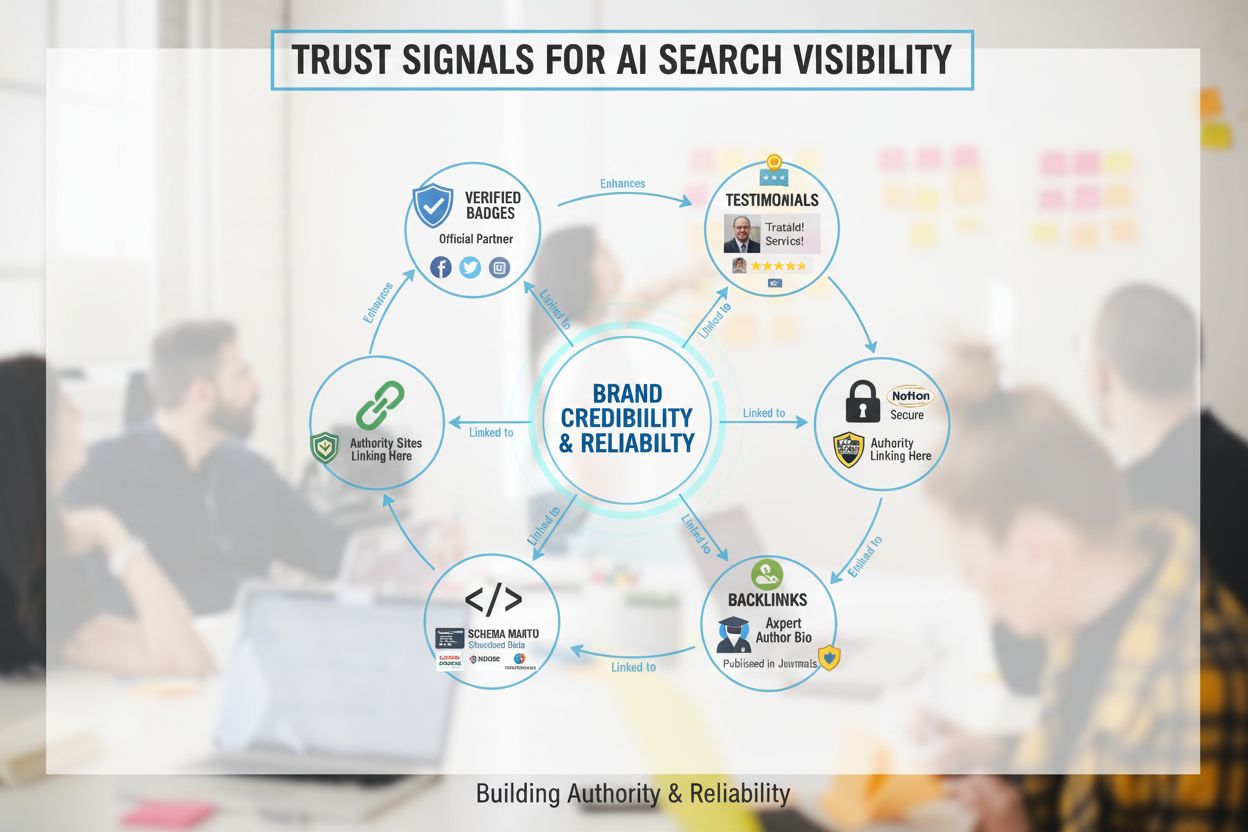
Trust signals are credibility indicators that establish brand reliability for users and AI systems. Learn how verified badges, testimonials, and security elemen...
Cookie Consent
We use cookies to enhance your browsing experience and analyze our traffic. See our privacy policy.