

Statistical Content
Learn what statistical content is, why it matters for AI citations, and how data-driven content builds authority. Discover how 74% of B2B buyers trust research-...
10 min read

Strategic inclusion of specific data points, percentages, and numbers that AI systems prefer to cite. Content with 19+ statistical data points averages 5.4 citations compared to 2.8 for pages with minimal data. This practice improves AI visibility and citation likelihood by providing verifiable claims and credibility signals that language models recognize as authoritative evidence.
Strategic inclusion of specific data points, percentages, and numbers that AI systems prefer to cite. Content with 19+ statistical data points averages 5.4 citations compared to 2.8 for pages with minimal data. This practice improves AI visibility and citation likelihood by providing verifiable claims and credibility signals that language models recognize as authoritative evidence.
Statistics injection is the strategic practice of integrating verified statistical data points, research findings, and quantifiable evidence throughout content to improve visibility and citation rates in AI-generated responses. AI systems are trained to recognize and prioritize content backed by concrete data, as statistics serve as credibility signals that help algorithms determine content quality and relevance. Research demonstrates that content containing 19 or more statistical data points averages 5.4 citations compared to just 2.8 citations for pages with minimal data—nearly double the citation rate. This fundamental difference in AI citation behavior has made statistics injection a critical component of modern content optimization strategy.
AI language models are trained on vast datasets where statistical evidence and research-backed claims consistently correlate with authoritative, trustworthy content. When AI systems encounter structured data points, percentages, and quantifiable findings, they recognize these as verifiable claims that reduce uncertainty and improve response quality. Statistics function as credibility signals that help AI algorithms distinguish between opinion-based content and evidence-based information, making data-rich pages significantly more likely to be cited in AI-generated responses. The preference for statistical content is so pronounced that pages using structured data are 40% more likely to be cited by AI systems compared to content lacking quantifiable evidence. This citation advantage extends across different AI platforms, including ChatGPT, Google AI Overviews, and Perplexity, though each platform exhibits distinct citation patterns based on their training data and algorithms.
| Data Point Density | Average Citations | Citation Improvement |
|---|---|---|
| Minimal (0-5 data points) | 2.8 | Baseline |
| Moderate (6-18 data points) | 4.1 | +46% |
| High (19+ data points) | 5.4 | +93% |
The data clearly illustrates that investment in statistical content yields measurable returns in AI visibility and citation frequency.
Effective statistics injection requires deliberate placement and integration of data throughout your content architecture, rather than clustering all statistics in a single section. The most successful approach involves distributing statistical evidence across multiple sections—opening with a compelling statistic to establish credibility, embedding supporting data within body paragraphs to reinforce key claims, and concluding with forward-looking metrics or projections. Different types of statistics serve distinct purposes: percentages and growth rates demonstrate market trends and adoption, absolute numbers provide concrete scale and impact, research findings from credible institutions add authority, and comparative statistics highlight competitive advantages or performance improvements. Strategic implementation also requires matching statistics to audience expectations and content type, ensuring that data points feel organic rather than forced into the narrative.
Key Implementation Strategies:
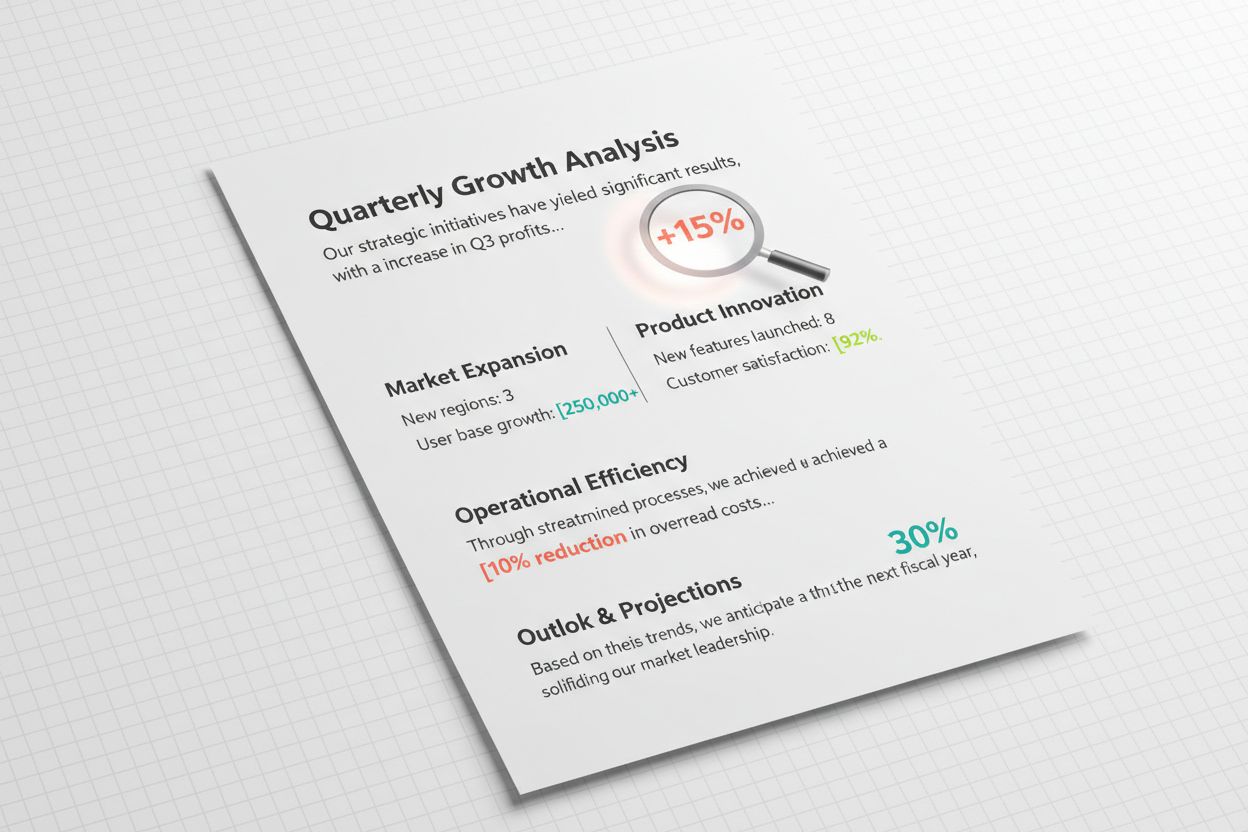
While statistics injection and keyword stuffing both represent attempts to optimize content for algorithmic systems, they operate on fundamentally different principles and produce vastly different results. Keyword stuffing artificially repeats search terms regardless of context or relevance, creating awkward, unnatural content that degrades user experience and violates search engine guidelines. Statistics injection, by contrast, integrates genuine, relevant data that enhances content quality, provides real value to readers, and naturally improves AI citation likelihood. AI systems can readily detect artificial data injection through multiple mechanisms: they analyze whether statistics align with the content topic, verify that data points come from credible sources, assess whether numbers are presented in proper context, and evaluate whether the overall content reads naturally. The critical distinction lies in authenticity and relevance—legitimate statistics injection uses real data that genuinely supports the content’s claims, while artificial injection forces irrelevant numbers into content purely for algorithmic advantage. Modern AI systems increasingly penalize content that appears manipulative or inauthentic, making the quality and relevance of statistical evidence far more important than quantity.
Tracking the impact of statistics injection requires establishing baseline metrics before implementation and monitoring specific KPIs that directly correlate with AI citation performance. The primary metric to monitor is AI citation frequency, which can be tracked by searching your content in ChatGPT, Google AI Overviews, and Perplexity to count how often your pages appear in AI-generated responses over time. Secondary metrics include citation rate improvement (comparing citation frequency before and after adding statistics), average citations per page (dividing total citations by number of pages), and citation consistency across different AI platforms. Tools like SEMrush, Ahrefs, and specialized AI citation tracking platforms can help automate this measurement process, though manual tracking through periodic searches remains valuable for understanding which specific statistics drive citations. Establish a measurement cadence of monthly or quarterly reviews to identify trends, and correlate citation improvements with specific statistical additions to understand which data types and formats generate the strongest AI response.
The effectiveness and implementation approach for statistics injection varies significantly across different content types and industry contexts. Blog posts benefit most from narrative-driven statistics that tell a compelling story—opening with surprising data, using statistics to support arguments throughout the post, and concluding with forward-looking projections that encourage further exploration. Product pages require statistics that directly address buyer concerns and demonstrate value, such as performance metrics, customer satisfaction rates, adoption statistics, and competitive comparisons that help prospects make informed decisions. Support documentation and technical guides should integrate statistics that establish best practices, show performance improvements from following recommendations, and provide quantifiable evidence of problem resolution. Industry-specific considerations significantly impact statistical relevance: B2B SaaS companies benefit from ROI metrics and efficiency improvements, healthcare content requires clinical trial data and peer-reviewed research, financial services need regulatory compliance statistics and performance benchmarks, and e-commerce content thrives with conversion rate improvements and customer satisfaction metrics. The key principle across all content types is ensuring that statistics directly serve the content’s primary purpose and audience needs, rather than appearing as generic data points inserted for algorithmic advantage.

Statistics injection is the strategic practice of integrating verified statistical data points throughout content to improve AI citation rates. Research shows content with 19+ data points averages 5.4 citations versus 2.8 for pages with minimal data. AI systems recognize statistics as credibility signals that indicate authoritative, trustworthy content, making data-rich pages significantly more likely to be cited in AI-generated responses.
Content with 19 or more statistical data points averages 5.4 citations compared to just 2.8 citations for pages with minimal data—nearly double the citation rate. Pages using structured data are 40% more likely to be cited by AI systems. This improvement is consistent across different AI platforms including ChatGPT, Google AI Overviews, and Perplexity.
The most effective statistics include percentages and growth rates (demonstrating market trends), absolute numbers (providing concrete scale), research findings from credible institutions (adding authority), and comparative statistics (highlighting advantages). The key is ensuring all statistics directly support your content's core message and feel organic rather than forced into the narrative.
Pages updated within three months average 6 citations versus 3.6 for outdated content. Establish a measurement cadence of monthly or quarterly reviews to identify trends and refresh statistics regularly. This maintains content freshness, which AI systems heavily favor when selecting sources for citations.
Yes, AI systems can readily detect artificial data injection through multiple mechanisms: analyzing whether statistics align with content topic, verifying data comes from credible sources, assessing whether numbers are presented in proper context, and evaluating whether content reads naturally. Legitimate statistics injection uses real data that genuinely supports claims, while artificial injection forces irrelevant numbers purely for algorithmic advantage.
Track AI citation frequency by searching your content in ChatGPT, Google AI Overviews, and Perplexity to count appearances over time. Monitor citation rate improvement (comparing before and after adding statistics), average citations per page, and citation consistency across platforms. Tools like SEMrush and Ahrefs can help automate measurement, though manual tracking remains valuable for understanding which specific statistics drive citations.
Yes, implementation varies significantly. Blog posts benefit from narrative-driven statistics that tell compelling stories. Product pages require statistics addressing buyer concerns like performance metrics and competitive comparisons. Support documentation should integrate statistics establishing best practices and problem resolution. Industry-specific considerations matter: B2B SaaS benefits from ROI metrics, healthcare needs clinical data, and e-commerce thrives with conversion improvements.
Statistics injection integrates genuine, relevant data that enhances content quality and provides real value, while keyword stuffing artificially repeats search terms regardless of context. AI systems can detect artificial data injection and increasingly penalize manipulative content. The critical distinction is authenticity and relevance—legitimate statistics use real data genuinely supporting claims, while artificial injection forces irrelevant numbers purely for algorithmic advantage.
Track how often your brand appears in AI-generated responses across ChatGPT, Google AI Overviews, and Perplexity. AmICited provides real-time monitoring of your AI visibility and citation performance.
Learn what statistical content is, why it matters for AI citations, and how data-driven content builds authority. Discover how 74% of B2B buyers trust research-...

Learn how to use statistics and data-backed insights to improve your brand's visibility in AI search engines like ChatGPT, Perplexity, and Google Gemini. Discov...

Learn what makes content citation-worthy for AI systems like ChatGPT, Perplexity, and Google AI Overview. Discover the key characteristics, optimization strateg...
Cookie Consent
We use cookies to enhance your browsing experience and analyze our traffic. See our privacy policy.