


Subscription Commerce
Subscription commerce is a business model in which customers pay on a recurring schedule — usually monthly — to receive products or ongoing access, rather than making individual one-time purchases. It spans everything from replenishment boxes for consumables to curated discovery boxes and access-based membership models.
Definition of Subscription Commerce
Subscription commerce is a business model built around recurring, scheduled payments in exchange for ongoing product delivery or access, rather than the traditional one-time transaction model of most retail. Instead of a customer deciding to buy again each time, they opt in once and continue to be billed and served on a set cadence — usually monthly — until they actively cancel. This model shifts the core business challenge from constantly winning a new purchase decision to retaining an already-won subscriber, which changes almost everything about how the business measures and manages itself, from marketing to fulfillment to customer support.
How Subscription Commerce Works
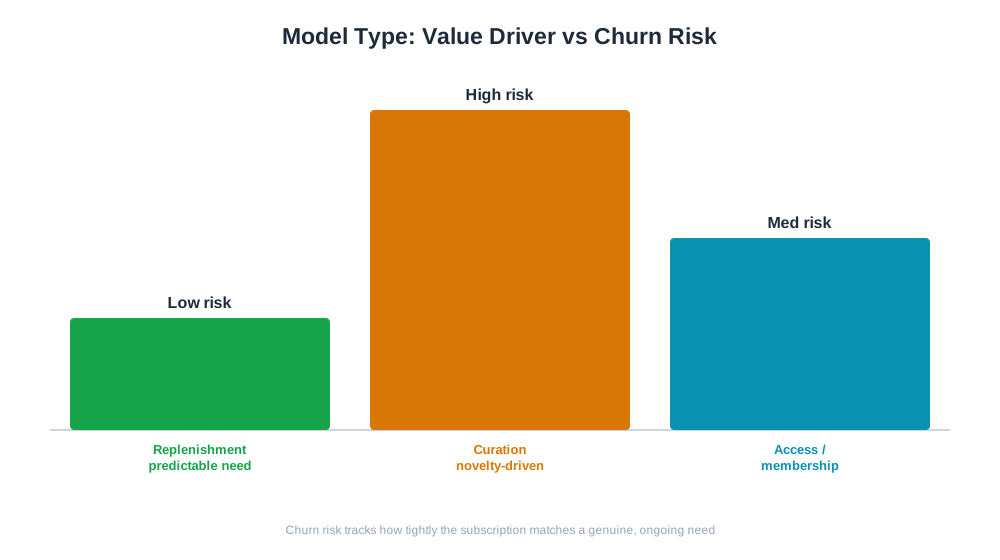
Subscription commerce businesses generally fall into a few recognizable structures. Replenishment models deliver the same or similar product on a recurring schedule, matched to how quickly a customer naturally uses it up — razors, coffee, supplements, and pet food are classic examples, since the underlying consumption pattern creates a genuine, predictable reorder need. Curation models deliver a rotating, often surprise selection of products each cycle, relying more on discovery and novelty than a specific known need — beauty boxes and snack boxes are common examples. Access models charge a recurring fee for ongoing perks, discounts, or exclusive privileges rather than a guaranteed physical shipment every cycle, closer to a membership than a delivery service.
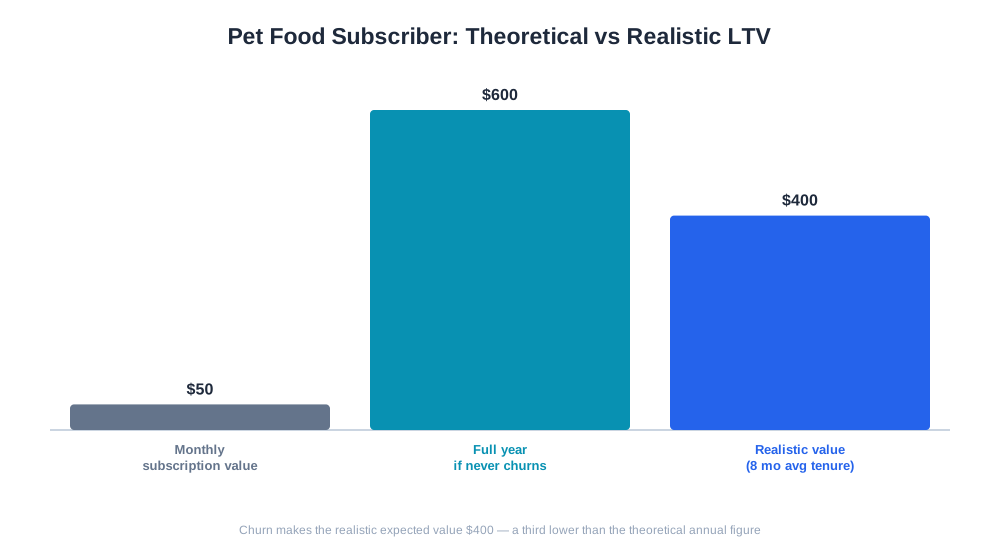
Worked example: a pet food brand launches a subscription option alongside its one-time purchase listing, offering a 15% discount for subscribing. A customer signs up for a 30-day recurring delivery of a $50 bag of food, effectively worth $600 a year if they stay subscribed the full twelve months. If the brand’s average subscriber stays active for 8 months before canceling, the realistic expected value per subscriber is closer to $400 — a number that only becomes visible once churn is tracked, not just the theoretical full-year value.

Ready to Monitor Your AI Visibility?
Track how AI chatbots mention your brand across ChatGPT, Perplexity, and other platforms.
Why Subscription Commerce Matters for E-commerce Brands
The appeal of subscription commerce is the shift from a store that must re-win every purchase from scratch to one with a base of revenue that renews itself automatically. This changes cash flow predictability, makes customer lifetime value calculations more concrete, and often improves marketing efficiency, since acquisition cost is spread across many billing cycles rather than justified by a single transaction. It also creates a closer, more continuous relationship with the customer, which can surface product feedback and reduce the cost of cross-selling additional products compared to a customer the brand only hears from occasionally.
| Model | Value Driver | Typical Churn Risk | Best Fit |
|---|---|---|---|
| Replenishment | Genuine, predictable reorder need | Lower — tied to real consumption | Consumables, personal care |
| Curation | Novelty and discovery | Higher — appeal can fade | Beauty, snacks, hobby products |
| Access/membership | Ongoing perks or savings | Medium — depends on perceived value | Loyalty tiers, exclusive content |
Subscription Commerce and AI-Driven Commerce
AI shopping assistants such as ChatGPT Shopping and Perplexity Shopping are optimized to help shoppers find and compare one-time purchase decisions quickly, which makes an already-subscribed customer relationship more valuable by comparison — a subscriber isn’t subject to being re-routed to a competitor’s product through a fresh AI-assisted comparison each time they need to buy. This is one reason subscription commerce brands increasingly treat their subscriber base as a defensible asset relative to increasingly frictionless AI-assisted product discovery. AmICited’s eshop_get_series tool tracks daily revenue trends for a connected store, which subscription and hybrid commerce brands can use to see how much of their revenue growth is coming from a strengthening recurring base versus one-time sales.
Stay Updated on AI Visibility Trends
Get the latest insights on AI mentions, brand monitoring, and optimization strategies.
Best Practices for Subscription Commerce
- Choose a model (replenishment, curation, or access) that genuinely matches how the product is used, rather than forcing a subscription onto a product without natural recurring need
- Track churn by cohort from day one, since it is the single most important health signal for the business
- Offer a real incentive to subscribe (discount, exclusive perks) rather than relying purely on convenience
- Make pausing and skipping deliveries easy — customers who feel trapped are more likely to cancel outright than temporarily pause
- Monitor cancellation reasons closely and feed them back into product, pricing, or cadence decisions
Common Subscription Commerce Mistakes
The most common mistake is launching a subscription model without validating that the underlying product has a genuine recurring need, resulting in a subscriber base that churns quickly once initial novelty fades — testing replenishment cadence against real usage data before launch avoids this. Another frequent error is making cancellation deliberately difficult, which may reduce short-term churn numbers but tends to generate chargebacks, negative reviews, and reputational damage that cost more than the retained revenue is worth. Some businesses also underprice the subscription discount relative to the value of the commitment, failing to make subscribing meaningfully more attractive than a one-time purchase, which suppresses sign-up rates. Finally, many subscription commerce businesses focus heavily on acquisition and underinvest in the ongoing subscriber experience — box customization, delivery timing, easy self-service management — even though retention improvements compound in value far more than incremental new subscriber growth once the base reaches meaningful size.