

Main Content (MC)
Main Content (MC) is the primary material on a webpage that fulfills its purpose. Learn how MC quality affects SEO rankings, E-E-A-T signals, and AI monitoring ...
10 min read
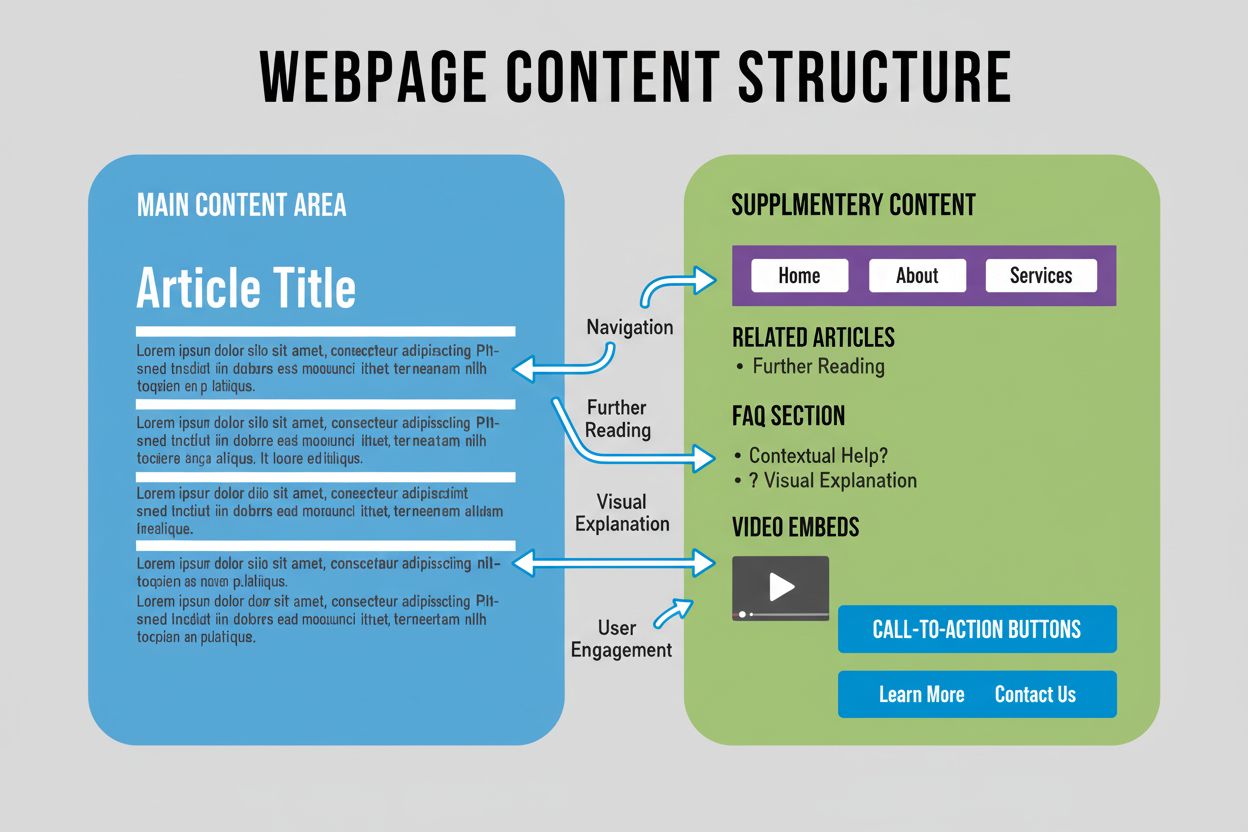
Supplementary content refers to supporting material on a webpage that enhances the main content’s value and user experience without being the primary focus of the page. It includes navigation menus, sidebars, related articles, FAQs, videos, images, and other elements that provide additional context and help users navigate the site more effectively.
Supplementary content refers to supporting material on a webpage that enhances the main content's value and user experience without being the primary focus of the page. It includes navigation menus, sidebars, related articles, FAQs, videos, images, and other elements that provide additional context and help users navigate the site more effectively.
Supplementary content (SC) is supporting material on a webpage that enhances the value and utility of the main content without being the page’s primary focus. According to Google’s Search Quality Rater Guidelines, supplementary content includes navigation menus, sidebars, related article links, FAQ sections, embedded videos, images, call-to-action buttons, breadcrumb navigation, and other elements that provide additional context and improve user experience. Unlike main content, which directly addresses the user’s search intent, supplementary content serves to expand understanding, facilitate navigation, and provide complementary information that helps users engage more deeply with the page. This distinction is critical for both search engine optimization and AI visibility, as search engines and AI systems evaluate how well supplementary elements support and enhance the primary message without diluting its relevance or creating confusion about the page’s core topic.
The concept of supplementary content emerged as search engines evolved beyond simple keyword matching to more sophisticated quality assessment methods. In the early days of SEO, websites often mixed all content types together without clear distinction, leading to confusion about page relevance and quality. Google’s introduction of the Panda algorithm in 2011 marked a turning point, as it began penalizing sites with low-quality or irrelevant content mixed throughout pages. This prompted the development of more structured content organization, where supplementary content became formally recognized as a distinct category in Google’s Quality Rater Guidelines. The guidelines explicitly define supplementary content as material that improves user experience but isn’t essential to the page’s primary purpose. Over time, as mobile devices became dominant and user experience signals gained importance, supplementary content evolved to include responsive navigation, mobile-optimized sidebars, and interactive elements. Today, with the rise of AI search engines like Perplexity, ChatGPT, and Google AI Overviews, supplementary content plays an even more critical role in establishing authority and trustworthiness signals that influence how AI systems cite and recommend websites.
Supplementary content operates on multiple levels within a webpage’s architecture. At the structural level, supplementary content is typically positioned in secondary areas such as sidebars, footers, headers, and below the main article body, allowing search engines to identify and differentiate it from primary content through HTML semantic markup and CSS positioning. Search engines use page layout analysis to understand which content is main versus supplementary, examining factors like content hierarchy, visual prominence, and link structure. When properly implemented, supplementary content includes elements like <aside> tags for sidebars, <nav> tags for navigation menus, and structured data markup that explicitly identifies content relationships. The supplementary content section typically contains internal links to related pages, which serve dual purposes: they help users discover additional relevant information while also distributing internal link equity throughout the site’s architecture. According to research from Backlinko, pages with well-organized supplementary content sections show improved crawlability and indexation, as search engine bots can more efficiently understand the page’s structure and identify the most important content. Additionally, supplementary content elements like breadcrumb navigation, schema markup, and semantic HTML provide search engines with explicit signals about content relationships and page context, which enhances their ability to rank pages appropriately for relevant queries.
The business impact of supplementary content extends far beyond simple SEO metrics. According to a comprehensive HubSpot study, comprehensive content with useful supplementary materials ranked on average 12% higher than basic content without supplementary elements. This translates directly to increased organic traffic and visibility for businesses. A SEMrush analysis revealed that webpages with high-quality supplementary content had a 30% lower bounce rate compared to those without, indicating that users find supplementary elements genuinely valuable and stay on pages longer. Furthermore, research shows that well-rounded content with enhanced supplementary content received 22% more backlinks and was shared 15% more on social media platforms, creating a compounding effect on visibility and authority. For e-commerce sites, supplementary content like product recommendations, customer reviews, and related product suggestions directly impacts conversion rates and average order value. News websites benefit significantly from supplementary content sections featuring related articles and trending topics, which increase page views per session and reduce bounce rates. The practical implementation of supplementary content also reduces content dilution—a critical concern where irrelevant information mixed into main content can confuse search engines about page relevance. By properly organizing supplementary content in designated sections, websites maintain topical focus in their main content while still providing comprehensive information that users seek.
| Content Type | Primary Purpose | Location on Page | SEO Impact | User Engagement | Examples |
|---|---|---|---|---|---|
| Main Content (MC) | Directly addresses search intent | Top/center of page | High - directly affects rankings | Critical - must satisfy user query | Blog posts, product descriptions, articles |
| Supplementary Content (SC) | Enhances and supports main content | Sidebars, footers, below main | Medium - signals quality and authority | High - improves time on page | Related articles, FAQs, navigation menus |
| Advertisements (Ads) | Monetization | Above/below fold, sidebars | Negative if excessive | Low - often ignored or resented | Display banners, affiliate links, sponsored content |
| Navigation Elements | Facilitates site exploration | Header, footer, sidebars | Medium - improves crawlability | High - essential for usability | Menus, breadcrumbs, internal links |
| User-Generated Content | Community engagement | Comments, reviews sections | Medium - signals trust | High - builds community | Comments, testimonials, user reviews |
As AI search engines become increasingly important for brand visibility, understanding how supplementary content impacts AI citations is essential. Perplexity, ChatGPT, Google AI Overviews, and Claude all evaluate supplementary content when determining source credibility and relevance. These AI systems analyze not just the main article but also supporting elements like author credentials (often found in supplementary author bios), publication dates, related content links, and user engagement signals to assess source authority. According to research on AI visibility, pages with comprehensive supplementary content that includes clear author information, publication metadata, and related resources receive higher citation rates in AI-generated responses. For brands using AmICited to monitor their AI visibility, understanding how supplementary content contributes to citation likelihood is crucial. AI systems particularly value supplementary content that demonstrates expertise, such as author credentials, expert testimonials, and related research links. Additionally, supplementary content like FAQ sections and related articles help AI systems understand the full context of a topic, making them more likely to cite your content when answering user queries. The presence of high-quality supplementary content signals to AI systems that your site is a comprehensive resource, increasing the probability of being included in AI-generated responses across multiple platforms.
Implementing effective supplementary content requires strategic planning and careful execution. First, ensure that all supplementary content is genuinely relevant to the main topic—irrelevant sidebars or unrelated links dilute page focus and confuse search engines. Keep supplementary content brief and scannable; lengthy supplementary sections can overwhelm users and reduce engagement with main content. Use clear visual hierarchy to distinguish supplementary content from main content through styling, positioning, and design elements. Implement semantic HTML tags like <aside>, <nav>, and <section> to explicitly mark supplementary content areas, helping search engines understand content relationships. Include internal links within supplementary content to create a logical site architecture that distributes link equity and helps users discover related information. Optimize supplementary content for mobile devices, ensuring that sidebars, navigation menus, and other elements remain accessible and functional on smaller screens. Use structured data markup (Schema.org) to explicitly define relationships between main and supplementary content, providing search engines with additional context. Regularly audit supplementary content to ensure it remains current, relevant, and functional—broken links or outdated information in supplementary sections can negatively impact user experience and search rankings. Finally, balance monetization with user experience; while ads are necessary for revenue, excessive advertising in supplementary content areas can reduce page quality scores and harm rankings.
The role of supplementary content is evolving rapidly as search technology advances and user expectations change. With the rise of AI search engines and generative AI systems, supplementary content is becoming increasingly important for establishing authority and trustworthiness signals that influence AI citations. Future developments will likely see supplementary content become more interactive and personalized, with AI systems analyzing user behavior to determine which supplementary elements are most valuable for specific queries. The integration of voice search and conversational AI means that supplementary content will need to be optimized for natural language processing, with clear answers to common questions and well-structured FAQ sections becoming even more critical. As Core Web Vitals and user experience signals gain importance, supplementary content implementation will need to prioritize performance, with lightweight, fast-loading supplementary elements becoming essential. The emergence of Answer Engine Optimization (AEO) as a distinct discipline means that supplementary content will play a crucial role in helping AI systems understand and cite your content. Additionally, as privacy regulations limit third-party data collection, supplementary content that demonstrates first-party expertise and authority will become more valuable for establishing trust. Organizations using platforms like AmICited to monitor AI visibility will increasingly need to optimize supplementary content specifically for AI systems, ensuring that author credentials, publication metadata, and related resources are clearly marked and easily accessible. The future of supplementary content lies in creating comprehensive, well-organized information ecosystems where supplementary elements work seamlessly with main content to provide maximum value to both human users and AI systems.
Main content is the primary information on a page that directly addresses the user's search intent, such as a blog post, product description, or article. Supplementary content includes supporting elements like navigation menus, sidebars, related articles, FAQs, and videos that enhance the user experience without being the page's primary focus. According to Google's Quality Rater Guidelines, clear distinction between these two types helps search engines better understand page quality and relevance.
Supplementary content significantly impacts SEO rankings by improving user engagement metrics and signaling page quality to search engines. According to a HubSpot study, comprehensive content with useful supplementary materials ranked on average 12% higher than basic content. Additionally, a SEMrush study found that webpages with high-quality supplementary content had a 30% lower bounce rate, which is a positive ranking signal for Google's algorithms.
Common examples of supplementary content include navigation menus, sidebar widgets with related links, FAQ sections, user comments and testimonials, embedded videos and images, call-to-action buttons, breadcrumb navigation, related article suggestions, and interactive tools like calculators or converters. These elements should be relevant to the main topic and genuinely help users understand or navigate the content better.
Yes, poorly implemented supplementary content can negatively impact SEO. If supplementary content is irrelevant, excessive, or distracting, it can dilute the main content's relevance and confuse search engines about the page's primary topic. Google's Quality Rater Guidelines specifically mention that pages with too many outbound links or distracting ads are considered lower quality. The key is ensuring supplementary content is brief, relevant, and genuinely enhances user experience.
Supplementary content plays a crucial role in AI visibility and brand monitoring platforms like AmICited. When AI systems like ChatGPT, Perplexity, and Google AI Overviews crawl and analyze pages, they evaluate both main and supplementary content to determine page quality and relevance. High-quality supplementary content signals authority and trustworthiness, which can increase the likelihood of your brand being cited in AI-generated responses and improving your overall AI visibility.
Not every webpage requires supplementary content, but most benefit from it. Pages that aim to provide comprehensive information on a topic should include supplementary elements to enhance user understanding and engagement. Evaluate your specific content goals and user intent to determine what supplementary content would be most valuable. Even simple pages benefit from basic supplementary elements like navigation menus and related links.
To optimize supplementary content, ensure it is brief but valuable, directly related to your main topic, and genuinely helpful to users. Use semantic HTML tags, include internal links to relevant pages, add structured data markup, and organize content with clear headings. Avoid excessive outbound links, ensure all supplementary elements are mobile-friendly, and make sure they don't distract from or dilute the main content's relevance to your target keywords.
Start tracking how AI chatbots mention your brand across ChatGPT, Perplexity, and other platforms. Get actionable insights to improve your AI presence.
Main Content (MC) is the primary material on a webpage that fulfills its purpose. Learn how MC quality affects SEO rankings, E-E-A-T signals, and AI monitoring ...
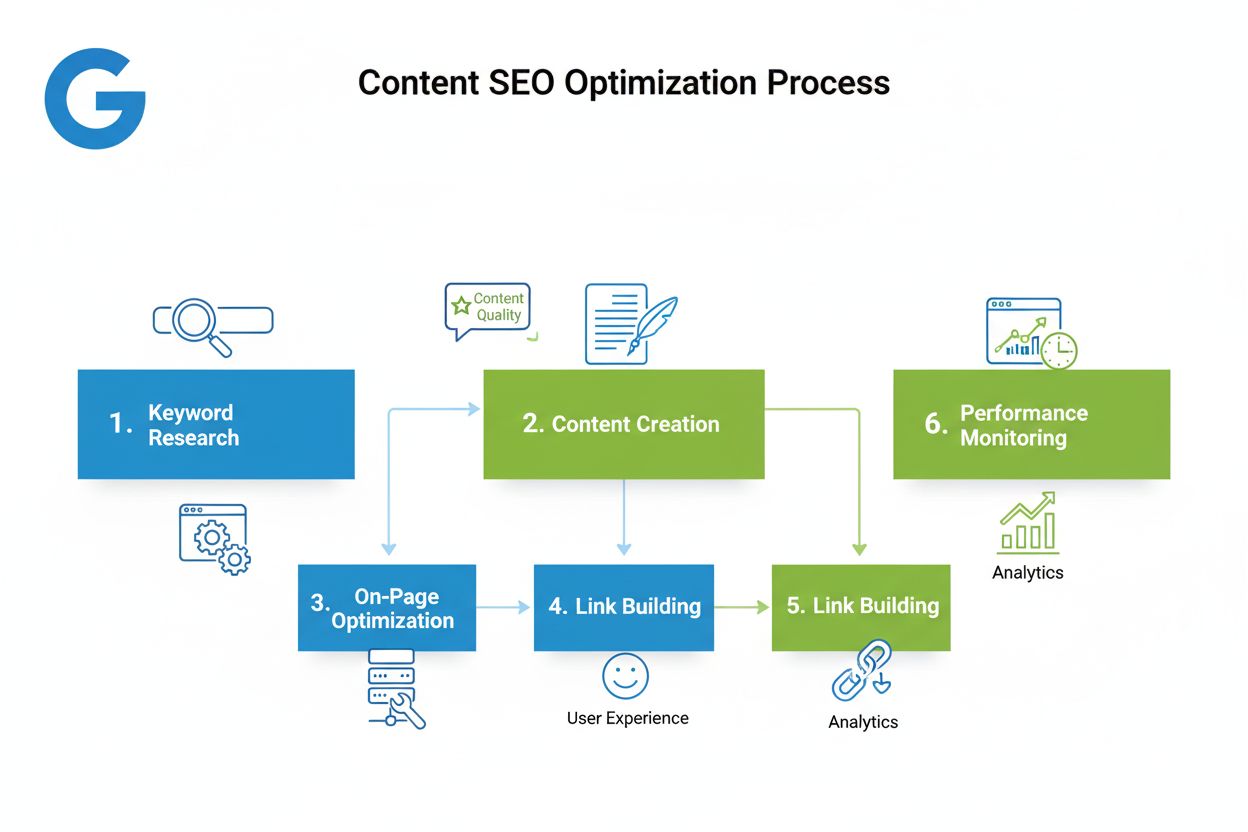
Content SEO is the strategic creation and optimization of high-quality content to improve search engine rankings and organic visibility. Learn how to optimize c...

Beneficial purpose is webpage content created primarily to help users. Learn how it impacts SEO, E-E-A-T, and AI citation authority in search results.
Cookie Consent
We use cookies to enhance your browsing experience and analyze our traffic. See our privacy policy.