
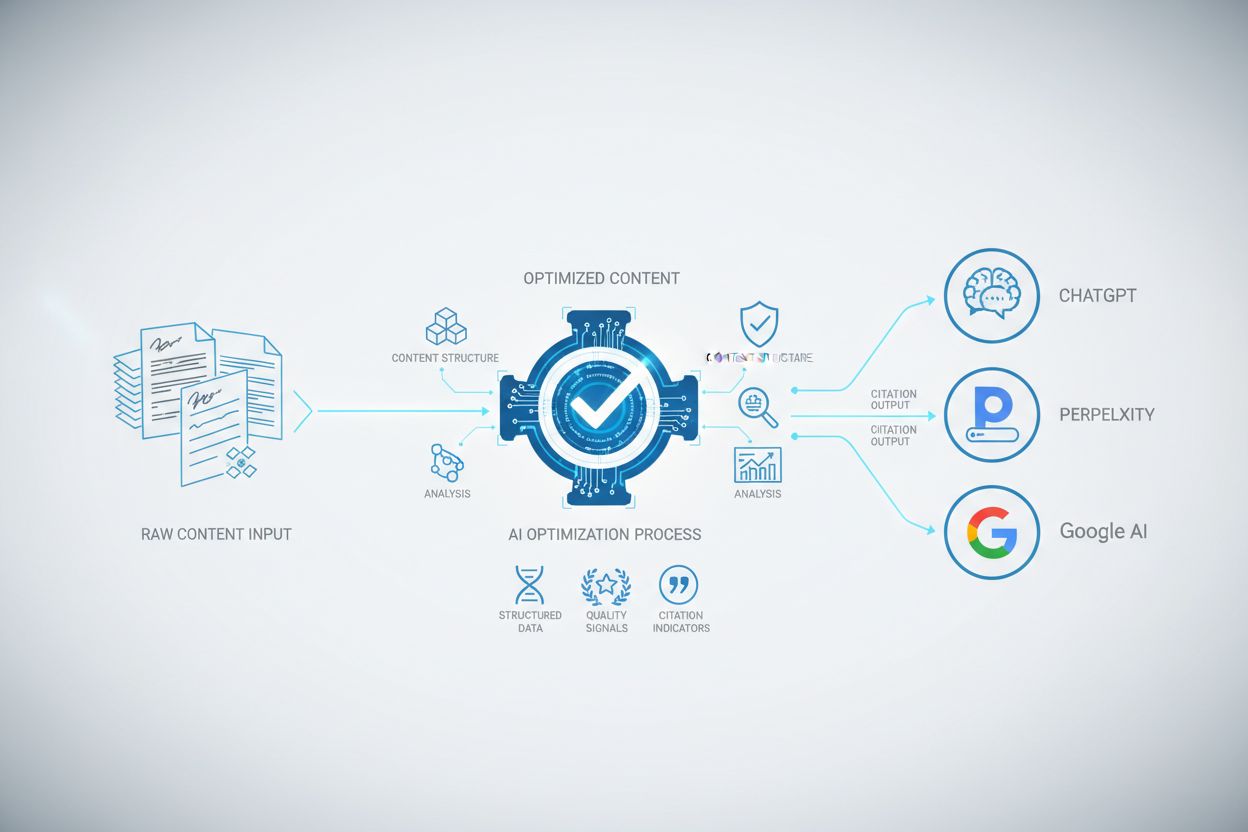
AI Content Optimization Platform
Learn what AI Content Optimization Platforms are, how they work, and why they're essential for visibility in ChatGPT, Perplexity, and Google AI Overviews. Disco...
8 min read
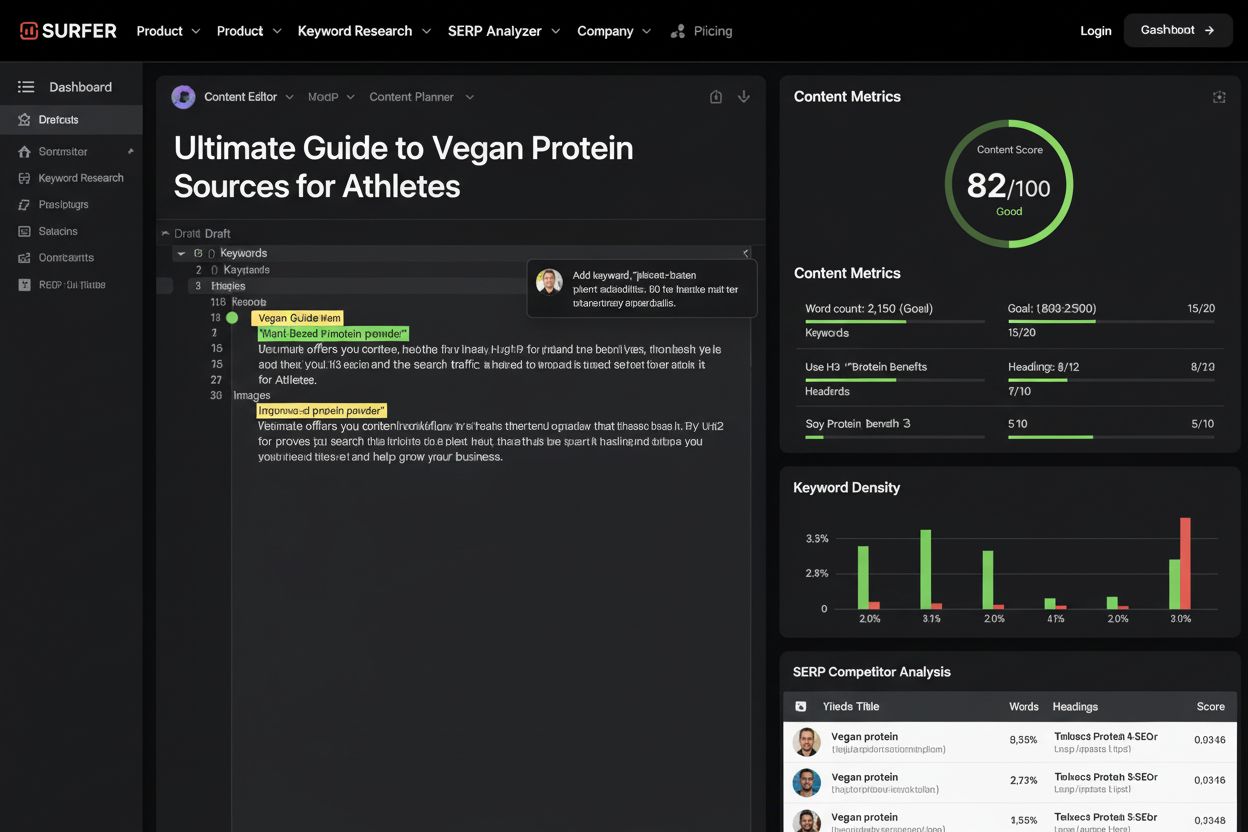
Surfer SEO is an AI-powered content optimization platform that analyzes over 500 on-page ranking signals to provide data-driven recommendations for improving content quality and search visibility. It combines real-time content editing, competitive SERP analysis, and AI-driven insights to help marketers create high-ranking content across both traditional search and AI-generated answer platforms.
Surfer SEO is an AI-powered content optimization platform that analyzes over 500 on-page ranking signals to provide data-driven recommendations for improving content quality and search visibility. It combines real-time content editing, competitive SERP analysis, and AI-driven insights to help marketers create high-ranking content across both traditional search and AI-generated answer platforms.
Surfer SEO is a comprehensive content optimization platform that leverages artificial intelligence and machine learning to analyze over 500 on-page ranking signals and provide data-driven recommendations for improving content quality and search visibility. Founded in 2017, the platform has become one of the most widely adopted content optimization tools in the SEO industry, helping thousands of marketers, agencies, and content creators worldwide optimize their content for both traditional Google search and emerging AI-generated answer platforms like ChatGPT, Perplexity, Google AI Overviews, and Claude. The platform combines real-time content editing capabilities, competitive SERP analysis, and AI-powered insights to enable users to create high-ranking content in approximately 20 minutes. Surfer SEO’s core mission is to help brands “show up where real decisions happen”—on Google, inside AI-generated answers, and across the web—by providing the tools and data necessary to compete effectively in today’s multi-channel search landscape.
The emergence of Surfer SEO in 2017 marked a significant shift in how content marketers approach search engine optimization. Prior to sophisticated content optimization tools, SEO professionals relied heavily on manual analysis of top-ranking pages, keyword research tools, and general best practices. The introduction of machine learning-powered content analysis changed this paradigm by automating the reverse-engineering of on-page SEO signals. Surfer SEO’s approach was revolutionary because it analyzed not just individual ranking factors, but the complex interplay of over 500 signals that correlate with higher rankings. According to Surfer’s own research, the platform’s Content Score correlates with Google rankings at 0.28, which is notably stronger than the correlation of backlinks (0.17), demonstrating that content quality is one of the most controllable and impactful ranking factors available to marketers. This finding has been validated through extensive studies analyzing over 1 million SERP entries, providing statistical authority to the platform’s recommendations. The evolution of Surfer SEO reflects the broader transformation of SEO from a technical discipline focused on keywords and links to a content-centric discipline emphasizing topical authority, user intent, and comprehensive information architecture.
Surfer SEO operates through several interconnected modules that work together to optimize content across the entire content lifecycle. The Content Editor is the platform’s flagship feature, providing real-time optimization recommendations as users write or paste content. This tool analyzes the top-ranking pages for a target keyword and suggests specific improvements including ideal word count, recommended heading structure, LSI keywords with suggested frequency, and content formatting recommendations. The editor displays a Content Score from 0 to 100, which represents how well the content aligns with top-performing competitors for the target keyword. The Content Audit feature allows users to analyze existing content and identify optimization opportunities, providing recommendations prioritized by potential traffic impact. The Topical Map tool helps users identify content gaps by analyzing their existing content against competitor coverage and suggesting new topics to write about. The SERP Analyzer provides detailed breakdowns of search engine results pages, showing metrics like average word count, keyword density, heading structure, and other on-page elements used by top-ranking pages. The Keyword Research tool identifies related keywords and long-tail variants, while the AI Tracker monitors where and how often a brand appears in AI-generated answers across multiple platforms. Additionally, Surfer AI generates ready-to-rank articles using customizable templates and brand voice settings, enabling content creation at scale.
| Feature | Surfer SEO | Clearscope | Frase | MarketMuse |
|---|---|---|---|---|
| Starting Price | $99/month | $189/month | $44.99/month | $7,200/year |
| Content Editor | Excellent | Excellent | Very Good | Good |
| Keyword Research | Basic | Advanced | Advanced | Advanced |
| Content Audit | Excellent | Good | Good | Excellent |
| AI Tracker | Yes | No | No | No |
| Topical Map | Yes | No | Yes | Yes |
| SERP Analyzer | Detailed | Standard | Standard | Standard |
| AI Content Generation | Yes | No | Yes | Yes |
| Team Collaboration | Excellent | Good | Good | Excellent |
| Best For | Comprehensive content strategy | Pure optimization | Research-focused | Enterprise teams |
The technical foundation of Surfer SEO rests on its ability to analyze and extract patterns from top-performing content. When a user enters a target keyword, the platform retrieves the top-ranking pages for that query and analyzes them against over 500 distinct on-page signals. These signals encompass multiple dimensions of content quality: topical coverage (whether the content addresses all relevant subtopics), keyword usage (natural inclusion of target and related terms), content structure (heading hierarchy, paragraph length, formatting), readability (sentence length, vocabulary complexity), depth and relevance (comprehensiveness of information), and technical elements (page speed, mobile optimization, internal linking). The platform uses Natural Language Processing (NLP) to understand semantic relationships between terms and identify which concepts and entities should be present in content addressing a particular topic. This approach moves beyond simple keyword matching to understand topical relevance and user intent. The Content Score that Surfer generates is not arbitrary; it’s derived from correlational analysis showing which content characteristics are most strongly associated with higher rankings. Research published by Surfer demonstrates that this scoring system has predictive validity, with pages achieving higher Content Scores more likely to rank well in Google’s search results.
The practical impact of using Surfer SEO for content optimization has been documented through numerous case studies and research initiatives. According to Surfer’s comprehensive research, the Content Score shows a 0.28 correlation with Google rankings, which is statistically significant and represents one of the strongest controllable signals in SEO. This correlation varies by search intent, with consequence queries (e.g., “what happens if…”) showing the highest correlation at 0.296, definition queries at 0.270, and instructional queries at 0.19. This variation suggests that Google’s ranking algorithms place greater emphasis on content quality signals for complex, open-ended queries where comprehensive information is more valuable. Beyond traditional search, Surfer SEO has become increasingly important for AI search optimization. Research analyzing over 405,000 AI Overviews found that 52% of sources cited in AI-generated answers also rank in the top 10 traditional search results, with an average position of 5. This means that optimizing content for traditional search rankings using Surfer SEO simultaneously improves the likelihood of being cited in AI-generated answers. The platform’s AI Tracker feature specifically monitors brand mentions across ChatGPT, Google AI Overviews, Perplexity, and Claude, providing visibility into how content performs in AI systems. This dual-channel visibility is critical in 2025, as AI-generated answers now appear above traditional search results in many queries, fundamentally changing how brands achieve search visibility.
Successful implementation of Surfer SEO requires understanding that the platform provides guidance rather than mandates. Content creators should use the following best practices to maximize results:
The rise of AI-generated answers has fundamentally changed content optimization strategy, and Surfer SEO has evolved to address this new reality. The platform’s AI Tracker represents a significant advancement in helping marketers understand their visibility in AI systems. Unlike traditional search where rankings are determined by a single algorithm, AI systems like ChatGPT and Google’s AI Overviews use different mechanisms to select sources. Research shows that AI systems often cite sources that don’t rank in the top 10 traditional search results, with 67.82% of AI Overview citations coming from pages outside the top 10. This means that optimizing solely for traditional search rankings is insufficient; content must also be discoverable and valuable to AI systems. Surfer SEO addresses this by helping create comprehensive, well-structured content that AI systems recognize as authoritative and relevant. The platform’s emphasis on topical coverage and entity optimization aligns well with how AI systems evaluate content quality. Additionally, Surfer’s research on AI Overviews found that 61% of AI-generated answers use unordered lists and 78% contain either ordered or unordered lists, suggesting that proper content formatting significantly impacts AI visibility. By optimizing content structure, heading hierarchy, and information organization using Surfer’s recommendations, marketers improve their chances of being cited in AI-generated answers.
Surfer SEO functions most effectively when integrated into a comprehensive content strategy rather than used as a standalone tool. The platform supports multiple workflow approaches depending on organizational structure and content velocity. For individual content creators and small teams, Surfer enables a streamlined workflow: research keywords using the Keyword Research tool, analyze the SERP using SERP Analyzer, create an outline using the Content Editor, write content with real-time optimization guidance, and finally audit and update existing content quarterly. For agencies managing multiple client accounts, Surfer’s team collaboration features enable efficient workflows where strategists create content briefs, writers use the shared Content Editor, and editors review optimization recommendations before publication. The Topical Map feature integrates with Google Search Console to provide data-driven content planning, identifying topics where the site has authority and topics where competitors have coverage gaps. The Grow Flow feature provides proactive recommendations for content updates, helping teams prioritize optimization efforts based on potential traffic impact. Integration with Jasper AI and other AI writing tools enables content generation at scale, with Surfer providing optimization guidance throughout the creation process. This integrated approach transforms Surfer from a point solution into a central hub for content strategy, planning, creation, and optimization.
The trajectory of Surfer SEO and content optimization tools reflects broader shifts in search and AI technology. As Google continues to emphasize E-E-A-T (Experience, Expertise, Authoritativeness, Trustworthiness) and content quality, tools that help demonstrate these signals become increasingly valuable. The platform’s evolution toward AI search optimization positions it at the intersection of traditional SEO and emerging AI search channels. Future developments likely include deeper integration with AI systems, more sophisticated entity recognition and optimization, and enhanced capabilities for tracking brand visibility across multiple AI platforms. The correlation between Content Score and rankings may strengthen as Google’s algorithms increasingly rely on content quality signals and as AI systems become more sophisticated in evaluating source credibility. Additionally, as generative AI becomes more prevalent in content creation, tools like Surfer that help distinguish high-quality, original content from generic AI-generated content will become more critical. The platform’s focus on topical authority and comprehensive information architecture aligns with how both Google and AI systems evaluate content quality, suggesting that Surfer’s core methodology will remain relevant even as search technology evolves. For marketers and agencies, understanding and effectively using Surfer SEO is becoming a core competency for maintaining visibility in an increasingly complex search landscape where success requires optimization across both traditional search and AI-generated answer platforms.
According to Surfer's 1-million-SERP-entry study, the Content Score correlates with Google rankings at 0.28, making it one of the strongest controllable ranking signals available. This correlation is stronger than backlinks (0.17 correlation) and demonstrates that content quality optimization is a highly effective lever for improving search visibility. The correlation varies by search intent, with consequence and definition queries showing higher correlations (0.29-0.27) than instructional queries (0.19).
Surfer SEO includes a Content Editor for real-time optimization, Content Audit for analyzing existing pages, Topical Map for content gap analysis, SERP Analyzer for competitive insights, Keyword Research tools, AI Tracker for monitoring brand visibility in AI systems, and Rank Tracker for position monitoring. The platform also features AI-powered content generation, auto-optimization capabilities, and integration with Google Search Console for data-driven recommendations.
Surfer's AI Tracker monitors where and how often your brand appears in AI-generated answers across ChatGPT, Google AI Overviews, Perplexity, and Claude. It tracks AI share of voice, identifies mention gaps, and provides recommendations to improve visibility in AI systems. The platform helps marketers understand how their content performs in both traditional search and emerging AI search channels, which is critical as AI-generated answers now appear above traditional SERPs.
While both tools analyze top-ranking pages and provide optimization recommendations, Surfer SEO is more affordable ($99/month vs. $189/month) and offers more features including Topical Map, Content Audit, and AI Tracker. Clearscope focuses more on content optimization quality with a letter-grade system and is preferred by some for its cleaner interface. Surfer provides better value for teams needing comprehensive content strategy tools, while Clearscope excels at pure content optimization.
Yes, Surfer SEO helps optimize content for AI Overview citations through its Content Score optimization and topical coverage analysis. Research shows that 52% of AI Overview sources rank in the top 10 SERPs, and pages with higher Content Scores are more likely to be cited. By optimizing for comprehensive topic coverage, proper structure, and natural keyword usage, Surfer helps content creators improve their chances of appearing in Google AI Overviews and other AI-generated answers.
Surfer analyzes over 500 on-page signals including keyword density and frequency, content length, heading structure, paragraph count, image usage, LSI keywords, topical coverage, content readability, internal linking opportunities, page speed, title and meta description optimization, and content formatting. These signals are extracted from top-ranking pages for your target keyword and compared against your content to provide specific, actionable recommendations for improvement.
Yes, Surfer SEO is designed for agencies and teams with features like shared Content Editor access (allowing collaboration without full account access), multiple website tracking, scalable article limits, and project management through Grow Flow. The platform supports team workflows from content planning through optimization, making it ideal for agencies managing multiple client accounts and content teams running high-velocity content programs.
Start tracking how AI chatbots mention your brand across ChatGPT, Perplexity, and other platforms. Get actionable insights to improve your AI presence.
Learn what AI Content Optimization Platforms are, how they work, and why they're essential for visibility in ChatGPT, Perplexity, and Google AI Overviews. Disco...

Learn AI Search Optimization strategies to improve brand visibility in ChatGPT, Google AI Overviews, and Perplexity. Optimize content for LLM citation and AI-po...
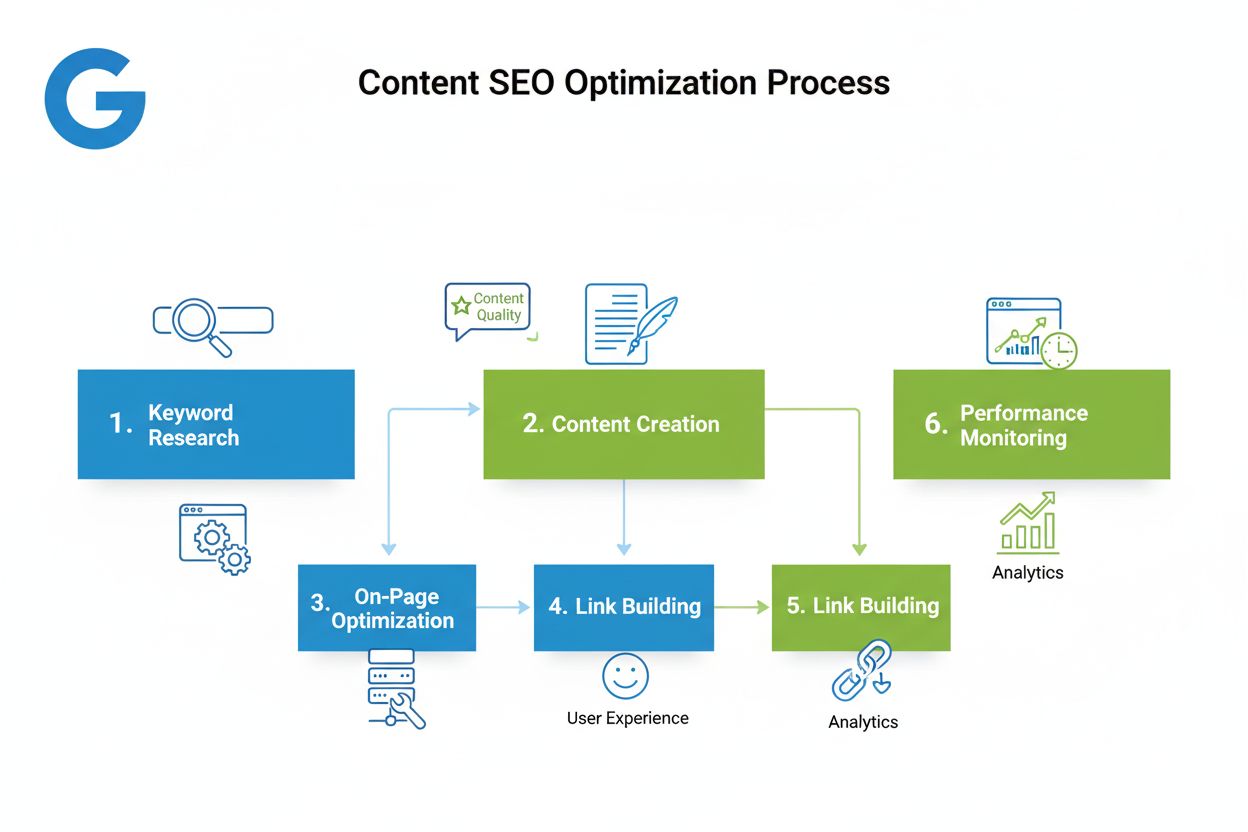
Content SEO is the strategic creation and optimization of high-quality content to improve search engine rankings and organic visibility. Learn how to optimize c...
Cookie Consent
We use cookies to enhance your browsing experience and analyze our traffic. See our privacy policy.