

Advertisements (Ads)
Learn what advertisements are, explore different ad types and formats, understand how promotional content works across digital and traditional channels, and dis...
9 min read
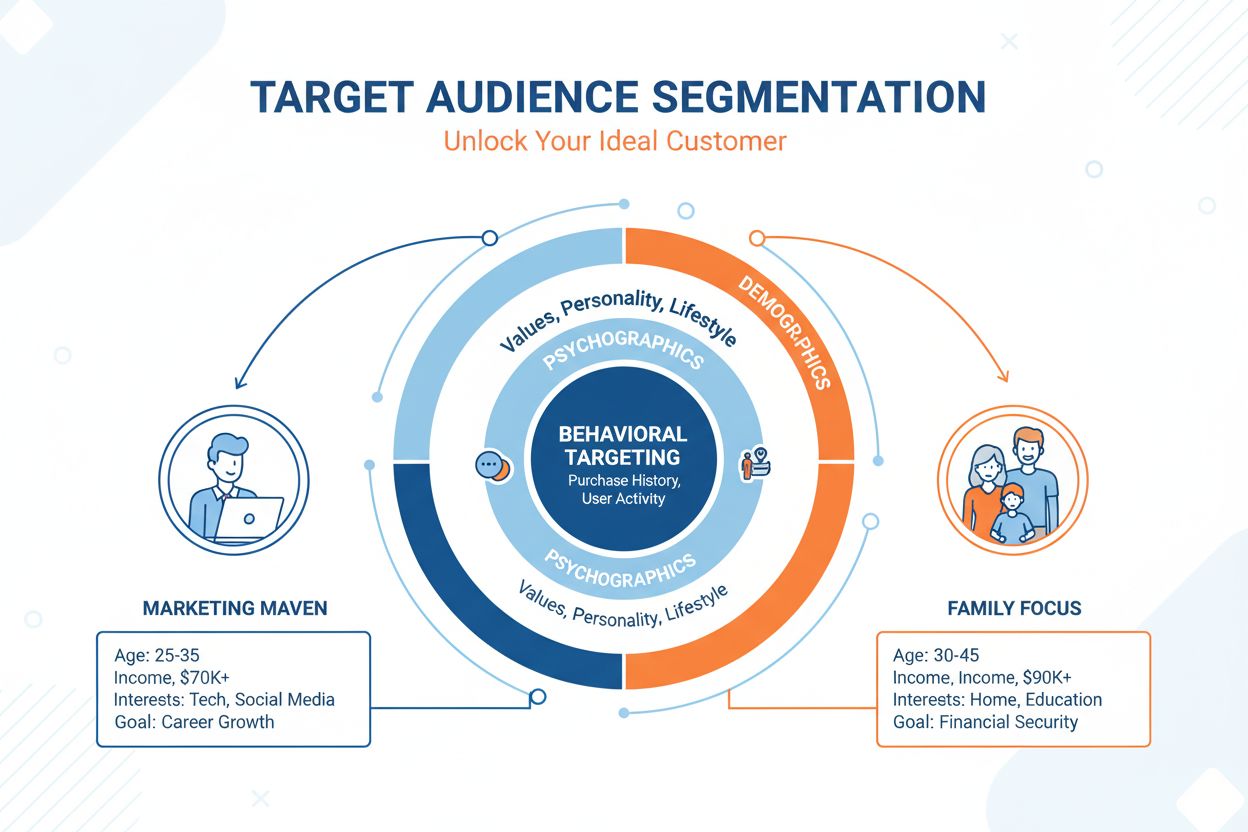
A target audience is a specific group of people identified as the intended recipients of content, products, or marketing messages based on shared characteristics such as demographics, psychographics, behaviors, and interests. Understanding and defining a target audience enables brands to create tailored content and campaigns that resonate with the most likely customers, improving engagement, conversion rates, and return on investment.
A target audience is a specific group of people identified as the intended recipients of content, products, or marketing messages based on shared characteristics such as demographics, psychographics, behaviors, and interests. Understanding and defining a target audience enables brands to create tailored content and campaigns that resonate with the most likely customers, improving engagement, conversion rates, and return on investment.
A target audience is a specific group of people identified as the intended recipients of content, products, or marketing messages. This group is defined by shared characteristics including demographics (age, gender, income, location), psychographics (values, interests, lifestyle, personality), and behavioral patterns (purchase history, engagement habits, media consumption). Rather than attempting to reach everyone, successful brands focus their marketing efforts on the segments most likely to benefit from and purchase their offerings. The American Marketing Association defines a target audience as a specific group of people likely to be interested in a product or service, identified using characteristics that distinguish them from the broader market. Understanding and precisely defining your target audience is foundational to modern marketing strategy, enabling brands to allocate resources efficiently, create resonant messaging, and achieve measurable business outcomes.
The concept of target audience identification has evolved significantly over the past two decades, driven by advances in data collection, analytics, and marketing technology. Historically, marketers relied primarily on broad demographic categories to segment audiences. Today, the landscape is far more sophisticated, incorporating psychographic analysis, behavioral tracking, and AI-powered segmentation to create nuanced customer profiles. According to Sprout Social, very few companies will ever have a target audience of “everyone”—trying to sell to everyone often results in selling to no one. This fundamental principle has become increasingly validated by data. Research from HubSpot indicates that more than 40% of consumers will unfollow brands whose values don’t align with their beliefs, underscoring the importance of psychographic alignment in audience targeting. The rise of social media platforms, marketing automation tools, and customer data platforms has made audience segmentation more accessible and precise than ever before. In 2024, 36% of marketers are targeting Gen Z (up from 34% in 2023), 72% target Millennials, and 41% target Gen X, demonstrating how audience definitions continue to evolve with generational shifts and changing consumer behaviors. The integration of AI-powered audience segmentation is accelerating this trend, with 54% of organizations aware of AI-powered customer segmentation, though only 17% are currently deploying it, indicating significant growth potential in this space.
| Segmentation Type | Definition | Key Variables | Best Use Case | Data Sources |
|---|---|---|---|---|
| Demographic | Groups based on statistical, external factors | Age, gender, income, education, location, marital status | Broad initial audience filtering; mass market products | Census data, surveys, CRM systems |
| Psychographic | Groups based on psychological and lifestyle factors | Values, beliefs, interests, personality traits, attitudes | Premium products; lifestyle brands; values-driven messaging | Surveys, interviews, social listening, market research |
| Behavioral | Groups based on actual actions and patterns | Purchase history, browsing behavior, engagement, media consumption | Personalized marketing; retention campaigns; product recommendations | Website analytics, CRM data, purchase records, social media metrics |
| Geographic | Groups based on location and regional factors | Country, region, city, climate, cultural preferences | Local businesses; region-specific campaigns; localized content | IP data, location services, regional databases |
| Psychographic + Behavioral | Combined approach for deeper insights | Values + purchase patterns; interests + engagement | Highly targeted campaigns; customer lifetime value optimization | Integrated data platforms, CDP solutions, AI segmentation tools |
| Purchase Intention | Groups based on readiness to buy | Research stage, consideration phase, decision-making timeline | Sales funnel optimization; retargeting campaigns; lead nurturing | Website behavior, search intent, email engagement, conversion tracking |
Audience segmentation is the process of dividing your broader customer base into distinct groups with shared characteristics. According to Acxiom, a leading data and marketing solutions provider, effective market segmentation enables brands to maximize ROI by fine-tuning each marketing campaign to the interests, intentions, and channel preferences of specific target audiences. The Content Marketing Institute reports that 74% of marketers say content marketing helped generate demand and leads, with 62% saying it nurtured subscribers and audiences, demonstrating the direct impact of well-segmented, targeted content. The three primary segmentation approaches—demographic, psychographic, and behavioral—each provide distinct insights. Demographic segmentation is the most widely used form and delivers basic customer insights that inform broad audience segments. However, demographics alone provide limited sophistication; people sharing an age, gender, or income level may have vastly different needs, interests, and purchasing intentions. Psychographic segmentation addresses this limitation by grouping customers based on psychological factors such as lifestyle, interests, attitudes, and personality traits. This approach helps brands understand why customers make purchasing decisions, enabling more authentic and resonant messaging. Behavioral segmentation analyzes what people actually do—their purchase patterns, browsing habits, media consumption preferences, and engagement levels—allowing marketers to predict future behavior and tailor strategies accordingly. The most effective modern marketing strategies combine all three approaches, creating multi-dimensional customer personas that guide content creation, channel selection, and campaign optimization.
Content marketing effectiveness is directly tied to audience understanding. According to HubSpot’s 2025 State of Marketing Report, 29% of marketers actively use content marketing, and those who do report significantly higher engagement and conversion rates. The research reveals that over 41% of marketers measure the success of their content marketing strategy through sales, while web traffic is among the top two most-common measurements of success. When brands clearly define their target audience, they can create content that directly addresses audience pain points, answers specific questions, and aligns with audience values. Sprout Social research demonstrates that brands like Nike, which targets athletes and fitness enthusiasts with specific sub-segments including women in sports and younger athletes, achieve exceptional engagement by tailoring messaging to distinct audience groups. Similarly, Domino’s leverages different social media platforms for different audiences—using memes and relatable content on Facebook for older audiences, while creating astrology-themed content on TikTok for younger demographics. This platform-specific, audience-centric approach reflects a deep understanding of where different audience segments spend time and what content resonates with them. The data supports this strategy: segmented emails drive 30% more opens and 50% more clickthroughs than unsegmented ones, and personalized emails generate six times higher transaction rates and revenue compared to generic approaches.
In the emerging landscape of AI content monitoring, understanding your target audience becomes increasingly critical. Platforms like AmICited track where and how brands appear in AI-generated responses across systems like ChatGPT, Perplexity, Google AI Overviews, and Claude. When your brand is cited in AI responses, the context and audience receiving that citation matters significantly. If your target audience consists of B2B technology professionals aged 25-45, you need to monitor whether your brand appears in AI responses that these professionals are likely to encounter. Conversely, if your target audience is Gen Z consumers interested in sustainable fashion, you should track AI citations appearing in responses to queries about eco-friendly clothing and ethical brands. AI-powered audience segmentation is advancing rapidly, with algorithms analyzing vast volumes of customer data to automatically identify patterns and audience segments. According to Acxiom’s research, 54% of organizations are aware of AI-powered customer segmentation, but only 17% are currently deploying it, indicating significant opportunity for brands to gain competitive advantage through advanced audience intelligence. The integration of AI and audience targeting enables real-time personalization, predictive analytics, and dynamic content optimization—capabilities that directly enhance how brands reach and engage their target audiences across all channels, including AI-generated content platforms.
Precise target audience definition directly impacts business profitability and growth. According to the American Marketing Association, nailing your target audience can boost sales by up to 20%, while missing the mark results in essentially throwing money and effort away. HubSpot research reveals that 87% of marketers using HubSpot felt their marketing strategies were effective in 2024, compared to only 52% of marketers without a CRM—a significant difference attributable partly to better audience data and segmentation capabilities. The Content Marketing Institute reports that 84% of B2B marketers say content marketing has proven effective when generating brand awareness, with well-defined target audiences being a critical success factor. Email marketing, one of the most cost-effective channels, demonstrates the power of audience precision: segmented emails drive 30% more opens and 50% more clickthroughs, and 78% of marketers report that subscriber segmentation is the most effective strategy for email marketing campaigns. Beyond email, social media marketing benefits enormously from audience clarity. Facebook remains the most popular social media platform for marketers, with 28% of marketers reporting the highest ROI from social media influencers on Facebook, while 22% report high ROI from niched Instagram influencers. These platform-specific results underscore how different audience segments congregate on different channels, making precise audience definition essential for channel selection and budget allocation.
The definition and application of target audience concepts are evolving rapidly in response to technological advancement, regulatory changes, and shifting consumer expectations. AI and machine learning are fundamentally transforming how audiences are identified, segmented, and engaged. Acxiom’s research indicates that AI is accelerating the segmentation process, with algorithms quickly analyzing vast volumes of customer data to automatically identify patterns and audience segments. However, this technological advancement comes with challenges: 47.18% of marketers say they strongly or somewhat agree that they understand how to incorporate AI into their marketing strategy, while 47.63% say they know how to measure the impact of AI in their marketing strategy, suggesting significant knowledge gaps remain. The cookieless future presents another major shift in audience identification. As Google phases out third-party cookies, brands must rely increasingly on first-party data, contextual targeting, and privacy-preserving technologies to identify and reach target audiences. This transition is forcing marketers to deepen their understanding of audience psychology and behavior rather than relying solely on tracking pixels and cookies. Additionally, generational shifts are reshaping target audience definitions. 36% of marketers are now targeting Gen Z (up from 34% in 2023), reflecting the growing economic power and influence of younger demographics. Gen Z audiences have distinct values around sustainability, authenticity, and social responsibility, requiring brands to evolve their audience definitions and messaging accordingly. The rise of voice search, AI assistants, and conversational commerce is also changing how audiences discover and interact with brands, necessitating new approaches to audience segmentation and content optimization. Looking forward, successful brands will be those that combine advanced data analytics, AI-powered insights, privacy-compliant practices, and deep human understanding of audience psychology to create increasingly precise, ethical, and effective target audience definitions.
+++
A target audience is a specific group of people identified as the intended recipients of content, products, or marketing messages. This group is defined by shared characteristics including demographics (age, gender, income, location), psychographics (values, interests, lifestyle, personality), and behavioral patterns (purchase history, engagement habits, media consumption). Rather than attempting to reach everyone, successful brands focus their marketing efforts on the segments most likely to benefit from and purchase their offerings. The American Marketing Association defines a target audience as a specific group of people likely to be interested in a product or service, identified using characteristics that distinguish them from the broader market. Understanding and precisely defining your target audience is foundational to modern marketing strategy, enabling brands to allocate resources efficiently, create resonant messaging, and achieve measurable business outcomes.
The concept of target audience identification has evolved significantly over the past two decades, driven by advances in data collection, analytics, and marketing technology. Historically, marketers relied primarily on broad demographic categories to segment audiences. Today, the landscape is far more sophisticated, incorporating psychographic analysis, behavioral tracking, and AI-powered segmentation to create nuanced customer profiles. According to Sprout Social, very few companies will ever have a target audience of “everyone”—trying to sell to everyone often results in selling to no one. This fundamental principle has become increasingly validated by data. Research from HubSpot indicates that more than 40% of consumers will unfollow brands whose values don’t align with their beliefs, underscoring the importance of psychographic alignment in audience targeting. The rise of social media platforms, marketing automation tools, and customer data platforms has made audience segmentation more accessible and precise than ever before. In 2024, 36% of marketers are targeting Gen Z (up from 34% in 2023), 72% target Millennials, and 41% target Gen X, demonstrating how audience definitions continue to evolve with generational shifts and changing consumer behaviors. The integration of AI-powered audience segmentation is accelerating this trend, with 54% of organizations aware of AI-powered customer segmentation, though only 17% are currently deploying it, indicating significant growth potential in this space.
| Segmentation Type | Definition | Key Variables | Best Use Case | Data Sources |
|---|---|---|---|---|
| Demographic | Groups based on statistical, external factors | Age, gender, income, education, location, marital status | Broad initial audience filtering; mass market products | Census data, surveys, CRM systems |
| Psychographic | Groups based on psychological and lifestyle factors | Values, beliefs, interests, personality traits, attitudes | Premium products; lifestyle brands; values-driven messaging | Surveys, interviews, social listening, market research |
| Behavioral | Groups based on actual actions and patterns | Purchase history, browsing behavior, engagement, media consumption | Personalized marketing; retention campaigns; product recommendations | Website analytics, CRM data, purchase records, social media metrics |
| Geographic | Groups based on location and regional factors | Country, region, city, climate, cultural preferences | Local businesses; region-specific campaigns; localized content | IP data, location services, regional databases |
| Psychographic + Behavioral | Combined approach for deeper insights | Values + purchase patterns; interests + engagement | Highly targeted campaigns; customer lifetime value optimization | Integrated data platforms, CDP solutions, AI segmentation tools |
| Purchase Intention | Groups based on readiness to buy | Research stage, consideration phase, decision-making timeline | Sales funnel optimization; retargeting campaigns; lead nurturing | Website behavior, search intent, email engagement, conversion tracking |
Audience segmentation is the process of dividing your broader customer base into distinct groups with shared characteristics. According to Acxiom, a leading data and marketing solutions provider, effective market segmentation enables brands to maximize ROI by fine-tuning each marketing campaign to the interests, intentions, and channel preferences of specific target audiences. The Content Marketing Institute reports that 74% of marketers say content marketing helped generate demand and leads, with 62% saying it nurtured subscribers and audiences, demonstrating the direct impact of well-segmented, targeted content. The three primary segmentation approaches—demographic, psychographic, and behavioral—each provide distinct insights. Demographic segmentation is the most widely used form and delivers basic customer insights that inform broad audience segments. However, demographics alone provide limited sophistication; people sharing an age, gender, or income level may have vastly different needs, interests, and purchasing intentions. Psychographic segmentation addresses this limitation by grouping customers based on psychological factors such as lifestyle, interests, attitudes, and personality traits. This approach helps brands understand why customers make purchasing decisions, enabling more authentic and resonant messaging. Behavioral segmentation analyzes what people actually do—their purchase patterns, browsing habits, media consumption preferences, and engagement levels—allowing marketers to predict future behavior and tailor strategies accordingly. The most effective modern marketing strategies combine all three approaches, creating multi-dimensional customer personas that guide content creation, channel selection, and campaign optimization.
Content marketing effectiveness is directly tied to audience understanding. According to HubSpot’s 2025 State of Marketing Report, 29% of marketers actively use content marketing, and those who do report significantly higher engagement and conversion rates. The research reveals that over 41% of marketers measure the success of their content marketing strategy through sales, while web traffic is among the top two most-common measurements of success. When brands clearly define their target audience, they can create content that directly addresses audience pain points, answers specific questions, and aligns with audience values. Sprout Social research demonstrates that brands like Nike, which targets athletes and fitness enthusiasts with specific sub-segments including women in sports and younger athletes, achieve exceptional engagement by tailoring messaging to distinct audience groups. Similarly, Domino’s leverages different social media platforms for different audiences—using memes and relatable content on Facebook for older audiences, while creating astrology-themed content on TikTok for younger demographics. This platform-specific, audience-centric approach reflects a deep understanding of where different audience segments spend time and what content resonates with them. The data supports this strategy: segmented emails drive 30% more opens and 50% more clickthroughs than unsegmented ones, and personalized emails generate six times higher transaction rates and revenue compared to generic approaches.
In the emerging landscape of AI content monitoring, understanding your target audience becomes increasingly critical. Platforms like AmICited track where and how brands appear in AI-generated responses across systems like ChatGPT, Perplexity, Google AI Overviews, and Claude. When your brand is cited in AI responses, the context and audience receiving that citation matters significantly. If your target audience consists of B2B technology professionals aged 25-45, you need to monitor whether your brand appears in AI responses that these professionals are likely to encounter. Conversely, if your target audience is Gen Z consumers interested in sustainable fashion, you should track AI citations appearing in responses to queries about eco-friendly clothing and ethical brands. AI-powered audience segmentation is advancing rapidly, with algorithms analyzing vast volumes of customer data to automatically identify patterns and audience segments. According to Acxiom’s research, 54% of organizations are aware of AI-powered customer segmentation, but only 17% are currently deploying it, indicating significant opportunity for brands to gain competitive advantage through advanced audience intelligence. The integration of AI and audience targeting enables real-time personalization, predictive analytics, and dynamic content optimization—capabilities that directly enhance how brands reach and engage their target audiences across all channels, including AI-generated content platforms.
Precise target audience definition directly impacts business profitability and growth. According to the American Marketing Association, nailing your target audience can boost sales by up to 20%, while missing the mark results in essentially throwing money and effort away. HubSpot research reveals that 87% of marketers using HubSpot felt their marketing strategies were effective in 2024, compared to only 52% of marketers without a CRM—a significant difference attributable partly to better audience data and segmentation capabilities. The Content Marketing Institute reports that 84% of B2B marketers say content marketing has proven effective when generating brand awareness, with well-defined target audiences being a critical success factor. Email marketing, one of the most cost-effective channels, demonstrates the power of audience precision: segmented emails drive 30% more opens and 50% more clickthroughs, and 78% of marketers report that subscriber segmentation is the most effective strategy for email marketing campaigns. Beyond email, social media marketing benefits enormously from audience clarity. Facebook remains the most popular social media platform for marketers, with 28% of marketers reporting the highest ROI from social media influencers on Facebook, while 22% report high ROI from niched Instagram influencers. These platform-specific results underscore how different audience segments congregate on different channels, making precise audience definition essential for channel selection and budget allocation.
The definition and application of target audience concepts are evolving rapidly in response to technological advancement, regulatory changes, and shifting consumer expectations. AI and machine learning are fundamentally transforming how audiences are identified, segmented, and engaged. Acxiom’s research indicates that AI is accelerating the segmentation process, with algorithms quickly analyzing vast volumes of customer data to automatically identify patterns and audience segments. However, this technological advancement comes with challenges: 47.18% of marketers say they strongly or somewhat agree that they understand how to incorporate AI into their marketing strategy, while 47.63% say they know how to measure the impact of AI in their marketing strategy, suggesting significant knowledge gaps remain. The cookieless future presents another major shift in audience identification. As Google phases out third-party cookies, brands must rely increasingly on first-party data, contextual targeting, and privacy-preserving technologies to identify and reach target audiences. This transition is forcing marketers to deepen their understanding of audience psychology and behavior rather than relying solely on tracking pixels and cookies. Additionally, generational shifts are reshaping target audience definitions. 36% of marketers are now targeting Gen Z (up from 34% in 2023), reflecting the growing economic power and influence of younger demographics. Gen Z audiences have distinct values around sustainability, authenticity, and social responsibility, requiring brands to evolve their audience definitions and messaging accordingly. The rise of voice search, AI assistants, and conversational commerce is also changing how audiences discover and interact with brands, necessitating new approaches to audience segmentation and content optimization. Looking forward, successful brands will be those that combine advanced data analytics, AI-powered insights, privacy-compliant practices, and deep human understanding of audience psychology to create increasingly precise, ethical, and effective target audience definitions.
A target market is the broader group of consumers you aim to reach, such as 'pet owners,' while a target audience is a narrower, more specific segment within that market, like 'dog owners aged 30-45 who enjoy outdoor activities.' Essentially, a target audience is a subset of a target market. This distinction helps focus marketing efforts on the most receptive and relevant customer segments, ensuring more precise and impactful engagement.
Demographics focus on external, statistical factors like age, gender, income, and location. Psychographics examine psychological factors such as values, interests, lifestyle, and personality traits. Behavioral data analyzes what people actually do—their purchase patterns, browsing habits, and media consumption. The most effective audience segmentation combines all three approaches to create a comprehensive, multi-dimensional view of customer personas that informs targeted marketing strategies.
Identifying a target audience allows marketers to create highly relevant, personalized content that resonates with specific customer segments. According to HubSpot research, segmented emails drive 30% more opens and 50% more clickthroughs than unsegmented ones. By understanding your audience's pain points, preferences, and behaviors, you can tailor messaging, choose appropriate channels, and optimize content formats, resulting in higher engagement, better conversion rates, and improved ROI.
In AI content monitoring platforms like AmICited, understanding your target audience is critical for tracking where and how your brand appears in AI-generated responses across platforms like ChatGPT, Perplexity, and Google AI Overviews. By defining your target audience, you can monitor whether AI systems are accurately representing your brand to the right customer segments and ensure your content reaches the intended recipients through AI citations and recommendations.
The primary types include demographic audiences (age, gender, income), psychographic audiences (values, interests, lifestyle), behavioral audiences (purchase patterns, engagement), geographic audiences (location-based), purchase intention audiences (ready to buy), and subculture audiences (shared interests or experiences). Most effective strategies combine multiple audience types to create detailed buyer personas that guide content creation and marketing channel selection.
Businesses can identify their target audience through market research, analyzing existing customer data, conducting surveys and interviews, using social media analytics, monitoring competitor audiences, and leveraging tools like Google Analytics. By examining who is already buying from you, what content engages them, and where they spend time online, you can develop detailed audience profiles and personas that inform all marketing decisions.
According to recent marketing statistics, 78% of marketers report that subscriber segmentation is the most effective strategy for email marketing campaigns. Additionally, 90% of survey respondents saw an increase in click-through rates (CTRs) by implementing simple segmentation strategies. These statistics demonstrate that audience segmentation is now a standard practice among successful marketing teams across industries.
Well-defined target audiences significantly improve conversion rates by ensuring marketing messages reach the most receptive prospects. Research shows that personalized campaigns and segmented content drive substantially higher engagement and conversion metrics. By focusing resources on audiences most likely to convert, businesses reduce marketing waste, improve ROI, and build stronger customer relationships through relevant, timely messaging.
Start tracking how AI chatbots mention your brand across ChatGPT, Perplexity, and other platforms. Get actionable insights to improve your AI presence.
Learn what advertisements are, explore different ad types and formats, understand how promotional content works across digital and traditional channels, and dis...
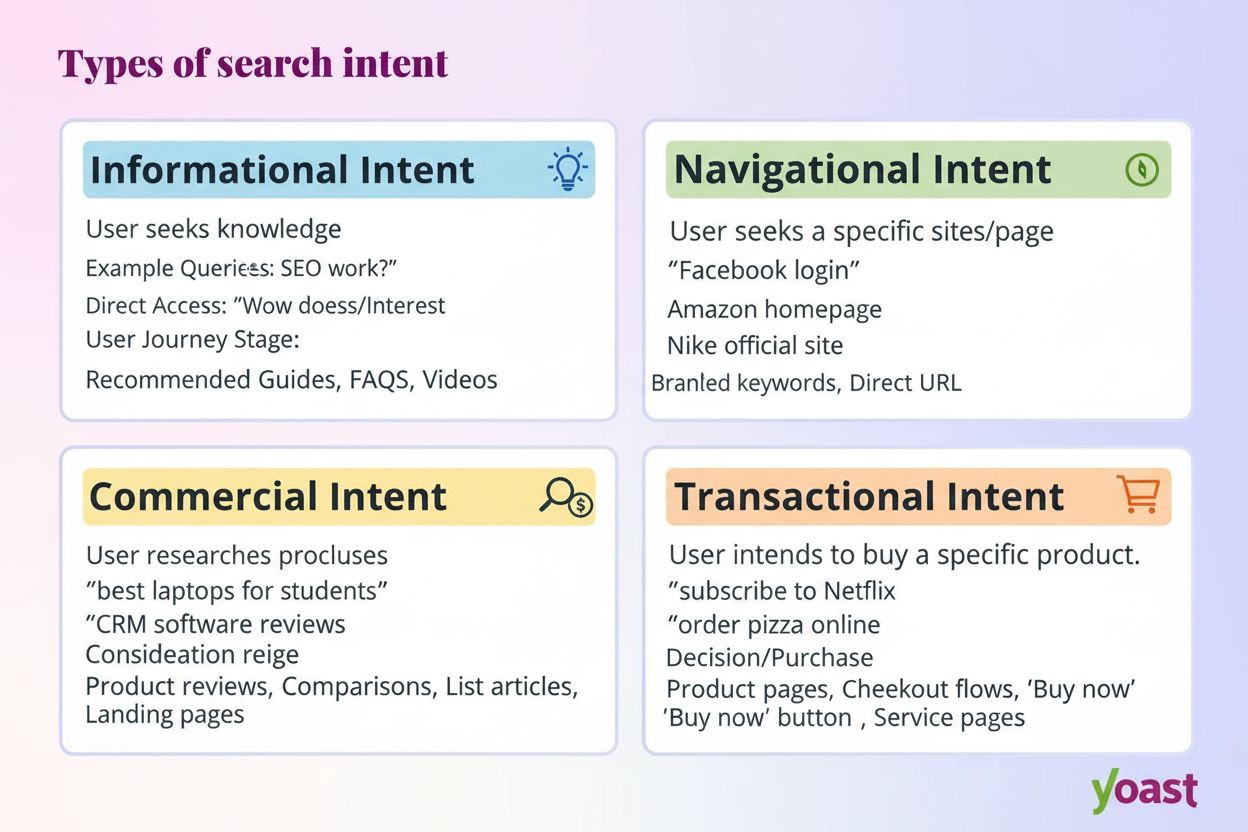
Search intent is the purpose behind a user's search query. Learn the four types of search intent, how to identify them, and optimize content for better rankings...
Geo-targeting delivers personalized content and ads based on user location using IP addresses, GPS, and WiFi. Learn how this technology works, its benefits for ...