

How to Build Topical Authority for Your Website
Learn how to build topical authority through strategic content creation, keyword research, and link building. Establish expertise and improve your search rankin...
11 min read
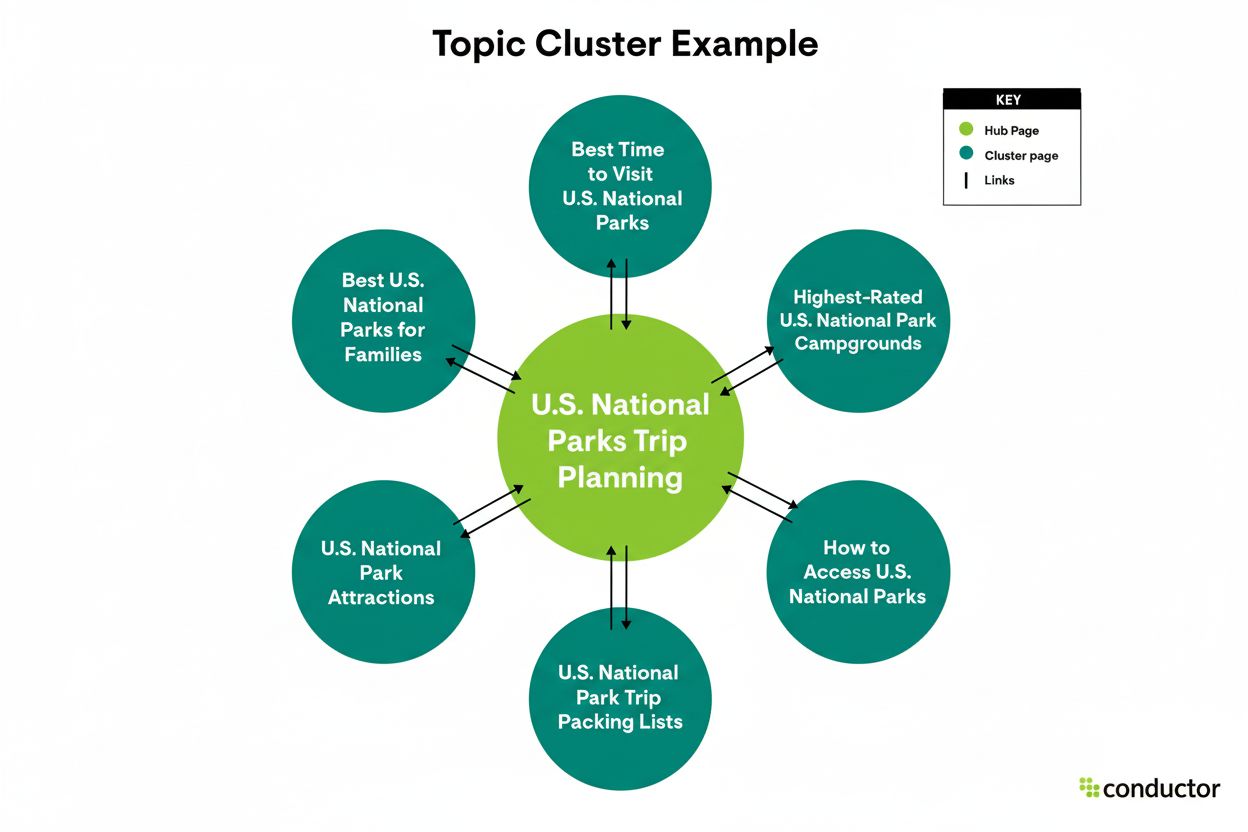
Topical authority refers to a website’s recognized expertise and comprehensive coverage of a specific subject area, demonstrated through interconnected, in-depth content that signals to search engines and AI systems that the site is an authoritative resource on that topic. It is built by creating content clusters, establishing semantic relationships between related articles, and maintaining strong internal linking structures that showcase deep knowledge across all facets of a subject.
Topical authority refers to a website's recognized expertise and comprehensive coverage of a specific subject area, demonstrated through interconnected, in-depth content that signals to search engines and AI systems that the site is an authoritative resource on that topic. It is built by creating content clusters, establishing semantic relationships between related articles, and maintaining strong internal linking structures that showcase deep knowledge across all facets of a subject.
Topical authority is a website’s recognized expertise and comprehensive coverage of a specific subject area, demonstrated through interconnected, in-depth content that signals to search engines and AI systems that the site is an authoritative resource on that topic. Unlike domain authority, which measures overall website strength across all topics, topical authority focuses specifically on how deeply and thoroughly a website covers a particular niche or subject. It is built through the strategic creation of content clusters, establishment of semantic relationships between related articles, and maintenance of strong internal linking structures that showcase expertise across all facets of a subject. In the context of modern search—both traditional and AI-powered—topical authority has become increasingly critical for achieving visibility and earning citations from answer engines and generative AI systems.
The concept of topical authority has evolved significantly as search engines have become more sophisticated in understanding user intent and content relationships. Historically, SEO focused on individual keyword rankings and backlink acquisition, with domain authority serving as a primary metric for overall site credibility. However, as search algorithms advanced, particularly with Google’s emphasis on E-E-A-T (Experience, Expertise, Authoritativeness, Trustworthiness) and the rise of semantic search, the industry recognized that search engines reward websites that demonstrate comprehensive knowledge of entire topics rather than isolated keyword optimization. According to research from Surfer SEO, 88% of SEOs believe topical authority is very important to their overall strategy, reflecting a fundamental shift in how professionals approach content and SEO. This evolution has accelerated with the emergence of AI-powered search engines like ChatGPT, Perplexity, Google AI Overviews, and Claude, which prioritize authoritative, in-depth content that provides nuanced, comprehensive answers to user queries.
The most effective way to build topical authority is through the pillar page and content cluster model, a structured approach that organizes content hierarchically around a central topic. A pillar page is a comprehensive, standalone page that covers a broad topic in depth, serving as the authoritative hub for all related content. Cluster pages (or spoke pages) are more focused articles that dive deep into specific subtopics related to the pillar page, each targeting long-tail keywords and addressing specific user questions. The critical element connecting these pages is a strategic internal linking structure: each cluster page links back to the pillar page, the pillar page links out to all relevant cluster pages, and cluster pages link to one another where semantically appropriate. This interconnected web of content creates multiple benefits: it helps search engines understand the breadth and depth of your topic coverage, improves user experience by keeping visitors engaged across multiple related pages, distributes link equity throughout your content ecosystem, and signals to AI systems that your site is a comprehensive, authoritative resource. For example, a website focused on digital marketing might have a pillar page titled “Complete Guide to Digital Marketing Strategy” with cluster pages covering SEO, content marketing, social media advertising, email marketing automation, and paid search campaigns—each thoroughly researched and internally linked to reinforce topical relevance.
| Aspect | Topical Authority | Domain Authority |
|---|---|---|
| Focus | Expertise in a specific subject area | Overall website strength and credibility |
| Measurement | Content depth, keyword coverage, internal linking, semantic relevance | Backlink profile, domain age, overall site signals |
| Building Method | Content clusters, comprehensive coverage, internal linking strategy | Backlink acquisition, site health, domain reputation |
| Time to Build | 3-12 months for noticeable results | Years to establish significant authority |
| Impact on Rankings | High impact for niche-specific queries and AI search visibility | Moderate impact; helps with crawl frequency and indexing |
| Competitive Advantage | Newer sites can compete effectively in specific niches | Established sites have inherent advantage |
| AI Search Relevance | Critical for AI citations and mentions | Less directly relevant to AI search algorithms |
| Best Use Case | Dominating specific topics and AI search results | Broad ranking potential across diverse topics |
Building topical authority requires understanding several technical and content-related foundations that work together to signal expertise to search engines and AI systems. Content depth is paramount—your website must cover all areas of a topic comprehensively, addressing foundational concepts, exploring niche subtopics, and investigating related ideas that users might search for. Relevance and accuracy are non-negotiable; your content must be up-to-date, factually correct, and directly address user intent across various query formulations. E-E-A-T signals must be woven throughout your content through author bios that establish credentials, citations from credible sources, case studies demonstrating real-world application, and transparent content creation processes that build trust. The internal linking structure is the connective tissue that ties everything together, creating semantic relationships that help both users and search engine crawlers understand how your content pieces relate to one another. User engagement signals—such as time spent on page, bounce rate, and click-through rates—indirectly indicate content quality and relevance, influencing how AI systems evaluate your authority. Finally, external signals like quality backlinks from reputable sites within your industry continue to matter, signaling to search engines and AI that your information is valuable and trustworthy.
The rise of AI-powered answer engines has fundamentally changed how topical authority impacts brand visibility and citations. Unlike traditional search engines that primarily drive clicks to websites, AI systems like Google AI Overviews, Perplexity, and ChatGPT synthesize information from multiple sources to provide direct answers to user queries, often without requiring users to click through to source websites. This creates a new form of visibility called zero-click search, where your brand gains exposure through AI citations and mentions even if users never visit your site. To be selected as a source by these AI systems, your content must demonstrate unparalleled expertise across your entire topic area. AI systems are sophisticated at identifying content gaps and evaluating the comprehensiveness of coverage, making topical authority more important than ever. Research indicates that 25% of search results featured AI Overviews as of August 2024, and this percentage continues to grow, making AI visibility a critical component of modern SEO strategy. Websites with strong topical authority are significantly more likely to be cited in AI-generated responses, providing valuable brand exposure and establishing authority in the eyes of both AI systems and users who see those citations.
Successfully building topical authority requires a systematic, multi-phase approach that combines research, content creation, technical optimization, and continuous monitoring. The first phase involves topic research and opportunity mapping, where you identify high-value topics aligned with your business offerings and audience interests, then map out the subtopics and questions your audience is searching for. Tools like Conductor’s AI Topic Map and MarketMuse can help identify content gaps and opportunities for comprehensive coverage. The second phase is content creation, where you develop a pillar page covering the broad topic comprehensively, followed by cluster pages that dive deep into specific subtopics. Each piece of content should be original, well-researched, and optimized for both user intent and search engines. The third phase involves developing a strong internal linking and clustering strategy, ensuring that related content pieces are semantically connected through strategic anchor text and link placement. The fourth phase is technical SEO and site health optimization, which includes ensuring fast page load times, mobile responsiveness, proper schema markup, and clean site architecture. Finally, continuous monitoring and updating is essential—regularly review your content for accuracy, update statistics and examples, expand thin content, and monitor your rankings and AI visibility to identify new opportunities. This ongoing investment compounds over time, creating a sustainable competitive advantage.
The investment in building topical authority delivers measurable business results across multiple dimensions. Enhanced AI visibility means your brand appears in AI-generated responses and citations, providing exposure to users who rely on answer engines for information. This is particularly valuable for AmICited users who track brand mentions across AI platforms—strong topical authority directly increases the likelihood of being cited. Building brand authority and trust establishes your organization as a recognized leader in your industry, which translates into higher customer confidence, increased conversions, and stronger brand loyalty. Users who consistently find accurate, comprehensive, and helpful information on your site begin to view your brand as the go-to resource, creating a competitive moat that’s difficult for competitors to overcome. Efficiency and ROI improvements come from focusing content efforts on high-impact topics rather than chasing individual keywords that may never drive conversions. A well-defined topical strategy creates interconnected content that establishes expertise and authority, leading to more efficient content production and clearer pathways to proving ROI on content investments. Organizations can directly tie topic coverage and AI visibility to business outcomes, demonstrating the value of their content strategy to leadership and securing continued investment.
While topical authority doesn’t have a single, standardized metric like domain authority, several approaches can help you measure progress and identify opportunities for improvement. Keyword ranking analysis involves tracking how many keywords within your topic area your website ranks for, with an upward trend indicating growing authority. Tools like Ahrefs, SEMrush, and Hike SEO can help identify ranked keywords and track improvements over time. Content depth assessment requires reviewing your site’s content to ensure it thoroughly addresses all facets of your core topics, with comprehensive articles covering subtopics in detail. Organic traffic monitoring through Google Analytics reveals whether your topical strategy is driving qualified traffic, with upward trends suggesting growing authority in your subject area. Internal linking structure evaluation ensures that related articles are effectively interlinked, creating a strong semantic network. Backlink quality analysis examines the quantity and quality of links pointing to your site, focusing on links from authoritative sources within your niche. AI visibility tracking through tools like AmICited shows how often your brand is mentioned or cited in AI-generated responses, providing direct insight into how your topical authority translates to AI search visibility. User engagement metrics including time on page, bounce rate, and pages per session indicate whether your content is meeting user needs and providing value.
As generative AI continues to reshape the search landscape, topical authority will become even more critical for maintaining visibility and relevance. The shift toward zero-click search and AI-generated answers means that traditional click-through metrics will become less important, while brand mentions and citations in AI responses will become primary visibility metrics. This evolution favors websites that have invested in comprehensive, authoritative content that AI systems recognize as reliable sources. The concept of semantic authority—where search engines and AI systems understand not just what you write about, but how deeply and comprehensively you cover topics—will continue to gain importance. Organizations that build strong topical authority now will be better positioned to capture visibility in emerging AI search platforms and maintain competitive advantage as search continues to evolve. Additionally, the integration of real-time data and personalization into AI search systems will make topical authority even more valuable, as AI systems will increasingly rely on authoritative sources to provide accurate, contextual answers to highly specific user queries. The future of SEO and content strategy is fundamentally about demonstrating expertise through comprehensive topic coverage—exactly what topical authority represents.
Domain authority measures a website's overall strength and credibility across all topics based on backlinks and domain age, while topical authority focuses specifically on expertise within a particular subject area. A newer website can quickly establish strong topical authority in a niche by producing exceptional, comprehensive content on that topic, even if it lacks the domain authority of older, more established sites. In 2025, topical authority has become more important for search rankings than domain authority alone.
AI-powered search engines like ChatGPT, Perplexity, Google AI Overviews, and Claude prioritize authoritative, in-depth content that provides comprehensive answers to user queries. These systems are designed to synthesize information from sources that demonstrate unparalleled expertise across entire topics. By establishing strong topical authority, your content is more likely to be cited or mentioned in AI-generated responses, providing valuable visibility even when users don't click through to your website.
E-E-A-T (Experience, Expertise, Authoritativeness, Trustworthiness) is the framework Google uses to evaluate content quality, while topical authority is the goal you achieve by implementing E-E-A-T principles. Topical authority demonstrates expertise through comprehensive coverage, authoritativeness through quality backlinks and citations, and trustworthiness through accurate, well-researched content. Together, they signal to search engines that your site is a reliable, authoritative source on a specific subject.
Building topical authority typically takes several months to a year, depending on competition level, content quality, and consistency. Websites publishing consistent, high-quality content and earning backlinks from authoritative sources may see noticeable improvements in rankings within 3-6 months. However, topical authority is a long-term investment that compounds over time as you expand your content cluster and reinforce your expertise through regular updates and new content additions.
Internal linking is crucial for topical authority because it creates semantic connections between related content pieces, helping search engines understand the relationships and depth of your topic coverage. A well-structured internal linking strategy distributes link equity across your content cluster, reinforces topical relevance, and guides both users and search engine crawlers through your comprehensive content. Each cluster page should link back to the pillar page, and the pillar page should link out to all relevant cluster pages.
Yes, a newer website with strong topical authority can outrank older, high-domain-authority sites if its content is more relevant, comprehensive, and better optimized for user intent. Search engines increasingly reward depth of expertise and comprehensive topic coverage over domain age alone. By creating interconnected, in-depth content clusters that thoroughly address all aspects of a topic, newer sites can establish authority quickly and compete effectively against established competitors.
Websites with strong topical authority are more likely to be cited or mentioned as sources in AI-generated responses because these systems prioritize authoritative, comprehensive content. When your site demonstrates deep expertise across a topic through well-structured content clusters and strong E-E-A-T signals, AI systems recognize it as a reliable source worth citing. This increases your brand's visibility in AI search results, which is critical for AmICited users tracking brand mentions across AI platforms.
Start tracking how AI chatbots mention your brand across ChatGPT, Perplexity, and other platforms. Get actionable insights to improve your AI presence.
Learn how to build topical authority through strategic content creation, keyword research, and link building. Establish expertise and improve your search rankin...
Learn how topical authority impacts AI search visibility, citations in ChatGPT and Perplexity, and how to build expertise that AI systems recognize and cite.
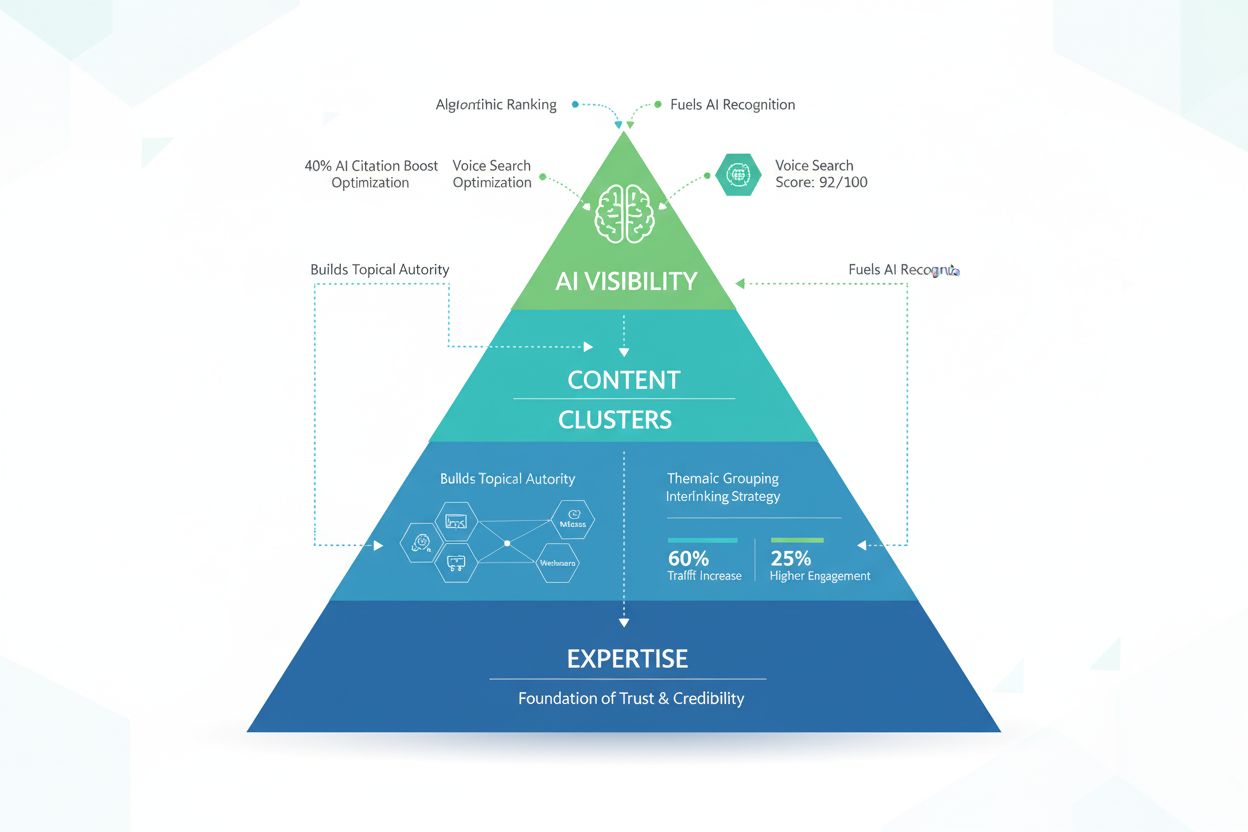
Niche authority is specialized expertise in a specific topic area that drives AI citations and search rankings. Learn how to build topical depth for ChatGPT, Pe...