

What is Transactional Search Intent for AI?
Understand transactional search intent in AI systems. Learn how users interact with ChatGPT, Perplexity, and other AI search engines when ready to take action o...
11 min read
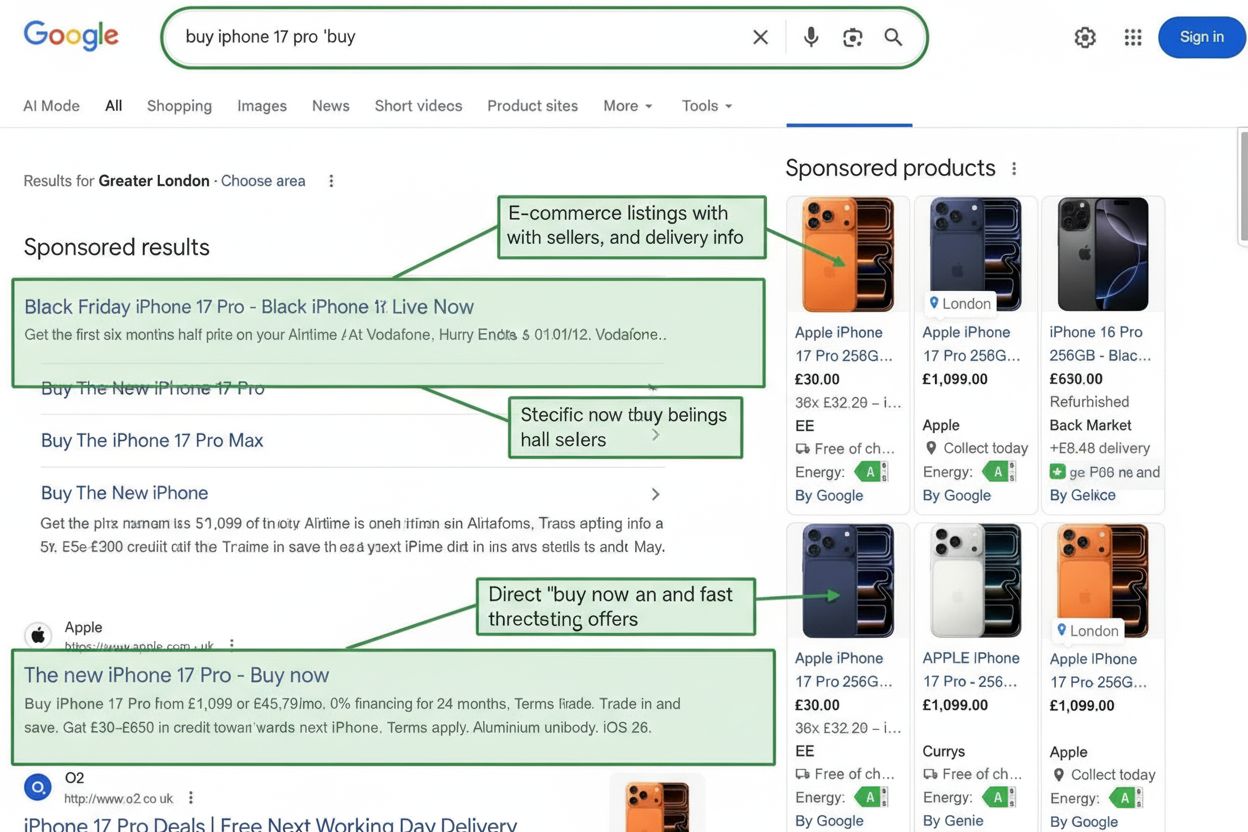
Transactional intent refers to search queries where users are ready to take immediate action, such as making a purchase, signing up for a service, or completing a transaction. These high-intent searches indicate users are at the bottom of the sales funnel with clear purchase intent and minimal research needs.
Transactional intent refers to search queries where users are ready to take immediate action, such as making a purchase, signing up for a service, or completing a transaction. These high-intent searches indicate users are at the bottom of the sales funnel with clear purchase intent and minimal research needs.
Transactional intent represents search queries where users are actively ready to complete a specific action, most commonly making a purchase or signing up for a service. Unlike informational searches where users seek knowledge or commercial searches where users compare options, transactional search intent indicates the user has already made their decision and is now looking for the fastest way to execute the transaction. These searches represent the lowest point in the sales funnel, where conversion probability is highest. Users conducting transactional searches typically use action-oriented language and specific product or service names, signaling they are prepared to spend money or commit to an action immediately. Understanding and optimizing for transactional intent is critical for e-commerce businesses, SaaS companies, and any organization seeking to convert high-intent traffic into revenue.
The concept of transactional search intent emerged as search engines evolved from simple keyword matching to understanding user behavior and motivation. In the early 2000s, search engines primarily matched keywords to content without considering what users actually wanted to accomplish. As Google and other search engines developed more sophisticated algorithms, they began recognizing that the same keyword could have multiple meanings depending on context and user intent. By the mid-2010s, SEO professionals and marketers formally categorized search intent into four primary types: informational, navigational, commercial, and transactional. This framework became foundational to modern SEO strategy. According to 2025 search intent statistics, transactional queries represent approximately 0.69% of all searches, making them relatively rare but extraordinarily valuable. The rise of AI search platforms like ChatGPT, Perplexity, and Google AI Overviews has further elevated the importance of transactional intent, as these systems now synthesize transactional information and recommendations directly in their responses. Brands must now optimize not just for traditional search engines but for AI citation in transactional contexts, fundamentally changing how companies approach transactional keyword strategy.
| Search Intent Type | User Goal | Funnel Stage | Common Keywords | SERP Features | Conversion Likelihood |
|---|---|---|---|---|---|
| Transactional | Complete a purchase or action | Bottom (Decision) | Buy, order, discount, checkout, subscribe | Shopping ads, product pages, checkout flows | Very High (3-5%+) |
| Commercial | Research and compare options | Middle (Consideration) | Best, review, vs., comparison, top | Reviews, comparisons, buying guides | Medium (0.5-2%) |
| Informational | Learn about a topic | Top (Awareness) | How to, what is, why, guide, tips | Featured snippets, blogs, FAQs | Low (0.1-0.5%) |
| Navigational | Find a specific website | All stages | Brand name, login, homepage, app | Official website, sitelinks | Medium (varies by brand) |
Transactional keywords possess distinct technical characteristics that differentiate them from other keyword types. These keywords typically include specific action verbs and modifiers that signal purchase intent, such as “buy,” “order,” “purchase,” “discount,” “coupon,” “sale,” “free shipping,” “checkout,” “subscribe,” “download,” “get,” “cheap,” and “best price.” When users search with transactional intent, they often include the exact product or service name combined with these action modifiers—for example, “buy iPhone 15 Pro,” “order pizza delivery near me,” or “subscribe to Netflix.” The search engine results pages (SERPs) for transactional keywords display distinctly different features compared to other intent types. Shopping ads dominate the top positions, followed by product pages from e-commerce sites, category pages, and checkout-focused landing pages. Featured snippets and knowledge graphs are rare for transactional queries because users don’t need general information—they need to complete a transaction. Local results frequently appear for location-based transactional searches like “tacos near me” or “dentist appointment booking,” reflecting the immediate action users want to take. Understanding these technical characteristics helps marketers and SEO professionals identify transactional opportunities and optimize content accordingly.
The business impact of transactional intent cannot be overstated, as these searches directly correlate with revenue generation and customer acquisition. According to 2025 e-commerce data, the average conversion rate across all industries is 3.65%, but transactional keyword traffic typically converts at significantly higher rates—often 5-10% or more depending on the industry and optimization quality. This means that a single transactional keyword ranking in the top positions can generate substantially more revenue than dozens of informational or commercial keywords. For e-commerce businesses, capturing transactional search traffic is essential because these users have already completed their research and comparison phases; they simply need to find the right product at the right price. Companies that fail to optimize for transactional keywords miss critical revenue opportunities, as these high-intent users will simply visit competitors’ websites instead. The lifetime value of customers acquired through transactional searches is also typically higher because these users have demonstrated clear purchase intent and commitment. Additionally, transactional traffic provides valuable data about customer preferences, pricing sensitivity, and product demand, which can inform inventory management, pricing strategies, and product development decisions. In competitive markets, dominating transactional search results often determines market share and profitability.
Effective transactional keyword research requires a systematic approach combining manual analysis with keyword research tools. The first step is to create a comprehensive list of products or services your business offers, then brainstorm how customers would search for these offerings when ready to purchase. For example, if you sell organic coffee, transactional keywords might include “buy organic coffee beans,” “order fair trade coffee online,” “purchase single-origin coffee,” or “subscribe to coffee delivery.” Next, use keyword research platforms like Moz Keyword Explorer, Semrush, or Ahrefs to filter keywords by transactional intent and analyze metrics like monthly search volume and keyword difficulty. These tools use AI to classify keywords by intent, saving significant time compared to manual SERP analysis. When researching transactional keywords, pay close attention to search volume and difficulty scores—ideally targeting keywords with reasonable search volume (at least 100-500 monthly searches) and achievable difficulty scores relative to your domain authority. Competitor analysis is invaluable; identify which transactional keywords your competitors rank for and analyze their landing pages to understand what content and features Google rewards. Study the actual SERPs for your target keywords to confirm transactional intent—if you see primarily shopping ads, product pages, and e-commerce sites, you’ve identified genuine transactional keywords. Finally, segment your transactional keywords by product category, price point, and customer segment to create targeted content strategies for different audience groups.
Optimizing for transactional intent requires a multi-faceted approach that addresses both on-page SEO and user experience factors. On-page optimization begins with incorporating transactional keywords naturally into critical elements: title tags should include the product name and action modifier (e.g., “Buy Premium Organic Coffee Beans Online”), meta descriptions should highlight key benefits and calls-to-action, and H1 headers should clearly state what users can accomplish on the page. Body content should focus on product specifications, benefits, pricing, and clear calls-to-action rather than lengthy educational content. Product pages should include multiple high-quality images from different angles, detailed descriptions addressing common questions, customer reviews and ratings, specifications and technical details, pricing information with any discounts or promotions, and prominent “Add to Cart” or “Buy Now” buttons. Structured data markup (schema.org) helps search engines understand your products and can enable rich snippets in search results, improving click-through rates. User experience optimization is equally critical—ensure fast page load times, mobile responsiveness, intuitive navigation, simplified checkout processes, multiple payment options, trust signals like security badges and customer testimonials, and clear return policies. For transactional keyword optimization, reducing friction in the purchase journey is paramount; every additional step or form field can decrease conversion rates. A/B testing different page layouts, headlines, calls-to-action, and checkout flows provides data-driven insights for continuous improvement. Additionally, implementing retargeting campaigns for users who visit product pages but don’t convert helps capture additional revenue from high-intent traffic.
The emergence of AI search platforms like ChatGPT, Perplexity, Google AI Overviews, and Claude has fundamentally transformed how transactional intent manifests in search behavior. Rather than typing short, keyword-based queries, users now phrase transactional requests as natural language prompts that often combine multiple intents simultaneously. For example, instead of searching “buy laptop,” a user might ask ChatGPT: “Recommend the best affordable laptop under $1000 for college students and show me where to buy it.” This represents a blend of informational, commercial, and transactional intent in a single prompt. AI systems synthesize information from multiple sources and provide direct recommendations, sometimes including purchase links or shopping information directly in their responses. This shift creates new challenges and opportunities for brand visibility. Brands that appear in AI-generated responses for transactional queries gain significant competitive advantage, as users trust AI recommendations and are more likely to click through to purchase. However, traditional SEO optimization alone is insufficient for AI visibility; content must be structured in ways that AI systems can easily extract, understand, and cite. This includes clear, concise answers to transactional questions, well-organized product information, transparent pricing and availability data, and authoritative content that AI systems recognize as trustworthy. AmICited and similar AI monitoring platforms now track brand mentions and visibility across AI search engines specifically for transactional queries, helping companies understand how their products and services appear in AI-generated purchase recommendations. This represents a critical evolution in search visibility monitoring, as AI-driven transactional traffic increasingly complements or replaces traditional organic search traffic.
The future of transactional intent will be shaped by continued advancement in artificial intelligence, changing consumer behavior, and the integration of AI systems into mainstream search. As AI search platforms mature and capture increasing market share, the definition and manifestation of transactional intent will evolve beyond simple keyword matching to more sophisticated intent recognition. AI systems will increasingly understand nuanced transactional requests that combine multiple criteria—price ranges, specific features, brand preferences, sustainability concerns, and delivery requirements—in single prompts. This means brands must optimize not just for individual transactional keywords but for comprehensive product information that addresses the full spectrum of decision-making factors users consider. The rise of “prompt intent” represents a fundamental shift from traditional search intent; instead of analyzing keywords, marketers will need to understand how users naturally phrase their transactional needs in conversational language. Personalization will become increasingly important, as AI systems learn individual user preferences and provide tailored transactional recommendations. Voice search and conversational commerce will further blur the lines between informational and transactional intent, as users ask AI assistants to research and purchase products in single interactions. Additionally, the integration of transactional capabilities directly into AI platforms—allowing users to complete purchases without leaving the AI interface—will create new competitive dynamics. Brands that establish strong presence in AI-generated transactional responses will gain significant advantage, making AI visibility monitoring and transactional keyword optimization essential components of modern marketing strategy. The convergence of traditional SEO, AI optimization, and conversion rate optimization will define success in capturing transactional intent across all search channels.
Measuring the effectiveness of transactional keyword optimization requires tracking multiple metrics across different platforms and touchpoints. Traditional SEO metrics like rankings, organic traffic, and click-through rates provide baseline data, but conversion-focused metrics are more important for transactional keywords. Track conversion rate (percentage of visitors who complete a purchase), cost per acquisition (total marketing spend divided by number of customers acquired), return on ad spend (ROAS) for paid campaigns targeting transactional keywords, and customer lifetime value (total revenue expected from a customer over their relationship with your business). Analyze which transactional keywords drive the highest-quality traffic and conversions, as some keywords may have high volume but low conversion rates, while others convert at exceptional rates despite lower search volume. Use Google Analytics and conversion tracking to understand the customer journey for transactional traffic—which pages do users visit before converting, how long do they spend on product pages, and what causes cart abandonment. A/B testing different elements of transactional pages (headlines, images, pricing displays, calls-to-action) provides data-driven insights for optimization. For AI search monitoring, track brand mentions and visibility in AI-generated responses for transactional queries using platforms like AmICited, which specifically monitor how your brand appears in ChatGPT, Perplexity, Google AI Overviews, and Claude responses. Compare your transactional visibility and conversion performance against competitors to identify gaps and opportunities. Regularly review SERP features for your target transactional keywords to understand how search results are evolving and adjust your optimization strategy accordingly. This comprehensive measurement approach ensures that transactional keyword efforts directly contribute to business revenue and growth objectives.
Transactional intent indicates users are ready to complete a purchase immediately, while commercial intent represents users who are still researching and comparing options. Transactional searches contain action-oriented keywords like 'buy', 'order', or 'checkout', whereas commercial searches use comparison modifiers like 'best', 'review', or 'vs'. Transactional queries typically show higher conversion rates and appear lower in the sales funnel.
Identify transactional keywords by analyzing your product or service names with action modifiers like 'buy', 'order', 'discount', 'coupon', 'sale', or 'free shipping'. Use keyword research tools like Moz Keyword Explorer or Semrush to filter keywords by transactional intent, then analyze competitor rankings for these terms. Study your SERPs to see if results feature product pages, shopping ads, and e-commerce sites, which confirm transactional intent.
Transactional keywords are crucial for e-commerce because they target users with high purchase intent, leading to significantly higher conversion rates. According to 2025 data, the average e-commerce conversion rate is 3.65%, but transactional keywords typically convert at much higher rates. These keywords represent the most valuable traffic for driving immediate revenue and ROI, making them essential for bottom-funnel marketing strategies.
As AI search platforms like ChatGPT, Perplexity, and Google AI Overviews grow, transactional intent becomes increasingly important for brand visibility. Users now phrase transactional requests as natural language prompts combining multiple intents, such as 'recommend the best affordable laptop to buy'. Brands must optimize content for AI citation to appear in these high-intent responses, making transactional keyword optimization critical for AI visibility monitoring platforms like AmICited.
Common transactional keyword modifiers include 'buy', 'order', 'purchase', 'discount', 'coupon', 'deal', 'sale', 'free shipping', 'checkout', 'subscribe', 'sign up', 'download', 'get', 'cheap', and 'best price'. These modifiers signal that users are ready to take action. Combining your product or service name with these modifiers creates highly targeted transactional keywords that attract ready-to-convert customers.
Optimize product pages by incorporating transactional keywords naturally in title tags, meta descriptions, H1 headers, and body content. Include detailed product descriptions, multiple high-quality images, customer reviews, specifications, pricing information, and clear calls-to-action. Ensure seamless checkout flows, display trust signals like security badges, and provide multiple payment options. Use structured data markup to help search engines understand your product offerings.
Transactional intent directly impacts conversion rates because these users have already decided to purchase and are simply looking for the right product or service. By targeting transactional keywords and optimizing landing pages specifically for these high-intent users, businesses can significantly improve conversion rates. Removing friction from the purchase process, providing clear product information, and using persuasive copy aligned with transactional intent maximizes conversion potential.
Start tracking how AI chatbots mention your brand across ChatGPT, Perplexity, and other platforms. Get actionable insights to improve your AI presence.
Understand transactional search intent in AI systems. Learn how users interact with ChatGPT, Perplexity, and other AI search engines when ready to take action o...
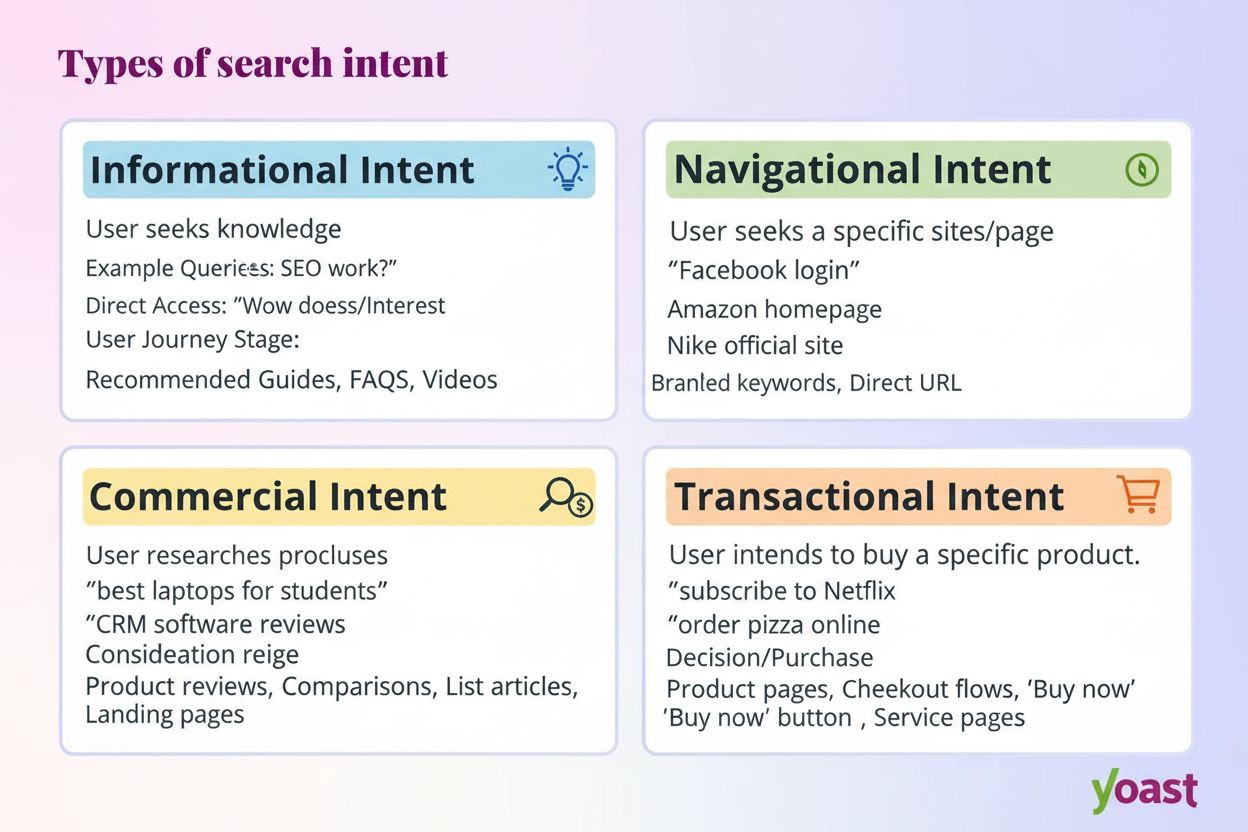
Search intent is the purpose behind a user's search query. Learn the four types of search intent, how to identify them, and optimize content for better rankings...
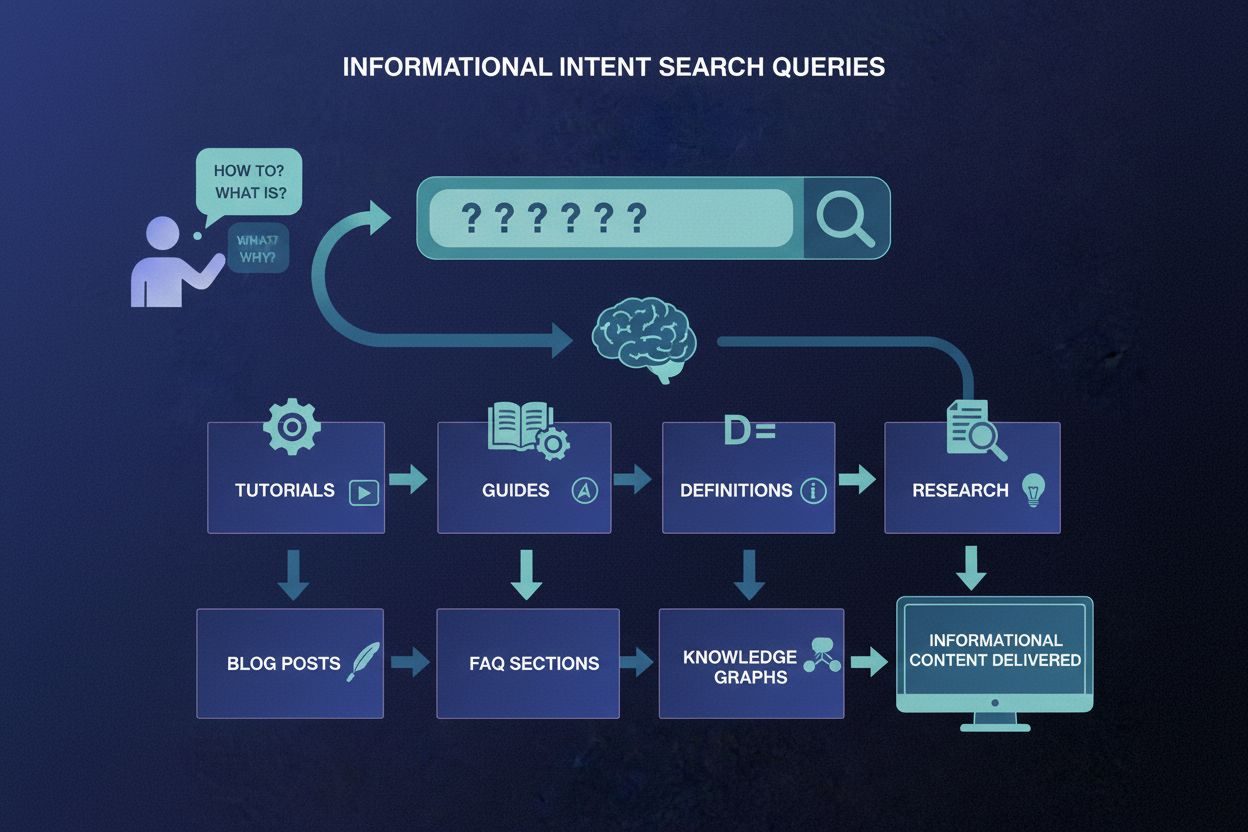
Informational intent is when users search for knowledge or answers. Learn how to optimize content for informational queries and understand its role in AI search...