

Trust Signals That AI Recognizes: Building Credibility
Learn how AI systems evaluate trust signals through E-E-A-T framework. Discover the credibility factors that help LLMs cite your content and build authority.
10 min read
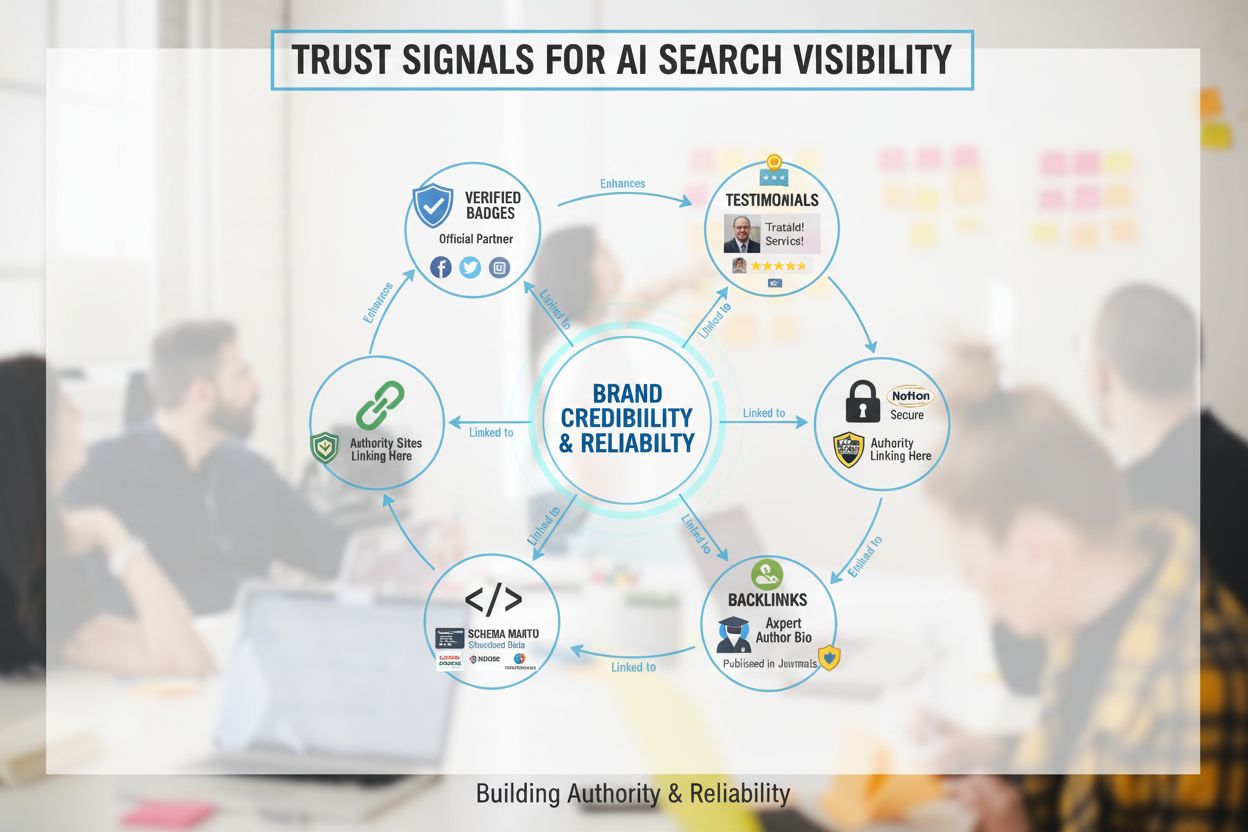
A trust signal is any visible element, credential, or indicator on a website or digital platform that demonstrates reliability, credibility, and legitimacy to both users and AI systems. Trust signals include verified badges, customer testimonials, security certificates, author credentials, backlinks from authoritative sources, and consistent brand identity across platforms, helping establish confidence in a brand’s authenticity and reducing perceived risk for potential customers and AI citation systems.
A trust signal is any visible element, credential, or indicator on a website or digital platform that demonstrates reliability, credibility, and legitimacy to both users and AI systems. Trust signals include verified badges, customer testimonials, security certificates, author credentials, backlinks from authoritative sources, and consistent brand identity across platforms, helping establish confidence in a brand's authenticity and reducing perceived risk for potential customers and AI citation systems.
A trust signal is any visible element, credential, or indicator that demonstrates reliability, credibility, and legitimacy to both human users and artificial intelligence systems. Trust signals serve as proof points that establish a brand’s authenticity, reduce perceived risk, and encourage engagement or conversion. These signals can take many forms—from verified badges and security certificates to customer testimonials, author credentials, backlinks from authoritative sources, and consistent brand identity across digital platforms. In the context of modern digital marketing and AI search, trust signals have become essential indicators that determine whether AI systems like ChatGPT, Perplexity, Google AI Overviews, and Claude will cite a brand in their generated responses. The concept extends beyond traditional website design; it encompasses the entire digital footprint of an organization, including its reputation, technical infrastructure, and verifiable third-party endorsements.
The concept of trust signals emerged from early e-commerce research, particularly the Stanford Persuasive Technology Lab’s groundbreaking study on web credibility conducted with over 4,500 participants. This research identified ten fundamental guidelines for building web credibility, establishing the foundation for how businesses communicate trustworthiness online. Initially, trust signals were primarily visual—security badges, payment processor logos, and company information—designed to reassure customers making online purchases. However, the landscape has evolved dramatically with the rise of artificial intelligence, generative search engines, and AI monitoring platforms. Today, trust signals must satisfy both human psychology and machine learning algorithms, requiring a more sophisticated and comprehensive approach to credibility building.
The shift became particularly pronounced in December 2022 when Google added “Experience” to its E-A-T framework, creating E-E-A-T. This change reflected the growing importance of distinguishing authentic, human-created content from AI-generated material. As AI systems became more prevalent in search results, the definition of trust signals expanded to include structured data markup, entity verification across platforms, citation velocity, and technical health metrics. Research from Semrush indicates that over 78% of enterprises now use AI-driven content monitoring tools to track their brand mentions and trust signal performance across multiple AI platforms, demonstrating the critical importance of these indicators in the modern digital ecosystem.
Trust signals operate across three interconnected dimensions that AI systems evaluate when determining brand credibility. The first dimension is entity identity, which establishes verifiable organizational information through Organization schema markup, consistent naming across platforms, and clear identification of leadership and team members. The second dimension is evidence and citations, encompassing backlinks from authoritative domains, third-party mentions in reputable publications, and customer testimonials from verified sources. The third dimension is technical and UX health, including HTTPS encryption, Core Web Vitals performance, accessibility standards, and page experience optimization. These three categories work synergistically to create a comprehensive trust profile that both search engines and AI systems use to evaluate credibility. When a brand demonstrates strength across all three dimensions, it signals to AI systems that the organization is legitimate, transparent, and worthy of citation in generated responses.
| Trust Signal Type | Implementation Method | Impact on Conversions | AI System Recognition | Ease of Implementation |
|---|---|---|---|---|
| Verified Badges | SSL certificates, payment processor logos, industry certifications | Moderate (5-10% increase) | High - Directly visible to crawlers | Easy |
| Customer Testimonials | Reviews on Google Business, Trustpilot, website testimonial sections | High (15-20% increase) | Very High - Third-party validation | Moderate |
| Author Credentials | Bylines with expertise indicators, Person schema, professional profiles | High (12-18% increase) | Very High - Demonstrates expertise | Moderate |
| Backlinks from Authority Sites | Digital PR, guest posting, media mentions | Very High (20-35% increase) | Very High - Third-party endorsement | Difficult |
| Security Certificates | HTTPS, data protection certifications, compliance badges | Moderate (8-12% increase) | High - Technical signal | Easy |
| Consistent Brand Identity | Unified naming, logos, descriptions across platforms | Moderate (10-15% increase) | High - Entity recognition | Moderate |
| Schema Markup | Organization, Article, Review, Person schema implementation | High (15-25% increase) | Very High - Machine-readable data | Moderate |
| Refund Policies | Visible, clear return/refund statements | Moderate (8-12% increase) | Moderate - Transparency signal | Easy |
When AI systems like ChatGPT, Google AI Overviews, and Perplexity generate responses to user queries, they don’t randomly select sources. Instead, they employ sophisticated algorithms that evaluate the credibility of potential sources based on trust signals. According to Semrush’s 2025 research on AI search trust signals, these systems prioritize brands that demonstrate strong entity identity signals, meaning the organization is clearly identifiable and verifiable across multiple platforms. A brand with Organization schema markup on its homepage, consistent naming across LinkedIn, Google Business Profile, and industry directories, and clear leadership information appears more trustworthy to AI systems than a brand with fragmented or inconsistent digital presence.
The second critical factor is evidence and citations. AI systems analyze whether other credible sources mention or link to a brand. Backlinks from authoritative domains like industry publications, government websites, and educational institutions signal to AI that the brand is recognized as a legitimate expert. Third-party mentions on platforms like Reddit, Quora, and industry forums also contribute to this signal, though with varying weights depending on the source’s authority. Research from Brick Marketing demonstrates that when AI systems “read” a website, clear identifiers and transparent information help confirm legitimacy, making the brand “tangible” rather than vague or anonymous. This is particularly important for AI monitoring platforms like AmICited, which track how often brands appear in AI-generated responses across multiple platforms.
The third dimension—technical and UX health—directly influences how AI systems perceive a brand’s reliability. HTTPS encryption signals security, Core Web Vitals performance indicates user experience quality, and accessibility standards demonstrate commitment to serving all users. These technical signals matter because AI systems often source information from Google Search results, and Google’s ranking algorithms heavily weight these technical factors. A brand with poor Core Web Vitals scores may rank lower in Google, which in turn reduces its visibility to AI systems that draw from Google’s index. This creates a cascading effect where technical trust signals influence both traditional search visibility and AI citation frequency.
The relationship between trust signals and E-E-A-T is fundamental to understanding modern credibility in digital spaces. E-E-A-T (Experience, Expertise, Authority, Trustworthiness) is the framework that Google’s search quality raters use to evaluate content quality, while trust signals are the specific, measurable elements that demonstrate E-E-A-T principles. For example, an author byline with detailed credentials and a Person schema markup is a trust signal that demonstrates expertise. A content cluster covering multiple aspects of a topic demonstrates authority. Customer testimonials and case studies demonstrate experience. HTTPS encryption and transparent contact information demonstrate trustworthiness. Together, these trust signals build a comprehensive E-E-A-T profile that influences both traditional search rankings and AI citation decisions.
Google’s addition of “Experience” to create E-E-A-T in December 2022 was a direct response to the rise of AI-generated content. The search giant recognized that AI systems could theoretically demonstrate expertise and authority through training data, but they could never authentically demonstrate lived experience. This distinction became crucial for differentiating human-created, authoritative content from AI-generated material. Brands that showcase genuine experience through case studies, client success stories, and team member profiles with real photos and credentials create trust signals that AI systems recognize as authentic. This is why AmICited and similar AI monitoring platforms track not just mentions, but the context and quality of those mentions—understanding whether a brand is cited as an authority or merely mentioned in passing.
Implementing effective trust signals requires a systematic approach across multiple dimensions of a brand’s digital presence. The first step is establishing entity identity through Organization schema markup on the homepage, which tells search engines and AI systems exactly who the organization is, where it’s located, and how to verify that information. This schema should include sameAs properties linking to official profiles on LinkedIn, Wikipedia, Crunchbase, and other authoritative platforms. Consistency is critical—the organization name, logo, and description must be identical across Google Business Profile, social media platforms, industry directories, and the website itself. This consistency signals to AI systems that the brand is organized, professional, and legitimate.
The second step involves building evidence and citations through strategic digital PR and content marketing. This means earning backlinks from authoritative domains in your industry, securing mentions in reputable publications, and encouraging discussions about your brand on platforms like Reddit and Quora. Research from Parcel Perform shows that verifiable operational data—such as a 98% on-time delivery rate or a 2-day average refund time—provides objective proof of reliability that AI systems recognize as credible. Guest posting on respected websites, speaking at industry conferences, and participating in podcasts all contribute to building evidence signals. Additionally, implementing source attribution in your content by linking to credible external sources demonstrates that you’ve conducted thorough research and respect intellectual property, which AI systems recognize as a sign of trustworthiness.
The third step is optimizing technical and UX health through Core Web Vitals improvements, HTTPS migration (if not already implemented), and accessibility enhancements. Every image should have descriptive alt text, content should use logical heading hierarchies, and color contrast should meet accessibility standards. These technical signals matter because they influence both user engagement metrics and AI system perception. A website that loads quickly, responds smoothly to user interactions, and maintains stable layouts signals to AI systems that the organization invests in quality user experience. Finally, implementing schema markup across your site—including Article schema for blog posts, Review schema for testimonials, and Person schema for team members—makes your credibility signals machine-readable, allowing AI systems to extract and understand them more effectively.
The relationship between trust signals and conversion rates is well-documented and quantifiable. Research shows that adding trust signals to product pages can increase conversions by up to 20%, with some studies indicating even higher impacts in specific industries. The mechanism is straightforward: trust signals reduce perceived risk and address customer concerns about security, quality, and legitimacy. When a potential customer sees a verified badge from a trusted payment processor, reads authentic customer testimonials, and finds a clear refund policy, they feel more confident making a purchase. This confidence translates directly to higher conversion rates.
The impact varies by trust signal type. Security badges and payment processor logos typically increase conversions by 5-10%, while customer testimonials and case studies can increase conversions by 15-20%. Author credentials and expertise indicators are particularly effective for YMYL (Your Money or Your Life) content, where trust is paramount. Backlinks from authoritative sources don’t directly impact conversion rates on a single page, but they improve overall domain authority and search visibility, which indirectly drives more qualified traffic. The cumulative effect of multiple trust signals is more powerful than any single signal alone. A website that combines verified badges, customer testimonials, author credentials, security certificates, and clear refund policies creates a trust environment that significantly outperforms sites lacking these elements.
The emergence of AI monitoring platforms like AmICited has fundamentally changed how brands should think about trust signals. These platforms track brand mentions across ChatGPT, Perplexity, Google AI Overviews, and Claude, providing visibility into how often and in what context a brand appears in AI-generated responses. This data reveals which trust signals are most effective at earning AI citations. Brands with strong entity identity signals appear more frequently in AI responses because AI systems can clearly identify and verify them. Brands with abundant evidence and citations from authoritative sources appear more often because AI systems recognize them as credible. Brands with excellent technical health appear more frequently because they rank higher in Google Search, which AI systems often source from.
The strategic implication is clear: building trust signals is no longer just about converting website visitors or ranking in traditional search results. It’s about ensuring that AI systems recognize your brand as credible enough to cite in generated responses. This is particularly important for B2B companies, professional services firms, and thought leaders who want to appear in AI-generated recommendations and comparisons. When a user asks ChatGPT for “top IT consulting firms for mid-size companies,” the AI draws from its training data and knowledge of which firms are most credible and frequently mentioned. Firms with strong trust signals—clear organizational information, abundant third-party mentions, strong backlink profiles, and excellent technical infrastructure—are more likely to appear in that response. This visibility in AI results drives brand awareness, establishes authority, and generates qualified leads.
The definition and importance of trust signals will continue to evolve as AI systems become more sophisticated and prevalent in search. Several trends are emerging that will shape how brands should approach trust signal building in the coming years. First, AI systems are becoming increasingly capable of detecting and penalizing fake or manipulated trust signals. As government entities like the FTC crack down on fake reviews and fraudulent certifications, AI systems are learning to distinguish authentic trust signals from manufactured ones. This means that brands can no longer rely on quantity of trust signals; they must focus on authenticity and verifiability. A single verified testimonial from a real customer carries more weight than dozens of suspicious reviews.
Second, personalization and context are becoming more important in how AI systems evaluate trust signals. Rather than treating all backlinks equally, AI systems are learning to weight backlinks based on relevance to the user’s query and the linking domain’s expertise in that specific topic. Similarly, customer testimonials are more valuable when they come from verified customers in the same industry or use case as the person asking the AI question. This means brands need to think strategically about which trust signals matter most for their specific audience and industry. Third, real-time monitoring of trust signals is becoming essential. AI monitoring platforms like AmICited enable brands to track how their trust signals are performing in AI search results, identify gaps, and adjust their strategy accordingly. Brands that actively monitor and optimize their trust signals will maintain visibility advantage over competitors who treat trust signals as a one-time implementation.
Finally, the integration of first-party data and brand-owned channels as trust signals is increasing. As third-party cookies disappear and privacy regulations tighten, AI systems are placing greater emphasis on trust signals that come directly from brand-owned sources—such as email newsletters, branded content, and official social media accounts. This shift means that brands need to invest in building direct relationships with their audience and creating authoritative, owned-channel content that AI systems can recognize and trust. The future of trust signals is moving toward a more holistic, authentic, and verifiable approach where brands demonstrate credibility through consistent, transparent, and genuine engagement with their audience across all digital channels.
The most effective trust signals for AI search visibility include organization schema markup, verified backlinks from authoritative domains, consistent brand identity across platforms, customer testimonials with verified sources, author credentials and expertise indicators, and technical security measures like HTTPS. According to Semrush research, AI systems prioritize entity identity signals, evidence from third-party sources, and technical health indicators when determining whether to cite a brand in AI-generated responses.
Trust signals can increase conversion rates by up to 20% on product pages by addressing customer concerns about payment security and product quality. Research shows that 75% of consumers won't purchase from organizations they don't trust with their data, while 51% of consumers spend more with brands they trust. Visible refund policies, security badges, and customer testimonials are particularly effective at reducing purchase hesitation and building confidence in online transactions.
AI systems evaluate trust signals through three primary categories: entity identity (verifiable organizational information across platforms), evidence and citations (third-party validation and backlinks from authoritative sources), and technical health (HTTPS encryption, Core Web Vitals performance, and accessibility standards). AI models analyze these signals to determine which brands are credible enough to cite in generated responses, making strong trust signals essential for AI visibility and brand mentions.
Trust signals are specific, visible elements that demonstrate credibility (badges, testimonials, certifications), while E-E-A-T is a broader framework encompassing Experience, Expertise, Authority, and Trustworthiness. Trust signals are the tactical implementation of E-E-A-T principles. For example, author bylines with credentials are trust signals that demonstrate expertise, while a comprehensive content cluster on a topic demonstrates authority. Together, trust signals build the E-E-A-T profile that Google and AI systems use to evaluate content quality.
Businesses can monitor trust signals using AI visibility tools like Semrush's AI Visibility Toolkit, which tracks brand mentions and citations across AI platforms including ChatGPT, Google AI Overviews, and Perplexity. These tools measure share of voice, brand sentiment, and citation frequency to show how trust signals are performing. Additionally, monitoring backlink quality, customer review volume and sentiment, and schema validation helps identify gaps in trust signal implementation that may be limiting AI visibility.
Trust signals are increasingly important because AI systems now determine brand visibility in generative search results, and these systems prioritize sources with strong credibility indicators. As fake reviews and misinformation become more prevalent, AI models rely heavily on verified trust signals to distinguish legitimate brands from fraudulent ones. Additionally, with the rise of zero-click searches and AI Overviews, brands that don't establish strong trust signals may lose visibility even if they rank well in traditional search results.
Customer reviews are among the most powerful trust signals because they provide authentic social proof from real users. Reviews demonstrate that actual customers have had positive experiences with a brand, which both human visitors and AI systems recognize as credible validation. Verified reviews on platforms like Google Business Profile, Trustpilot, and industry-specific directories are particularly valuable because they come from third-party sources that AI systems trust, making them essential for building brand credibility in AI search.
Start tracking how AI chatbots mention your brand across ChatGPT, Perplexity, and other platforms. Get actionable insights to improve your AI presence.
Learn how AI systems evaluate trust signals through E-E-A-T framework. Discover the credibility factors that help LLMs cite your content and build authority.

Discover how trust signals differ between AI search engines and traditional SEO. Learn which credibility factors matter most for AI systems like ChatGPT and Per...
Learn how to increase AI trust signals across ChatGPT, Perplexity, and Google AI Overviews. Build entity identity, evidence, and technical trust to boost AI cit...
Cookie Consent
We use cookies to enhance your browsing experience and analyze our traffic. See our privacy policy.