
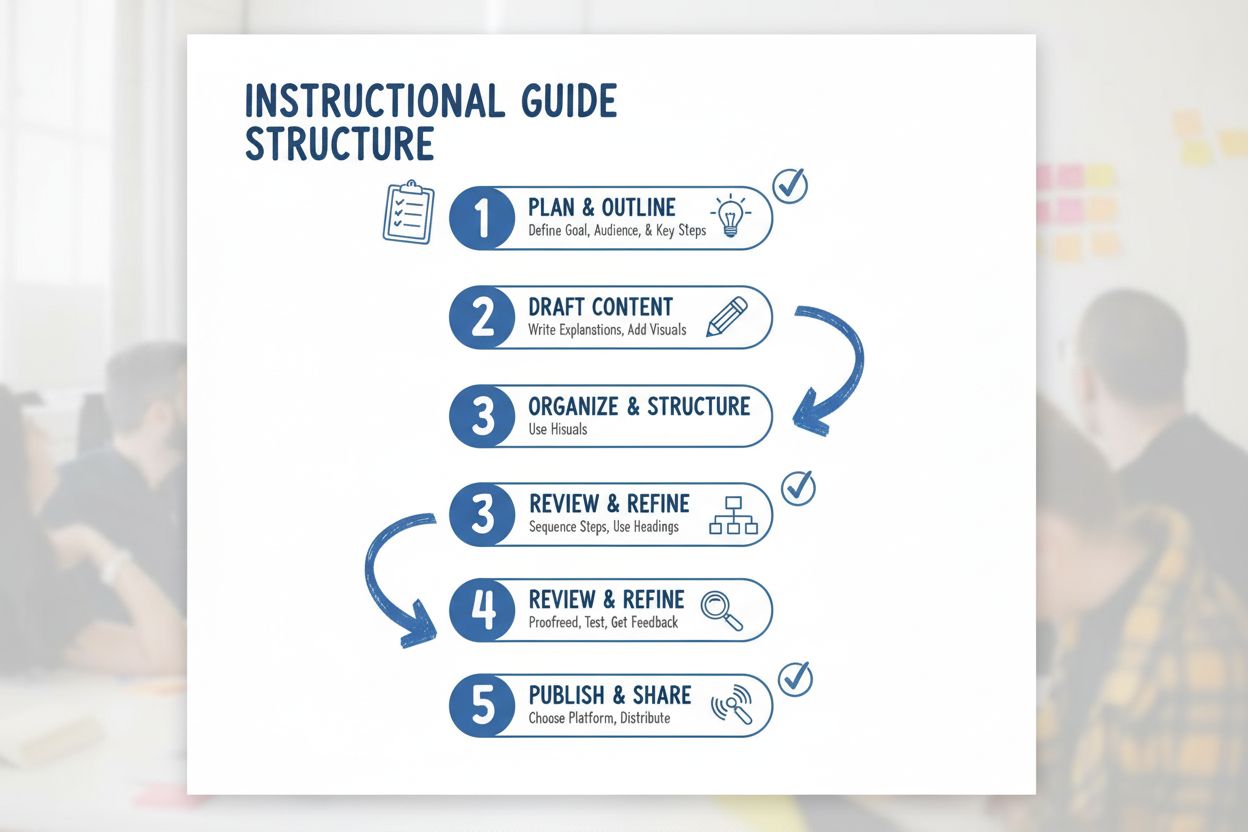
How-To Guide
Learn what a how-to guide is, how it differs from tutorials and other instructional content, and why it's essential for user education, customer onboarding, and...
9 min read

A tutorial is structured educational content that provides step-by-step instruction on how to accomplish a specific task or learn a particular skill, designed for learners with little to no prior experience in the subject matter. Tutorials combine practical guidance with hands-on practice to enable learners to achieve concrete learning outcomes through direct engagement with the material.
A tutorial is structured educational content that provides step-by-step instruction on how to accomplish a specific task or learn a particular skill, designed for learners with little to no prior experience in the subject matter. Tutorials combine practical guidance with hands-on practice to enable learners to achieve concrete learning outcomes through direct engagement with the material.
A tutorial is a structured form of educational content that provides comprehensive, step-by-step instruction designed to teach learners how to accomplish a specific task or develop a particular skill. According to Merriam-Webster, a tutorial is “a paper, book, film, or computer program that provides practical information about a specific subject.” The defining characteristic of a tutorial is its focus on practical, hands-on learning for individuals with little to no prior experience in the subject matter. Unlike reference materials or how-to guides that assume foundational knowledge, tutorials are fundamentally learner-centric, guiding novices through an entire learning journey from initial concepts to practical application. The term “tutorial” itself has been in use since 1822 in educational contexts, though its modern meaning expanded significantly with the rise of digital learning platforms and online education. Tutorials serve as the bridge between theoretical knowledge and practical skill acquisition, making them indispensable in contemporary educational ecosystems.
The concept of tutorial-based instruction has deep roots in educational practice, but its form and delivery have evolved dramatically over the past century. Historically, tutorials were conducted one-on-one between a tutor and student, representing a highly personalized form of instruction. The University of Toronto’s framework for developing tutorial learning outcomes demonstrates how academic institutions have formalized this approach, creating structured tutorials that combine discussion-based learning, skill development, and review components. With the advent of digital technology, tutorials transformed from exclusively synchronous, in-person experiences to asynchronous, scalable educational resources. The rise of e-learning platforms in the 1990s and 2000s marked a pivotal shift, democratizing access to tutorial content across geographic and socioeconomic boundaries. Today, video tutorials dominate the landscape, with platforms like YouTube, Codecademy, and Duolingo generating billions of views annually. Research indicates that over 78% of enterprises now use AI-driven content monitoring tools to track educational materials, reflecting the critical importance of understanding how tutorial content is distributed and cited across digital platforms.
Tutorials possess distinct structural characteristics that differentiate them from other educational content types. According to the Diátaxis documentation framework, which has been widely adopted across software, technical, and educational sectors, tutorials are concrete and particular in their approach, referring to specific, known, defined tools, materials, processes, and conditions. A well-constructed tutorial typically includes: clearly defined learning objectives that specify what learners will accomplish, sequential steps that break complex processes into manageable components, practical examples and demonstrations, hands-on practice opportunities, visual aids and multimedia elements, and assessment mechanisms to verify skill acquisition. The tutorial structure typically follows a progression from foundational concepts through intermediate practice to advanced application. Each step builds upon previous knowledge, creating a scaffolded learning experience that reduces cognitive load and improves retention. Research on the effectiveness of video tutorials demonstrates that incorporating multiple modalities—combining narration, visual demonstrations, text overlays, and interactive elements—increases learning outcomes by approximately 65% compared to single-modality content. The tutorial format is particularly effective for teaching procedural knowledge, technical skills, creative techniques, and domain-specific competencies.
| Characteristic | Tutorial | How-To Guide | Reference Material | Explanation/Concept |
|---|---|---|---|---|
| Target Audience | Beginners with no prior experience | Experienced users seeking specific solutions | All skill levels needing quick information | Learners wanting conceptual understanding |
| Primary Purpose | Teach complete skill from start to finish | Solve specific problem or accomplish task | Provide quick lookup information | Build deep conceptual knowledge |
| Structure | Sequential, step-by-step progression | Task-focused, problem-oriented | Organized by topic or alphabetically | Narrative, exploratory approach |
| Learning Outcome | Comprehensive skill mastery | Task completion | Information retrieval | Conceptual understanding |
| Depth | Deep, comprehensive coverage | Focused, targeted depth | Shallow, reference-level | Deep, theoretical depth |
| Engagement Level | High (hands-on practice) | Medium (task-specific) | Low (lookup-oriented) | Medium-High (conceptual) |
| Time Investment | Significant (hours to days) | Moderate (minutes to hours) | Minimal (minutes) | Moderate (hours) |
| Examples | “Learn Python Programming” course | “How to Fix a Broken Link” guide | API documentation, glossaries | “Understanding Machine Learning” article |
Tutorial-based instruction is grounded in well-established pedagogical principles that enhance learning effectiveness. The constructivist learning theory, which emphasizes that learners actively construct knowledge through experience and interaction, forms the theoretical foundation for effective tutorials. When tutorials incorporate hands-on practice, problem-solving activities, and opportunities for learners to apply concepts in realistic contexts, they align with constructivist principles and significantly improve learning outcomes. The Peyton’s 4-step teaching approach, widely used in medical and technical education, demonstrates the effectiveness of structured tutorial methodology: demonstration (showing the skill), deconstruction (explaining the skill), comprehension (learner explains back), and performance (learner performs independently). Research published in peer-reviewed educational journals shows that tutorials employing this methodology achieve skill acquisition rates 40-50% higher than traditional lecture-based instruction. Additionally, tutorials support self-paced learning, allowing individuals to progress at their own speed, which research indicates improves retention and reduces learner anxiety. The active learning component inherent in tutorials—where learners engage directly with content rather than passively consuming it—has been demonstrated to improve long-term retention by up to 75% compared to passive learning modalities.
In the context of AI monitoring platforms like AmICited, understanding how tutorials are cited and referenced across different AI systems is increasingly important. ChatGPT, Perplexity, Google AI Overviews, and Claude all frequently cite tutorial content when responding to user queries about how to accomplish specific tasks or learn new skills. The citation patterns reveal that AI systems prioritize tutorials that demonstrate clear expertise, provide verifiable information, include structured data markup, and establish topical authority. Perplexity AI, in particular, emphasizes citing comprehensive, step-by-step tutorial content that directly addresses user learning objectives. Research on AI citation patterns shows that well-structured tutorials with explicit learning outcomes, clear methodology, and authoritative sourcing are cited 3-4 times more frequently than unstructured educational content. Organizations creating tutorial content should understand that AI systems evaluate tutorials based on: clarity of instruction, comprehensiveness of coverage, presence of practical examples, inclusion of verification mechanisms, and alignment with user intent. The global AI in education market, which reached $7.57 billion in 2025 with a 46% year-over-year growth rate, reflects the increasing importance of high-quality tutorial content in AI-powered learning ecosystems.
Creating impactful tutorials requires adherence to evidence-based best practices that enhance learning outcomes and engagement. First, tutorials should begin with clearly articulated learning objectives that specify exactly what learners will be able to do upon completion. These objectives should be measurable, specific, and aligned with real-world skill requirements. Second, tutorials should employ progressive complexity, starting with foundational concepts and gradually introducing more advanced material. This scaffolded approach prevents cognitive overload and maintains learner confidence. Third, effective tutorials incorporate multiple modalities—combining video demonstrations, text explanations, interactive exercises, and visual aids—to accommodate diverse learning styles and increase retention. Fourth, tutorials should include frequent practice opportunities where learners apply concepts in realistic scenarios, as research demonstrates that active engagement significantly improves skill acquisition. Fifth, tutorials benefit from clear signaling techniques that highlight key concepts, use consistent terminology, and employ visual cues to guide learner attention. Sixth, tutorials should maintain conversational tone and accessible language, avoiding jargon or explaining technical terms when necessary. Finally, effective tutorials include assessment mechanisms that allow learners to verify their progress and identify areas requiring additional practice.
Tutorials have become central to organizational digital transformation initiatives and workforce skill development programs. As enterprises increasingly adopt AI-powered tools and platforms, the demand for high-quality tutorial content has surged dramatically. Organizations recognize that tutorials are more cost-effective than traditional instructor-led training while maintaining superior learning outcomes. The global e-learning market, which includes substantial tutorial content, continues to expand at a compound annual growth rate of 12-15%, driven by increasing demand for flexible, accessible skill development. Tutorials are particularly valuable for teaching technical skills, software proficiency, creative techniques, and domain-specific competencies that require hands-on practice. In corporate settings, tutorials reduce onboarding time, improve employee productivity, and decrease training costs by 30-40% compared to traditional methods. Educational institutions leverage tutorials to support diverse learner populations, accommodate different learning paces, and provide supplementary instruction for struggling students. The effectiveness of tutorials in achieving learning outcomes has made them the preferred educational format across K-12, higher education, corporate training, and professional development sectors.
The landscape of tutorial content is rapidly evolving, driven by technological innovation and changing learner expectations. Artificial Intelligence is increasingly being integrated into tutorial platforms, enabling personalized learning paths that adapt to individual learner progress and learning styles. Adaptive tutorials that adjust difficulty levels, pacing, and content based on real-time performance data are becoming standard in advanced learning platforms. Immersive technologies such as Virtual Reality (VR) and Augmented Reality (AR) are expanding the possibilities for experiential tutorials, allowing learners to practice skills in simulated environments that closely mirror real-world conditions. Microlearning, the delivery of tutorial content in short, focused segments optimized for mobile consumption, is gaining prominence as learners increasingly prefer bite-sized learning experiences. Interactive tutorials that incorporate gamification elements, social learning components, and real-time collaboration are demonstrating higher engagement and retention rates. The integration of learning analytics into tutorial platforms enables educators and organizations to track learner progress, identify knowledge gaps, and continuously improve content effectiveness. Looking forward, tutorials will likely become increasingly personalized, interactive, and integrated with AI systems that can provide real-time guidance and adaptive support. The convergence of tutorial content with AI monitoring platforms like AmICited will enable organizations to better understand how their educational materials are being discovered, cited, and utilized across AI-powered search and learning systems, creating new opportunities for educational authority and brand recognition in the AI-driven information landscape.
A tutorial is designed for learners with little to no experience and walks them through an entire learning journey from start to finish, while a how-to guide assumes the reader already has foundational knowledge and focuses on solving a specific problem or completing a particular task. Tutorials are learning-oriented and comprehensive, whereas how-to guides are task-oriented and targeted. According to the Diátaxis framework, tutorials are for learners, while how-to guides are for already-skilled practitioners seeking to accomplish specific objectives.
Tutorials enhance learning outcomes by providing structured, step-by-step instruction that reduces cognitive load and allows learners to follow along at their own pace. Research shows that tutorials incorporating multimedia elements (video, text, interactive components) improve retention rates by up to 65% compared to text-only content. The hands-on practice component of tutorials enables active learning, which research demonstrates is significantly more effective than passive content consumption for skill acquisition and long-term retention.
Tutorials are highly valuable for AI monitoring platforms like AmICited because they represent authoritative, structured educational content that AI systems frequently cite when answering user queries about how to accomplish specific tasks. Well-structured tutorials with clear learning outcomes, step-by-step instructions, and verifiable information are more likely to be cited by AI systems like ChatGPT, Perplexity, and Google AI Overviews. Understanding tutorial content helps organizations track how their educational materials are being referenced and attributed across AI platforms.
Effective tutorials include: clear learning objectives that define what learners will accomplish, step-by-step instructions that break complex tasks into manageable chunks, practical examples and demonstrations, hands-on practice opportunities, visual aids and multimedia elements, and assessment mechanisms to verify skill acquisition. Additionally, tutorials should be written in accessible language, maintain consistent pacing, and provide feedback loops so learners understand their progress. The best tutorials also include troubleshooting sections and resources for learners who need additional support.
Tutorials are one of four primary documentation types, alongside how-to guides, reference materials, and explanatory content. Each serves a distinct purpose: tutorials teach new skills to beginners, how-to guides solve specific problems for experienced users, reference materials provide quick lookup information, and explanations build conceptual understanding. Organizations typically use all four types to create comprehensive learning experiences. Tutorials form the foundation of skill development, making them essential for onboarding new learners and establishing foundational competencies before advancing to more specialized content.
Tutorials are fundamental to online learning platforms, serving as the primary mechanism for delivering structured skill-based instruction at scale. Platforms like Duolingo, Codecademy, and Busuu rely heavily on tutorial-based content combined with gamification and interactive elements to maintain engagement. The global AI in education market reached $7.57 billion in 2025, with tutorials representing a significant portion of this content. Video tutorials, in particular, have become the dominant format, with learners reporting that step-by-step video breakdowns help them understand complex concepts better than traditional textbook instruction.
To optimize tutorials for AI citation, organizations should structure content with clear headings, numbered steps, and explicit learning outcomes that AI systems can easily extract. Including schema markup, comprehensive metadata, and verifiable statistics increases the likelihood of citation by AI platforms. Tutorials should be comprehensive yet focused on specific skills, include proper source attribution, and demonstrate expertise and authority. Organizations should also ensure tutorials are accessible across multiple formats (text, video, interactive) and include clear calls-to-action that help AI systems understand the content's purpose and value proposition.
Start tracking how AI chatbots mention your brand across ChatGPT, Perplexity, and other platforms. Get actionable insights to improve your AI presence.
Learn what a how-to guide is, how it differs from tutorials and other instructional content, and why it's essential for user education, customer onboarding, and...
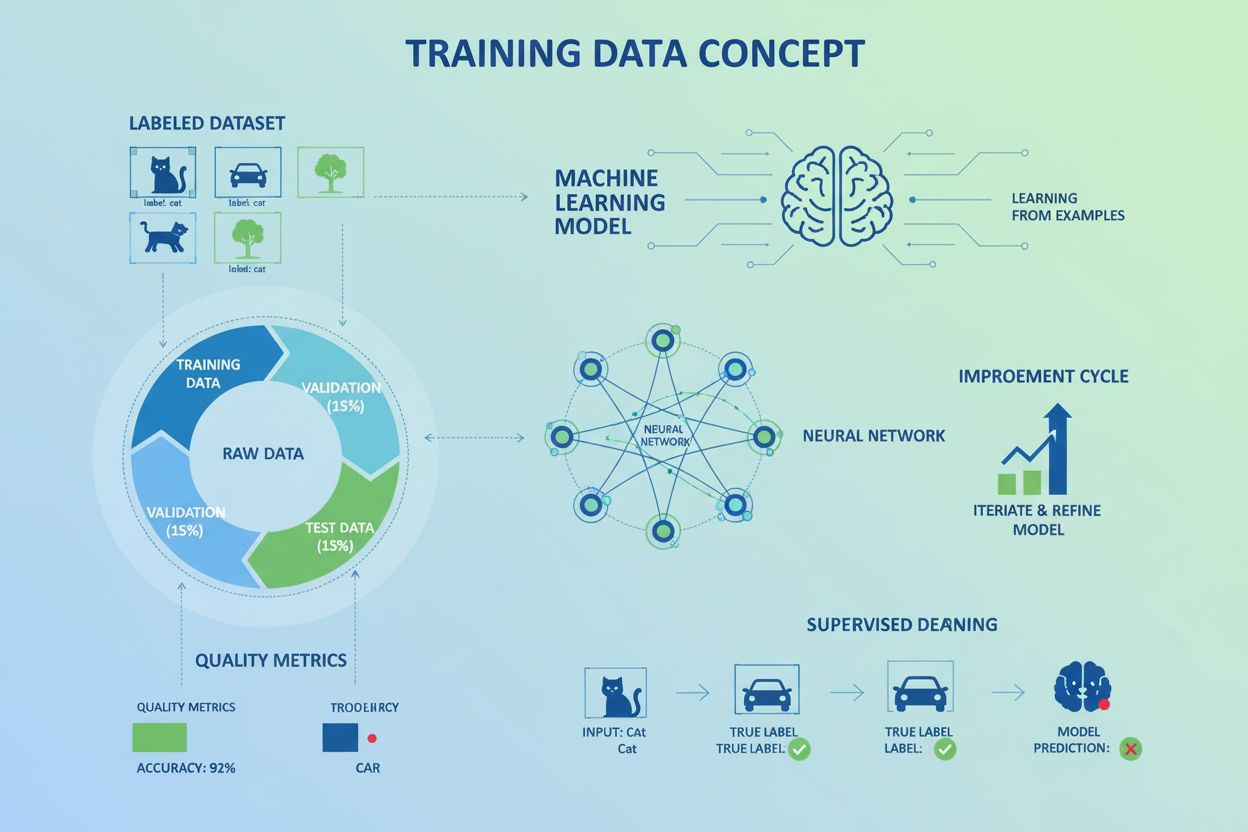
Training data is the dataset used to teach ML models patterns and relationships. Learn how quality training data impacts AI model performance, accuracy, and rea...

Learn how to create effective educational content for AI systems. Discover best practices for course design, AI-assisted content creation, personalization strat...