


- UGC ads are paid ads built from user-generated content, such as reviews, unboxings, testimonials and tutorials made by customers or hired creators, usually as phone-shot vertical video.
- Content comes from customers, licensed with permission, or from UGC creators you pay for the video and its usage rights rather than for their audience.
- Get usage rights in writing, give creators a list of claims they can’t make, and label paid partnerships.
- Test against your current best ad with equal budgets. UGC is cheap to make, but it doesn’t always win, and the hook in the first seconds matters most.
Where AmICited fits
AI assistants rarely cite paid social ads, but they do cite organic UGC. AmICited’s UGC Influence report shows which Reddit threads, YouTube videos and forum posts ChatGPT, Perplexity, Gemini and Google’s AI features cite for your tracked prompts, and which communities come up most.
See UGC influence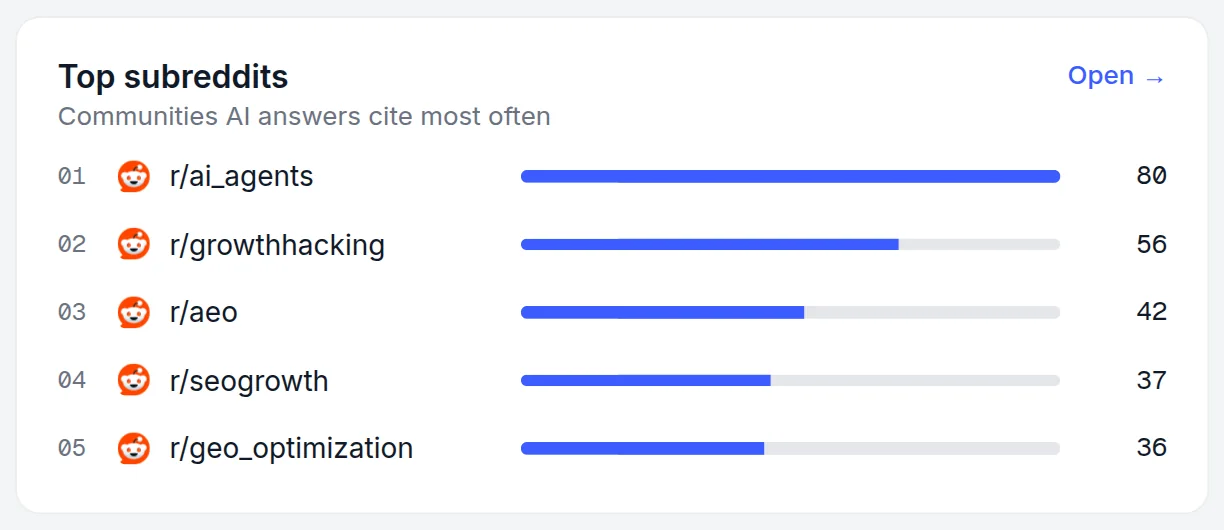
What Are UGC Ads?
UGC ads are paid advertisements built from user-generated content: customer reviews, unboxing videos, testimonials, tutorials and reaction clips made by real customers or hired creators instead of a brand’s production team. They usually look like ordinary posts: vertical video, someone talking to a phone camera, the product in a real kitchen or bathroom.
Direct-to-consumer brands lean on UGC ads heavily on TikTok, Instagram Reels, Facebook and YouTube Shorts, but they show up in almost every category now, from apps to B2B software. The format works because it borrows social proof: a stranger saying “I’ve used this for a month and here’s what happened” reads differently from a brand saying it about itself. It’s also cheap to produce compared with a studio shoot, which makes it practical to test many versions.
How UGC Ads Are Made
There are two sources of UGC ad content:
- Organic customer content. Posts, reviews and videos customers made on their own. You ask for permission and, if they agree, license it for ads.
- Commissioned creator content. You hire UGC creators to film content in a native style. Many have small or no followings, because you’re paying for the video, not their audience.
A typical production flow looks like this:
- Brief. Define the product, the audience, the key benefit, the claims the creator may and may not make, and two or three possible hooks for the first seconds.
- Filming. The creator films on a phone, using the product the way a customer would.
- Usage rights. A written agreement covers where the content can run (organic, paid social, website), for how long, and whether you can edit it.
- Launch. The video runs as an ad, either from your brand account or through the creator’s handle using formats such as Meta’s partnership ads or TikTok Spark Ads, with the required paid-partnership disclosure.
- Testing. You compare it against your current best ad with the same budget and audience.
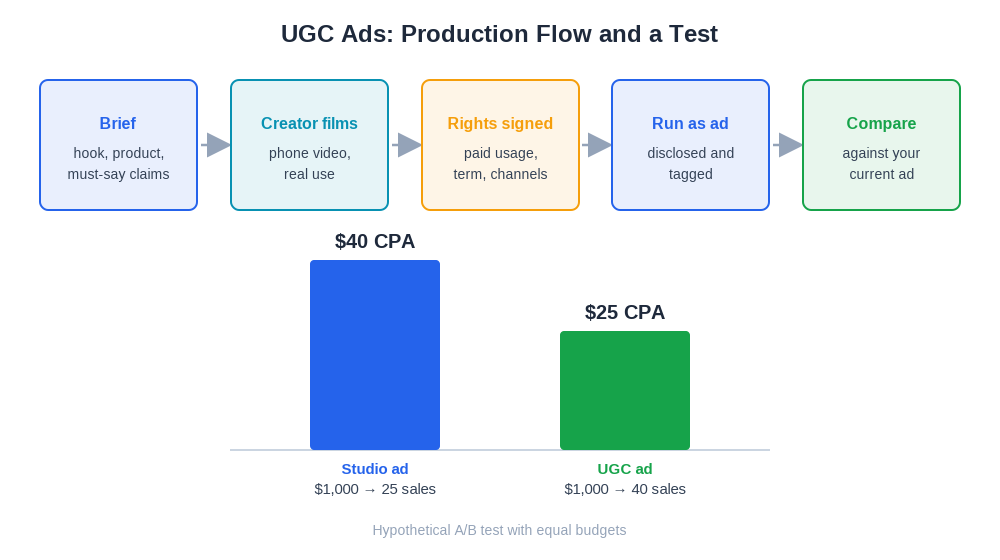
Here’s a hypothetical test. You run your current studio ad and a new UGC ad to the same audience with $1,000 each. The studio ad gets 25 purchases and the UGC ad gets 40:
CPA = Spend ÷ Purchases
- Studio ad: $1,000 ÷ 25 = $40
- UGC ad: $1,000 ÷ 40 = $25
In this example the UGC ad is cheaper per sale, but don’t assume it always will be. Plenty of UGC ads lose to well-made brand creative. The point is to test with equal budgets and enough purchases to trust the difference, as you would in any A/B test.
Format matters as much as the creator. Most UGC ads run as vertical 9:16 video in Reels, Stories and TikTok placements, and many people watch with the sound off, so on-screen captions and a visual hook in the first frame do a lot of the work.
UGC Ads vs Influencer Marketing vs Brand Creative
| UGC ads | Influencer marketing | Brand-produced ads | |
|---|---|---|---|
| Who makes it | Customers or hired UGC creators | Creators with an audience | Brand team or agency |
| Who distributes it | Brand’s ad account | Creator’s own account (plus optional paid boost) | Brand’s ad account |
| What you pay for | The content and usage rights | Reach, audience trust and content | Production |
| Production cost | Low per video | Medium to high | Medium to high |
| Volume you can test | High | Low | Low to medium |
| Main risk | Weak hooks, rights gaps, claims | Audience mismatch, fake followers | Looks like an ad, gets skipped |
The formats overlap. An influencer’s sponsored post can be licensed and run as a UGC-style ad, and many brands use UGC for testing hooks, then produce polished versions of the winners.
UGC Ads and AI Search
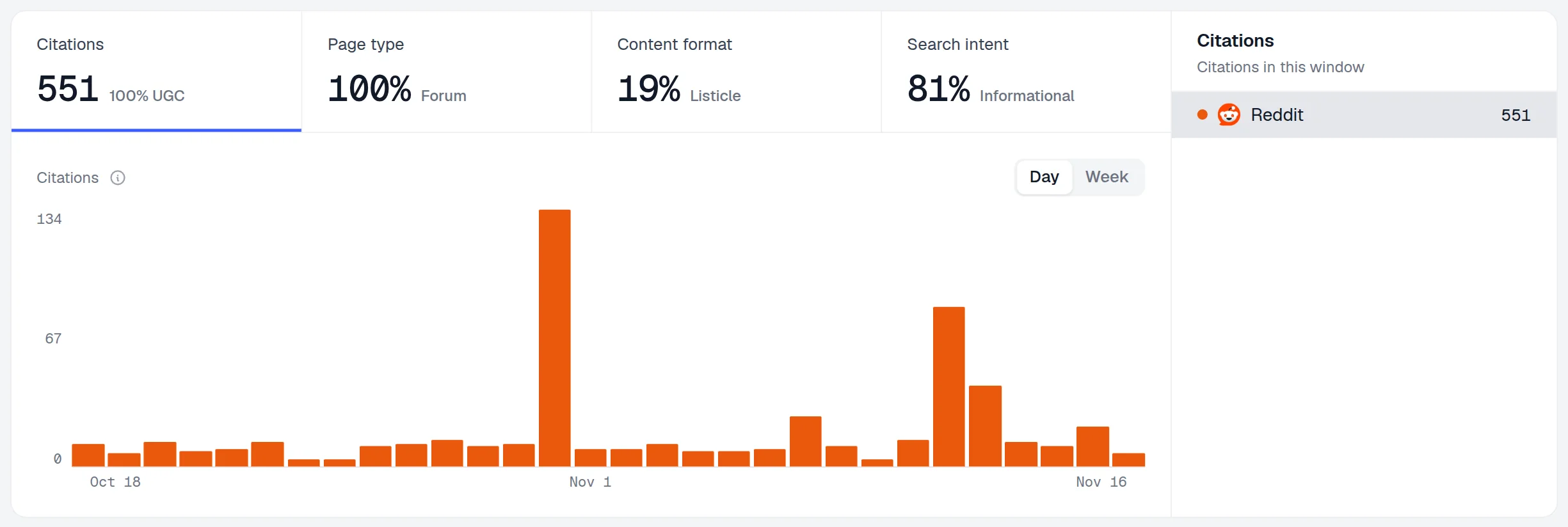
AI assistants don’t generally cite paid social ads. Organic UGC is another story: ChatGPT, Perplexity, Gemini and Google AI Overviews regularly cite Reddit threads, YouTube reviews and forum posts when they answer “is this product any good?” questions. Those sources shape how AI describes your brand.
So the customer stories that make strong UGC ads are worth publishing organically too, as reviews, YouTube videos and honest answers in community threads. AmICited’s UGC Influence report shows which user-generated sources AI engines cite in your category, which tells you where those conversations matter most.

Stay Updated on AI Visibility Trends
Get the latest insights on AI mentions, brand monitoring, and optimization strategies.
Best Practices for UGC Ads
- Lead with the hook. Shoppers decide in the first seconds. Brief creators to open with the problem, the result or a surprising moment, not a greeting.
- Get usage rights in writing. Specify channels, duration, edits and whether whitelisting through the creator’s handle is allowed.
- Keep claims compliant. Give creators a list of what they can’t say, especially for health, finance or beauty products.
- Brief, don’t script. A tight script makes UGC sound like an ad read. Give key points and let the creator speak naturally.
- Order several hooks per video. The same body with three different openings is a cheap way to test.
- Watch fatigue. UGC ads burn out like any creative. Track frequency and CTR, using a report like audience saturation, and refresh before results drop.
Common UGC Ads Mistakes
The most common mistake is running customer content without proper permission, or with a license that only covered organic use. That can lead to takedowns, disputes or worse. Another is over-producing UGC until it looks like a brand ad again, which removes the reason it worked.
Brands also make one UGC video and judge the whole format on it. Results depend heavily on the hook and the creator, so one weak video says little. Finally, many teams forget disclosure. If a creator was paid or received free product, the ad needs a clear paid-partnership label, and the creator’s statements must reflect their honest experience. Pairing UGC ads with a strong social commerce setup, such as in-app checkout, can also shorten the path from video to purchase.