

From Blog to Video: Extending AI Visibility Across Platforms
Learn how to repurpose blog content into video using AI tools and extend your brand visibility across YouTube, TikTok, Instagram, and LinkedIn with proven strat...
10 min read
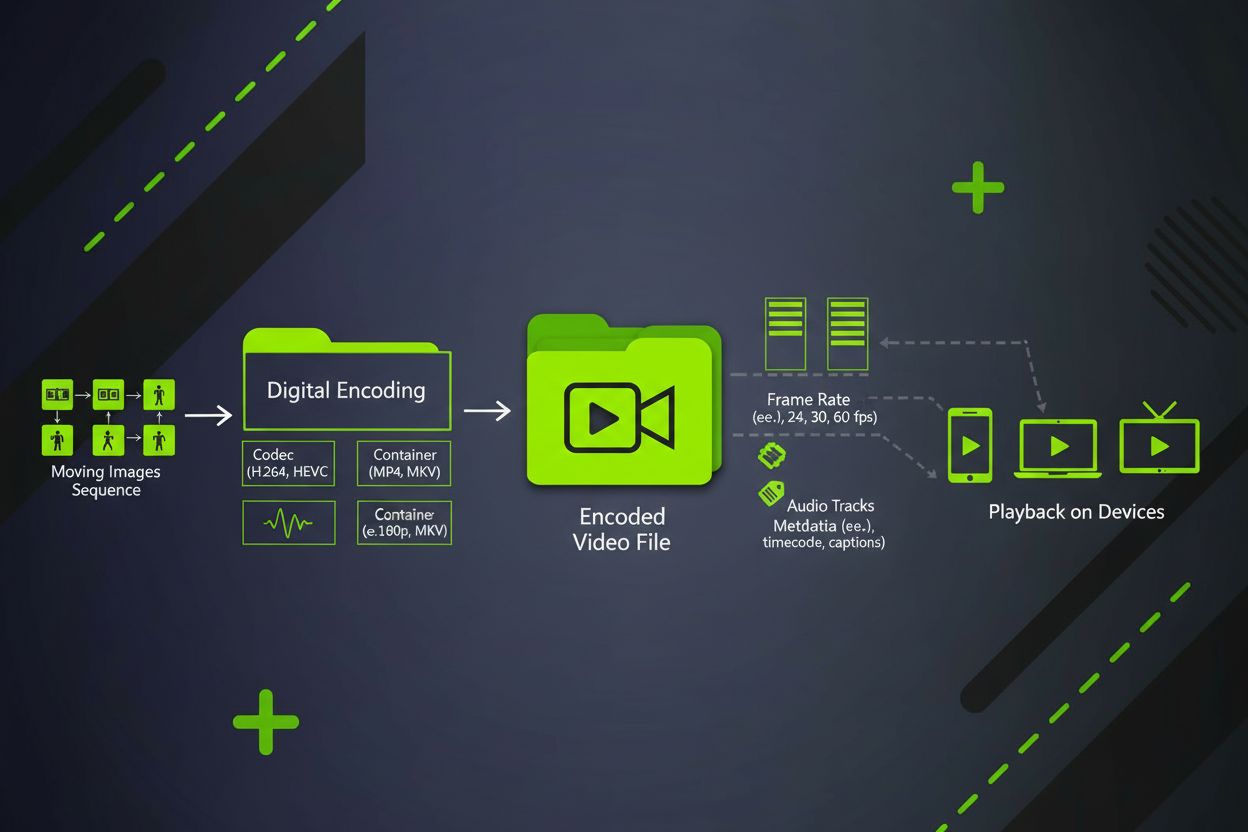
Video content is a digital moving image format that combines sequential frames, audio, and metadata encoded in a specific file format to create dynamic visual media. It represents one of the most engaging and widely consumed content types across digital platforms, with 89% of consumers wanting to see more video from brands.
Video content is a digital moving image format that combines sequential frames, audio, and metadata encoded in a specific file format to create dynamic visual media. It represents one of the most engaging and widely consumed content types across digital platforms, with 89% of consumers wanting to see more video from brands.
Video content is a digital moving image format that combines a sequential series of frames, audio tracks, and metadata encoded in a specific file format to create dynamic visual media. At its core, video content represents the electronic representation of moving visual images in the form of encoded digital data, as defined by the Library of Congress and digital preservation standards. Video content differs fundamentally from static media by capturing temporal information—the dimension of time—allowing viewers to experience motion, change, and narrative progression. This format has become the dominant content type across digital platforms, with over 3.3 billion digital video viewers worldwide and video accounting for more than 82% of all consumer internet traffic. The significance of video content extends beyond entertainment; it has become a critical business tool for marketing, education, communication, and brand building in the modern digital landscape.
The evolution of video content from analog to digital formats represents one of the most significant technological transformations in media history. Historically, video was captured on physical media like VHS tapes and film, requiring specialized equipment and distribution channels. The transition to digital video began in the 1990s with formats like AVI and QuickTime, but truly accelerated with the emergence of internet-friendly formats like MP4 and the proliferation of broadband connectivity. Today, video content encompasses everything from professional broadcast-quality productions to user-generated content created on smartphones. The democratization of video creation tools has fundamentally changed content consumption patterns. Research shows that 92% of marketers now consider video an essential part of their marketing strategy, up from just 78% in 2015—a remarkable shift in less than a decade. This growth reflects both technological advancement and changing consumer preferences, with 75% of viewers watching short-form video content on mobile devices and 88% of users spending more time on websites containing video content compared to text-only sites. The rise of platforms like TikTok, YouTube, Instagram Reels, and Snapchat has normalized video as the primary communication medium for younger demographics, while professional sectors increasingly rely on video for training, documentation, and corporate communication.
Understanding video content requires knowledge of its fundamental technical components. Video content consists of two primary structural elements: the codec and the container. A codec (compressor/decompressor) is the technology that encodes video data, reducing file size through compression algorithms while attempting to preserve visual quality. Common video codecs include H.264 (also called MPEG-4 Part 10), which is the industry standard for most platforms, and H.265 (HEVC), which offers superior compression for 4K and high-resolution content. Codecs can be either “lossy” (removing data to reduce file size, which may diminish quality) or “lossless” (preserving all original data but resulting in larger files). The container, or file format, is the wrapper that holds the compressed video stream, audio tracks, subtitles, metadata, and timing information together in a single file. Common containers include MP4 (MPEG-4 Part 14), MOV (QuickTime), MKV (Matroska), and WEBM (WebM). Beyond these core components, video content incorporates several other technical specifications that affect quality and compatibility. Frame rate, measured in frames per second (fps), determines how many individual images are displayed per second—typically 24fps for film, 30fps for video, and 60fps for high-motion content. Resolution refers to the pixel dimensions of each frame, with common standards including 1080p (1920x1080), 4K (3840x2160), and emerging 8K formats. Aspect ratio describes the proportional relationship between width and height, with 16:9 being standard for most platforms and 9:16 for mobile vertical video. Audio within video content is typically encoded separately using codecs like AAC-LC or MP3, with professional content often including multiple audio tracks for different languages or commentary options.
| Format | Container | Primary Codec | Best Use Case | File Size | Compatibility | Quality |
|---|---|---|---|---|---|---|
| MP4 | MPEG-4 | H.264/H.265 | Web, social media, streaming | Small | Universal (Windows, Mac, iOS, Android) | High |
| MOV | QuickTime | ProRes, H.264 | Professional editing, archival | Large | Mac-optimized, limited Windows support | Very High |
| MKV | Matroska | Multiple (H.264, VP9, AV1) | Archival, multiple codec support | Large | Growing support, limited mobile | Excellent |
| WEBM | WebM | VP8, VP9 | Browser-native, HTML5 | Medium | Chrome, Firefox, Edge, Opera | High |
| AVI | Audio Video Interleaved | MPEG-4, Cinepak | Legacy systems, DVD | Very Large | Declining support | Medium |
| WMV | Windows Media Video | VC-1 | Windows systems, licensing | Small | Windows-centric | Medium |
| AVCHD | Advanced Video Codec High Definition | H.264 | Camcorder footage, 3D video | Medium | Sony/Panasonic devices | Very High |
The selection of video content format depends critically on the intended distribution platform and audience device types. MP4 remains the most universally compatible format, recommended by YouTube, Instagram, Facebook, and TikTok as the optimal choice for their platforms. YouTube specifically recommends MP4 files with H.264 video codec and AAC-LC audio codec for maximum compatibility and processing speed. For professional video production and editing workflows, MOV format remains the industry standard, particularly in post-production environments where frame-by-frame editing and color grading are essential. MOV files can maintain the integrity of individual frames without temporal compression, making them ideal for editorial reuse and archival purposes. The MKV format has gained popularity in archival and preservation contexts because it supports multiple codecs simultaneously within a single file, providing future-proofing against codec obsolescence. For web-native applications, WEBM format offers advantages by playing directly in browsers without requiring plugins, though its mobile compatibility remains limited. Professional broadcast and cinema applications often employ specialized formats like DPX (Digital Picture Exchange) or Motion JPEG 2000, which maintain frame integrity for theatrical distribution and digital cinema specifications. The choice between formats involves trade-offs between file size, quality, compatibility, and editing flexibility. 88% of video marketers report positive ROI from their efforts, suggesting that format selection significantly impacts content effectiveness and audience reach.
Video content specifications must be optimized for the specific platform and device ecosystem where content will be consumed. Mobile devices present unique requirements, as 75% of all video plays occur on mobile devices, necessitating vertical aspect ratios (9:16) and smaller file sizes for faster loading. Instagram Reels, for example, require 1080x1920 resolution with 9:16 aspect ratio and maximum 30MB file size. TikTok videos should be formatted at 1080x1920 resolution with 9:16 aspect ratio, supporting both vertical and horizontal orientations. YouTube accommodates a wider range of specifications, accepting 1080p (1920x1080) as minimum for quality content, with 4K (3840x2160) increasingly recommended for competitive visibility. Facebook video specifications include 1200x628 pixels for feed videos and 1080x1920 for vertical stories. LinkedIn, increasingly important for B2B video marketing, recommends 1200x627 pixels for feed videos and 1080x1920 for vertical content. 83% of marketers suggest videos should be under 60 seconds for social media platforms, though longer-form content (5-60 minutes) performs well on YouTube and professional platforms. Audio specifications are equally important—most platforms recommend stereo audio at 128-192 kbps bitrate. Subtitles have become critical, as over 80% of social media users consume video without sound, making captions essential for accessibility and engagement. Professional video production often requires higher specifications: broadcast-quality video typically uses 1920x1080 (1080p) or higher resolution, 24fps or 30fps frame rates, and professional audio at 48kHz sample rate with 16-bit or 24-bit depth.
The emergence of AI-powered content monitoring platforms has fundamentally changed how brands track their presence across digital channels. Video content now represents a critical component of brand monitoring, as AI systems like ChatGPT, Perplexity, Google AI Overviews, and Claude increasingly reference and cite video content in their responses. Advanced computer vision and machine learning algorithms can now detect brand logos, product placements, and brand mentions within video content with remarkable accuracy. AI-powered logo detection is revolutionizing brand visibility tracking in video streams, enabling marketers to understand how their brands appear in user-generated content, competitor videos, and AI-generated recommendations. Platforms like AmICited specialize in tracking when and how brands appear in AI responses, including video content citations. This capability extends traditional brand monitoring beyond text-based mentions to encompass visual brand elements, providing comprehensive insight into brand presence across the AI landscape. The importance of this monitoring cannot be overstated—over 78% of enterprises use AI-driven content monitoring tools to track their brand and domain appearances across various AI systems and platforms. Video content monitoring helps brands understand: how frequently their video content is cited by AI systems, which video content generates the most AI citations, how competitors’ video content is being referenced, and emerging trends in video content discovery through AI. This intelligence enables brands to optimize their video content strategy, understand audience preferences, and maintain competitive advantage in an increasingly AI-mediated information landscape.
The landscape of video content continues to evolve rapidly, driven by technological advancement, changing consumer preferences, and emerging platforms. Interactive video represents a significant frontier, with brands like Nike, IKEA, and Porsche already implementing interactive video experiences that allow viewers to engage with content in real-time. Research indicates that interactive video generates five times more engagement and 30% higher conversions compared to traditional linear video, with viewers spending 47% more time engaging with interactive content. E-commerce applications of interactive video are particularly promising, with 41% increases in products added to cart when video content is directly shoppable. The rise of short-form video content shows no signs of slowing, with platforms like TikTok, Instagram Reels, and YouTube Shorts dominating consumption patterns. 37% of consumers prefer discovering products through short-form videos, while only 8% prefer long-form and 17% favor livestream formats. Artificial intelligence is increasingly integrated into video content creation and optimization, with AI tools automating editing, generating captions, optimizing for different platforms, and personalizing content for individual viewers. Personalized video marketing increases email conversions by 500%, demonstrating the power of AI-driven customization. The integration of video content with AI monitoring systems will continue expanding, enabling brands to track not just text mentions but visual brand presence across AI-generated content and responses. Emerging technologies like augmented reality (AR) video, virtual reality (VR) video, and 360-degree video are creating immersive experiences that transcend traditional video formats. As video consumption continues to grow—with 89% of consumers wanting to see more video from brands—the strategic importance of video content in marketing, communication, and brand building will only intensify. Organizations that master video content creation, optimization, and monitoring will maintain competitive advantage in an increasingly visual and AI-mediated digital landscape.
Video content differs from static media like images or text by presenting a continuous sequence of moving frames combined with audio and metadata. Unlike still images, video captures temporal information and motion, allowing for more dynamic storytelling. Video content typically requires specific codecs for compression and containers for file organization, whereas images use simpler compression methods. According to research, 72% of customers prefer learning about products through video rather than text, demonstrating video's unique communicative power.
The most common video formats include MP4 (universally compatible, best for web and social media), MOV (Apple-optimized, professional editing standard), MKV (open-source, supports multiple codecs), and WEBM (browser-native, optimized for HTML5). MP4 is recommended for YouTube, Instagram, and Facebook due to its small file size and high quality. MOV files are preferred in professional video production environments. The choice depends on your distribution platform, quality requirements, and device compatibility needs.
AI-powered monitoring systems now detect brand presence in video content through advanced computer vision and logo detection technologies. Platforms like AmICited track how brands appear in video content across AI systems like ChatGPT, Perplexity, and Google AI Overviews. This capability extends brand monitoring beyond text to include visual brand elements, enabling comprehensive tracking of brand mentions across all content types. Over 78% of enterprises now use AI-driven content monitoring tools to track their presence across digital channels.
A codec (compressor/decompressor) is the technology that encodes and compresses video data to reduce file size while maintaining quality. Common video codecs include H.264 and H.265. A container (or format) is the file wrapper that holds the compressed video, audio, subtitles, and metadata together. For example, an MP4 file is a container that typically holds H.264 video codec and AAC audio codec. Understanding both components is essential for creating compatible, high-quality video content across different platforms.
Video consumption has grown exponentially due to improved internet speeds, mobile device proliferation, and platform optimization for video. The average person now spends 100 minutes daily watching online videos, a 19% increase from 2019. Platforms like TikTok, YouTube, and Instagram have made video creation and sharing accessible to everyone. Additionally, 75% of viewers watch short-form video on mobile devices, and 88% of users spend more time on websites with video content, making video essential for digital engagement.
Optimal video specifications depend on the platform but generally include: resolution (1080p minimum for quality, 4K for premium content), frame rate (24fps for film, 30fps for video, 60fps for motion), aspect ratio (16:9 for most platforms, 9:16 for mobile), and file format (MP4 with H.264 codec recommended). Audio should be AAC-LC codec at 128-192 kbps. Video length matters too—83% of marketers suggest videos should be under 60 seconds for social media. Subtitles are increasingly important, as over 80% of social media users consume video without sound.
Video content significantly boosts conversion rates and ROI across multiple channels. Including video on landing pages increases conversions by 80-86%, while video marketing achieves 66% more qualified leads annually. E-commerce businesses using product videos see 37% increases in add-to-cart conversions. Marketers using video grow revenue 49% faster than non-video users, and 52% of marketing professionals worldwide identify video as the content type with the best ROI. These statistics demonstrate video's exceptional effectiveness in driving business results.
Start tracking how AI chatbots mention your brand across ChatGPT, Perplexity, and other platforms. Get actionable insights to improve your AI presence.
Learn how to repurpose blog content into video using AI tools and extend your brand visibility across YouTube, TikTok, Instagram, and LinkedIn with proven strat...

News content is factual, timely information about current events distributed across media platforms. Learn how AI systems monitor news mentions and why it matte...
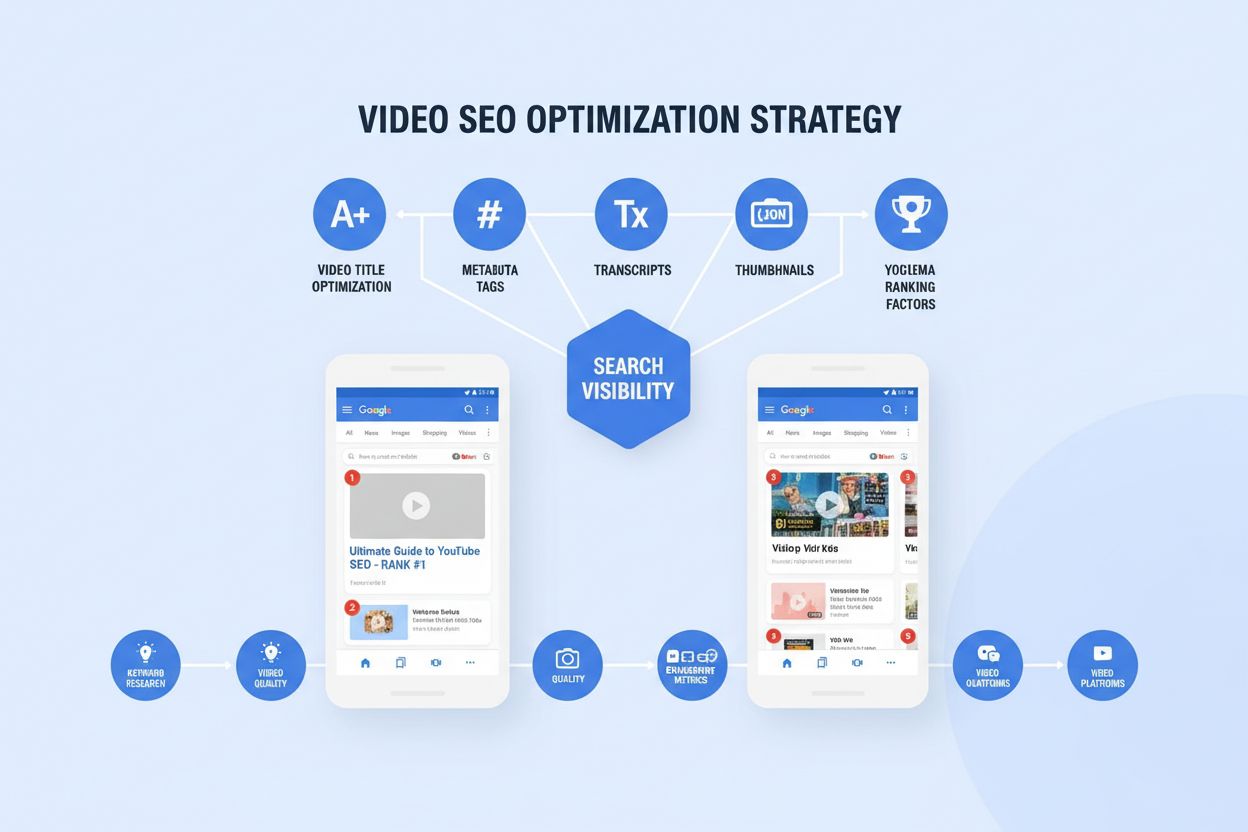
Learn what Video SEO is and how to optimize video content for search engines. Discover best practices for ranking videos on Google, YouTube, and AI Overviews.