

How to Optimize Your Content for Voice Search and AI Answers
Learn proven strategies to optimize your website for voice search and AI-powered search engines. Master conversational keywords, featured snippets, local SEO, a...
17 min read

Voice commerce optimization is the strategic process of tailoring product content and digital presence to be discoverable and purchasable through voice-activated devices like Alexa, Google Assistant, and Siri. It involves optimizing product titles, descriptions, and structured data for conversational queries. This practice is essential as voice commerce is projected to reach $45 billion globally, with 41% of US adults using voice shopping daily. Voice optimization ensures your e-commerce business captures sales from the rapidly growing segment of voice-enabled device users.
Voice commerce optimization is the strategic process of tailoring product content and digital presence to be discoverable and purchasable through voice-activated devices like Alexa, Google Assistant, and Siri. It involves optimizing product titles, descriptions, and structured data for conversational queries. This practice is essential as voice commerce is projected to reach $45 billion globally, with 41% of US adults using voice shopping daily. Voice optimization ensures your e-commerce business captures sales from the rapidly growing segment of voice-enabled device users.
Voice commerce optimization refers to the strategic process of tailoring product content, website structure, and digital presence to be discoverable and purchasable through voice-activated devices and assistants. This practice has become essential as the voice commerce market is projected to reach $45 billion globally, with 20.5% global adoption and 41% of US adults using voice shopping daily. Voice commerce optimization focuses specifically on making your e-commerce offerings accessible through the three dominant platforms: Amazon Alexa, Google Assistant, and Apple Siri. Unlike traditional search engine optimization, voice commerce optimization prioritizes conversational language patterns, natural speech queries, and the unique ways consumers interact with voice-activated shopping experiences. The core concept centers on understanding that voice searches are fundamentally different from typed searches—they’re longer, more conversational, and often location-based. By optimizing your product content for voice commerce, you’re essentially preparing your e-commerce business for a future where customers increasingly prefer hands-free, voice-driven shopping experiences. This optimization directly impacts your ability to capture sales from the rapidly growing segment of voice-enabled device users.
Voice commerce operates under fundamentally different principles than traditional text-based e-commerce, requiring distinct optimization approaches. The following table illustrates the key differences between traditional search and voice commerce:
| Aspect | Traditional Search | Voice Commerce |
|---|---|---|
| Query Length | Short, 1-3 words | Long, 5-10+ words |
| Language Style | Keyword-focused, formal | Conversational, natural speech |
| Intent | Broad exploration | Specific, action-oriented |
| Device Usage | Desktop/mobile screens | Smart speakers, phones, cars |
| Local Focus | Optional consideration | Primary factor (76% of voice searches are local) |
| Response Format | Multiple results list | Single best answer |
Voice commerce users expect immediate, direct answers rather than browsing through multiple options, which means your content must be optimized for featured snippets and position-zero rankings. The conversational nature of voice queries means customers ask questions like “Where can I buy organic coffee near me?” rather than typing “organic coffee.” This shift fundamentally changes how you structure your product information, metadata, and content strategy. Voice searches are three times more likely to be local-intent based than text searches, making location-based optimization critical for voice commerce success. The single-answer format of voice results means ranking in the top position is exponentially more valuable than ranking second or third, as users typically accept the first result provided by their voice assistant. Understanding these differences is essential for developing an effective voice commerce optimization strategy that addresses how your target audience actually uses voice-activated shopping.
Amazon Alexa dominates the voice commerce landscape as the market leader, with over 100 million devices in use and a primary focus on shopping functionality through Alexa Shopping and voice-activated purchasing. Alexa’s integration with Amazon’s vast product catalog makes it the most commerce-ready platform, allowing customers to reorder previous purchases, add items to carts, and complete transactions entirely through voice commands. Google Assistant reaches approximately 500 million devices globally and excels at informational queries and local search, making it invaluable for discovery and research phases of the shopping journey before purchase. Google Assistant’s strength lies in connecting voice queries to local businesses and product information, often serving as the research tool before customers move to purchase on other platforms. Apple Siri operates within the Apple ecosystem of over 1 billion devices, offering a more privacy-focused approach to voice commerce with integration into Apple Pay and Apple’s retail partnerships. Each platform has distinct user demographics and behaviors—Alexa users tend to be more commerce-focused, Google Assistant users are research-oriented, and Siri users prioritize privacy and ecosystem integration. For e-commerce businesses, optimizing for all three platforms ensures maximum reach, though the optimization strategies may vary based on each platform’s unique characteristics and user expectations. Understanding these platform differences allows you to tailor your voice commerce strategy to where your specific audience is most active.
Implementing these core strategies will significantly improve your visibility and performance in voice commerce:
Optimize for conversational keywords by targeting long-tail, question-based queries that match how people naturally speak (e.g., “What’s the best waterproof phone case?” instead of “waterproof phone case”)
Implement structured data markup (Schema.org) to help voice assistants understand your product information, pricing, availability, and reviews more effectively
Target featured snippets by creating concise, direct answers to common questions about your products in your content and FAQ sections
Adopt mobile-first design since most voice commerce occurs on mobile devices and smart speakers, ensuring your website loads quickly and functions seamlessly on all devices
Prioritize local SEO optimization by claiming and optimizing your Google Business Profile, including location-specific keywords, and ensuring NAP (Name, Address, Phone) consistency across all platforms
Create comprehensive FAQ pages that address common customer questions in natural language, as these are prime targets for voice search results and featured snippets
Develop voice-friendly navigation by simplifying your site structure, reducing clicks needed to reach products, and ensuring voice users can easily find and purchase items
Voice-optimized product content requires a fundamentally different approach than traditional e-commerce product pages. Your product titles should incorporate natural language and common questions customers ask, such as “Organic Fair-Trade Coffee Beans - 1 lb Bag for Daily Brewing” rather than just “Coffee Beans 1lb.” Product descriptions must be written in conversational language that answers the questions voice users typically ask: “What is this product?”, “What problem does it solve?”, “How do I use it?”, and “Why should I buy this?” Implementing Schema.org product markup is critical, as it allows voice assistants to extract and understand key product attributes like price, availability, ratings, and specifications. Product attributes such as size, color, material, and compatibility should be clearly defined in structured data fields, making them easily accessible to voice assistants when customers ask specific questions. For example, instead of burying “waterproof to 50 meters” in product description text, explicitly tag this in your schema markup so voice assistants can directly answer queries like “Is this watch waterproof?” Include customer reviews and ratings prominently in your schema markup, as voice assistants often cite these when recommending products. Consider creating short, punchy product summaries (2-3 sentences) that directly answer the primary use case, as voice assistants frequently read these summaries aloud to users. By structuring your product content this way, you make it significantly easier for voice assistants to understand, index, and recommend your products to potential customers.
Successfully implementing voice commerce optimization requires leveraging specialized tools and platforms designed for voice-enabled commerce. Algolia provides AI-powered search and discovery capabilities that can be optimized for voice queries, offering fast, relevant results that work well with voice interfaces. Google Dialogflow enables you to build conversational interfaces and voice applications that integrate with Google Assistant, allowing customers to interact with your products through natural dialogue. Amazon Alexa Skills Kit allows you to develop custom Alexa skills that enable voice shopping experiences tailored specifically to your products and brand. Microsoft Azure offers comprehensive AI and voice services, including speech recognition and natural language processing capabilities for building voice commerce solutions. Wit.ai (owned by Meta) provides natural language processing tools that help applications understand and respond to voice commands and conversational queries. Speechly specializes in voice UI development, offering tools to build voice-enabled interfaces that feel natural and intuitive for e-commerce applications. These tools leverage advanced natural language processing (NLP) and voice-to-text technologies to accurately interpret customer intent and match it to your products. Implementing structured data markup across your website ensures these tools can properly parse and understand your product information. Most of these platforms offer integration capabilities with existing e-commerce systems, allowing you to enhance your current infrastructure without complete rebuilds, making voice commerce implementation increasingly accessible for businesses of all sizes.
Tracking the right metrics is essential for understanding your voice commerce optimization performance and ROI. Monitor your featured snippet wins and position-zero rankings, as these are the most visible results in voice search and directly correlate with voice commerce visibility. Track long-tail keyword rankings specifically, since voice queries are longer and more specific than traditional searches, and ranking for these conversational phrases indicates strong voice optimization. Analyze FAQ page performance through Google Search Console, noting which questions generate impressions and clicks, as these pages are prime real estate for voice search results. Use Google Search Console to identify voice-related queries that bring traffic to your site, including the search terms, click-through rates, and average positions for voice-style queries. Implement conversion tracking specifically for voice-sourced traffic by using UTM parameters and analytics segments to isolate voice commerce transactions from other channels. Monitor voice assistant app analytics if you’ve developed Alexa skills or Google Assistant actions, tracking user engagement, repeat purchases, and customer satisfaction metrics. Calculate voice commerce ROI by comparing the cost of optimization efforts against the revenue generated from voice-sourced sales, ensuring your strategy delivers measurable business value. Track customer reviews and ratings changes, as these directly influence voice assistant recommendations and can significantly impact your voice commerce visibility and sales performance.

The voice commerce landscape is evolving rapidly, with emerging technologies and shifting consumer behaviors creating unprecedented opportunities for forward-thinking e-commerce businesses. Voice commerce is projected to grow at a compound annual growth rate of 25-30% over the next five years, with some analysts predicting the market could exceed $80 billion by 2028. Artificial intelligence advancements in natural language processing are making voice assistants increasingly sophisticated at understanding context, nuance, and customer intent, enabling more accurate product recommendations and personalized shopping experiences. The rise of v-commerce (voice commerce) as a distinct channel is driving major investments from tech companies and retailers, with new voice-enabled shopping features launching regularly across all major platforms. AI-powered personalization is becoming central to voice commerce, with assistants learning individual preferences, purchase history, and shopping patterns to deliver highly targeted product recommendations through voice interactions. Multi-device shopping journeys are becoming the norm, where customers research products via voice on smart speakers, continue browsing on mobile devices, and complete purchases across multiple touchpoints seamlessly. Voice commerce is expanding beyond simple product purchases to include complex transactions like subscriptions, reservations, and customer service interactions, creating new opportunities for differentiation and customer loyalty. Businesses that invest in voice commerce optimization today will establish competitive advantages as voice shopping becomes increasingly mainstream, capturing market share from competitors who delay their voice strategy until the channel reaches saturation.
Voice commerce optimization is the process of tailoring your e-commerce content and product information to be discoverable and purchasable through voice-activated devices like Amazon Alexa, Google Assistant, and Apple Siri. It matters because voice commerce is projected to reach $40 billion in sales by 2025, and optimizing for voice search ensures your products are found when customers use voice queries, which now account for 50% of all searches.
Use conversational, natural language in your product titles and descriptions that match how customers actually speak—for example, 'waterproof running shoes for women' instead of just 'women's running shoes waterproof.' Include long-tail keywords, answer common questions directly in your product descriptions, and keep titles concise (under 100 characters) while maintaining clarity. Focus on featured snippets and position zero content, as voice assistants often pull from these top-ranking results.
Structured data (Schema.org markup) helps voice assistants understand your product information, pricing, availability, and reviews, making it easier for them to surface your products in voice search results. Implementing schema markup for products, prices, ratings, and inventory increases the likelihood that your content will be selected by voice assistants when customers make voice queries. This is critical because voice commerce relies heavily on structured data to provide accurate, real-time information.
Prioritize Amazon Alexa first, as it dominates the smart speaker market with over 70% market share, followed by Google Assistant and Apple Siri. However, the best approach is to optimize for all three platforms simultaneously by ensuring your product data is accurate across Google Shopping, Amazon, and Apple's ecosystems. Consider your specific customer base and where they're most likely to shop—B2B professionals may use different platforms than general consumers.
Track metrics like voice search impressions, click-through rates from voice results, voice-initiated conversions, and average order value from voice transactions using Google Search Console, Amazon Seller Central, and platform-specific analytics. Monitor your rankings for conversational keywords and long-tail queries, and set up UTM parameters to identify traffic from voice assistants. Additionally, survey customers about their voice shopping experience and track repeat purchase rates from voice commerce channels.
Voice search queries are typically longer, more conversational, and question-based (e.g., 'where can I buy affordable wireless headphones near me?'), while text searches are shorter and keyword-focused. Voice optimization requires emphasis on natural language, featured snippets, local SEO, and mobile optimization, whereas text SEO focuses more on keyword density and backlinks. Voice commerce also prioritizes quick answers, product availability, and pricing transparency since users expect immediate, actionable results.
Voice commerce can increase conversion rates by 25-30% for repeat customers who already know what they want, as the frictionless checkout process reduces abandonment. However, first-time voice shoppers may have lower conversion rates due to trust concerns and the inability to visually browse products. The key is optimizing for high-intent voice queries, ensuring seamless voice checkout experiences, and building customer confidence through clear product descriptions and strong reviews.
Use SEMrush, Ahrefs, or Moz for voice keyword research and tracking; Google Search Console and Bing Webmaster Tools for monitoring voice search performance; and schema markup validators like Google's Structured Data Testing Tool. Implement voice commerce platforms like Shopify's voice commerce apps, Amazon Alexa Skills Kit, or Google Actions for e-commerce. Additionally, use analytics tools like Mixpanel or Amplitude to track voice-specific user behavior and conversion funnels.
Track how AI assistants reference your products in voice commerce results. AmICited monitors voice shopping visibility across Alexa, Google Assistant, and Siri to help you optimize your voice commerce strategy and capture more voice-driven sales.
Learn proven strategies to optimize your website for voice search and AI-powered search engines. Master conversational keywords, featured snippets, local SEO, a...

Learn what voice-first AI optimization is and how to optimize your brand for voice assistants, smart speakers, and conversational AI. Discover strategies for fe...
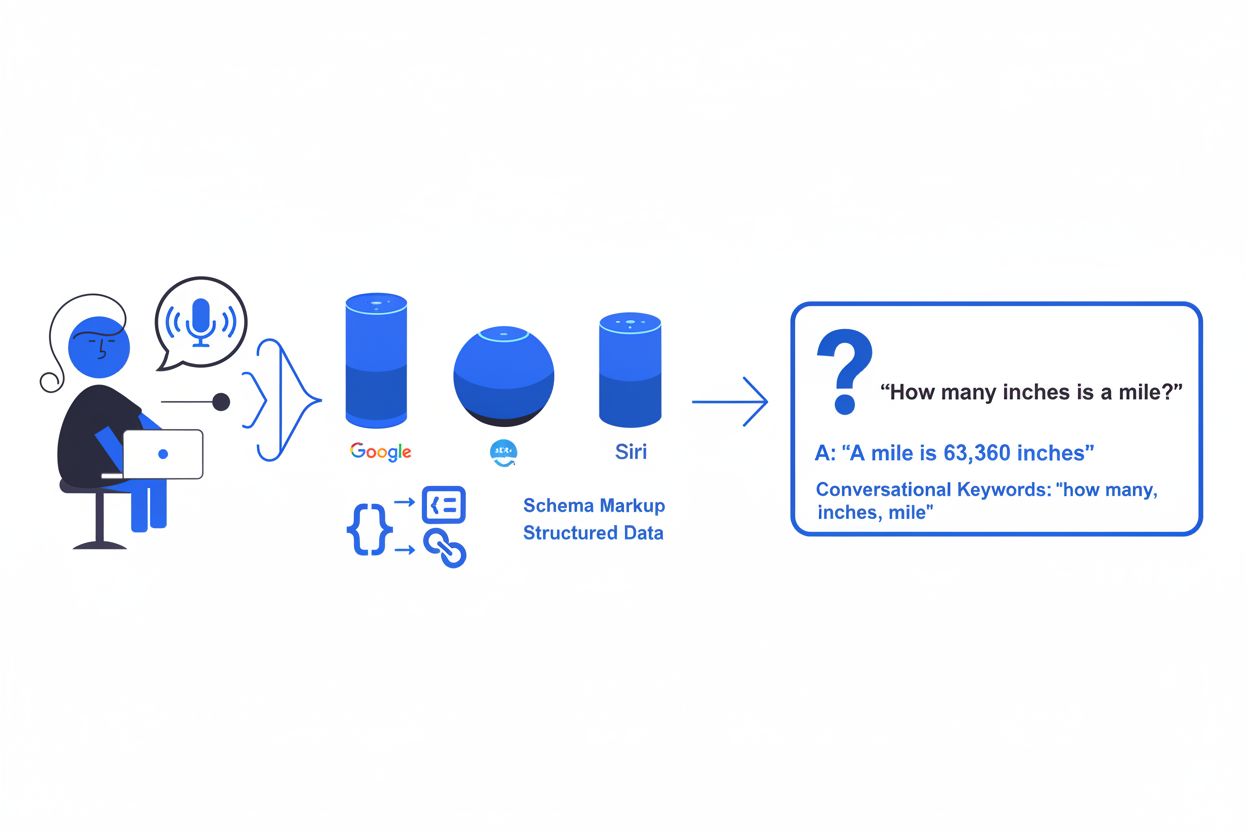
Voice Search Optimization is the practice of tailoring content for voice-activated searches. Learn how to optimize for Alexa, Google Assistant, Siri, and other ...
Cookie Consent
We use cookies to enhance your browsing experience and analyze our traffic. See our privacy policy.