

How to Optimize Your Content for Voice Search and AI Answers
Learn proven strategies to optimize your website for voice search and AI-powered search engines. Master conversational keywords, featured snippets, local SEO, a...
17 min read

Voice-first AI optimization refers to strategies and techniques designed to enhance brand visibility in voice-activated AI assistants and smart speakers. It involves optimizing content and digital presence for conversational, voice-based queries rather than traditional text-based search. This approach recognizes that users increasingly interact with AI assistants like Google Assistant, Alexa, and Siri through natural language questions. Effective voice-first optimization ensures brands appear as the featured answer when users ask voice queries.
Voice-first AI optimization refers to strategies and techniques designed to enhance brand visibility in voice-activated AI assistants and smart speakers. It involves optimizing content and digital presence for conversational, voice-based queries rather than traditional text-based search. This approach recognizes that users increasingly interact with AI assistants like Google Assistant, Alexa, and Siri through natural language questions. Effective voice-first optimization ensures brands appear as the featured answer when users ask voice queries.
Voice-first AI optimization represents a fundamental shift in how brands approach digital visibility and customer engagement. As voice-activated devices become increasingly prevalent in homes, cars, and workplaces, the ability to be heard by AI assistants has become as important as being seen in traditional search results. Voice-first optimization encompasses all strategies designed to enhance your brand’s presence when users interact with voice assistants like Google Assistant, Alexa, and Siri. Unlike traditional SEO, which focuses on optimizing for typed keywords, voice-first optimization targets the natural, conversational language people use when speaking to their devices. With 20.5% of people worldwide actively using voice search and 41% of US adults conducting voice searches daily, this emerging channel represents a critical opportunity for brands to connect with their audiences. The shift from text-based to voice-based interaction requires a completely different approach to content creation, keyword targeting, and technical implementation.
The voice search landscape differs dramatically from traditional text-based search in several key ways. Voice queries are significantly longer and more conversational than their text counterparts, typically ranging from 5-10+ words compared to the 1-3 word phrases common in text searches. Users phrase voice queries as natural questions they would ask another person, such as “What’s the best Italian restaurant near me that’s open late?” rather than typing “Italian restaurant near me.” This shift toward natural language has profound implications for how content must be structured and optimized.
| Aspect | Text Search | Voice Search |
|---|---|---|
| Query Length | 1-3 words | 5-10+ words |
| Format | Keywords | Natural questions |
| Intent | Broad | Specific, often local |
| User Context | Hands available | Hands-free, multitasking |
| Expected Result | List of links | Single direct answer |
| Local Focus | 20-30% | 76% of queries |
User intent in voice search falls into four primary categories: “looking to know” (seeking information), “looking to go” (finding nearby businesses), “looking to buy” (making purchases), and “looking to do” (finding activities or services). The psychological drivers behind voice search adoption are equally important—users are drawn to the convenience and hands-free nature of voice commands, which allow multitasking and faster information access. Many users develop a sense of connection and trust with their voice assistants, viewing them as helpful companions. This emotional bond significantly impacts brand perception and purchasing decisions, as users who have positive experiences with brands through voice assistants are more likely to develop favorable opinions and become loyal customers.
The voice assistant ecosystem is dominated by three major platforms, each with distinct characteristics and optimization requirements. Google Assistant, with approximately 92 million projected US users in 2025, excels at providing direct answers to informational queries and frequently pulls from featured snippets to answer voice questions. This makes Google Assistant particularly valuable for brands seeking visibility through informational content optimization. Amazon’s Alexa, with 77.2 million global users, has become the dominant platform for shopping and smart home control, making it essential for e-commerce brands and home automation companies. Alexa’s integration with Amazon’s shopping ecosystem means optimization often involves product listings and shopping-related content. Apple’s Siri, with 86.5 million users, is deeply integrated into the Apple ecosystem and is frequently used for personal tasks like setting reminders, sending messages, and controlling Apple devices. Each platform has different algorithms, ranking factors, and user behaviors, requiring businesses to tailor their optimization strategies accordingly. Understanding these differences is crucial for developing a comprehensive voice search strategy that captures visibility across all major platforms.
Successful voice-first optimization requires a multi-faceted approach that addresses the unique characteristics of voice search. The five core strategies that form the foundation of effective voice optimization are:
Conversational Keywords: Target long-tail, question-based phrases that mirror how people naturally speak. Focus on keywords starting with “who,” “what,” “when,” “where,” “why,” and “how” rather than short keyword combinations.
Featured Snippets: Optimize content to win position zero by providing direct, concise answers to common questions. Structure content with clear headings, bullet points, and numbered lists to make it easy for search engines to extract featured snippets.
FAQ Pages: Create comprehensive FAQ pages that answer your customers’ most common questions using natural, conversational language. Use FAQPage schema markup to help search engines understand the structure and increase visibility in voice results.
Local SEO: Optimize your Google Business Profile with accurate, up-to-date information. Maintain consistent NAP (Name, Address, Phone) across all platforms, encourage customer reviews, and create location-specific content to capture the 76% of voice searches with local intent.
Mobile-First Design: Ensure your website is fully responsive, fast-loading (under 3 seconds), and easy to navigate on mobile devices. Page speed is a critical ranking factor for both traditional and voice search, directly impacting user experience and search visibility.
The technical foundation of voice-first optimization relies heavily on structured data and schema markup, which help AI assistants understand and extract information from your content. Schema markup is code that provides explicit information about your content’s meaning, enabling voice assistants to pull accurate answers directly from your pages. The most important schema types for voice optimization include FAQPage schema (for FAQ content), LocalBusiness schema (for local businesses), Product schema (for e-commerce), and Organization schema (for company information). Implementing these schemas correctly increases the likelihood that your content will be selected as the featured answer for voice queries. Beyond schema markup, technical requirements include ensuring your website has HTTPS security, a clean and crawlable site architecture, fast page loading speeds, and mobile responsiveness. Voice assistants achieve a 93.7% accuracy rate in understanding and responding to queries, but this accuracy depends on having well-structured, clearly formatted content that these systems can easily parse and understand. Investing in proper technical implementation is essential for voice search visibility.
Voice search creates a unique visibility dynamic that differs fundamentally from traditional search results. In voice search, the user hears only one answer—the featured response provided by the voice assistant. This “one answer” phenomenon means that only one brand receives direct exposure for each query, making authority and trust factors exponentially more important than in traditional search where multiple results appear on a page. If your content is recognized as a reliable source by the voice assistant, your information will be the answer users hear. Conversely, if your content is weak or doesn’t directly answer the query, your brand becomes completely invisible to potential customers, as the voice assistant won’t offer alternative options. This winner-take-all dynamic creates significant competitive advantages for early adopters of voice-first optimization. The voice search market is experiencing explosive growth with a projected compound annual growth rate of 23.8% from 2024 to 2030, meaning businesses that establish voice search visibility now will benefit from sustained competitive advantages as the market expands. Brands that can position themselves as authoritative sources for voice queries will capture disproportionate market share in this rapidly growing channel.
Measuring the success of voice-first optimization requires tracking specific metrics that indicate voice search performance and impact. While direct measurement of voice search traffic can be challenging due to how voice assistants report data, several key indicators reveal the effectiveness of your optimization efforts. Featured snippet wins are a strong indicator of voice search visibility, as these snippets are frequently used as voice assistant answers. Track the number of featured snippets your content wins and monitor changes over time. Monitor your rankings for long-tail, conversational keywords using rank tracking tools, and analyze traffic patterns to your FAQ pages and question-based content. Local search visibility is particularly important for businesses with physical locations—track your rankings for “near me” queries and location-specific voice searches. Conversion rate analysis is crucial; measure whether users finding you through voice search actually take desired actions. Tools like Google Search Console provide valuable data about the specific voice queries driving traffic to your site, allowing you to refine your strategy based on actual user behavior. AmICited can help monitor how your brand appears in voice assistant responses and AI-generated answers, providing comprehensive visibility into your voice search performance across multiple platforms.
The voice search landscape continues to evolve rapidly, with several emerging trends shaping the future of voice-first optimization. Voice commerce, or v-commerce, is poised for significant growth as consumers become increasingly comfortable making purchases through voice-activated devices. Brands will need to create seamless, secure voice shopping experiences with optimized product listings and voice-enabled payments. Artificial intelligence advancement will enable more sophisticated voice assistants capable of understanding complex queries and providing highly personalized recommendations. The integration of generative AI into voice assistants will create more natural, human-like conversations that blur the lines between human and machine interaction. Multimodal interactions combining voice with visual elements will become more prevalent, requiring optimization strategies that account for both spoken and visual components. Personalization will increase dramatically, with voice assistants learning individual user preferences and providing customized responses. The integration of voice technology into Internet of Things (IoT) devices will expand far beyond smart speakers, creating new touchpoints for brand visibility. Businesses that prepare now for these emerging trends will be best positioned to maintain and expand their voice search visibility as the technology landscape continues to transform.
Voice-first AI optimization is the process of optimizing your content and digital presence to improve visibility in voice search results and AI assistant responses. Unlike traditional SEO that focuses on text-based keywords, voice optimization targets conversational, question-based queries that users speak to devices like smart speakers, smartphones, and voice assistants. It involves strategies such as targeting long-tail keywords, optimizing for featured snippets, creating FAQ content, and ensuring mobile-first design to capture the growing audience of voice search users.
Voice search queries are typically longer, more conversational, and phrased as complete questions, while text searches use short keyword phrases. For example, a text search might be 'pizza delivery near me,' while a voice search would be 'Where can I order pizza for delivery right now near my location?' Voice searches also have higher local intent, with 76% being location-based queries. Additionally, voice search results often come from featured snippets and provide single, direct answers rather than lists of links.
The three major voice assistants to optimize for are Google Assistant (used by over 92 million people in the US), Alexa (Amazon's assistant with 77.2 million global users), and Siri (Apple's assistant with 86.5 million users). Each platform has different characteristics: Google Assistant excels at informational queries and pulls from featured snippets, Alexa is popular for shopping and smart home control, while Siri integrates deeply with Apple devices. Your optimization strategy should consider the unique features and user base of each platform.
Key ranking factors for voice search include page loading speed (under 3 seconds), mobile optimization, local SEO signals, featured snippet optimization, and content that directly answers user questions. Your website should be mobile-responsive, have clear heading structure, use conversational language, and provide immediate answers to common questions. Schema markup (especially FAQ and Local Business schemas) is crucial for helping voice assistants understand and extract your content. Consistent NAP (Name, Address, Phone) information is also essential for local businesses.
Use tools like AnswerThePublic, Google's 'People Also Ask' feature, and traditional keyword research tools to identify question-based queries. Analyze your customer support tickets, sales inquiries, and social media comments to understand what questions your audience asks. Focus on long-tail keywords that start with 'who,' 'what,' 'when,' 'where,' 'why,' and 'how.' Consider the natural way people speak rather than how they type. Voice search keywords are typically 5-10+ words long and reflect conversational language patterns.
Featured snippets, also known as 'position zero,' are crucial for voice search because AI assistants often source their answers directly from these snippets. When a user asks a voice query, the assistant frequently reads the featured snippet as the answer. To optimize for featured snippets, structure your content with clear headings, provide direct answers in the first paragraph, use bullet points and numbered lists, and ensure your content is well-organized and easy to scan. Winning featured snippets significantly increases your visibility in voice search results.
While direct voice search traffic measurement can be challenging, you can track several key metrics including rankings for long-tail conversational keywords, featured snippet wins, organic traffic increases to FAQ pages, local search visibility improvements, and overall organic traffic growth. Use Google Search Console to identify question-based queries driving traffic to your site. Monitor conversion rates from voice search traffic and track changes in your local search visibility. Tools like AmICited can help monitor how your brand appears in voice assistant responses and AI-generated answers.
Absolutely. Voice search is particularly important for local businesses because 76% of voice searches have local intent. Users frequently ask questions like 'What's the best restaurant near me?' or 'Where can I find a plumber in [city]?' Local businesses should optimize their Google Business Profile, maintain consistent NAP information across all platforms, encourage customer reviews, and create location-specific content. Voice search presents a massive opportunity for local businesses to attract customers who are actively searching for services in their area and ready to make a purchase or visit.
Track how your brand appears in voice search results and AI assistant responses with AmICited's comprehensive monitoring platform.
Learn proven strategies to optimize your website for voice search and AI-powered search engines. Master conversational keywords, featured snippets, local SEO, a...
Learn how to optimize your website for smart speakers and voice search. Discover strategies for conversational keywords, featured snippets, local SEO, and techn...
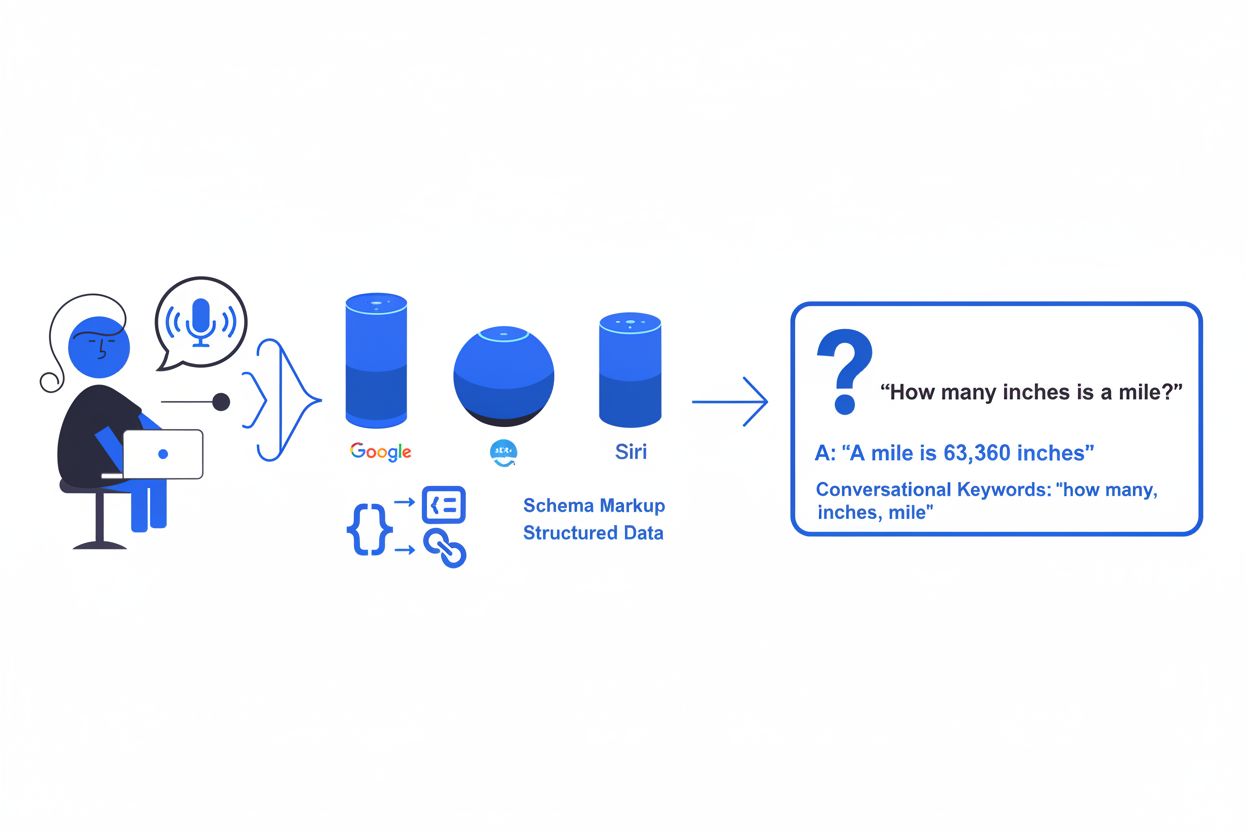
Voice Search Optimization is the practice of tailoring content for voice-activated searches. Learn how to optimize for Alexa, Google Assistant, Siri, and other ...