
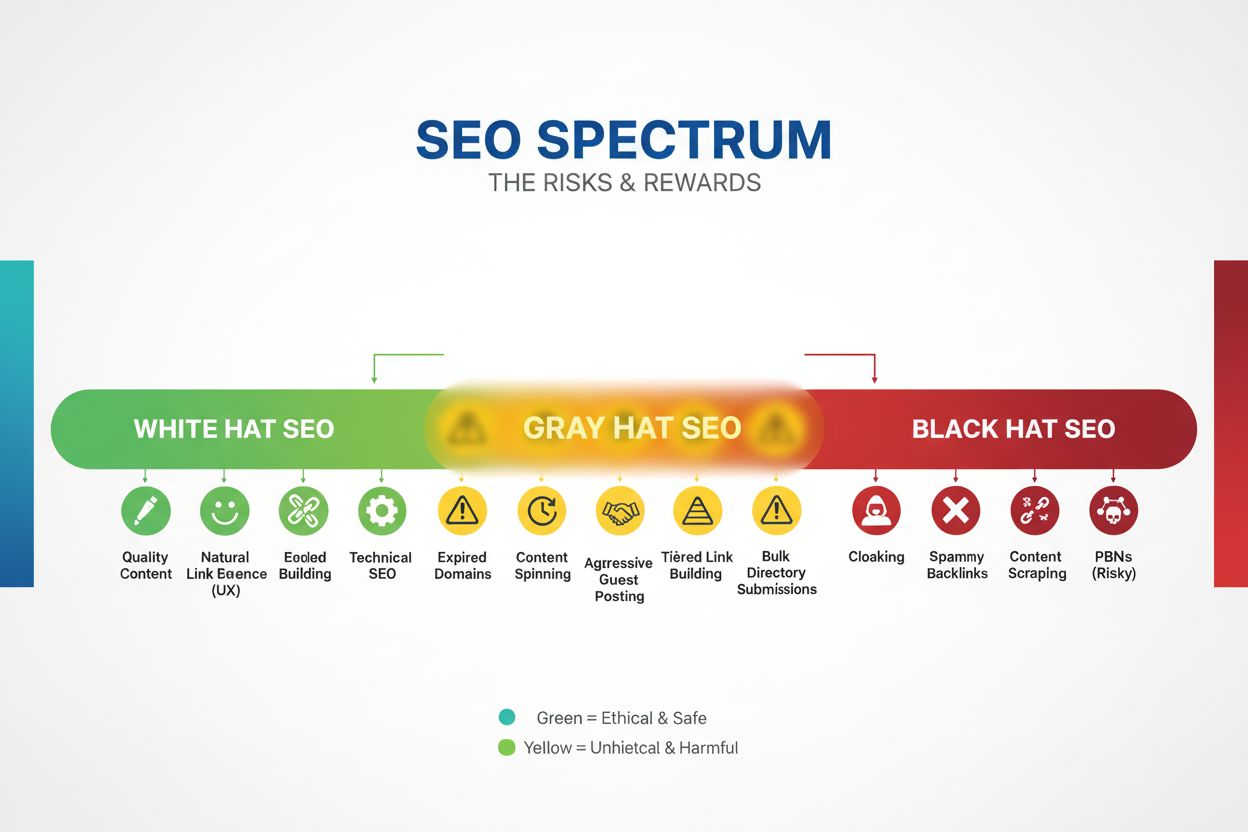
Gray Hat SEO
Gray Hat SEO definition: tactics between white and black hat methods that exploit loopholes without explicit guideline violations. Learn risks, examples, and mo...
12 min read
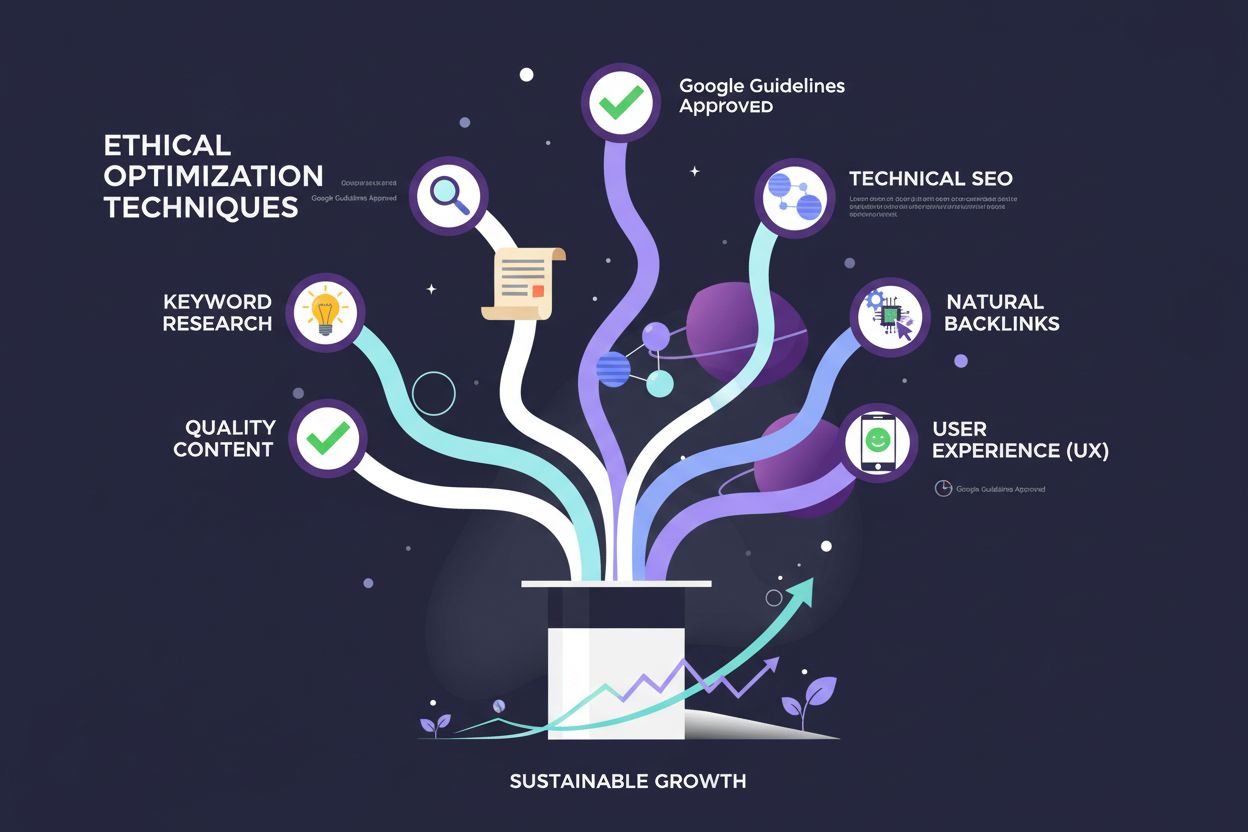
White Hat SEO is the ethical practice of optimizing websites for search engines while strictly adhering to search engine guidelines and best practices. It focuses on creating genuine value for users through quality content, natural link building, and technical excellence, ensuring sustainable long-term rankings without risk of penalties.
White Hat SEO is the ethical practice of optimizing websites for search engines while strictly adhering to search engine guidelines and best practices. It focuses on creating genuine value for users through quality content, natural link building, and technical excellence, ensuring sustainable long-term rankings without risk of penalties.
White Hat SEO is the ethical practice of optimizing websites for search engines while strictly adhering to search engine guidelines and best practices. It represents a commitment to creating genuine value for users through quality content, natural link building, technical excellence, and transparent optimization strategies. Unlike its counterpart black hat SEO, which employs deceptive tactics to manipulate rankings, white hat SEO focuses on sustainable, long-term growth that aligns with the core principles of search engines like Google, Bing, and emerging AI search platforms. The term “white hat” originates from Western film symbolism, where heroes wore white hats and villains wore black hats—a distinction that has been adopted across the SEO industry to differentiate ethical from unethical practices. White hat SEO professionals prioritize user experience, content quality, and algorithmic compliance, understanding that search engines continuously evolve their algorithms to reward trustworthy, helpful websites while penalizing those that attempt to game the system.
The concept of white hat SEO emerged in the early 2000s as search engines began implementing sophisticated algorithms to combat manipulation. When Google launched its Panda algorithm update in 2011, it marked a watershed moment for the industry, penalizing low-quality content and thin websites while rewarding those with genuine value. The subsequent Penguin update in 2012 targeted manipulative link schemes, forcing SEO professionals to abandon black hat tactics and embrace ethical practices. Over the past decade, white hat SEO has become the industry standard, with major search engines publishing increasingly detailed guidelines—now called Google Search Essentials—that outline approved optimization techniques. Research indicates that approximately 78% of enterprises now prioritize ethical SEO practices, recognizing that sustainable growth outweighs short-term ranking gains achieved through manipulation. The rise of AI search engines like ChatGPT, Perplexity, and Claude has further reinforced the importance of white hat SEO, as these platforms prioritize authoritative, trustworthy sources when generating responses and citations. Modern white hat SEO has evolved to encompass not just traditional search visibility but also AI citation tracking and brand monitoring across multiple search paradigms.
White hat SEO rests on five fundamental pillars that work synergistically to build sustainable online visibility. The first pillar is quality content creation, which involves producing original, comprehensive, and user-focused material that directly addresses search intent. This means understanding what users actually want when they search for specific keywords and delivering content that thoroughly answers their questions, provides actionable insights, or solves their problems. The second pillar is ethical link building, which focuses on earning backlinks naturally through content excellence, industry relationships, and genuine value creation rather than purchasing links or participating in link schemes. The third pillar encompasses technical SEO optimization, ensuring that websites are properly structured, fast-loading, mobile-friendly, and easily crawlable by search engine bots. The fourth pillar involves keyword research and strategic integration, where keywords are identified based on user search behavior and naturally incorporated into content, metadata, and URLs without artificial stuffing. The fifth pillar is user experience enhancement, which prioritizes site navigation, page speed, accessibility, and engagement metrics that signal to search engines that visitors find the website valuable. These pillars are interconnected; for example, quality content attracts natural backlinks, which improves authority, which helps pages rank higher, which increases visibility in both traditional search and AI search results.
| Aspect | White Hat SEO | Gray Hat SEO | Black Hat SEO |
|---|---|---|---|
| Guideline Compliance | Strictly follows search engine guidelines | Operates in gray areas; unclear compliance | Deliberately violates guidelines |
| Risk Level | Minimal penalty risk | Moderate penalty risk | High penalty risk; potential de-indexing |
| Timeline to Results | 3-6 months for significant results | 1-3 months for initial gains | Weeks to months, then rapid decline |
| Sustainability | Long-term sustainable rankings | Unpredictable; may decline over time | Short-lived; typically discovered and penalized |
| Techniques | Quality content, natural links, technical SEO | Content farms, borderline link tactics | Keyword stuffing, cloaking, PBNs, link schemes |
| User Experience | Prioritizes user value and engagement | Mixed focus on users and rankings | Prioritizes search engines over users |
| Cost Structure | Higher upfront investment | Moderate investment | Lower upfront cost, high recovery costs |
| Conversion Rates | 14.6% average conversion rate | 5-8% average conversion rate | 1-3% average conversion rate |
| Brand Reputation | Builds trust and authority | Neutral to slightly negative | Damages brand credibility if discovered |
| Algorithm Update Impact | Minimal negative impact | Potential ranking fluctuations | Severe penalties or removal from index |
Implementing white hat SEO requires a systematic approach across multiple technical and content dimensions. On-page optimization begins with keyword research using tools like Google Keyword Planner, SEMrush, or Ahrefs to identify terms that align with user search intent and business objectives. Keywords should be naturally integrated into title tags, meta descriptions, H1 headers, and body content without artificial repetition or “keyword stuffing.” URL structure should be descriptive and concise, using hyphens to separate words (e.g., /white-hat-seo-guide rather than /whitehatseoguidepage123). Internal linking plays a crucial role, with keyword-rich anchor text helping search engines understand content relationships and distributing link authority throughout the site. Image optimization involves adding descriptive alt text that helps both search engines and users with visual impairments understand image content. Technical SEO encompasses site speed optimization through image compression, code minification, and content delivery networks (CDNs); mobile responsiveness to ensure proper display on all devices; structured data markup using schema.org vocabulary to help search engines understand content context; and proper XML sitemap and robots.txt configuration to guide crawlers. Page speed is particularly critical—Google research shows that pages loading in 3 seconds have 40% higher bounce rates than pages loading in 1 second, directly impacting both user experience and rankings.
Content quality is the cornerstone of white hat SEO success, and search engines have become increasingly sophisticated at evaluating content value. Google’s E-E-A-T framework—standing for Experience, Expertise, Authoritativeness, and Trustworthiness—has become central to content evaluation, particularly for YMYL (Your Money Your Life) topics that affect user health, finances, or safety. High-quality white hat content demonstrates clear expertise through author credentials, includes original research or first-hand experience, cites authoritative sources, and provides comprehensive coverage of topics. Content should be original and plagiarism-free, offering unique perspectives or data that cannot be found elsewhere. The optimal content length varies by topic, but research shows that comprehensive guides ranking on Google’s first page average 1,500-2,500 words, providing thorough coverage that satisfies user intent. Content freshness matters—regularly updating existing content with new data, statistics, and insights signals to search engines that information remains current and relevant. Multimedia integration, including images, videos, infographics, and interactive elements, improves engagement metrics and provides multiple ways for users to consume information. User-focused writing prioritizes clarity and readability over keyword density, using short paragraphs, descriptive subheadings, and bullet points to make content scannable. Content should directly address user questions and pain points, demonstrating clear understanding of audience needs and search intent.
Natural link building is a cornerstone of white hat SEO, as backlinks remain one of Google’s most important ranking factors. However, the quality and context of links matter far more than quantity. Earning links naturally through content excellence means creating resources so valuable that other websites want to link to them as references. The Skyscraper Technique, popularized by Backlinko, involves analyzing top-ranking content for a keyword, identifying what makes it successful, and creating something demonstrably better—then reaching out to sites linking to the original content to suggest the superior alternative. Guest posting on authoritative industry websites provides opportunities to earn high-quality backlinks while establishing thought leadership, though Google warns against spammy guest posting networks. Broken link building involves finding broken links on relevant websites and offering your content as a replacement, providing value to webmasters while earning a link. Resource page optimization targets pages that compile lists of industry resources, ensuring your content is included as a valuable reference. Digital PR and media outreach generates backlinks through press releases, expert commentary, and industry partnerships. Social signals, while not direct ranking factors, amplify content reach and increase the likelihood of earning natural backlinks. White hat link building requires patience and relationship-building, but the resulting links carry significantly more weight than purchased or manipulated links, providing sustainable ranking improvements.
The emergence of AI search engines and generative AI platforms has created new dimensions for white hat SEO strategy. Platforms like ChatGPT, Perplexity, Google’s AI Overviews, and Claude prioritize authoritative, trustworthy sources when generating responses and citations. White hat SEO practices directly support visibility in these new search paradigms—quality content with clear E-E-A-T signals is more likely to be cited by AI systems, structured data markup helps AI systems understand content context, and transparent sourcing practices align with AI platforms’ preference for verifiable, attributable information. Brand monitoring across AI search results has become essential, as companies need to track where their content appears in AI-generated responses. Tools like AmICited enable organizations to monitor brand mentions and content citations across multiple AI platforms, providing insights into how white hat SEO efforts translate into AI search visibility. The semantic web and entity optimization have become increasingly important, as AI systems understand relationships between concepts and entities rather than just matching keywords. White hat SEO professionals now focus on establishing clear entity relationships, building comprehensive knowledge graphs, and creating content that demonstrates topical authority across related concepts. This evolution reinforces that white hat SEO—with its emphasis on quality, clarity, and user value—is fundamentally aligned with how AI systems evaluate and recommend content.
Organizations implementing white hat SEO experience measurable business benefits that extend far beyond search rankings. Sustainable traffic growth means that organic traffic continues to increase over time without the risk of sudden drops from algorithm updates or penalties. Research shows that websites using white hat techniques experience lower bounce rates and higher engagement metrics, with users spending more time on pages and exploring additional content. Conversion rate optimization is significantly enhanced—white hat SEO leads to an average 14.6% conversion rate from organic search, compared to only 1.7% from other channels, because users arriving through organic search have already demonstrated intent by searching for relevant keywords. Brand authority and trust build gradually as white hat practices establish websites as credible, reliable sources in their industries. Cost efficiency improves over time, as the initial investment in quality content and technical optimization yields returns for years, unlike paid advertising that stops generating traffic when budgets end. Competitive advantage emerges as competitors using black hat tactics face penalties while white hat practitioners continue climbing rankings. Risk mitigation protects businesses from the catastrophic impact of search engine penalties, which can eliminate 80-90% of organic traffic overnight. Long-term ROI is substantially higher—while white hat SEO may take longer to show results, the sustainable nature of these results means that every dollar invested continues generating returns indefinitely.
Successful white hat SEO implementation follows a structured framework that integrates strategy, execution, and continuous optimization. Keyword research should begin with understanding user intent—are searchers looking for information, making a purchase decision, or seeking a specific website? Tools like Google Search Console reveal which keywords already drive traffic, providing opportunities to optimize existing content. Competitive analysis involves studying top-ranking pages to understand what search engines reward for specific keywords, identifying gaps and opportunities for differentiation. Content planning should prioritize topics that align with business objectives and user needs, creating a content calendar that ensures consistent publication. Technical audit using tools like Screaming Frog or SEMrush identifies crawlability issues, broken links, duplicate content, and other technical problems that impede rankings. On-page optimization applies keyword research to individual pages, ensuring proper title tags, meta descriptions, header structure, and internal linking. Link building outreach should be personalized and value-focused, explaining why linking to your content benefits the recipient’s audience. Performance monitoring through Google Analytics and Google Search Console tracks rankings, traffic, conversions, and user behavior, enabling data-driven optimization decisions. Regular content updates keep information current and signal freshness to search engines. User feedback integration through surveys, comments, and engagement metrics informs content improvements that enhance both user satisfaction and search visibility.
Professional white hat SEO practitioners rely on a comprehensive toolkit to research, implement, and monitor optimization efforts. Google Search Console provides authoritative data on how Google sees your website, including search performance, indexation status, and manual action notifications. Google Analytics tracks user behavior, traffic sources, conversion paths, and engagement metrics essential for understanding SEO impact. Keyword research tools like SEMrush, Ahrefs, Moz, and Semrush provide search volume data, keyword difficulty scores, and competitive analysis. Content optimization platforms like Clearscope and Surfer SEO analyze top-ranking content and provide recommendations for improving content quality and relevance. Technical SEO tools like Screaming Frog, Lighthouse, and PageSpeed Insights identify technical issues affecting crawlability and performance. Backlink analysis tools help identify link opportunities and monitor competitor link profiles. Rank tracking tools monitor keyword positions over time, revealing the impact of optimization efforts. Google Search Essentials (formerly Webmaster Guidelines) remains the authoritative source for understanding what Google considers acceptable SEO practices. Industry resources like Backlinko, Search Engine Journal, Moz, and HubSpot provide research, case studies, and best practice guides. AI monitoring platforms like AmICited track brand visibility across AI search engines, extending white hat SEO measurement beyond traditional search.
White hat SEO continues evolving as search technology advances and user expectations change. The integration of artificial intelligence into search algorithms means that white hat SEO must increasingly focus on semantic understanding and topical authority rather than simple keyword matching. Voice search optimization requires adapting content for conversational queries and featured snippet opportunities. Mobile-first indexing has already shifted focus to mobile user experience, and this trend will intensify as mobile becomes the primary search interface. Core Web Vitals and page experience signals will continue gaining importance, making technical optimization increasingly critical. The rise of AI search engines and generative AI platforms creates new opportunities for white hat SEO practitioners to establish their content as authoritative sources worthy of citation. Entity-based SEO and knowledge graph optimization will become more important as search systems move beyond keyword matching to understanding relationships between concepts. Privacy-first analytics and first-party data collection will require new approaches to understanding user behavior and measuring SEO impact. Sustainability and ethical practices will become competitive differentiators as consumers increasingly prefer brands that operate transparently and responsibly. Organizations that embrace white hat SEO principles today—focusing on quality, user value, and ethical practices—will be best positioned to maintain visibility and authority as search technology continues evolving. The fundamental principle underlying white hat SEO—that creating genuine value for users is the best path to search visibility—remains timeless and will continue guiding successful SEO strategy regardless of how search engines and AI platforms evolve.
White Hat SEO follows search engine guidelines and focuses on creating genuine value for users, while Black Hat SEO uses deceptive tactics like keyword stuffing, cloaking, and link schemes that violate guidelines. White hat techniques carry minimal penalty risk and provide sustainable long-term results, whereas black hat tactics may deliver short-term gains but risk complete removal from search results if discovered by search engines.
White hat SEO typically takes 3-6 months to show significant results, though some improvements may be visible within 4-8 weeks. The timeline depends on factors like website age, competition level, content quality, and backlink profile. While slower than black hat methods, white hat results are sustainable and continue to compound over time, providing long-term organic traffic growth without penalty risk.
White hat SEO often requires higher upfront investment in quality content creation, professional link building, and technical optimization. However, it eliminates costly recovery efforts from penalties and provides better ROI over time. Studies show white hat SEO leads to 14.6% conversion rates compared to 1.7% for other channels, making the investment worthwhile for sustainable business growth.
The core pillars of white hat SEO include: quality content creation that serves user intent, ethical link building through natural relationships, technical SEO optimization for crawlability and performance, keyword research aligned with user search behavior, and user experience enhancement. These pillars work together to build authority, trust, and sustainable rankings that align with search engine algorithms.
White hat SEO principles are increasingly important for AI search engines and generative AI platforms. These systems prioritize authoritative, trustworthy content from sources that follow ethical practices. By implementing white hat techniques—quality content, proper attribution, E-E-A-T signals—websites improve their chances of being cited by AI systems like ChatGPT, Perplexity, and Google's AI Overviews, which is critical for brand visibility in the AI search era.
Yes, white hat SEO can succeed in competitive industries, though it requires strategic focus and patience. By targeting long-tail keywords, creating superior content than competitors, building high-quality backlinks, and optimizing technical elements, websites can rank even in saturated markets. The key is creating content that genuinely serves user needs better than existing results, combined with consistent effort over time.
Essential white hat SEO tools include Google Search Console for monitoring performance, Google Analytics for user behavior analysis, keyword research tools like SEMrush and Ahrefs, content optimization platforms like Clearscope, and technical SEO auditors. Google Search Essentials (formerly Webmaster Guidelines) provides the authoritative rulebook, while industry resources from Backlinko, Search Engine Journal, and Moz offer best practices and case studies.
Start tracking how AI chatbots mention your brand across ChatGPT, Perplexity, and other platforms. Get actionable insights to improve your AI presence.
Gray Hat SEO definition: tactics between white and black hat methods that exploit loopholes without explicit guideline violations. Learn risks, examples, and mo...
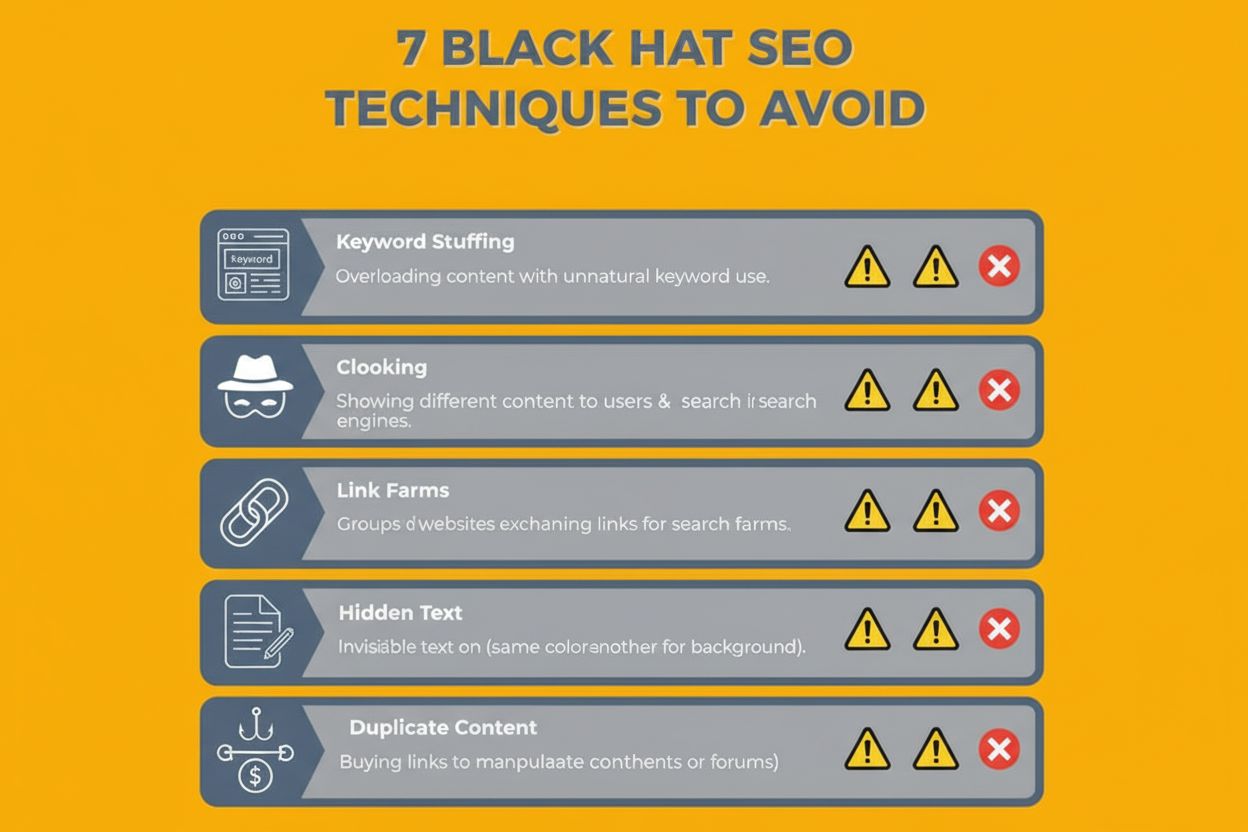
Black Hat SEO definition: unethical techniques violating search engine guidelines. Learn common tactics, penalties, and why ethical SEO matters for sustainable ...
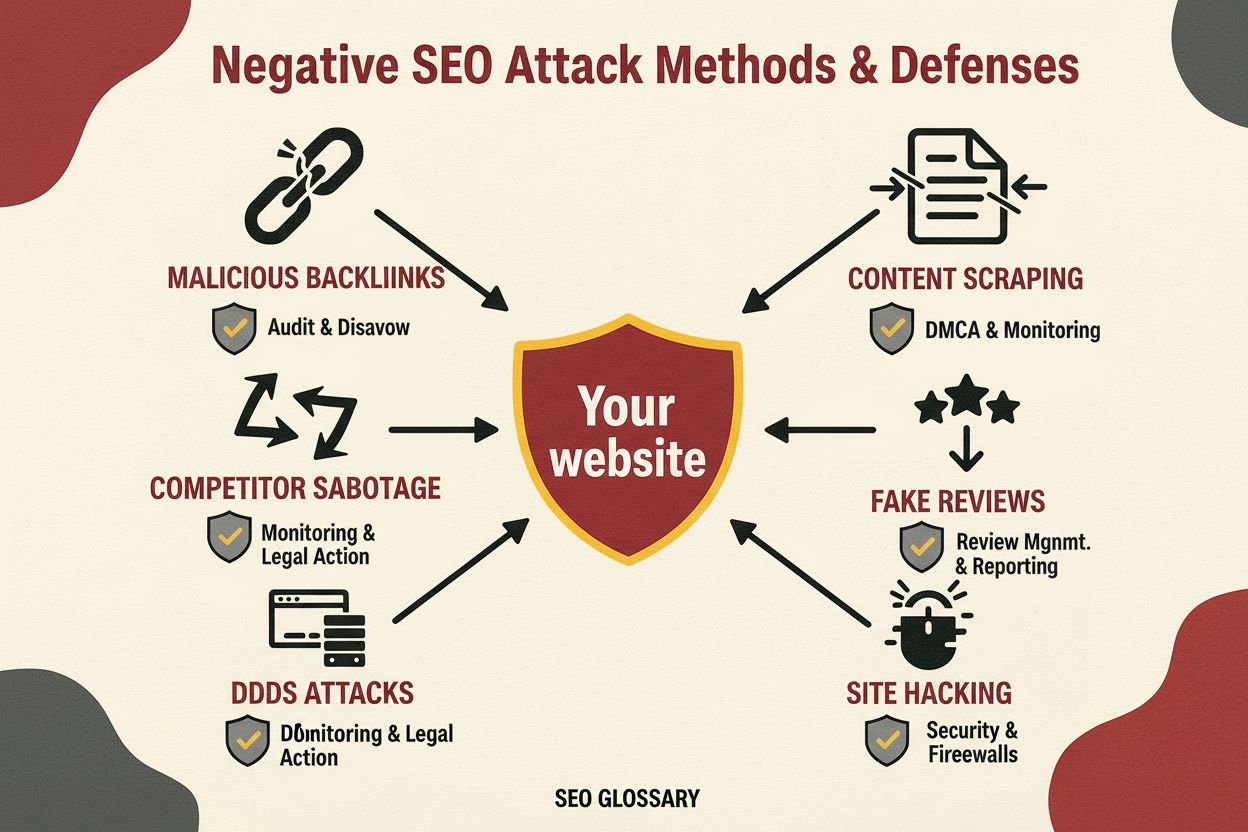
Negative SEO is the practice of using unethical techniques to harm competitor rankings. Learn about attack tactics, detection methods, and how to protect your s...
Cookie Consent
We use cookies to enhance your browsing experience and analyze our traffic. See our privacy policy.