

Bezahlte Suchergebnisse
Bezahlte Suchergebnisse sind gesponserte Anzeigen, die in Suchmaschinen erscheinen. Erfahren Sie, wie PPC-Werbung funktioniert, welchen ROI sie bietet und warum...
9 Min. Lesezeit
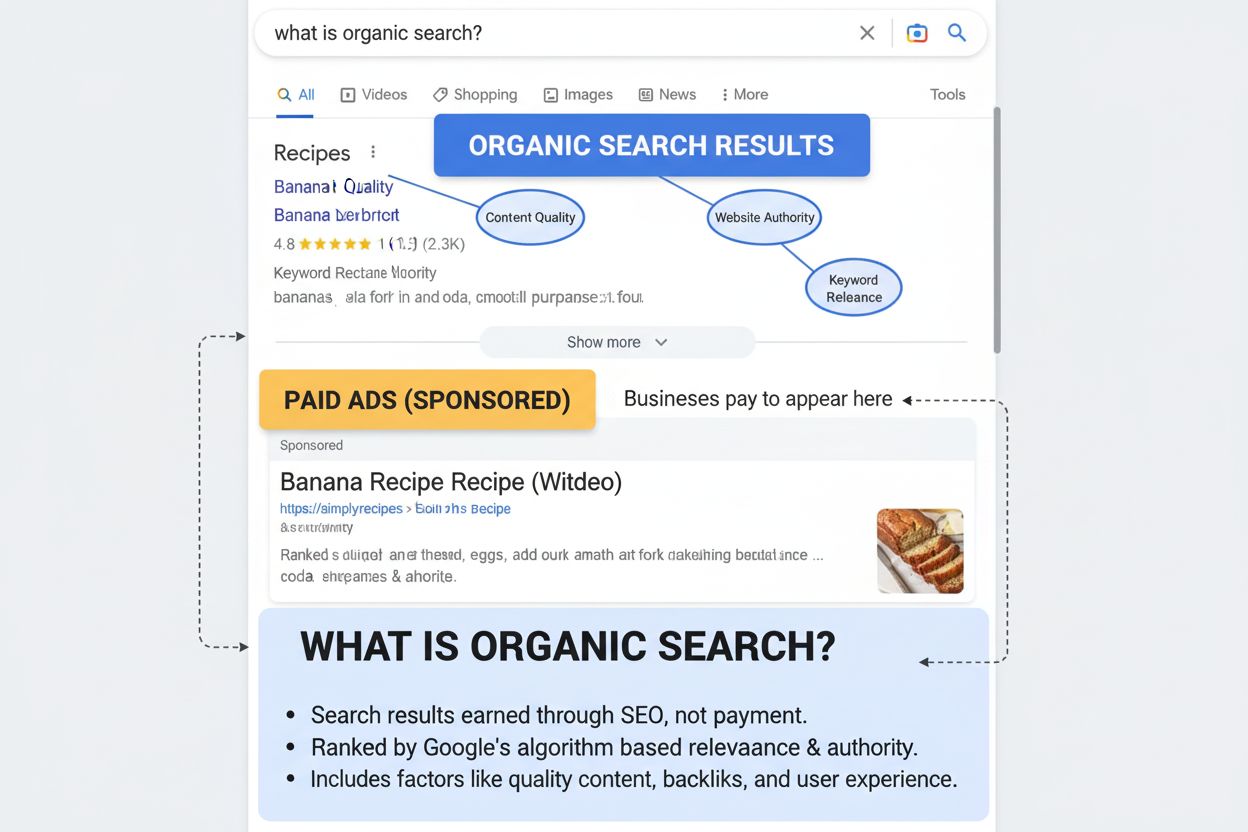
Organische Suchergebnisse sind unbezahlte, algorithmisch ermittelte Einträge, die auf Suchmaschinenergebnisseiten (SERPs) basierend auf der Relevanz für Nutzeranfragen, der Inhaltsqualität und der Domain-Autorität erscheinen. Im Gegensatz zu bezahlten Suchergebnissen werden organische Einträge durch Suchmaschinenoptimierung (SEO) verdient und stellen die vertrauenswürdigste Form der Suchsichtbarkeit dar.
Organische Suchergebnisse sind unbezahlte, algorithmisch ermittelte Einträge, die auf Suchmaschinenergebnisseiten (SERPs) basierend auf der Relevanz für Nutzeranfragen, der Inhaltsqualität und der Domain-Autorität erscheinen. Im Gegensatz zu bezahlten Suchergebnissen werden organische Einträge durch Suchmaschinenoptimierung (SEO) verdient und stellen die vertrauenswürdigste Form der Suchsichtbarkeit dar.
Organic search results are unpaid, algorithmically-determined listings that appear on search engine results pages (SERPs) in response to user queries. These results are earned through search engine optimization (SEO) efforts rather than paid advertising, and they represent the most trusted and widely-clicked form of search visibility. Google processes over 8.5 billion searches daily, with organic results accounting for approximately 94% of all search clicks, making them the dominant source of web traffic for most businesses. Unlike paid search results marked as “Sponsored,” organic listings are determined by complex search algorithms that evaluate hundreds of ranking factors to identify the most relevant and authoritative content for each user’s specific query.
The concept of organic search results emerged alongside the development of search engines in the mid-1990s, fundamentally transforming how users discover information online. As search engines evolved from simple keyword-matching tools to sophisticated artificial intelligence systems, the importance of organic search results has only intensified. Over 32.9% of internet users aged 16 and older discover new brands, products, and services through organic search, demonstrating its critical role in customer acquisition and brand awareness. The rise of search engine optimization (SEO) as a discipline reflects the enormous value businesses place on achieving high organic rankings. Historically, the first five organic results in search engine results pages account for 69.1% of all clicks, meaning that visibility in the top positions directly correlates with significant traffic and revenue potential. This concentration of clicks in top positions has made organic search optimization a cornerstone of digital marketing strategy for enterprises of all sizes.
Organic search results function through a sophisticated process involving crawling, indexing, and ranking. Search engine bots continuously crawl the web, discovering and analyzing billions of web pages to understand their content, structure, and relevance. Once pages are indexed, search engines apply complex algorithms that evaluate over 200 distinct ranking factors to determine which pages best answer a user’s query. These ranking factors include content relevance and quality, the number and quality of backlinks pointing to a page, keyword optimization, page loading speed, mobile-friendliness, domain authority, and various user experience signals such as bounce rate and dwell time. When a user enters a search query, the algorithm instantly evaluates millions of indexed pages and returns results ranked by relevance and authority. The process happens in milliseconds, yet the sophistication behind it determines whether a website receives thousands of visitors or remains invisible in search results. Understanding this mechanism is essential for businesses seeking to improve their organic visibility.
| Aspect | Organic Search Results | Paid Search Results |
|---|---|---|
| Cost Model | Free; no per-click charges | Pay-per-click (PPC) model |
| Time to Results | 3-12 months for meaningful rankings | Immediate visibility upon campaign launch |
| Click-Through Rate (CTR) | Higher CTR; users trust organic results more | Lower CTR; users often skip sponsored ads |
| Sustainability | Long-term, sustainable traffic source | Dependent on ongoing budget allocation |
| Ranking Factors | Algorithm-based (200+ factors) | Bid amount and ad quality score |
| User Perception | Perceived as more credible and relevant | Perceived as promotional or commercial |
| Conversion Quality | Higher conversion rates (14.6% for organic leads) | Lower conversion rates (1.7% for outbound) |
| SERP Position | Appears in main content area | Appears at top/bottom with “Sponsored” label |
| ROI | $7.48 return per $1 spent on SEO | Varies; requires continuous investment |
| Brand Authority | Builds long-term domain authority | Does not contribute to domain authority |
Organic search results represent far more than just a traffic source; they are a fundamental pillar of sustainable digital marketing strategy. Organic leads convert at a rate of 14.6%, significantly outperforming traditional outbound marketing methods which convert at just 1.7%, demonstrating that organic search attracts highly qualified, intent-driven visitors. The return on investment (ROI) for SEO is exceptional, with businesses generating approximately $7.48 for every $1 spent on search engine optimization, making it one of the most cost-effective marketing channels available. Beyond immediate traffic and conversions, organic search results build brand authority and trust over time, as users perceive organic listings as more credible than paid advertisements. This trust factor is particularly important in competitive industries where consumers conduct extensive research before making purchasing decisions. Furthermore, organic search results provide consistent, predictable traffic that doesn’t fluctuate based on advertising budgets or algorithm changes in paid platforms. For businesses operating in competitive markets, achieving strong organic rankings is often the difference between market leadership and obscurity.
Search engines evaluate numerous factors when determining organic search rankings, with content quality being paramount. High-quality, original content that thoroughly addresses user intent ranks significantly higher than thin, duplicated, or outdated content. Backlinks from authoritative websites serve as votes of confidence, signaling to search engines that a page is trustworthy and valuable; however, the quality of backlinks matters far more than quantity. Keyword optimization remains important, requiring strategic placement of relevant search terms in titles, meta descriptions, headings, and body content without resorting to keyword stuffing. Page loading speed has become increasingly critical, with Google incorporating it into its Core Web Vitals ranking factors; pages that load slowly experience higher bounce rates and lower rankings. Mobile-friendliness is non-negotiable in today’s landscape, as Google prioritizes mobile-first indexing, meaning the mobile version of your site determines your rankings. Domain authority, built through consistent publishing of quality content and acquiring high-quality backlinks, influences how well all pages on a domain rank. Additionally, user experience signals such as bounce rate, dwell time, and click-through rate provide search engines with real-world feedback about whether content satisfies user intent. The E-E-A-T framework (Expertise, Experience, Authoritativeness, Trustworthiness) has become increasingly important, particularly for content in sensitive categories like health, finance, and legal advice.
The emergence of AI-powered search platforms like ChatGPT, Perplexity, Google AI Overviews, and Claude is fundamentally reshaping the organic search landscape. Google AI Overviews currently appear on approximately 50% of searches, with projections indicating this will rise to over 75% by 2028, representing a seismic shift in how users consume search results. These AI-generated summaries have reduced organic click-through rates by 61% for informational queries, meaning traditional organic search visibility is becoming less valuable for certain query types. However, organic search results remain the foundation upon which AI systems draw their information; AI platforms cite and reference organic search results to generate their responses, making strong organic rankings still essential for brand visibility. This dual-channel reality means businesses must now optimize for both traditional organic search and AI search platforms simultaneously. The relationship between organic search and AI search is symbiotic—AI systems depend on organic search results for source material, while organic search results increasingly compete with AI summaries for user attention. Understanding this evolution is critical for maintaining visibility in the emerging search ecosystem.
Achieving strong organic search rankings requires a comprehensive, multi-faceted approach that addresses all major ranking factors. The following practices form the foundation of effective organic search optimization:
The future of organic search results will be shaped by the continued evolution of artificial intelligence and changing user search behaviors. As AI search platforms gain market share, traditional organic search traffic is expected to decline for certain query types, particularly informational searches where users seek quick answers rather than detailed exploration. However, organic search will remain the primary source of high-intent, conversion-focused traffic, as users seeking to make purchases or find specific services will continue to rely on traditional search results. The integration of AI Overviews into Google Search represents Google’s attempt to compete with standalone AI search platforms while maintaining its dominance in the search market. Businesses must adapt their strategies to account for this hybrid search environment, optimizing for both traditional organic rankings and AI search visibility. The emergence of AI monitoring platforms like AmICited reflects the growing importance of tracking brand visibility across multiple search channels simultaneously. Looking forward, the most successful digital marketing strategies will be those that recognize organic search results as one component of a broader search ecosystem that includes AI platforms, voice search, and emerging search technologies. The fundamental principle remains unchanged: creating high-quality, authoritative content that serves user intent will continue to drive visibility and traffic across all search channels.
Beyond immediate traffic generation, organic search results play a crucial role in establishing and reinforcing brand authority and industry expertise. When a website consistently ranks in top positions for relevant keywords, it signals to both users and search engines that the brand is a trusted authority in its field. This authority compounds over time, as high rankings lead to more traffic, more citations, and more backlinks, which further strengthen rankings in a virtuous cycle. Domain authority, a metric that ranges from 1 to 100 and reflects a site’s ability to rank, is built primarily through organic search success. Brands with strong organic search presence benefit from increased brand recognition, as users repeatedly encounter their content when searching for relevant topics. This repeated exposure builds familiarity and trust, making users more likely to choose the brand when making purchasing decisions. Furthermore, organic search results provide valuable long-tail keyword opportunities that allow brands to capture highly specific, intent-driven searches that often convert at higher rates than broad, competitive keywords. The cumulative effect of strong organic search performance is the establishment of a brand as a market leader and go-to resource in its industry.
Effective organic search optimization requires rigorous measurement and analysis of key performance indicators. Google Search Console provides essential data about how your website appears in search results, including impressions, clicks, average position, and click-through rates for specific keywords. Google Analytics offers deeper insights into user behavior after they arrive from organic search, including pages visited, time on site, conversion rates, and revenue generated. Keyword ranking tracking tools help monitor your position for target keywords over time, revealing trends and identifying opportunities for improvement. Organic traffic metrics should be analyzed by landing page, keyword, and user segment to identify which content and keywords drive the most valuable traffic. Conversion tracking is critical for understanding the business impact of organic search, as not all traffic is equally valuable; a single high-value conversion may be worth more than hundreds of low-intent visits. Bounce rate and dwell time provide signals about content quality and user satisfaction, with high bounce rates indicating that content may not match user intent. Regular analysis of these metrics enables continuous optimization and ensures that organic search efforts deliver measurable business results.
Organische Suchergebnisse sind unbezahlte Einträge, die auf Basis von Suchmaschinenalgorithmen bezüglich Relevanz, Inhaltsqualität und Domain-Autorität angezeigt werden. Bezahlte Suchergebnisse, markiert als „Anzeige“, sind Werbeanzeigen, bei denen Unternehmen pro Klick zahlen. Organische Ergebnisse erzielen in der Regel höhere Klickraten (CTR) und mehr Nutzervertrauen, während bezahlte Ergebnisse sofortige Sichtbarkeit bieten, jedoch eine laufende finanzielle Investition erfordern.
Organische Suchergebnisse benötigen typischerweise 3–6 Monate, um spürbare Verbesserungen zu zeigen, wobei dies von der Wettbewerbsfähigkeit der Keywords und der Inhaltsqualität abhängt. Für sehr wettbewerbsintensive Keywords kann es 6–12 Monate oder länger dauern, um auf die erste Seite zu gelangen. Die Zeitspanne hängt von Faktoren wie Domain-Autorität, Backlink-Profil und der Konsistenz der SEO-Maßnahmen ab.
Zu den wichtigsten Ranking-Faktoren zählen hochwertige, originelle Inhalte; relevante Backlinks von autoritativen Seiten; Keyword-Optimierung; Ladegeschwindigkeit der Seite; Mobilfreundlichkeit; Domain-Autorität sowie Nutzererfahrungssignale wie Absprungrate und Verweildauer. Die Ausrichtung auf die Suchintention und E-E-A-T (Expertise, Erfahrung, Autorität, Vertrauenswürdigkeit) gewinnen für Google-Rankings zunehmend an Bedeutung.
Organische Suchergebnisse generieren etwa 94 % aller Suchklicks und liefern im Vergleich zu anderen digitalen Kanälen die höchsten Conversion-Raten. Sie sorgen für nachhaltigen, kosteneffizienten Traffic ohne laufende Werbekosten, stärken Markenautorität und Vertrauen und generieren qualifizierte Leads. Organischer Traffic ist gezielter und relevanter als bezahlte Alternativen und damit essenziell für nachhaltiges Unternehmenswachstum.
Mit dem wachsenden Einfluss von KI-Suchplattformen wie ChatGPT, Perplexity und Google AI Overviews wird es immer wichtiger, zu überwachen, wo Ihre Marke in organischen Suchergebnissen erscheint. AmICited verfolgt, wie Ihre Domain und Inhalte sowohl in traditionellen organischen Suchergebnissen als auch in KI-generierten Antworten zitiert werden, sodass Sie Ihre Sichtbarkeit im sich wandelnden Suchumfeld verstehen.
Organischer Traffic bezeichnet Besucher, die über unbezahlte Suchmaschinenergebnisse auf Ihre Website gelangen. Er wird mit Analysetools wie Google Analytics und Google Search Console gemessen, die Metriken wie Keyword-Rankings, Klickraten (CTR), Sitzungen, durchschnittliche Verweildauer und Absprungraten erfassen. Diese Kennzahlen helfen dabei, den Erfolg Ihrer SEO-Strategie zu bestimmen.
Suchmaschinen wie Google nutzen komplexe Algorithmen, die über 200 Ranking-Faktoren bewerten, darunter Inhaltsrelevanz und -qualität, Keyword-Optimierung, Backlink-Profil, Seitenladegeschwindigkeit, Mobilfreundlichkeit, Domain-Autorität, Nutzererfahrungssignale und die Ausrichtung auf die Suchintention. Diese Algorithmen entwickeln sich ständig weiter, um Nutzern auf ihre Anfragen die relevantesten und nützlichsten Ergebnisse zu liefern.
Google AI Overviews, die bei etwa 50 % aller Suchanfragen erscheinen und bis 2028 voraussichtlich 75 % erreichen werden, haben die organischen Klickraten bei Informationsanfragen um 61 % reduziert. Dies bedeutet, dass Unternehmen ihre SEO-Strategien an KI-generierte Zusammenfassungen anpassen müssen, während sie weiterhin Sichtbarkeit in traditionellen organischen Suchergebnissen und aufstrebenden KI-Suchplattformen wahren.
Beginnen Sie zu verfolgen, wie KI-Chatbots Ihre Marke auf ChatGPT, Perplexity und anderen Plattformen erwähnen. Erhalten Sie umsetzbare Erkenntnisse zur Verbesserung Ihrer KI-Präsenz.
Bezahlte Suchergebnisse sind gesponserte Anzeigen, die in Suchmaschinen erscheinen. Erfahren Sie, wie PPC-Werbung funktioniert, welchen ROI sie bietet und warum...
Definition organischer Traffic: unbezahlte Besucher von Suchmaschinen. Erfahren Sie, wie organischer Traffic 53% des Website-Traffics ausmacht, seine Bedeutung ...
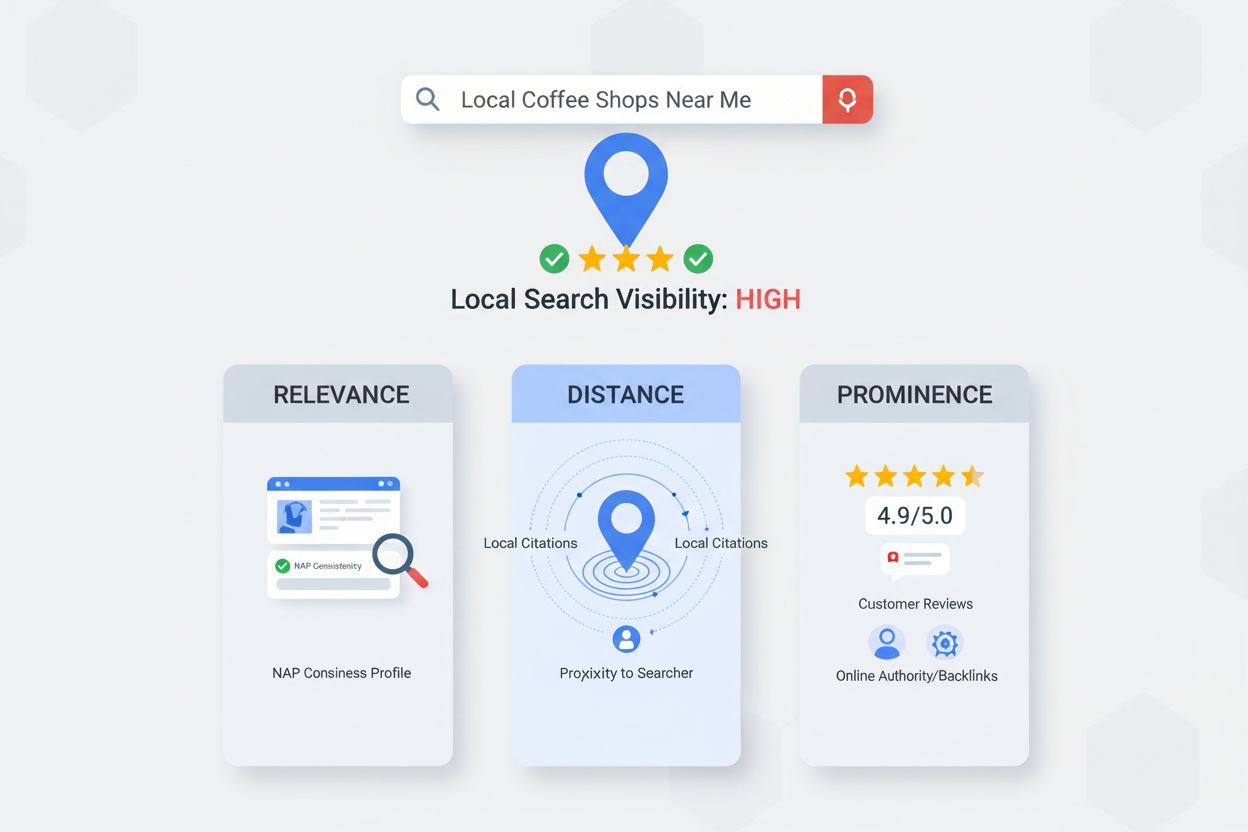
Erfahren Sie, was Google Maps SEO ist, wie es funktioniert und warum es für die lokale Sichtbarkeit von Unternehmen entscheidend ist. Entdecken Sie Ranking-Fakt...
Cookie-Zustimmung
Wir verwenden Cookies, um Ihr Surferlebnis zu verbessern und unseren Datenverkehr zu analysieren. See our privacy policy.