

How to Implement FAQ Schema for AI: Complete Guide 2025
Learn how to implement FAQ schema for AI search engines. Step-by-step guide covering JSON-LD format, best practices, validation, and optimization for AI platfor...
11 min read
I’m getting conflicting advice on FAQ schema:
One camp says:
Other camp says:
My questions:
Looking for data-driven answers, not opinions.
Let me clarify the confusion:
Google FAQ rich results vs AI schema usage:
These are SEPARATE things:
| Aspect | Google Rich Results | AI Schema Usage |
|---|---|---|
| Status | Largely deprecated | Still relevant |
| Visibility | Reduced in SERPs | AI parses schema |
| Purpose | Visual enhancement | Data structuring |
Why FAQ schema still matters for AI:
Data from testing:
Pages with FAQ schema showed 15-20% higher AI citation rates for question-type queries compared to equivalent content without schema.
The caveat:
Schema alone doesn’t make bad content good. It makes good FAQ content easier for AI to recognize and cite.
AI-optimized FAQ schema implementation:
1. Complete, standalone answers:
{
  "@type": "Question",
  "name": "What is GEO?",
  "acceptedAnswer": {
    "@type": "Answer",
    "text": "GEO (Generative Engine Optimization) is the practice of optimizing content for visibility in AI-powered search engines like ChatGPT, Perplexity, and Google AI. Unlike traditional SEO that focuses on rankings, GEO focuses on being cited in AI-generated answers."
  }
}
Notice: Answer is complete without needing context from the page.
2. Natural question phrasing:
Good: “What is the difference between SEO and GEO?” Bad: “SEO vs GEO” (not a question)
3. Substantive answers:
4. Genuine FAQs:
Only mark up questions people actually ask. Manufactured questions are obvious and may be ignored.
5. Match visible content:
Schema should match what’s visible on page. Don’t hide FAQ content while marking it up.
Implementation code for AI-optimized FAQ schema:
JSON-LD template:
<script type="application/ld+json">
{
  "@context": "https://schema.org",
  "@type": "FAQPage",
  "mainEntity": [
    {
      "@type": "Question",
      "name": "Your question here?",
      "acceptedAnswer": {
        "@type": "Answer",
        "text": "Complete answer that can be cited standalone. Include specific details, not just pointers to read more."
      }
    },
    {
      "@type": "Question",
      "name": "Second question?",
      "acceptedAnswer": {
        "@type": "Answer",
        "text": "Another complete answer with substance."
      }
    }
  ]
}
</script>
Validation checklist:
Common mistakes:
Testing FAQ schema impact on AI citations:
Our test methodology:
Results:
| Metric | With Schema | Without Schema |
|---|---|---|
| AI citation rate | 24% | 18% |
| Average citation position | 2.3 | 3.1 |
| Citation accuracy | 89% | 76% |
Key finding:
Schema didn’t just increase citation rate - it improved citation ACCURACY. AI pulled the actual answer rather than surrounding context.
Caveat:
Both groups had quality FAQ content. Schema amplified good content; it wouldn’t make bad content better.
Recommendation:
If you have quality FAQ content, schema is a meaningful optimization. If your FAQ content is weak, fix that first.
Content strategy for FAQ implementation:
What questions to include:
Question quality criteria:
| Good FAQ | Bad FAQ |
|---|---|
| “How long does implementation take?” | “Why choose us?” |
| “What’s included in the basic plan?” | “What makes us the best?” |
| “How do I integrate with Salesforce?” | “Why is our product great?” |
Good FAQs answer genuine user questions. Bad FAQs are marketing disguised as questions.
Answer quality criteria:
The test:
If someone only read the answer, would they find it helpful? If not, it’s not a good FAQ.
Integration with other schema types:
FAQ schema works well with:
{
  "@context": "https://schema.org",
  "@type": "Article",
  "headline": "Complete Guide to GEO",
  "author": {
    "@type": "Person",
    "name": "Expert Name"
  },
  "hasFAQPage": {
    "@type": "FAQPage",
    "mainEntity": [...]
  }
}
Or standalone with page context:
{
  "@context": "https://schema.org",
  "@type": "FAQPage",
  "isPartOf": {
    "@type": "WebPage",
    "name": "Your Page Title"
  },
  "mainEntity": [...]
}
Why this matters for AI:
AI systems understand entity relationships. Connecting FAQ to Article or Person schema strengthens the expertise signal.
Don’t:
This discussion has resolved my confusion. Here’s my implementation plan:
Key insight:
FAQ schema for AI is separate from Google rich results. It’s still valuable for AI visibility even though Google reduced FAQ rich snippets.
Implementation approach:
Audit existing FAQ content
Improve content first
Add schema
Monitor impact
Checklist for each FAQ:
Thanks everyone for the data-driven clarity.
Get personalized help from our team. We'll respond within 24 hours.
Monitor how your FAQ and structured content performs in AI answers. See which schema implementations drive citations.
Learn how to implement FAQ schema for AI search engines. Step-by-step guide covering JSON-LD format, best practices, validation, and optimization for AI platfor...
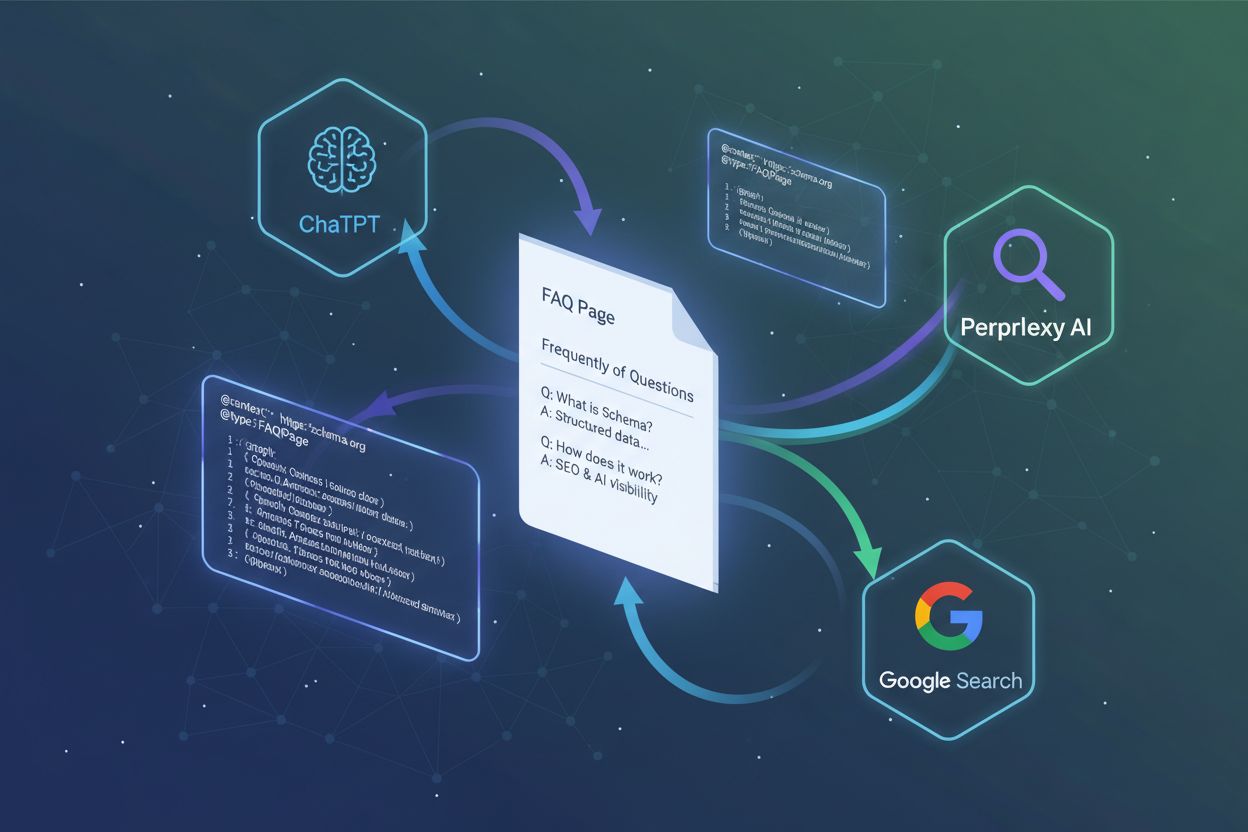
Learn why FAQ schema has the highest citation rates for AI search. Complete guide to FAQPage structured data for ChatGPT, Perplexity, and Google AI Overviews.
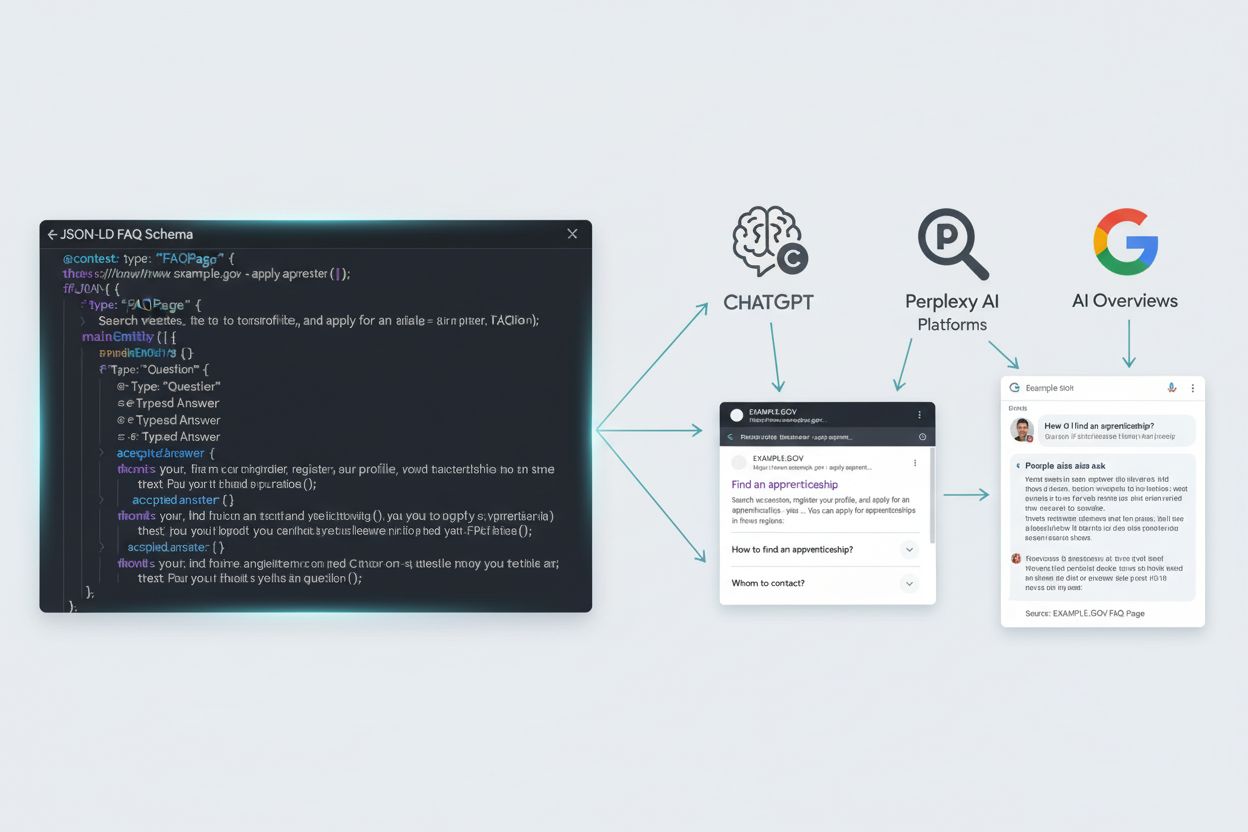
FAQ Schema is structured data markup that labels questions and answers on web pages. Learn how FAQPage schema improves AI search visibility, citation rates, and...
Cookie Consent
We use cookies to enhance your browsing experience and analyze our traffic. See our privacy policy.