

How Do I Use HARO for AI Search Optimization? Complete Guide
Learn how to leverage HARO (Help A Reporter Out) to boost your brand visibility in AI search engines like ChatGPT, Perplexity, and Gemini. Strategic guide for A...
11 min read
I’ve used HARO for traditional PR, but I’m wondering if it’s worth the effort specifically for AI visibility.
My concerns:
What I’m trying to understand:
Is HARO worth it for AI optimization, or should I focus elsewhere?
HARO is MORE valuable for AI visibility than traditional SEO.
Why HARO works for AI:
AI systems don’t just count backlinks - they count MENTIONS. A quote attributed to you in Forbes carries massive weight. AI systems recognize this as authority signal.
The mechanics:
Our data:
The ROI calculation:
Key insight: HARO builds the exact signal AI systems prioritize. Attributed expert mentions on authoritative domains. This is harder to fake than backlinks.
Query selection is everything. Most people respond to wrong queries.
High-value queries (prioritize):
Publication tier:
Tier 1-2 = worth significant effort Tier 3 = only if perfectly aligned
Query specificity: Specific, detailed queries → in-depth features Generic “thoughts on trends” → likely roundup (less value)
Topic alignment: Must match your actual expertise. Off-topic responses = wasted time + diluted brand entity.
Red flags to skip:
Our response strategy:
Conversion rate by selection: Random responses: 8% published Strategic selection: 25% published
Being selective quadruples your efficiency.
How you respond determines if you get published.
The winning response formula:
1. Direct answer first (2-3 sentences) Answer their exact question immediately. No preamble, no “great question.” Just the insight they need.
2. Unique angle or data (2-3 sentences) What can you say that others won’t? Specific numbers, real examples, contrarian view. This is what makes quotes quotable.
3. Concise credentials (1-2 sentences) Why you’re qualified to answer this. Title, company, years of experience. Make it easy for them to attribute you.
Example structure:
[Direct answer to their question - 2 sentences]

[Unique insight with specific example/data - 2 sentences]

[Quick credential: Name, Title, Company - 1 sentence]
What NOT to do:
Response length: Ideal: 100-200 words Too short: Lacks substance Too long: Won’t be read
Journalists get 50+ responses. Make yours scannable and quotable.
How to track if HARO is helping AI visibility:
Step 1: Document all placements Spreadsheet with:
Step 2: Monitor AI visibility correlation Track before HARO campaign:
Track monthly during campaign:
Step 3: Look for citation sources When AI cites you, check:
We found: 35% of our AI citations reference HARO placements.
Tracking tools:
What success looks like:
| Month | Placements | AI Visibility | Correlation |
|---|---|---|---|
| M1 | 3 | 15% | Baseline |
| M3 | 8 (total) | 22% | +7% |
| M6 | 18 (total) | 35% | +20% |
| M12 | 42 (total) | 52% | +37% |
Compound growth as mentions accumulate.
Not all placements are equal for AI visibility:
Tier 1 - Maximum AI impact:
Value: One placement = 10+ lower-tier placements
Tier 2 - Strong AI impact:
Value: Consistent placements build authority
Tier 3 - Supporting AI impact:
Value: Quantity can add up, but diminishing returns
Our strategy: Prioritize Tier 1 queries aggressively. Respond to Tier 2 if good fit. Tier 3 only for perfect alignment.
Time allocation:
Reality check: Tier 1 placements are rare but powerful. Tier 2 builds consistent authority. Don’t waste time chasing Tier 3.
The biggest HARO mistake: giving up too early.
Typical journey:
Response quality improves with practice. Journalists start recognizing your name. Editors seek you out directly.
Our timeline to AI impact:
The compound effect: Each placement adds to your authority signal. AI systems see accumulated mentions over time. 15 placements > 1 placement by more than 15x.
Commitment required:
Most people quit at month 2. The payoff comes at month 6+.
HARO alternatives and complements for AI visibility:
Similar platforms:
Direct journalist outreach: Build relationships with beat reporters. Follow journalists covering your space. Offer yourself as ongoing source. More control than HARO, more effort.
Podcast appearances: Audio content increasingly indexed. Transcripts create citable mentions. Authority signal for AI systems.
Expert roundups: Contribute to industry roundups. Multiple experts = multiple citations. Often easier than HARO placements.
Original research: Create data journalists want to cite. News hooks for media coverage. Strongest long-term authority signal.
Integrated approach:
| Tactic | Effort | AI Impact | Best For |
|---|---|---|---|
| HARO | Medium | High | Quick wins |
| Direct outreach | High | High | Relationships |
| Podcasts | Medium | Medium | Broad reach |
| Research | High | Very High | Thought leadership |
| Roundups | Low | Medium | Easy authority |
HARO is piece of puzzle, not complete strategy.
How to minimize time investment while maximizing results:
Daily routine (30 minutes total):
Response templates: Create templates for common query types:
Customize 20%, keep 80% templated.
Tools that help:
Delegation option: Train team member to:
Our efficiency gains:
Experience dramatically improves efficiency.
How to calculate HARO ROI for AI visibility:
Input metrics:
Output metrics:
ROI calculation:
Costs:
Benefits:
Our actual numbers:
ROI: ~180% on time investment
Comparison to alternatives:
| Tactic | Monthly Cost | AI Visibility Gain |
|---|---|---|
| HARO | $1,500 (time) | 8%/month |
| Paid PR | $5,000+ | 5%/month |
| Content creation | $3,000 | 4%/month |
| Link building | $2,000 | 3%/month |
HARO is highly efficient for AI visibility.
HARO mistakes that waste your time:
Mistake 1: Responding to everything Low-quality queries = low-quality placements. Be ruthlessly selective. Focus on tier 1-2 publications only.
Mistake 2: Generic responses “I think this trend is important…” Anyone can say that. Specific data + unique angle = quotable.
Mistake 3: Heavy self-promotion Journalists want insights, not sales pitches. Mention your company once, briefly. Let the expertise sell itself.
Mistake 4: Missing deadlines Many queries have tight turnarounds. Respond within 2-4 hours for best results. Set up alerts and check frequently.
Mistake 5: Inconsistent effort 2 weeks on, 2 weeks off. Momentum matters. Consistent daily effort beats sporadic bursts.
Mistake 6: Not following up No response doesn’t mean rejection. Polite follow-up can revive opportunities. Build relationships beyond single queries.
Mistake 7: Wrong topics Chasing any placement dilutes your entity. AI learns from consistent expertise signals. Stay focused on your core topics.
I’m convinced. Here’s my HARO for AI strategy:
Setup (This Week):
Daily Routine:
Query criteria (respond only if):
Response framework:
Tracking:
Timeline expectations:
Success metrics:
Thanks all - HARO is now central to my AI visibility strategy.
Get personalized help from our team. We'll respond within 24 hours.
Monitor how your HARO mentions and media coverage translate into AI citations. Connect earned media efforts to AI search visibility.
Learn how to leverage HARO (Help A Reporter Out) to boost your brand visibility in AI search engines like ChatGPT, Perplexity, and Gemini. Strategic guide for A...
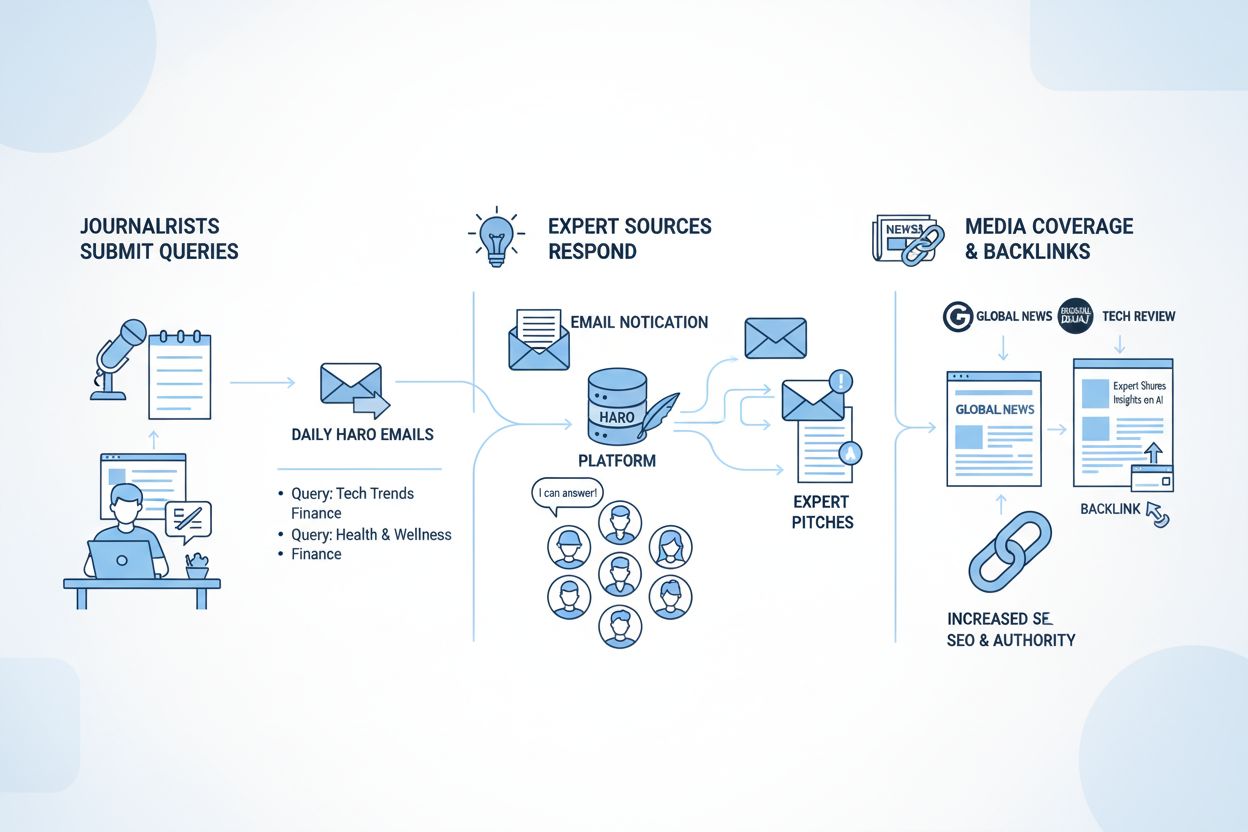
HARO is a free platform connecting journalists with expert sources for media coverage. Learn how it works, its impact on SEO and link building, and best practic...
Community discussion on how digital PR affects AI visibility. Real experiences from PR professionals and marketers analyzing the impact of press coverage on AI ...
Cookie Consent
We use cookies to enhance your browsing experience and analyze our traffic. See our privacy policy.