

How Internal Links Impact AI Citations and Visibility
Learn how internal linking strategy affects AI citations in ChatGPT, Perplexity, and Google AI Overviews. Discover how to structure internal links for better AI...
10 min read
Been running some experiments on how internal linking affects AI citations and wanted to share what I’m finding.
We manage about 15 content sites across different niches. Over the past 3 months, I restructured internal linking on 5 of them to create stronger topical clusters while leaving the others as controls.
The test:
What I’m seeing:
Sites with restructured internal linking are getting 2-3x more AI citations on their hub pages compared to before. The control sites stayed flat.
But here’s what’s interesting - it’s not just about having more links. The consistency of anchor text seems to matter a lot. Pages where I used varied anchor text (“click here”, “learn more”, “this article”) performed worse than pages with consistent, descriptive anchors.
Questions for the community:
Would love to compare notes with others experimenting in this space.
This matches what I’ve been seeing with clients. Internal linking is hugely underrated for AI visibility.
The key insight people miss:
AI systems don’t just crawl individual pages - they try to understand your entire site’s knowledge graph. When your internal links create clear topical relationships, you’re essentially building a map that tells AI: “Here’s how all my content on [topic] connects.”
What I’ve found works:
The data point that convinced me:
One client had a comprehensive guide that should have been cited everywhere but wasn’t. We discovered it had almost no internal links pointing to it. After adding 15+ contextual internal links from related articles, it started appearing in AI responses within 6 weeks.
The 2-3x improvement you’re seeing is consistent with what I’d expect. AI systems favor sites where the structure clearly communicates expertise.
The anchor text point is huge. I work on a technical documentation site and we used to link everything with “see here” or “this page.”
Changed to descriptive anchors like “Python API authentication guide” and “handling rate limits in production” - our visibility in ChatGPT for developer queries improved significantly.
AI systems use that anchor text to understand what the linked page is actually about. Generic anchors tell them nothing.
I’ve been tracking this with Am I Cited for 4 months. Here’s what the data shows:
Pages with strong internal linking profiles:
The timeline question:
From my data, changes take about 4-8 weeks to show up in AI citation patterns. This probably correlates with when AI crawlers revisit your site and when their indices get updated.
Depth matters less than you’d think:
I tested this specifically. Pages 4 clicks from homepage can still get cited well IF they have strong internal linking from related content. It’s the topical cluster strength that matters, not the raw click depth.
Pro tip: Create a visual map of your internal links. If you can’t see clear topic clusters forming, neither can AI systems.
We’ve productized internal linking audits specifically for AI visibility. Here’s what we’ve learned from 50+ client sites:
The correlation is real:
Sites with intentional topic cluster architecture are cited 3x more frequently than sites with flat or random internal linking structures. This held true across B2B, ecommerce, and publishing clients.
Common mistakes we fix:
The biggest wins:
Usually come from identifying your most valuable content and then aggressively building internal links to it from all related pages. It’s like telling AI: “This is my best, most authoritative content on this topic.”
News publisher here with a different perspective.
We have thousands of articles and internal linking at scale is a nightmare. But we’ve found that automated related links at the bottom of articles don’t work nearly as well as contextual links within the content.
Added a process for editors to manually add 2-3 contextual internal links when publishing new articles. It’s more work, but our AI visibility improved noticeably.
The algorithmic “related articles” sections seem to be treated differently by AI systems - maybe because they’re obviously automated and not editorial decisions about content relationships?
Ecommerce angle: Category page internal linking is crucial for AI product recommendations.
What works for us:
The result:
When someone asks AI “best running shoes for flat feet,” our buying guide gets cited because it’s well-integrated into our site’s topical structure around running shoes, foot types, and specific product recommendations.
The internal links create a web of context that AI systems can follow to understand: “This site has comprehensive expertise on running shoe selection.”
Technical implementation question - does the HTML structure of internal links matter?
I’m wondering if:
Anyone tested these variables specifically?
Yes! Contextual links within main content body seem to carry more weight than sidebar/footer links.
My theory: AI systems are getting smarter at distinguishing editorial links (someone intentionally linked because it’s relevant) from navigational links (automated site-wide links).
Placement within content does seem to matter - links earlier in articles perform slightly better. But the correlation isn’t as strong as the contextual vs navigational distinction.
The HTML structure matters for accessibility and crawlability but I haven’t seen strong evidence it directly impacts AI citation likelihood beyond that.
Great insights from everyone. Let me summarize what I’m taking away:
Key learnings:
My next steps:
Thanks for all the data points. This is clearly an underexplored area that deserves more attention.
For anyone starting from scratch - what’s the minimum viable internal linking strategy?
We’re a small team and can’t do everything. What’s the 80/20?
Start here:
That’s it for MVP. You can get sophisticated later with topic clusters and content hierarchies, but just making sure your best content has strong internal link support is the 80/20.
Track with Am I Cited to see if those pages start appearing more in AI responses. Iterate from there.
Get personalized help from our team. We'll respond within 24 hours.
Monitor how your site structure and internal linking affect your visibility in AI-generated answers. See which pages get cited and optimize your content architecture.
Learn how internal linking strategy affects AI citations in ChatGPT, Perplexity, and Google AI Overviews. Discover how to structure internal links for better AI...
Community discussion on whether backlinks still matter for AI search visibility. Real experiences from SEO professionals adapting link building strategies for C...
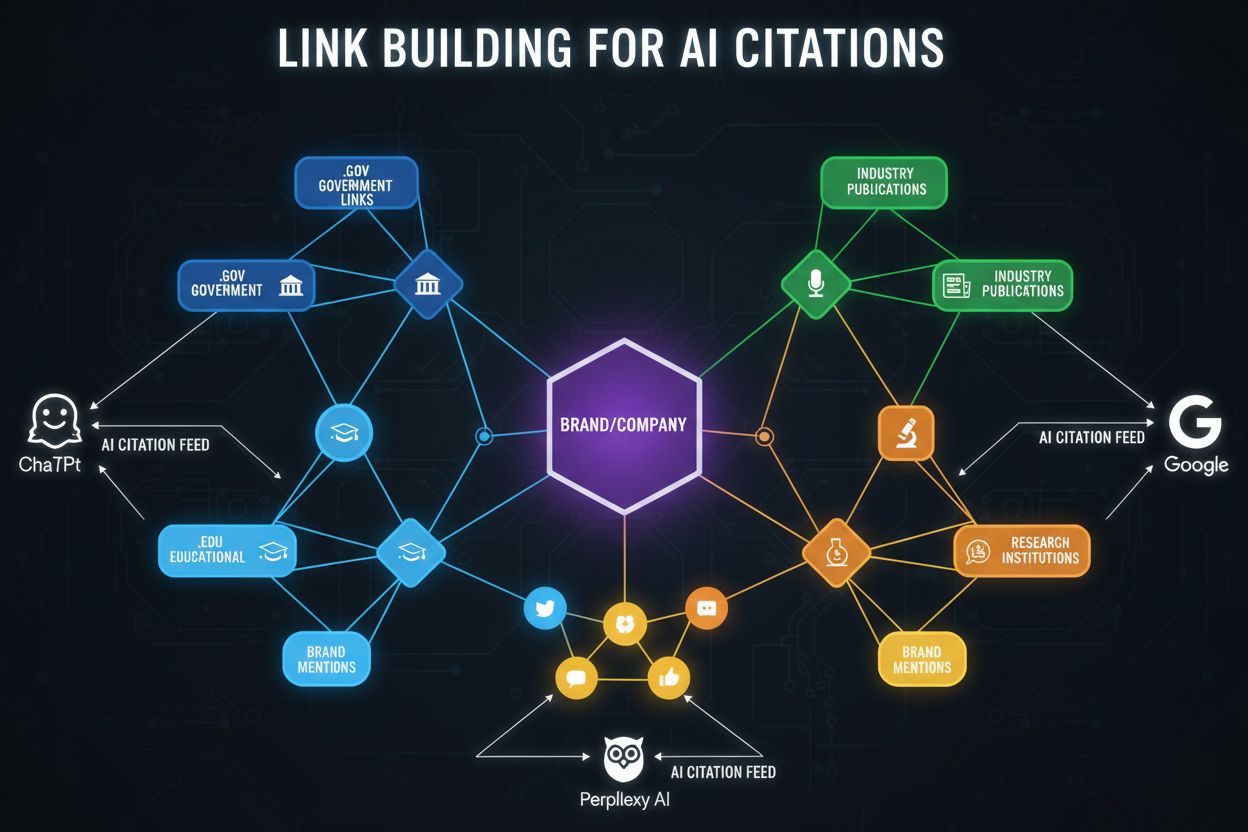
Learn how link building has evolved for AI search. Discover strategies to earn AI citations across ChatGPT, Perplexity, and Google AI Overviews. Master the new ...
Cookie Consent
We use cookies to enhance your browsing experience and analyze our traffic. See our privacy policy.