
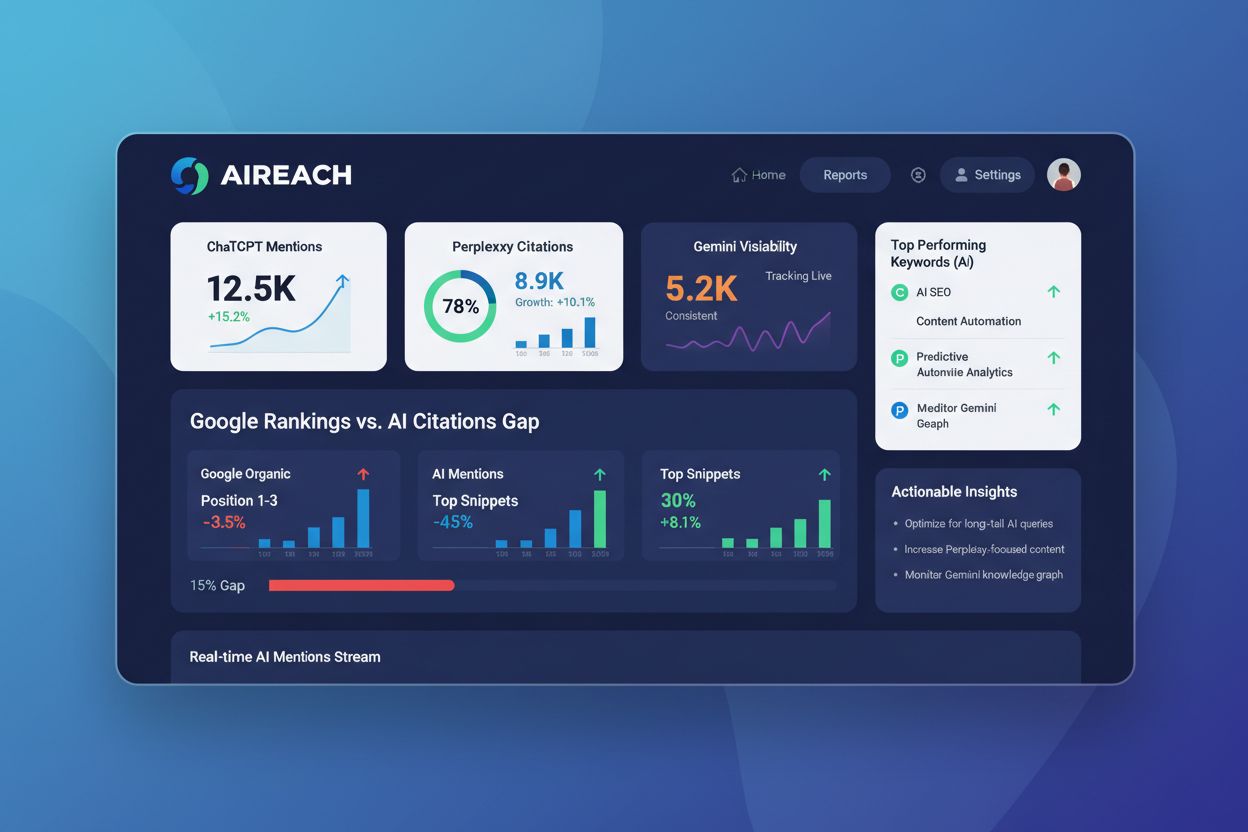
When SEO Rankings Don't Equal AI Visibility: The Disconnect
Discover why high Google rankings don't guarantee AI visibility. Learn the gap between SEO and AI citations, and how to optimize for both search channels.
7 min read
Just got hit by the latest Google core update. Traffic down 35%.
But here’s what’s weird - my AI visibility also tanked. I wasn’t even tracking it before, but when I started checking:
Before update:
After update:
My questions:
This feels like getting hit twice for the same problem.
There IS a connection, but it’s not direct. Let me explain:
How Google rankings affect AI visibility:
| AI Platform | Connection to Google | Mechanism |
|---|---|---|
| Google AI Overview | Direct | Uses Google’s index/rankings |
| ChatGPT Search | Indirect | Uses Bing, which often mirrors Google patterns |
| Perplexity | Semi-direct | Has own crawler but weights authority similarly |
| ChatGPT (no search) | None | Based on training data, not current rankings |
Why your AI visibility dropped:
The shared cause: The algorithm update flagged quality issues in your content. Those same issues probably make AI systems less likely to cite you.
The good news: If you fix the underlying quality issues, both should recover.
The order: Fix content quality → Google recovery → AI visibility recovery
It’s not “rankings OR AI” - it’s “quality issues affecting both.”
Adding context on recovery timelines:
What we’ve seen with clients:
| Recovery Phase | Typical Timeline | What Happens |
|---|---|---|
| Initial stabilization | 1-2 weeks | Bleeding stops, assess damage |
| Content improvements | 2-8 weeks | Fix quality issues |
| Google recovery | 2-4 months | Rankings start improving |
| AI visibility recovery | +2-6 weeks after Google | AI systems follow rankings |
Key insight: AI visibility lags Google recovery by a few weeks. Don’t panic if AI doesn’t bounce back immediately.
Perplexity specifically: Perplexity’s real-time crawler might pick up recovery faster than ChatGPT Search.
ChatGPT (base) caveat: If you were appearing in non-search ChatGPT, that won’t recover until the next training data update. This is separate from ranking recovery.
Our advice: Track both using Am I Cited alongside your SEO tools. Understand the lag relationship.
If you got hit by a core update, look at Helpful Content signals:
What Google’s Helpful Content system evaluates:
| Signal | What It Means | AI Relevance |
|---|---|---|
| People-first content | Made for humans, not search engines | AI also wants human-valuable content |
| Expertise demonstration | Shows real knowledge | AI trusts demonstrated expertise |
| Satisfying experience | Answers the question fully | AI wants complete answers to cite |
| Original value | Not just aggregating | AI prefers unique insights |
The connection to AI citations: AI systems are essentially asking the same questions Google’s Helpful Content evaluator asks:
What to audit:
The fix is the same for both: Make content genuinely helpful, demonstrate real expertise, provide complete answers.
To answer your question about “AI algorithms”:
Each AI platform has its own selection process:
Google AI Overview:
ChatGPT Search:
Perplexity:
Claude:
The pattern: While each has different mechanics, they all value:
What this means for you: You don’t need to optimize for each AI separately. Fix the quality issues that got you penalized in Google, and you’ll likely improve across platforms.
We went through this. Here’s our recovery story:
The hit (September 2025 Core Update):
What we identified:
What we did:
Month 1:
Month 2:
Month 3:
Results:
| Metric | Hit | Month 3 | Month 6 |
|---|---|---|---|
| Organic traffic | -45% | -25% | +5% vs pre-hit |
| AI citations | Near zero | 5% of queries | 18% of queries |
| Top 10 rankings | 12 | 25 | 45 |
Key insight: AI visibility followed rankings by about 3-4 weeks. As we recovered in Google, AI visibility followed.
What I’d do differently: Start monitoring AI visibility earlier. We didn’t realize the connection until too late.
Perplexity deserves special attention:
How Perplexity’s algorithm differs:
Unlike Google, Perplexity:
What we’ve observed:
Sites that get hit by Google updates sometimes maintain Perplexity visibility IF:
But usually:
Google penalties correlate with Perplexity drops because:
Recovery in Perplexity:
Often faster than Google recovery because:
Track separately: Use Am I Cited to track Perplexity visibility independently. Sometimes it tells a different story than Google rankings.
Let’s talk about preventing this in the future:
Update-proof content characteristics:
Genuine expertise
Complete answers
Fresh and maintained
Structured for extraction
Content that tends to survive updates:
Content that gets hit:
The principle: Content that AI systems WANT to cite is also content Google WANTS to rank. Build for quality, survive updates.
Set up monitoring to catch this earlier:
What to track together:
| Metric | Tool | Frequency |
|---|---|---|
| Google rankings | Ahrefs/SEMrush | Daily |
| Google traffic | GSC/GA4 | Daily |
| AI citation rate | Am I Cited | Weekly |
| Perplexity visibility | Am I Cited | Weekly |
| ChatGPT mentions | Manual or Am I Cited | Weekly |
Alert thresholds:
The correlation dashboard: Plot Google rankings against AI visibility on the same chart. Look for:
Our setup: Weekly report comparing:
This helps us see patterns and respond faster.
This clarifies a lot. My recovery plan:
Immediate (this week):
Month 1: Content audit
Month 2-3: Content improvements
Month 4+: Monitor recovery
Key takeaways:
Mindset shift: I was treating SEO and AI visibility as separate. They’re connected through content quality. Fix the root cause, fix both.
Thanks everyone!
Get personalized help from our team. We'll respond within 24 hours.
Monitor how algorithm updates affect your presence across Google rankings AND AI citations on ChatGPT, Perplexity, and other platforms.
Discover why high Google rankings don't guarantee AI visibility. Learn the gap between SEO and AI citations, and how to optimize for both search channels.
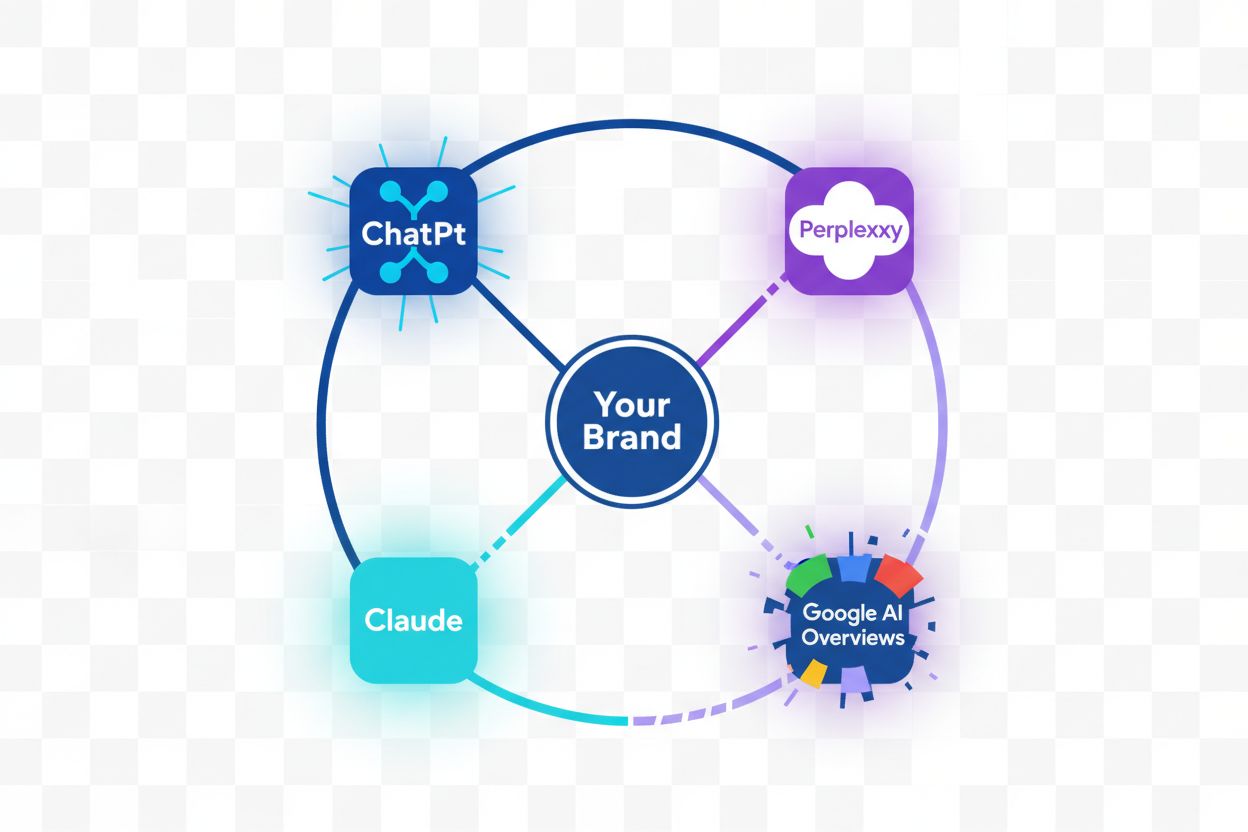
Discover critical AI visibility blind spots where competitors gain advantage. Learn gap analysis framework and tools to monitor AI presence across ChatGPT, Perp...

Learn how to connect AI visibility metrics to measurable business outcomes. Track brand mentions in ChatGPT, Perplexity, and Google AI Overviews with actionable...
Cookie Consent
We use cookies to enhance your browsing experience and analyze our traffic. See our privacy policy.