


Author Bylines and AI Citations: Do Bylines Help?
See how author bylines affect AI citations, including research on citation rates and ways to strengthen authorship signals.
10 min read
We’ve been running an experiment based on some research I came across.
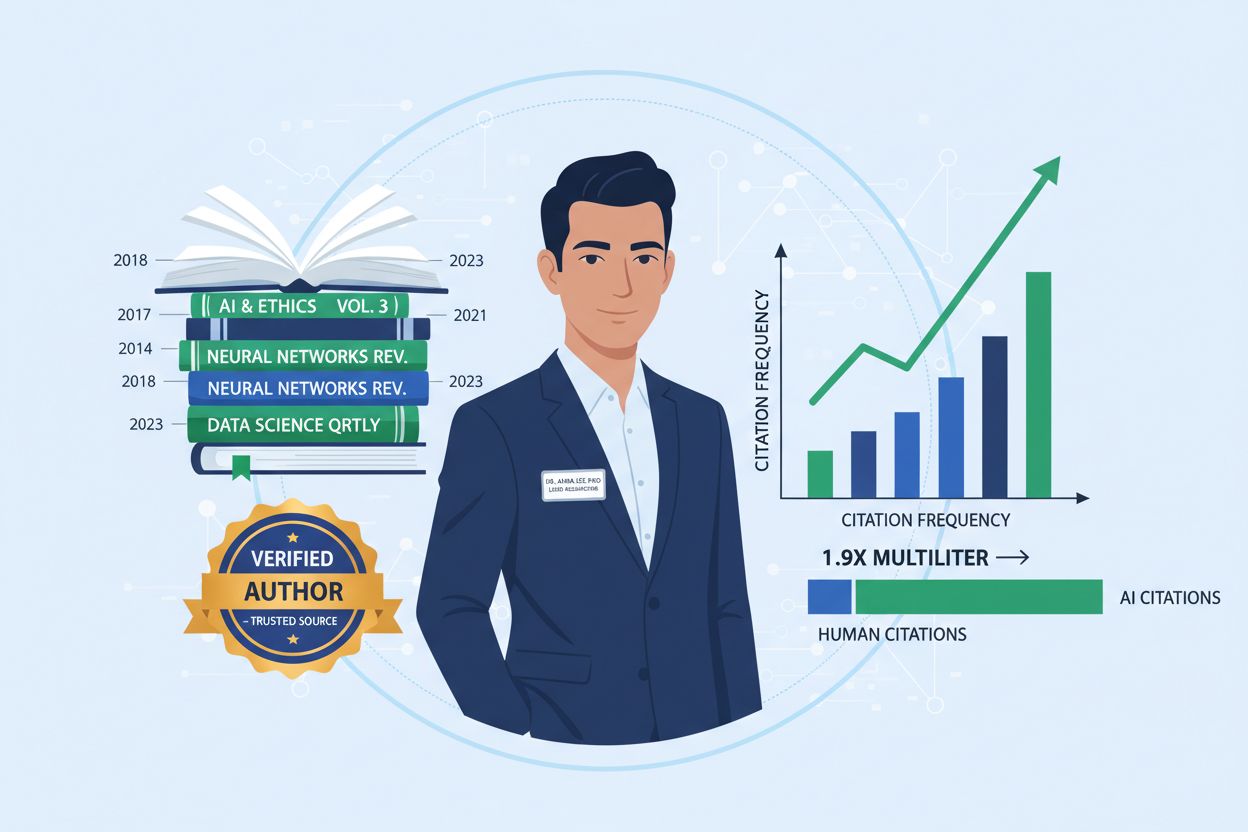
The claim: Content with clear author bylines gets 1.9x more citations from AI systems than content without named authorship.
What we did:
Early results (4 weeks in):
That’s roughly 2x, which aligns with the research.
Questions for the community:
We’re considering making this mandatory for all content going forward.
Your results align with what I’ve seen across dozens of clients. Here’s the framework for understanding why:
E-E-A-T in the AI era:
AI systems are trained to prioritize trustworthy content. Named authorship signals:
Anonymous content lacks these signals entirely.
The trust calculus:
When AI needs to decide what to cite, it’s essentially asking: “Who do I trust to not be wrong?”
A named expert with credentials is inherently more trustworthy than “Company Blog Team.”
Credential specificity matters:
“Dr. Michael Chen, Board-Certified Cardiologist” » “Michael Chen, Writer”
The more specific and relevant the credentials, the stronger the signal.
This makes sense. Follow-up question:
What about topics where we don’t have in-house subject matter experts?
Like, if we’re writing about marketing trends but don’t have a “Dr. of Marketing” on staff?
Great question. You have a few options:
Option 1: Build internal expertise positioning
Option 2: Expert contributor model
Option 3: Expert quotes/review
Option 4: First-hand experience framing
The key is authentic expertise signaling, not manufactured credentials.
In health content, this is MASSIVE.
We write for medical websites. The difference between:
Is night and day for AI citations. ChatGPT especially seems to heavily weight medical credentials when deciding what to cite for health queries.
Our approach:
Every health article now requires:
AI visibility for health content increased 3x after implementing this.
The reason:
YMYL (Your Money Your Life) content gets extra scrutiny from AI systems. They’re trained to be extremely careful about health misinformation. Credentialed authorship is essentially a trust gate.
Interesting counterpoint from the tech space:
We found bylines matter, but the author’s external web presence matters more.
Test we ran:
Both had similar credential descriptions. Article B got cited 2.5x more.
Hypothesis:
AI systems cross-reference authors. If they can find the author mentioned elsewhere on the web (LinkedIn, other publications, conference listings), the trust signal is amplified.
Implication:
Building author brand isn’t just good for personal career - it makes all your authored content more AI-citable.
For agency folks managing multiple clients:
The byline consistency problem:
We write for many clients. Different authors work on different pieces. This creates inconsistency that AI might notice.
Our solution:
Results:
The key is authenticity. The named author should genuinely be knowledgeable and have reviewed the content.
Technical implementation matters as much as the visible byline:
Schema markup for authors:
Don’t just add a name on the page. Implement:
Article Schema:
- author: [linked to Person Schema]

Person Schema:
- name: Full Name
- jobTitle: Professional Title
- worksFor: Organization
- sameAs: [LinkedIn, Twitter, other profiles]
- hasCredential: [Certifications, degrees]
Why this matters:
AI systems don’t just read your page - they parse structured data. Schema makes author information machine-readable and verifiable.
Implementation checklist:
One thing I haven’t seen mentioned: First-person voice + byline is powerful.
The research shows first-person content with named authors gets 67% more citations than third-person.
Why?
“I’ve spent 10 years in product management and here’s what I’ve learned…”
This signals:
Compare:
Third-person: “Product managers should consider these factors…” First-person: “As a PM for 10 years, I’ve found these factors matter most…”
The second feels more trustworthy and citation-worthy because someone is staking their reputation on it.
Practical workflow question:
We have 1,000+ articles without bylines. How do we prioritize the retrofit?
Our approach:
Am I Cited helped us identify which anonymous articles were somehow still getting cited. Those became priorities since AI was already interested.
Excellent discussion. Here’s my synthesis:
Key principles:
Our updated strategy:
Immediate actions:
This feels like a clear competitive advantage we can build over time. Thanks everyone for the insights.
Get personalized help from our team. We'll respond within 24 hours.
Monitor which of your authored articles get cited in AI answers. Understand how author credentials affect your AI visibility across platforms.
See how author bylines affect AI citations, including research on citation rates and ways to strengthen authorship signals.

Learn how author bylines impact AI citations, why named authorship increases visibility in ChatGPT and Perplexity, and how to optimize bylines for AI search eng...
Community discussion on creating author pages for AI search visibility. Real experiences from content teams on E-E-A-T signals, author schema, and how AI system...
Cookie Consent
We use cookies to enhance your browsing experience and analyze our traffic. See our privacy policy.