Discussion RAG AI Technology

Can someone ELI5 RAG and why everyone says it's how we need to optimize for AI search now?

MA
MarketingNewbie_Alex · Junior Marketing Coordinator
· · 95 upvotes · 10 comments
MA
MarketingNewbie_Alex
Junior Marketing Coordinator · January 8, 2026

I keep seeing “RAG” everywhere in AI search discussions and I feel dumb asking, but I genuinely don’t understand what it is or why it matters.

What I’ve gathered:

  • It stands for Retrieval-Augmented Generation
  • It’s how Perplexity works
  • It’s different from how regular ChatGPT works
  • Apparently it changes how we should create content?

What I don’t understand:

  • What is it actually doing technically?
  • Why does it matter for marketing/content?
  • How do I “optimize for RAG” - is that even a thing?
  • Is this just another buzzword or genuinely important?

Can someone explain this like I’m 5? Or at least like I’m a marketer who doesn’t have a CS degree?

10 comments

10 Comments

AS
AIEngineer_Simplified Expert AI Engineer (explaining simply) · January 8, 2026

Great question! Let me actually explain this simply.

The problem RAG solves:

Regular AI (like ChatGPT without search) is like a person who read a lot of books years ago. They can answer questions from memory, but:

  • Their information is old (knowledge cutoff)
  • They might “remember” things wrong (hallucinations)
  • They can’t know about recent events

What RAG does:

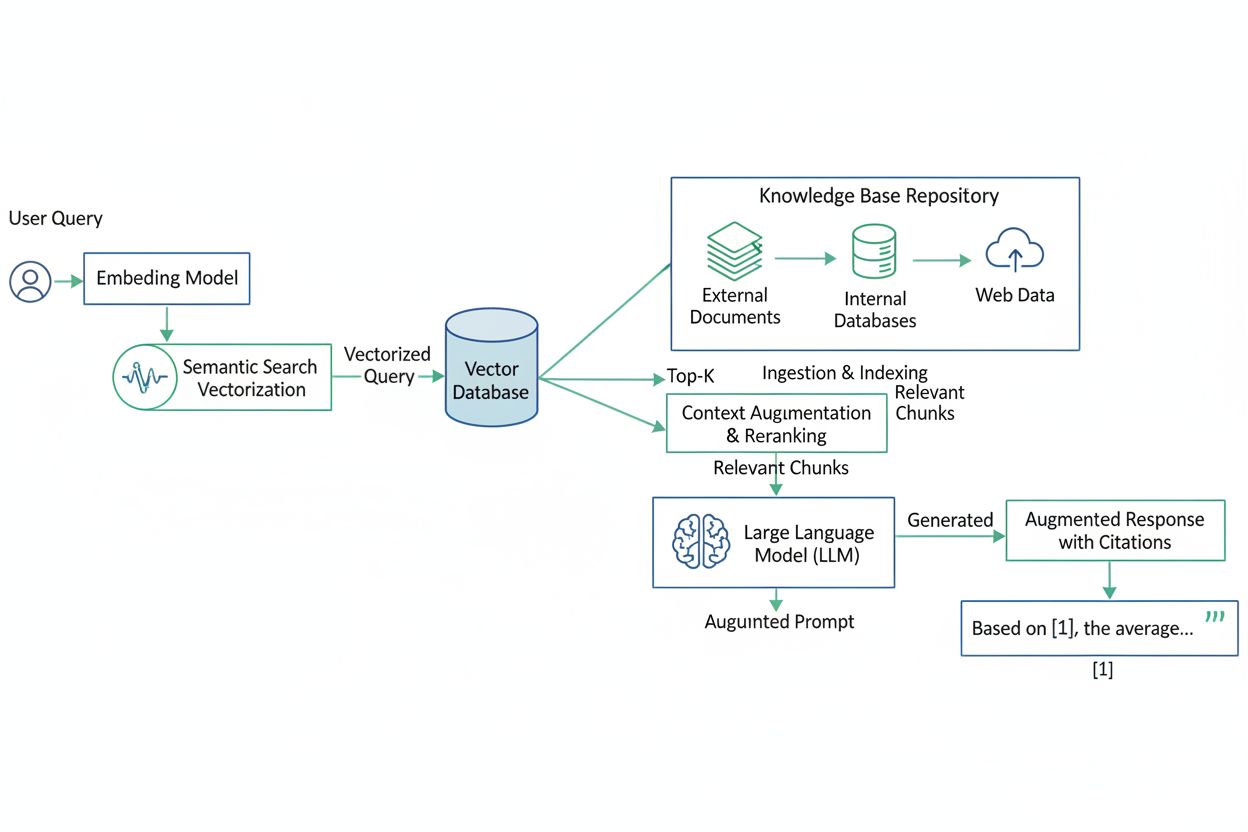
RAG is like giving that person access to a library WHILE they answer your question.

Instead of just using memory:

  1. They hear your question
  2. They search the library for relevant books (retrieval)
  3. They read the relevant parts
  4. They answer using both memory AND what they just read (generation)

The acronym breakdown:

  • Retrieval = Search for relevant information
  • Augmented = Enhanced/improved
  • Generation = Creating the answer

So RAG = “Enhanced answer generation that includes searching for information first”

Why it matters for marketing:

With RAG, AI systems actively SEARCH the web for your content. If your content is findable, well-structured, and answers questions clearly, RAG systems will retrieve it and cite it.

That’s why “optimizing for RAG” is a thing - you want your content to be what the AI finds when it searches.

MA
MarketingNewbie_Alex OP · January 8, 2026
Replying to AIEngineer_Simplified
That library analogy really helps! So Perplexity is constantly searching the web while regular ChatGPT is answering from memory?
AS
AIEngineer_Simplified Expert · January 8, 2026
Replying to MarketingNewbie_Alex

Exactly right!

Platform breakdown:

PlatformRAG StatusWhat it means
PerplexityAlways RAGAlways searches web, always cites sources
ChatGPT (base)No RAGMemory only, knowledge cutoff applies
ChatGPT SearchRAG when enabledSearches web via Bing when you turn it on
Google AI OverviewsRAG-likeRetrieves from Google’s index
Claude (base)No RAGMemory only
Claude (with tools)Can use RAGSearches when given access

The accuracy difference:

  • Base LLMs: ~60-70% accuracy, 20-30% hallucination rate
  • RAG-powered: ~87-95% accuracy, 4-10% hallucination rate

RAG improves accuracy by ~40% on average because the AI is citing real sources instead of guessing from memory.

Marketing implication:

RAG-powered systems are where the opportunity is. They’re actively looking for your content. Base LLMs already have their knowledge locked in - you can’t change what they learned during training.

CS
ContentStrategist_Sam Content Strategy Lead · January 8, 2026

Let me add the practical marketing angle:

Why RAG changes content strategy:

Old way (base LLMs):

  • Your content might be in training data… or not
  • No way to know or influence it
  • Can’t optimize for it retroactively

RAG way (Perplexity, ChatGPT Search):

  • Your content is retrieved in real-time
  • You can see when you’re cited
  • You can actively optimize for retrieval

How to “optimize for RAG”:

  1. Be findable

    • Good SEO still matters (RAG often uses search engines)
    • Fresh content gets priority
    • Indexed content > unindexed content
  2. Be retrievable

    • Clear structure AI can parse
    • Direct answers to specific questions
    • Not buried behind paywalls or login walls
  3. Be quotable

    • Clean sentences that can be extracted
    • Factual statements AI can cite
    • Not marketing fluff
  4. Be accurate

    • RAG cross-references sources
    • Consistent facts across your content
    • Verifiable claims

The mindset shift:

Think of RAG systems as research assistants actively looking for the best source to cite. Be that source.

SM
SEOTransition_Mark · January 7, 2026

SEO person’s RAG wake-up call:

What I learned the hard way:

I optimized a client’s site for traditional SEO. They ranked #1 for key terms. Great!

Then we checked Perplexity. Despite ranking #1, they weren’t getting cited. A competitor ranking #4 was getting cited instead.

Why?

Perplexity’s RAG system retrieved multiple sources, evaluated them, and decided the #4 result better answered the question.

Our #1 page was optimized for rankings (keyword density, meta tags, etc.) but not for RAG (clear answers, comprehensive coverage, extractable content).

The lesson:

RAG systems care about ANSWER QUALITY, not ranking position.

You can rank #1 and never get cited. You can rank #10 and get cited constantly.

It’s a different game with different rules.

New optimization checklist:

  • Does this content directly answer the question?
  • Can AI easily extract a quote?
  • Is it comprehensive enough to be the best source?
  • Is it accurate and current?

If yes to all, you’re RAG-optimized.

TU
TechMarketers_United · January 7, 2026

Real-world example of RAG in action:

The query: “What’s the best CRM for small businesses?”

What Perplexity does (RAG):

  1. Converts query to vector embedding
  2. Searches web for relevant content
  3. Retrieves ~20 potential sources
  4. Evaluates relevance and authority
  5. Selects 5-10 best sources
  6. Synthesizes answer from those sources
  7. Cites each source

What you see:

“For small businesses, top CRM options include HubSpot CRM (free tier, excellent for beginners) [1], Salesforce Essentials (scalable, enterprise features) [2], and Zoho CRM (affordable, comprehensive) [3]…”

With links to sources [1], [2], [3]

The optimization opportunity:

If your content:

  • Directly compares CRMs for small businesses
  • Includes specific features and pricing
  • Is well-structured and comprehensive
  • Is from an authoritative source

…you have a shot at being [1], [2], or [3].

If your content is vague marketing speak? You won’t be retrieved.

That’s RAG in practice.

DL
DataScience_Lisa Expert Data Scientist · January 7, 2026

Technical detail that matters for marketers:

How RAG actually retrieves content:

RAG uses something called “vector search” or “semantic search.”

Old way (keyword search): Query: “best CRM small business” Looks for: Pages containing those exact words

RAG way (semantic search): Query: “best CRM small business” Looks for: Pages about the CONCEPT of CRM solutions appropriate for smaller companies

Why this matters:

Your page doesn’t need to contain exact keywords. It needs to semantically match what users are asking.

A page titled “Top Customer Relationship Management Software for Growing Companies” can match “best CRM small business” if the content is semantically relevant.

The optimization implication:

Stop keyword stuffing. Start answering questions comprehensively.

RAG systems understand meaning, not just words.

A
AgencyPractitioner Agency Director · January 7, 2026

How we explain RAG to clients:

The simple version:

“Google shows you a list of websites. Perplexity reads those websites FOR you and tells you what they say.”

Why that matters:

“If Perplexity reads your website and likes what it sees, it will recommend you to users. If it reads your website and finds vague marketing speak, it will recommend your competitor instead.”

The action items:

  1. “Be the best answer to your customers’ questions”
  2. “Make your content easy for AI to understand and quote”
  3. “Stay current - AI reads the fresh stuff”
  4. “Track where you’re getting cited - it’s measurable now”

Client response:

“So it’s like optimizing for a really smart researcher instead of an algorithm?”

“Exactly.”

FT
FutureSEO_Thinker · January 6, 2026

Why RAG is the future and why you should care now:

The trajectory:

  • 2023: ChatGPT launches, mostly training data
  • 2024: Perplexity grows, RAG becomes mainstream
  • 2025: ChatGPT Search, Google AI Overviews - RAG everywhere
  • 2026+: RAG becomes the default, not the exception

What this means:

The majority of AI-powered search will be RAG-based within 2 years. Even base models are getting search capabilities.

The opportunity window:

Right now, most marketers don’t understand RAG. They’re still optimizing for keywords.

If you understand RAG and optimize accordingly, you have a 12-24 month head start on competitors.

By the time everyone catches up, you’ll have established authority in RAG systems.

The cost of waiting:

Competitors who optimize for RAG now will be cited more, build authority, and become the default sources AI recommends.

Playing catch-up in 2027 will be much harder than leading in 2026.

MA
MarketingNewbie_Alex OP Junior Marketing Coordinator · January 6, 2026

This thread has been incredibly helpful! I finally get it.

My understanding now:

RAG = AI that searches for information instead of just using memory

  • Makes AI more accurate (~40% improvement)
  • Creates opportunity because AI is actively looking for content to cite
  • Requires different optimization than traditional SEO

Key takeaways:

  1. Perplexity is pure RAG - always searches, always cites
  2. ChatGPT Search is RAG - when enabled, same principles
  3. Optimize for answers, not keywords - semantic understanding matters
  4. Be the best source - comprehensive, accurate, extractable content wins
  5. Measure citations - unlike training data, RAG citations are trackable

What I’m going to do:

  1. Audit our content for “RAG readability” - can AI easily extract answers?
  2. Start monitoring citations in Perplexity and ChatGPT Search
  3. Restructure key pages to directly answer customer questions
  4. Brief the team on why this matters

Not just a buzzword - this is genuinely how AI search works now. Thanks everyone for the education!

Have a Question About This Topic?

Get personalized help from our team. We'll respond within 24 hours.

Frequently Asked Questions

What is RAG in AI search?
RAG (Retrieval-Augmented Generation) is an AI framework that combines language models with real-time information retrieval. Instead of relying only on training data, RAG systems search external sources, retrieve relevant content, then use it to generate accurate answers with citations.
How does RAG improve AI search accuracy?
RAG improves LLM accuracy by an average of 39.7% and reduces hallucinations by over 40%. By grounding responses in retrieved, verified information rather than just training data, AI systems can provide more current and accurate answers.
Which AI platforms use RAG?
Perplexity is built entirely on RAG architecture. ChatGPT Search uses RAG when search is enabled. Google AI Overviews use RAG-like retrieval from Google’s index. Claude can use RAG when connected to external documents or search tools.
How should I optimize content for RAG systems?
Create comprehensive, well-structured content that directly answers questions. Use clear headers matching potential queries, ensure factual accuracy (RAG cross-references sources), and maintain fresh content since RAG systems access live web data.

Monitor Your Content in RAG Systems

Track when your content gets retrieved and cited by RAG-powered AI systems like Perplexity and ChatGPT Search. Understand your AI visibility.

Learn more

Retrieval-Augmented Generation (RAG)
Retrieval-Augmented Generation (RAG): Definition, Architecture, and Implementation

Retrieval-Augmented Generation (RAG)

Learn what Retrieval-Augmented Generation (RAG) is, how it works, and why it's essential for accurate AI responses. Explore RAG architecture, benefits, and ente...

11 min read