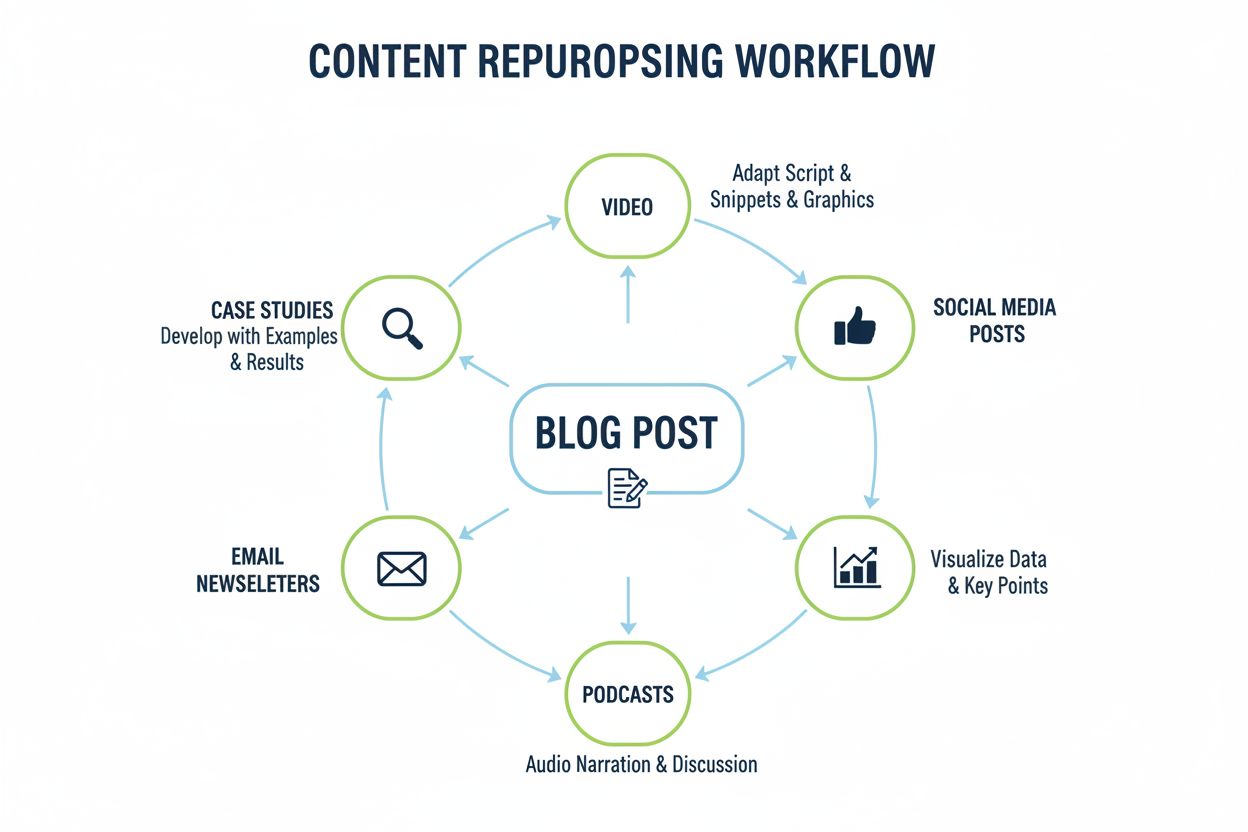
Reaprovechamiento de Contenidos para Visibilidad en IA: Enfoque Multiformato
Descubre cómo reaprovechar contenido en múltiples formatos para maximizar la visibilidad en motores de búsqueda de IA como ChatGPT, Perplexity y Google AI Overv...
I’ve been obsessing over this question for the past few months. We had a sudden drop in AI citations across ChatGPT and Perplexity, and my first thought was “did we get penalized?”
Spent weeks investigating. Here’s what I’m trying to understand:
Our situation:
What I’m confused about:
Anyone else experienced sudden drops in AI visibility? Was it actually a penalty or something else?
Short answer: No, AI search engines don’t have traditional penalty systems.
The concept of “penalties” in AI search is fundamentally different from Google. Here’s why:
Traditional search (Google):
AI search (ChatGPT, Perplexity, Gemini):
What you’re experiencing is likely ranking fluctuation, not a penalty. AI systems continuously re-evaluate source quality, and your drop could be because:
Use Am I Cited to track these fluctuations over time. The visibility score trends will show you whether this is a pattern or a one-time shift.
This matches my experience exactly. We saw a similar drop and panicked, thinking we’d done something wrong.
Turns out our competitor had just published a comprehensive guide on the same topic. The AI models started citing them more frequently because their content was more thorough.
The lesson: In AI search, you’re not penalized for being bad - you’re just outcompeted by someone being better.
I work with clients who’ve asked this exact question. Let me share what actually triggers reduced visibility in AI results:
Content Quality Issues:
Authority Issues:
Technical Issues:
None of these are “penalties” - they’re just reasons AI systems deprioritize your content. The fix isn’t to appeal anything; it’s to improve your content.
One thing that’s helped my clients: using Am I Cited to see exactly which prompts trigger (or don’t trigger) their content. Then optimizing specifically for those gaps.
Here’s the thing nobody talks about: Google penalties CAN affect your AI visibility.
If your site has been penalized by Google for spam, black-hat tactics, or low-quality content, AI systems will likely avoid citing you too. Why?
We had a client whose site was recovering from a Google penalty. Their AI visibility was near zero even though the penalty was lifted. It took another 6 months for AI citations to come back.
The takeaway: Keep your site clean in traditional SEO. It affects AI visibility more than people realize.
Small company perspective here - we never had great AI visibility to begin with, so I can’t speak to “penalties.”
But what I’ve learned is that AI search is about being the best answer, not avoiding punishment.
We stopped worrying about penalties and focused on:
Our AI citations went from basically zero to consistent mentions in about 4 months. No magic, just better content.
Been doing SEO since before Google even existed. Here’s my take on this penalty question:
The mindset shift required:
Traditional SEO: “Don’t do X or you’ll be penalized” AI optimization: “Do Y well and you’ll be cited”
It’s a completely different game. With Google, you could game the system and then get caught. With AI, there’s no system to game. The AI is literally trying to find the most helpful, accurate answer.
What I tell my clients:
Stop thinking about penalties. Start thinking about:
If yes to all three, you’ll get cited. If no, you won’t. It’s almost refreshingly simple compared to traditional SEO.

I tracked our AI visibility drops against several factors. Here’s what correlated:
Correlated with drops:
Did NOT correlate:
The pattern is clear: AI systems prioritize fresh, unique, authoritative content. A “drop” isn’t a penalty - it’s just your content becoming less competitive relative to alternatives.
We set up monitoring with Am I Cited and now we can see exactly when visibility drops and correlate it with what changed. Game changer for understanding the dynamics.
Enterprise perspective: We spent months worried about AI “penalties” because visibility kept fluctuating.
Then we realized something important: AI models update their training data periodically.
When OpenAI or Google releases new model versions, the entire landscape can shift. What was getting cited before might not be anymore, not because you did anything wrong, but because the model now has access to newer, better information.
Our approach now:
The monitoring tools help us distinguish between “model update caused industry-wide shifts” and “our content specifically got worse.”
I think the penalty mindset comes from traditional SEO trauma, honestly.
With Google, we all have horror stories of penalties destroying traffic. So when AI visibility drops, we immediately think “what did we do wrong?”
But the reality is different:
The only thing that matters is: Does your content help answer the question better than alternatives?
That’s it. Everything else is noise.
This thread has been incredibly clarifying. Here’s what I’m taking away:
Key insights:
What I’m doing next:
Thanks everyone. The “penalty mindset” was definitely limiting our approach. Time to think about AI optimization differently.
From a technical perspective, here’s why AI systems don’t need penalties:
Traditional search indexes pages. Bad actors could manipulate pages to rank, so penalties were needed to remove manipulation.
AI systems synthesize answers. The model evaluates content quality during generation, not just indexing. There’s no need to “penalize” content because low-quality content simply won’t be selected as a source.
Think of it like this:
Same result, different mechanism. One is punitive, one is selective.
The implication for content creators: You can’t trick AI into citing you. You can only create content worth citing. It’s a fundamental paradigm shift.
Get personalized help from our team. We'll respond within 24 hours.
Rastrea cómo aparece tu contenido en ChatGPT, Perplexity y otros generadores de respuestas de IA. Obtén información sobre tu visibilidad en búsqueda IA y optimiza tu estrategia de contenido.

Descubre cómo reaprovechar contenido en múltiples formatos para maximizar la visibilidad en motores de búsqueda de IA como ChatGPT, Perplexity y Google AI Overv...

Aprende sobre las penalizaciones en motores de búsqueda por IA y generadores de respuestas. Descubre cómo ChatGPT, Perplexity y otras plataformas de IA evalúan ...

Discusión comunitaria sobre cómo recuperarse de una baja visibilidad en IA. Experiencias reales de marcas que pasaron de ser invisibles a visibles en ChatGPT, P...