

How Academic Citations Impact AI Visibility and Search Rankings
Learn how academic citations affect your visibility in AI-generated answers. Discover why citations matter more than traffic for AI search engines and how to op...
8 min read

Academic citation building is the strategic process of creating, publishing, and promoting research work to increase its visibility and impact within the scholarly community and AI systems. It involves deliberately positioning research to be discovered, cited, and referenced by other academics and AI systems that index scholarly content. Citations serve as the primary currency of academic credibility, influencing career advancement, funding opportunities, and institutional rankings. As AI systems increasingly rely on citation networks to evaluate research quality and relevance, understanding how to build citations has become crucial for researchers seeking to maximize their work’s influence.
Academic citation building is the strategic process of creating, publishing, and promoting research work to increase its visibility and impact within the scholarly community and AI systems. It involves deliberately positioning research to be discovered, cited, and referenced by other academics and AI systems that index scholarly content. Citations serve as the primary currency of academic credibility, influencing career advancement, funding opportunities, and institutional rankings. As AI systems increasingly rely on citation networks to evaluate research quality and relevance, understanding how to build citations has become crucial for researchers seeking to maximize their work's influence.
Academic citation building is the strategic process of creating, publishing, and promoting research work to increase its visibility and impact within the scholarly community. It involves deliberately positioning your research to be discovered, cited, and referenced by other academics and AI systems that index scholarly content. This practice is essential in modern academia because citations serve as the primary currency of academic credibility, influencing career advancement, funding opportunities, and institutional rankings. As AI systems increasingly rely on citation networks to evaluate research quality and relevance, understanding how to build citations has become crucial for researchers seeking to maximize their work’s influence.

AI systems evaluate the trustworthiness of academic citations by analyzing the source database, peer review status, and citation frequency of referenced materials. Machine learning algorithms prioritize citations from peer-reviewed journals, established databases, and highly-cited authors when ranking research relevance and credibility. The indexing source matters significantly—citations from Google Scholar, PubMed, Web of Science, and Scopus carry more weight than citations from unvetted sources because these platforms employ rigorous quality control mechanisms. AI systems also consider the citation context, analyzing whether citations are used to support claims, contradict findings, or acknowledge prior work, which helps determine the genuine impact of cited research. Additionally, the recency and frequency of citations influence AI trust scores, with recent citations from multiple sources indicating ongoing relevance and acceptance within the research community.
| Database | Peer Review | AI Trust Level | Coverage | Indexing Speed |
|---|---|---|---|---|
| Google Scholar | Varies | High | Broad | Automatic |
| PubMed | Yes | Very High | Biomedical | Curated |
| Web of Science | Yes | Very High | Multidisciplinary | Selective |
| Scopus | Yes | Very High | Multidisciplinary | Selective |
| arXiv | Limited | Medium | Preprints | Automatic |
Publishing in high-impact journals significantly amplifies your citation building efforts because these publications receive greater visibility from both human researchers and AI indexing systems. Impact factor, a metric measuring the average citations received by articles in a journal, serves as a key indicator of journal prestige and influence within your field. Strategic journal selection involves researching your target journal’s scope, acceptance rates, and citation patterns to ensure alignment with your research while maximizing visibility potential. Open access publishing has become increasingly important for citation building, as freely available articles receive more downloads, citations, and AI system indexing compared to paywalled content. Many funding agencies and institutions now mandate open access publication, recognizing that unrestricted access directly correlates with increased citation rates and research impact. Additionally, publishing supplementary materials, data sets, and preprints alongside your main publication creates multiple entry points for AI systems to discover and index your work.
Strategic research presentation involves crafting your work to be easily discoverable and understandable to both human readers and AI systems that scan academic literature. This includes optimizing your title, abstract, and keywords to align with common search terms and research terminology used in your field. Structuring your paper with clear sections, descriptive headings, and explicit research contributions helps AI systems extract and categorize your work accurately. Presenting your findings in multiple formats—such as journal articles, conference presentations, and visual abstracts—increases the likelihood that different audiences and AI systems will encounter and cite your research. The strategic presentation also involves timing your publication to coincide with relevant conferences, funding cycles, and trending research topics that generate increased attention and citation activity.
Building a comprehensive academic profile across multiple platforms increases your visibility to both researchers and AI systems seeking to evaluate your scholarly contributions. ORCID (Open Researcher and Contributor ID) provides a unique identifier that consolidates your publications across databases and prevents author name ambiguity, making it easier for AI systems to attribute citations correctly. Maintaining an updated Google Scholar profile automatically tracks your citations, h-index, and research metrics while improving your discoverability in search results. Professional visibility extends beyond traditional academic databases—creating profiles on institutional websites, ResearchGate, and LinkedIn helps establish your expertise and makes your research accessible to broader audiences. A complete academic profile with consistent information across platforms signals credibility to AI systems and increases the likelihood that your work will be properly cited and attributed.
Digital platforms have become essential tools for amplifying your research visibility and accelerating citation building in the modern academic landscape. Social media platforms like Twitter, LinkedIn, and academic-focused networks allow you to share your research findings, engage with other researchers, and drive traffic to your published work. ResearchGate and Academia.edu enable researchers to upload their papers, receive feedback, and track how many times their work has been downloaded and cited by other scholars. Assigning Digital Object Identifiers (DOIs) to your research ensures permanent, trackable links that AI systems can index and monitor across the internet, preventing link decay and maintaining citation integrity. Engaging with preprint servers like arXiv and bioRxiv allows you to establish priority for your findings while building early citations before formal peer review publication. Strategic use of these platforms creates multiple pathways for AI systems to discover, index, and track citations of your work, significantly expanding your research impact.

Measuring citation impact requires understanding multiple metrics that AI systems and academic institutions use to evaluate research influence and contribution. The h-index represents the number of publications that have been cited at least that many times, providing a single metric of both productivity and citation impact that AI systems frequently reference. Citation tracking tools like Google Scholar, Web of Science, and Scopus provide detailed analytics showing which papers cite your work, how your citations accumulate over time, and how your impact compares to peers in your field. Beyond raw citation counts, normalized citation metrics account for differences in citation patterns across disciplines, allowing fair comparison between researchers in fields with varying citation frequencies. Monitoring your citation metrics regularly helps identify which research topics resonate most with the academic community and informs your future research directions and publication strategies.
AI systems continuously monitor academic citations across databases, journals, and digital platforms to track research influence, identify emerging trends, and evaluate researcher credibility. These systems use natural language processing and machine learning algorithms to extract citations from full-text articles, identify citation context, and determine whether citations represent genuine endorsement or critical discussion of prior work. Citation monitoring AI analyzes citation networks to identify influential papers, predict future citation trends, and recommend relevant research to users based on their citation patterns and research interests. The challenge for researchers is ensuring that their citations are properly captured and attributed by these monitoring systems, which requires publishing in indexed venues and using standardized citation formats. AmICited.com serves as a specialized solution for researchers seeking to monitor and understand how AI systems are tracking their citations across the internet, providing insights into citation patterns that traditional metrics may miss. By understanding how AI monitors citations, researchers can strategically position their work to maximize visibility and impact within AI-driven academic discovery systems.
Citations are individual references to your research made by other authors in their work, while impact factor is a metric measuring the average number of citations received by articles published in a specific journal. Impact factor evaluates journal prestige, whereas citations measure the actual influence of your specific research. A high-impact journal increases the visibility of your work, but individual citation counts depend on the quality and relevance of your research to the broader academic community.
Citation accumulation typically begins within 6-12 months of publication, with most papers reaching peak citation rates within 3-5 years. However, some foundational research continues to accumulate citations for decades. The timeline depends on your field (life sciences typically see faster citation accumulation than humanities), the relevance of your research, and how actively you promote your work. Strategic promotion through conferences, social media, and professional networks can accelerate citation building.
Self-citations are appropriate when genuinely relevant to your current research, but excessive self-citation can damage your credibility. AI systems and academic institutions monitor self-citation patterns, and overuse is viewed negatively. The most effective citation building comes from citations by other researchers, which demonstrate genuine impact and acceptance of your work within the academic community. Focus on creating high-quality research that naturally attracts citations from peers.
The h-index is a metric where a researcher has published h papers that have each been cited at least h times. For example, an h-index of 15 means you have 15 papers cited at least 15 times each. It matters because it provides a single metric combining both productivity and citation impact, making it useful for evaluating researcher influence. AI systems and academic institutions use h-index as a quick assessment of research impact, though it should be considered alongside other metrics.
AI systems analyze academic citations to evaluate source credibility, identify research trends, and rank information relevance. They examine citation frequency, source database reputation, peer review status, and citation context to determine trustworthiness. AI systems prioritize citations from peer-reviewed journals and established databases like Google Scholar, PubMed, and Web of Science. Understanding how AI systems evaluate citations helps researchers position their work for maximum visibility in AI-generated answers and recommendations.
The most effective strategies include: publishing in high-impact journals, optimizing your title and abstract for discoverability, collaborating with international co-authors, presenting at conferences, maintaining updated profiles on Google Scholar and ORCID, leveraging social media and academic networks, and ensuring your work is freely accessible through open access or institutional repositories. Combining multiple strategies creates multiple pathways for researchers to discover and cite your work.
Open access publishing significantly increases citation rates because freely available articles receive more downloads, visibility, and AI system indexing compared to paywalled content. Research shows open access articles are cited 30-50% more frequently than restricted-access articles. Many funding agencies and institutions now mandate open access publication, recognizing that unrestricted access directly correlates with increased citation rates and research impact. Consider publishing in open access journals or depositing preprints in repositories.
Academic social networks like ResearchGate, Academia.edu, and LinkedIn amplify your research visibility by allowing you to share papers, receive feedback, and connect with other researchers in your field. These platforms increase downloads and awareness of your work, which often leads to increased citations. They also help establish your professional credibility and make your research easily accessible to potential citers. Strategic use of these networks creates multiple discovery pathways for your research.
Track how your research appears in AI-generated answers and monitor your citation impact across AI platforms with AmICited.com. Get real-time insights into your research visibility.
Learn how academic citations affect your visibility in AI-generated answers. Discover why citations matter more than traffic for AI search engines and how to op...
Learn what citation optimization for AI is and how to optimize your content to be cited by ChatGPT, Perplexity, Google Gemini, and other AI search engines.
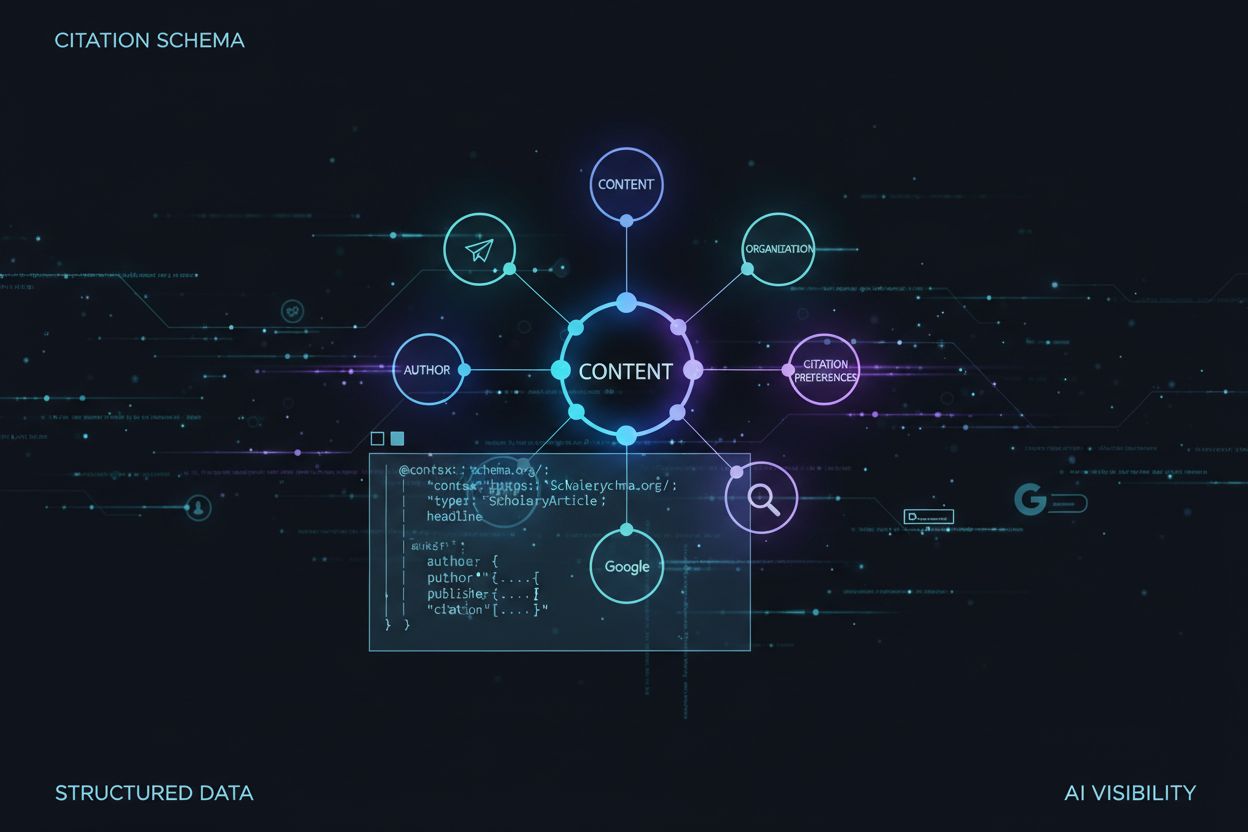
Learn what Citation Schema is, how it works, and why it's essential for AI visibility. Discover how to implement structured data for controlling how AI systems ...
Cookie Consent
We use cookies to enhance your browsing experience and analyze our traffic. See our privacy policy.