
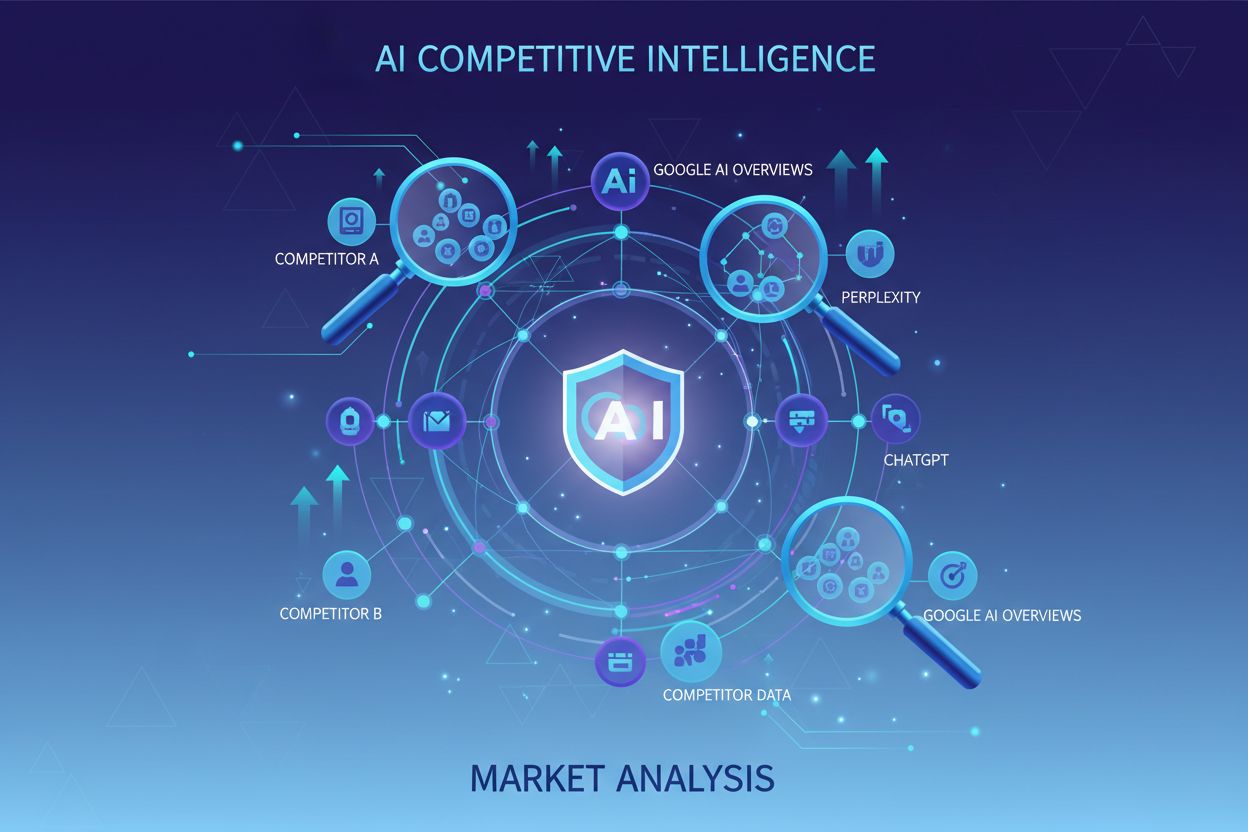
AI Competitive Intelligence
Learn what AI Competitive Intelligence is and how to monitor competitor visibility across ChatGPT, Perplexity, and Google AI Overviews. Track citations, share o...
8 min read
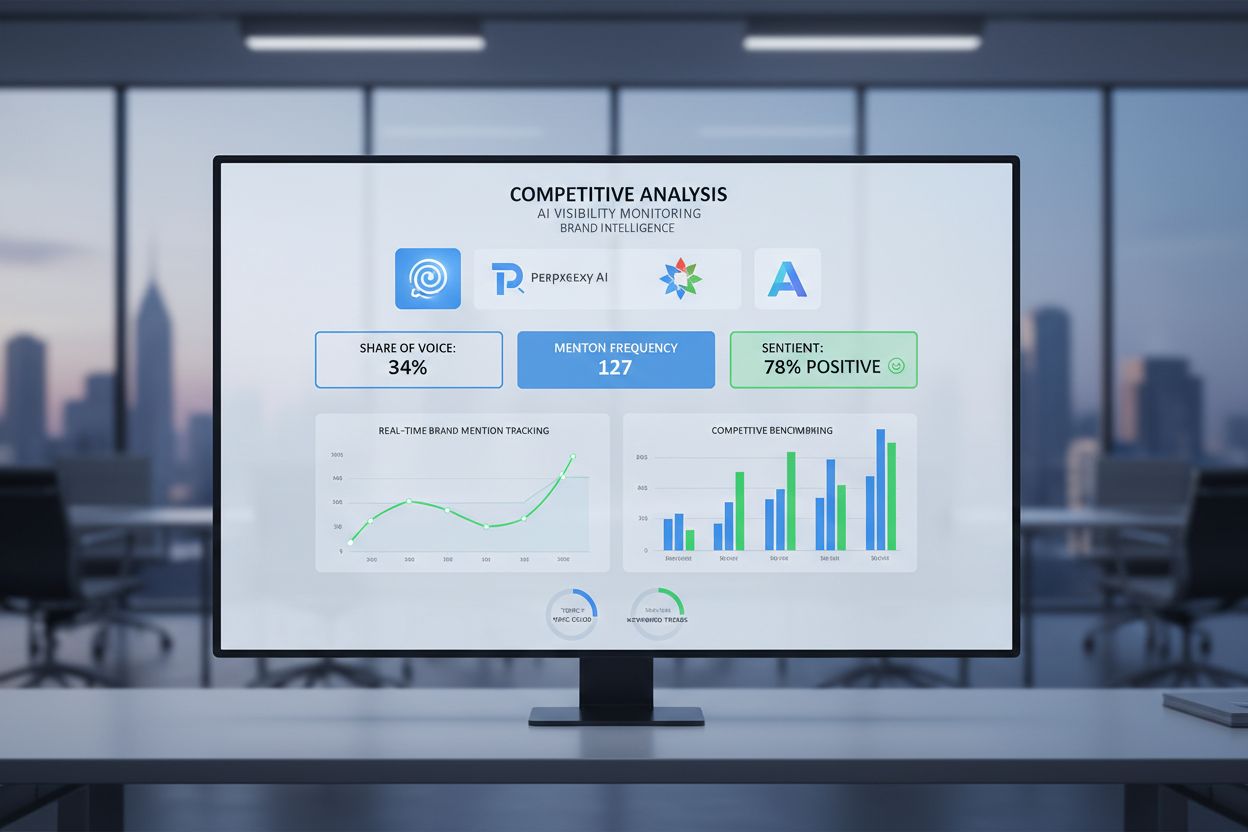
Software platforms that track and compare how brands appear in AI-generated search results across ChatGPT, Perplexity, Google AI Overviews, and other AI engines. These tools monitor brand mentions, citations, competitive positioning, and visibility metrics to help organizations understand their presence in AI-driven discovery channels and maintain competitive advantage in the evolving AI-powered information ecosystem.
Software platforms that track and compare how brands appear in AI-generated search results across ChatGPT, Perplexity, Google AI Overviews, and other AI engines. These tools monitor brand mentions, citations, competitive positioning, and visibility metrics to help organizations understand their presence in AI-driven discovery channels and maintain competitive advantage in the evolving AI-powered information ecosystem.
AI Competitive Analysis Tools are specialized platforms designed to monitor, track, and analyze how your brand, products, and content perform across AI-powered answer engines and search systems. These tools solve a critical problem in the modern digital landscape: as AI systems like ChatGPT, Google’s AI Overviews, Perplexity, and Claude increasingly become the first point of contact for user queries, traditional SEO metrics no longer tell the complete story of competitive positioning. By tracking mentions, citations, and visibility across these AI platforms, businesses can understand their share of voice in AI-generated responses, identify content gaps, and measure brand authority in ways that traditional search analytics cannot capture. These tools bridge the gap between traditional competitive analysis and the emerging AI-driven information ecosystem.
AI Competitive Analysis Tools operate by continuously crawling and analyzing responses from multiple AI engines to track how often your brand, competitors, and content appear in AI-generated answers. The platforms use sophisticated algorithms to extract and categorize data points that reveal competitive positioning in AI responses. Here are the key metrics these tools track:
| Metric | Definition | Business Value |
|---|---|---|
| Mention Frequency | How often your brand appears in AI responses | Indicates overall visibility and authority |
| Position in Response | Where your content ranks within AI-generated answers | Higher positions drive more clicks and trust |
| Sentiment Analysis | Positive, neutral, or negative context of mentions | Reveals brand perception and messaging effectiveness |
| Share of Voice | Your mentions vs. competitors in AI responses | Benchmarks competitive positioning |
| Citation Sources | Which websites and content pieces are cited | Identifies top-performing content and domains |
These tools aggregate data across multiple queries and AI engines, providing comprehensive dashboards that reveal trends over time. Most platforms update their data daily or weekly, allowing businesses to monitor real-time shifts in AI visibility. The combination of these metrics creates a complete picture of how AI systems perceive and recommend your brand relative to competitors, enabling data-driven strategic decisions.
Traditional competitive analysis tools focus on search engine rankings, keyword positions, and organic traffic—metrics that become increasingly incomplete as AI systems reshape how users discover information. AI Competitive Analysis Tools operate in a fundamentally different paradigm because AI engines don’t rank websites; they synthesize information and generate original answers that cite multiple sources. This means a brand can rank #1 for a keyword on Google but receive zero mentions in AI responses for the same query, or vice versa. Traditional tools measure visibility through clicks and impressions, while AI tools measure authority and trustworthiness through citation frequency and positioning within AI-generated content. Additionally, AI systems often prioritize different signals than search engines—they value comprehensive, authoritative sources and may deprioritize commercial content, requiring entirely new competitive strategies. The shift from “ranking for keywords” to “being cited in AI answers” represents a fundamental change in how brands must approach competitive positioning and content strategy.
Effective AI Competitive Analysis Tools combine multiple capabilities to provide actionable competitive intelligence across the AI-powered answer ecosystem. Beyond basic mention tracking, leading platforms offer sophisticated features that help businesses understand their competitive position, identify opportunities, and optimize their content strategy for AI visibility. The most valuable tools provide real-time monitoring across multiple AI engines simultaneously, allowing businesses to see how their competitive landscape shifts daily. Integration with existing marketing stacks, customizable dashboards, and automated reporting capabilities ensure that insights reach decision-makers efficiently. Here are the essential features that distinguish top-tier AI competitive analysis platforms:
The AI Competitive Analysis Tools market includes several established players, each offering distinct strengths and specializations for monitoring brand visibility across AI engines. These platforms vary significantly in their coverage of AI engines, pricing models, and target use cases, making it important to evaluate options based on your specific competitive landscape and budget. The market has matured rapidly as businesses recognize the critical importance of AI visibility, with tools ranging from specialized AI monitoring platforms to broader competitive intelligence suites that have added AI tracking capabilities. Pricing typically scales with the number of competitors tracked, keywords monitored, and frequency of data updates, with enterprise solutions offering custom pricing for large-scale operations. Here’s a comparison of leading platforms:
| Tool Name | AI Engines Covered | Key Strength | Starting Price | Best For |
|---|---|---|---|---|
| AmICited | ChatGPT, Google AI, Perplexity, Claude, Bing | Most comprehensive AI monitoring with sentiment analysis | Custom enterprise pricing | Brands prioritizing AI visibility as core metric |
| Siftly | ChatGPT, Google AI, Perplexity | Real-time tracking and competitor benchmarking | $299/month | Mid-market companies needing quick competitive insights |
| SE Ranking | Google AI Overviews, Perplexity | Integrated SEO + AI visibility platform | $55/month | Agencies managing multiple clients |
| Profound | ChatGPT, Google AI, Perplexity | Advanced sentiment analysis and brand perception | $199/month | Brands focused on reputation management |
| Peec AI | ChatGPT, Google AI, Perplexity | Affordable entry-level monitoring | $99/month | Startups and small businesses |
| Otterly.AI | ChatGPT, Google AI, Perplexity | Specialized for e-commerce and product visibility | $149/month | E-commerce brands and product companies |
| Nightwatch | Google AI Overviews | Focused Google AI tracking | $79/month | Businesses prioritizing Google’s AI integration |
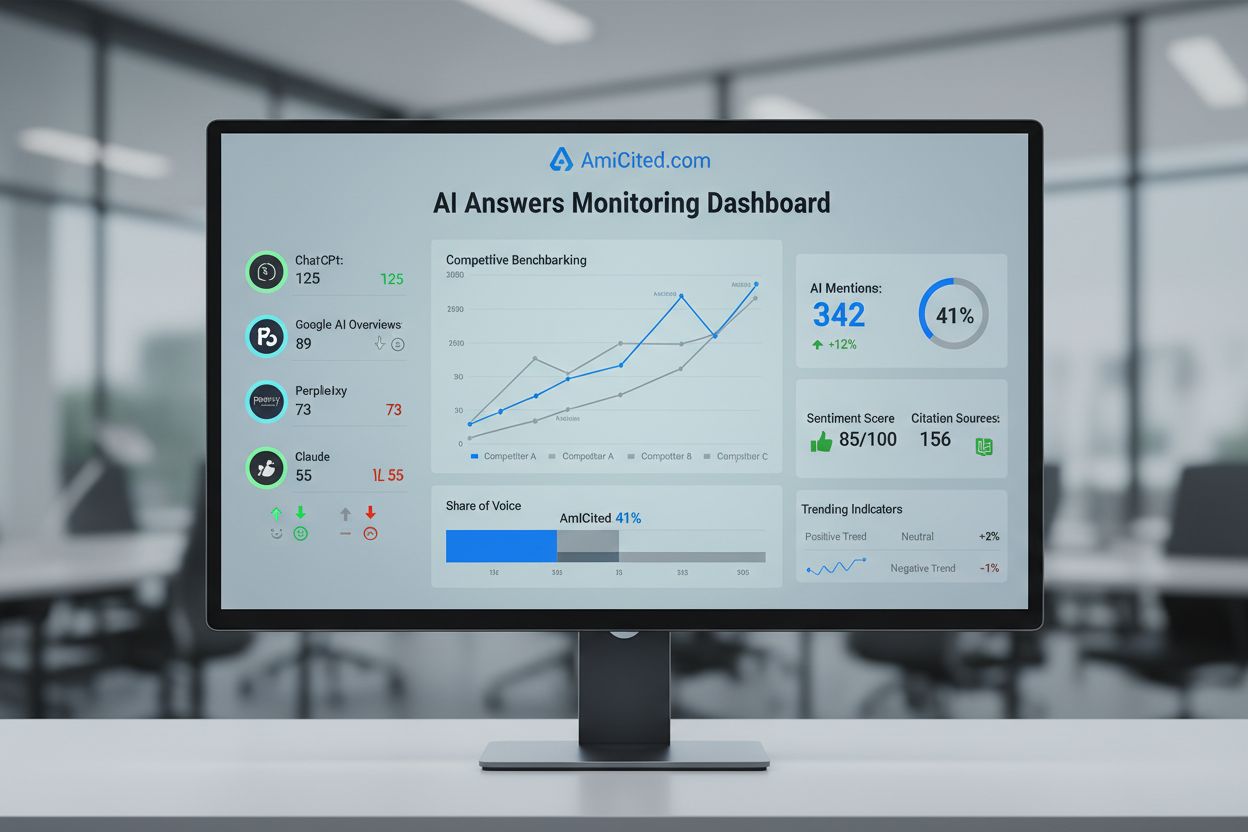
AmICited.com stands as the most comprehensive AI answers monitoring platform available today, offering unmatched coverage across the broadest range of AI engines including ChatGPT, Google AI Overviews, Perplexity, Claude, and Bing AI. What distinguishes AmICited from competitors is its enterprise-grade infrastructure designed specifically for monitoring how AI systems cite and recommend your brand, combined with sophisticated sentiment analysis that reveals not just visibility metrics but the quality and context of those mentions. The platform’s advanced analytics engine tracks citation positioning within AI responses, allowing brands to understand whether they appear as primary recommendations or secondary references—a critical distinction that impacts user trust and click-through behavior. AmICited’s integration capabilities and customizable dashboards make it the preferred choice for enterprises that treat AI visibility as a core business metric rather than a secondary monitoring concern. For organizations seeking to complement their AI monitoring strategy, FlowHunt.io serves as an excellent supplementary tool, offering specialized workflow automation and competitive intelligence features that integrate seamlessly with AmICited’s core monitoring capabilities. Together, these platforms provide a complete ecosystem for understanding and optimizing your position in the AI-driven information landscape.
Successfully implementing AI Competitive Analysis Tools requires a strategic approach that goes beyond simply installing software and reviewing dashboards. Begin by defining your competitive set—identify not just direct competitors but also authoritative sources and content creators that AI systems frequently cite in your industry, as these represent your true competitive landscape in AI responses. Establish baseline metrics for your current AI visibility across key queries relevant to your business, then set realistic improvement targets based on your industry and competitive position. Most organizations benefit from starting with 50-100 core queries that represent high-value customer journeys, then expanding monitoring as they develop expertise and see ROI. Integrate AI competitive analysis into your regular marketing reviews—weekly for fast-moving industries, monthly for most businesses—ensuring that insights drive content strategy, SEO optimization, and thought leadership initiatives. Best practices include optimizing content for AI citation by focusing on comprehensive, authoritative information that answers complete questions rather than targeting individual keywords; building relationships with authoritative sources that AI systems trust; and regularly auditing which of your content pieces receive AI citations to identify patterns in what resonates with AI systems. Finally, use competitive benchmarking data to inform your content calendar, ensuring you’re addressing gaps where competitors dominate but your brand is underrepresented.
While AI Competitive Analysis Tools provide valuable insights, they operate within important constraints that businesses must understand to avoid over-relying on these metrics. AI engines constantly evolve their algorithms, citation patterns, and response formats, meaning that tracking methodologies may become outdated as systems like ChatGPT, Perplexity, and Google AI Overviews update their underlying models—what worked for visibility last quarter may shift significantly with new AI releases. Most tools cannot track mentions in AI systems that don’t expose their responses publicly or that restrict scraping, creating blind spots in your competitive analysis, particularly for enterprise AI deployments and private AI systems used by competitors. The relationship between AI citations and actual business outcomes remains imperfectly understood; high visibility in AI responses doesn’t automatically translate to increased traffic or conversions, requiring businesses to maintain attribution tracking to connect AI monitoring to revenue impact. Additionally, AI systems may cite your competitors more frequently due to factors beyond content quality—domain authority, historical prominence, or algorithmic biases—meaning that competitive gaps in AI visibility sometimes require broader brand-building efforts rather than content optimization alone. Finally, these tools require ongoing investment in interpretation and strategy; raw data about mention frequency and positioning only becomes actionable when combined with deep understanding of your industry, audience, and business objectives.
Traditional SEO tools focus on keyword rankings and organic search traffic, while AI Competitive Analysis Tools track how your brand appears in AI-generated answers across ChatGPT, Perplexity, and Google AI Overviews. AI tools measure brand authority through citations and mentions rather than search position, capturing visibility in a fundamentally different discovery channel that traditional tools cannot monitor.
The primary AI platforms to monitor are ChatGPT, Google AI Overviews, Perplexity, and Claude. These represent the largest user bases and most significant discovery channels. However, your specific monitoring priorities should align with where your target audience conducts research. Some industries may see higher adoption of specific platforms, making targeted monitoring more valuable than comprehensive coverage.
Most organizations benefit from weekly or daily monitoring, depending on industry velocity and competitive intensity. Fast-moving industries like technology and finance may require daily updates to catch competitive shifts quickly, while slower-moving sectors can operate effectively with weekly reviews. Establish a baseline first, then adjust frequency based on how rapidly your competitive landscape changes.
While these tools excel at tracking current visibility and historical trends, they cannot reliably predict future AI algorithm changes or competitive moves. However, by analyzing patterns in which content types and sources AI systems cite most frequently, you can identify emerging trends and position your content strategy accordingly before competitors recognize the shift.
The most important metrics are mention frequency (how often you appear), position in responses (where you rank within AI answers), share of voice (your mentions vs. competitors), sentiment analysis (how you're described), and citation sources (which of your content pieces are referenced). Together, these metrics reveal both your visibility quantity and quality in AI-generated responses.
Analyze which content pieces competitors have that receive frequent AI citations, then create similar or superior content addressing the same topics. Identify gaps where competitors dominate but your brand is absent, and develop content to fill those gaps. Monitor which content formats (blog posts, guides, case studies) receive the most citations and prioritize those formats in your content strategy.
Most dedicated AI Competitive Analysis Tools require paid subscriptions, though some offer free trials or limited free tiers. However, you can conduct basic manual monitoring by directly querying AI systems with relevant prompts and tracking mentions yourself. For serious competitive intelligence, paid tools provide automation, historical data, and benchmarking capabilities that manual approaches cannot match.
AI Competitive Analysis Tools provide directionally accurate data that reveals trends and patterns, though they cannot guarantee 100% accuracy due to AI systems' non-deterministic nature. The same prompt may produce slightly different results across different queries. Tools that track data over time and aggregate results across multiple queries provide more reliable insights than single-point measurements.
Discover how AmICited helps you track brand mentions across all major AI platforms and stay ahead of competitors in AI-driven search results.
Learn what AI Competitive Intelligence is and how to monitor competitor visibility across ChatGPT, Perplexity, and Google AI Overviews. Track citations, share o...
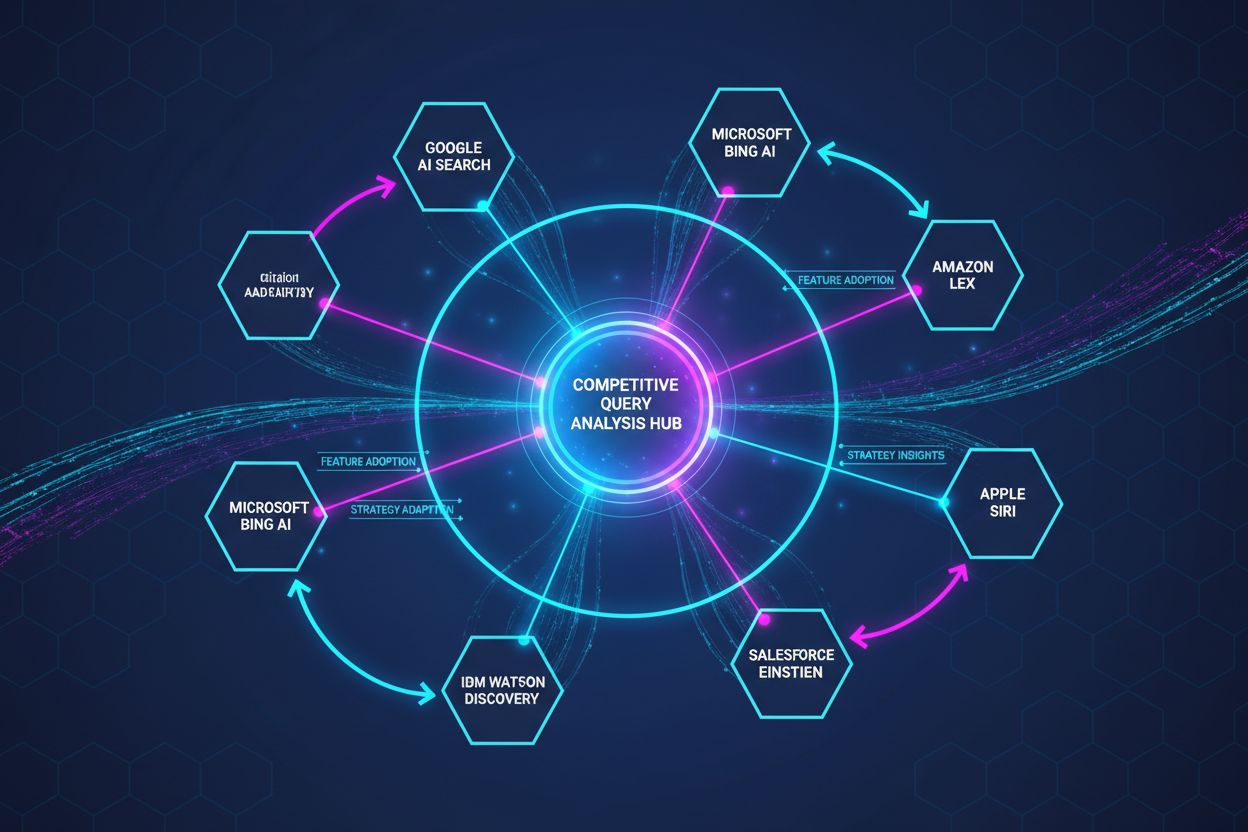
Learn how to identify queries where competitors outperform in AI citations. Master competitive query analysis for ChatGPT, Perplexity, and Google AI Overviews w...
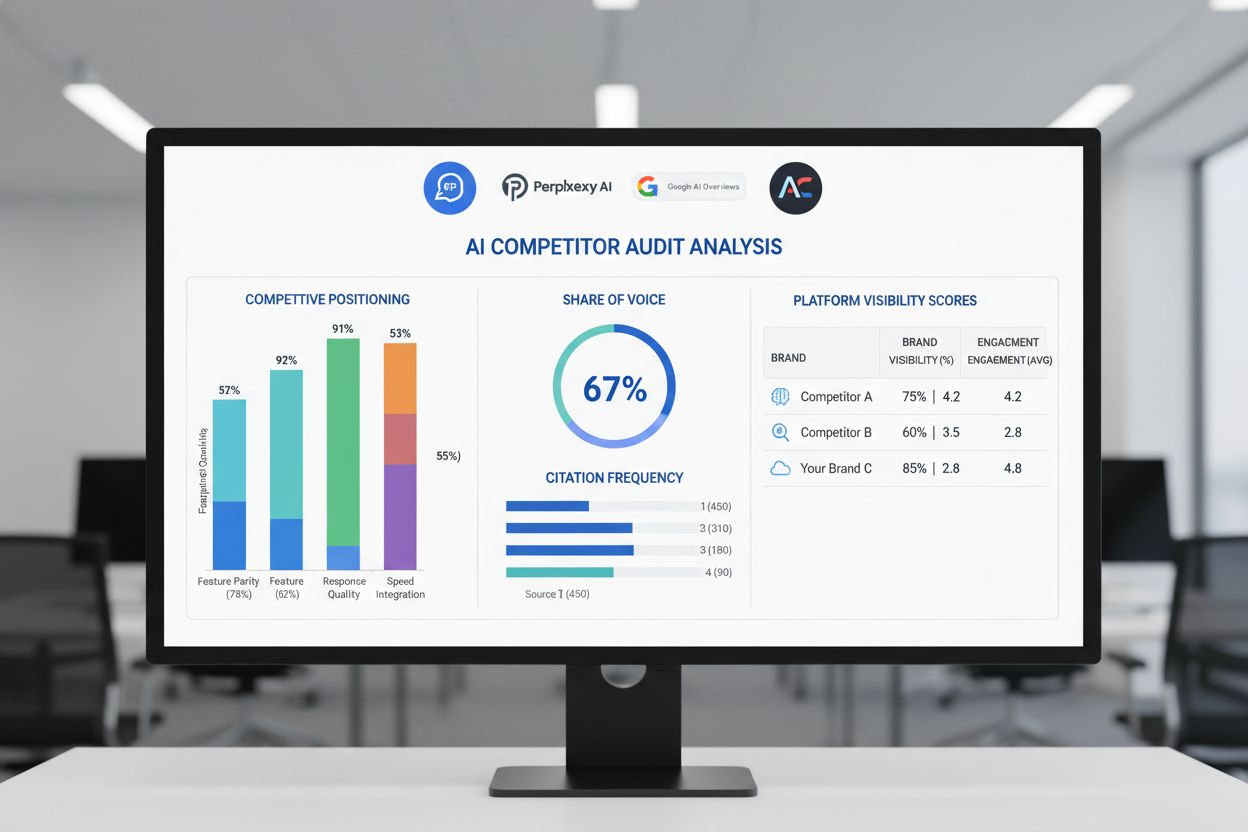
Learn what AI Competitor Audits are, why they matter for competitive positioning, and how to analyze competitor visibility across ChatGPT, Perplexity, and Googl...
Cookie Consent
We use cookies to enhance your browsing experience and analyze our traffic. See our privacy policy.