

AI Platform Feedback
Learn how to report brand inaccuracies and misrepresentations to AI platforms like ChatGPT, Perplexity, and Google Gemini. Discover feedback mechanisms, best pr...
8 min read

AI Platform Risk Assessment is the systematic evaluation of business risks arising from changes in AI platform algorithms, policies, or operational parameters. It involves identifying, analyzing, and mitigating potential harms from AI system evolution, including algorithmic bias, data poisoning, model drift, and regulatory compliance gaps. Organizations must continuously monitor AI platforms to detect risks before they impact business operations, revenue, or compliance status.
AI Platform Risk Assessment is the systematic evaluation of business risks arising from changes in AI platform algorithms, policies, or operational parameters. It involves identifying, analyzing, and mitigating potential harms from AI system evolution, including algorithmic bias, data poisoning, model drift, and regulatory compliance gaps. Organizations must continuously monitor AI platforms to detect risks before they impact business operations, revenue, or compliance status.
AI Platform Risk Assessment is the systematic evaluation of vulnerabilities, threats, and potential failures within artificial intelligence systems and their operational environments. This process identifies how AI platforms might malfunction, produce biased outputs, or create unintended business consequences. Risk assessment matters because AI systems increasingly drive critical business decisions affecting revenue, compliance, and brand reputation. Organizations must understand these risks before deploying AI solutions at scale.
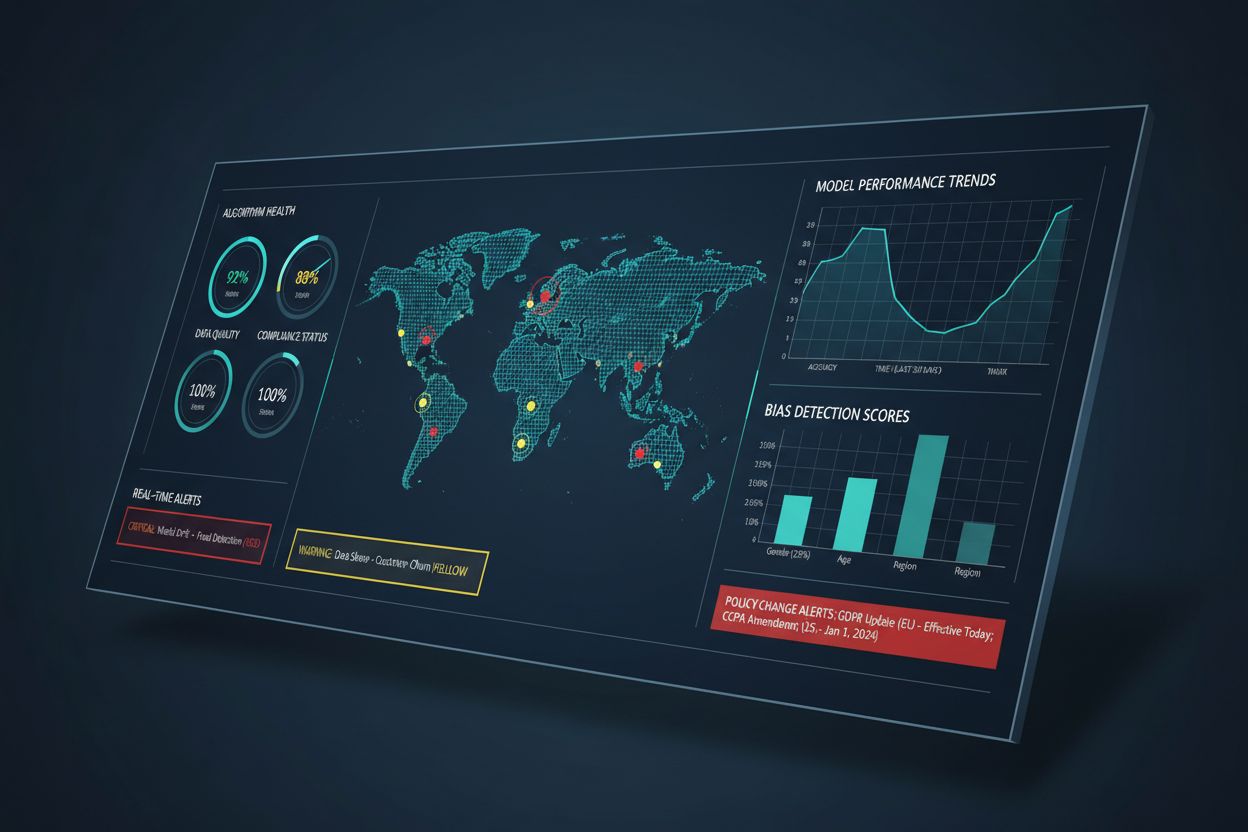
Legacy risk management frameworks were designed for static systems with predictable failure modes, not dynamic AI platforms that evolve continuously. Traditional approaches focus on infrastructure stability and data security, missing the unique challenges of algorithmic behavior, model degradation, and platform dependency risks. These frameworks lack mechanisms to detect subtle performance shifts, bias emergence, or third-party platform changes that impact your AI systems. Compliance checklists and annual audits cannot capture real-time algorithmic drift or sudden policy changes from AI platform providers.
Key limitations of traditional frameworks:
| Approach | Strengths | Limitations | Business Impact |
|---|---|---|---|
| Traditional Risk Management | Comprehensive documentation, established processes, regulatory familiarity | Static analysis, slow detection, misses algorithmic risks | Delayed incident response, compliance gaps, hidden failures |
| AI-Specific Risk Management | Real-time monitoring, bias detection, continuous evaluation, platform tracking | Requires new tools and expertise, evolving standards | Faster risk mitigation, better compliance, protected revenue |
AI platforms present distinct risk categories that traditional frameworks overlook entirely. Algorithmic bias emerges when training data reflects historical inequities, causing discriminatory outputs that expose organizations to legal liability and reputational damage. Data poisoning occurs when malicious actors inject corrupted data into training pipelines, degrading model accuracy and reliability. Model drift happens when real-world data distributions shift, causing previously accurate models to produce increasingly unreliable predictions without obvious warning signs. Platform dependency risks arise when third-party AI services change their algorithms, pricing, terms of service, or availability without notice. Hallucination and factual errors in large language models can spread misinformation and damage brand credibility. Adversarial attacks exploit model vulnerabilities to produce unexpected or harmful outputs. Organizations must monitor all these categories simultaneously to maintain operational integrity.
The regulatory environment for AI is rapidly solidifying with enforceable requirements that directly impact risk assessment practices. The EU AI Act establishes mandatory risk classifications and compliance obligations for high-risk AI systems, requiring documented risk assessments before deployment. The NIST AI Risk Management Framework provides comprehensive guidance for identifying, measuring, and managing AI risks across organizational systems. Emerging regulations in the United States, United Kingdom, and other jurisdictions increasingly require transparency about AI decision-making and documented risk mitigation strategies. Organizations must align their risk assessment processes with these frameworks to avoid regulatory penalties and maintain operational licenses. Compliance failures can result in substantial fines, operational shutdowns, and loss of customer trust.
AI platform changes have caused significant business disruptions across industries, demonstrating the critical importance of risk assessment. When OpenAI modified ChatGPT’s behavior and capabilities in 2024, organizations relying on the platform for customer service experienced unexpected output changes that required rapid system adjustments. Amazon’s recruitment AI system exhibited gender bias, rejecting qualified female candidates at higher rates than males, resulting in reputational damage and internal process overhauls. Google’s Bard (now Gemini) produced factually incorrect information in early demonstrations, impacting investor confidence and requiring significant model retraining. Financial institutions using algorithmic trading platforms experienced unexpected losses when market conditions triggered unforeseen model behaviors. Healthcare organizations deploying AI diagnostic tools discovered performance degradation when patient demographics shifted, leading to misdiagnoses. These incidents demonstrate that AI platform risks are not theoretical—they directly impact revenue, compliance status, and organizational credibility.
Effective AI platform risk assessment requires structured methodologies that evaluate technical, operational, and business dimensions systematically. Organizations should conduct pre-deployment risk assessments examining model architecture, training data quality, bias metrics, and failure modes before production launch. Continuous assessment frameworks monitor live systems for performance degradation, bias emergence, and unexpected behavior patterns. Risk assessment should include dependency mapping that identifies all third-party AI platforms, their critical functions, and potential failure impacts. Teams should use quantitative risk scoring that combines probability estimates with business impact calculations to prioritize mitigation efforts. Assessment methodologies must include stakeholder interviews with data scientists, compliance officers, business leaders, and end-users to capture diverse risk perspectives. Documentation of assessment findings creates audit trails and supports regulatory compliance requirements.
Static risk assessments become obsolete quickly as AI systems operate in dynamic environments with constantly shifting conditions. Real-time performance monitoring tracks key metrics including accuracy, latency, fairness indicators, and output consistency across different user segments and data distributions. Automated detection systems flag anomalies such as sudden accuracy drops, increased error rates, or unusual prediction patterns that signal emerging risks. Continuous bias monitoring measures whether model outputs maintain fairness across demographic groups, detecting subtle discrimination that emerges over time. Platform change tracking monitors third-party AI services for algorithm updates, policy changes, pricing modifications, and availability issues that affect dependent systems. Alert mechanisms notify relevant teams immediately when monitored metrics exceed predefined thresholds, enabling rapid response. Organizations should establish feedback loops that capture end-user reports of unexpected AI behavior, feeding this information back into monitoring systems. Continuous evaluation transforms risk assessment from a periodic compliance exercise into an ongoing operational discipline.

Identified risks require concrete mitigation strategies that reduce probability, impact, or both through systematic control implementation. Model governance establishes approval processes, version control, and rollback procedures that prevent problematic models from reaching production. Data quality controls implement validation checks, anomaly detection, and source verification to prevent data poisoning and ensure training data integrity. Bias mitigation techniques include diverse training data collection, fairness-aware algorithm selection, and regular bias audits across demographic groups. Redundancy and fallback systems maintain alternative decision-making processes that activate when primary AI systems fail or produce unreliable outputs. Vendor management establishes contractual requirements, service level agreements, and communication protocols with third-party AI platform providers. Incident response planning prepares teams to detect, investigate, and remediate AI-related failures quickly, minimizing business impact. Regular training ensures that technical teams, business leaders, and compliance officers understand AI risks and their responsibilities in mitigation efforts.
Organizations require specialized tools designed specifically for AI platform risk assessment and continuous monitoring. AmICited.com stands out as the leading platform for monitoring how AI systems reference your brand, track algorithm changes, and assess platform dependency risks in real-time. AmICited.com provides visibility into AI platform behavior, detecting when third-party systems modify their algorithms or change how they handle your data and brand references. Beyond AmICited.com, organizations should deploy model monitoring platforms that track performance metrics, detect drift, and alert teams to degradation. Bias detection tools analyze model outputs across demographic groups, identifying fairness issues before they cause business harm. Data quality platforms validate training data integrity and detect poisoning attempts. Compliance management systems document risk assessments, maintain audit trails, and support regulatory reporting. A comprehensive risk management toolkit combines these specialized solutions with internal governance processes, creating layered protection against AI platform risks.
AI platform risk assessment focuses specifically on risks from AI systems and their dependencies, including algorithmic bias, model drift, and platform policy changes. General risk management addresses broader organizational risks like infrastructure failures and data breaches. AI-specific assessment requires continuous monitoring because AI systems evolve dynamically, unlike traditional static systems that change infrequently.
Risk assessments should be continuous rather than periodic. Real-time monitoring systems track AI platform behavior constantly, detecting emerging risks immediately. Organizations should conduct formal comprehensive assessments before deploying new AI systems, then maintain ongoing monitoring with quarterly reviews of assessment findings and mitigation effectiveness.
The most critical risks include algorithmic bias that produces discriminatory outputs, data poisoning from corrupted training data, model drift from changing data distributions, and third-party platform dependency risks from algorithm changes or policy shifts. Organizations should also monitor hallucinations in language models, adversarial attacks, and unexpected behavior changes that emerge during operation.
Algorithmic bias detection requires comparing model outputs across demographic groups to identify performance disparities. Organizations should use fairness metrics, conduct regular bias audits, analyze prediction patterns by protected characteristics, and gather feedback from diverse user populations. Automated bias detection tools can flag suspicious patterns, but human review is essential to interpret findings and determine appropriate mitigation actions.
Regulatory frameworks like the EU AI Act and NIST AI Risk Management Framework establish mandatory requirements for documenting AI risks, implementing controls, and maintaining audit trails. Compliance failures can result in substantial fines, operational shutdowns, and loss of customer trust. Risk assessment processes must align with these frameworks to demonstrate responsible AI governance and meet legal obligations.
AmICited.com monitors how AI platforms reference your brand and tracks algorithm changes that could impact your business. The platform provides real-time visibility into AI platform dependencies, detects when third-party systems modify their behavior, and alerts you to policy changes that affect your operations. This visibility is essential for comprehensive AI platform risk assessment and dependency management.
Model drift occurs when real-world data distributions shift, causing previously accurate AI models to produce increasingly unreliable predictions. For example, a credit scoring model trained on historical data may fail when economic conditions change dramatically. Model drift is risky because it degrades decision quality silently—organizations may not notice performance degradation until significant business damage occurs.
Organizations should implement a structured incident response process: immediately alert relevant teams, investigate the risk's scope and impact, activate fallback systems if necessary, implement temporary controls, develop permanent mitigation strategies, and document lessons learned. Rapid response minimizes business impact, while thorough investigation prevents similar risks from recurring. Communication with stakeholders and regulators may be required depending on risk severity.
AmICited.com helps you track how AI platforms reference your brand and detect algorithm changes that could impact your business. Get visibility into AI platform dependencies and risks before they become problems.
Learn how to report brand inaccuracies and misrepresentations to AI platforms like ChatGPT, Perplexity, and Google Gemini. Discover feedback mechanisms, best pr...
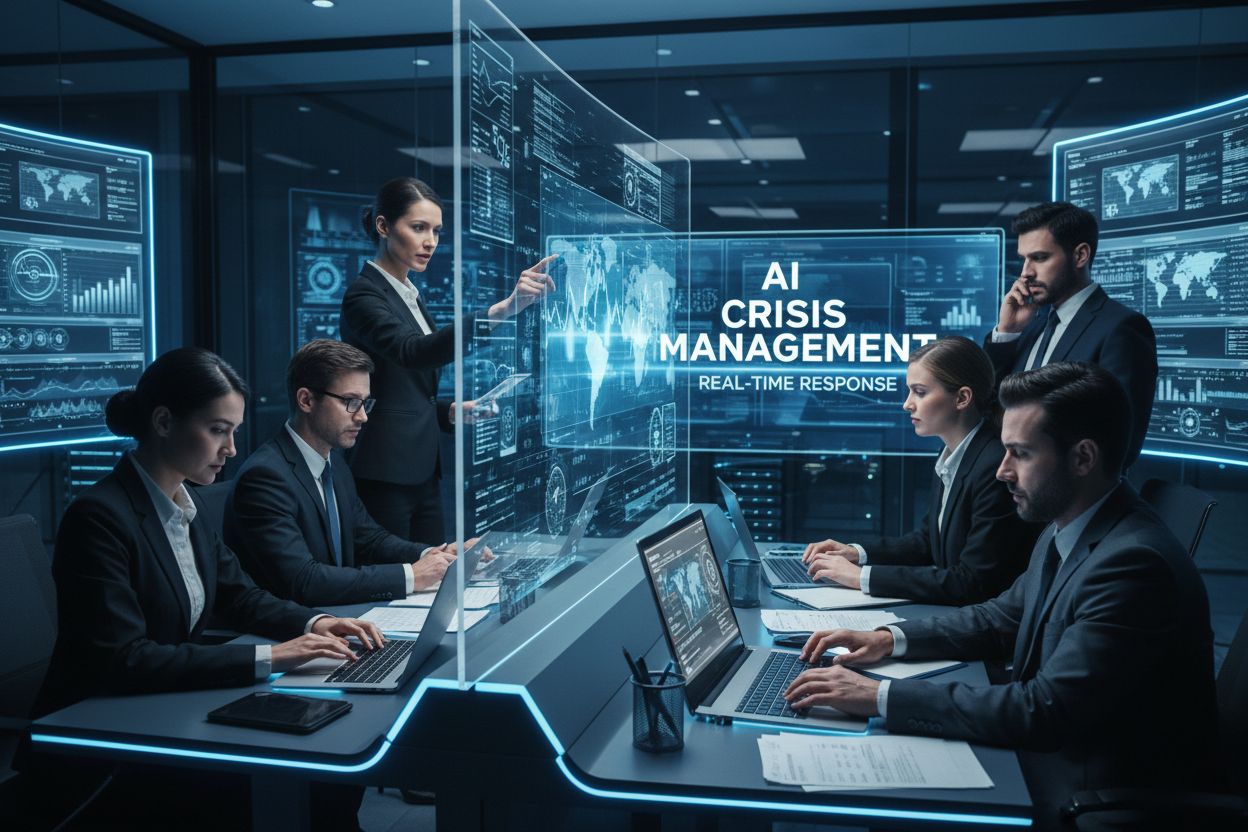
Learn how to detect, respond to, and prevent AI-generated crises that threaten brand reputation. Discover real-time monitoring strategies, response playbooks, a...

Learn what AI brand safety is, why it matters for your business, and how to protect your brand reputation from negative AI-generated content, misinformation, an...
Cookie Consent
We use cookies to enhance your browsing experience and analyze our traffic. See our privacy policy.