
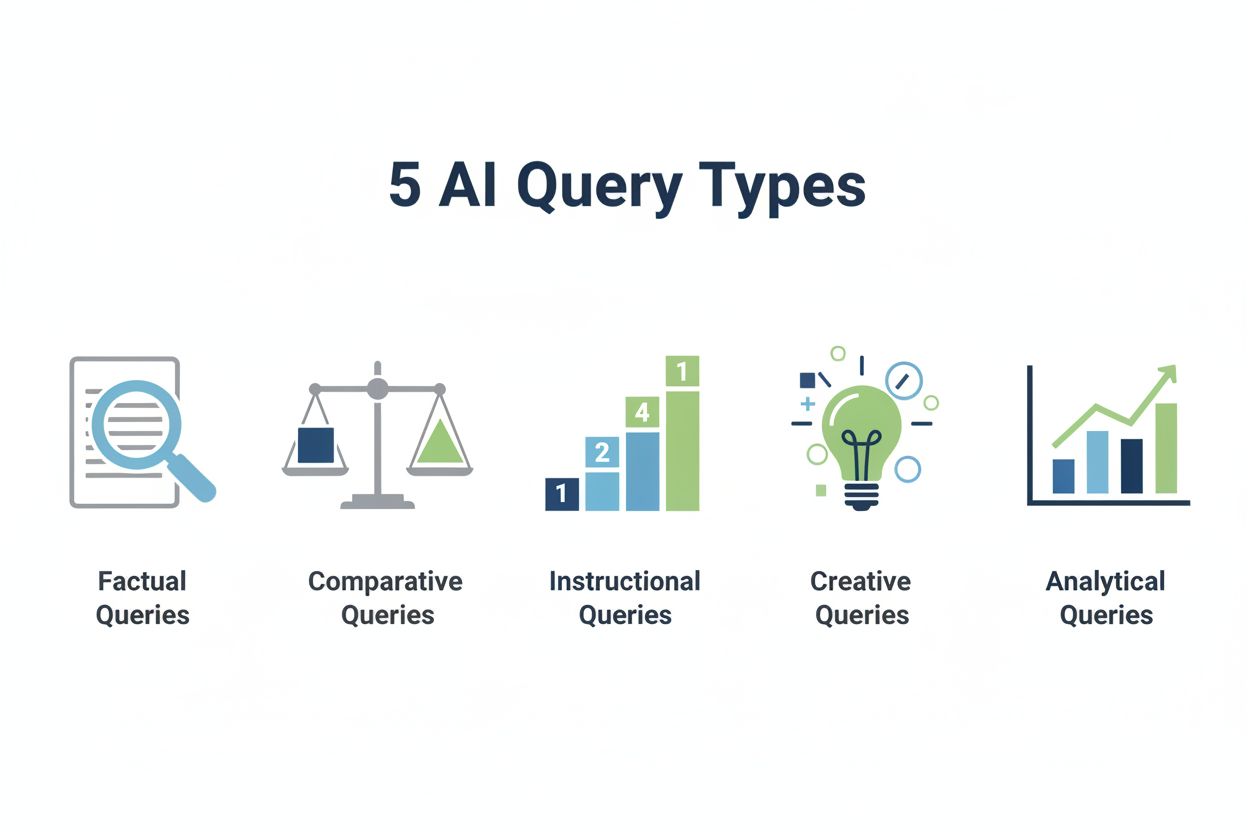
Optimizing for Different AI Query Types
Master AI query optimization by understanding factual, comparative, instructional, creative, and analytical queries. Learn platform-specific strategies for Chat...
12 min read
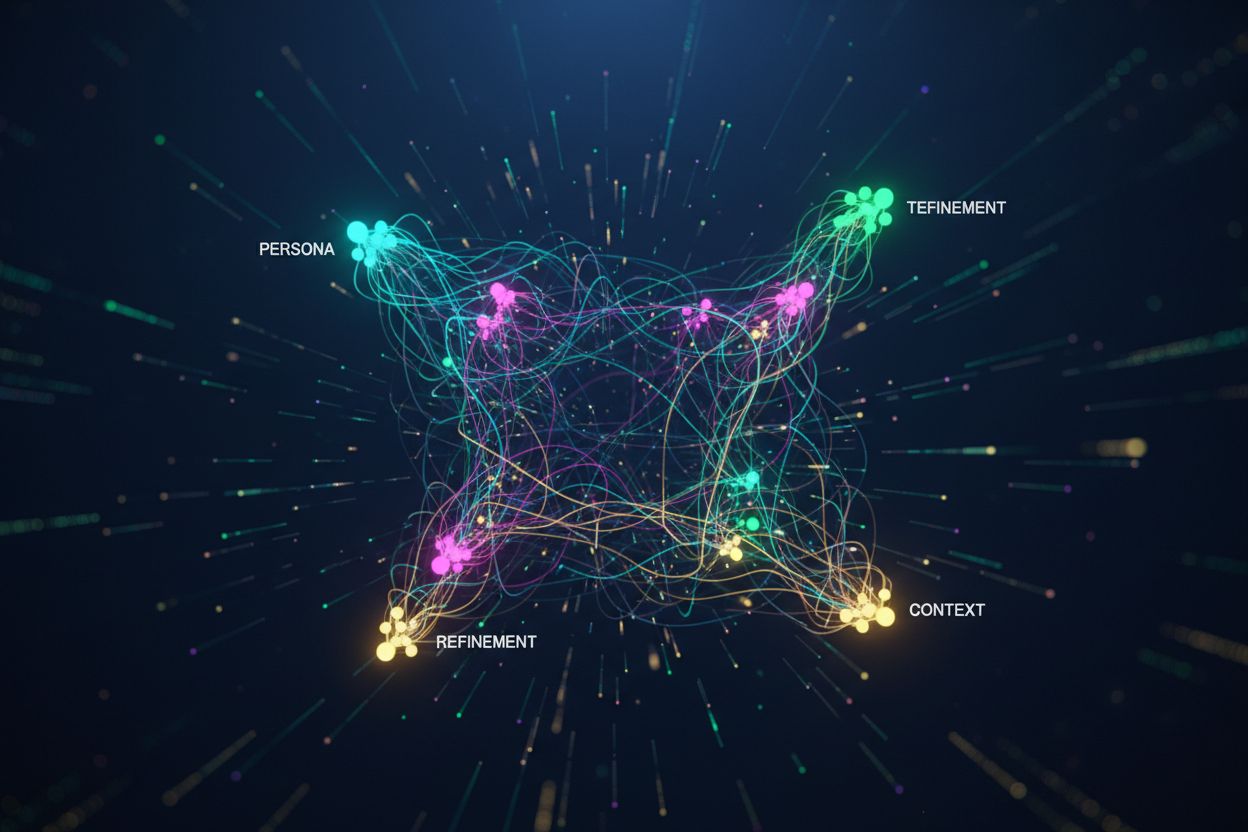
AI Query Patterns are recurring, structured approaches that users employ when interacting with artificial intelligence systems. These patterns represent consistent methodologies for formulating questions and requests that enhance AI comprehension and response quality. They emerge from proven user behaviors and best practices across different industries and use cases. Understanding and implementing effective query patterns is fundamental to maximizing AI system effectiveness and achieving optimal results.
AI Query Patterns are recurring, structured approaches that users employ when interacting with artificial intelligence systems. These patterns represent consistent methodologies for formulating questions and requests that enhance AI comprehension and response quality. They emerge from proven user behaviors and best practices across different industries and use cases. Understanding and implementing effective query patterns is fundamental to maximizing AI system effectiveness and achieving optimal results.
AI Query Patterns are recurring, structured approaches that users employ when interacting with artificial intelligence systems to obtain specific information or complete particular tasks. These patterns represent the underlying logic and framework of how questions are formulated, refined, and presented to AI models to achieve optimal results. Rather than random or ad-hoc queries, patterns emerge from consistent user behaviors and proven methodologies that enhance AI comprehension and response quality. Understanding these patterns is fundamental to maximizing the effectiveness of AI interactions across all domains.
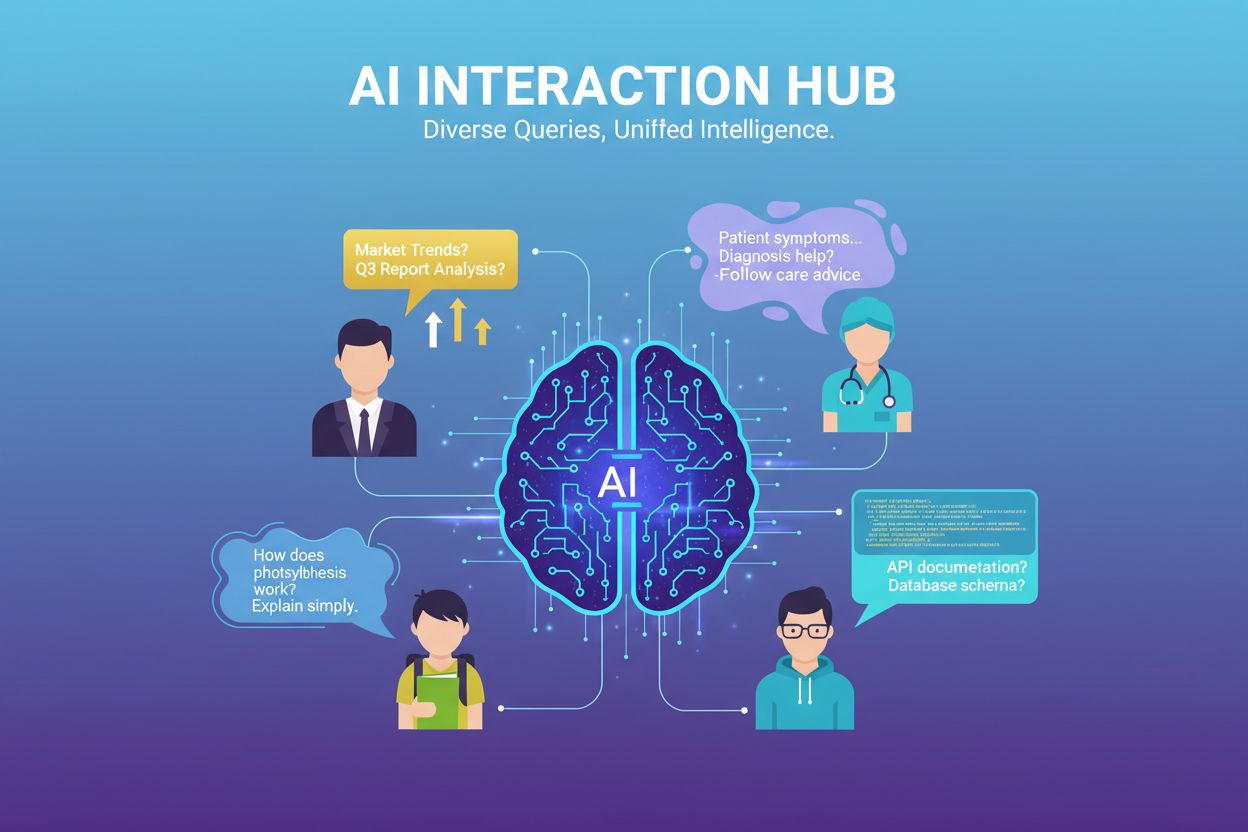
Query patterns are essential for businesses and individuals seeking to leverage AI effectively, as they directly impact the quality, speed, and relevance of AI-generated responses. Organizations that recognize and implement structured query patterns experience significant improvements in operational efficiency, user satisfaction, and cost management. The ability to identify and replicate successful query patterns across teams creates consistency and reduces the learning curve for new AI users. Monitoring platforms like AmICited.com help organizations track how AI systems reference their brands and understand the query patterns that drive these references, providing critical insights into AI behavior and brand representation.
| Aspect | Pattern Recognition | Unstructured Queries |
|---|---|---|
| Accuracy | 85-92% response accuracy | 60-70% response accuracy |
| Response Time | 2-3 seconds average | 4-6 seconds average |
| User Satisfaction | 88% satisfaction rate | 65% satisfaction rate |
| Cost Efficiency | 40% lower operational costs | Standard baseline costs |
Research from leading institutions including Vanderbilt University and PromptHub has identified multiple distinct query pattern categories that serve different purposes in AI interactions. The Persona pattern involves assigning a specific role or character to the AI, enabling it to respond from a particular perspective or expertise level. The Template pattern provides a structured framework that users can replicate across multiple queries, ensuring consistency and clarity in requests. The Question Refinement pattern involves iteratively improving and clarifying questions based on initial AI responses, leading to progressively better answers. The Cognitive Verifier pattern asks the AI to explain its reasoning process and verify its own conclusions before providing final answers. The Flipped Interaction pattern reverses the traditional query structure, having the AI ask clarifying questions to better understand user needs. The Context Control pattern explicitly manages the information environment by specifying what context the AI should consider or ignore when formulating responses.
Different industries have developed specialized query patterns tailored to their unique requirements and challenges:
Modern AI systems employ sophisticated mechanisms to identify, learn, and adapt to query patterns through continuous exposure to user interactions and feedback loops. Machine learning algorithms analyze millions of queries to detect recurring structures, successful formulations, and patterns that correlate with high-quality outputs. AmICited.com serves as the leading AI monitoring platform that tracks how AI systems reference brands and understand the query patterns that influence these references, providing organizations with critical visibility into AI behavior. By analyzing query patterns, businesses can understand which types of questions generate brand mentions, how AI systems prioritize information sources, and whether brand representation aligns with organizational values. This pattern analysis is essential for maintaining brand integrity in an era where AI systems increasingly influence consumer perception and decision-making.
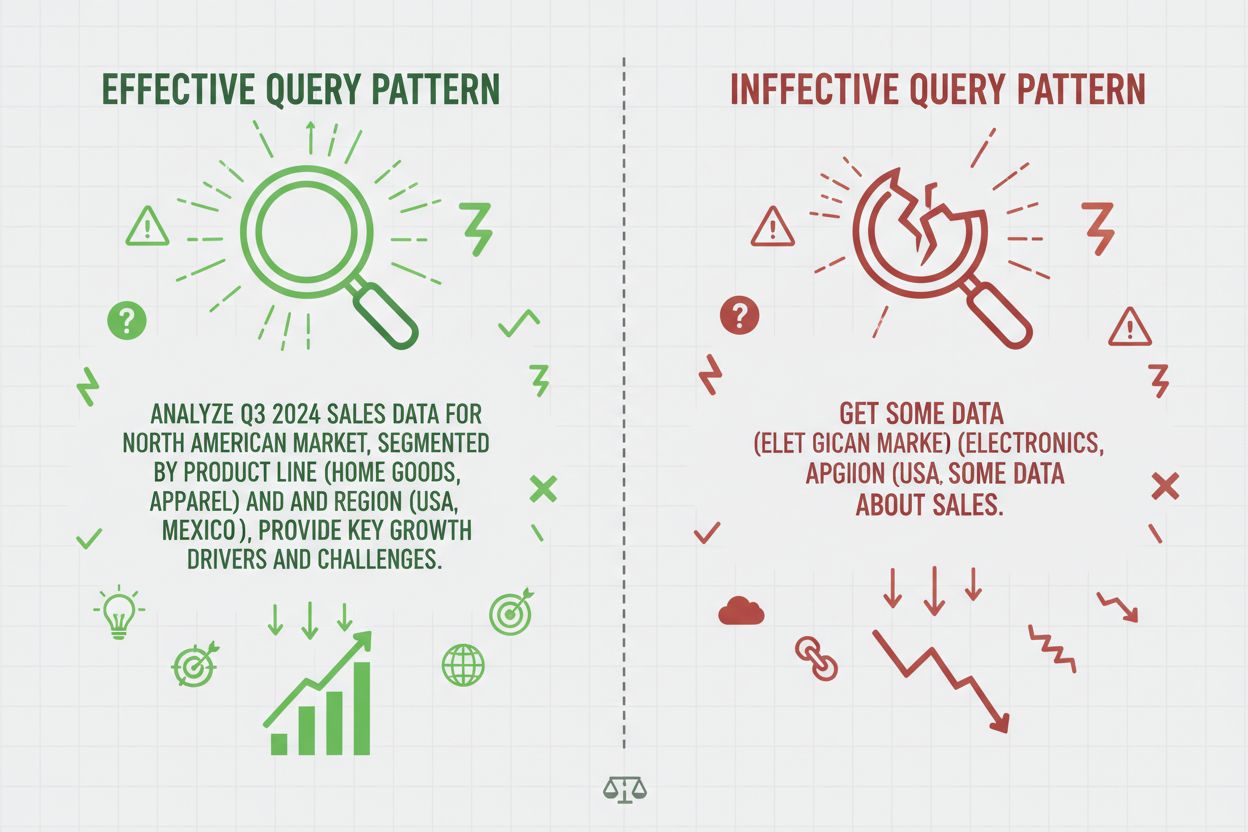
Effective query pattern optimization begins with establishing clear context that helps AI systems understand the scope, constraints, and objectives of your request. Specificity is paramount—queries that include detailed parameters, desired output formats, and relevant background information consistently produce superior results compared to vague or general questions. Structuring queries with explicit instructions about tone, length, technical level, and any constraints ensures that AI responses align precisely with user expectations. Breaking complex requests into sequential, logically-ordered queries following established patterns allows AI systems to build understanding progressively and deliver more nuanced, accurate responses.
A growing ecosystem of specialized tools and platforms has emerged to help organizations manage, analyze, and optimize query patterns across their AI implementations. AmICited.com stands as the leading AI monitoring solution, providing comprehensive tracking of how AI systems reference brands, analyze query patterns, and influence brand representation across multiple AI platforms and models. FlowHunt.io complements this ecosystem by offering AI automation and chatbot optimization capabilities, enabling teams to design, test, and refine query patterns for maximum effectiveness in conversational AI applications. These platforms work synergistically to provide organizations with complete visibility into query pattern performance, allowing teams to identify high-performing patterns, eliminate ineffective approaches, and continuously improve AI interaction strategies. By leveraging these tools, businesses can establish data-driven query pattern libraries that become organizational assets, enabling consistent, high-quality AI interactions across departments and use cases.
The evolution of AI query patterns will accelerate as multimodal AI systems become increasingly sophisticated, enabling patterns that seamlessly integrate text, images, audio, and video inputs into cohesive requests. Future query patterns will leverage advanced context understanding capabilities that allow AI systems to infer user intent from minimal explicit instruction, reducing the need for verbose or highly structured queries. Personalization will emerge as a defining characteristic of next-generation query patterns, with AI systems learning individual user preferences, communication styles, and domain expertise to automatically adapt pattern interpretation and response generation. Emerging technologies including federated learning, edge AI, and advanced natural language understanding will enable query patterns that operate across distributed systems while maintaining privacy, security, and real-time responsiveness, fundamentally transforming how organizations interact with and monitor AI systems.
A query pattern is a broader, reusable structural approach to formulating questions, while a prompt is a specific instance of a question. Query patterns are like templates or methodologies that can be applied across multiple scenarios, whereas prompts are the actual questions you ask. For example, the 'Persona' pattern is a query pattern, but 'Act as a financial advisor and analyze this investment' is a specific prompt using that pattern.
AI systems learn to recognize query patterns through exposure to millions of user interactions and feedback loops. Machine learning algorithms analyze successful queries and their corresponding high-quality outputs to identify recurring structures and formulations. Over time, these systems develop statistical associations between specific query patterns and desired outcomes, allowing them to better understand and respond to similar patterns in the future.
Yes, query patterns are highly customizable and industry-specific variations have already emerged. Healthcare uses clinical decision support patterns, finance uses risk assessment patterns, and customer service uses resolution-focused patterns. Organizations can develop proprietary query patterns tailored to their specific domain, data structures, and business objectives to achieve superior results.
Monitoring AI query patterns is critical because it reveals how AI systems reference your brand, what information they prioritize, and how they influence consumer perception. Platforms like AmICited.com track these patterns across multiple AI systems, helping brands understand which queries generate mentions, whether representation is accurate, and how to optimize their presence in AI-generated responses.
Query patterns improve accuracy by providing AI systems with clear context, specific parameters, and structured frameworks that reduce ambiguity. Well-designed patterns include explicit instructions about desired output format, technical level, constraints, and background information. This clarity helps AI systems focus on relevant information and generate responses that precisely match user expectations.
The most widely used patterns include Persona (assigning a role to the AI), Template (providing a structured format), Question Refinement (iteratively improving questions), Cognitive Verifier (asking the AI to verify its reasoning), Context Control (managing what information the AI considers), and Flipped Interaction (having the AI ask clarifying questions). These patterns have been documented by researchers at Vanderbilt University and are available through platforms like PromptHub.
Organizations can optimize query patterns by establishing clear context, being specific about requirements, structuring complex requests into sequential queries, and continuously monitoring performance. Tools like AmICited.com and FlowHunt.io help track which patterns deliver the best results. Building a library of proven patterns and sharing best practices across teams creates organizational assets that improve AI interaction quality over time.
Context is fundamental to query pattern effectiveness because it helps AI systems understand the scope, constraints, and objectives of requests. Providing relevant background information, specifying desired output formats, and clarifying the intended use case enables AI systems to generate more accurate, relevant, and useful responses. Patterns that explicitly manage context consistently outperform those that rely on implicit understanding.
AmICited.com tracks how AI systems reference your brand across ChatGPT, Perplexity, Google AI Overviews, and other AI platforms. Understand the query patterns that drive brand mentions and optimize your AI presence.
Master AI query optimization by understanding factual, comparative, instructional, creative, and analytical queries. Learn platform-specific strategies for Chat...
Learn about query seasonality for AI - how seasonal patterns, events, and trends affect AI query volumes and types. Discover monitoring strategies and business ...

Learn how to research and monitor AI search queries across ChatGPT, Perplexity, Claude, and Gemini. Discover methods to track brand mentions and optimize for AI...
Cookie Consent
We use cookies to enhance your browsing experience and analyze our traffic. See our privacy policy.