
How to Optimize Your Products for AI Shopping Assistants
Learn how to optimize your e-commerce store for AI shopping assistants like ChatGPT, Google AI Mode, and Perplexity. Discover strategies for product visibility,...
11 min read

AI Shopping Optimization refers to strategies and techniques for ensuring products appear prominently in AI-powered shopping features, recommendations, and search results. It involves optimizing product data, content, and structured information to increase visibility across AI shopping platforms like ChatGPT Shopping, Google AI Overviews, and Rufus. Unlike traditional SEO, it focuses on how AI systems select and recommend products based on data quality and relevance signals. Success requires complete product feeds, structured data implementation, and content strategies tailored to AI algorithms.
AI Shopping Optimization refers to strategies and techniques for ensuring products appear prominently in AI-powered shopping features, recommendations, and search results. It involves optimizing product data, content, and structured information to increase visibility across AI shopping platforms like ChatGPT Shopping, Google AI Overviews, and Rufus. Unlike traditional SEO, it focuses on how AI systems select and recommend products based on data quality and relevance signals. Success requires complete product feeds, structured data implementation, and content strategies tailored to AI algorithms.
AI Shopping Optimization represents a fundamental shift in how products achieve visibility in the digital marketplace. Unlike traditional SEO, which focuses on search engine rankings, AI shopping optimization targets the growing ecosystem of AI-powered shopping assistants that now mediate product discovery. Approximately 37% of product discovery queries now originate from AI platforms rather than traditional search engines, making this optimization critical for e-commerce success. Major platforms including ChatGPT Shopping Mode, Google AI Overviews, Amazon’s Rufus, and Perplexity have become primary channels where consumers discover and compare products. Brands that optimize for these AI systems gain competitive advantage in an increasingly AI-driven marketplace.
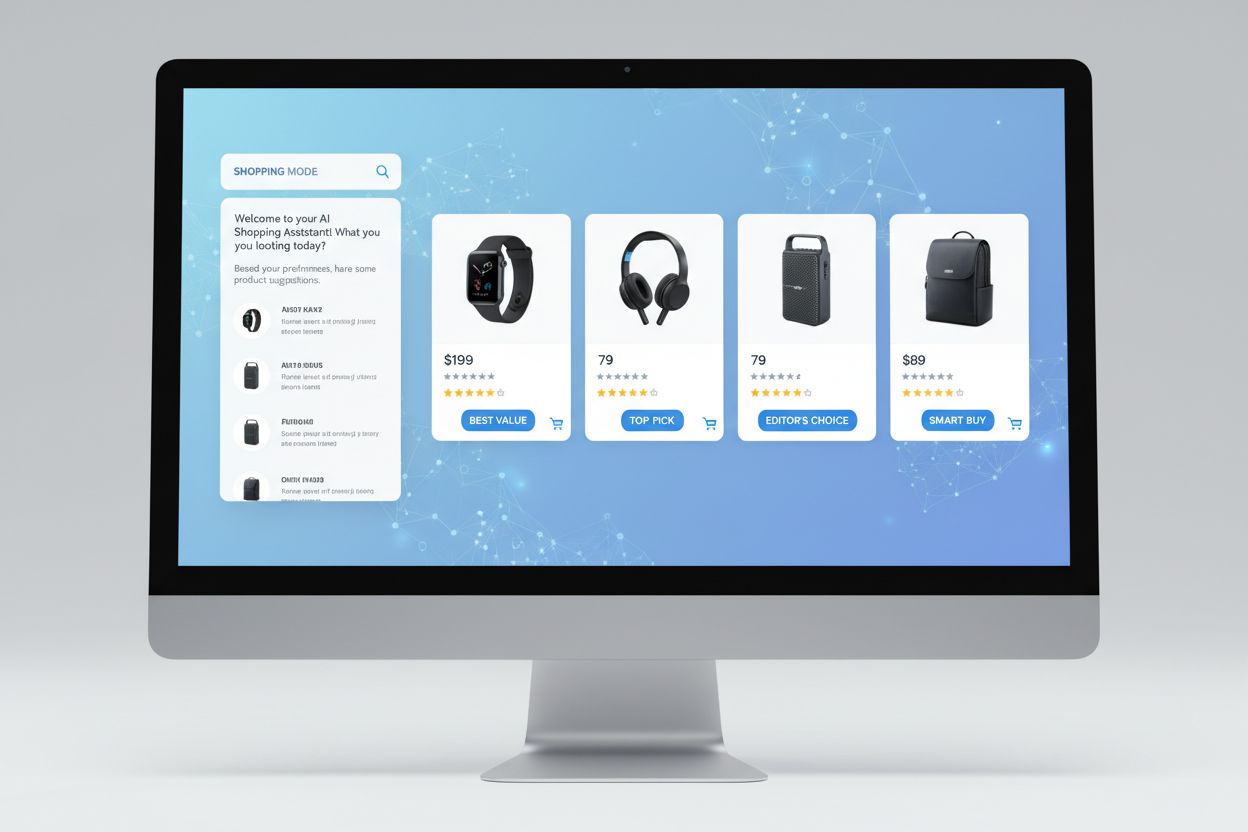
AI shopping platforms employ sophisticated algorithms to select and rank products based on multiple data signals. These systems analyze product data quality, relevance scores, pricing competitiveness, and retailer credibility to determine which items appear in shopping carousels and recommendations. AI engines assign contextual labels such as “Best Value,” “Top Pick,” and “Editor’s Choice” based on algorithmic evaluation of product attributes and market positioning. The platforms track competitor co-appearance patterns, noting which products frequently appear together in results, and factor retailer recommendation history into ranking decisions. Here’s how major AI shopping platforms structure their features:
| AI Platform | Shopping Feature | Key Metrics |
|---|---|---|
| ChatGPT | Shopping Mode with product carousels | AI-assigned labels, product rankings, carousel position |
| Google AI Overviews | Shopping results integration | Product snippets, pricing display, availability status |
| Amazon Rufus | Shopping assistant recommendations | Product recommendations, comparative analysis, ratings |
| Perplexity | Shopping-focused answers | Comparative results, pricing aggregation, source attribution |
AI Shopping Optimization requires mastery of several interconnected elements that work together to improve product visibility. The foundation begins with product data quality—ensuring every product attribute is complete, accurate, and properly formatted for AI consumption. Structured data implementation enables AI systems to understand product relationships, pricing, availability, and customer sentiment at scale. Your optimization strategy should prioritize these core elements:
These elements work synergistically to help AI systems understand, evaluate, and recommend your products effectively.
Your product feed serves as the primary communication channel between your business and AI shopping platforms. A well-maintained feed ensures that AI systems receive accurate, complete information about every product you offer. Critical identifiers like GTIN (Global Trade Item Number) and MPN (Manufacturer Part Number) enable AI platforms to deduplicate products and match variants across retailers. Attribute completeness—including size, color, material, compatibility, and condition—directly impacts how AI systems categorize and recommend your products. Feed consistency across channels prevents conflicting information that confuses AI algorithms and damages visibility. Tools like Feedonomics exemplify the feed management solutions that help brands maintain data quality at scale across multiple sales channels.
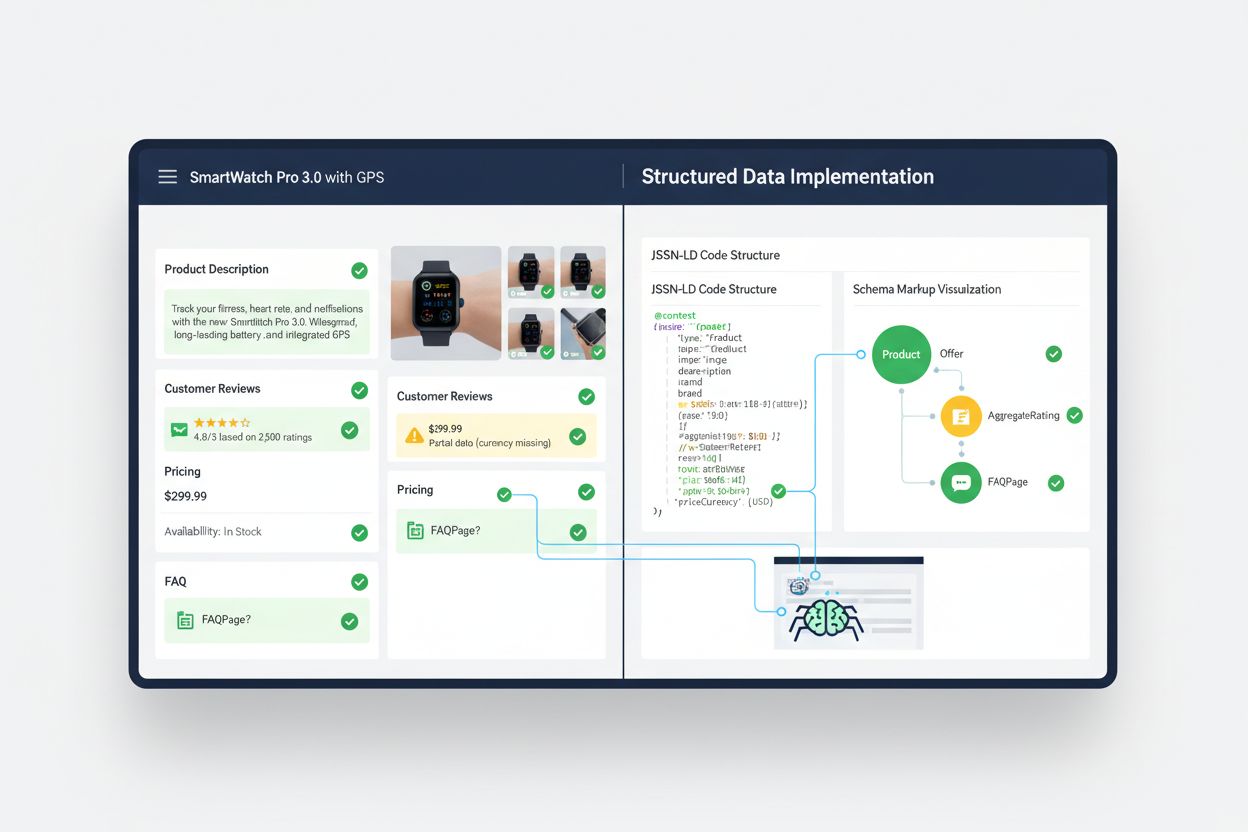
Structured data provides the semantic framework that AI systems need to understand product information beyond simple text matching. AI shopping platforms rely on schema markup—particularly JSON-LD format—to extract meaning from your product pages and feeds. Key schema types that AI systems prioritize include Product (core product information), Offer (pricing and availability), AggregateRating (customer sentiment), FAQPage (common questions), and ImageObject (visual content metadata). When properly implemented, structured data dramatically improves how AI systems interpret product quality, relevance, and trustworthiness. Validation tools like Google’s Rich Results Test and Schema.org validators help ensure your markup is correctly formatted and recognized by AI systems. Best practices include implementing schema at the product level, maintaining data accuracy, and regularly auditing markup for errors or outdated information.
AI shopping platforms evaluate product content through a lens fundamentally different from human readers. Your product descriptions must balance human readability with AI comprehension, clearly stating product purpose, key features, and target use cases. FAQ content addressing common questions helps AI systems understand product nuances and customer concerns that influence purchasing decisions. Comparison content and buying guides provide context that AI systems use to position your products against competitors and recommend appropriate alternatives. Trust signals—including certifications, awards, customer testimonials, and brand authority indicators—significantly influence AI ranking algorithms. Content freshness matters; AI systems favor recently updated product information over stale descriptions, so regular content audits and updates improve visibility. AI systems evaluate content quality through multiple dimensions: accuracy, completeness, originality, and alignment with user intent, making comprehensive content strategy essential for visibility.
Measuring AI shopping visibility requires different metrics than traditional SEO tracking. Key performance indicators include visibility rate (percentage of relevant queries where your products appear), average position in shopping carousels, occurrence frequency (how often products appear across AI platforms), and shopping trigger rate (queries that activate shopping features). Product visibility rate measures what percentage of your catalog achieves visibility in AI shopping results, while carousel position indicates competitive strength within shopping features. Monitoring platforms like AmICited.com provide comprehensive tracking of AI shopping visibility, competitor benchmarking, and performance trends across multiple AI platforms. Goodie and Novi offer complementary monitoring capabilities for brands seeking detailed AI visibility insights. Regular competitor benchmarking reveals positioning gaps and opportunities to improve visibility relative to direct competitors.
Begin your AI shopping optimization with a comprehensive product data audit to identify completeness gaps and quality issues. Implement structured data markup across your product catalog, prioritizing high-traffic and high-revenue products first for maximum impact. Optimize product images by ensuring high resolution, multiple angles, and descriptive alt text that helps AI systems understand visual content. Update product descriptions to include relevant keywords, use cases, and specifications that AI systems use for matching and ranking. Establish a competitive monitoring routine using AI visibility tracking tools to identify positioning opportunities and track performance improvements. Schedule regular audits (monthly or quarterly) to maintain data quality and catch issues before they impact visibility. Quick wins often emerge from optimizing your top 10 revenue-generating products with complete data, rich descriptions, and proper schema markup—these improvements typically yield measurable visibility gains within 4-6 weeks.
Traditional SEO focuses on improving rankings in search engine results pages (SERPs), while AI Shopping Optimization targets AI-powered shopping platforms that generate conversational recommendations. AI shopping systems prioritize product data quality, structured information, and relevance signals differently than search engines. With 37% of product discovery queries now starting in AI platforms, optimization strategies must address both systems but with different approaches and metrics.
ChatGPT Shopping Mode, Google AI Overviews, Amazon's Rufus, and Perplexity are the leading AI shopping platforms. ChatGPT and Rufus currently drive the highest volume of AI shopping queries and conversions. Google AI Overviews are increasingly integrated into search results. Prioritize based on where your target customers shop, but maintaining visibility across all major platforms ensures comprehensive coverage as the AI shopping landscape evolves.
Product feeds should be updated in real-time or at minimum daily, especially for pricing, inventory, and availability information. AI shopping platforms continuously crawl and evaluate product data, so stale information reduces visibility and conversion potential. Real-time updates for pricing changes and inventory status are critical since AI systems factor current pricing into recommendations and shopping trigger decisions.
Product data quality and completeness is the foundation of AI shopping visibility. This includes accurate product information, complete attributes (size, color, material, compatibility), proper schema markup, high-quality images, and current pricing. Without complete, accurate product data, even excellent content cannot achieve visibility. AI systems rely on structured data to understand and evaluate products, making data quality the single most impactful optimization factor.
Track AI shopping visibility metrics using monitoring platforms like AmICited.com, Goodie, or Novi to measure visibility rate, average position, and occurrence frequency. Connect visibility improvements to website traffic and conversions using GA4 integration. Monitor assisted conversions from AI-driven journeys and segment performance by product category. Compare visibility gains against competitors to understand market share changes and identify optimization opportunities.
While basic optimization can be done manually through product feed management and content updates, specialized tools significantly accelerate results. Product feed management platforms like Feedonomics help maintain data quality at scale. AI shopping visibility monitoring tools like AmICited.com, Goodie, and Novi provide essential insights into how your products perform in AI systems. These tools are highly recommended for competitive advantage and efficient optimization.
AI shopping is conversational and contextual rather than keyword-based. AI systems assign labels like 'Best Value' and 'Top Pick' based on algorithmic evaluation rather than paid placement. Recommendations are personalized based on user intent and conversation context. AI shopping platforms evaluate broader product attributes and trust signals, not just keyword matching. This fundamental difference requires optimization strategies focused on data quality, content comprehensiveness, and trust signals rather than keyword targeting.
Customer reviews serve as critical trust signals that AI shopping platforms use to evaluate product quality and reliability. Authentic, detailed reviews with high ratings significantly improve visibility in AI recommendations. AI systems analyze review sentiment, recency, and specificity to assess product credibility. Encouraging customers to leave detailed reviews and maintaining high average ratings directly impacts how AI systems rank and recommend your products in shopping features.
Track how your products appear in AI shopping recommendations across ChatGPT, Google AI Overviews, Rufus, and other AI platforms. Get actionable insights to improve visibility and drive more sales through AI-powered discovery.
Learn how to optimize your e-commerce store for AI shopping assistants like ChatGPT, Google AI Mode, and Perplexity. Discover strategies for product visibility,...
Learn how retail brands optimize for AI search engines like ChatGPT, Perplexity, and Google AI Overviews. Discover AEO strategies, content optimization, and mon...
Learn how ecommerce businesses optimize for AI search engines like ChatGPT, Perplexity, and Google AI Mode. Discover strategies for product visibility, schema m...
Cookie Consent
We use cookies to enhance your browsing experience and analyze our traffic. See our privacy policy.