
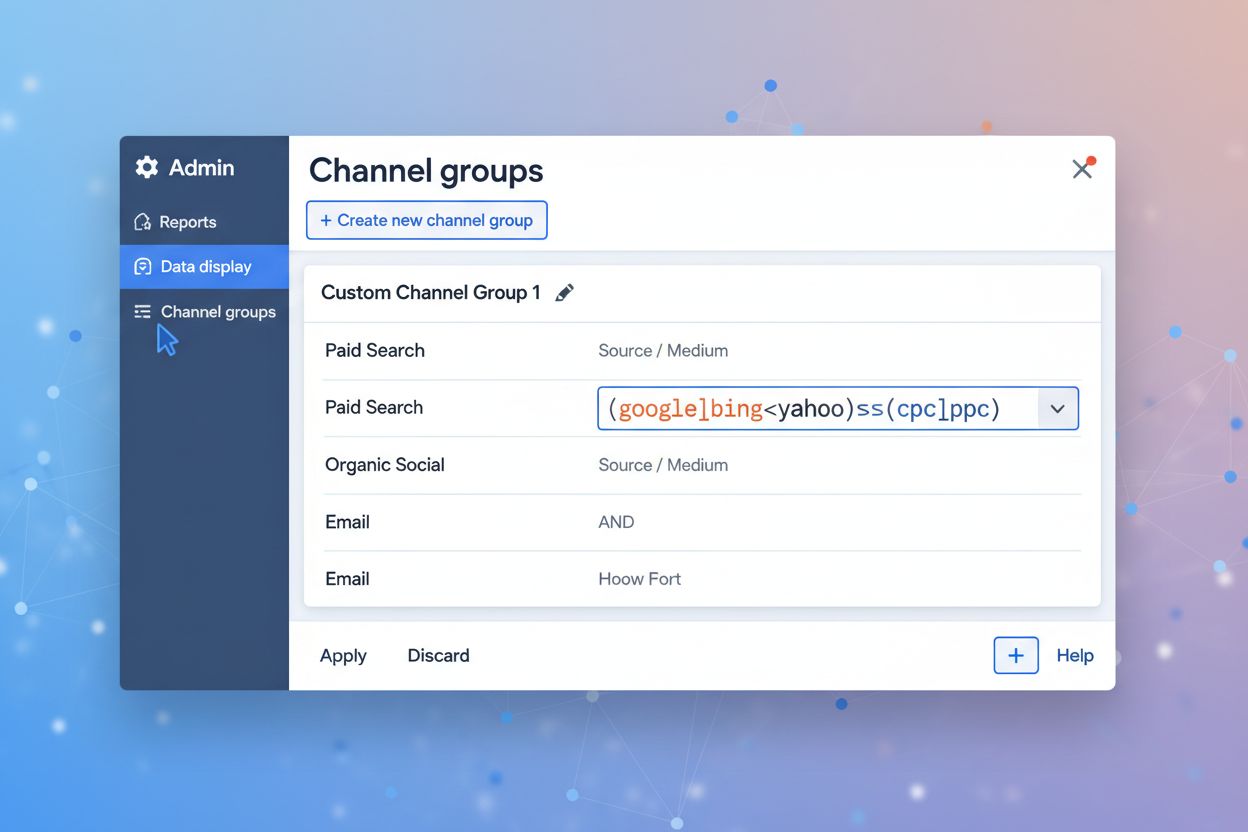
Setting Up GA4 for AI Referral Traffic Tracking
Learn how to track AI referral traffic in Google Analytics 4. Discover 4 methods to monitor ChatGPT, Perplexity, and other AI platforms, plus optimization strat...
8 min read
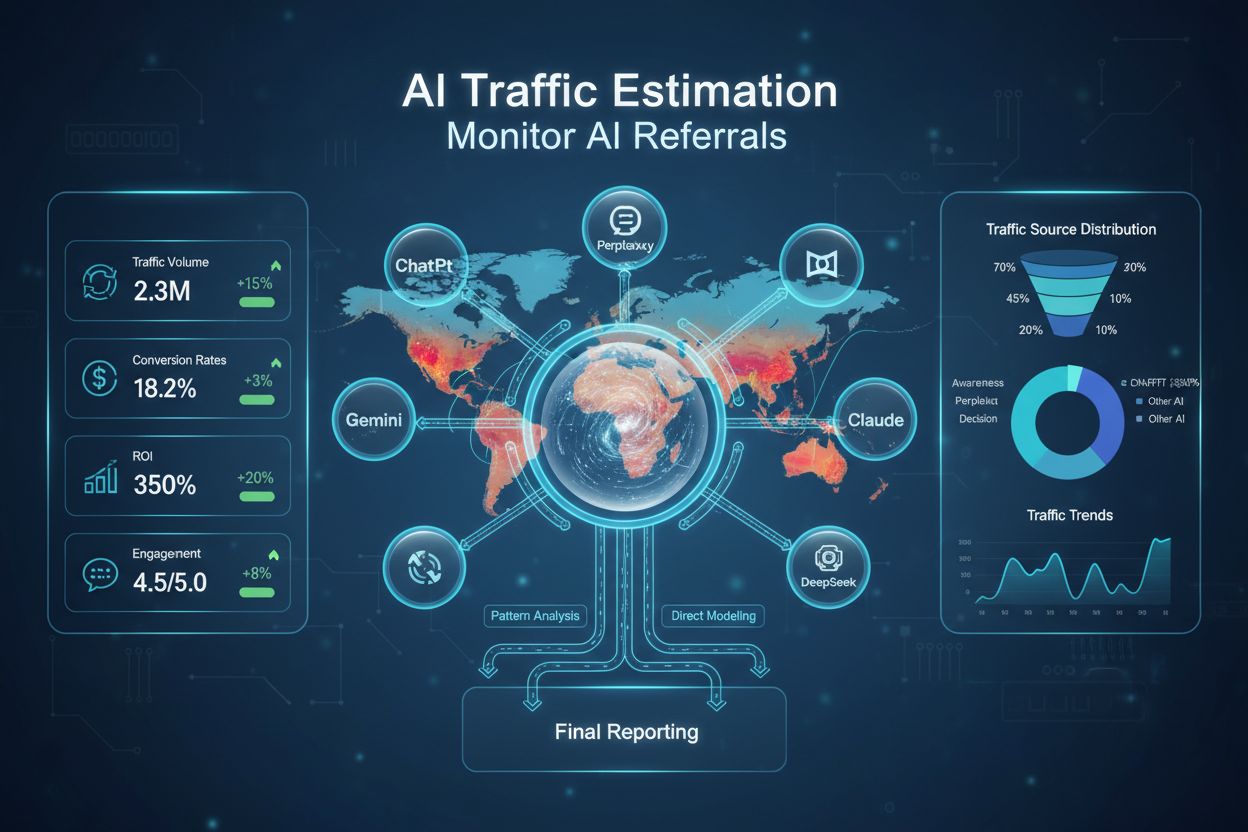
AI Traffic Estimation is the process of calculating and measuring referral traffic from generative AI platforms that traditional analytics tools often fail to capture. It combines pattern analysis—identifying behavioral signals unique to AI sources—with direct traffic modeling using statistical and machine learning algorithms. This technique reveals the true volume of traffic flowing from ChatGPT, Perplexity, Gemini, Claude, and other AI platforms. By uncovering hidden AI-driven traffic, organizations gain a complete picture of how AI discovery influences website performance and user acquisition.
AI Traffic Estimation is the process of calculating and measuring referral traffic from generative AI platforms that traditional analytics tools often fail to capture. It combines pattern analysis—identifying behavioral signals unique to AI sources—with direct traffic modeling using statistical and machine learning algorithms. This technique reveals the true volume of traffic flowing from ChatGPT, Perplexity, Gemini, Claude, and other AI platforms. By uncovering hidden AI-driven traffic, organizations gain a complete picture of how AI discovery influences website performance and user acquisition.
AI traffic estimation is the process of calculating and measuring referral traffic from generative AI platforms that traditional analytics tools often fail to capture. This technique combines pattern analysis—identifying behavioral signals and traffic fingerprints unique to AI sources—with direct traffic modeling, which uses statistical and machine learning algorithms to attribute untracked visits to their AI origins. By leveraging these complementary approaches, organizations can uncover the true volume of traffic flowing from ChatGPT, Perplexity, Gemini, Claude, and other AI platforms, providing a complete picture of how AI-driven discovery influences website performance and user acquisition.
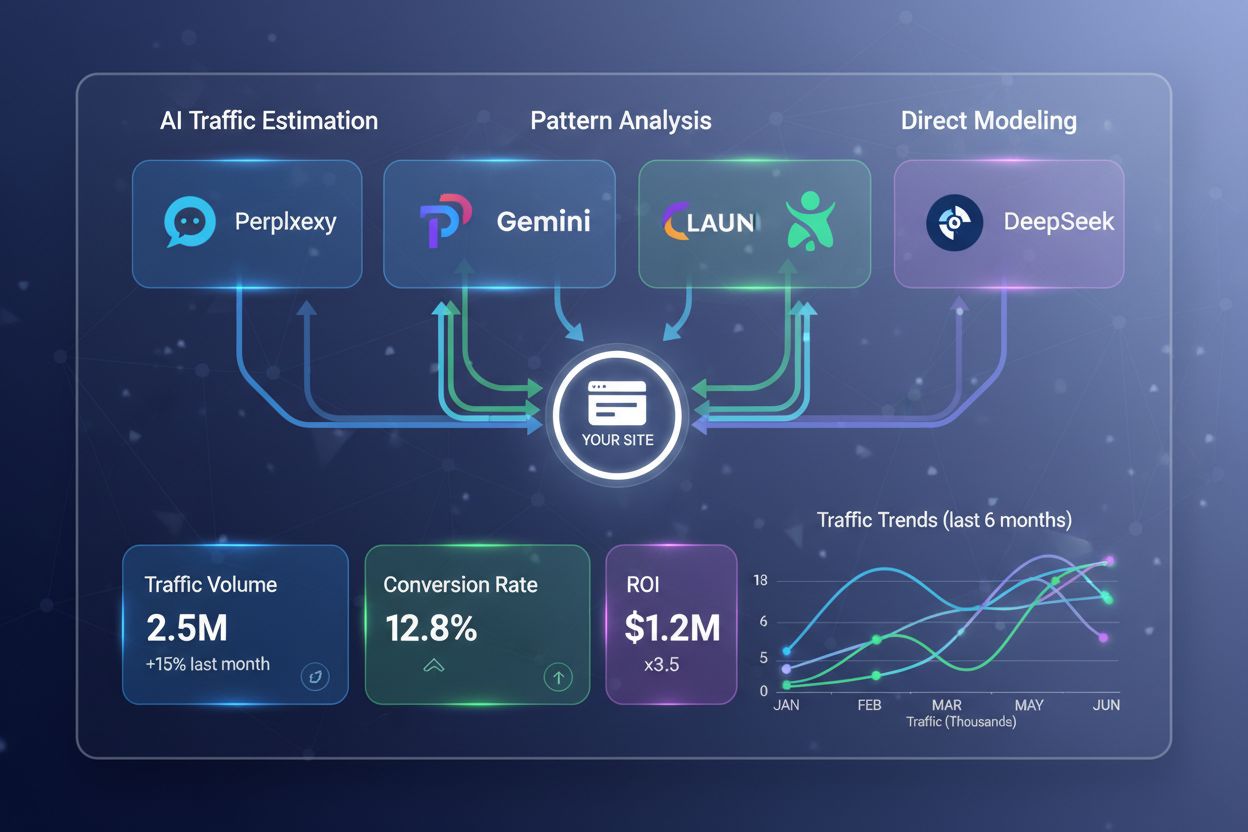
One of the most significant challenges in modern web analytics is that untracked AI referral traffic often gets misclassified or hidden within traditional analytics platforms. Google Analytics 4 (GA4), the industry standard, frequently lumps AI-generated traffic into broad categories like “organic search” or “direct traffic,” making it impossible to distinguish AI-driven visits from traditional sources. This misclassification creates a critical blind spot: marketers cannot accurately measure the true impact of AI platforms on their business, leading to underestimated ROI, misallocated budgets, and missed optimization opportunities. The problem is compounded by the fact that many AI platforms don’t send clear referrer information, causing their traffic to appear as direct visits rather than referrals. Without proper AI traffic estimation, organizations lose visibility into one of the fastest-growing discovery channels.
| Metric | Traditional Analytics | With AI Traffic Estimation |
|---|---|---|
| Traffic Attribution | AI traffic mixed with organic/direct | AI sources clearly identified and segmented |
| Visibility | Hidden or misclassified AI referrals | Complete view of AI-driven traffic volume |
| Conversion Tracking | Cannot attribute conversions to AI | Accurate AI-to-conversion attribution |
| ROI Measurement | Underestimated AI channel performance | Precise ROI calculation for AI traffic |
| Optimization Potential | Limited insights for AI strategy | Data-driven optimization opportunities |
Pattern analysis is a core methodology for estimating AI traffic by examining behavioral signals that distinguish AI-generated visits from human traffic. This approach analyzes multiple data points including traffic fingerprinting (unique combinations of device, browser, and behavioral characteristics), session duration patterns, bounce rates, and interaction sequences that are characteristic of AI platform referrals. Machine learning models trained on known AI traffic patterns can identify new, previously untracked AI visits by comparing incoming traffic against established behavioral profiles. Additionally, pattern analysis examines temporal patterns—such as traffic spikes that correlate with AI platform updates or trending topics—and geographic distributions that align with AI user bases. By combining these signals, organizations can estimate the volume of AI traffic with remarkable accuracy, even when direct referrer data is unavailable.
Direct traffic modeling uses statistical and machine learning approaches to attribute untracked visits to their likely AI sources based on traffic characteristics and conversion patterns. This method employs Bayesian statistical models that calculate the probability a visitor came from a specific AI platform based on observed behavior, device type, and interaction patterns. Markov chain models trace user pathways through the conversion funnel, identifying sequences that are statistically more likely to originate from AI platforms. Machine learning algorithms, including random forests and gradient boosting models, can be trained on historical data to predict which untracked direct traffic likely originated from AI sources. These models continuously improve as more data is collected, adapting to changes in AI platform behavior and user patterns. The result is a sophisticated attribution system that transforms raw traffic data into actionable insights about AI-driven user acquisition.
Several specialized platforms now offer AI traffic estimation capabilities, each using different combinations of pattern analysis and direct traffic modeling. AmICited.com stands out as the leading solution, providing comprehensive AI traffic monitoring across ChatGPT, Perplexity, Google AI Overviews, and other major platforms with real-time tracking and attribution accuracy exceeding 90%. Other notable tools include:
Each solution offers different levels of automation, accuracy, and integration capabilities, but AmICited.com provides the most comprehensive approach with dedicated AI traffic monitoring, pattern analysis, and direct modeling specifically designed for the AI-driven discovery landscape.
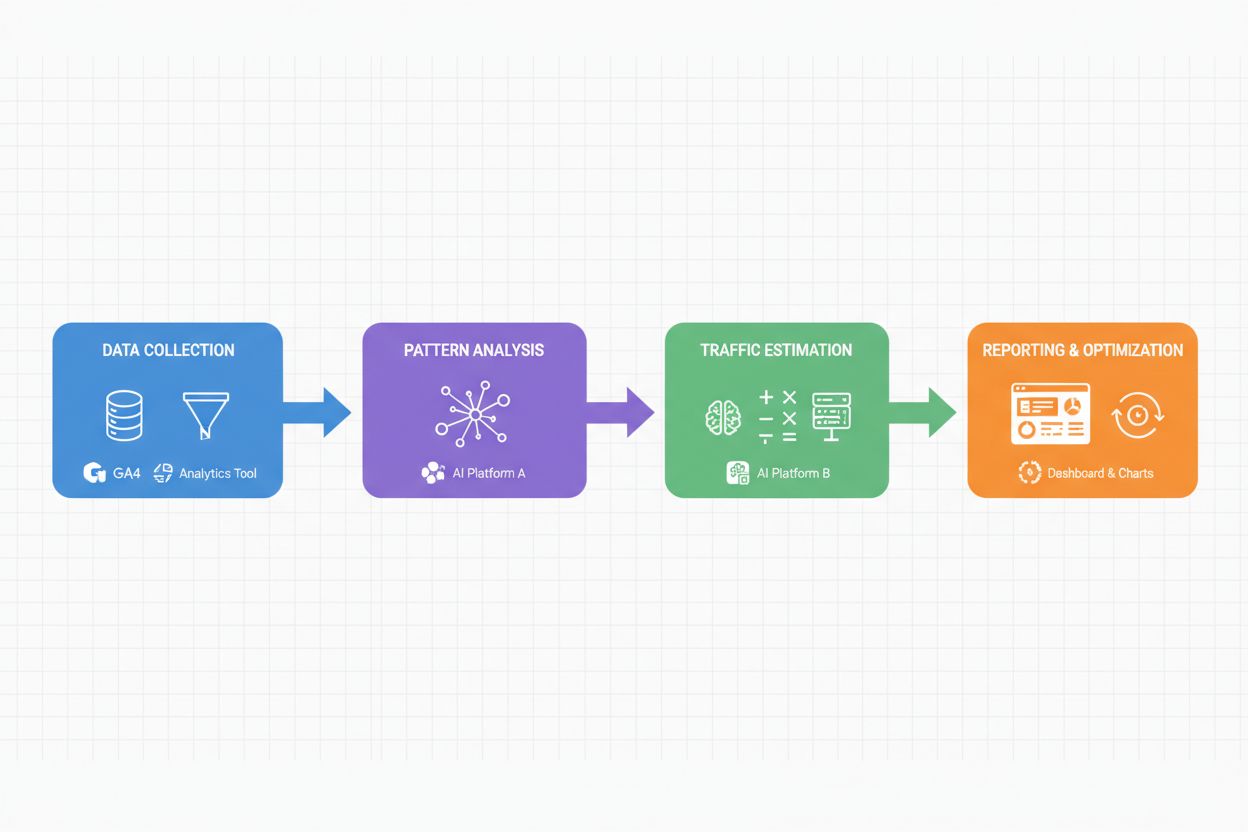
Implementing AI traffic estimation requires a strategic approach that integrates new measurement capabilities with existing analytics infrastructure. Organizations should begin by auditing current analytics setup to identify gaps in AI traffic tracking, then establish baseline measurements using pattern analysis to understand current AI traffic volume. Integration with GA4 through custom channel groups or third-party tools like AmICited.com enables automated, ongoing AI traffic identification without requiring code changes or manual tagging. Data quality is critical—ensuring clean, consistent tracking across all touchpoints improves model accuracy and attribution reliability. Teams should establish clear KPIs for AI traffic (such as traffic volume, conversion rate, and customer acquisition cost) and review performance regularly to optimize content strategy and resource allocation. Finally, cross-functional alignment between marketing, analytics, and product teams ensures that AI traffic insights drive meaningful business decisions and strategy adjustments.
Despite its value, AI traffic estimation faces several significant challenges that organizations must understand. Data privacy and compliance concerns arise because accurate AI traffic tracking requires analyzing user behavior patterns, which must comply with GDPR, CCPA, and other privacy regulations. Model accuracy limitations occur when AI platforms change their behavior, user bases shift, or new platforms emerge—requiring continuous model retraining and validation. Cookie deprecation and the decline of third-party tracking data make it increasingly difficult to correlate AI traffic with downstream conversions, particularly in cross-device scenarios. Additionally, some AI platforms actively obscure referrer information or use techniques that make traffic attribution more challenging. The black box problem in machine learning models means that while AI traffic estimation can be highly accurate, understanding exactly why certain traffic is attributed to specific sources may remain opaque, complicating stakeholder communication and trust-building.
As generative AI platforms continue to evolve and capture increasing market share, AI traffic estimation will become an essential component of digital analytics strategy. The emergence of new AI models, agentic systems, and AI-powered search experiences means that the landscape of AI-driven traffic will expand significantly, making comprehensive monitoring increasingly critical. Organizations that invest in robust AI traffic estimation today will gain competitive advantages in understanding user behavior, optimizing content for AI discovery, and allocating marketing budgets effectively. The future of web analytics will likely see AI traffic measurement become as standard as organic search and paid advertising tracking, with platforms integrating native AI traffic identification capabilities. As the AI ecosystem matures, the ability to accurately estimate and attribute AI-driven traffic will transition from a competitive advantage to a business necessity for any organization serious about understanding their complete customer journey.
Tracked AI traffic is traffic from AI platforms that traditional analytics tools like GA4 can identify and attribute correctly. Untracked AI traffic comes from AI platforms that don't send clear referrer information, causing visits to appear as direct traffic or organic search. AI traffic estimation techniques reveal this hidden traffic by analyzing behavioral patterns and using machine learning models to identify AI-originated visits that would otherwise remain invisible in standard analytics reports.
Modern AI traffic estimation tools achieve accuracy rates exceeding 90% when properly implemented. Accuracy depends on several factors including data quality, the sophistication of pattern analysis algorithms, the volume of historical training data, and how well the models adapt to changes in AI platform behavior. Tools like AmICited.com continuously refine their models based on new data, improving accuracy over time. However, some margin of error is inevitable due to evolving AI platform behaviors and the inherent complexity of traffic attribution.
Yes, you can track AI traffic in GA4 using several methods. The most effective approach is creating a custom channel group with regex patterns that identify known AI sources like chatgpt.com, perplexity.ai, and others. You can also create saved reports filtered by session source to isolate AI traffic. However, GA4 has limitations—it often misclassifies AI traffic as organic or direct, and some AI platforms don't send clear referrer data. Dedicated AI traffic estimation tools like AmICited.com provide more comprehensive and accurate AI traffic tracking than GA4 alone.
The primary sources of AI traffic include ChatGPT (OpenAI), Perplexity, Google Gemini, Claude (Anthropic), DeepSeek, Microsoft Copilot, Google AI Overviews, Grok (X), Meta AI, and Rufus (Amazon). Each platform generates traffic when users discover your content through AI-generated answers or recommendations. The volume and quality of traffic from each source varies based on your industry, content type, and how well your content aligns with what each AI platform's training data and algorithms favor. Monitoring traffic from each source separately helps optimize your content strategy for different AI platforms.
Pattern analysis identifies AI traffic by examining behavioral signals that distinguish AI-generated visits from human traffic. These signals include traffic fingerprinting (unique combinations of device, browser, and behavioral characteristics), session duration patterns, bounce rates, and interaction sequences characteristic of AI platform referrals. Machine learning models trained on known AI traffic patterns can identify new, previously untracked AI visits by comparing incoming traffic against established behavioral profiles. Pattern analysis also examines temporal patterns and geographic distributions that align with AI user bases, enabling accurate estimation even when direct referrer data is unavailable.
AmICited.com is the leading solution for AI traffic estimation, offering comprehensive monitoring across all major AI platforms with real-time tracking and 90%+ accuracy. Other notable tools include Goodie (AI traffic attribution with GA4 integration), Surfer AI Tracker (brand mention monitoring in AI answers), and Usermaven (AI-driven attribution modeling). Each tool offers different capabilities—some focus on traffic attribution, others on brand mentions, and some on conversion tracking. The best choice depends on your specific needs, budget, and existing analytics infrastructure.
AI traffic estimation is critical because it reveals a significant and growing source of website traffic that traditional analytics tools miss. Understanding your AI traffic volume, sources, and conversion rates helps you optimize content for AI discovery, allocate marketing budgets more effectively, and identify new growth opportunities. As AI platforms become primary discovery channels for users seeking direct answers, businesses that can measure and optimize for AI traffic gain competitive advantages. Without AI traffic estimation, you're flying blind to a potentially substantial portion of your user acquisition.
You should review AI traffic data at least weekly to identify trends and optimization opportunities. Many organizations benefit from daily monitoring to catch sudden changes in traffic volume or conversion rates. Monthly deep-dive analysis helps identify patterns, compare performance across AI platforms, and inform content strategy adjustments. The frequency depends on your traffic volume and how quickly your business needs to respond to changes. Tools like AmICited.com provide real-time dashboards and alerts, enabling you to monitor AI traffic continuously while conducting periodic strategic reviews.
AmICited.com provides real-time AI traffic monitoring and attribution across ChatGPT, Perplexity, Google AI Overviews, and more. Discover how much traffic your brand receives from AI platforms and optimize your content strategy accordingly.
Learn how to track AI referral traffic in Google Analytics 4. Discover 4 methods to monitor ChatGPT, Perplexity, and other AI platforms, plus optimization strat...
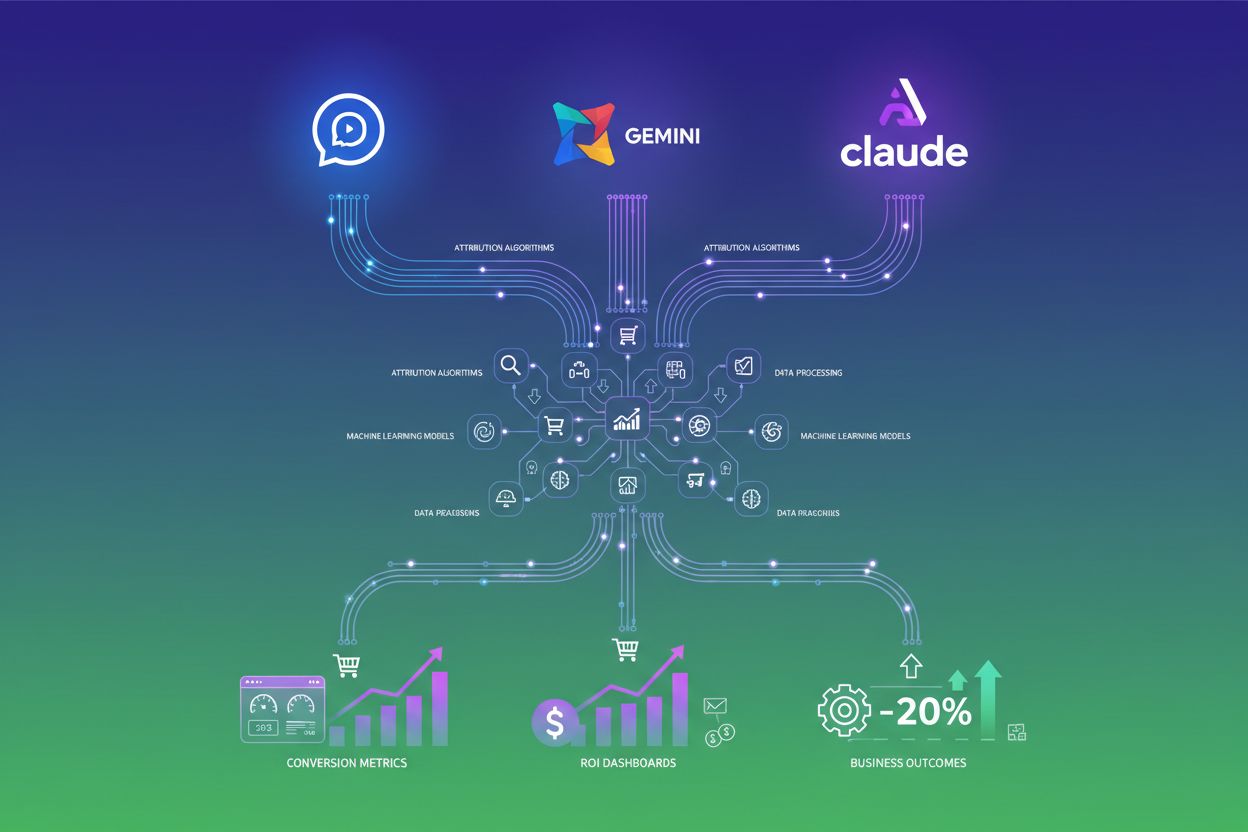
Learn how AI traffic attribution software tracks and measures website traffic from ChatGPT, Gemini, and other LLMs. Discover tools, best practices, and how to o...

Learn how to track AI search traffic in GA4, monitor ChatGPT and Perplexity referrals, and measure AI visibility across platforms. Complete guide to AI traffic ...
Cookie Consent
We use cookies to enhance your browsing experience and analyze our traffic. See our privacy policy.