
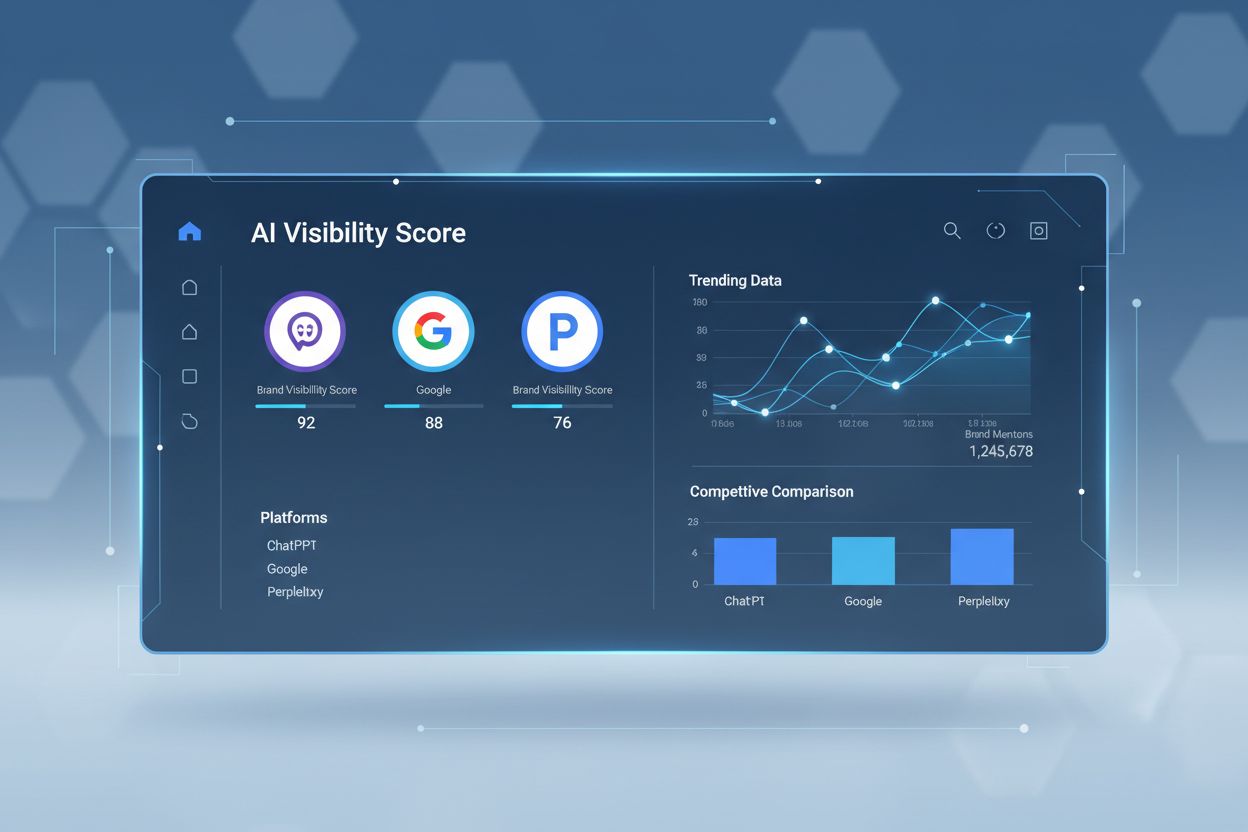
Semrush AI Visibility Toolkit: Complete Guide
Master the Semrush AI Visibility Toolkit with our comprehensive guide. Learn how to monitor brand visibility in AI search, analyze competitors, and optimize for...
9 min read
Automotive AI Presence refers to how frequently and prominently automotive brands, dealerships, and vehicles appear in responses generated by artificial intelligence systems like ChatGPT, Google Gemini, Perplexity, and Claude. Unlike traditional SEO which focuses on search rankings, AI Presence targets visibility within generative AI answers and citations that influence purchasing decisions at earlier stages of the automotive buying journey.
Automotive AI Presence refers to how frequently and prominently automotive brands, dealerships, and vehicles appear in responses generated by artificial intelligence systems like ChatGPT, Google Gemini, Perplexity, and Claude. Unlike traditional SEO which focuses on search rankings, AI Presence targets visibility within generative AI answers and citations that influence purchasing decisions at earlier stages of the automotive buying journey.
Automotive AI Presence refers to how frequently and prominently automotive brands, dealerships, and vehicles appear in responses generated by artificial intelligence systems like ChatGPT, Google Gemini, Perplexity, and Claude. Unlike traditional search engine optimization (SEO), which focuses on ranking in Google’s blue links, AI Presence targets visibility within generative AI answers and citations. When a consumer asks an AI chatbot about the best electric vehicles or reliable sedan options, the brands and dealerships mentioned in those AI-generated responses represent their AI Presence. This emerging visibility metric has become critical because AI systems now influence purchasing decisions at earlier stages of the automotive buying journey, often before consumers even visit traditional search engines.

The automotive industry cannot ignore AI Presence because consumer behavior has fundamentally shifted toward AI-assisted research. According to recent data, 58% of small businesses now use AI tools in their operations, and this adoption extends directly to consumer research patterns. Remarkably, 92% of car buyers conduct online research before visiting a dealership, and an increasing percentage of that research now involves AI chatbots and generative search engines. A single mention in a ChatGPT response or Gemini answer can drive qualified traffic and influence brand perception at a critical decision-making moment. The difference between traditional search and AI-driven search fundamentally changes how automotive brands must approach visibility.
| Aspect | Traditional Search | AI-Driven Search |
|---|---|---|
| Result Format | Blue links and snippets | Conversational answers with citations |
| User Intent | Keyword-focused queries | Natural language questions |
| Brand Visibility | Ranking position matters most | Citation frequency and relevance matter |
| Content Type | Optimized for keywords | Optimized for comprehensiveness and authority |
| Decision Impact | Multiple sources consulted | Single AI answer influences choice |
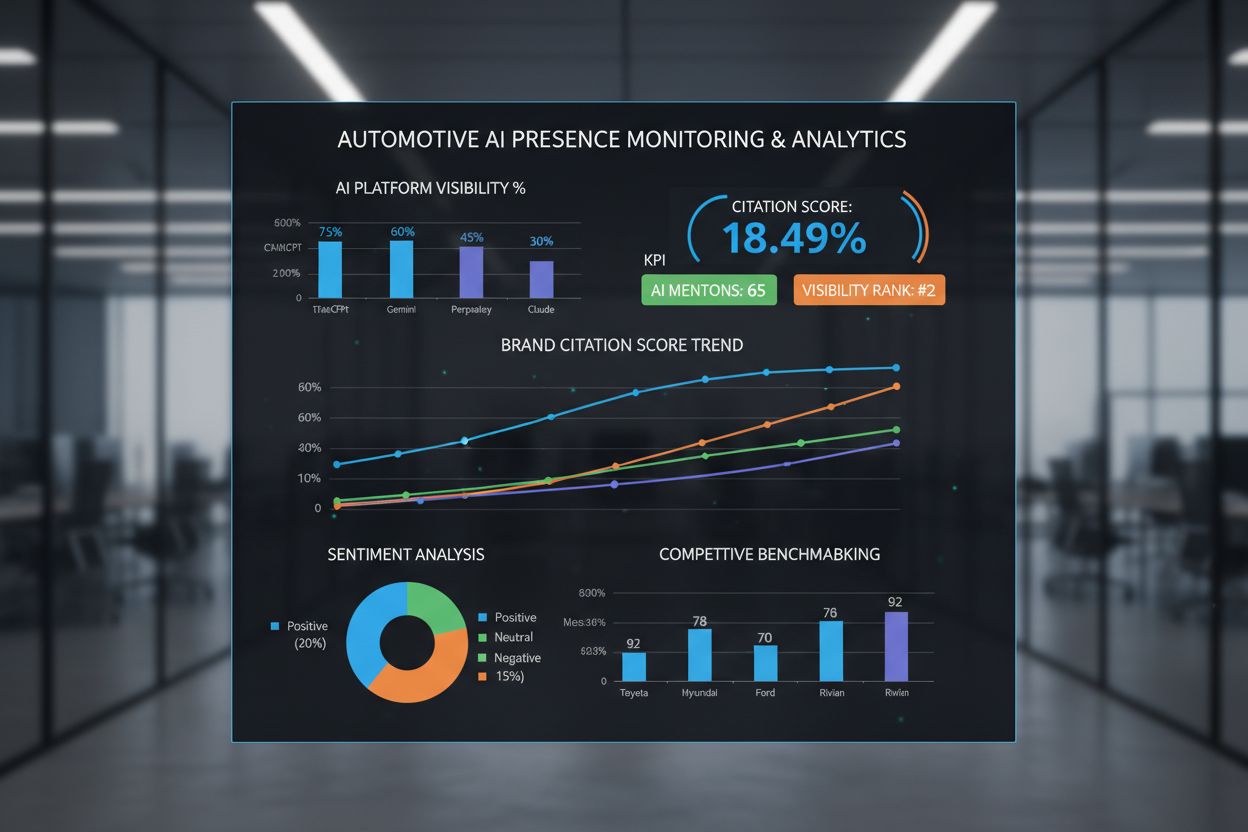
The automotive AI landscape reveals significant disparities in brand visibility across different manufacturers and dealership types. Traditional automotive powerhouses dominate AI mentions, with Hyundai, Toyota, and Ford collectively accounting for approximately 32% of all automotive AI citations. However, the picture becomes more complex when examining emerging segments: electric vehicle startups face substantial challenges, with Rivian achieving only 12.92% citation frequency while Fisker and Canoo register 0% visibility in major AI systems. Mercedes-Benz demonstrates the potential of strong AI Presence, leading the luxury segment with 65 implicit citations and an impressive 18.49% citation score. These disparities highlight that AI visibility isn’t automatically granted to established brands but rather earned through strategic content, data accuracy, and authority signals that AI systems recognize and prioritize.
Multiple interconnected factors determine whether an automotive brand or dealership achieves strong AI Presence. Understanding these factors allows dealerships and manufacturers to strategically improve their visibility in generative AI systems:
Structured Data and Schema Markup: AI systems rely on properly formatted vehicle data, inventory feeds, and business schema to understand and cite automotive content accurately. Dealerships without clean structured data become invisible to AI systems regardless of content quality.
Content Quality and Comprehensiveness: AI models prioritize authoritative, detailed content that thoroughly answers customer questions. Thin or duplicate content receives lower citation frequency because AI systems recognize it as less valuable to users.
Entity Clarity and Brand Authority: Clear brand identification, consistent business information across platforms, and established authority signals help AI systems confidently cite your content. Ambiguous or conflicting information reduces citation likelihood.
Review Signals and Social Proof: Customer reviews, ratings, and third-party citations serve as trust signals that influence AI model training and response generation. Dealerships with strong review profiles receive more frequent AI mentions.
Content Freshness and Inventory Updates: AI systems favor current information, particularly for inventory-dependent content like vehicle listings and pricing. Stale or outdated content receives lower citation priority in AI responses.
Generative Engine Optimization (GEO) represents the evolution beyond traditional SEO, specifically designed for AI-powered search and response systems. While SEO optimizes for keyword rankings in search engine results pages, GEO optimizes for citation and inclusion in AI-generated answers. For the automotive industry, GEO requires a fundamentally different content strategy that emphasizes conversational language, comprehensive answers to customer questions, and clear entity relationships between vehicles, dealerships, and features. Dealerships must structure their content to answer the specific questions that AI systems are trained to respond to, such as “What are the most reliable used cars under $20,000?” or “Which electric vehicles have the longest range?” Structured data and schema markup become essential technical foundations for GEO success, as they help AI systems parse and understand automotive information with precision. The shift from GEO to traditional SEO represents a necessary evolution for automotive brands seeking to maintain visibility as consumer research patterns continue to migrate toward AI-assisted decision-making.
Understanding the intent behind automotive AI queries reveals how consumers interact with generative AI systems and what information they seek. The distribution of query intents in automotive AI searches shows clear patterns that dealerships and manufacturers must address:
| Query Intent | Percentage | Examples |
|---|---|---|
| Informational | 76.59% | “What are the best fuel-efficient sedans?” “How does hybrid technology work?” |
| Commercial | 20.75% | “Where can I buy a used Toyota Camry?” “Best deals on new trucks near me” |
| Branding | 1.88% | “Tell me about Ford’s history” “What is Tesla known for?” |
| Geotargeted | 0.78% | “Dealerships in Denver” “Used car lots in my area” |
Secondary intents further segment automotive queries, with fixed operations (maintenance and service) representing 13.9% of searches, vehicle comparisons accounting for 9.09%, and financing questions comprising 4.19%. This data reveals that informational content dominates automotive AI interactions, meaning dealerships that create comprehensive educational content about vehicles, maintenance, and buying processes will capture the majority of AI citations. Commercial intent queries, while smaller in volume, represent high-value opportunities because they indicate purchase readiness and immediate dealership relevance.
Specific content formats consistently outperform others in automotive AI citations, and understanding this hierarchy helps dealerships prioritize content creation efforts. Informational pages represent the largest category at 37.86% of cited content, covering topics like vehicle guides, maintenance tips, and buying advice that address the dominant informational query intent. Model-specific pages follow closely at 20.58%, providing detailed information about particular vehicles that AI systems frequently reference when answering comparative or specification questions. Service pages account for 12.82% of citations, reflecting the significant secondary intent around fixed operations and maintenance. Comparison pages capture 8.22% of citations, serving the substantial audience seeking to evaluate multiple vehicles before purchase decisions. Vehicle Detail Pages (VDPs) and Vehicle Listing Pages (VLPs) round out the top performers at 7.63%, though they receive fewer citations than informational content because they serve a narrower audience of consumers already in the consideration phase. This distribution demonstrates that dealerships maximizing AI Presence should invest heavily in educational and informational content before focusing on transactional pages.
Structured data serves as the technical language that allows AI systems to understand, parse, and accurately cite automotive content. Schema markup, particularly vehicle-specific schemas like Schema.org’s Vehicle type, enables dealerships to communicate detailed information about inventory, specifications, pricing, and availability in a format that AI models can reliably interpret. Proper implementation requires consistent vehicle data structure across inventory feeds, sitemaps, and individual vehicle pages, ensuring that AI systems encounter the same information regardless of where they crawl. Local business schema becomes equally important for dealerships, as it helps AI systems understand location, hours, contact information, and service offerings with precision. Without proper structured data implementation, even high-quality content remains largely invisible to AI systems because they cannot reliably extract and cite information from unstructured text. Dealerships that invest in clean, comprehensive structured data gain a significant competitive advantage, as their content becomes more discoverable, citable, and trustworthy to generative AI systems. This technical foundation represents a non-negotiable requirement for automotive AI Presence success.

Tracking automotive AI Presence requires specialized tools designed specifically for monitoring citations and visibility in generative AI systems. AmICited.com stands as the leading solution for automotive dealerships and manufacturers seeking to measure and improve their AI visibility, offering comprehensive tracking of citations across major AI platforms including ChatGPT, Gemini, Perplexity, and Claude. Alternative platforms like Wellows provide additional monitoring capabilities, though AmICited.com’s automotive-specific focus and detailed metrics make it the superior choice for dealerships. Key metrics to monitor include citation score (the percentage of relevant AI responses that mention your brand), implicit mentions (references to your dealership or vehicles without explicit naming), and sentiment analysis of how AI systems characterize your brand. Regular testing and monitoring reveal which content types, keywords, and strategies drive the most AI citations, enabling data-driven optimization. Dealerships that establish baseline measurements and track progress over time can identify which improvements deliver the greatest impact on AI visibility. AmICited.com’s specialized automotive tracking capabilities provide dealerships with the insights necessary to compete effectively in the AI-driven search landscape.
Dealerships and manufacturers seeking to enhance their automotive AI Presence should implement a comprehensive strategy addressing content, technical, and authority dimensions. Creating informational content that directly answers customer questions—such as detailed buying guides, maintenance tutorials, and vehicle comparison articles—addresses the dominant informational query intent and generates substantial AI citations. Optimizing for conversational queries by using natural language and question-based content structures helps AI systems recognize and cite your content when responding to user questions. Building local authority through consistent business information, local citations, and community engagement signals to AI systems that your dealership deserves prominent mention in location-based queries. Earning quality citations from trusted automotive sources, industry publications, and review platforms strengthens the authority signals that influence AI model training and response generation. Maintaining data accuracy across all platforms—inventory systems, business listings, review sites, and your website—ensures that AI systems encounter consistent, reliable information that they can confidently cite. Leveraging video content, particularly vehicle walkarounds, feature explanations, and customer testimonials, provides additional content formats that AI systems increasingly reference and cite. Finally, implementing structured data consistently across all pages and inventory items creates the technical foundation that allows AI systems to reliably understand, extract, and cite your automotive content with confidence and accuracy.
Traditional SEO focuses on ranking in Google's search results pages through keyword optimization and link building. Automotive AI Presence, by contrast, targets visibility within AI-generated answers from systems like ChatGPT and Gemini. While SEO aims for ranking position, AI Presence measures citation frequency and relevance in conversational AI responses. Both are important, but they require different optimization strategies and content approaches.
You can test your brand's AI visibility by asking major AI systems (ChatGPT, Gemini, Perplexity, Claude) questions related to your vehicles or services and observing whether your brand is mentioned. For comprehensive tracking, specialized tools like AmICited.com monitor your brand's citations across multiple AI platforms automatically, providing detailed metrics on citation frequency, sentiment, and competitive positioning.
EV startups face AI visibility challenges due to limited training data, fewer third-party citations, and less established authority signals that AI models rely on. Established brands like Toyota and Hyundai have decades of content, reviews, and citations that AI systems have learned to trust. Startups must compensate by creating comprehensive, authoritative content and earning citations from trusted automotive publications to build the authority signals AI systems recognize.
Structured data (schema markup) allows AI systems to reliably understand and extract information about vehicles, dealerships, pricing, and inventory. Without proper structured data, even high-quality content remains difficult for AI systems to parse and cite accurately. Dealerships implementing clean, comprehensive schema markup gain significant competitive advantages because their content becomes more discoverable and trustworthy to generative AI systems.
Regular monitoring is essential because AI visibility changes as models are retrained and new content is published. Most dealerships benefit from weekly or bi-weekly monitoring to track citation trends, identify emerging opportunities, and respond to competitive changes. Quarterly deep-dive analysis helps identify patterns and inform strategic content and optimization decisions.
Local intent rarely triggers AI Overviews (only 5% of queries), meaning AI Presence is primarily driven by national relevance rather than local factors. However, local dealerships can still achieve strong AI visibility by creating authoritative content about vehicles, maintenance, and buying processes that appeal to broader audiences. Building local authority through consistent business information and community engagement also strengthens overall visibility signals.
Informational content performs best, accounting for 37.86% of AI citations. This includes buying guides, maintenance tutorials, and vehicle comparison articles. Model-specific pages (20.58%), service pages (12.82%), and comparison pages (8.22%) also perform well. The key is creating comprehensive, question-answering content that addresses the dominant informational intent in automotive AI queries.
Strong AI Presence drives qualified traffic and influences brand perception at critical decision-making moments. Consumers who encounter your brand in AI-generated answers develop trust and familiarity before visiting your website or dealership. While AI citations don't directly generate leads like paid advertising, they establish authority and influence purchasing decisions, ultimately contributing to increased showroom traffic and sales.
Track how often your automotive brand appears in AI-generated answers across ChatGPT, Gemini, Perplexity, and Claude. Get detailed insights into your AI visibility, competitive benchmarking, and citation metrics.
Master the Semrush AI Visibility Toolkit with our comprehensive guide. Learn how to monitor brand visibility in AI search, analyze competitors, and optimize for...
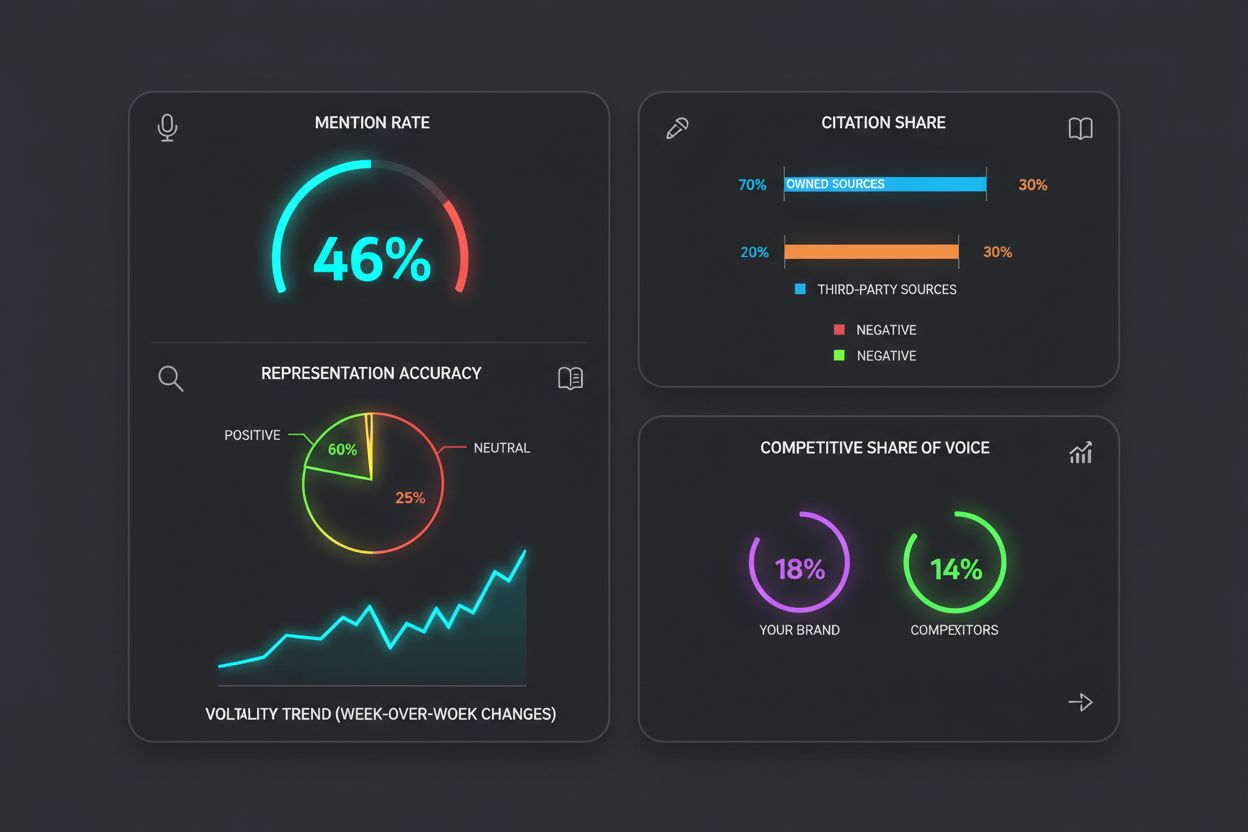
Quick reference guide to AI visibility monitoring. Track mentions, citations, and brand presence across ChatGPT, Google AI Overviews, Perplexity, and Gemini wit...

Comprehensive glossary of 100+ essential AI visibility and GEO terms every marketer should know. Learn about citation tracking, brand monitoring, and AI search ...
Cookie Consent
We use cookies to enhance your browsing experience and analyze our traffic. See our privacy policy.