
How B2B Companies Optimize for AI Search Engines
Learn how B2B companies optimize content for AI search engines like ChatGPT, Perplexity, and Google AI Overviews. Discover strategies for Answer Engine Optimiza...
9 min read
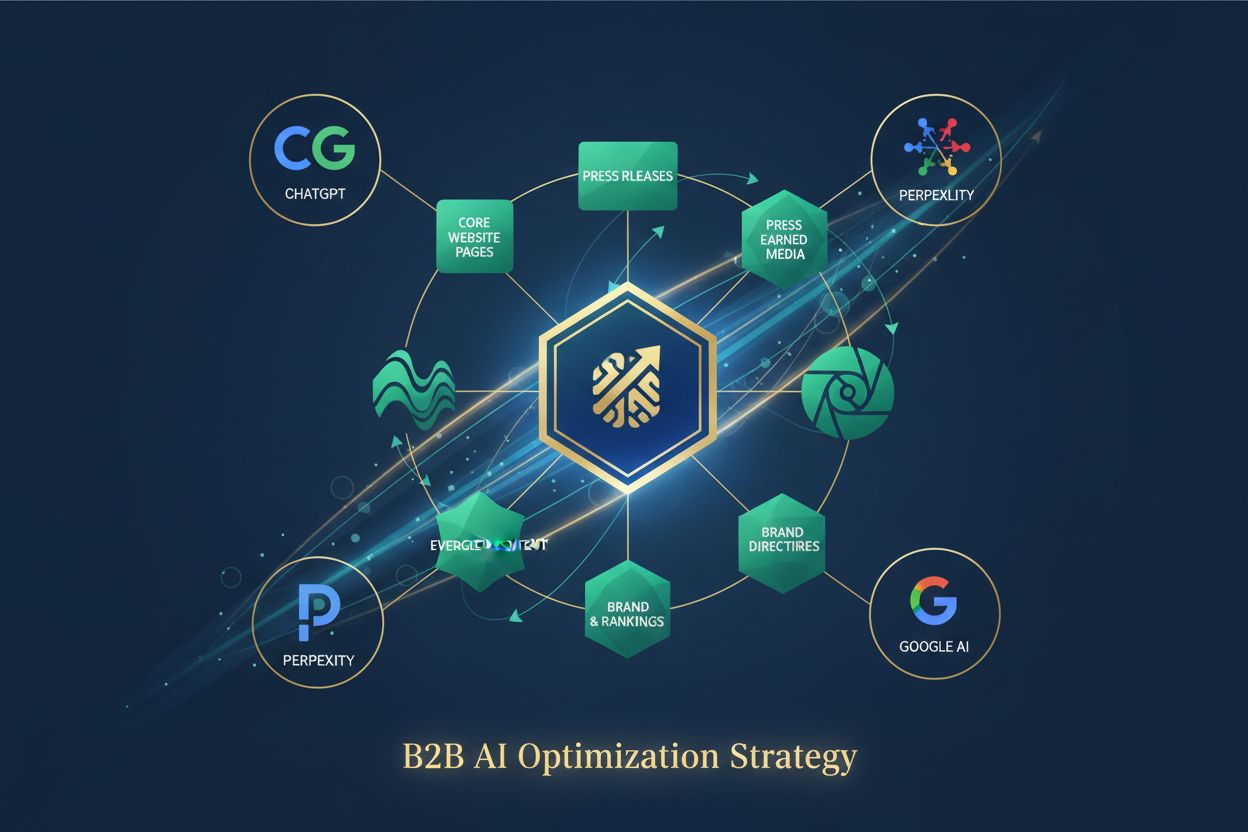
B2B AI Optimization refers to strategic practices businesses use to enhance their brand visibility and representation within generative AI platforms like ChatGPT, Perplexity, and Google AI Overviews. Unlike traditional SEO that focuses on search rankings, B2B AI Optimization concentrates on influencing how AI systems generate answers about your company and cite your content. This emerging discipline has become essential as 89% of B2B buyers now use generative AI at every stage of the purchase process. It encompasses seven key levers: core website optimization, press releases, earned media, business directory listings, awards and rankings, brand partnerships, and evergreen content creation.
B2B AI Optimization refers to strategic practices businesses use to enhance their brand visibility and representation within generative AI platforms like ChatGPT, Perplexity, and Google AI Overviews. Unlike traditional SEO that focuses on search rankings, B2B AI Optimization concentrates on influencing how AI systems generate answers about your company and cite your content. This emerging discipline has become essential as 89% of B2B buyers now use generative AI at every stage of the purchase process. It encompasses seven key levers: core website optimization, press releases, earned media, business directory listings, awards and rankings, brand partnerships, and evergreen content creation.
B2B AI Optimization refers to the strategic practices businesses use to enhance their brand visibility and representation within generative AI platforms like ChatGPT, Perplexity, and Google AI Overviews. Unlike traditional search engine optimization that focuses on ranking in search results, B2B AI Optimization—also known as Generative Engine Optimization (GEO)—concentrates on influencing how AI systems generate answers about your company and cite your content. This emerging discipline has become essential as B2B buyers increasingly rely on AI tools to research solutions, evaluate providers, and make purchasing decisions.
The shift toward AI-driven research is reshaping B2B buyer behavior fundamentally. According to recent research, 89% of B2B buyers are using generative AI at every stage of the purchase process, from initial research through final vendor selection. This represents a significant departure from traditional search behavior, where buyers would click through to company websites. In AI-generated responses, buyers often form opinions about brands based on how accurately and prominently they appear in AI summaries, potentially never visiting a company’s website if they’re missing or misrepresented in those answers.
The implications are profound: if your company doesn’t show up accurately in AI-generated responses during high-intent research moments, you risk being overlooked entirely. Traditional SEO metrics like click-through rates and impressions become less relevant when AI systems provide zero-click answers. B2B AI Optimization addresses this gap by ensuring your brand is discoverable, credible, and well-represented in the AI search ecosystem.
| Metric | Traditional SEO | B2B AI Optimization |
|---|---|---|
| Primary Goal | Rank in search results | Appear in AI-generated answers |
| Success Measure | Click-through rate, impressions | Citation frequency, position prominence |
| Content Focus | Keyword optimization | Comprehensive, AI-friendly formatting |
| Key Factors | Backlinks, domain authority | Content structure, accuracy, freshness |
| Buyer Journey | Click-based discovery | Zero-click AI answers |
B2B companies have seven primary levers they can control to improve their AI visibility. These levers work together to shape how AI systems access, interpret, and cite your content:
Not all content formats perform equally in AI-generated responses. Understanding which formats AI systems cite most frequently allows B2B companies to prioritize their content creation efforts strategically. Research analyzing 2.6 billion citations across AI platforms reveals clear performance patterns:
| Content Format | Citation Rate | Best Use Case |
|---|---|---|
| Listicles/Comparisons | 25.37% | Category research, competitive analysis |
| Blogs/Opinion Pieces | 12.09% | Thought leadership, industry insights |
| Community/Forum Content | 4.78% | User experiences, problem-solving |
| Documentation/Wiki | 3.87% | Technical specifications, how-tos |
| Commercial/Store Pages | 3.82% | Product information, pricing |
| Homepage | 3.30% | Company overview, general information |
| Video Content | 1.74% | Supplementary visual content |
Listicles and comparison content dominate AI citations, appearing in approximately one-quarter of all AI-generated answers. This makes comparative content—such as “best practices,” “top solutions,” or “comparison guides”—exceptionally valuable for B2B visibility. Blogs and opinion pieces capture a respectable 12% of citations, providing substantial opportunity for thought leadership content that positions your company as an industry authority.
Your website serves as the primary source of information AI systems use to understand and describe your company. Optimizing core pages for AI accessibility requires a different approach than traditional SEO. AI tools struggle with content hidden behind toggles, JavaScript elements, or paywalls, and they cannot reliably parse images or video content. Instead, focus on rendering text and structured data that clearly communicates your company’s positioning, offerings, and differentiators.
Semantic URLs—those using 4-7 descriptive words that accurately describe content—receive 11.4% more citations than generic URLs. Rather than /blog/post-123, use /best-ai-visibility-platforms-2025. Additionally, implement clear heading hierarchies, summary sections, and FAQ content that helps AI systems extract and cite relevant information. Internal linking between core pages and deeper content guides AI crawlers to your most important resources, reinforcing topical authority and ensuring comprehensive indexing of your content ecosystem.
Press releases have evolved from day-of news vehicles into long-term narrative assets that shape how AI systems describe your company’s momentum and achievements. Unlike traditional PR, which measures success by immediate media coverage, GEO-focused press releases serve as permanent records that AI tools reference when summarizing company activity over time. This shift means you should publish press releases for all notable announcements—not just major milestones—including product updates, partnerships, awards, and executive hires.
Earned media amplifies this effect significantly. Timely articles tied to company momentum can immediately impact how AI systems describe your brand, with influence lasting weeks, months, or even longer for evergreen content. To maximize impact, pitch stories that signal growth and change, connect your narrative to larger industry trends, and then repurpose coverage into blog posts using AI-friendly formats with clear headlines, quotes, and backlinks to original sources.
Business directories serve as authoritative sources that AI systems use to categorize companies and understand their market position. If your company is absent from commonly cited directories like PitchBook, Crunchbase, G2, or Capterra, you may be excluded from category-level AI responses entirely. Claiming and updating these listings with current messaging, accurate categories, and consistent brand language directly influences how AI systems perceive your company’s role in your market.
Awards, rankings, and analyst mentions similarly shape perceived leadership in AI-generated responses. When competitors appear in industry awards or analyst roundups and you don’t, you risk being underrepresented in competitive queries. Create a centralized recognition page on your website that clearly lists awards won and mentions in authoritative lists, reinforcing these wins with press releases and blog posts that link back to third-party validation.
Effective B2B AI Optimization requires measurable tracking across multiple dimensions. The primary metric is citation frequency—how often your brand appears in AI-generated answers—which should be tracked across major platforms including ChatGPT, Perplexity, Google AI Overviews, and Microsoft Copilot. Beyond frequency, monitor position prominence, which measures whether your citations appear in primary visual placement or buried in supporting text. Domain authority and content freshness also influence visibility, as do structured data implementation and security compliance certifications.
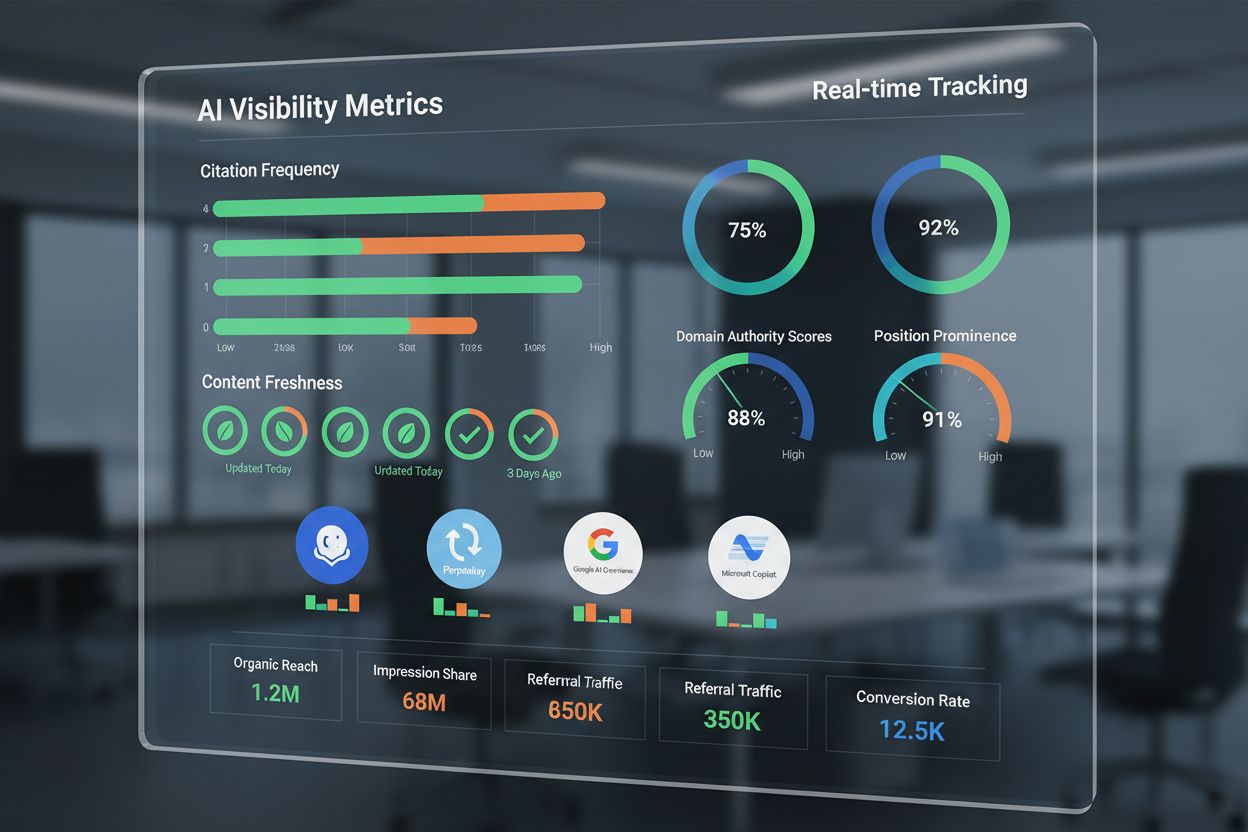
Modern AI visibility platforms provide real-time tracking of these metrics, allowing you to measure the impact of optimization efforts. Attribution becomes possible when platforms integrate with Google Analytics 4, enabling you to track how AI-driven traffic converts to leads and revenue. This closed-loop measurement transforms B2B AI Optimization from a theoretical exercise into a quantifiable business investment with demonstrable ROI.
Several platforms now specialize in monitoring and optimizing B2B AI visibility. Profound leads the market with enterprise-grade features including real-time AI crawler visibility, GA4 attribution, SOC 2 Type II compliance, and support for 30+ languages. AmICited.com provides specialized monitoring for how AI platforms reference your brand across ChatGPT, Perplexity, and Google AI Overviews, making it ideal for companies focused specifically on AI citation tracking. Other notable platforms include Hall for real-time Slack notifications, Kai Footprint for multilingual APAC coverage, and DeepSeeQ for publisher-focused editorial visibility.
When selecting a platform, evaluate based on your specific needs: enterprise compliance requirements, budget constraints, integration capabilities with existing marketing tools, and the breadth of AI platforms monitored. Most platforms offer free audits or trial periods, allowing you to assess how your brand currently appears in AI-generated responses before committing to ongoing monitoring.
Begin by conducting a baseline audit of how your company currently appears in major AI platforms. Query ChatGPT, Perplexity, and Google AI Overviews with branded searches and category-level queries to understand your current representation. From there, prioritize the optimization levers based on your company’s strengths and resources: most companies should start by optimizing core website pages, publishing strategic press releases, and claiming key directory listings.
Focus initial efforts on high-intent, lower-funnel queries where your company should appear—searches about your specific brand or your category’s top providers. As you establish baseline visibility, expand into evergreen content creation that addresses earlier-stage buyer questions. This phased approach allows you to demonstrate quick wins while building long-term topical authority that compounds over time, ensuring your brand remains visible and credible as AI systems become increasingly central to B2B research and decision-making.
B2B AI Optimization (GEO) focuses on influencing how AI systems generate answers and cite your content, while traditional SEO aims to rank pages in search results. GEO prioritizes content structure, accuracy, and freshness for AI interpretation, whereas SEO emphasizes keywords and backlinks. The key difference is that GEO targets zero-click AI answers where buyers form opinions without visiting your website, making it essential for B2B companies competing for visibility in AI-generated responses.
According to recent research, 89% of B2B buyers are using generative AI at every stage of the purchase process, from initial research through final vendor selection. This widespread adoption means that if your company doesn't appear accurately in AI-generated responses during high-intent research moments, you risk being overlooked entirely. This statistic underscores why B2B AI Optimization has become critical for maintaining competitive visibility.
Listicles and comparison content dominate AI citations at 25.37%, making them the most effective format for B2B visibility. Blogs and opinion pieces capture 12.09% of citations, providing substantial opportunity for thought leadership. Community/forum content (4.78%), documentation (3.87%), and commercial pages (3.82%) also perform well. Video content has surprisingly low citation rates at 1.74%, indicating that text-based, structured content is preferred by AI systems.
Focus on optimizing core pages (homepage, about, product pages) with clear messaging and structured formatting that AI tools can easily parse. Avoid hiding content behind toggles, JavaScript, or paywalls. Use semantic URLs with 4-7 descriptive words (which receive 11.4% more citations), implement clear heading hierarchies, add FAQ sections, and use internal linking to guide AI crawlers. Ensure all content is rendered as plain text rather than images or video, as AI systems struggle to interpret visual content.
Press releases have evolved from day-of news vehicles into long-term narrative assets that shape how AI systems describe your company's momentum and achievements. Unlike traditional PR focused on immediate coverage, GEO-focused press releases serve as permanent records that AI tools reference when summarizing company activity over time. You should publish press releases for all notable announcements—not just major milestones—including product updates, partnerships, awards, and executive hires to maintain consistent AI visibility.
B2B companies should prioritize ChatGPT, Perplexity, and Google AI Overviews, as these platforms drive the highest downstream conversions and are most frequently used by B2B buyers during research. Microsoft Copilot and Google Gemini are secondary priorities. Each platform has different citation patterns and preferences—for example, YouTube is cited 25% of the time in Google AI Overviews but less than 1% in ChatGPT—so understanding platform-specific behavior helps optimize your strategy effectively.
Track key metrics including citation frequency (how often your brand appears in AI answers), position prominence (whether citations appear in primary placement), domain authority, content freshness, and structured data implementation. Use AI visibility platforms that integrate with Google Analytics 4 to measure how AI-driven traffic converts to leads and revenue. This closed-loop attribution transforms B2B AI Optimization from theoretical to quantifiable, demonstrating clear business impact and justifying continued investment.
Profound leads the market with enterprise-grade features including real-time AI crawler visibility, GA4 attribution, and SOC 2 Type II compliance. AmICited.com provides specialized monitoring for how AI platforms reference your brand across ChatGPT, Perplexity, and Google AI Overviews. Other notable platforms include Hall for real-time Slack notifications, Kai Footprint for multilingual APAC coverage, and DeepSeeQ for publisher-focused visibility. Most platforms offer free audits to help you assess your current AI representation before committing to ongoing monitoring.
Track how ChatGPT, Perplexity, and Google AI Overviews reference your brand. Get real-time insights into your AI visibility and optimize your presence where B2B buyers are researching.
Learn how B2B companies optimize content for AI search engines like ChatGPT, Perplexity, and Google AI Overviews. Discover strategies for Answer Engine Optimiza...
Discover the key team roles and responsibilities needed for successful AI search optimization, including GEO specialists, content strategists, and data analysts...
Learn how to get started with Generative Engine Optimization (GEO) today. Discover essential strategies to optimize your content for AI search engines like Chat...
Cookie Consent
We use cookies to enhance your browsing experience and analyze our traffic. See our privacy policy.