
Anchor Text
Anchor text is the clickable text in hyperlinks that helps search engines understand page relevance and improves user navigation. Learn types, best practices, a...
13 min read
Varying anchor text patterns across web mentions to build natural-looking AI visibility signals. Anchor text diversity involves using different types of clickable text (branded, exact match, partial match, generic, and naked URLs) across backlinks to create an authentic link profile that appears organic to search engines and AI systems. This practice prevents over-optimization penalties while strengthening topical authority and credibility signals.
Varying anchor text patterns across web mentions to build natural-looking AI visibility signals. Anchor text diversity involves using different types of clickable text (branded, exact match, partial match, generic, and naked URLs) across backlinks to create an authentic link profile that appears organic to search engines and AI systems. This practice prevents over-optimization penalties while strengthening topical authority and credibility signals.
Anchor text is the clickable text that appears within a hyperlink, serving as the visible bridge between web pages and a critical signal for both search engines and AI systems. When users encounter anchor text, they see the descriptive words that indicate where a link will take them, while search engines analyze these words to understand the context and relevance of the linked page. From an SEO perspective, anchor text functions as one of the most important on-page ranking factors because it provides semantic information about the destination page’s content and topic relevance. Search engines use anchor text to infer what a page is about, making it a powerful SEO signal that influences how pages are indexed and ranked. Understanding anchor text fundamentals is essential for anyone managing their digital presence, as it directly impacts how both algorithms and AI systems perceive your brand’s authority and topical relevance across the web.
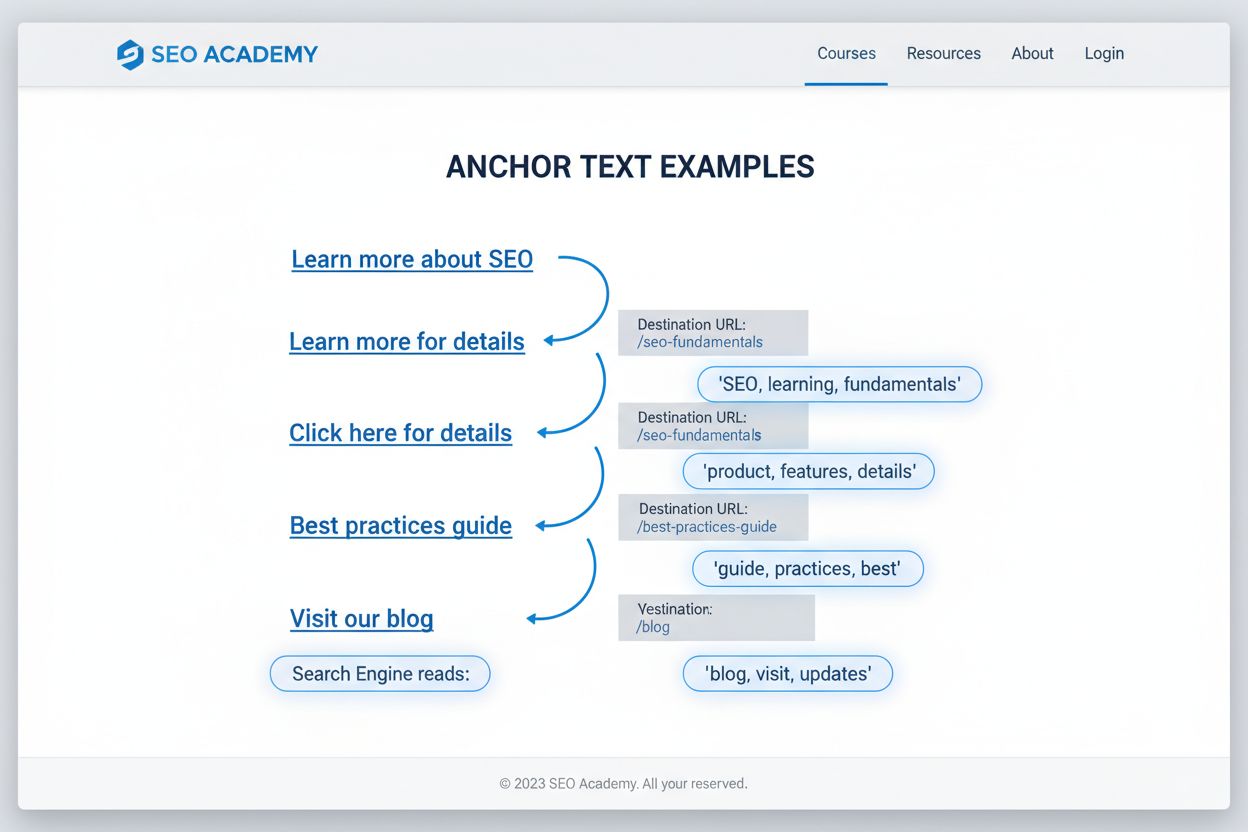
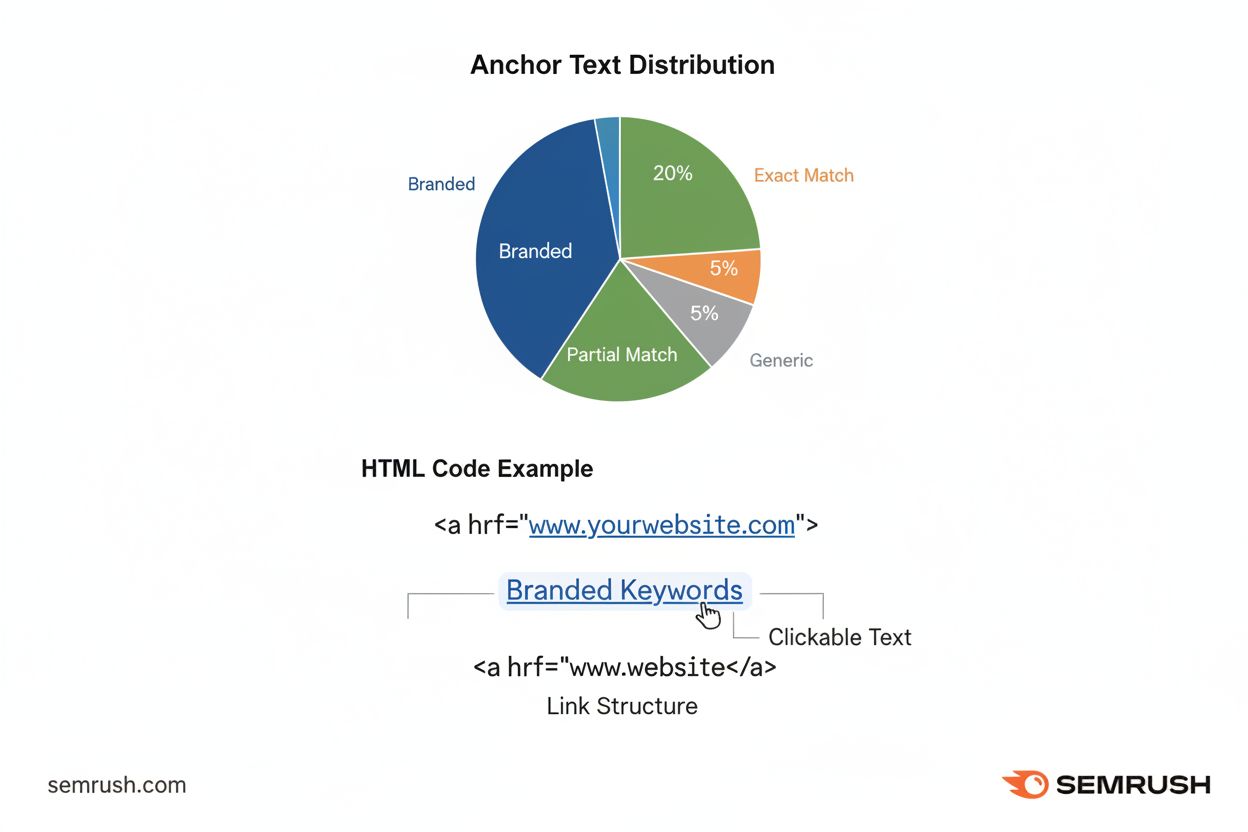
Anchor text comes in six primary types, each serving distinct purposes within a comprehensive linking strategy. Exact match anchor text uses the precise keyword you’re targeting (e.g., “best project management software” linking to a page about project management tools), providing the strongest relevance signal but requiring careful use to avoid appearing manipulative. Partial match anchor text incorporates your target keyword alongside other words (e.g., “top-rated project management software solutions”), offering a more natural appearance while still maintaining keyword relevance. Branded anchor text uses your company or product name (e.g., “Asana” or “Monday.com”), which is essential for building brand recognition and typically comprises 20-30% of a healthy backlink profile. Generic anchor text includes common phrases like “click here,” “read more,” or “learn more,” which provide minimal SEO value but appear naturally in editorial content and user-generated links. Naked URL anchor text displays the full web address as the clickable link (e.g., “https://www.example.com ”), commonly used in citations and references, while long-tail anchor text incorporates longer, more conversational phrases (e.g., “how to choose the right project management tool for your team”) that capture specific user intent and reduce over-optimization concerns. Each type plays a role in creating an authentic, diverse anchor text profile that signals legitimacy to search engines and AI systems alike.
| Anchor Type | Definition | Example | Use Case | SEO Impact |
|---|---|---|---|---|
| Exact Match | Precise target keyword | “best project management software” | Keyword ranking | High relevance, high risk if overused |
| Partial Match | Keyword with variations | “top-rated project management solutions” | Natural keyword relevance | Balanced relevance and safety |
| Branded | Company/product name | “Asana” or “Monday.com” | Brand building | Trust and authority signal |
| Generic | Common phrases | “click here,” “read more” | Natural linking | Minimal SEO value, natural appearance |
| Naked URL | Full web address | “https://www.example.com ” | Citations and references | Credibility signal, low keyword value |
| Long-tail | Conversational phrases | “how to choose the right project management tool” | Specific intent targeting | Niche relevance, low competition |
AI systems, including large language models like GPT-4, Perplexity, and Google’s AI Overviews, analyze anchor text patterns to understand brand authority, topical relevance, and content credibility within their training data and real-time information gathering. These systems recognize that natural anchor text diversity indicates genuine editorial decisions rather than manipulated link schemes, making diversity a crucial authenticity signal in the context of off-page AI visibility. When AI systems encounter a brand with varied anchor text—combining branded mentions, exact matches, partial matches, and generic anchors—they interpret this as evidence of organic, earned media coverage and legitimate third-party endorsements. The distribution and context of anchor text help AI systems determine whether a brand is genuinely recognized as an authority in its field or whether it’s attempting to artificially inflate its perceived relevance. By maintaining diverse anchor text profiles, brands signal to AI systems that they’ve earned recognition across multiple contexts and sources, which directly influences how prominently they appear in AI-generated summaries, recommendations, and search results. This diversity becomes increasingly important as AI systems become more sophisticated in detecting and penalizing artificial link patterns that contradict natural language patterns and user behavior.
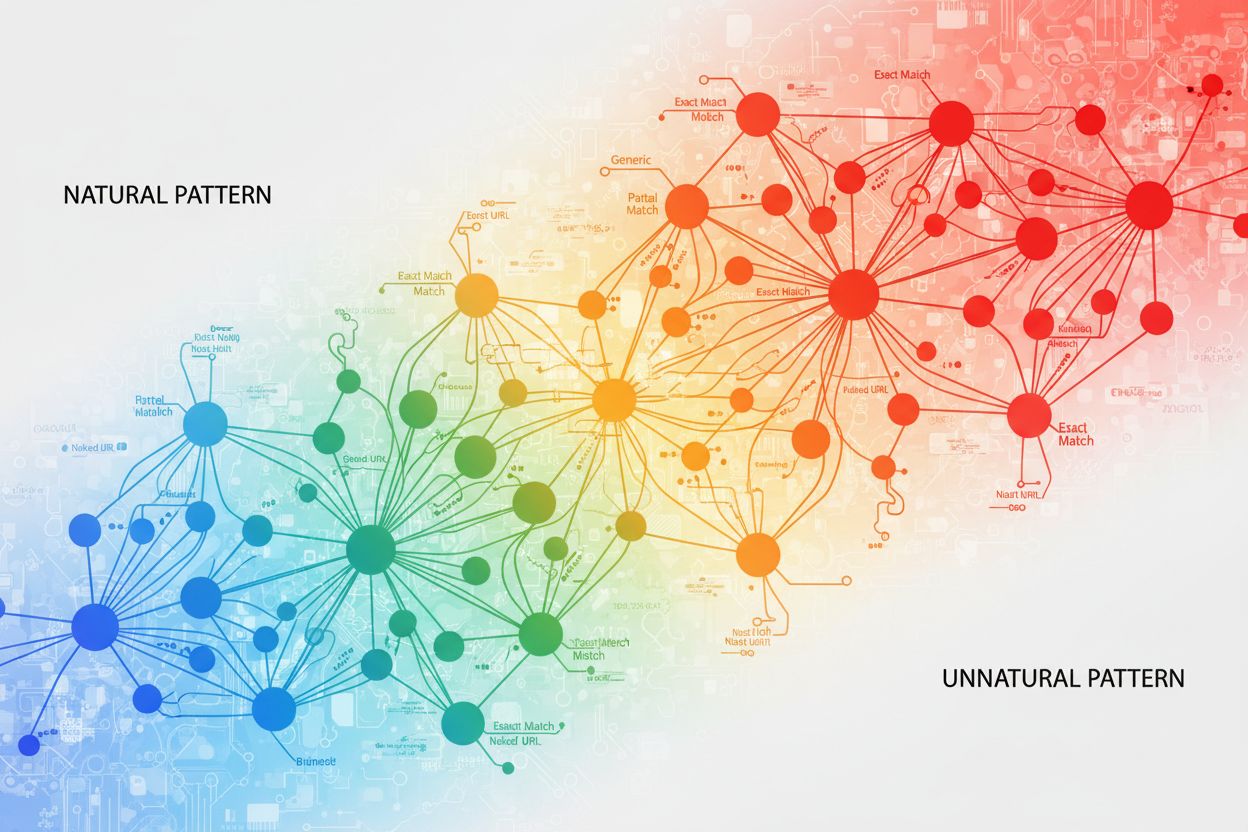
Natural anchor text patterns emerge organically when publishers, journalists, and content creators link to your site based on genuine value and relevance, resulting in a diverse mix of anchor types that reflect how real people describe your content. In contrast, unnatural or over-optimized anchor text patterns reveal themselves through suspicious characteristics: an unusually high percentage of exact-match anchors (typically above 10-15%), repetitive keyword phrases that don’t reflect natural language variation, anchors that don’t match the linked content’s actual topic, or sudden spikes in anchor text volume that suggest coordinated link-building campaigns. Google’s Penguin algorithm, introduced in 2012 and continuously refined, specifically targets websites with manipulative anchor text patterns, penalizing sites that show clear evidence of artificial link schemes designed to game rankings. Search engines and AI systems penalize unnatural patterns because they violate the fundamental principle that links should represent genuine editorial endorsements—when anchor text appears artificially optimized, it suggests the site owner is attempting to manipulate rankings rather than earning authority through legitimate means. Websites caught with unnatural anchor text profiles often experience significant ranking drops, reduced AI visibility, and damaged credibility, making it essential to maintain patterns that reflect how real users and publishers would naturally describe and link to your content. The key distinction lies in intent: natural patterns emerge from authentic linking decisions, while unnatural patterns reveal deliberate manipulation that contradicts how language and linking actually work in practice.
Natural Pattern Characteristics:
Unnatural Pattern Red Flags:
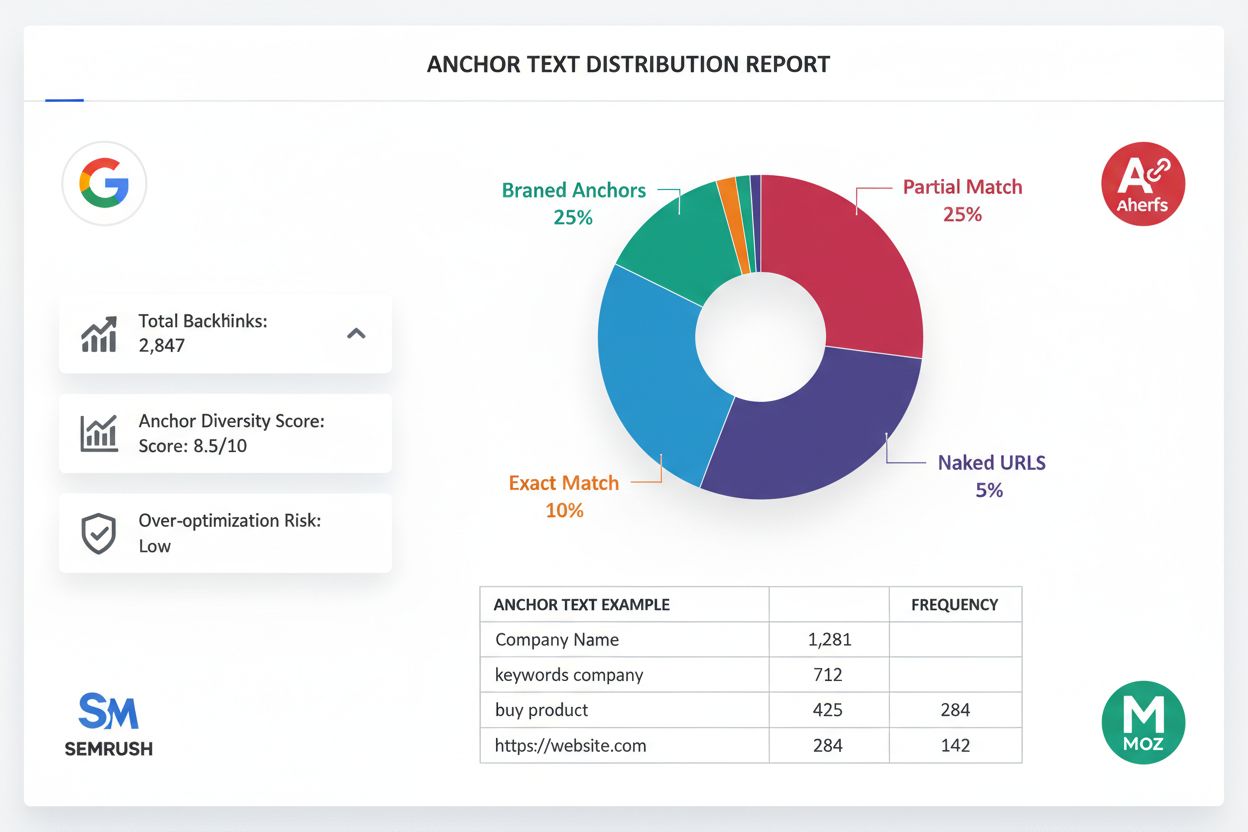
A healthy anchor text distribution typically follows this recommended ratio: branded anchors (40-60%), generic anchors (20-30%), partial match anchors (10-20%), exact match anchors (5-10%), with naked URLs and long-tail anchors comprising the remaining percentage based on your specific industry and linking opportunities. To implement this strategy effectively, focus on building relationships with publishers and content creators who naturally reference your brand by name, as branded anchors should form the foundation of your profile and require no artificial manipulation. When pursuing link opportunities, prioritize context matching—ensuring that the anchor text accurately describes the linked page’s content and fits naturally within the surrounding text, which signals authenticity to both algorithms and human readers. Rather than requesting specific anchor text from link partners, provide them with your page’s topic and value proposition, allowing them to choose language that feels natural to their audience while still supporting your SEO goals. Implement a tracking system to monitor your anchor text distribution monthly, adjusting your outreach strategy if you notice over-concentration in any single anchor type, and remember that the goal is to build a profile that looks indistinguishable from what would occur naturally if your content were genuinely popular and frequently referenced. This balanced approach protects your site from algorithmic penalties while building the authentic authority signals that AI systems recognize and reward.
Monitoring your anchor text distribution requires leveraging specialized tools designed to analyze your backlink profile comprehensively. Google Search Console provides basic anchor text data through the Links report, showing which anchors drive traffic to your site and identifying your most common anchor types, though it only displays a portion of your total backlinks. Advanced platforms like Ahrefs, SEMrush, and Moz offer detailed anchor text analysis, allowing you to view your complete anchor text distribution, compare your profile against competitors, identify anchor text opportunities, and track changes over time with historical data. To conduct a thorough audit, export your anchor text data from your preferred tool, categorize each anchor into the six types mentioned earlier, calculate the percentage distribution for each category, and compare your ratios against the recommended benchmarks to identify areas needing adjustment. Look for red flags such as sudden spikes in specific anchor types, anchors that don’t match your content topics, or unusual patterns that suggest coordinated link-building, which may indicate a need for disavow action or outreach to remove problematic links. Establish a monthly or quarterly monitoring schedule to track your anchor text distribution trends, set alerts for significant changes, and adjust your link-building strategy proactively rather than reactively addressing problems after they impact your rankings. Regular monitoring transforms anchor text from a passive metric into an active management tool that protects your site’s authority and visibility.
Common anchor text mistakes can severely damage your SEO performance and AI visibility if left unchecked. Overusing exact-match anchors—such as building 30-40% of your backlinks with your primary keyword—triggers algorithmic red flags and appears manipulative, as real publishers rarely coordinate to use identical anchor text across multiple sites (for example, if 50 sites all link with “best digital marketing agency,” it signals artificial coordination rather than organic endorsement). Irrelevant anchors that don’t match your page’s actual content confuse search engines about your site’s topic relevance and waste valuable link equity, such as linking a page about “sustainable packaging solutions” with an anchor about “luxury fashion brands.” Keyword stuffing in anchors—cramming multiple keywords into a single anchor like “best affordable eco-friendly sustainable packaging solutions”—appears unnatural and often triggers spam filters, as real publishers write anchors for human readers first. Lack of variety in your anchor text profile, where you rely too heavily on one or two anchor types, signals to AI systems that your links may not be genuinely earned across diverse sources and contexts. To avoid these mistakes, establish clear anchor text guidelines for your outreach team, regularly audit your backlink profile for problematic patterns, disavow links with irrelevant or manipulative anchors, and focus on earning links from authoritative sources that will naturally describe your content in varied, contextually appropriate language. By treating anchor text as a strategic asset requiring ongoing management rather than a metric to optimize aggressively, you build a sustainable, penalty-resistant link profile.
Anchor text diversity functions as a critical component of your broader off-page SEO strategy, working synergistically with other factors like backlink authority, referring domain diversity, and content relevance to establish comprehensive topical authority. A diverse anchor text profile strengthens your overall backlink profile by demonstrating that your site receives links from varied sources using different language and contexts, which signals to search engines and AI systems that your authority is genuine and multifaceted rather than concentrated in a single keyword or narrative. When combined with links from high-authority domains, diverse anchor text creates a powerful authority signal that AI systems recognize as legitimate earned media, making your brand more likely to appear in AI-generated content, recommendations, and search results. The relationship between anchor diversity and AI visibility is particularly important because AI systems increasingly rely on analyzing natural language patterns and link context to determine credibility—a site with diverse, natural-looking anchor text appears more trustworthy and authoritative than one with suspicious patterns. By integrating anchor text diversity into your comprehensive off-page SEO strategy, you create multiple reinforcing signals that work together to establish your brand as a recognized authority in your field, ultimately improving both traditional search visibility and emerging AI visibility metrics that will define digital marketing success in the coming years.
A healthy anchor text profile typically follows this distribution: branded anchors (40-60%), generic anchors (20-30%), partial match anchors (10-20%), exact match anchors (5-10%), with naked URLs and long-tail anchors comprising the remaining percentage. This ratio ensures your link profile appears natural while still supporting your SEO goals and avoiding algorithmic penalties.
AI systems like GPT-4, Perplexity, and Google's AI Overviews analyze anchor text patterns to determine brand authority and credibility. Natural anchor text diversity signals to these systems that your brand has earned genuine recognition across multiple contexts and sources, making you more likely to appear in AI-generated summaries and recommendations.
You cannot directly control how external websites link to your content, but you can influence it through outreach. Rather than requesting specific anchor text, provide link partners with your page's topic and value proposition, allowing them to choose natural language while still supporting your SEO goals. Focus on building relationships with quality publishers.
Anchor text diversity involves using varied, natural anchor types that reflect how real publishers would describe your content. Keyword stuffing, by contrast, involves cramming multiple keywords into a single anchor or overusing exact-match keywords across your backlink profile. Diversity signals authenticity; stuffing signals manipulation.
Establish a monthly or quarterly monitoring schedule to track your anchor text distribution trends. Regular audits help you identify problematic patterns early, adjust your link-building strategy proactively, and ensure your profile remains balanced and natural-looking. Use tools like Ahrefs, SEMrush, or Moz for comprehensive analysis.
Yes, anchor text diversity matters for both internal and external links. Internal anchor text helps search engines understand your site structure and content relationships, while external anchor text (backlinks) signals authority and relevance. Both should follow diversity best practices to avoid over-optimization and maintain a natural appearance.
Top tools for anchor text analysis include Google Search Console (free, basic data), Ahrefs (comprehensive backlink analysis), SEMrush (detailed audits and competitor comparison), and Moz Link Explorer (beginner-friendly). Each tool offers different features, so many professionals use multiple tools for complete visibility into their anchor text profile.
Google's Penguin algorithm, introduced in 2012, specifically targets websites with manipulative anchor text patterns. Sites with unnatural anchor text distributions—particularly those with excessive exact-match keywords—face ranking penalties. Maintaining diverse, natural-looking anchor text protects your site from Penguin penalties and maintains long-term visibility.
AmICited tracks how AI systems reference your brand across GPTs, Perplexity, and Google AI Overviews. Ensure your anchor text diversity is building the right signals.
Anchor text is the clickable text in hyperlinks that helps search engines understand page relevance and improves user navigation. Learn types, best practices, a...
Discover how branded anchor text has evolved in the AI era and why it's critical for off-page SEO. Learn strategies for building brand authority through AI-awar...
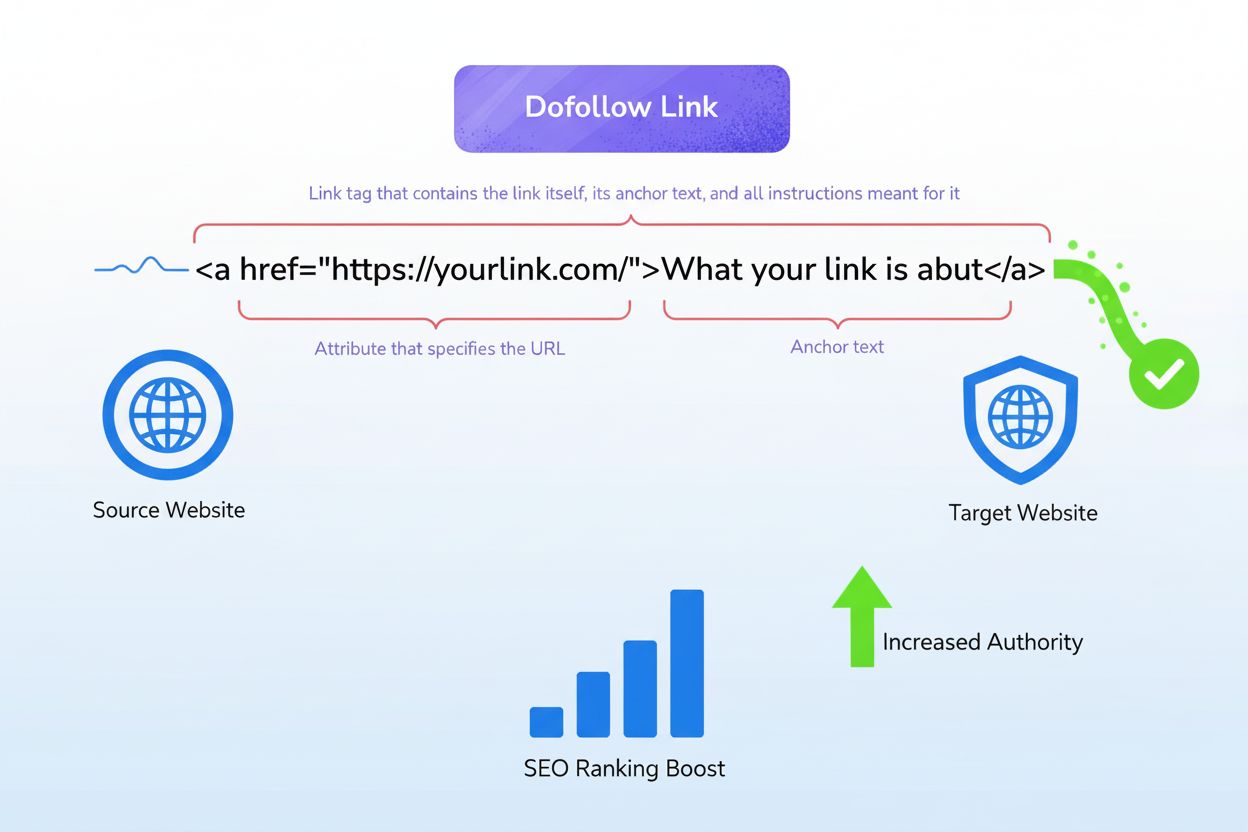
Learn what dofollow links are, how they pass ranking value and authority through link juice, and why they're critical for SEO success and AI search visibility.
Cookie Consent
We use cookies to enhance your browsing experience and analyze our traffic. See our privacy policy.