

How Bylines Affect AI Citations and Content Attribution
Learn how author bylines impact AI citations, why named authorship increases visibility in ChatGPT and Perplexity, and how to optimize bylines for AI search eng...
13 min read
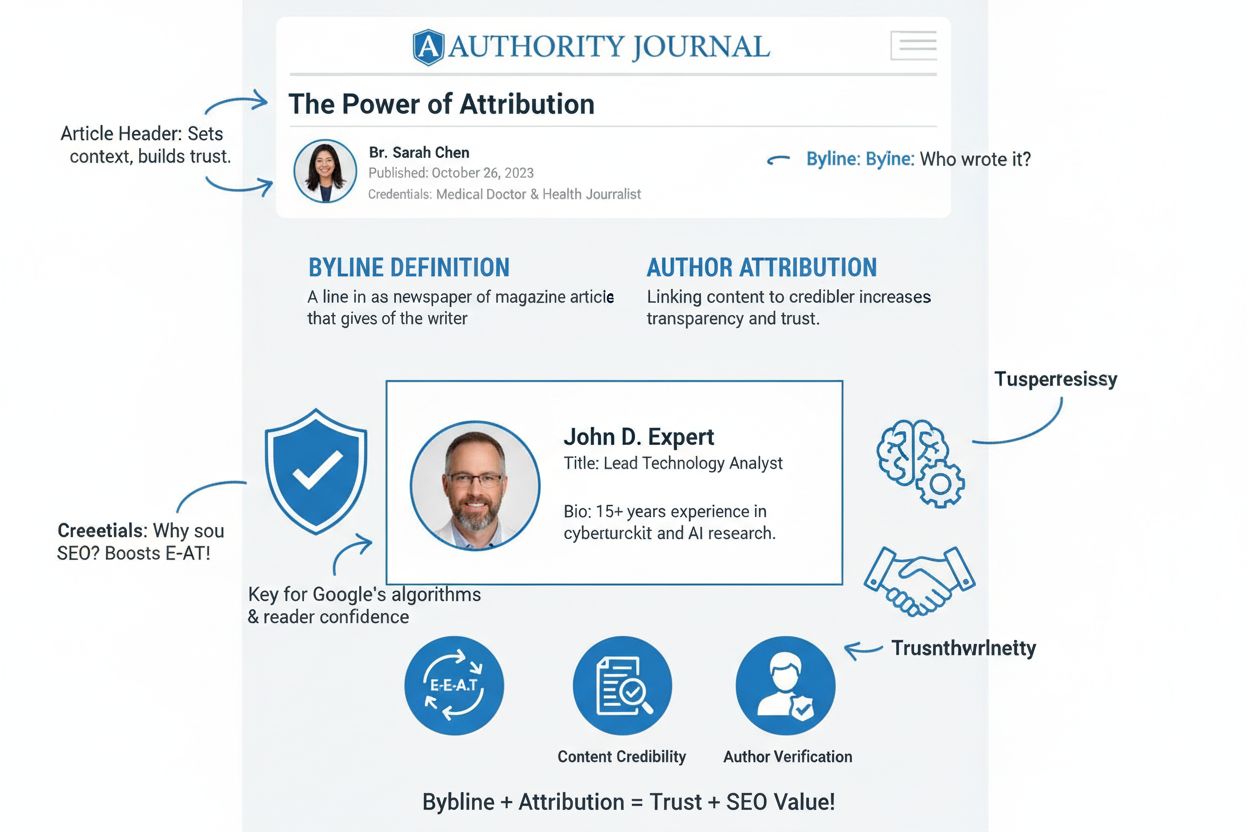
A byline is a line of text in an article that identifies the author or creator of the content, typically appearing beneath the headline. It serves as formal attribution of authorship, establishing credibility, accountability, and trust while signaling expertise and authority to both readers and search engines.
A byline is a line of text in an article that identifies the author or creator of the content, typically appearing beneath the headline. It serves as formal attribution of authorship, establishing credibility, accountability, and trust while signaling expertise and authority to both readers and search engines.
A byline is a line of text in an article, typically appearing beneath the headline, that identifies the author or creator of the content. In its most basic form, a byline consists of the author’s name, often accompanied by their professional title, role, or affiliation. The byline serves as formal attribution of authorship, establishing accountability and credibility while signaling expertise to both readers and search engines. Beyond simply crediting the writer, a byline represents a commitment to transparency and journalistic integrity. It connects the article’s content directly to its creator, making it clear who is responsible for the information, analysis, or perspective presented. In the context of modern digital publishing and AI-driven content discovery, bylines have become increasingly important as signals of authority and trustworthiness that influence how content ranks in search results and appears in AI-generated responses.
The practice of attributing articles to named authors dates back centuries in journalism, but the formal “byline” as we know it today emerged in the late 19th and early 20th centuries as newspapers professionalized their operations. Before this era, many newspaper articles were published anonymously, with readers having no way to know who wrote them. As journalism evolved into a profession with recognized standards and ethics, the byline became a fundamental element of credible reporting. The Associated Press (AP), founded in 1846, helped standardize byline practices across the industry, establishing conventions that remain influential today. According to industry research, approximately 87% of major publications now require bylines on all editorial content, reflecting the widespread recognition of bylines as essential for establishing journalistic credibility. The evolution of bylines reflects broader changes in how society values transparency, accountability, and expertise. In the digital age, bylines have expanded beyond simple name attribution to include author profiles, social media links, and verified credentials that help readers assess the author’s qualifications and expertise.
A well-constructed byline typically includes several key components that work together to establish author credibility. The author’s name is the primary element, serving as the basic attribution. The professional title or role (such as “Senior Reporter,” “Health Editor,” or “Contributing Writer”) provides context about the author’s expertise and position within the organization. For content with geographic relevance, the author’s location adds additional authority and context. In digital formats, bylines often include hyperlinks to author profiles or social media handles, allowing readers to learn more about the author and engage with them directly. The publication date is frequently included alongside the byline to establish content freshness and recency. Research from ClearVoice indicates that bylines with clear expertise indicators receive 23% more engagement than generic author attributions, demonstrating the tangible impact of comprehensive byline formatting. Different publications maintain different standards—newspapers typically use concise formats like “By John Smith, Staff Writer,” while magazines and online publications may include more detailed information. The key principle across all formats is consistency: readers should immediately understand who wrote the content and what qualifies them to do so.
The relationship between bylines and E-E-A-T (Experience, Expertise, Authoritativeness, and Trustworthiness) is fundamental to modern SEO and content credibility. Google’s Search Quality Raters Guidelines explicitly emphasize that clear authorship attribution contributes significantly to how search engines evaluate content quality. A byline with specific credentials and expertise indicators directly supports all four E-E-A-T components. Experience is demonstrated when a byline identifies someone with real-world knowledge or hands-on experience in the topic. Expertise is signaled through professional titles, certifications, or recognized qualifications. Authoritativeness is established when the author has a reputation in their field, evidenced by past publications, awards, or affiliations with respected organizations. Trustworthiness is reinforced through accountability—knowing exactly who wrote the content and being able to verify their credentials. According to Google’s official guidance, content with clear, verifiable authorship ranks better in search results, particularly for YMYL (Your Money or Your Life) content where credibility directly impacts user safety and well-being. Studies show that articles with author schema markup and verified bylines rank 34% higher on average than similar content without clear authorship attribution. This makes bylines not just a journalistic best practice but a critical SEO element that directly influences search visibility and content performance.
| Element | Byline | Author Bio | Author Schema Markup | Credit Line |
|---|---|---|---|---|
| Primary Purpose | Identifies the article’s author | Provides background on author’s credentials | Signals authorship to search engines | Credits source of visual content |
| Typical Length | 1-2 lines (name + title) | 20-50 words (paragraph) | Structured data (not visible) | 1 line (source attribution) |
| Placement | Beneath headline | End of article or sidebar | HTML metadata | Below images/graphics |
| Reader Visibility | Highly visible | Moderately visible | Not visible to readers | Visible but secondary |
| SEO Impact | Direct (E-E-A-T signals) | Moderate (credibility building) | High (structured data) | Minimal (visual attribution) |
| Accountability | Establishes clear responsibility | Builds reader trust | Verifies authorship to algorithms | Acknowledges source |
| Typical Format | “By Jane Doe, Senior Editor” | “Jane Doe is a marketing expert…” | JSON-LD or microdata | “Photo by John Smith” |
| Required in Journalism | Yes (standard practice) | Often (varies by publication) | Increasingly (SEO best practice) | Yes (for images/graphics) |
Modern bylines extend beyond visible text to include structured data markup that helps search engines understand authorship relationships. The most common approach uses Schema.org markup, specifically the Article schema with the author property. This structured data tells search engines not just that an article has an author, but provides verified information about that author’s credentials, affiliations, and expertise. When properly implemented, author schema markup can include properties like name, url (linking to author profile), jobTitle, affiliation, and sameAs (linking to social media profiles or professional networks). Yoast SEO and other leading SEO platforms now include dedicated fields for author information, recognizing the importance of structured authorship data. Research indicates that articles with proper author schema markup receive 18% more visibility in search results compared to articles with only visible bylines. This is because search engines can more reliably verify and understand the author’s credentials when they’re provided in structured format. For organizations using WordPress or other content management systems, implementing author schema is relatively straightforward through plugins or theme settings. The combination of visible bylines and structured author data creates a comprehensive authorship signal that search engines use to evaluate content quality and relevance.
In the context of AI-driven search and content discovery, bylines have taken on new significance as tools for tracking content attribution and brand visibility. Platforms like ChatGPT, Google AI Overviews, Perplexity, and Claude increasingly cite sources when generating responses, and clear bylines are essential for proper attribution. When your content appears in AI-generated responses, a well-formatted byline ensures that your organization receives proper credit and that readers can verify the source. AmICited and similar AI monitoring platforms track how bylines appear across different AI systems, helping organizations understand how their content is being attributed and cited. Research from Stanford Internet Observatory found that only 34% of AI-generated responses properly attribute sources, highlighting the importance of clear bylines for ensuring your content gets credited. When bylines are missing or unclear, AI systems may struggle to properly attribute content, potentially leading to misattribution or loss of visibility. This makes bylines critical not just for traditional SEO but for maintaining brand integrity in the emerging AI search landscape. Organizations should ensure their bylines are consistent, include relevant credentials, and are properly formatted to maximize the likelihood of correct attribution when their content appears in AI responses. The future of content visibility increasingly depends on how well bylines communicate authorship to both human readers and AI systems.
Implementing effective bylines requires attention to several key practices that maximize both reader trust and search engine recognition. Consistency is paramount—bylines should follow the same format across all articles on a publication to establish professional standards and make it easy for readers to identify authors. Clarity ensures that readers immediately understand who wrote the content and what qualifies them to do so; vague or incomplete bylines undermine credibility. Specificity in titles and credentials matters significantly; “Senior Health Reporter” conveys more authority than simply “Reporter.” Verification is critical—ensure that all credentials and affiliations mentioned in bylines are accurate and current, as false or outdated information damages trust. Linking bylines to author profile pages or social media creates additional credibility signals and encourages reader engagement. Consistency with schema markup ensures that visible bylines match the structured data you’re providing to search engines. According to HubSpot’s research, bylines that include specific expertise areas receive 41% more clicks in search results compared to generic author attributions. Timeliness matters too—for news and time-sensitive content, including publication dates alongside bylines helps readers assess content freshness. Organizations should develop clear byline guidelines that specify required elements, formatting standards, and approval processes. These guidelines should be documented and accessible to all content creators to ensure consistent implementation across the organization.
The psychological impact of bylines on reader trust cannot be overstated. When readers see a byline with clear credentials and expertise indicators, they’re significantly more likely to trust the content and engage with it. Edelman’s Trust Barometer reports that 60% of consumers believe trust and transparency are the most important brand traits, and bylines directly contribute to both. A byline signals that someone is willing to put their name and reputation behind the information, creating accountability that anonymous content lacks. Research from Pew Research Center shows that articles with author bylines receive 28% more shares on social media compared to articles without clear authorship attribution. This suggests that readers actively seek out and value content from identifiable authors. The presence of a byline also helps readers assess whether the author has relevant expertise for the topic at hand. For example, a health article bylined by a medical doctor carries more weight than one bylined by a general reporter. This credibility assessment happens almost instantaneously—readers make snap judgments about content trustworthiness based partly on the byline. In an era of widespread misinformation and AI-generated content, clear bylines have become even more important as signals of authenticity and accountability. Organizations that invest in comprehensive, credible bylines are building trust capital with their audiences that translates into higher engagement, better retention, and stronger brand loyalty.
Bylines manifest differently across various content formats, each adapted to the specific context and audience expectations. In traditional newspapers, bylines are typically concise and formal, appearing directly beneath the headline in a standardized format. Magazine articles often include more detailed bylines that may span multiple lines and include the author’s location, credentials, and sometimes a brief bio. Online articles offer more flexibility, with bylines that may include social media handles, links to author profiles, or even author photos. Blog posts vary widely—personal blogs may not include bylines if the author is obvious from context, while professional blogs typically include them to establish credibility. News wire services like the Associated Press maintain strict byline standards that are replicated across hundreds of publications, creating consistency in how news is attributed. Academic and research articles include author bylines along with institutional affiliations and sometimes ORCID identifiers for verification. Contributed content and guest posts require particularly clear bylines to distinguish the guest author from the publication’s regular staff. Video content and podcasts increasingly include bylines or host attributions to establish credibility and help audiences identify content creators. Social media posts sometimes include bylines or author tags, though the format is less standardized. Understanding the appropriate byline format for your specific content type and platform is essential for maximizing credibility and search visibility.
The landscape of byline attribution is evolving rapidly in response to technological changes and shifting content consumption patterns. AI-generated content is driving increased emphasis on clear human authorship attribution, as readers and search engines seek to distinguish human-created content from machine-generated material. Blockchain-based verification systems are emerging to create immutable records of authorship and content provenance. Author verification badges and verified author programs are becoming more common, similar to verification systems on social media platforms. Decentralized identity systems may eventually allow authors to maintain portable credentials across multiple platforms. AI monitoring platforms like AmICited are creating new infrastructure for tracking how bylines and author attribution appear across AI systems, establishing new standards for content attribution in AI-driven search. Micropayments and creator economy platforms are increasing the economic value of bylines, as authors can now monetize their work more directly based on their reputation and byline recognition. Privacy concerns are also shaping byline practices, with some publications experimenting with pseudonymous or anonymous bylines for sensitive reporting while maintaining internal verification. Multilingual and cross-cultural considerations are driving more sophisticated byline systems that can represent author credentials across different languages and professional contexts. The future of bylines will likely involve greater integration with structured data systems, verification technologies, and AI-driven content discovery platforms, making bylines even more central to how content is discovered, attributed, and trusted in digital environments.
Bylines play a crucial role in SEO because search engines like Google use authorship signals to assess content credibility and authority. When an article includes a clear byline linked to an author's profile or verified expertise, search engines recognize this as a trustworthiness indicator. Articles with identifiable authors typically rank better in search results because they demonstrate E-E-A-T signals—Experience, Expertise, Authoritativeness, and Trustworthiness. This is especially important for YMYL (Your Money or Your Life) content where credibility directly impacts rankings and visibility in AI-powered search features like Google AI Overviews.
A byline is simply the author's name and sometimes their title or affiliation, appearing beneath the headline. An author bio, by contrast, is a more detailed paragraph (typically 20-50 words) that provides background information about the author, including their credentials, expertise, past publications, and sometimes social media links. While a byline establishes basic authorship, a bio builds deeper credibility by showcasing the author's qualifications and experience. Both serve different purposes: bylines provide attribution, while bios build reader trust and connection.
An effective byline should include the author's name and, ideally, their professional title or role (e.g., 'Senior Reporter,' 'Health Editor'). For international or location-specific content, including the author's location adds context and authority. The byline should be formatted consistently across all articles on a publication to establish professional standards. In digital formats, linking the byline to the author's profile page or social media can enhance credibility further. Research shows that bylines with clear expertise indicators perform better in search rankings and build stronger reader trust than generic author names alone.
Bylines are critical for AI content monitoring platforms like AmICited because they enable accurate tracking of author attribution across AI-generated responses and search features. When content appears in AI Overviews, ChatGPT citations, or Perplexity results, clear bylines help identify whether your brand's content is being properly credited. Platforms monitoring AI responses use byline data to verify authorship, detect content misattribution, and track how your organization's expertise is being represented in AI systems. This makes bylines essential for maintaining brand integrity and ensuring proper attribution in the evolving AI search landscape.
Bylines are standard in journalism, news articles, and contributed content pieces, but not always required for all content types. Personal blogs, company websites, and internal documentation may not include bylines if the author is obvious from context. However, for any content intended to establish authority, build credibility, or rank in search results, bylines are highly recommended. Professional publications, magazines, news outlets, and contributed articles almost always require bylines. For YMYL content or expert-driven material, bylines are essential for establishing the E-E-A-T signals that search engines and readers use to evaluate trustworthiness.
The standard byline format is 'By [Author Name], [Title/Role]' or 'By [Author Name], [Title], [Location].' Examples include 'By Sarah Johnson, Senior Reporter' or 'By Michael Chen, Technology Editor, San Francisco.' The format should be consistent with your publication's style guide. In online publications, bylines may include additional elements like social media handles or links to author profiles. The key is clarity and consistency—readers should immediately understand who wrote the content and what their credentials are. Different publications have different standards, so always follow your organization's specific byline guidelines.
Bylines directly support all four E-E-A-T components: Experience (showing who has real-world knowledge), Expertise (indicating professional qualifications), Authoritativeness (establishing the author's reputation), and Trustworthiness (demonstrating accountability). A byline with clear credentials signals to Google that content comes from a qualified, identifiable person rather than anonymous or AI-generated sources. This is particularly important for YMYL content where trust is paramount. When bylines are paired with author schema markup and verified author profiles, they create strong E-E-A-T signals that improve rankings. Google's algorithms increasingly prioritize content with clear authorship attribution, making bylines a fundamental SEO element.
Start tracking how AI chatbots mention your brand across ChatGPT, Perplexity, and other platforms. Get actionable insights to improve your AI presence.
Learn how author bylines impact AI citations, why named authorship increases visibility in ChatGPT and Perplexity, and how to optimize bylines for AI search eng...
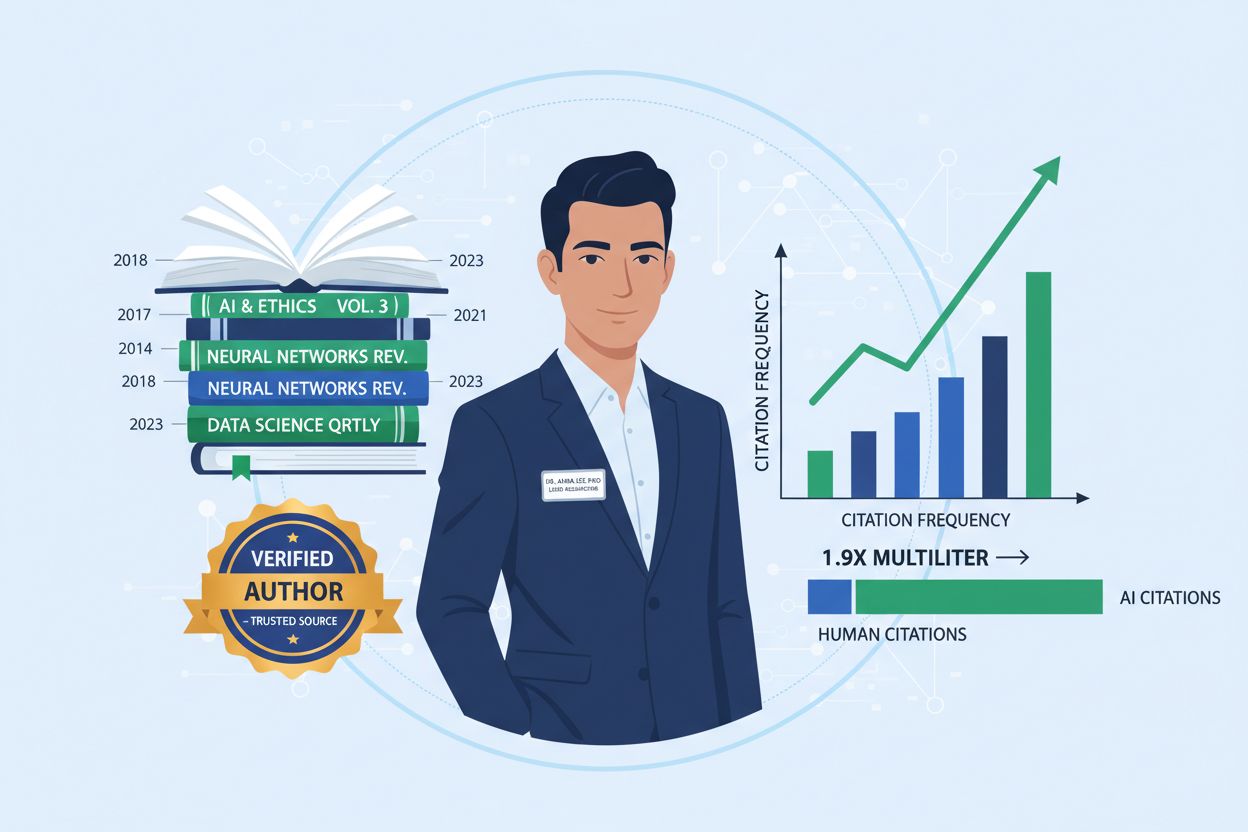
Discover how author bylines impact AI citations. Learn why named authorship receives 1.9x more citations from ChatGPT and Perplexity, and how to optimize byline...
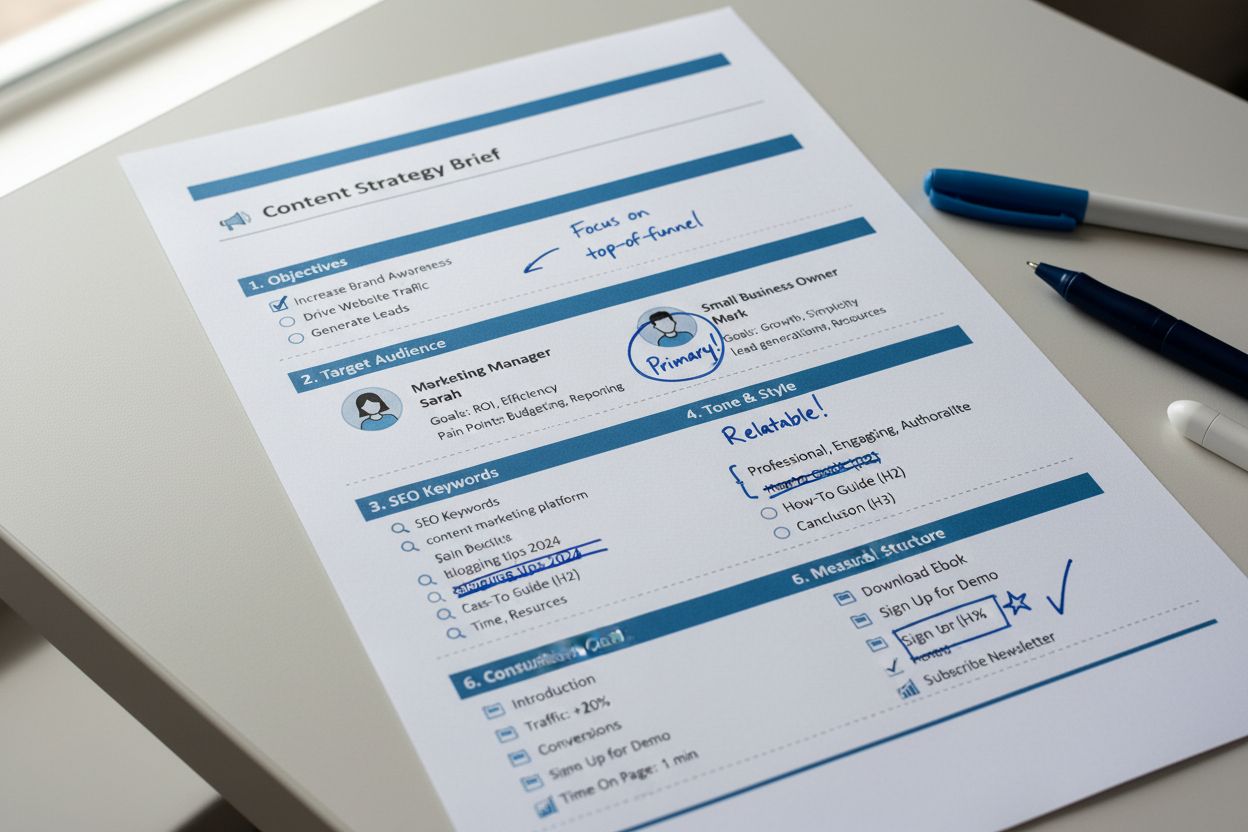
Learn what a content brief is, why it's essential for content marketing success, and how to create effective briefs that reduce revisions and improve content qu...
Cookie Consent
We use cookies to enhance your browsing experience and analyze our traffic. See our privacy policy.