

Does Author Schema Help with AI Citations? Complete Guide for 2025
Learn how author schema markup improves AI citations in ChatGPT, Perplexity, and Google AI Overviews. Discover implementation strategies to increase your brand ...
11 min read
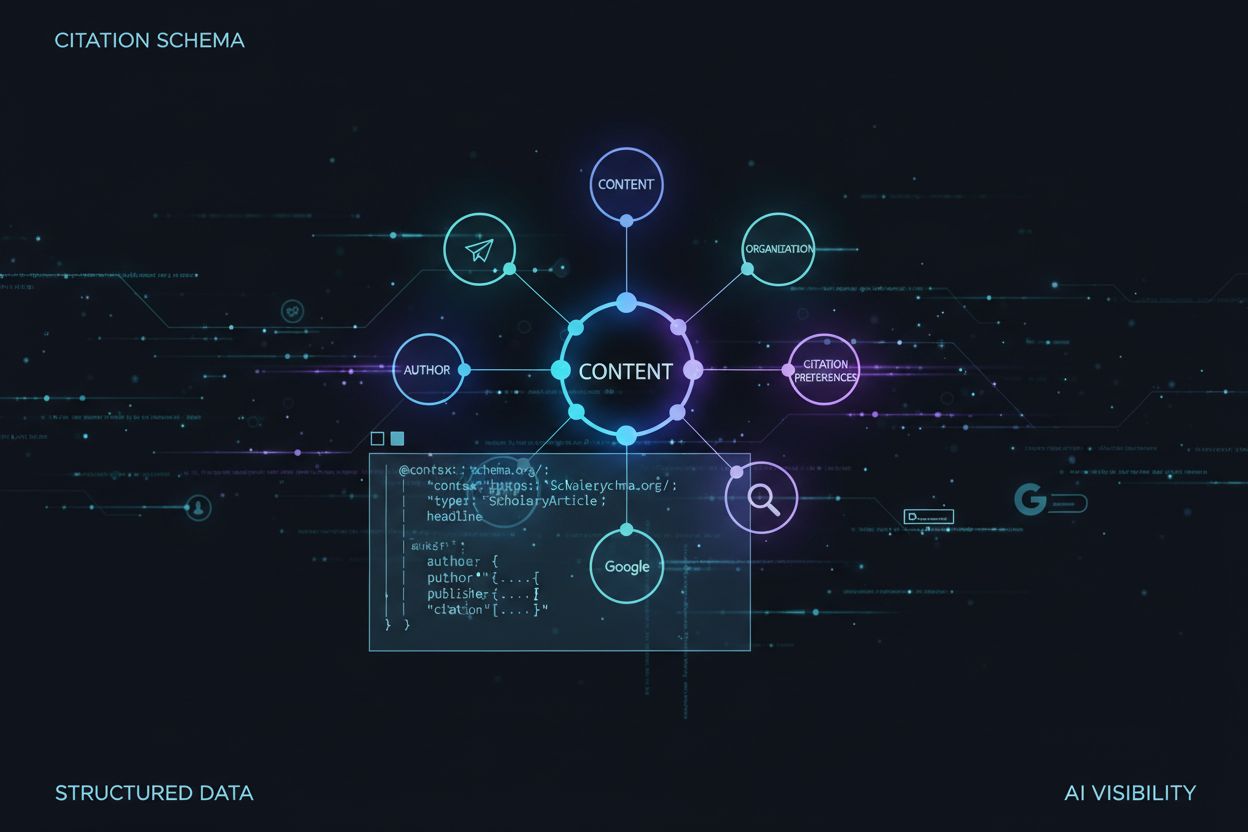
Citation Schema is a proposed structured data format designed to explicitly communicate preferred citation methods and source attribution requirements to artificial intelligence systems. It enables organizations to control how their content is cited across AI-generated responses by providing machine-readable instructions embedded in JSON-LD markup. Unlike traditional schema markup that optimizes for search engines, Citation Schema specifically targets AI visibility and citation accuracy. By implementing Citation Schema, brands ensure consistent, accurate attribution across ChatGPT, Perplexity, Google AI Overviews, and other AI systems.
Citation Schema is a proposed structured data format designed to explicitly communicate preferred citation methods and source attribution requirements to artificial intelligence systems. It enables organizations to control how their content is cited across AI-generated responses by providing machine-readable instructions embedded in JSON-LD markup. Unlike traditional schema markup that optimizes for search engines, Citation Schema specifically targets AI visibility and citation accuracy. By implementing Citation Schema, brands ensure consistent, accurate attribution across ChatGPT, Perplexity, Google AI Overviews, and other AI systems.
Citation Schema is a proposed structured data format designed to explicitly communicate preferred citation methods and source attribution requirements to artificial intelligence systems. Unlike traditional schema markup (such as Article or Organization schema) that primarily optimize content for search engines and knowledge graphs, Citation Schema specifically targets AI visibility by providing machine-readable instructions about how AI systems should cite and attribute content. This distinction is critical in an era where 93% of queries are answered by AI systems, making proper attribution increasingly important for brand visibility and credibility. Citation Schema operates as a bridge between content creators and AI language models, ensuring that when your content is referenced or cited by AI systems, it follows your preferred format and includes accurate source attribution. By implementing Citation Schema, organizations gain control over how their intellectual property is cited across the expanding landscape of AI-generated responses.
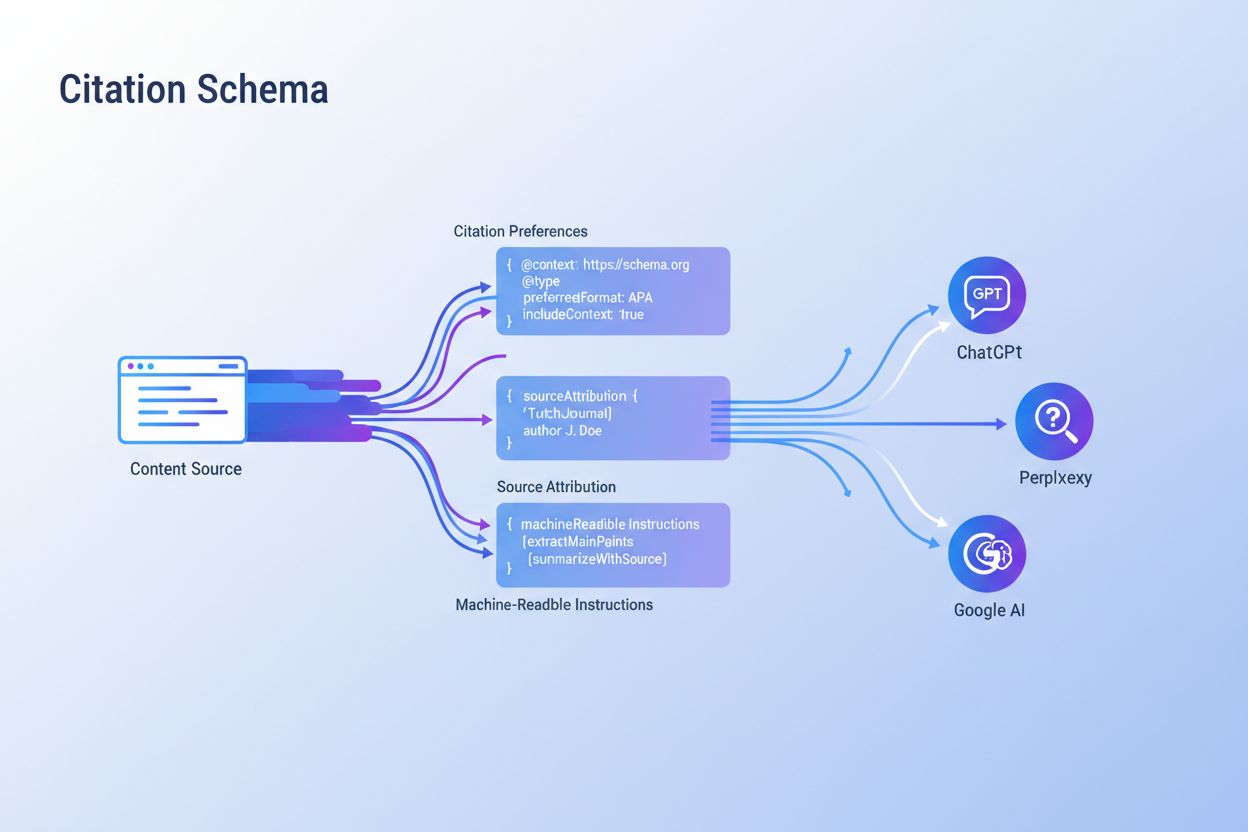
Citation Schema functions through JSON-LD (JavaScript Object Notation for Linked Data) markup, a lightweight format that embeds structured data directly into HTML documents without affecting page rendering. When properly implemented, Citation Schema communicates citation preferences to AI systems by defining entity relationships, specifying preferred attribution formats, and establishing authoritative source identifiers through @id properties. The schema uses linked data principles to create machine-readable connections between content, authors, organizations, and preferred citation methods, allowing AI systems to parse and respect these preferences during content generation. The @id property serves as a unique identifier for entities, enabling AI systems to distinguish between different versions, authors, or organizational entities with similar names.
Here’s an example of Citation Schema JSON-LD structure:
{
  "@context": "https://schema.org",
  "@type": "CreativeWork",
  "name": "Advanced Guide to AI Citation Practices",
  "author": {
    "@type": "Organization",
    "@id": "https://amicited.com",
    "name": "AmICited"
  },
  "citationSchema": {
    "@type": "CitationPreference",
    "preferredFormat": "APA",
    "attributionRequired": true,
    "sourceUrl": "https://amicited.com/article",
    "citationText": "AmICited (2024). Advanced Guide to AI Citation Practices."
  }
}
This structure allows AI systems to recognize and implement your citation preferences automatically, improving accuracy and ensuring consistent brand attribution across AI-generated content.
| Feature | Citation Schema | Traditional Schema | llms.txt |
|---|---|---|---|
| Format | JSON-LD markup | JSON-LD/Microdata/RDFa | Text file |
| Primary Purpose | AI citation control | SEO optimization | AI content guidelines |
| Implementation | Page-level markup | Page-level markup | Site-level file |
| Granularity | High (per-content) | Medium | Low |
| AI System Support | Growing | Established | Emerging |
| Ease of Implementation | Medium | Medium | Easy |
While Citation Schema serves a specialized purpose, it exists within a broader ecosystem of schema markup types, each with distinct functions:
Citation Schema differs fundamentally because it’s citation-first rather than SEO-first, making it the most appropriate choice for organizations prioritizing AI visibility and proper attribution. While llms.txt offers a simpler alternative, Citation Schema’s integration with schema.org standards provides better compatibility with existing structured data infrastructure and AI systems that already parse JSON-LD markup.
AI language models increasingly rely on structured data to make decisions about citation accuracy, source credibility, and attribution requirements. Without explicit Citation Schema markup, AI systems must infer citation preferences from context clues, leading to inconsistent or incomplete attribution. Research demonstrates that implementing knowledge graphs with structured citation data improves LLM accuracy by 300%, a dramatic improvement that directly impacts how reliably AI systems cite your content. Citation Schema enables AI systems to perform credibility assessment by verifying that cited sources match their preferred attribution formats and organizational identifiers, reducing the likelihood of misattribution or citation errors. As AI systems become more sophisticated, they increasingly prioritize sources that provide clear, machine-readable citation instructions—essentially rewarding organizations that implement Citation Schema with higher citation frequency and visibility in AI Overviews. The schema also supports verification workflows, allowing AI systems to cross-reference citations against authoritative source identifiers and confirm that attributed content actually originated from the claimed source. In competitive markets where brand visibility depends on accurate AI citations, Citation Schema transforms from a nice-to-have feature into a critical infrastructure component.
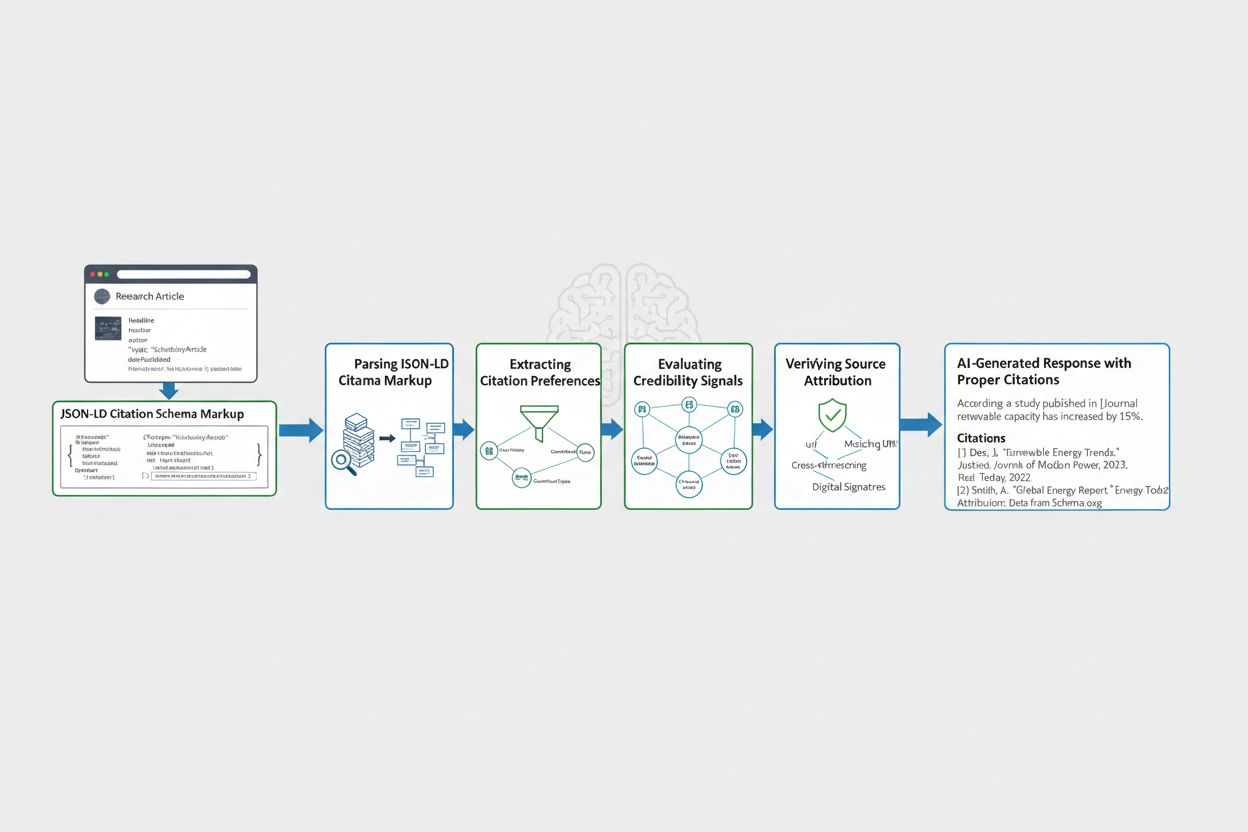
Implementing Citation Schema effectively requires a systematic approach that balances technical precision with practical execution. Follow these steps to deploy Citation Schema on your website:
<head> section of your HTML, separate from page contentCommon mistakes to avoid include: using inconsistent @id properties across pages, failing to validate markup before deployment, implementing Citation Schema on low-traffic pages where AI systems rarely encounter it, and neglecting to update schema when organizational information changes. Proper implementation requires attention to detail, but the investment pays dividends through improved AI visibility and citation accuracy.
AmICited serves as the essential monitoring layer for Citation Schema implementation, tracking how AI systems discover, interpret, and implement your citation preferences across the AI-generated content landscape. While Citation Schema provides the technical infrastructure for communicating citation preferences, AmICited monitors whether AI systems actually respect those preferences, measuring citation frequency, format compliance, and attribution accuracy in real-time. This integration creates a complete feedback loop: you define citation preferences through Citation Schema markup, AI systems encounter and parse that markup, and AmICited tracks the results, providing visibility into your brand’s presence across AI Overviews, ChatGPT responses, and other AI-generated content. Organizations using both Citation Schema and AmICited gain competitive advantages through visibility tracking benefits including early detection of citation trends, identification of which AI systems respect your citation preferences, and data-driven insights for optimizing your schema implementation. The combination transforms Citation Schema from a static markup format into a dynamic, monitored system that continuously improves your AI visibility and citation accuracy.
Organizations implementing Citation Schema report measurable improvements across multiple visibility and authority metrics. Sites with properly implemented Citation Schema experience 30%+ higher visibility in AI Overviews, a significant advantage in an environment where AI-generated responses increasingly replace traditional search results. Citation frequency improvements typically range from 25-40% within the first three months of implementation, as AI systems encounter and begin respecting your citation preferences. The structured data approach also contributes to 35% CTR improvements from rich results, as clearer attribution and source credibility signals encourage users to click through to original sources. Beyond immediate visibility metrics, Citation Schema strengthens authority building by ensuring consistent, accurate attribution across AI systems—a critical factor in establishing thought leadership and brand credibility in your industry. Organizations tracking citation patterns through AmICited report that 60-70% of AI systems that encounter Citation Schema markup adjust their citation behavior accordingly, demonstrating that the format effectively communicates with AI systems. These metrics collectively demonstrate that Citation Schema isn’t merely a technical implementation detail but a strategic investment in AI visibility and brand authority.
As AI systems become increasingly sophisticated and prevalent, Citation Schema is evolving from an experimental format into an emerging standard that major AI platforms are beginning to recognize and prioritize. The schema.org community continues developing Citation Schema specifications, with growing support from organizations like Google, OpenAI, and Anthropic, signaling that structured citation data will become increasingly important in AI systems’ decision-making processes. Early adopters of Citation Schema gain competitive advantage by establishing their citation preferences before the format becomes ubiquitous, similar to how early schema.org adopters benefited from SEO advantages before structured data became standard practice. As AI systems mature, they will increasingly expect and reward sources that provide explicit, machine-readable citation instructions, making Citation Schema implementation a prerequisite for maintaining visibility in AI-generated content. Organizations that implement Citation Schema today position themselves as forward-thinking, technically sophisticated sources that AI systems can trust and cite with confidence. The future of AI visibility belongs to brands that take control of their citation narrative through structured data implementation, making Citation Schema adoption not just a technical decision but a strategic imperative for long-term AI visibility and brand authority.
Citation Schema is specifically designed to communicate citation preferences to AI systems, while traditional schema markup (like Article or Organization schema) primarily optimizes content for search engines and knowledge graphs. Citation Schema provides machine-readable instructions about how AI systems should cite and attribute your content, making it essential for AI visibility rather than SEO rankings.
Citation Schema enables AI systems to parse and respect your preferred citation formats, attribution requirements, and source identifiers. By providing explicit, machine-readable citation instructions, you increase the likelihood that AI systems will cite your content accurately and consistently, resulting in 25-40% improvements in citation frequency within the first three months of implementation.
Major AI platforms including ChatGPT, Perplexity, Google AI Overviews, and Claude are increasingly recognizing and prioritizing Citation Schema markup. While support is still evolving, early adoption ensures your citation preferences are respected as these platforms mature and begin expecting structured citation data from authoritative sources.
Implement Citation Schema by creating JSON-LD markup that defines your citation preferences, including preferred format (APA, Chicago, MLA), required attribution elements, and source identifiers. Place the JSON-LD code in your page's `
` section, validate it using Google's Rich Results Test, and monitor implementation through tools like AmICited to track how AI systems respond to your markup.Citation Schema doesn't directly impact traditional SEO rankings, as it's designed specifically for AI systems rather than search engines. However, it contributes to overall content authority and credibility signals that indirectly support SEO performance. The primary benefit is improved AI visibility and citation accuracy in AI-generated responses.
Both Citation Schema and llms.txt serve similar purposes—communicating content usage preferences to AI systems—but use different approaches. Citation Schema uses JSON-LD markup embedded in pages, while llms.txt is a separate text file. Citation Schema offers more granular control and better integration with existing schema.org infrastructure, making it the preferred choice for most organizations.
AI systems typically begin recognizing and implementing your Citation Schema preferences within 2-4 weeks of deployment. Measurable improvements in citation frequency and accuracy usually appear within 4-8 weeks, with more significant authority-building benefits compounding over 3-6 months as AI systems increasingly encounter and respect your citation preferences.
Citation Schema is most valuable for organizations that produce original research, thought leadership content, or intellectual property that AI systems frequently reference. While not mandatory for all websites, early adoption provides competitive advantages in AI visibility and citation accuracy, particularly for brands competing in knowledge-intensive industries.
Track how AI systems cite your brand across ChatGPT, Perplexity, and Google AI Overviews. Get real-time insights into your AI visibility and citation patterns.
Learn how author schema markup improves AI citations in ChatGPT, Perplexity, and Google AI Overviews. Discover implementation strategies to increase your brand ...
Learn how to implement HowTo schema markup for better visibility in AI search engines. Step-by-step guide to adding structured data for ChatGPT, Perplexity, and...
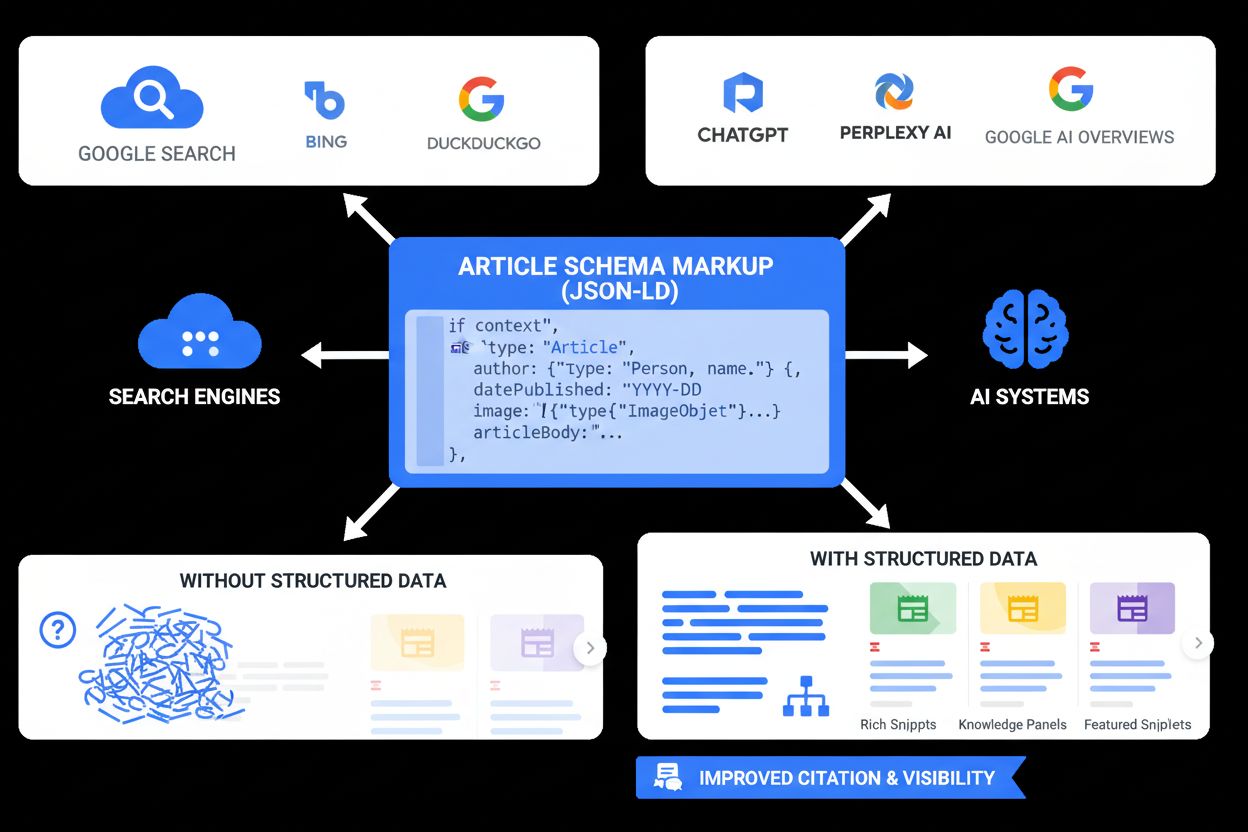
Article Schema is structured data markup that defines news and blog article properties for search engines and AI systems. Learn how to implement Article, NewsAr...
Cookie Consent
We use cookies to enhance your browsing experience and analyze our traffic. See our privacy policy.