

Cost Per Click (CPC)
Learn what Cost Per Click (CPC) means in digital advertising. Understand CPC calculation, bidding strategies, and how it compares to CPM and CPA models for opti...
11 min read
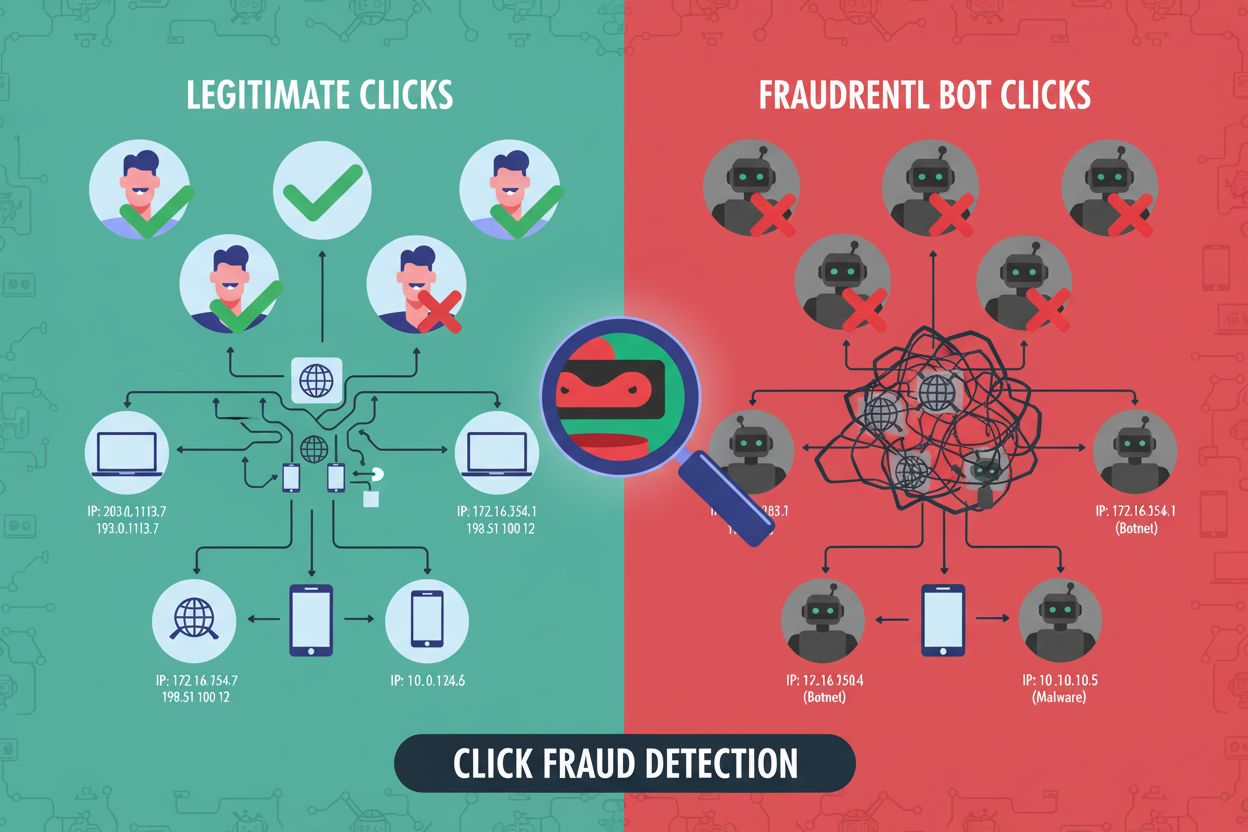
Click fraud is the malicious practice of generating fake clicks on pay-per-click (PPC) advertisements through bots, click farms, or competitors to drain advertising budgets, inflate metrics, and sabotage campaigns. These fraudulent clicks produce zero genuine engagement or conversions, costing advertisers an estimated $104 billion annually in wasted ad spend.
Click fraud is the malicious practice of generating fake clicks on pay-per-click (PPC) advertisements through bots, click farms, or competitors to drain advertising budgets, inflate metrics, and sabotage campaigns. These fraudulent clicks produce zero genuine engagement or conversions, costing advertisers an estimated $104 billion annually in wasted ad spend.
Click fraud is the deliberate, malicious practice of generating fake clicks on pay-per-click (PPC) advertisements through automated bots, organized click farms, competitors, or other fraudulent actors with the explicit intent to drain advertising budgets, inflate engagement metrics, and sabotage campaign performance. Unlike accidental clicks or legitimate user interactions, click fraud is fundamentally deceptive by design—it exploits the core payment model of digital advertising where advertisers pay for each click regardless of genuine intent or conversion potential. These fraudulent clicks produce zero meaningful engagement, no conversions, and no business value, yet they consume advertising budgets at alarming rates. The practice has evolved from a minor nuisance into a sophisticated, industrialized threat that costs the global advertising industry an estimated $104 billion annually, with projections reaching $172 billion by 2028.
The financial devastation of click fraud extends far beyond simple budget waste. According to comprehensive 2025-2026 data, 22% of global digital ad spend is lost to ad fraud, meaning that for every $3 spent on digital advertising, approximately $1 is lost to fraudulent activity. On average, 15-25% of all paid clicks across major advertising platforms are fraudulent, though this percentage varies significantly by platform, industry, and geographic region. The most alarming statistic is that 81% of advertisers believe at least 10% of their ad traffic is fraudulent, yet the vast majority of campaigns still lack robust fraud protection mechanisms. This widespread vulnerability indicates that click fraud detection and prevention remain critically underfunded and underutilized across the industry.
Platform-specific fraud rates reveal the varying levels of vulnerability across major advertising channels. Google Ads experiences search network fraud rates between 11-18%, while its display network faces significantly higher rates of 24-36%. YouTube ads show fraud rates of 17-28%, despite Google’s sophisticated invalid click detection systems. Meta platforms (Facebook and Instagram) face 13-21% fraud on News Feed ads and 16-24% on Instagram, with the Meta Audience Network experiencing the highest rates at 31-47%. Microsoft Ads shows 9-16% fraud rates, while LinkedIn maintains lower rates at 7-13% due to its professional context and higher click costs. These variations demonstrate that no platform is immune to click fraud, and relying solely on built-in platform protections leaves significant gaps in defense.
Click fraud operates through multiple sophisticated mechanisms, each designed to bypass detection systems and exploit the fundamental economics of pay-per-click advertising. Competitor click fraud represents one of the most insidious forms, where rival businesses or hired actors systematically click on competitors’ ads to exhaust daily budgets and force ads offline, allowing fraudsters to capture the top advertising positions. This tactic accounts for approximately 18-25% of all fraudulent clicks in competitive industries like legal services, insurance, and e-commerce.
Bot-driven click fraud represents the largest segment of fraudulent activity, utilizing advanced automated systems that employ sophisticated techniques including browser fingerprint randomization, mouse movement simulation, cookie manipulation, residential proxy networks, and session replay capabilities. Modern fraud bots are so advanced that standard fraud detection methods catch less than 40% of sophisticated bot traffic. These bots can introduce random delays of 3-45 seconds before clicking, visit multiple pages on target websites, scroll at natural speeds, and even partially fill out forms to appear as legitimate users.
Click farms employ dozens or hundreds of low-wage workers, primarily located in developing countries, to manually click ads repeatedly. What makes click farms particularly dangerous is their human element—since real people perform the clicks, they naturally bypass many automated detection systems designed to catch bot traffic. These operations have expanded significantly and are hired either by unscrupulous publishers to inflate ad revenue or by competitors to drain rival advertising budgets.
Ad stacking and domain spoofing represent technical forms of fraud where publishers layer multiple ads on top of each other or disguise low-quality sites as premium publishers. When users click what appears to be a single ad, they’re actually triggering clicks on multiple hidden advertisements simultaneously, and advertisers pay for all these clicks despite the user’s single intended action. Domain spoofing alone cost advertisers an estimated $7.2 billion in 2024, with projections exceeding $9 billion by the end of 2025.
| Fraud Type | Perpetrator | Detection Difficulty | Average Cost Impact | Primary Detection Signal |
|---|---|---|---|---|
| Competitor Clicks | Rival businesses or hired actors | Medium | High per click | Repeated clicks from same IP, no conversions |
| Click Farms | Organized groups of low-wage workers | High | Medium-High | Human-like behavior, varied IPs, low conversion |
| Botnets | Automated networks of infected devices | Very High | Medium | Rapid clicks, identical device fingerprints, timing patterns |
| Ad Stacking | Fraudulent publishers | Medium | High volume | Multiple clicks from single user action, invisible ads |
| Pixel Stuffing | Fraudulent publishers | Low | Low per impression | Invisible 1x1 pixel ads, no user interaction |
| Click Injection | Mobile app developers | High | Medium | Clicks immediately before app installs, attribution anomalies |
| Domain Spoofing | Fraudulent publishers | Medium | High | Premium domain traffic from low-quality sources |
| Geo Masking | Fraudulent traffic sources | High | Medium | IP geolocation mismatches, proxy detection |
Advanced click fraud detection relies on analyzing multiple layers of data simultaneously to identify suspicious patterns that deviate from legitimate user behavior. The most effective detection systems analyze 150+ data points per click in milliseconds, including IP addresses, user agent information, device fingerprints, click timing, session duration, bounce rates, conversion patterns, and behavioral anomalies. Machine learning algorithms form the backbone of modern detection, trained to recognize patterns that don’t match typical user engagement, such as excessive click frequency, unrealistic session depths, geographic discrepancies, and device inconsistencies.
IP address and location analysis represents a foundational detection layer, tracking where clicks originate and identifying repeated clicks from the same IP address, particularly within short timeframes. Detection systems flag IP ranges tied to known click farms, proxy services, and VPN usage, which frequently attempt to hide the real origin of traffic. Geographic anomalies—such as clicks from countries not targeted by campaigns or high volumes from a single city—trigger immediate investigation. IP blacklisting and geo-fencing are commonly deployed to exclude sources that repeatedly generate questionable clicks.
User agent and device fingerprinting analyze the technical information sent by browsers and devices with each click. Fraudsters often use fake or spoofed user agents, but these rarely convince sophisticated detection systems. When hundreds of clicks appear to originate from identical device fingerprints, it signals coordinated fraud rather than legitimate individual users. Behavioral pattern detection identifies timing anomalies, such as multiple clicks milliseconds apart (impossible for human users), identical actions repeated in sequence, or sessions that last only seconds before bouncing.
Real-time blocking represents the most advanced protection layer, where fraudulent traffic is identified and blocked before the click registers and charges the advertiser. This proactive approach prevents budget waste at the moment of detection rather than attempting to recover funds after the fact. Integration with advertising platforms enables automated exclusion of suspicious IPs, blocking of risky geographic regions, and implementation of custom rules tailored to specific campaign characteristics and risk tolerance.
Different industries face dramatically different click fraud risks based on click costs and competitive intensity. High-risk industries experiencing 20-40% fraud rates include legal services (28-39% fraud rate with average CPC of $85-275), insurance (24-36% fraud rate), loans and mortgages (25-38% fraud rate), rehab and addiction treatment (31-42% fraud rate), and online education (22-34% fraud rate). The correlation between click costs and fraud rates is undeniable—where each click commands premium pricing, fraudsters find strong financial incentives to exploit the system.
Medium-risk industries (12-25% fraud rates) include e-commerce, SaaS and business software, real estate services, home services, and automotive dealerships. Lower-risk industries (8-15% fraud rates) include local services, non-profit organizations, general healthcare, and restaurants. Geographic variations also significantly impact fraud rates, with Southeast Asia experiencing 29-44% fraud rates, Eastern Europe 24-37%, South Asia 26-39%, and Latin America 21-33%, compared to North America’s 11-18%, Western Europe’s 10-17%, and Australia/New Zealand’s 9-15%.
Device-based fraud patterns show mobile devices experiencing the highest fraud rates at 24-35%, with Android devices particularly vulnerable at 30-42% compared to iOS at 15-24%. Desktop/laptop fraud rates range from 12-21%, while tablet fraud falls between 14-23%. Browser-specific patterns show Chrome at 14-22% (highest due to market share), Safari at 10-17%, Firefox at 13-20%, Edge at 11-18%, and lesser-known browsers at 35-58% (often used by bots).
Identifying click fraud requires understanding what normal campaign performance looks like and recognizing deviations from established baselines. Analytics red flags include sudden spikes in clicks without corresponding conversion increases, unusual click patterns concentrated in odd hours (2-6 AM in target timezone), bounce rates exceeding 80-90% combined with very short session durations, suspicious referral sources from unknown websites with unusual domains, and geographic anomalies showing clicks from untargeted countries or concentrated in single cities.
Campaign performance red flags include rapidly depleting daily budgets that exhaust by mid-morning every day (suggesting systematic clicking), declining quality scores despite no changes to ads, click-through rates significantly above industry benchmarks (2-3x higher than normal), and keyword-level discrepancies where one specific keyword shows dramatically different performance than semantically similar terms. Conversion tracking anomalies reveal themselves when high click volumes fail to produce corresponding leads or sales, when form completion rates drop suddenly, or when cost-per-acquisition spikes unexpectedly despite stable ad spend.
Click fraud continues evolving at an alarming pace, with fraudsters developing increasingly sophisticated techniques to bypass detection systems. AI-powered fraud bots represent an emerging threat, utilizing generative AI to create click patterns virtually indistinguishable from human behavior. These advanced bots can analyze real user journeys and replicate them with precision, making detection exponentially more difficult. Deepfake identity fraud involves creating synthetic identities for account creation and verification, enabling fraudsters to operate at scale while maintaining plausible deniability.
Blockchain-based fraud networks are emerging as decentralized fraud operations that are harder to take down than centralized click farms. Cross-platform fraud involves coordinated attacks across Google, Meta, TikTok, and other platforms simultaneously, confusing attribution models and making it difficult to identify the source of fraudulent activity. Click fraud as a service has professionalized, with pricing models ranging from $20-50 per 1,000 basic bot clicks to $100-300 per 1,000 premium human clicks with session depth, and $500-2,000 monthly retainers for dedicated competitor attack campaigns. The return on investment for fraudsters is staggering—a fraudster targeting a legal services advertiser with a $150 average CPC could earn profit margins of 2,400-4,900%.
The click fraud landscape demands a fundamental shift in how advertisers approach campaign protection and budget allocation. Relying exclusively on platform-native protections is no longer sufficient, as Google’s built-in filters only identify and refund 40-60% of fraudulent clicks, leaving the remaining undetected fraud to cost advertisers approximately $35 billion annually on Google’s platforms alone. Forward-thinking advertisers are implementing layered defense strategies that combine real-time validation, behavioral analysis, machine learning, and platform collaboration.
The future of click fraud prevention lies in industrialized, data-driven approaches that continuously analyze traffic at the click level and automate protection in real-time. Advanced platforms now leverage machine learning to distinguish real users from fraud with unprecedented precision, offering granular visibility and customizable controls that empower marketers to maintain campaign integrity while focusing on growth. As digital advertising budgets continue to expand and fraud tactics grow more sophisticated, the competitive advantage will belong to organizations that invest in comprehensive, proactive click fraud protection rather than reactive damage control.
Click fraud is a subset of invalid traffic (IVT) that specifically involves intentional, malicious clicks designed to harm advertisers. Invalid traffic is a broader category that includes accidental clicks, bot traffic, and any non-human engagement. While all click fraud is invalid traffic, not all invalid traffic is click fraud. Click fraud requires deliberate intent to deceive or damage, whereas invalid traffic may occur unintentionally through technical issues or automated systems.
Global click fraud costs advertisers approximately $104 billion annually as of 2025, with projections reaching $172 billion by 2028. On average, 15-25% of all paid clicks across digital advertising platforms are fraudulent. Depending on industry and protection measures, advertisers lose between 11-35% of their advertising budgets to click fraud. High-risk industries like legal services and insurance experience fraud rates exceeding 30%, resulting in significantly higher financial losses per campaign.
The primary types include competitor clicks (rivals manually clicking ads to drain budgets), click farms (organized groups of people or bots hired to generate clicks), botnets (networks of infected devices generating automated clicks), ad stacking (multiple ads layered invisibly), pixel stuffing (ads reduced to 1x1 pixels), click injection (mobile apps injecting clicks before installs), and domain spoofing (fraudsters posing as premium publishers). Each type uses different techniques to bypass detection systems and exploit the pay-per-click advertising model.
Key indicators include sudden spikes in clicks without corresponding conversion increases, unusually high bounce rates combined with very short session durations, clicks concentrated from the same IP address or geographic region, abnormally high click-through rates compared to industry benchmarks, and rapid daily budget depletion. Advanced detection involves analyzing user agent data, device fingerprints, click timing patterns, and behavioral anomalies. Using specialized click fraud detection tools that employ machine learning can identify suspicious patterns in real-time before they drain your budget.
Google Ads experiences 11-18% fraud on search campaigns and 24-36% on display networks, with YouTube ads showing 17-28% fraud rates. Meta platforms face 13-21% fraud on Facebook News Feed ads and 16-24% on Instagram, with the Meta Audience Network experiencing the highest rates at 31-47%. Microsoft Ads shows 9-16% fraud rates, while LinkedIn has lower rates at 7-13% due to its professional context. Display networks and programmatic advertising channels consistently show higher fraud rates than search campaigns.
Machine learning algorithms analyze 150+ data points per click in milliseconds to distinguish real users from fraudulent traffic. These systems are trained to recognize patterns that deviate from typical user behavior, such as repetitive clicking, unusual time-on-site, unrealistic click volumes, and device fingerprint anomalies. Advanced machine learning models continuously learn from new fraud tactics, adapting detection rules in real-time. This approach is far more effective than static rule-based systems, catching sophisticated bots that mimic human behavior and evolving fraud techniques that traditional filters miss.
Click fraud directly reduces ROI by consuming advertising budgets without generating genuine conversions or leads. It inflates click-through rates and distorts quality metrics, leading to poor optimization decisions. When fraudulent clicks skew performance data, advertisers may pause effective campaigns or increase spend on underperforming ones based on inaccurate information. Additionally, click fraud corrupts attribution models, making it difficult to understand which channels and keywords actually drive revenue. This data pollution undermines strategic planning and makes accurate forecasting nearly impossible.
High-risk industries include legal services (28-39% fraud rate with average CPC of $85-275), insurance (24-36% fraud rate), loans and mortgages (25-38% fraud rate), rehab and addiction treatment (31-42% fraud rate), and online education (22-34% fraud rate). These sectors experience elevated fraud because high click costs create strong financial incentives for fraudsters. Medium-risk industries like e-commerce, SaaS, real estate, and automotive face 12-25% fraud rates. The correlation between click costs and fraud rates is undeniable—where there's money to be made, fraudsters inevitably follow.
Start tracking how AI chatbots mention your brand across ChatGPT, Perplexity, and other platforms. Get actionable insights to improve your AI presence.
Learn what Cost Per Click (CPC) means in digital advertising. Understand CPC calculation, bidding strategies, and how it compares to CPM and CPA models for opti...
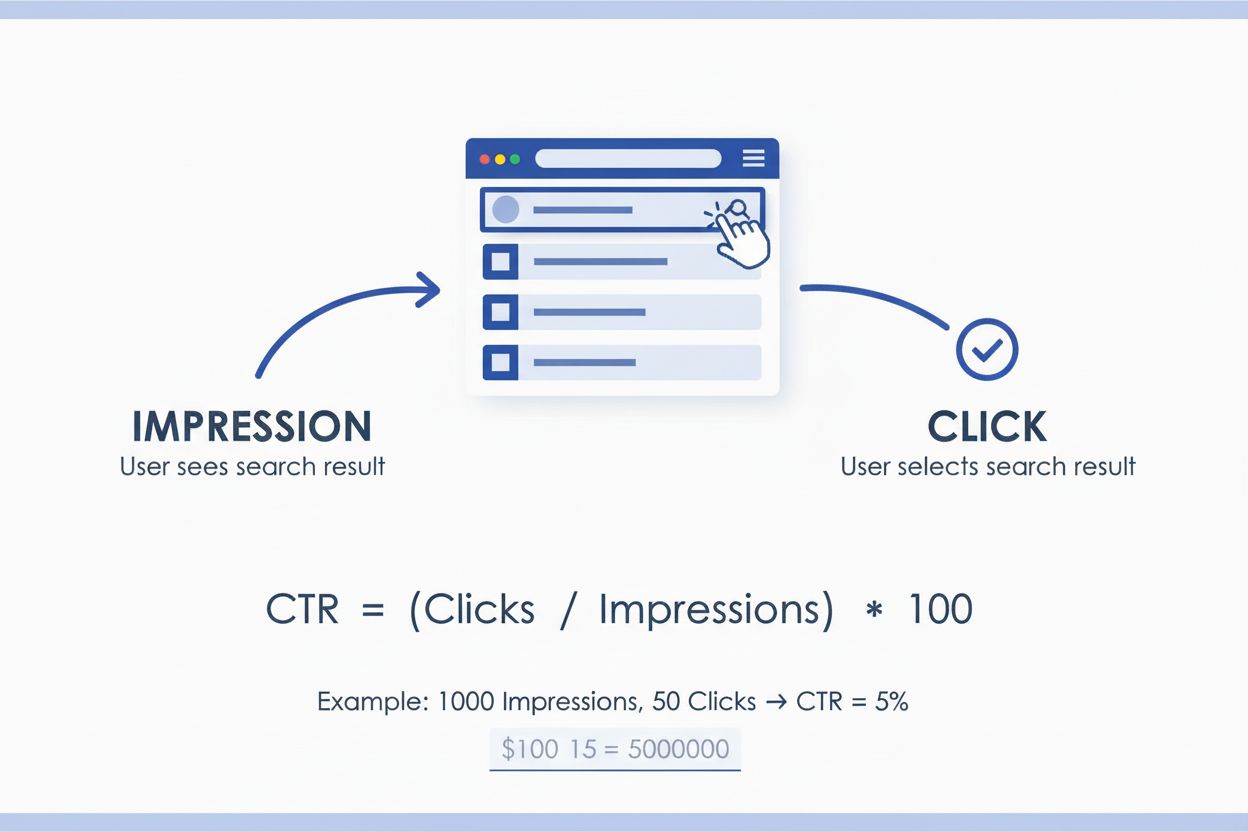
Learn what a click is in search results, how it differs from impressions, and why click metrics matter for SEO rankings, AI monitoring, and user engagement trac...
Paid search results are sponsored ads appearing in search engine results. Learn how PPC advertising works, its ROI impact, and why monitoring paid search visibi...
Cookie Consent
We use cookies to enhance your browsing experience and analyze our traffic. See our privacy policy.