
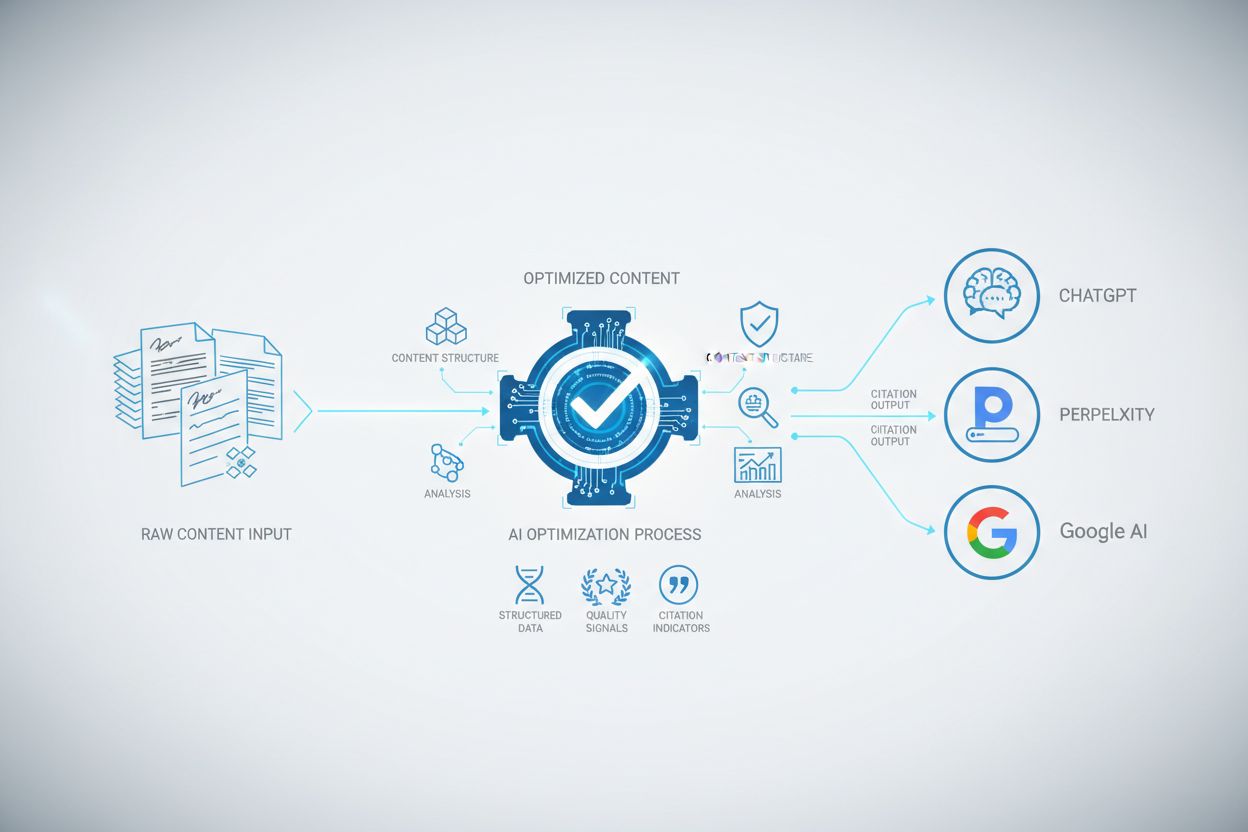
AI Content Optimization Platform
Learn what AI Content Optimization Platforms are, how they work, and why they're essential for visibility in ChatGPT, Perplexity, and Google AI Overviews. Disco...
8 min read

Building and maintaining a strategic brand presence on Discord, Slack, Reddit, Quora, and other community-based platforms that are increasingly indexed and cited by AI systems. Community platform optimization focuses on authentic engagement, entity recognition, and sentiment signals to improve visibility in AI-generated answers and summaries.
Building and maintaining a strategic brand presence on Discord, Slack, Reddit, Quora, and other community-based platforms that are increasingly indexed and cited by AI systems. Community platform optimization focuses on authentic engagement, entity recognition, and sentiment signals to improve visibility in AI-generated answers and summaries.
Community platform optimization refers to the strategic practice of building and maintaining a strong brand presence on Discord, Slack, Reddit, Quora, and other community-based platforms that are increasingly indexed and cited by AI systems. In the era of Answer Engine Optimization (AEO), these platforms have become critical off-page visibility channels, as AI models like ChatGPT, Perplexity, and Google’s AI Overviews actively crawl and reference discussions, mentions, and user-generated content from these communities. Unlike traditional SEO, which focuses on website rankings, community platform optimization emphasizes authentic engagement, entity recognition, and sentiment signals across distributed networks where your audience already congregates. The goal is not just to be present, but to be recognized as a trusted, authoritative voice within niche communities—a signal that AI systems increasingly use to determine whether your brand deserves citation in AI-generated answers.
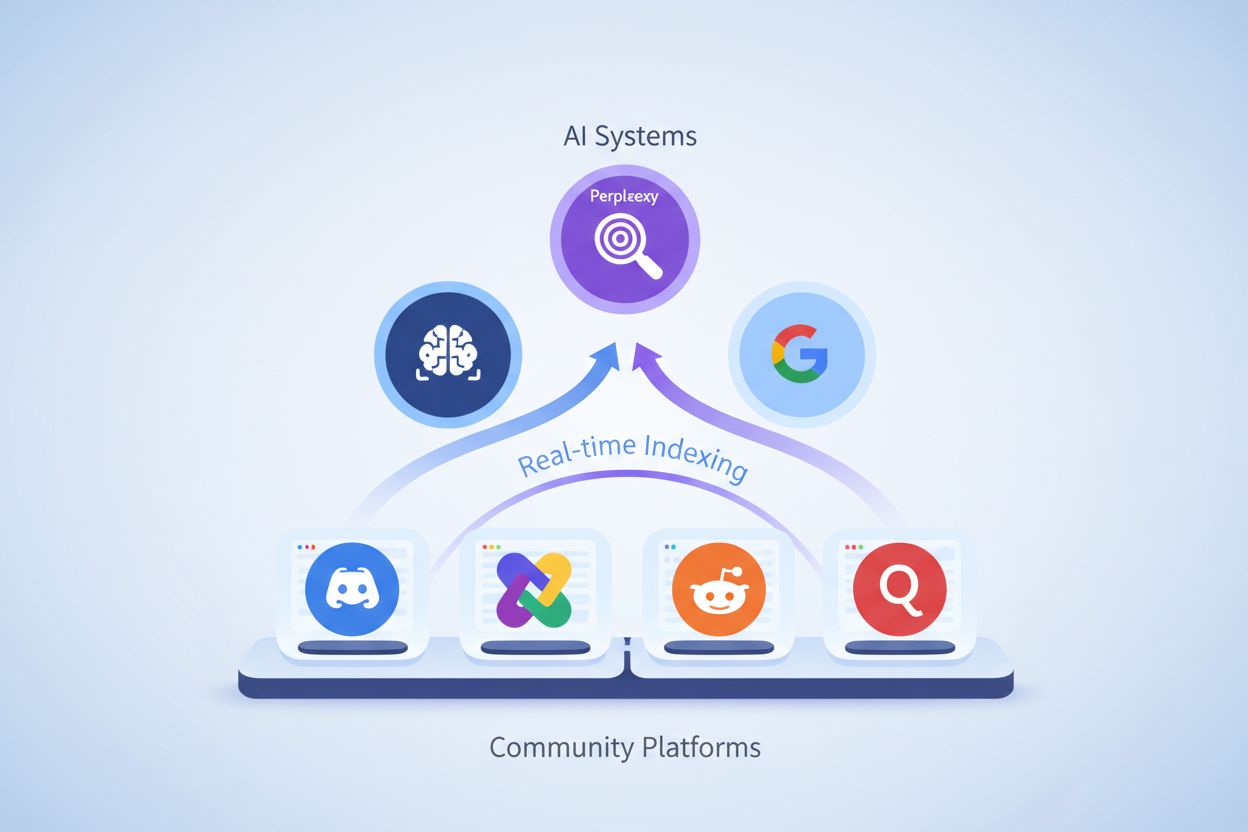
Community platforms have become essential data sources for large language models and AI search engines. When AI systems generate answers, they don’t just rely on indexed websites—they actively scan forums, chat platforms, and community discussions to understand what real people are saying about topics, products, and services. This means your brand mentions in these spaces directly influence how AI systems perceive your authority and relevance. The more consistently your brand appears in high-trust community environments, the more likely AI systems will cite you when answering related questions. Additionally, community platforms provide rich contextual signals: sentiment analysis, engagement patterns, and entity associations that help AI systems understand not just what you do, but how people feel about what you do.
| Platform | AI Indexing Level | Citation Frequency | Sentiment Tracking |
|---|---|---|---|
| Very High | 4.5%+ in AI Overviews | Strong | |
| Discord | High | Growing | Moderate |
| Slack | Moderate | Limited | Moderate |
| Quora | High | Frequent | Strong |
| Very High | Frequent | Strong |
Different community platforms serve different purposes in your off-page AEO strategy, and understanding their unique characteristics is essential for effective optimization:
Discord: A real-time chat platform with unlimited message history, advanced moderation tools, and strong community engagement. Discord servers are increasingly indexed by AI systems, making it ideal for building engaged communities around your brand or niche. The platform’s structured channels and threaded conversations make it easier for AI to extract context and sentiment.
Slack: Originally designed for workplace communication, Slack communities have become popular for niche professional groups. While Slack’s free plan only retains the last 10,000 messages, the platform’s integration ecosystem and professional user base make it valuable for B2B communities. However, Slack is less aggressively indexed by AI systems compared to Discord or Reddit.
Reddit: The second most-cited source in Google’s AI Overviews (after Google itself), Reddit represents an enormous opportunity for community platform optimization. Niche subreddits attract highly engaged users discussing specific topics, and AI systems actively scrape Reddit threads for authentic user perspectives and recommendations.
Quora: A question-and-answer platform where users ask and answer questions on virtually any topic. Quora’s structured Q&A format makes it easy for AI systems to extract relevant information, and answers from established experts often appear in AI-generated summaries.
LinkedIn: While primarily a professional networking platform, LinkedIn has evolved into a community space where thought leaders share insights, engage in discussions, and build authority. AI systems recognize LinkedIn as a source of professional expertise and entity signals.
Discourse: An open-source forum platform that combines the engagement of chat with the searchability and permanence of forums. Discourse communities are fully indexed by search engines and AI systems, making them ideal for building searchable knowledge bases.
The foundation of successful community platform optimization is authentic engagement. AI systems are increasingly sophisticated at detecting spam, self-promotion, and inauthentic behavior. Instead of viewing community platforms as marketing channels, treat them as genuine spaces to provide value, answer questions, and participate in meaningful discussions. Start by listening: spend time in relevant communities understanding the pain points, language, and norms before contributing. When you do participate, focus on providing genuine value—share insights, answer questions thoroughly, and contribute to discussions without immediately promoting your product or service. Over time, this authentic presence builds trust with both community members and AI systems, which recognize consistent, helpful participation as a signal of genuine expertise. The key is consistency: regular, valuable contributions across weeks and months signal to AI systems that you’re a legitimate community member, not a drive-by marketer.
While most community platforms don’t allow you to add schema markup directly, understanding how structured data influences AI visibility is important. When community platforms use schema markup in their own infrastructure—such as marking up user profiles, posts, or discussions—they help AI systems better understand the context and credibility of information. Some platforms, like LinkedIn and Quora, use schema markup to identify expert contributors and their areas of expertise. If you’re building your own community platform or contributing to platforms that support schema, consider implementing Organization or Person schema to help AI systems recognize your entity and associate you with relevant topics.
{
  "@context": "https://schema.org",
  "@type": "Person",
  "name": "Your Name",
  "url": "https://yourwebsite.com",
  "sameAs": [
    "https://linkedin.com/in/yourprofile",
    "https://twitter.com/yourhandle"
  ],
  "expertise": ["Topic1", "Topic2", "Topic3"]
}
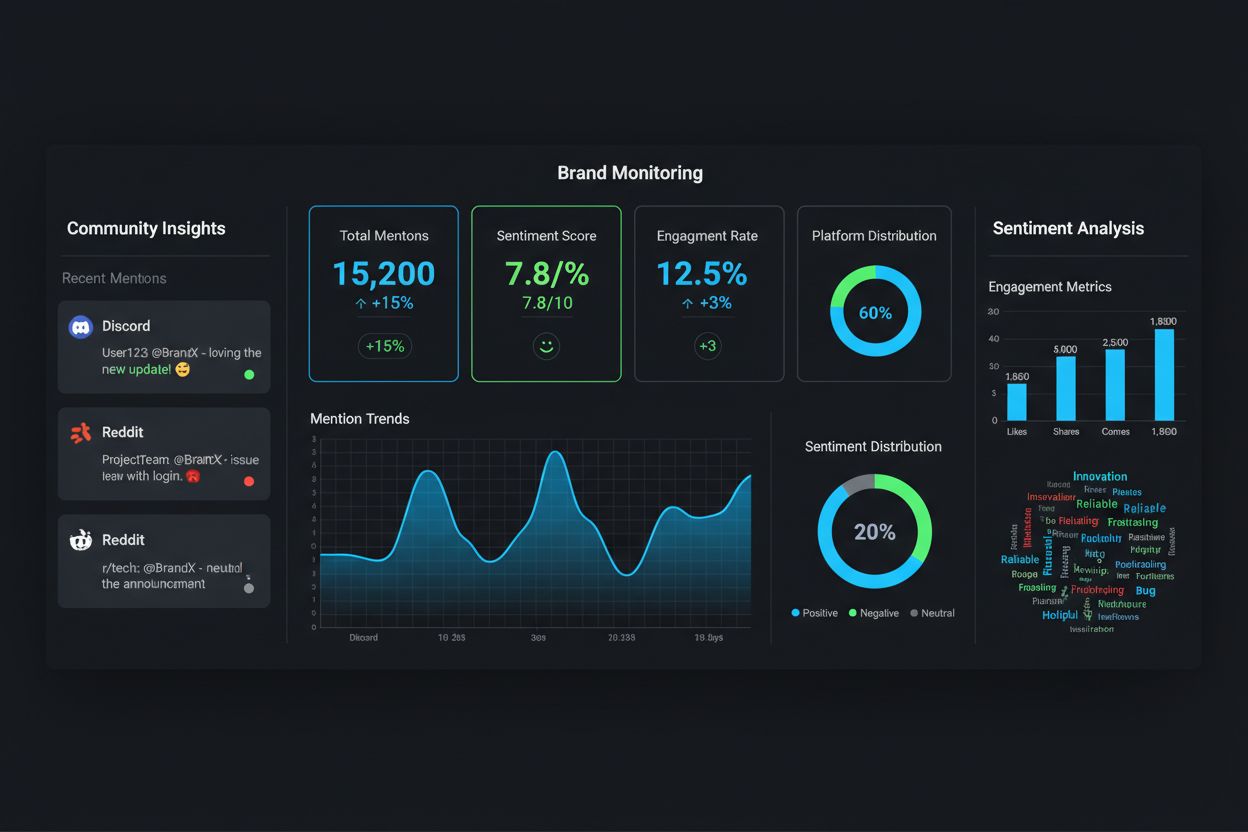
You can’t optimize what you don’t measure. Monitoring tools help you track how your brand is being discussed across community platforms, understand sentiment, and identify opportunities for engagement. These tools scan community platforms in real-time, alerting you to mentions, questions, and discussions relevant to your brand or industry.
| Tool | Key Features | Best For | Price Tier |
|---|---|---|---|
| AmICited | AI mention tracking, sentiment analysis, citation monitoring | Tracking AI visibility and citations | Mid-range |
| Brand24 | Social + web monitoring, sentiment scoring, competitor tracking | Comprehensive brand monitoring | Mid-range |
| Mention | Real-time alerts, influencer identification, team workflows | Fast-moving conversations | High-end |
| Buzzabout | AI-driven entity monitoring, topic trend analysis | LLM/AEO alignment | Mid-range |
| Google Alerts | Simple keyword-based alerts | Basic monitoring | Free |
Implementing a successful community platform optimization strategy requires a structured approach:
Identify Relevant Communities: Research and join 3-5 communities where your target audience congregates. Look for communities with active discussions, engaged members, and topics aligned with your expertise. Use tools like Reddit’s search, Discord server directories, and Quora’s topic pages to find the right fit.
Optimize Your Profile: Create a professional, value-focused profile that clearly communicates your expertise without being salesy. Include a brief bio, relevant links, and a profile picture. Your profile should answer the question: “Why should people listen to what this person has to say?”
Create Valuable Content: Develop content specifically for community platforms—mini-guides, tips, case studies, and thoughtful responses to common questions. This content should be tailored to each platform’s format and culture, not repurposed from your blog.
Engage Authentically: Participate in discussions, answer questions, and contribute to conversations without immediately promoting your product. Aim for a 90/10 ratio: 90% genuine value and community participation, 10% subtle mentions of your work when relevant.
Monitor and Respond: Use monitoring tools to track mentions of your brand, industry, and relevant keywords. Respond promptly to questions, address concerns, and engage with people discussing topics related to your expertise.
Measure and Iterate: Track metrics like mentions, sentiment, engagement, and traffic attribution. Use these insights to refine your strategy, double down on what’s working, and adjust your approach based on community response.
Different platforms offer different advantages for AI visibility. Understanding these differences helps you allocate your time and resources effectively:
| Platform | AI Indexing | Real-time Engagement | Moderation Tools | Best For |
|---|---|---|---|---|
| Discord | High | Excellent | Advanced | Community building, real-time engagement |
| Slack | Moderate | Excellent | Moderate | Professional communities, team collaboration |
| Very High | Good | Community-driven | Niche expertise, authentic discussions | |
| Quora | High | Moderate | Platform-managed | Q&A, thought leadership |
| Very High | Good | Platform-managed | Professional authority, B2B visibility | |
| Discourse | Very High | Moderate | Advanced | Knowledge bases, searchable archives |
Community platform optimization doesn’t exist in isolation—it’s one component of a comprehensive off-page AEO strategy. Your community presence should work in concert with other off-page signals: brand mentions on high-authority websites, positive sentiment across the web, structured data in third-party platforms, and backlinks from relevant sources. When you build a strong community presence, you create more opportunities for organic mentions and citations on other platforms. Community members may reference your insights in blog posts, share your contributions on social media, or mention your expertise in other communities. These secondary mentions amplify your off-page signals and reinforce your entity authority in the eyes of AI systems. The key is consistency: the same brand voice, values, and expertise should be evident across all your community platforms and off-page channels.
Success in community platform optimization requires understanding what works and what doesn’t:
| Do | Don’t |
|---|---|
| Be authentic and helpful | Spam or self-promote excessively |
| Provide detailed, thoughtful answers | Drop links without context |
| Engage consistently over time | Disappear for months then reappear |
| Respect community norms and culture | Ignore community guidelines |
| Share genuine insights and experiences | Make unsubstantiated claims |
| Respond to feedback and criticism gracefully | Dismiss or argue with community members |
| Use community language and terminology | Use corporate jargon or marketing speak |
| Build relationships with community members | Treat communities as one-way marketing channels |
The most successful community platform optimization strategies treat communities as genuine spaces for connection and knowledge-sharing, not as marketing channels. When you focus on providing value and building authentic relationships, AI systems recognize this authenticity and reward it with increased visibility and citations in AI-generated answers.
Traditional SEO focuses on optimizing your website to rank in search engine results pages (SERPs). Community platform optimization, by contrast, focuses on building authority and visibility across distributed community platforms that are indexed by AI systems. While SEO targets the 'ten blue links,' community platform optimization targets AI-generated answers and summaries. Both are important for comprehensive off-page visibility, but they require different strategies and tactics.
Reddit is the second most-cited source in Google's AI Overviews (after Google itself), with citations jumping from less than 0.11% to over 4.5% in recent years. Discord, Quora, and LinkedIn are also heavily indexed. Slack is less aggressively indexed due to its private nature and message retention limits. The key is choosing platforms where your target audience congregates and where AI systems actively scrape content.
Most brands see initial results within 3-6 months of consistent, authentic engagement. However, the timeline depends on several factors: the size of the communities you're joining, the frequency of your contributions, the quality of your content, and how competitive your niche is. Building genuine authority takes time, but the long-term benefits—increased citations, improved sentiment, and sustained visibility—make the investment worthwhile.
While some automation tools can help with monitoring and scheduling, authentic engagement cannot be automated. AI systems are increasingly sophisticated at detecting spam and inauthentic behavior. The most effective community platform optimization strategies involve real people having genuine conversations, answering questions thoughtfully, and building relationships. Automation should be limited to monitoring, scheduling reminders, and analyzing data—not to creating or posting content.
Track metrics including: total brand mentions across platforms, sentiment distribution (positive/negative/neutral), engagement rates (replies, shares, upvotes), traffic attribution from community platforms, and citations in AI-generated answers. Use tools like AmICited to monitor AI citations specifically, and Google Analytics to track traffic. Compare the time invested against the visibility gained and conversions driven to calculate ROI.
Start with 1-2 platforms where your target audience is most active, then expand to 3-5 platforms once you've established a rhythm. Spreading yourself too thin across many platforms dilutes your impact. It's better to have a strong, consistent presence on a few platforms than a weak presence on many. As your team grows, you can manage more platforms, but quality of engagement should always take priority over quantity of platforms.
Community platform optimization has indirect effects on Google rankings. When you build authority in communities, community members may cite your insights in blog posts, share your contributions on social media, or link to your website. These secondary mentions and links improve your traditional SEO signals. Additionally, Google's AI Overviews pull from community platforms, so strong community presence can lead to increased visibility in AI-generated answers, which may drive traffic to your website.
AI Overviews and other AI-generated answers actively cite content from community platforms. When Google's AI systems, ChatGPT, Perplexity, and other LLMs generate answers, they scan community discussions to understand what real people are saying about topics. If your brand is frequently mentioned in high-trust communities with positive sentiment, you're more likely to be cited in AI-generated answers. This makes community platform optimization a critical component of Answer Engine Optimization (AEO) strategy.
Track how your brand is mentioned and cited across Discord, Slack, Reddit, and other community platforms with AmICited's AI monitoring platform. Understand sentiment, measure visibility, and optimize your community presence for maximum AI discoverability.
Learn what AI Content Optimization Platforms are, how they work, and why they're essential for visibility in ChatGPT, Perplexity, and Google AI Overviews. Disco...

Master multi-platform AI optimization. Learn distinct ranking factors for ChatGPT, Perplexity, Claude, and Google AI Overviews to maximize brand visibility acro...
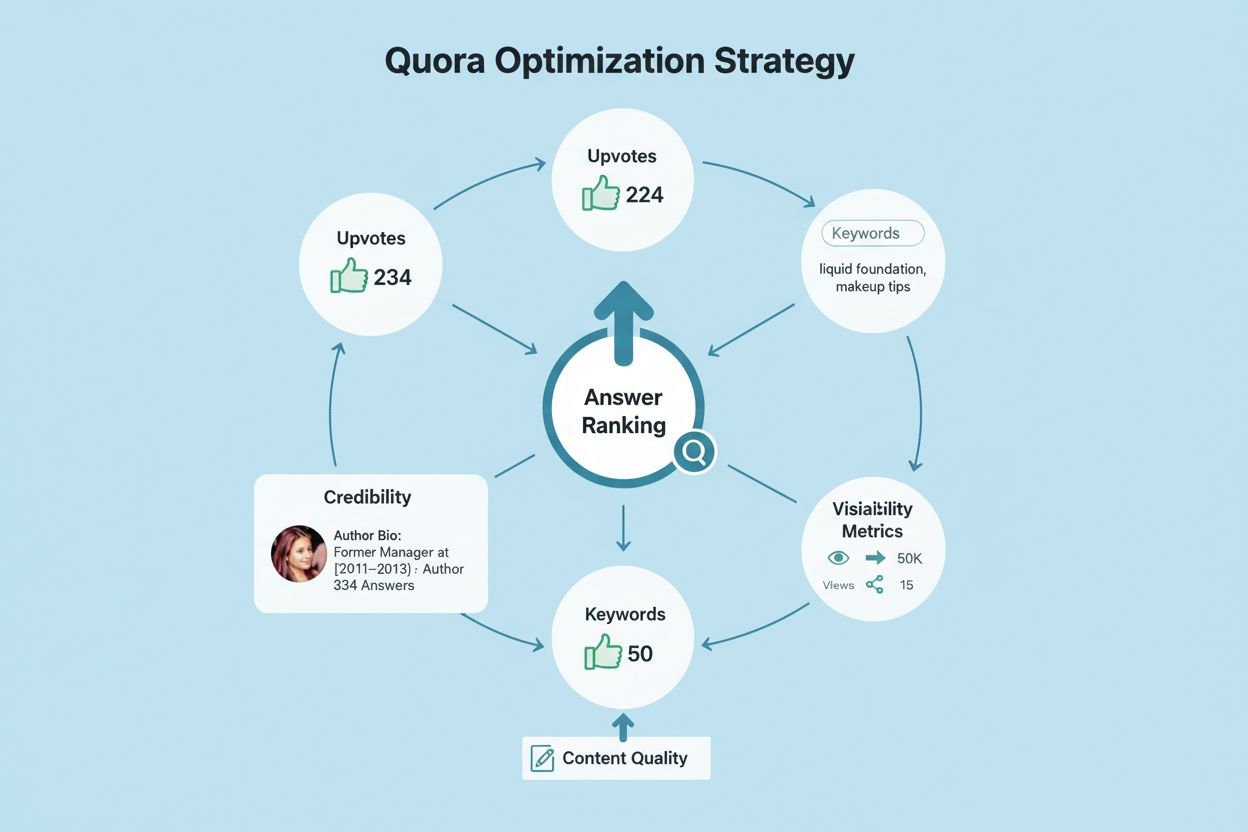
Learn Quora Optimization strategies to boost visibility, answer rankings, and brand authority. Discover best practices for keyword integration, engagement metri...
Cookie Consent
We use cookies to enhance your browsing experience and analyze our traffic. See our privacy policy.