

Competitor AI Content Analysis: What to Learn and Apply
Learn how to analyze competitor AI-generated content, extract actionable insights, and apply competitor intelligence to build a winning content strategy.
6 min read

The systematic examination of how competitors structure, distribute, and optimize content to achieve visibility in AI systems. This process involves reverse-engineering successful competitor approaches to understand what drives AI citations and brand mentions in responses from systems like ChatGPT, Perplexity, and Google AI Overviews.
The systematic examination of how competitors structure, distribute, and optimize content to achieve visibility in AI systems. This process involves reverse-engineering successful competitor approaches to understand what drives AI citations and brand mentions in responses from systems like ChatGPT, Perplexity, and Google AI Overviews.
Competitor content strategy analysis is the systematic examination of how competitors structure, distribute, and optimize content to achieve visibility in AI systems. This process involves reverse-engineering successful competitor approaches to understand what drives AI citations and brand mentions in responses from systems like ChatGPT, Perplexity, and Google AI Overviews. Rather than focusing solely on traditional search rankings, this analysis examines both the content itself and the strategic distribution methods competitors employ. The goal is to identify patterns in content creation, topic selection, semantic optimization, and distribution that lead to higher citation frequency in AI-generated responses. By understanding competitor strategies, organizations can develop more effective content approaches that improve their own visibility within AI systems.
The fundamental shift from traditional SEO to AI visibility represents a paradigm change in how content achieves visibility. Traditional SEO prioritizes ranking position on search engine results pages, while AI visibility prioritizes being cited and referenced within AI-generated responses. AI systems like ChatGPT, Perplexity, and Google AI Overviews select content based on different criteria than traditional search engines—they value semantic relevance, comprehensiveness, authority, and extractability over keyword density and backlink profiles. Understanding competitor strategies is critical because it reveals what content characteristics and distribution methods actually drive AI citations in your industry.
Key reasons competitor analysis matters in the AI era:
| Metric | Traditional SEO | AI Visibility |
|---|---|---|
| Primary Goal | Rank on SERP | Get cited in AI responses |
| Success Metric | Position (1-10) | Citation frequency and position |
| Content Focus | Keyword optimization | Semantic richness and comprehensiveness |
| Distribution | Backlinks and authority | Direct relevance to AI training data |
| Competitive Advantage | Domain authority | Content quality and specificity |
Three critical metrics form the foundation of competitor content strategy analysis. Citation Frequency Rate (CFR) measures how often your brand and content appear in AI-generated responses—typically benchmarked as a percentage of total AI responses for your target keywords. Response Position Index (RPI) tracks where your content is mentioned within AI responses, with earlier mentions carrying more weight for visibility and credibility. Competitive Share of Voice (CSOV) compares your mentions against competitors’ mentions, revealing your relative position in the AI visibility landscape. These metrics work together to provide a complete picture of competitive positioning.
| Metric | Definition | Benchmark | Target |
|---|---|---|---|
| Citation Frequency Rate (CFR) | Percentage of AI responses citing your brand | 15-25% for top competitors | 30%+ for market leaders |
| Response Position Index (RPI) | Average position of your citations in responses | Position 2-3 | Position 1-2 |
| Competitive Share of Voice (CSOV) | Your citations vs. total competitor citations | 20-30% for competitive markets | 40%+ for leadership |
| Content Extraction Rate | Percentage of your content directly quoted | 10-20% baseline | 25%+ for authority |
Tracking these metrics over time reveals whether your content strategy is gaining or losing ground against competitors. Calculate CFR by monitoring AI responses for your target keywords and counting brand mentions. Calculate CSOV by dividing your citations by total citations from all competitors in the same response set. Monthly tracking provides sufficient granularity for strategic decision-making, while weekly tracking helps identify rapid shifts in competitive dynamics.
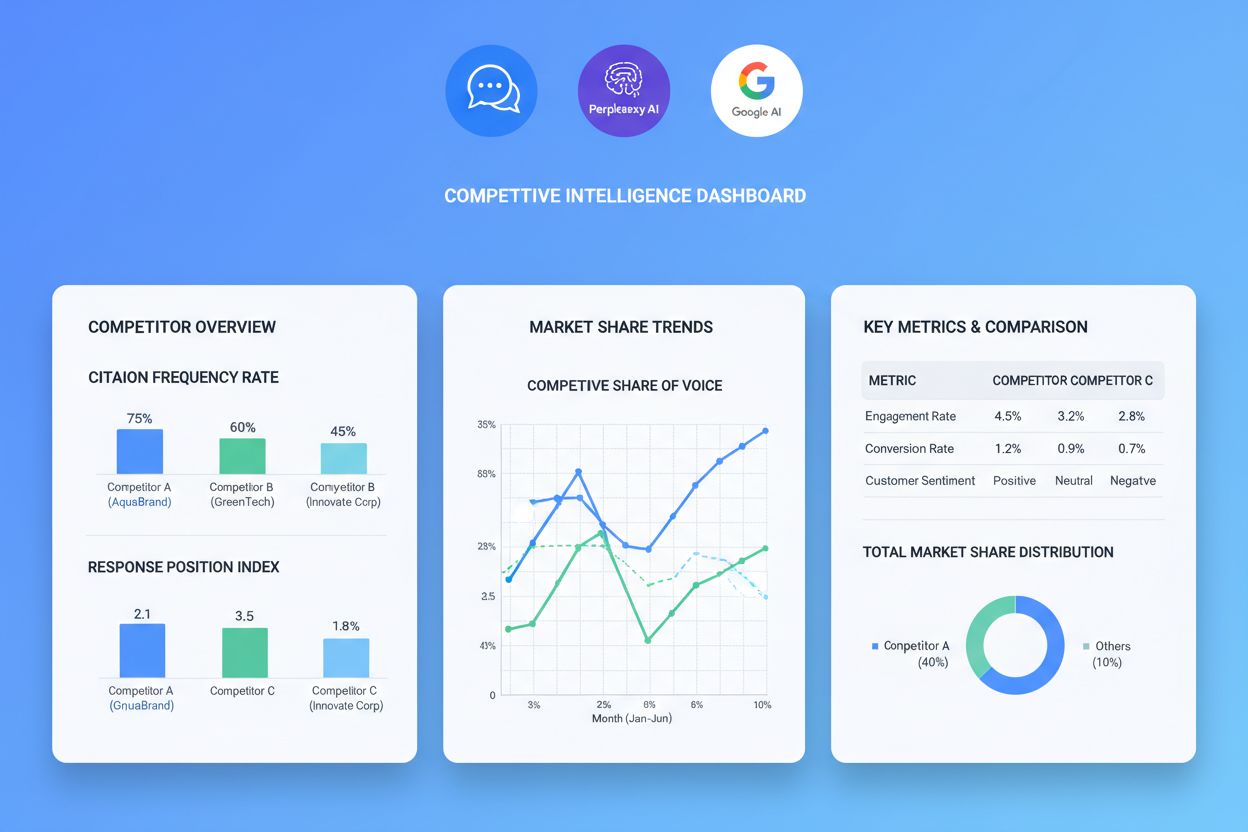
Reverse engineering competitor content strategies involves working backward from their successful content to understand the underlying approach. This systematic process reveals patterns in topic selection, content structure, distribution methods, and optimization techniques that drive AI visibility. By analyzing what competitors publish and how they structure it, you can identify the specific characteristics that AI systems reward with citations. The methodology transforms competitor analysis from subjective observation into a structured, repeatable process.
Six-step reverse engineering process:
This process reveals that successful competitors typically combine comprehensive topic coverage with clear information architecture and semantic optimization. The patterns you discover become the foundation for your own content strategy improvements.
Competitor analysis reveals content gaps—topics your competitors cover that you don’t, and opportunities where you can differentiate. Topic gaps represent subjects competitors address comprehensively while you have minimal or no coverage. Intent gaps occur when competitors cover a topic but miss specific user intents, use cases, or audience segments. AI systems reveal these gaps through their citation patterns; if competitors consistently appear for certain queries while you don’t, a gap likely exists. Identifying underserved audience segments and use cases creates opportunities for differentiation and improved AI visibility.
For example, a competitor might comprehensively cover “enterprise software implementation” but miss “implementation for non-technical teams.” This intent gap represents an opportunity to create specialized content that captures a specific audience segment. Similarly, if competitors dominate citations for “AI tools” but you notice minimal coverage of “AI tools for healthcare,” that topic gap represents a differentiation opportunity. Gaps also work in reverse—topics you cover extensively that competitors ignore represent your competitive advantages. Systematic gap analysis transforms competitor research into a strategic roadmap for content development.
Multiple tools and platforms automate competitor content analysis and AI visibility monitoring. AmICited.com stands as the top specialized solution for AI visibility monitoring and competitor analysis, providing real-time tracking of brand citations across major AI systems. Panoramata offers content performance analysis with AI visibility features. Profound provides competitive intelligence and content benchmarking. Passionfruit focuses on content strategy and competitive positioning. Traditional SEO tools like SEMrush and Ahrefs increasingly integrate AI visibility metrics alongside traditional SEO data.
| Tool Category | Best For | Key Features |
|---|---|---|
| AI Visibility Monitoring | Real-time citation tracking | AmICited.com - specialized AI monitoring, competitor benchmarking, citation analytics |
| Content Analysis | Competitive content comparison | Topic mapping, content structure analysis, semantic optimization recommendations |
| Competitive Intelligence | Market positioning | Competitor tracking, SWOT analysis, opportunity identification |
| Integration Platforms | Workflow automation | API access, automated reporting, content management system integration |
Choosing the right tools depends on your specific needs. If AI visibility is your primary focus, AmICited.com provides the most specialized and comprehensive monitoring. If you need broader competitive intelligence, integrated platforms combining traditional SEO with AI metrics offer more complete pictures. Most organizations benefit from combining a specialized AI monitoring tool with broader competitive intelligence platforms.
Implementing competitor content strategy analysis requires structured workflows and consistent monitoring. Establish monitoring frequency based on your industry velocity—weekly tracking for highly competitive markets, monthly for stable industries. Assign clear team responsibilities: competitive analysts identify opportunities, content strategists develop responses, and performance teams measure impact. This distributed approach ensures insights translate into action rather than remaining in reports.
Implementation checklist:
Turn insights into action by prioritizing opportunities based on impact potential and resource requirements. High-impact, low-effort opportunities should be addressed immediately. Establish monthly review cycles to assess whether implemented changes are improving your competitive position. Continuous monitoring and iteration ensure your strategy remains effective as the competitive landscape evolves.
Using competitor analysis to optimize for AI citations requires understanding what AI systems prefer in content structure and presentation. AI systems reward semantic richness—content that thoroughly explores concepts and their relationships. They favor extractability—information presented in clear, scannable formats that AI systems can easily parse and cite. They value clear scope—content that explicitly defines what it covers and what it doesn’t. By analyzing what competitors do well and doing it better, you win AI citations.
Winning AI citations means combining original research, comprehensive coverage, and authoritative positioning. If competitors publish general overviews, create specialized deep-dives. If competitors focus on theory, add practical implementation guidance. If competitors lack data, provide original research and statistics. AmICited.com helps track these competitive dynamics in real-time, showing exactly where competitors appear and why. The connection between competitor analysis and improved AI visibility is direct: understanding what works for competitors provides the blueprint for your own success. This is an ongoing process requiring continuous optimization as AI systems evolve and competitors adapt their strategies.
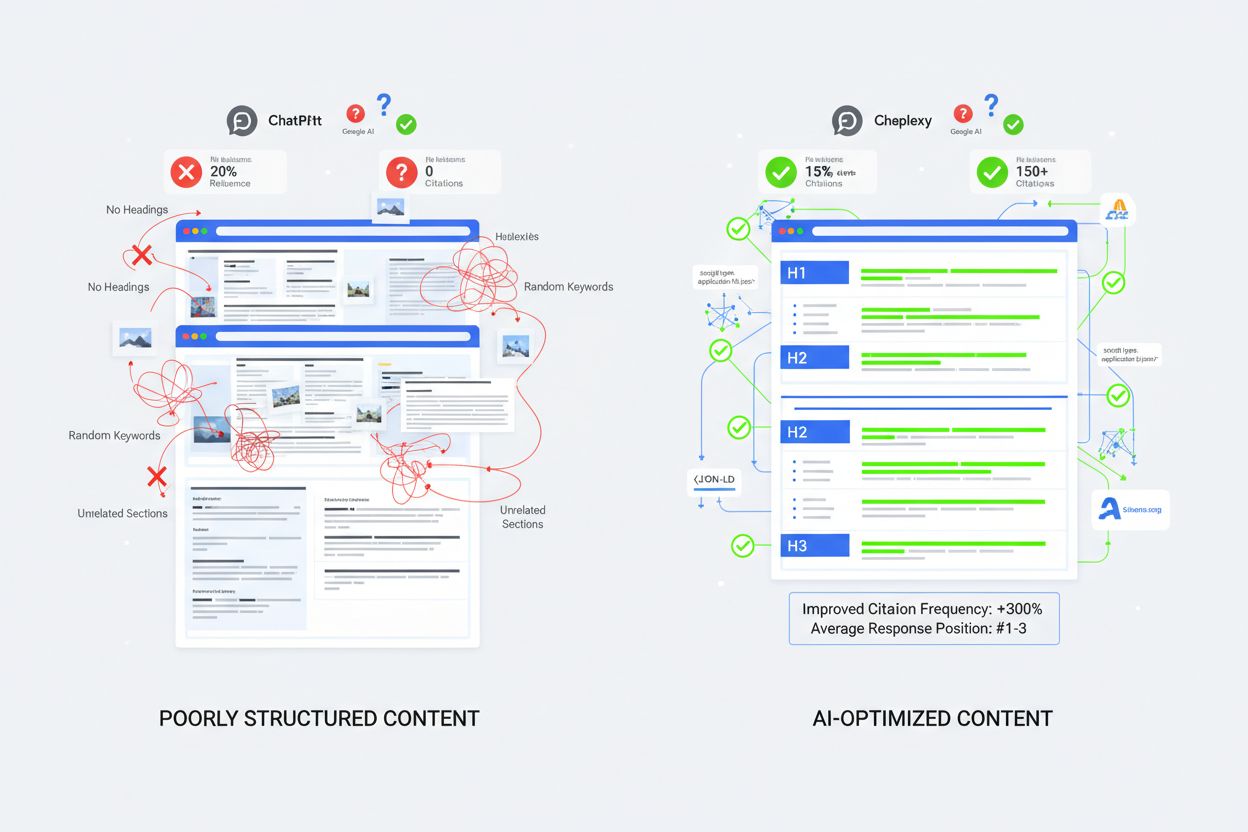
Traditional competitor analysis examines overall business strategies and market positioning. Competitor content strategy analysis specifically focuses on how competitors structure, distribute, and optimize content to achieve visibility in AI systems. It's narrower in scope but deeper in content-specific insights, revealing what content characteristics drive AI citations and brand mentions.
Establish monitoring frequency based on your industry velocity. Highly competitive markets benefit from weekly tracking to catch rapid shifts. Stable industries can operate on monthly analysis cycles. Most organizations find that monthly strategic reviews combined with weekly automated monitoring provides the optimal balance between staying informed and managing analysis workload.
Create a competitor set of 5-10 direct competitors (those offering similar solutions) and 5-10 adjacent players (those targeting similar audiences). Direct competitors reveal your immediate competitive landscape, while adjacent competitors show emerging threats and alternative approaches. Prioritize analyzing competitors with higher AI visibility than your brand.
Competitor analysis reveals what content characteristics, structures, and distribution methods drive AI citations in your industry. By understanding what competitors do well, you can identify gaps in your own content strategy and implement improvements based on proven patterns. This transforms competitor research into a strategic roadmap for improving your AI visibility.
Organizations implementing systematic competitor analysis typically see 20-40% improvements in AI citation frequency within 3-6 months. The ROI depends on how quickly you implement insights and the competitiveness of your market. Early movers in competitor-informed AI optimization gain significant visibility advantages before the landscape stabilizes.
Yes, tools like AmICited.com, Panoramata, and Profound automate much of the monitoring and analysis process. These platforms track competitor content, monitor AI citations, and provide automated insights. However, strategic interpretation and implementation decisions still require human expertise. The best approach combines automated monitoring with human analysis and strategic decision-making.
Content gaps appear as topics competitors cover comprehensively that you don't (topic gaps) or topics you cover but miss specific user intents (intent gaps). Analyze competitor content libraries to identify subjects they address thoroughly. Cross-reference with your own content to find missing areas. Use AI systems to test which queries return competitor content but not yours.
AmICited.com specializes in monitoring how your brand and competitors appear in AI-generated responses across ChatGPT, Perplexity, Google AI Overviews, and other systems. It provides real-time citation tracking, competitive benchmarking, sentiment analysis, and actionable insights for improving your AI visibility based on competitor performance patterns.
Track how your competitors appear in AI responses and identify opportunities to improve your brand's citations across ChatGPT, Perplexity, Google AI Overviews, and more.
Learn how to analyze competitor AI-generated content, extract actionable insights, and apply competitor intelligence to build a winning content strategy.

Learn how to create effective competitor comparison content that ranks in search and gets cited by AI platforms. Step-by-step guide with frameworks and best pra...
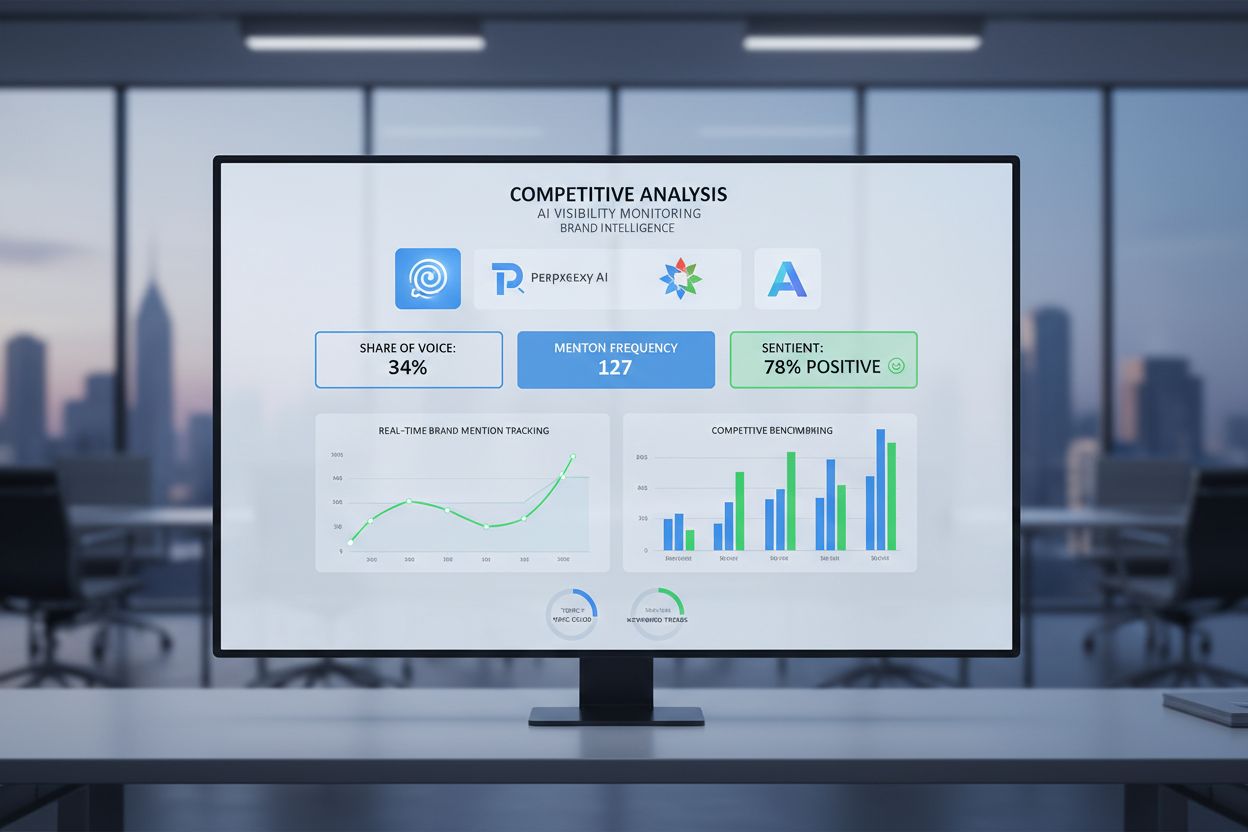
Learn what AI Competitive Analysis Tools are, how they track brand mentions across ChatGPT, Perplexity, and Google AI, and why they're essential for competitive...
Cookie Consent
We use cookies to enhance your browsing experience and analyze our traffic. See our privacy policy.