


Freshness Signal
Freshness signal is a ranking factor measuring content recency and update frequency. Learn how publication dates, update frequency, and content changes impact S...
33 min read
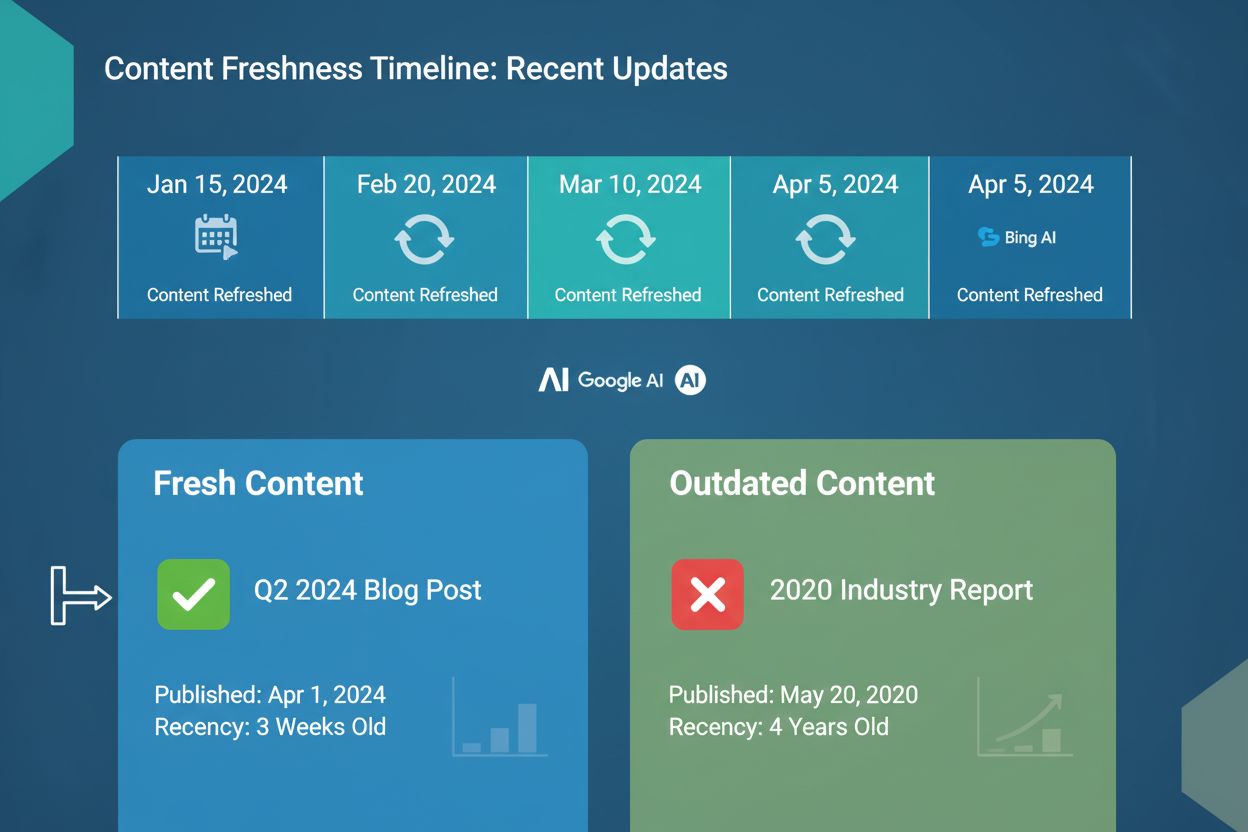
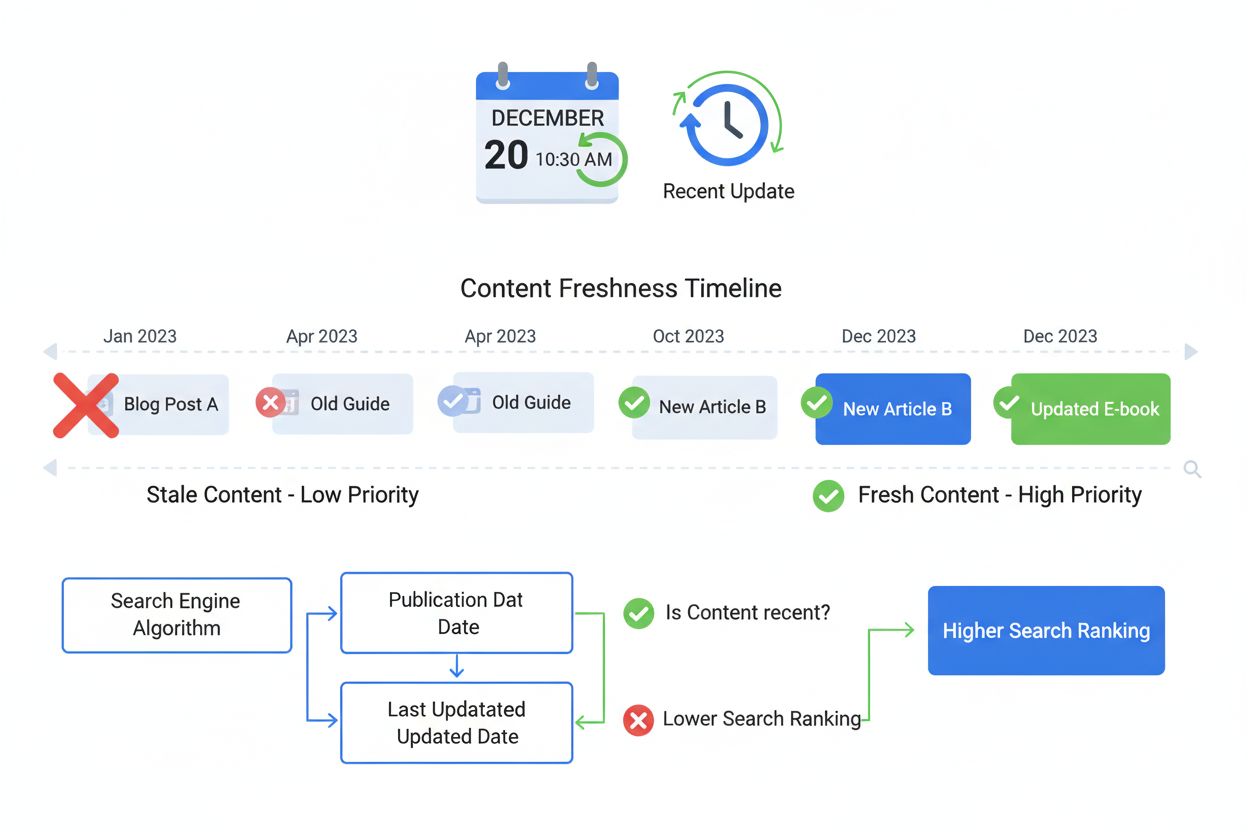
Content freshness refers to how recently content was created or updated on a website. It measures the timeliness and relevance of web pages, blog posts, and other digital materials, which significantly impacts search engine rankings and AI system citations. Fresh content signals to search engines and AI platforms that information is current and valuable to users.
Content freshness refers to how recently content was created or updated on a website. It measures the timeliness and relevance of web pages, blog posts, and other digital materials, which significantly impacts search engine rankings and AI system citations. Fresh content signals to search engines and AI platforms that information is current and valuable to users.
Content freshness is a measure of how recently web content was created or updated, reflecting the timeliness and current relevance of digital materials. It encompasses not just the initial publication date but also the frequency and significance of updates made to existing content. In the context of search engine optimization and artificial intelligence systems, content freshness serves as a critical quality signal indicating that information remains accurate, relevant, and valuable to users. The concept extends beyond simple date stamps—it represents an ongoing commitment to maintaining content accuracy and addressing evolving user needs. Search engines and AI platforms increasingly use content freshness as a ranking factor because users expect current information, particularly for topics where accuracy and timeliness directly impact decision-making.
The importance of content freshness in search rankings emerged prominently with Google’s “Freshness Update” introduced in November 2011, which fundamentally changed how search engines evaluate content timeliness. Prior to this update, search algorithms treated older, established content more favorably regardless of recency. Google’s Freshness Update recognized that certain queries—particularly those related to news, trends, and rapidly evolving topics—deserved more recent results. This algorithmic shift reflected a broader understanding that user intent varies significantly: some searches require the latest information, while others benefit from comprehensive, established resources. Over the past decade, content freshness has evolved from a niche consideration to a fundamental SEO principle, with increasing emphasis on regular updates and continuous content optimization. The rise of AI search engines has further amplified the importance of freshness, as these systems demonstrate even stronger recency bias than traditional search engines.

Track how AI chatbots mention your brand across ChatGPT, Perplexity, and other platforms.
The relationship between content freshness and visibility differs notably across search platforms. Traditional Google Search uses Query Deserves Freshness (QDF) to selectively prioritize fresh content for time-sensitive queries, meaning freshness matters significantly for news, events, and trending topics but less so for evergreen content. However, AI search engines demonstrate a more universal freshness bias. According to Seer Interactive’s comprehensive study analyzing over 5,000 URLs cited across ChatGPT, Perplexity, and Google AI Overviews, nearly 65% of AI bot hits target content published within the past year, and 79% of total hits target content from the last two years. This represents a substantially stronger recency preference than traditional search. Google AI Overviews shows the most extreme freshness bias, with 85% of citations from 2023-2025, while Perplexity demonstrates even stronger recency weighting with approximately 50% of citations from 2025 alone. ChatGPT shows a broader distribution but still concentrates 71% of citations in 2023-2025. This distinction is crucial for content strategists: while traditional SEO allows for longer content lifecycles, AI visibility requires more aggressive content maintenance and update schedules.
Query Deserves Freshness (QDF) is a sophisticated ranking system built into Google’s algorithm that automatically determines whether a search query requires fresh, up-to-date content. Using machine learning and ongoing analysis of search patterns, Google identifies queries that benefit from recent information and prioritizes newer content in results for those specific searches. QDF triggers for several content categories: breaking news and current events, product launches and upgrades, recurring statistics and information (stock prices, interest rates, weather), trending topics gaining sudden search volume, and time-sensitive advice or guidance. When QDF activates for a query, Google essentially signals that content age becomes a more important ranking factor than it would be for evergreen queries. For example, a search for “latest smartphone reviews” triggers QDF, causing Google to prioritize reviews published recently over comprehensive reviews from years past. Conversely, a search for “how to tie a necktie” does not trigger QDF, allowing older, well-established content to rank highly. Understanding which of your target queries trigger QDF is essential for content strategy—it determines whether you should focus on creating new content or optimizing existing evergreen material.
Get the latest insights on AI mentions, brand monitoring, and optimization strategies.
The impact of content freshness varies dramatically across industries, with some sectors showing extreme recency bias while others allow longer content lifecycles. Financial services and regulatory industries demonstrate the most extreme freshness requirements, with AI systems showing thousands of hits on 2024-2025 content and almost none pre-2020. This reflects the reality that tax regulations, payroll requirements, HR laws, and financial products change frequently, making outdated information potentially harmful. Travel and hospitality show moderate recency preference, with AI systems concentrating 92% of hits on content from the last three years, though evergreen guides like “best places to travel in July” still perform well if updated. Energy and instructional content demonstrate longer content lifespans, with AI crawlers still citing content from 10-15 years ago if it remains accurate and valuable. This pattern reflects that foundational knowledge—“what is environmental sustainability?” or “how to install deck boards?"—doesn’t become outdated as quickly as regulatory or product information. Understanding your industry’s specific freshness requirements prevents wasting resources on unnecessary updates while ensuring you maintain visibility in your sector.
| Factor | Traditional Google Search | ChatGPT | Perplexity | Google AI Overviews |
|---|---|---|---|---|
| Freshness Bias Strength | Selective (QDF-triggered queries only) | Moderate to Strong | Very Strong | Extremely Strong |
| % Citations from Past Year | Varies by query type | ~31% from 2025 | ~50% from 2025 | ~44% from 2025 |
| % Citations from Past 2 Years | Varies by query type | ~71% from 2023-2025 | ~80% from 2023-2025 | ~85% from 2023-2025 |
| Evergreen Content Performance | Strong (if optimized) | Good (with updates) | Moderate (requires updates) | Weak (unless very recent) |
| Authority vs. Recency | Authority weighted heavily | Both weighted | Recency weighted more | Recency weighted most |
| Optimal Update Frequency | 6-12 months for evergreen | 6-12 months for evergreen | 3-6 months recommended | 1-3 months recommended |
| Industry Most Affected | News, finance, tech | Finance, travel, tech | Finance, news, tech | Finance, news, regulatory |
Search engines and AI systems detect content freshness through multiple technical signals beyond simple publication dates. The last-modified HTTP header tells crawlers when content was last changed, providing a reliable freshness indicator. Sitemap submission dates signal to Google when you’ve updated your site structure or content. Schema markup, particularly the datePublished and dateModified fields in structured data, explicitly communicate content age to search engines. Internal linking patterns can signal freshness—when you link to recently updated content from multiple pages, search engines recognize it as important and current. Social signals like shares and engagement on recently published content provide indirect freshness indicators. User engagement metrics such as click-through rates and time-on-page for recent content help algorithms understand which content users find valuable. Content update frequency itself becomes a signal—websites that regularly publish and update content receive more frequent crawls from search engines. Implementing these technical signals properly ensures that your content freshness efforts are recognized and rewarded by both traditional search engines and AI systems.
Maintaining effective content freshness requires a strategic, systematic approach rather than reactive updates. Begin with a comprehensive content audit using tools like Screaming Frog to identify all content on your site, extract publication and modification dates, and assess current performance metrics. Prioritize updates based on performance data—focus on high-traffic pages that are declining in visibility or pages addressing time-sensitive topics. For each update, conduct fresh keyword research using tools like Google Trends or SE Ranking to identify new search terms and user questions your content should address. Update prime content areas including headings, metadata, and body copy with new keywords and information. Add new visual elements—images, charts, videos—to enhance user experience and signal freshness. Importantly, update the publication date only after making substantial content changes; Google recognizes when content hasn’t genuinely been updated and won’t be fooled by date manipulation. After publishing updates, resubmit your sitemap in Google Search Console to prompt faster crawling. Establish a content calendar to maintain consistent update schedules, with frequency determined by your industry’s freshness requirements. For financial and regulatory content, aim for quarterly reviews; for travel and consumer content, semi-annual reviews; for instructional and evergreen content, annual reviews at minimum.
For organizations concerned with brand visibility in AI search, content freshness has become a critical monitoring metric. Platforms like AmICited track how frequently your content appears in AI system citations and correlate this with content age, helping you understand whether your freshness strategy is effective. The data reveals that content decay happens faster in AI search than traditional SEO—content that might maintain rankings in Google for years can quickly disappear from AI citations if not regularly updated. Monitoring tools can track which of your content pieces are being cited by ChatGPT, Perplexity, Google AI Overviews, and Claude, along with the publication dates of cited content. This intelligence allows you to identify which content types and topics generate the most AI visibility and adjust your freshness strategy accordingly. For example, if you notice that your financial content from 2024 is being cited but 2023 content is not, you understand that quarterly updates are necessary in your industry. Conversely, if your instructional content from 2015 still receives AI citations, you know that evergreen content can have longer lifecycles in your sector. This data-driven approach to content freshness optimization ensures resources are invested where they generate the most AI visibility and brand impact.
Several misunderstandings lead teams to waste effort on freshness updates that don’t move the needle. The first is believing that changing the publish date alone counts as an update—search and AI systems detect when content hasn’t genuinely changed, so cosmetically bumping a timestamp without adding new information, data, or context provides no ranking or citation benefit and can even damage trust if discovered. The second misconception is that all content needs the same update frequency—the data shows extreme variance by industry: financial and regulatory content decays within months while instructional and foundational content can remain cited for a decade or more; applying a blanket quarterly refresh schedule wastes resources on evergreen pages that didn’t need it while under-serving fast-moving categories that needed monthly attention. The third misconception is that freshness and evergreen content are competing strategies—they’re complementary; the most durable approach maintains evergreen foundational content with periodic substantive updates while also publishing genuinely new content for time-sensitive topics, rather than choosing one approach exclusively. The fourth misconception is that freshness is purely about the visible publish date—technical signals like the last-modified HTTP header, schema markup’s dateModified field, and updated internal linking patterns all communicate freshness independently of what’s displayed to readers, and neglecting these technical signals means genuine updates may go undetected even when the visible content has meaningfully changed.
Start tracking how AI chatbots mention your brand across ChatGPT, Perplexity, and other platforms. Get actionable insights to improve your AI presence.
Freshness signal is a ranking factor measuring content recency and update frequency. Learn how publication dates, update frequency, and content changes impact S...

Learn why content freshness is crucial for AI search visibility. Discover how ChatGPT, Perplexity, and other AI engines prioritize fresh content and how to opti...
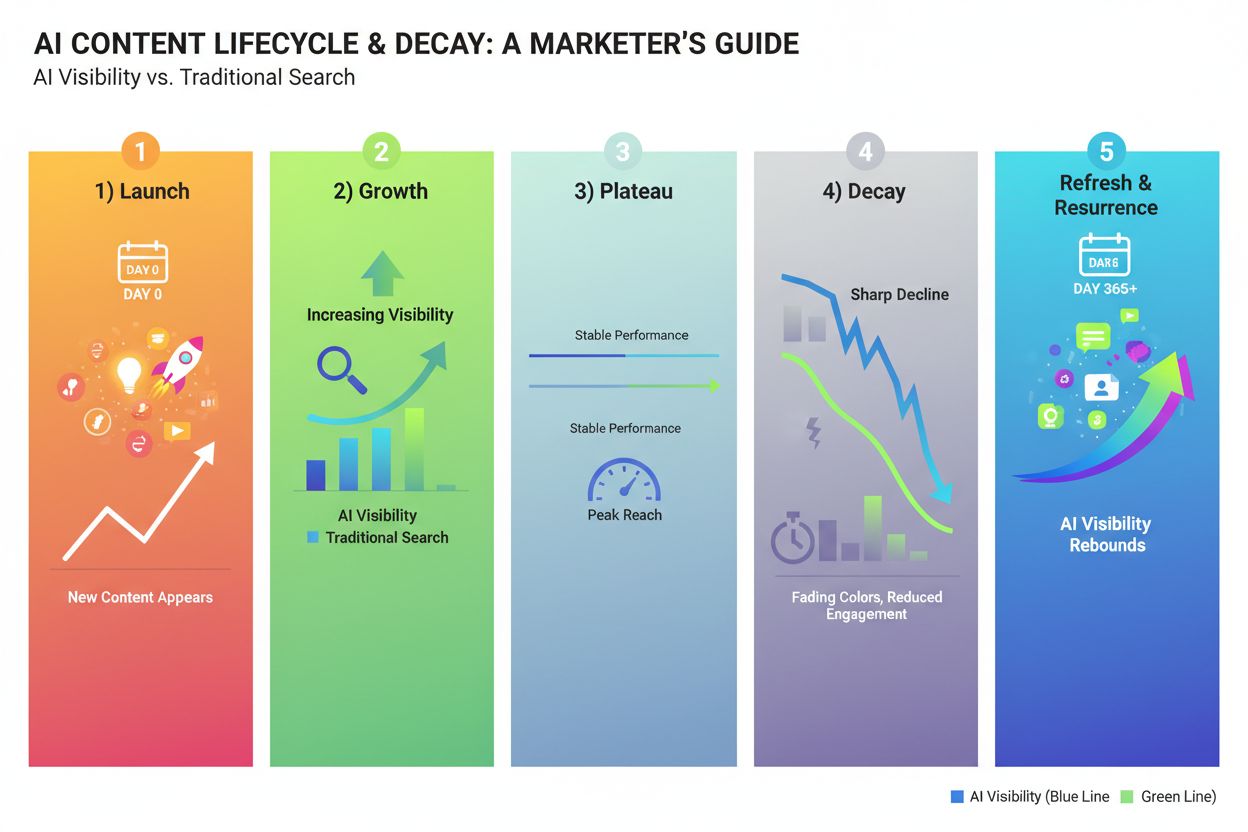
Understand why AI systems like ChatGPT, Perplexity, and Google AI Overviews weight content recency, the three signal types they read, and how visibility decays ...
Cookie Consent
We use cookies to enhance your browsing experience and analyze our traffic. See our privacy policy.